



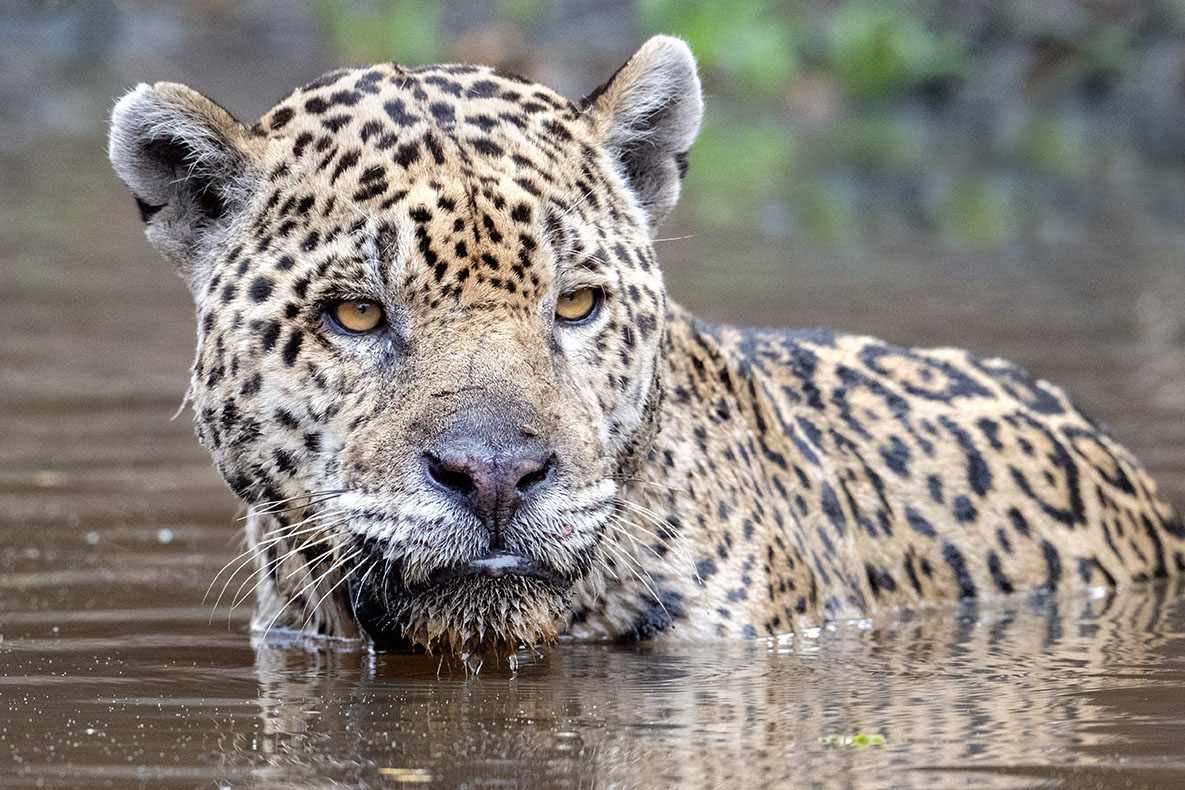
Barely a century ago, in the early 1900s, South America was considered remote, mysterious, and dangerous. Less was known about South America than any other inhabited continent. Even today, there are as many as 200 uncontacted indigenous tribes totalling up to 10,000 individuals living in voluntary isolation in the depths of Amazonia. For many of them, the jaguar is revered as a sacred animal, a potent symbol of power and strength. In the Tupi-Guarani indigenous language, the name jaguar comes from an expression meaning “the beast that kills in a single leap.” Although thousands of jaguars hunt in the sunlight and shadows of the impenetrable forests flanking the Amazon River and its tributaries, the greatest density of these legendary cats occurs just south of the rainforests in a seasonal wetland known as the Pantanal.
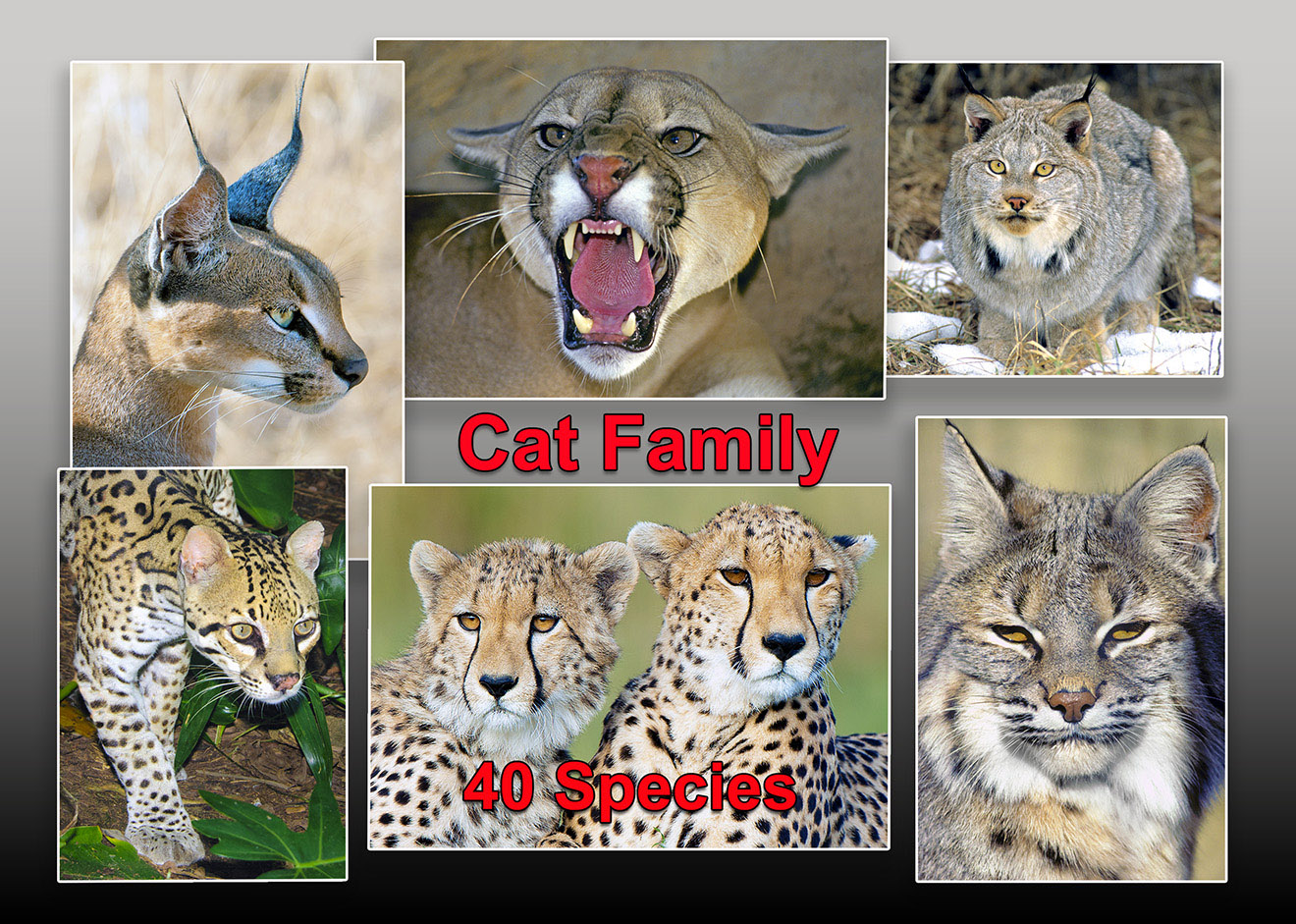
The Cat Family (Felidae), of which the jaguar is a member, has 40 different wild species (41 species if you include the domestic cat). Members of the family are found in the Americas, Europe, Asia, and Africa, but there are no native cats in Australia. The photographs in this illustration show the diversity of fur patterns among the group. In fact, cats display the greatest variety of fur patterns among all terrestrial carnivores. (clockwise from upper left: caracal, mountain lion, Canada lynx, bobcat, cheetah, ocelot).
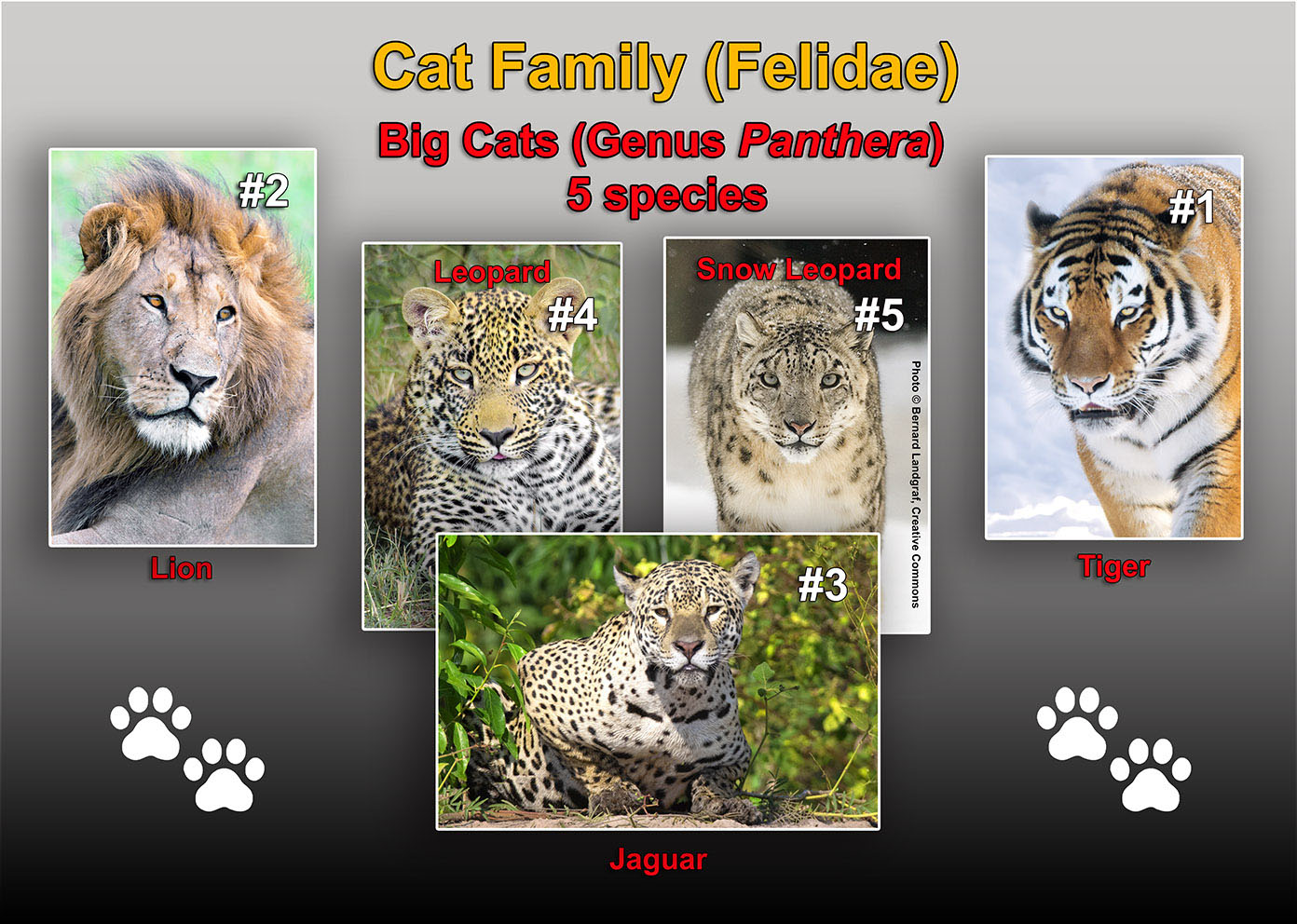
Within the Cat Family, five of the big cats belong to the genus Panthera. These include the tiger, lion, leopard, snow leopard, and jaguar, which ranks number three in size. The lion is the jaguar’s closest relative with the two species separating from a common ancestor roughly 1.5 million years ago.
On my first trip to the Pantanal wetlands in central Brazil in 1997, it was rare to glimpse a jaguar. But in the last 10 years, multiple sightings have become a regular occurrence. For example, in the summers of 2024 and 2025, during the 20 days I spent intensively searching the Cuiaba River and its tributaries, I had 4 to 8 jaguar encounters every day. I saw a wide range of behaviours, including scent marking, fighting, courting, mating, mothers interacting with cubs, stalking, predatory attacks, and even several successful captures of jacare caiman and green iguanas. Few wilderness areas in the world offer such a diverse range of visible and photographable behaviours of one of the planet’s most secretive and reclusive predators.
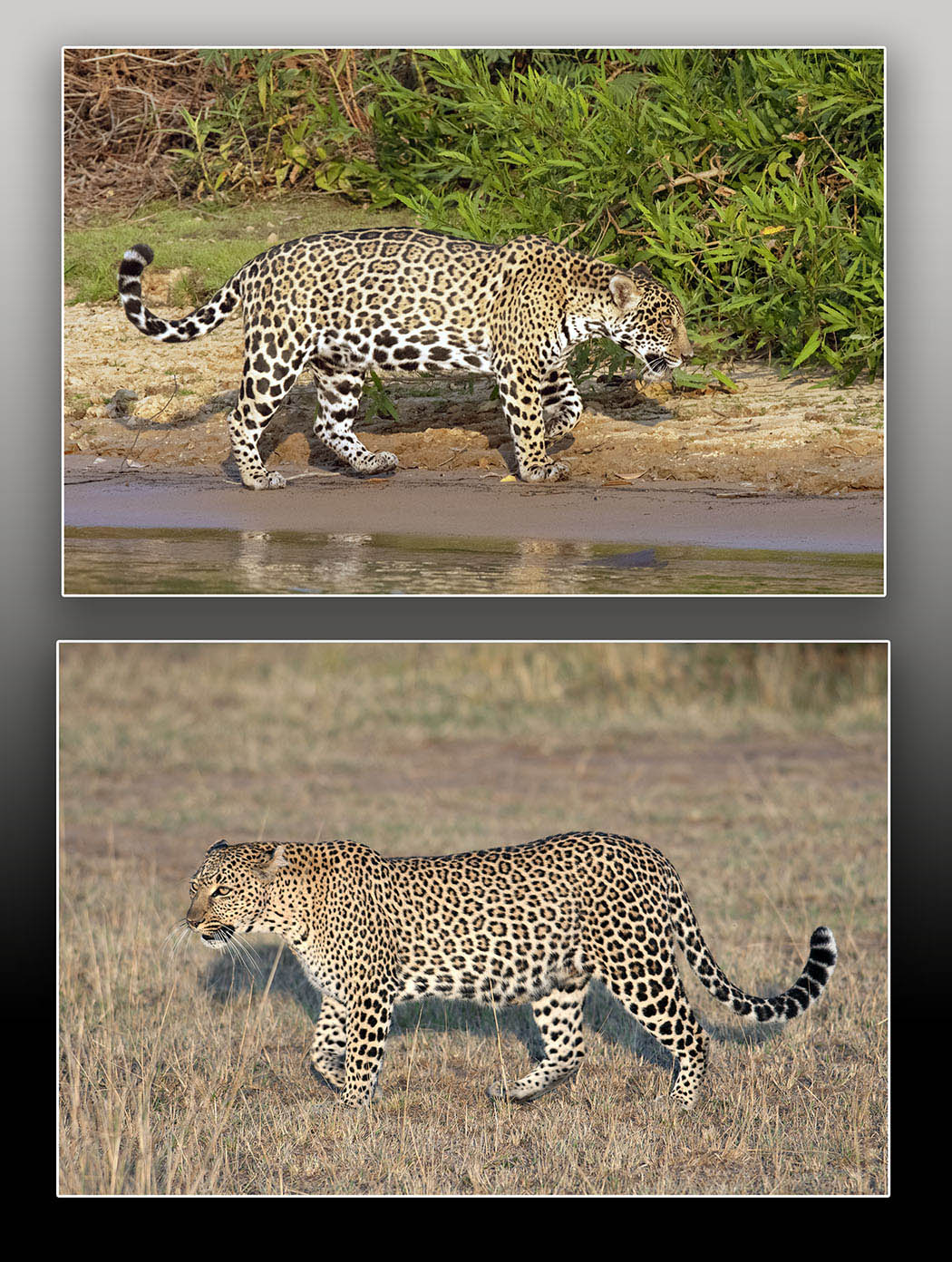
Jaguars and leopards are often confused. The jaguar is a stockier animal with a more pronounced shoulder hump, shorter, thicker limbs, a substantially shorter tail, and a proportionally larger head. Though both species are spotted, the large spots on the sides of their bodies, called rosettes, are different. The jaguar has fewer rosettes, but they are larger in size and often have one or more small spots in their center.
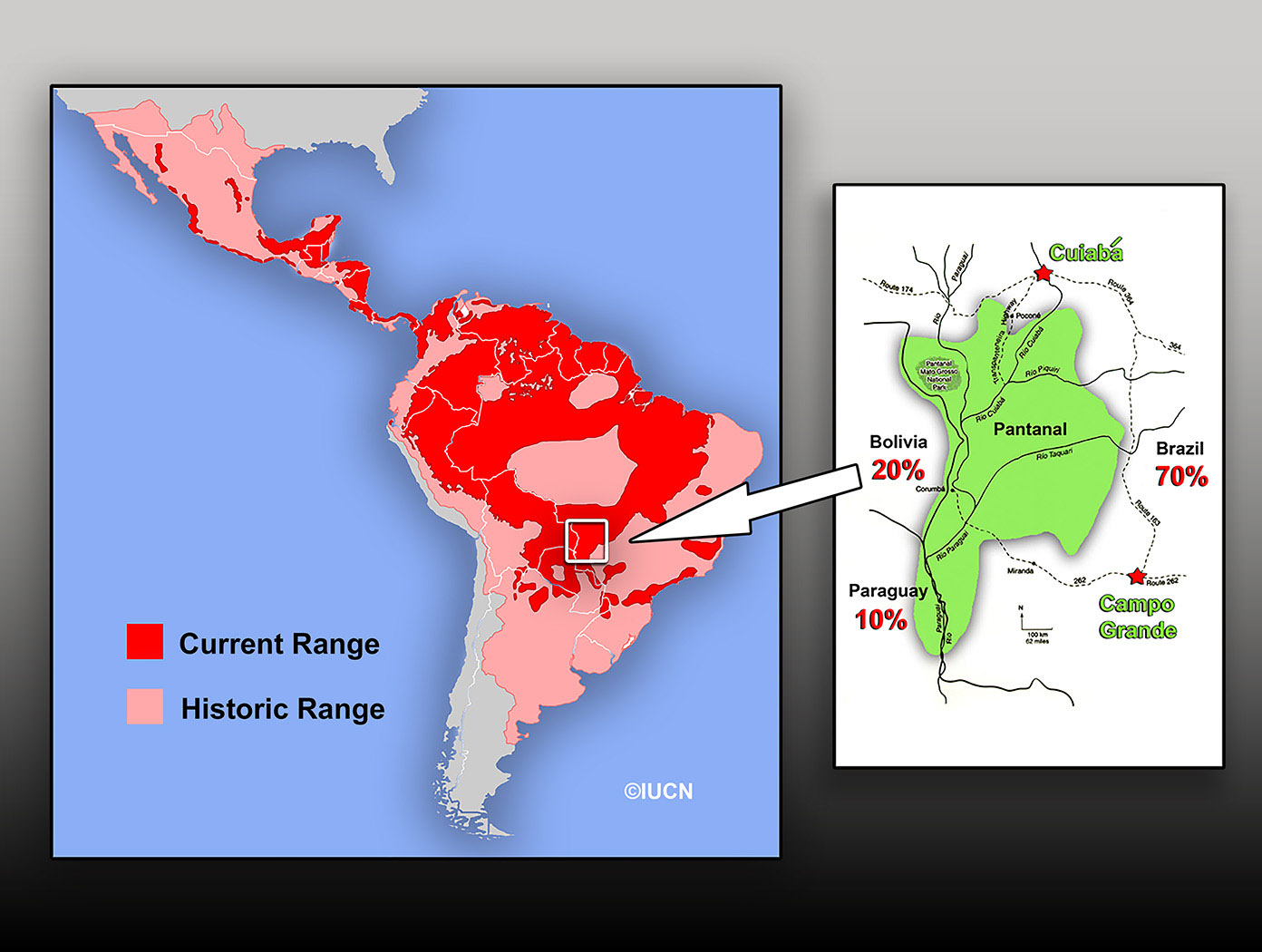
Jaguars occur from northern Mexico to northern Argentina. They are smallest in Mexico, Belize, and Guatemala and largest in the Pantanal where they can be twice as big as those in the north. The Pantanal is found mainly in Brazil but also spills into the eastern edges of Bolivia and Paraguay.
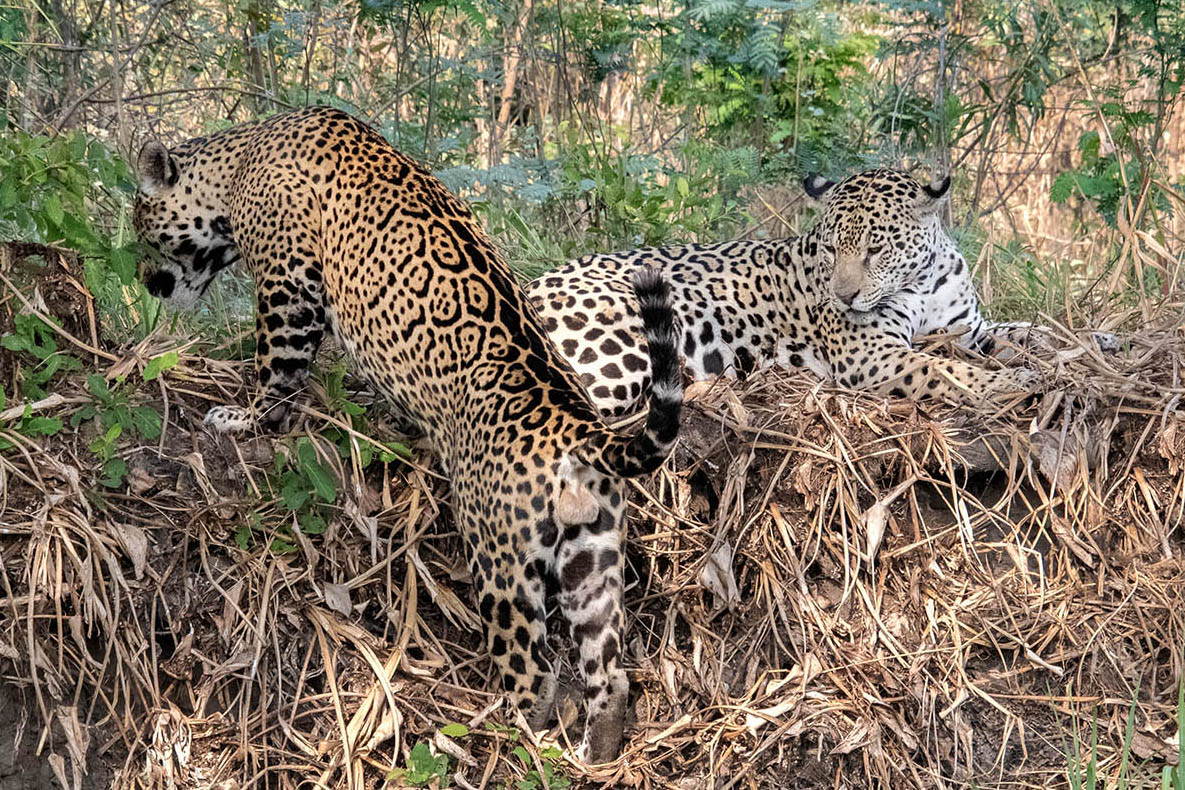
This courting pair illustrates the jaguars’ colour variation which ranges from a light tan background to one that is a rich cinnamon brown.
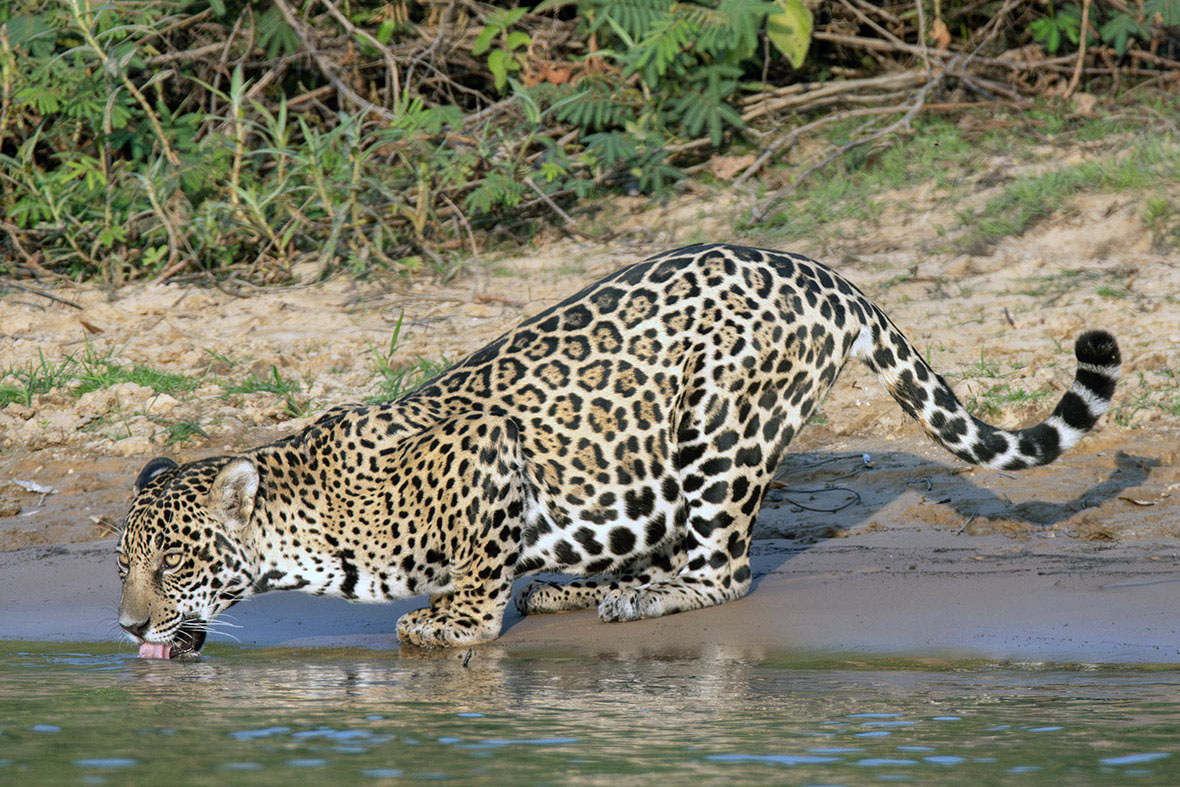
A jaguar’s rosette pattern is unique to each individual and is different on each side of the animal’s body.
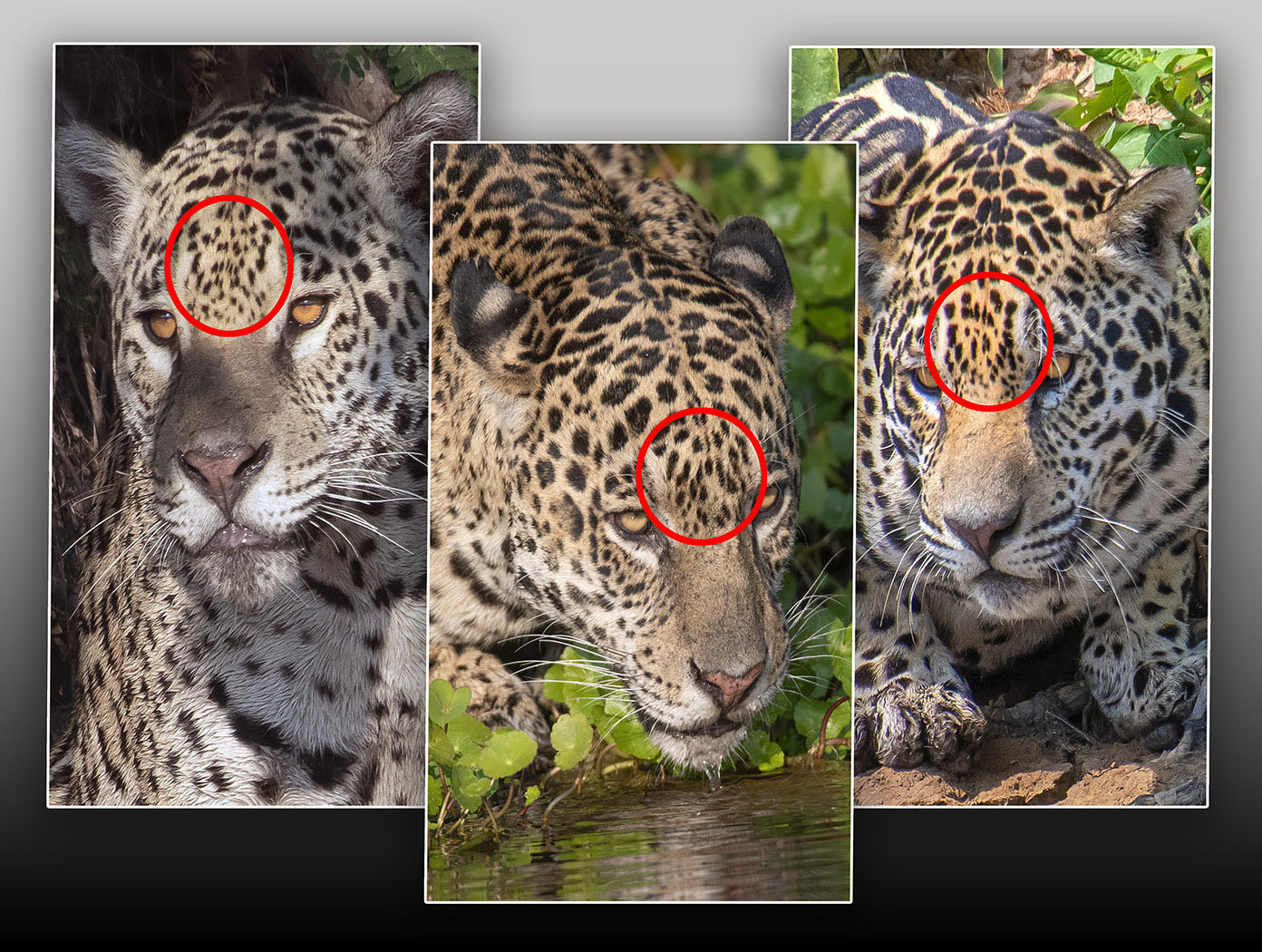
The spot pattern on a jaguar’s forehead is also unique to each animal. Photographs of the forehead markings combined with an individual’s rosette patterns are used by researchers to identify individuals, after which their movements can be tracked in a non-invasive manner.
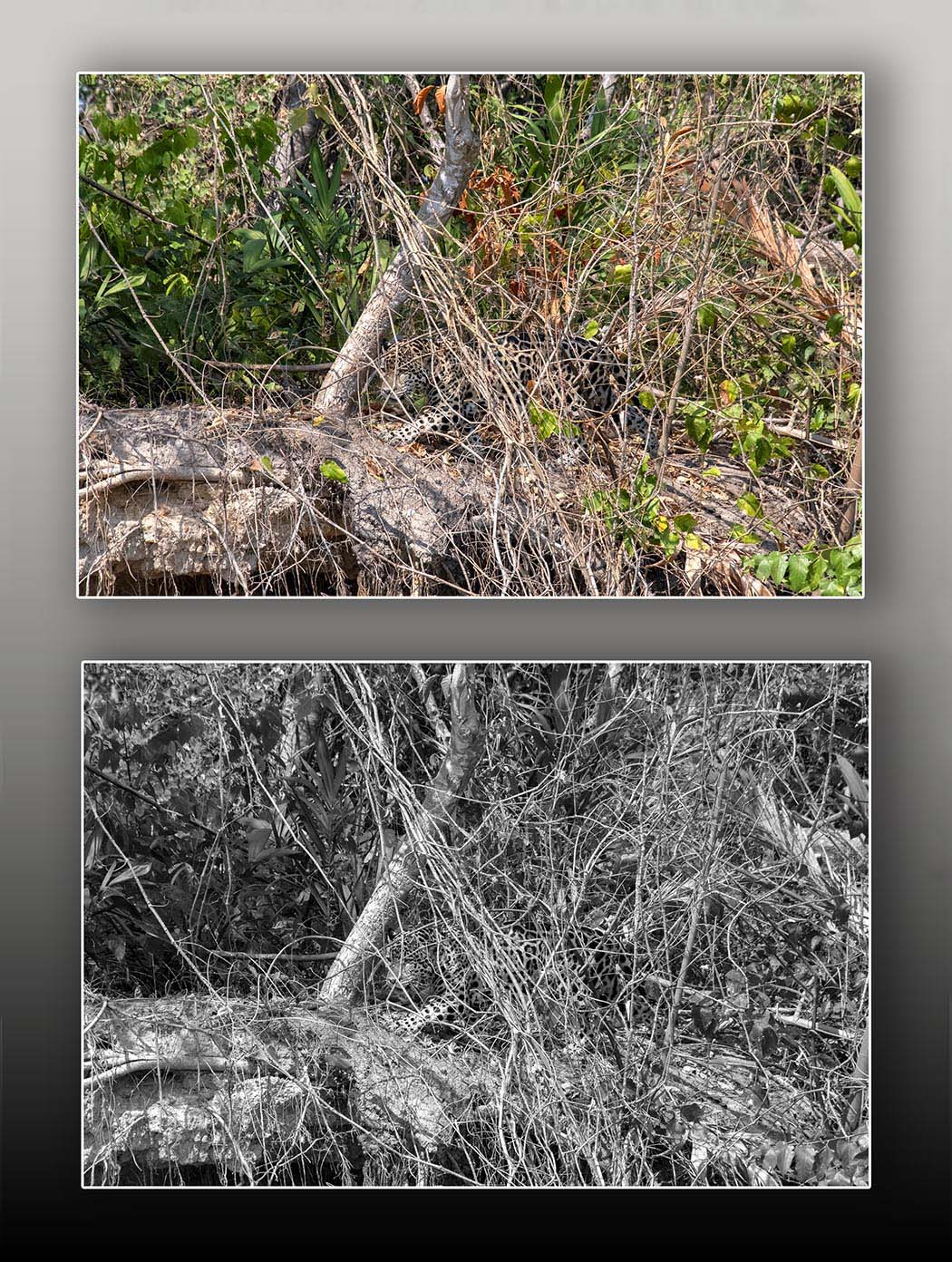
The jaguar’s spotted appearance is conspicuous when the cat is out in the open, but it becomes amazingly cryptic in the dappled sunlight and shadows of thick riverside vegetation. Notice the crouching jaguar in the centres of the two photographs. Its camouflage is even more effective when it is seen through the characteristic black-and-white vision of most of its prey animals, such as the capybara this cat was stalking.

The outer half of a jaguar’s tongue is covered with small, stiff, keratinized spicules that point inwards. These help the cat to lap up water, comb its fur to remove dirt and dried blood, and to rasp the flesh from bones. The inset is an extreme close-up of the spicules on the tongue.
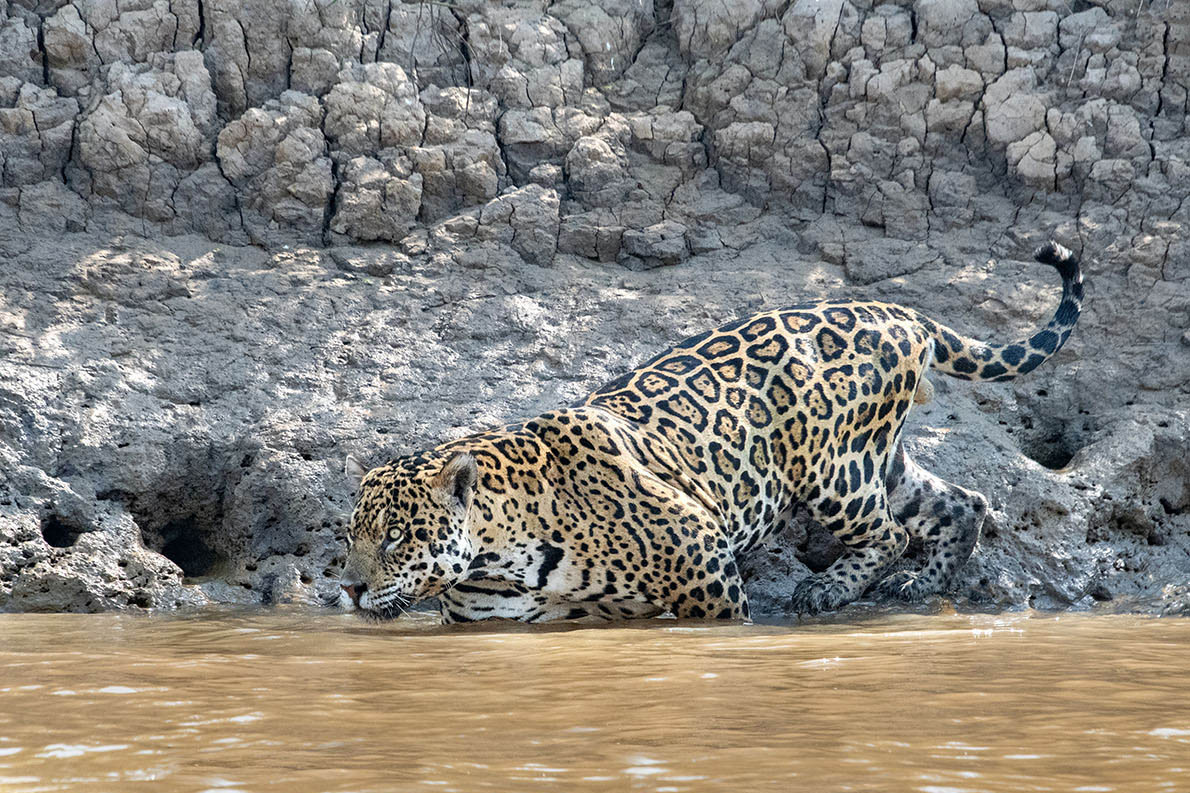
The jaguar spends more time hunting in water than any of the other big cats.
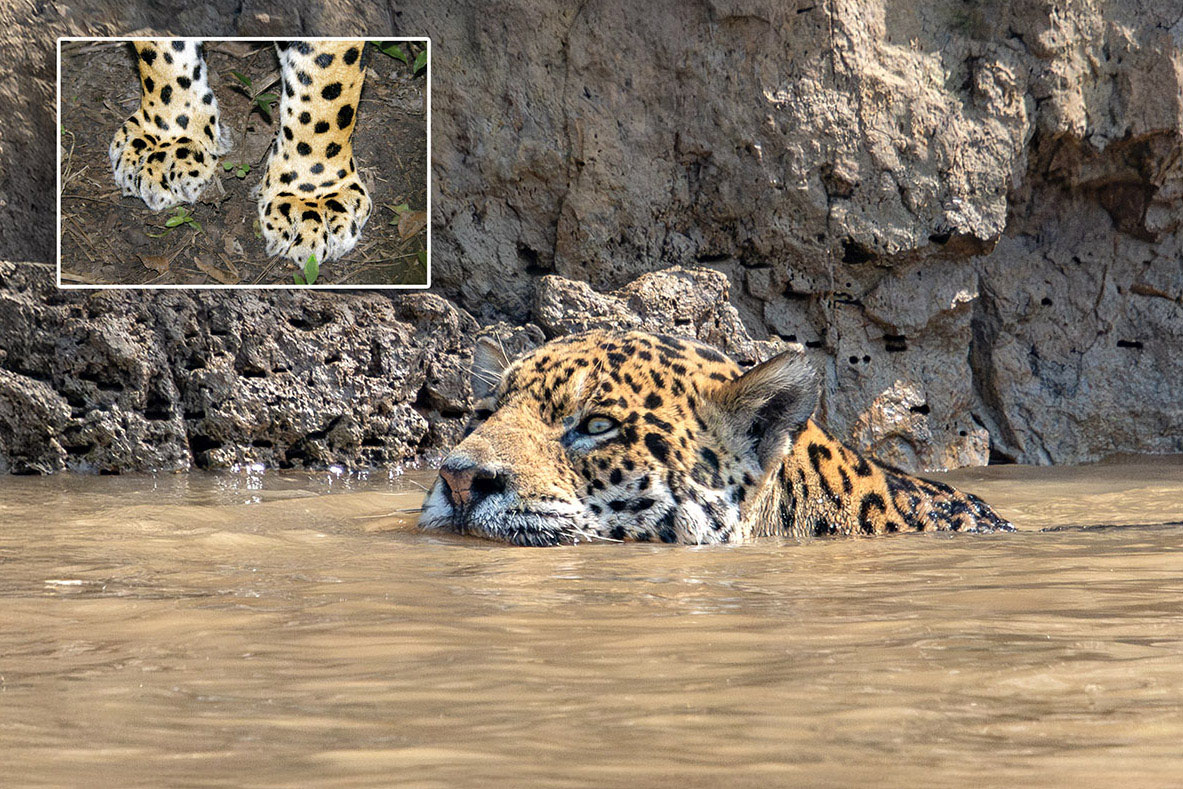
The cat’s large front paws splay when it walks or swims. This keeps it from sinking too deeply in muddy shorelines and helps it to swim more effectively.
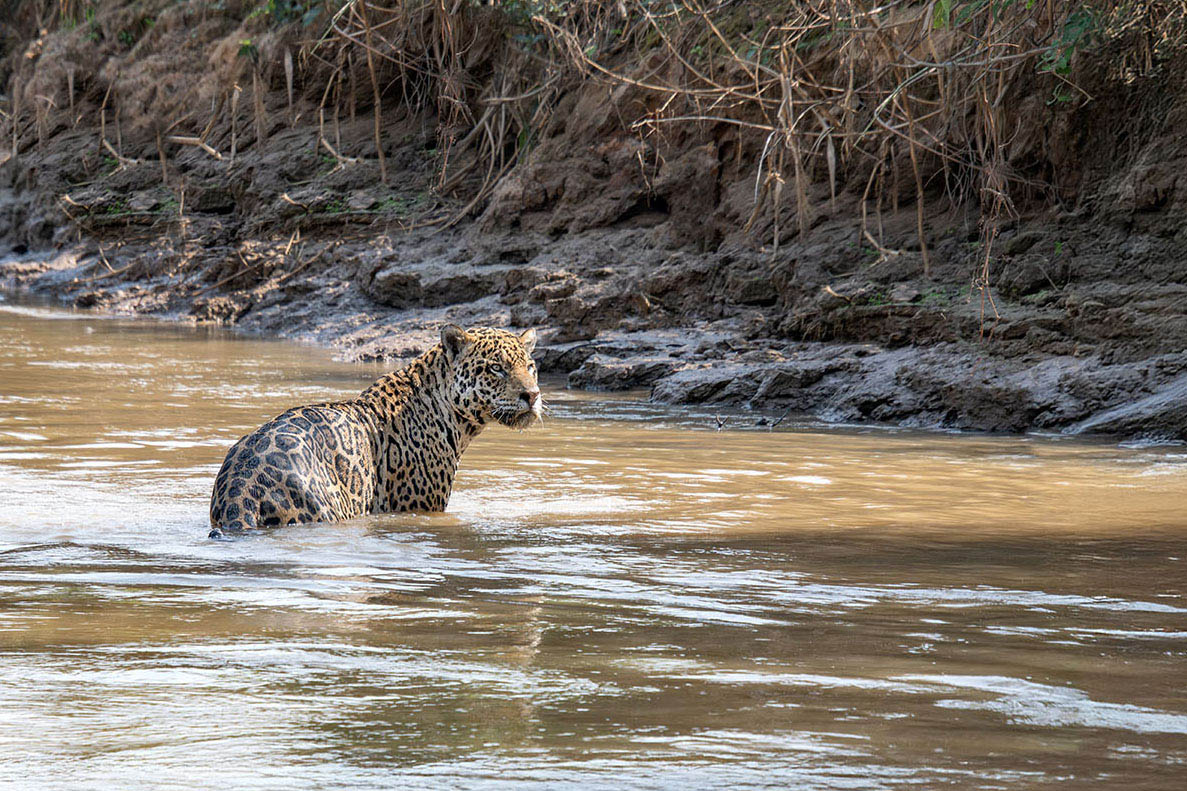
Jaguars everywhere are territorial, and each defends a patch of habitat for their own exclusive use, the size of which is determined primarily by the abundance of prey.
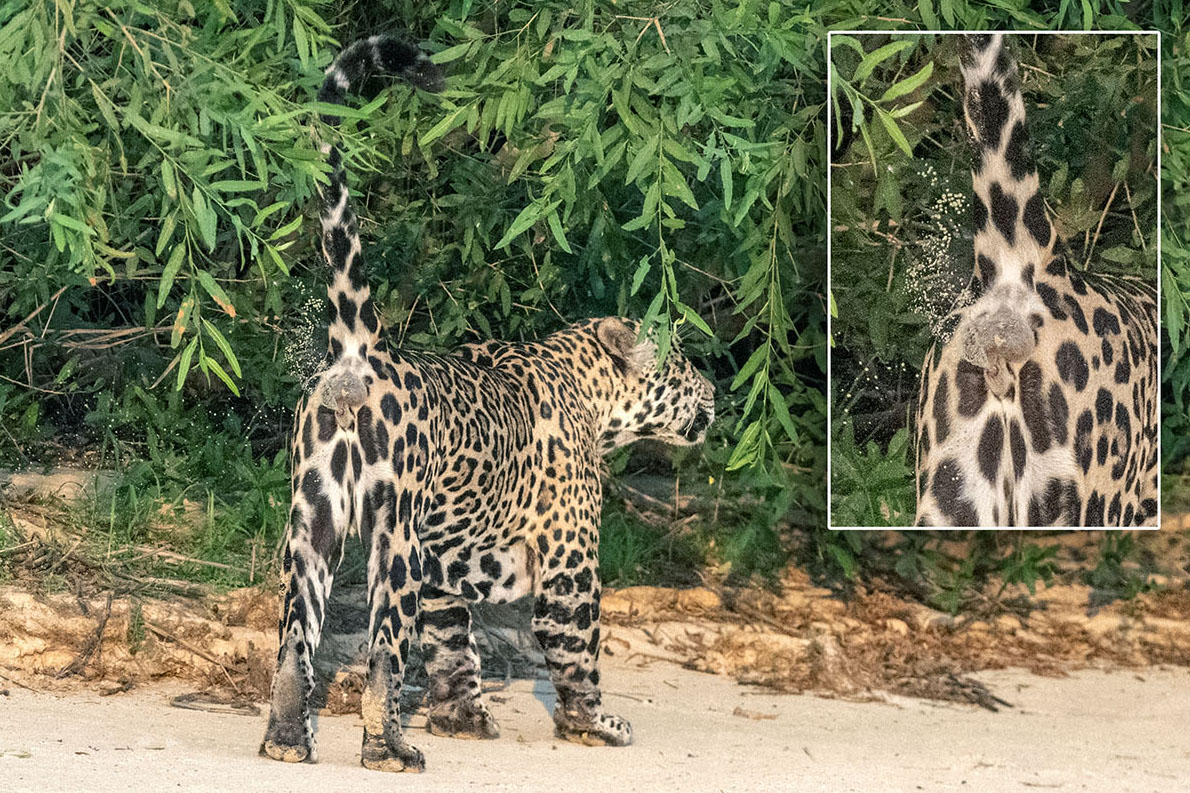
A jaguar advertises its ownership of a territory with vocalizations (roars & grunts), scrapes on the ground, droppings, and urine spraying. This adult male sprayed the vegetation three times before he left the beach. His pungent urine carries his dating profile: adult male, healthy, eager, and available.
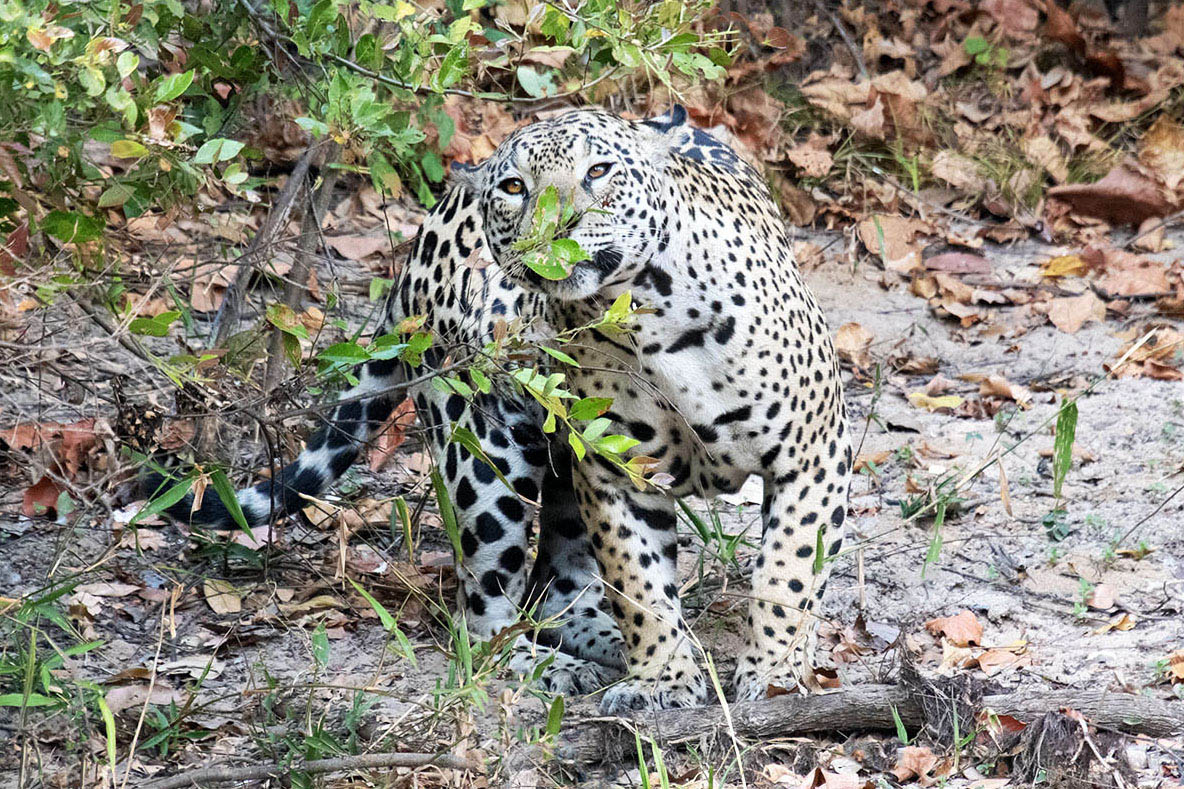
This female jaguar was smelling the scent marks left by the resident territorial male.
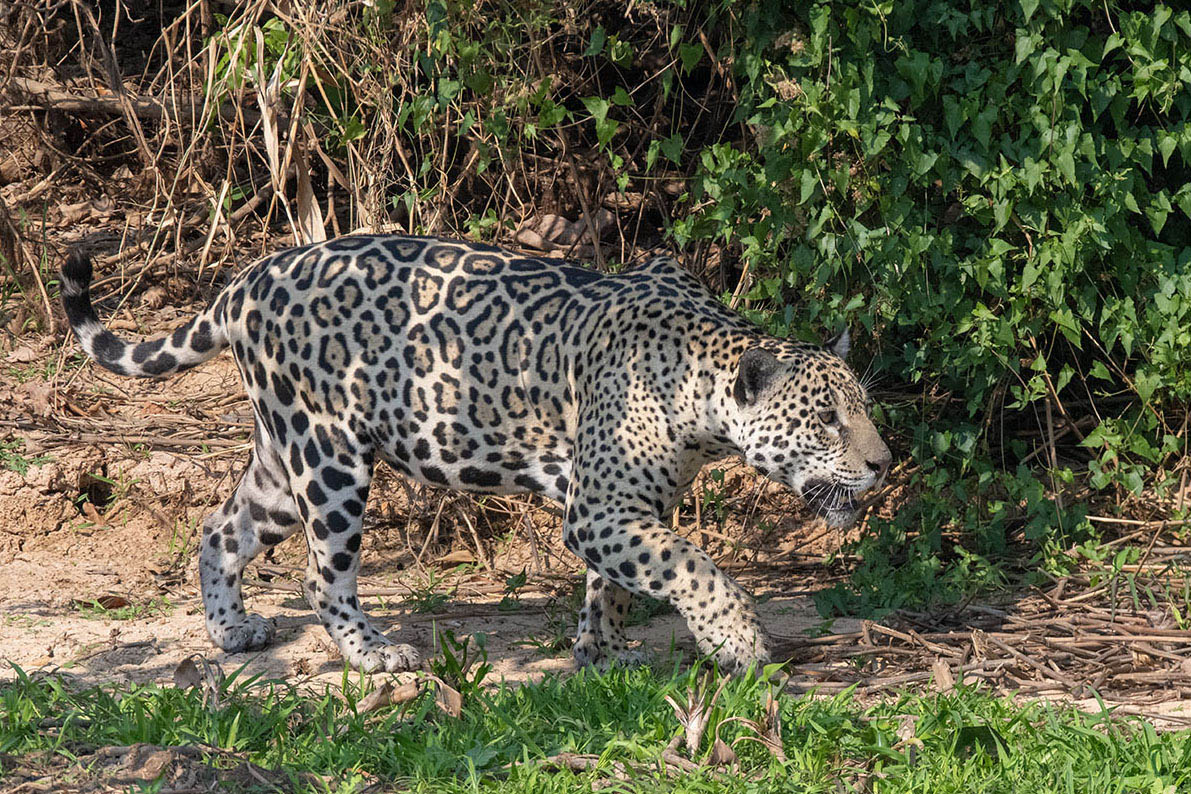
Jaguars are stalk-and-ambush predators. The word jaguar is derived from the Tupi-Guarani indigenous language which means “the beast that kills with a single leap.”
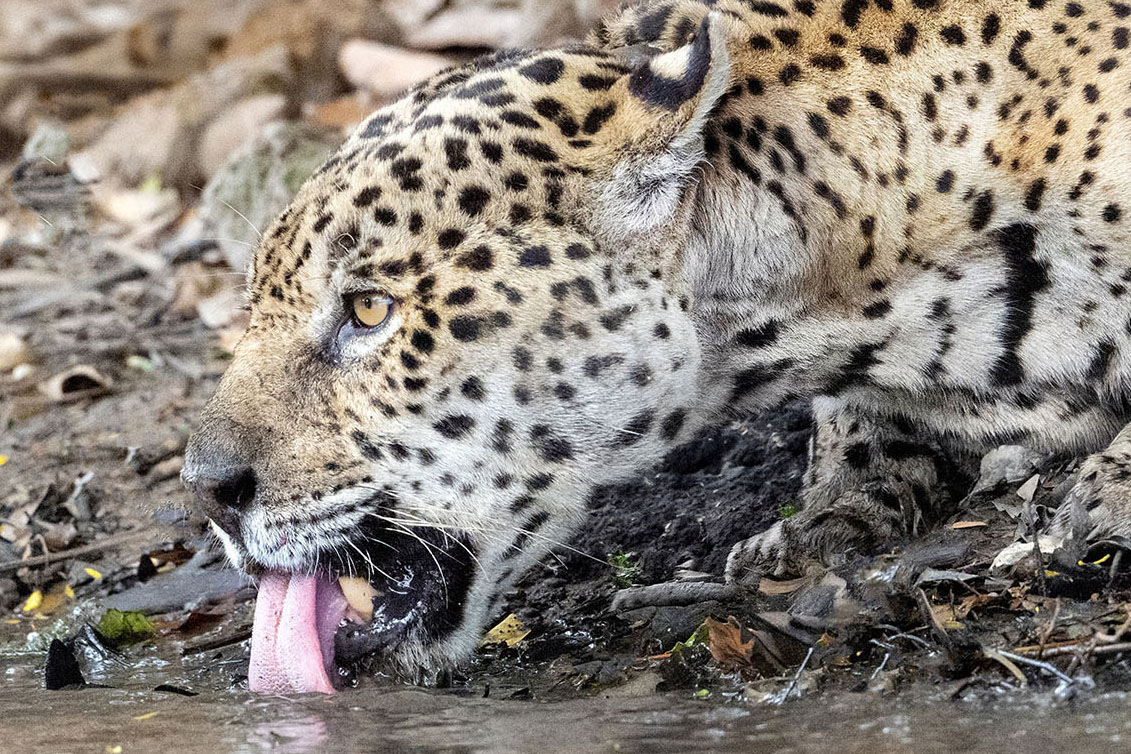
One of my most thrilling jaguar experiences involved a battle-hardened 10-year-old male, named Ousado, meaning bold or daring in Portuguese, who came to the edge of a shallow lagoon to drink. He was limping and appeared to have a sore left hind leg.
After he finished drinking, he quietly slipped into the water and rested there for nearly 20 minutes. I wondered if the buoyancy of the water took some weight off his sore rear leg and lessened his discomfort.
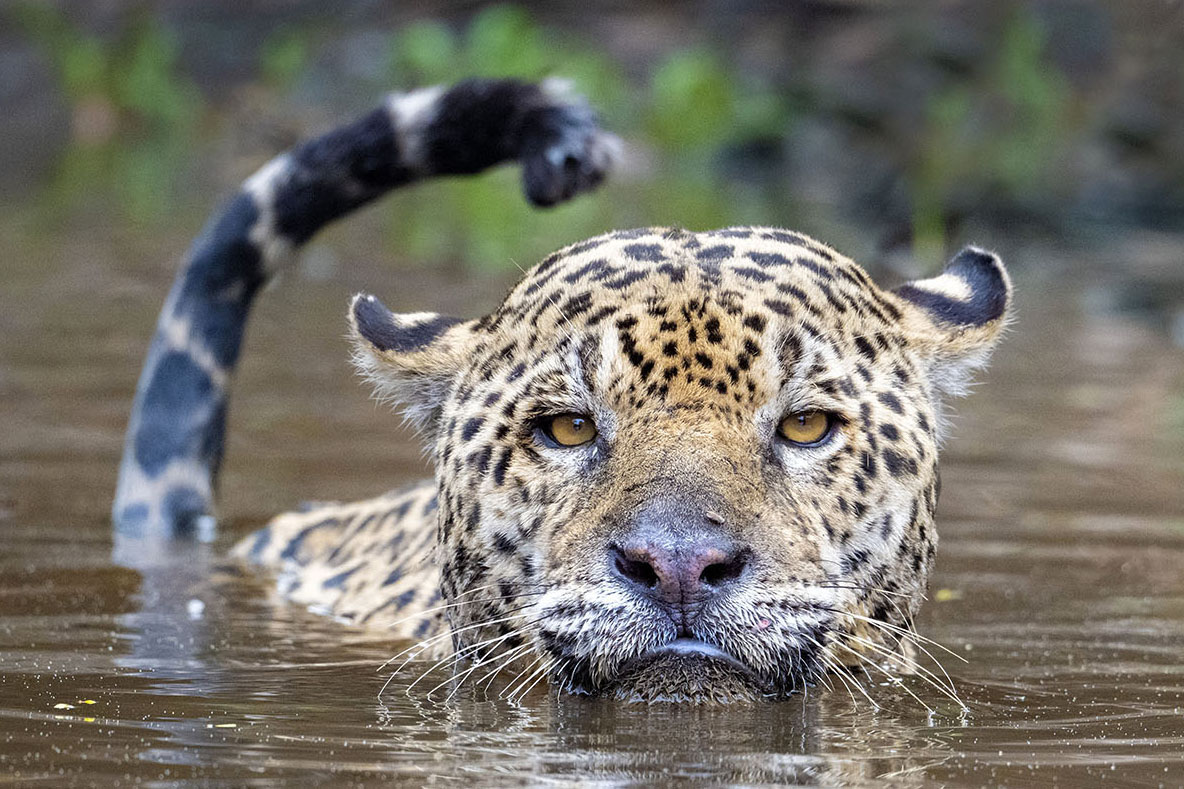
While Ousado was in the water, I was very close to him. As I focused on his face, he became annoyed. The big cat looked directly at me and flattened his ears. With the 12-power lens I was using, I could see every twitch in his face.
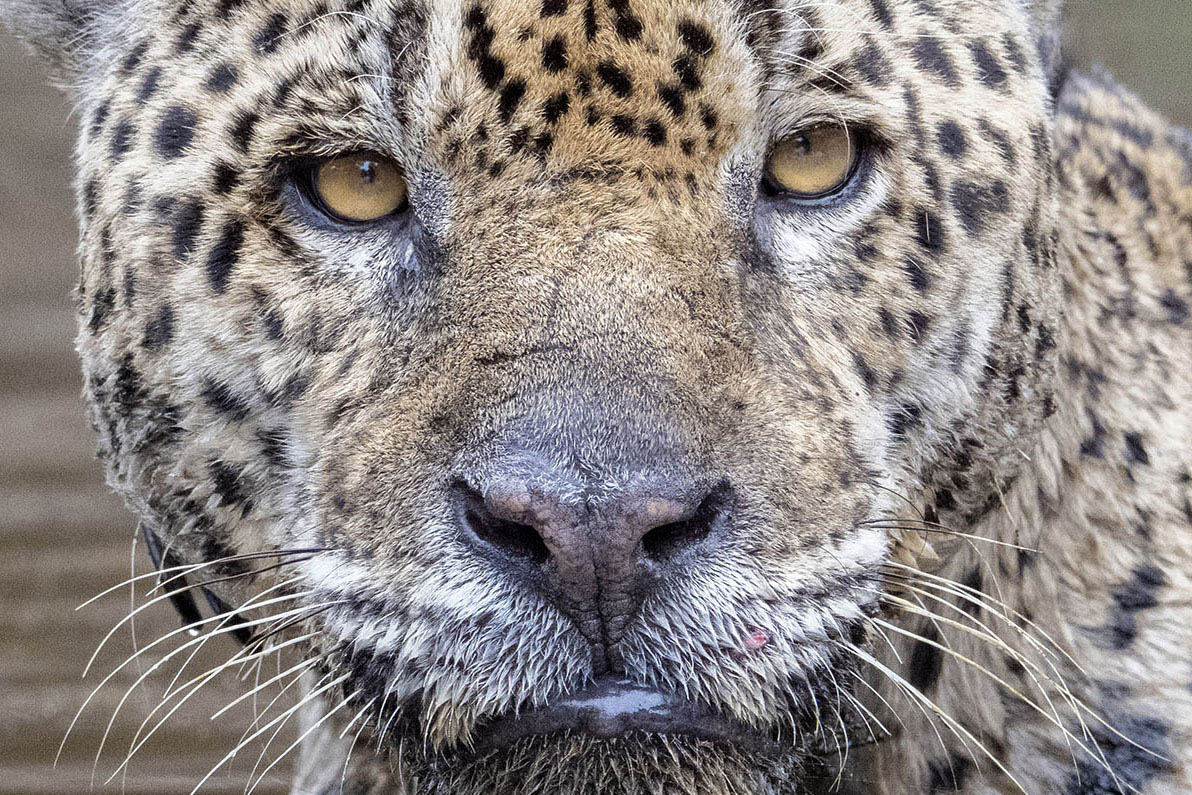
I froze in position but kept photographing, and thankfully, he slowly relaxed. When he finally looked away, his ears gradually straightened, his eyes widened, and his mouth softened. It was the most intense and intimate experience I had ever had with a jaguar.
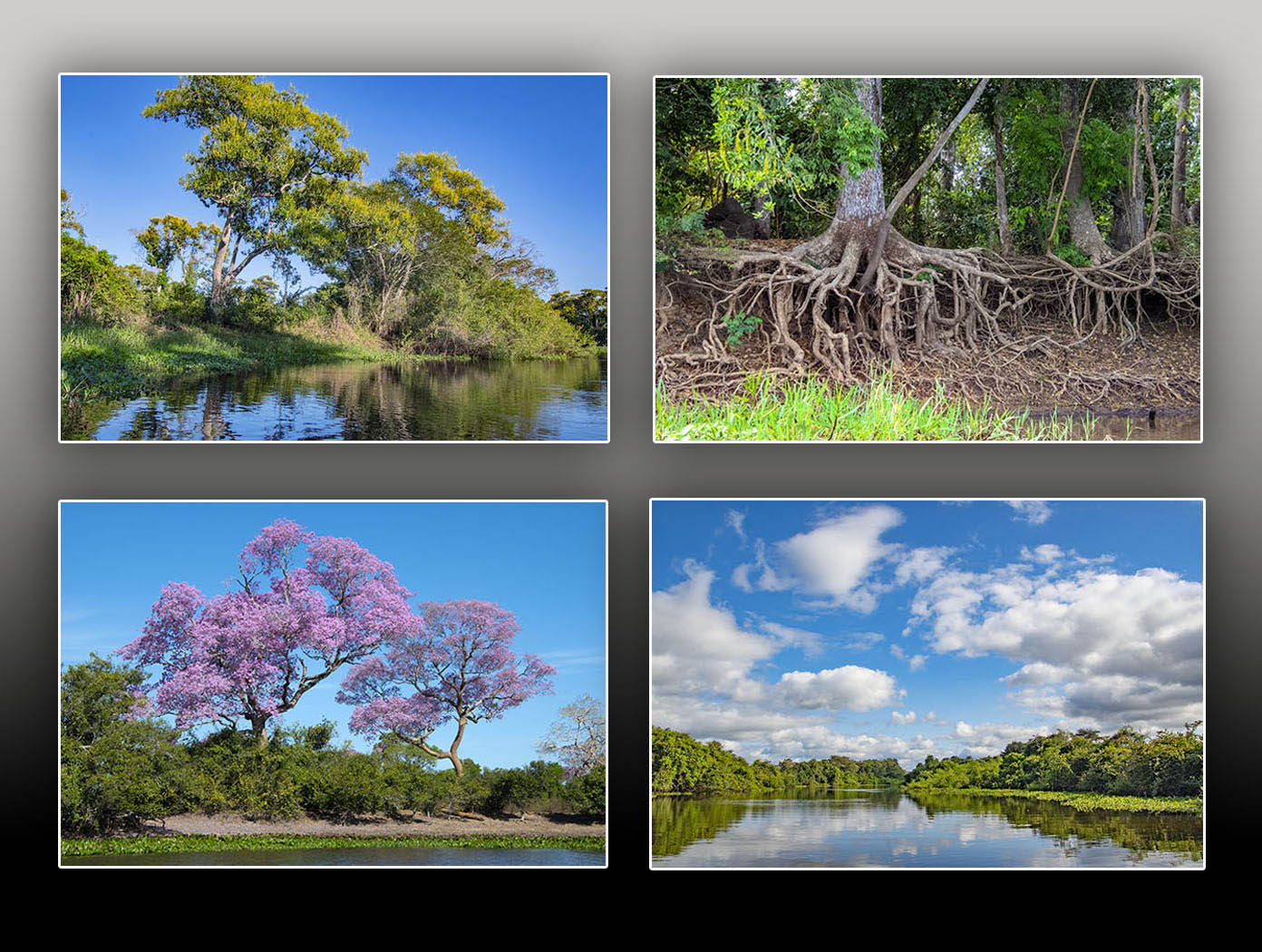
Jaguars in the Pantanal occur in a wide variety of riverine habitats.
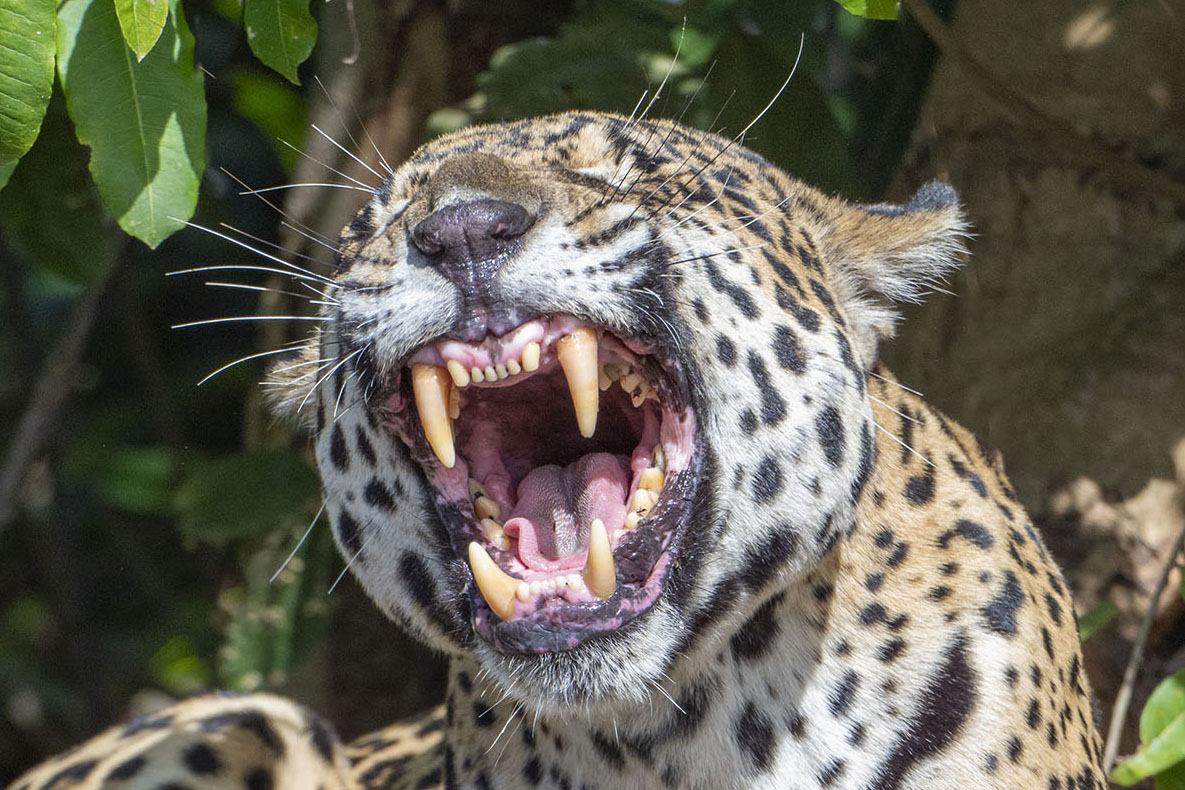
When a jaguar yawns you can see the large gaps behind its canine teeth. These toothless gaps, technically known as diastemas, allow the killing canines to penetrate as deeply into a victim as possible.
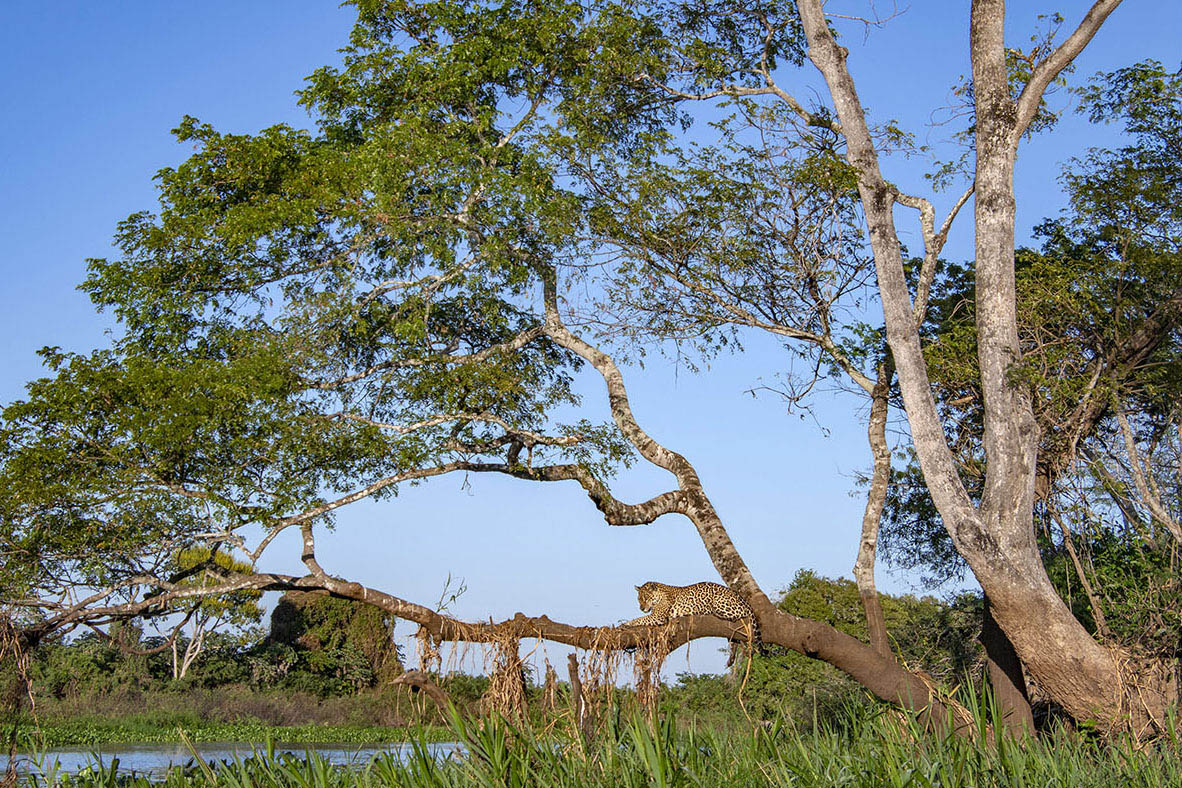
In the early part of the summer dry season, the riverbanks are often flooded, and the cats hunt from the branches of overhanging trees.
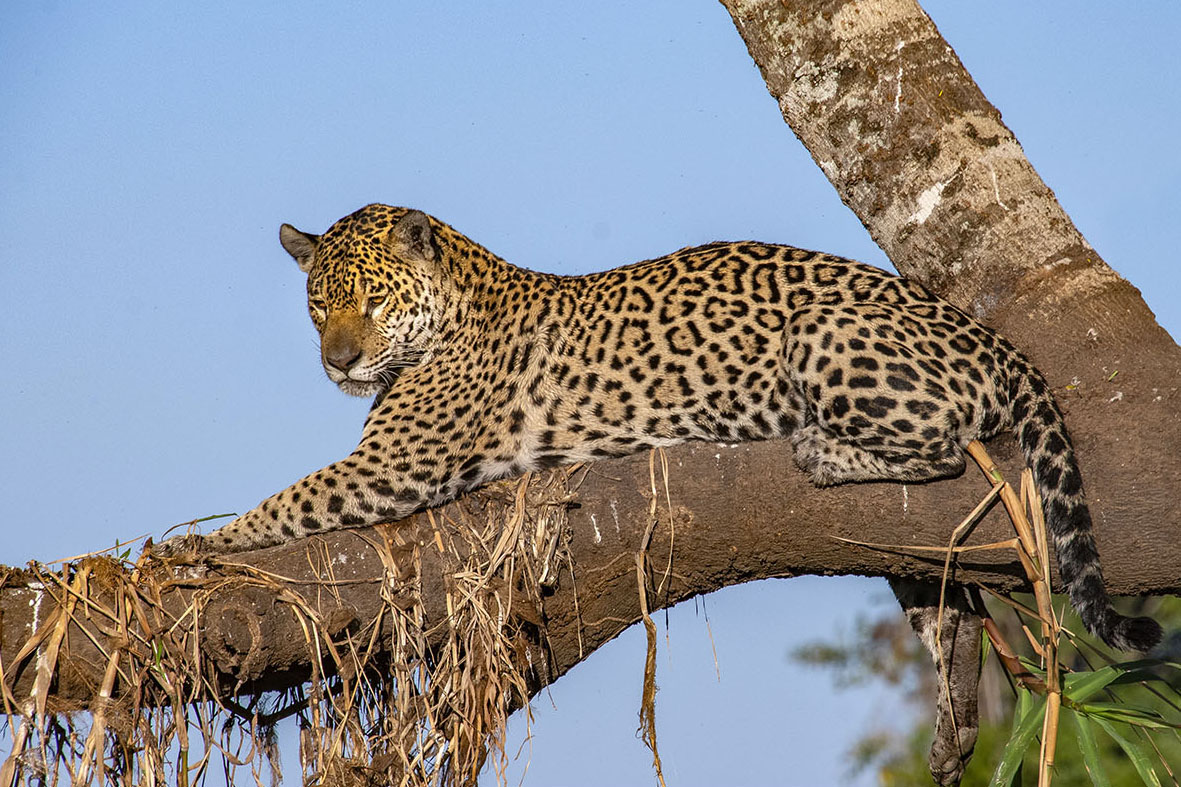
From their elevated position, the predatory cats can watch for surfacing caiman and noiselessly attack their victims from above.
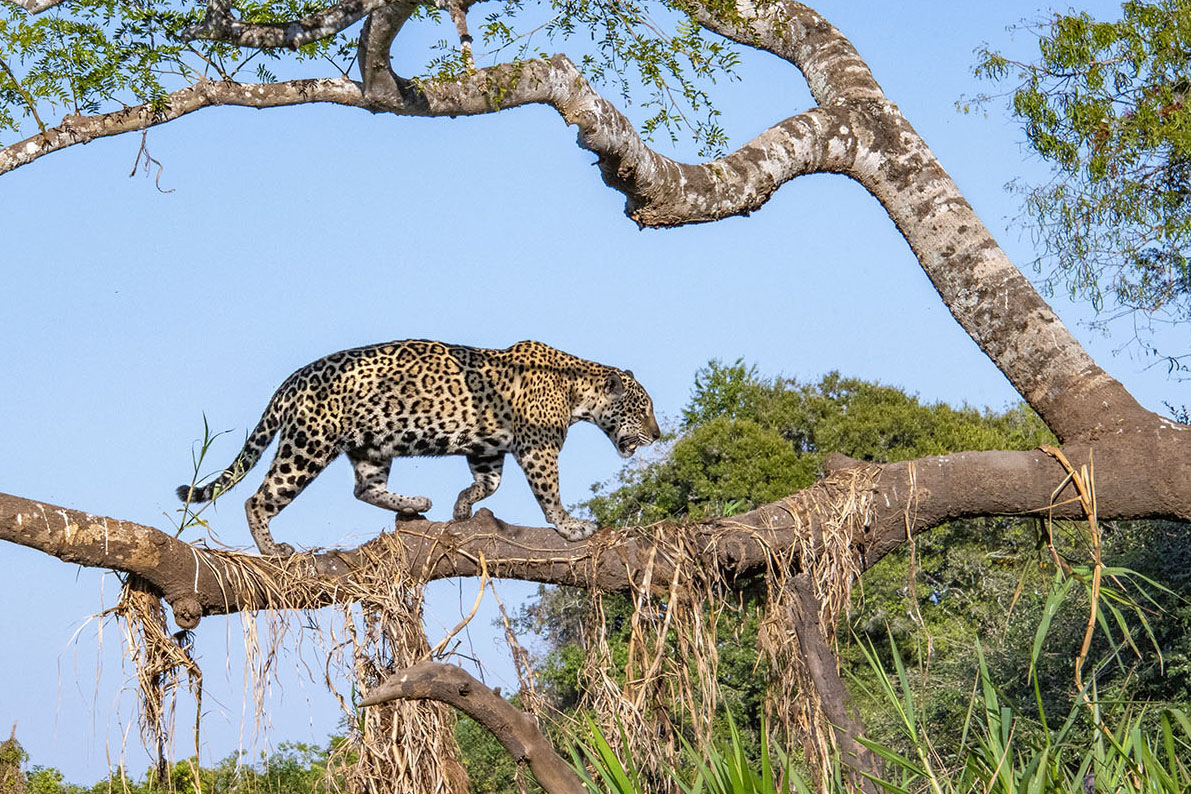
This female jaguar spent nearly an hour waiting patiently for an attack opportunity but finally gave up and disappeared into the bush.
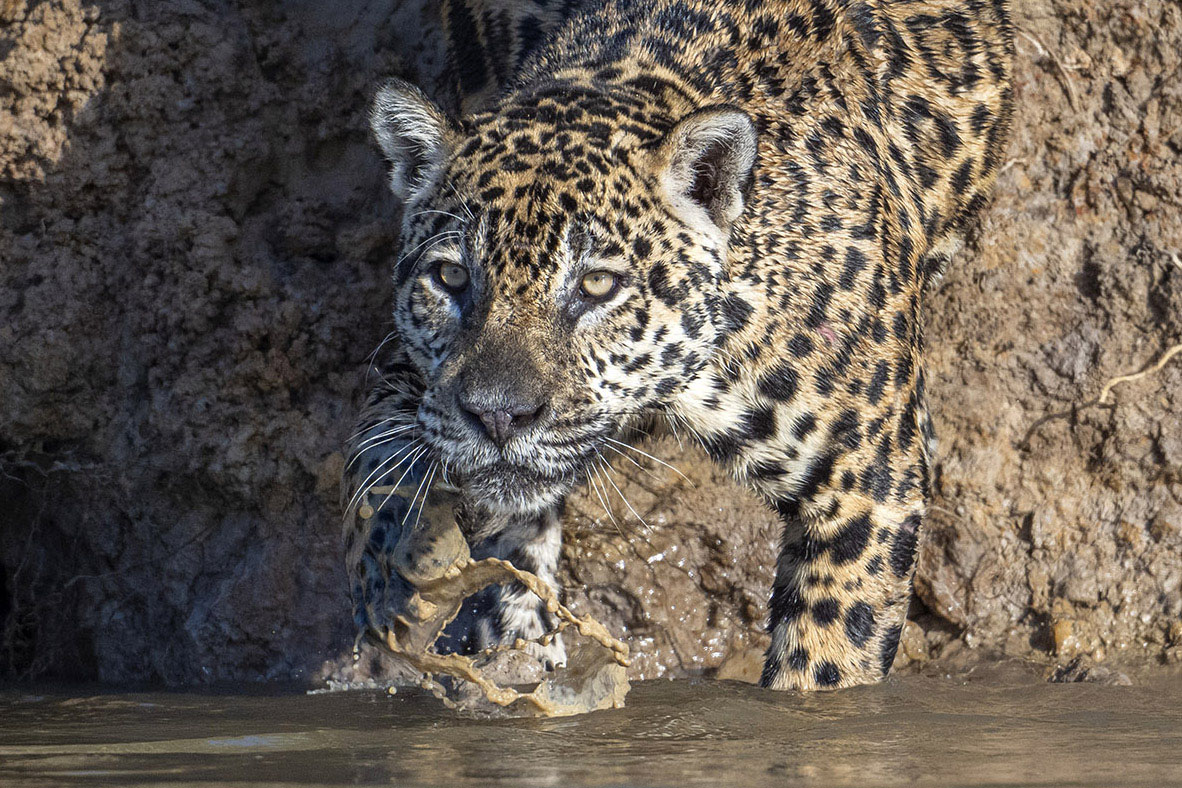
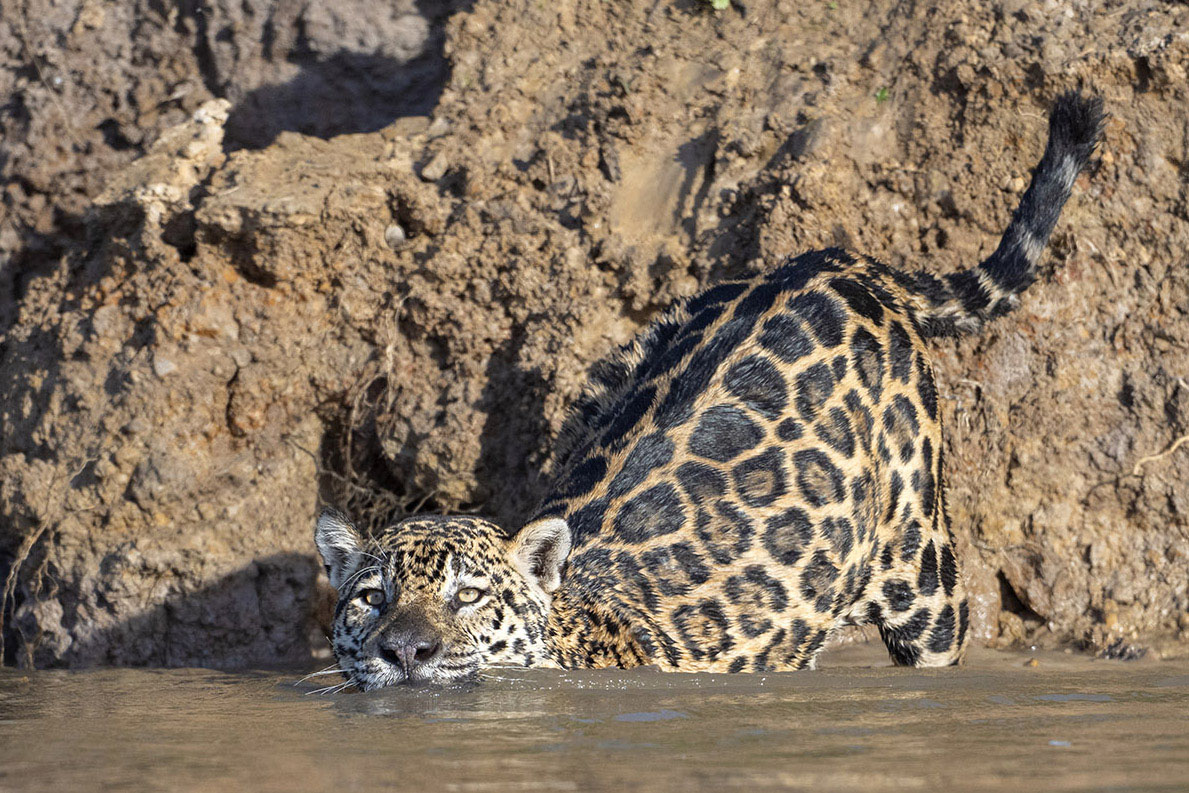
Later in the day the same female crossed the river in front of us. The distance to the far shore was 100 metres or more.
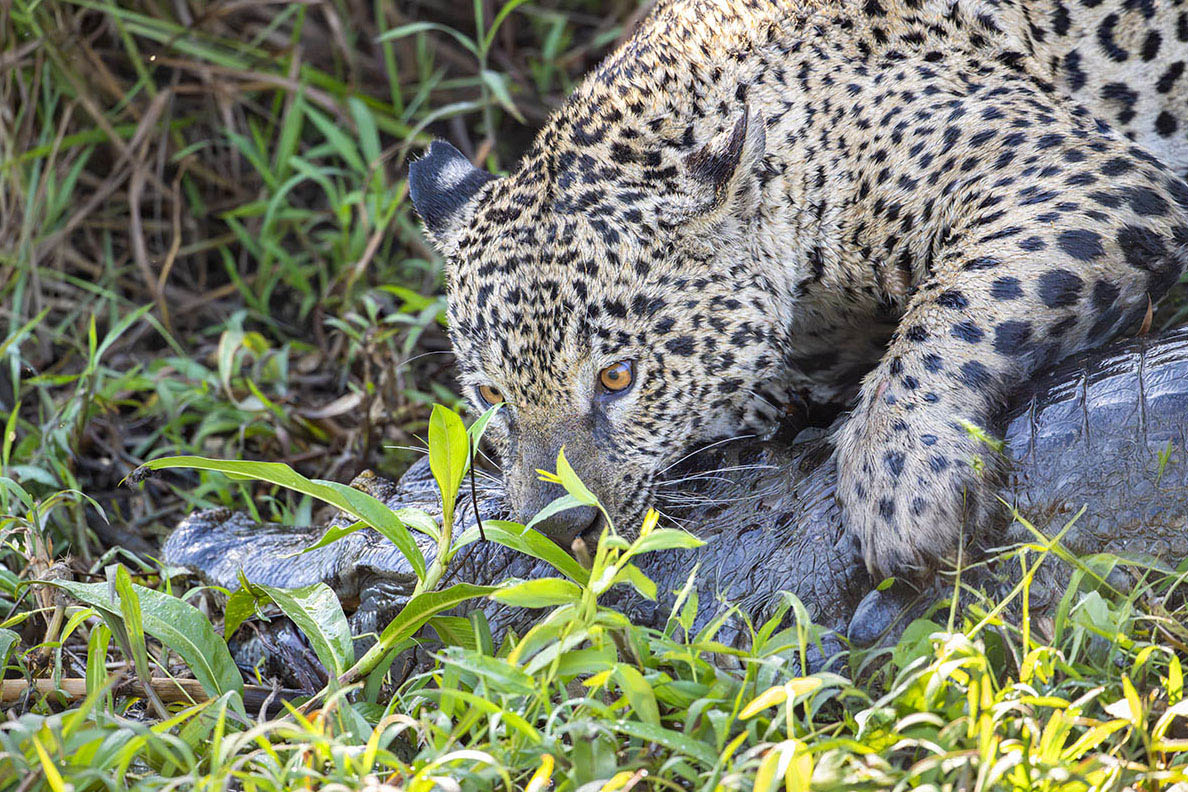
As she approached a jumble of branches and floating water hyacinths on the far bank, she unexpectedly caught a large caiman. I found it hard to believe that she had seen the caiman from the opposite shore, and the encounter was likely accidental.
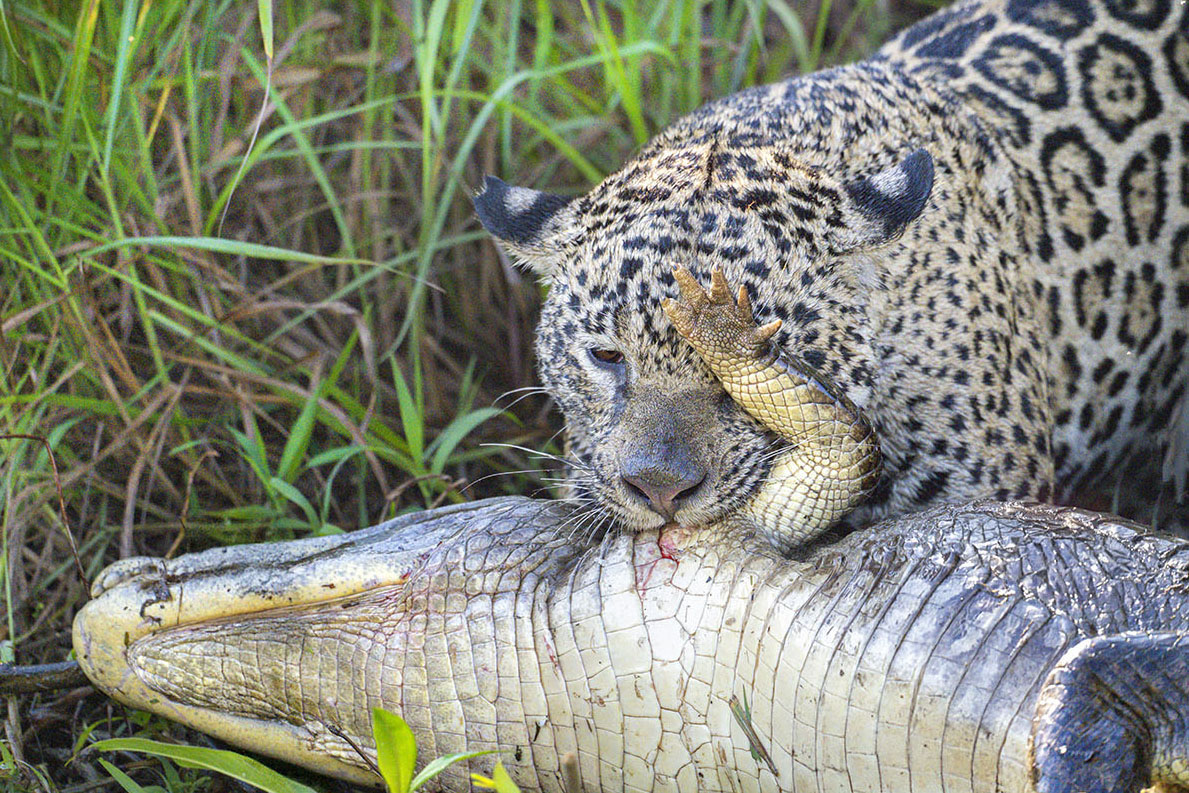
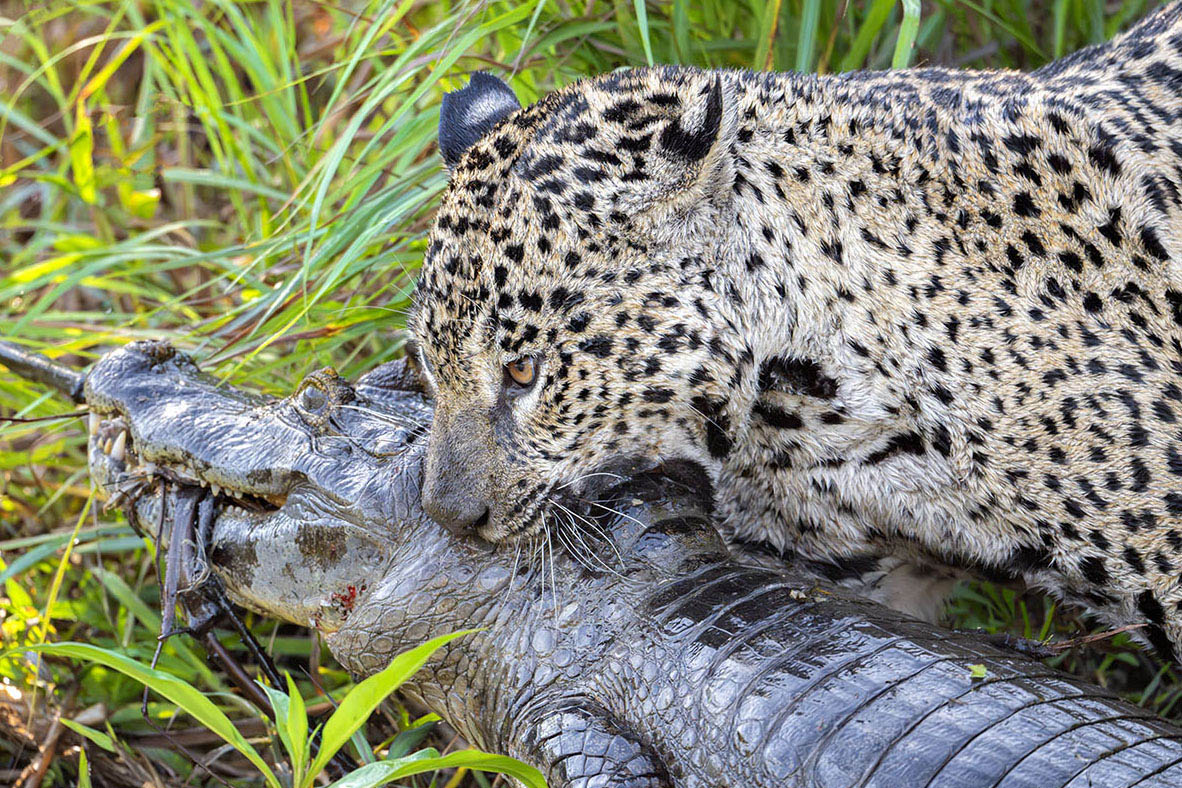
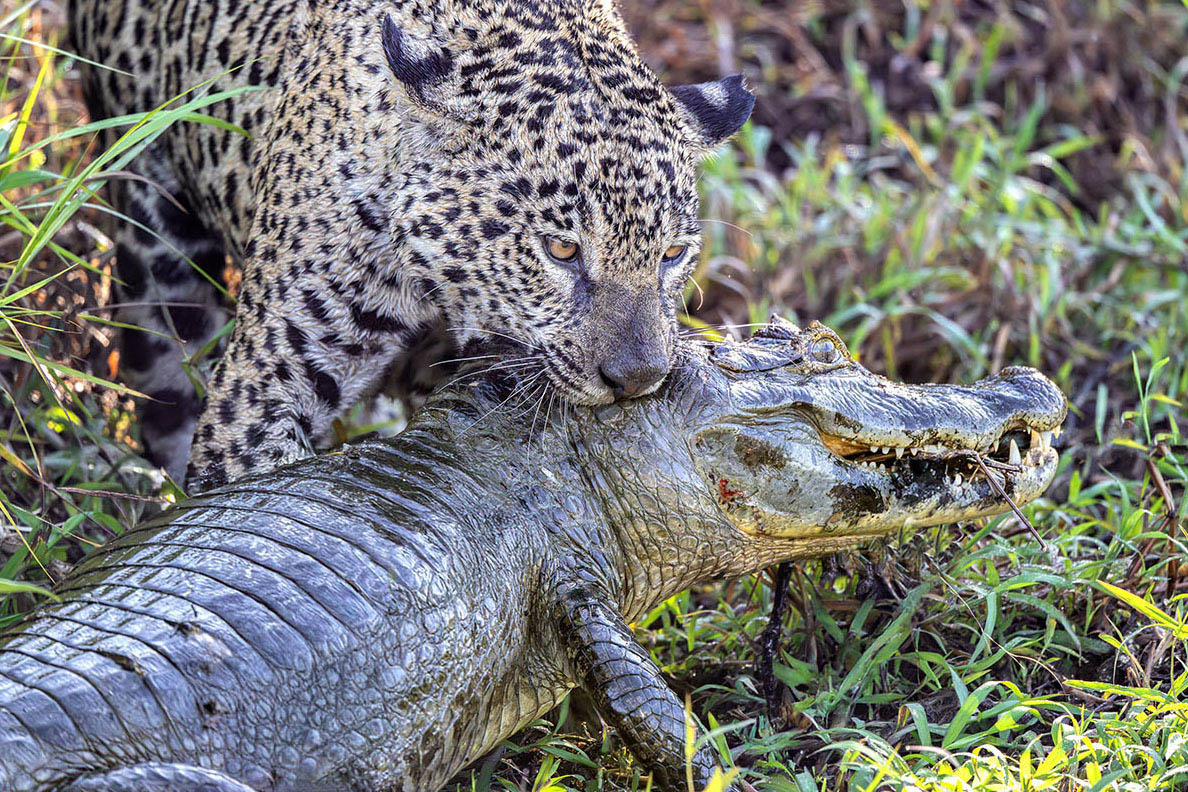
The female adjusted her bite several times and eventually delivered a lethal bite to the rear of the head. This is a typical killing maneuver in which the canines either sever the cervical spine or penetrate the brain case.
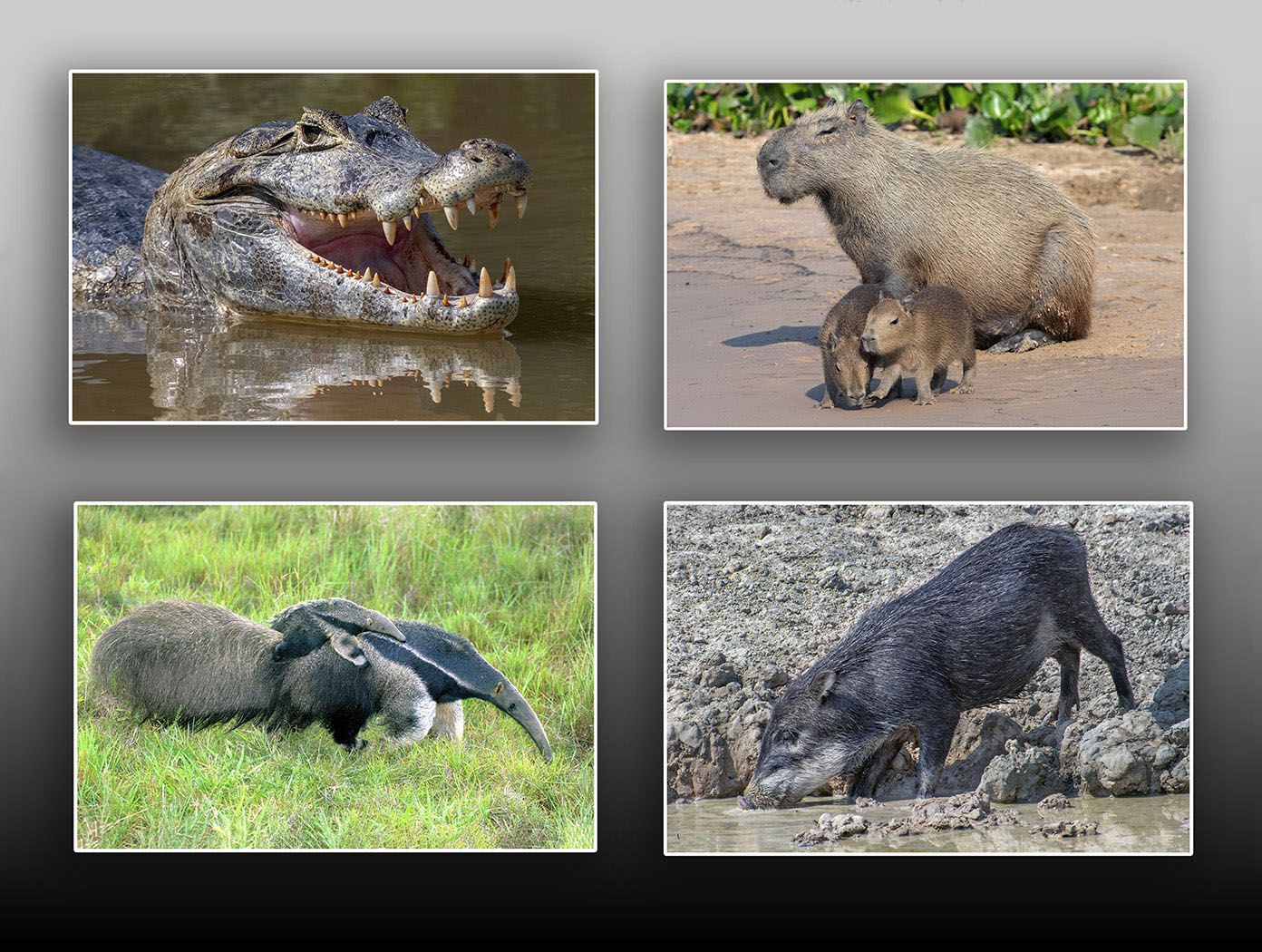
The jaguar is what biologists call a “hypercarnivore,” an obligate meat-eater that targets over 100 different species of mammals, birds, and reptiles. Its prey ranges in size from 1 to 130 kilograms (2.2-287 lbs). In the Pantanal, four of its main prey animals include: (clockwise from upper left) the jacare caiman, capybara, white-lipped peccary, and giant anteater.
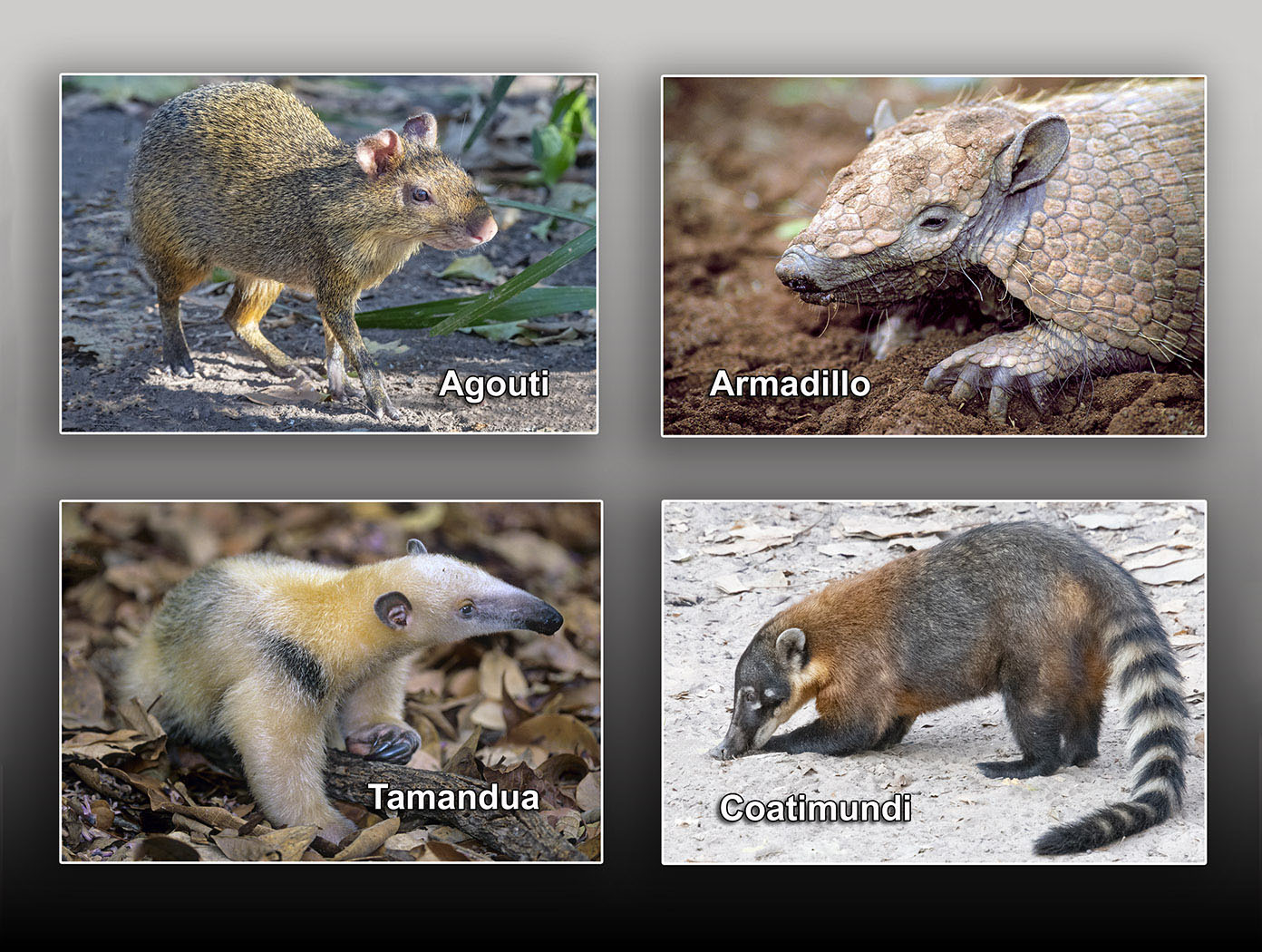
In the small mammal category, the cat targets agoutis, armadillos, coatimundi, and tamandua.
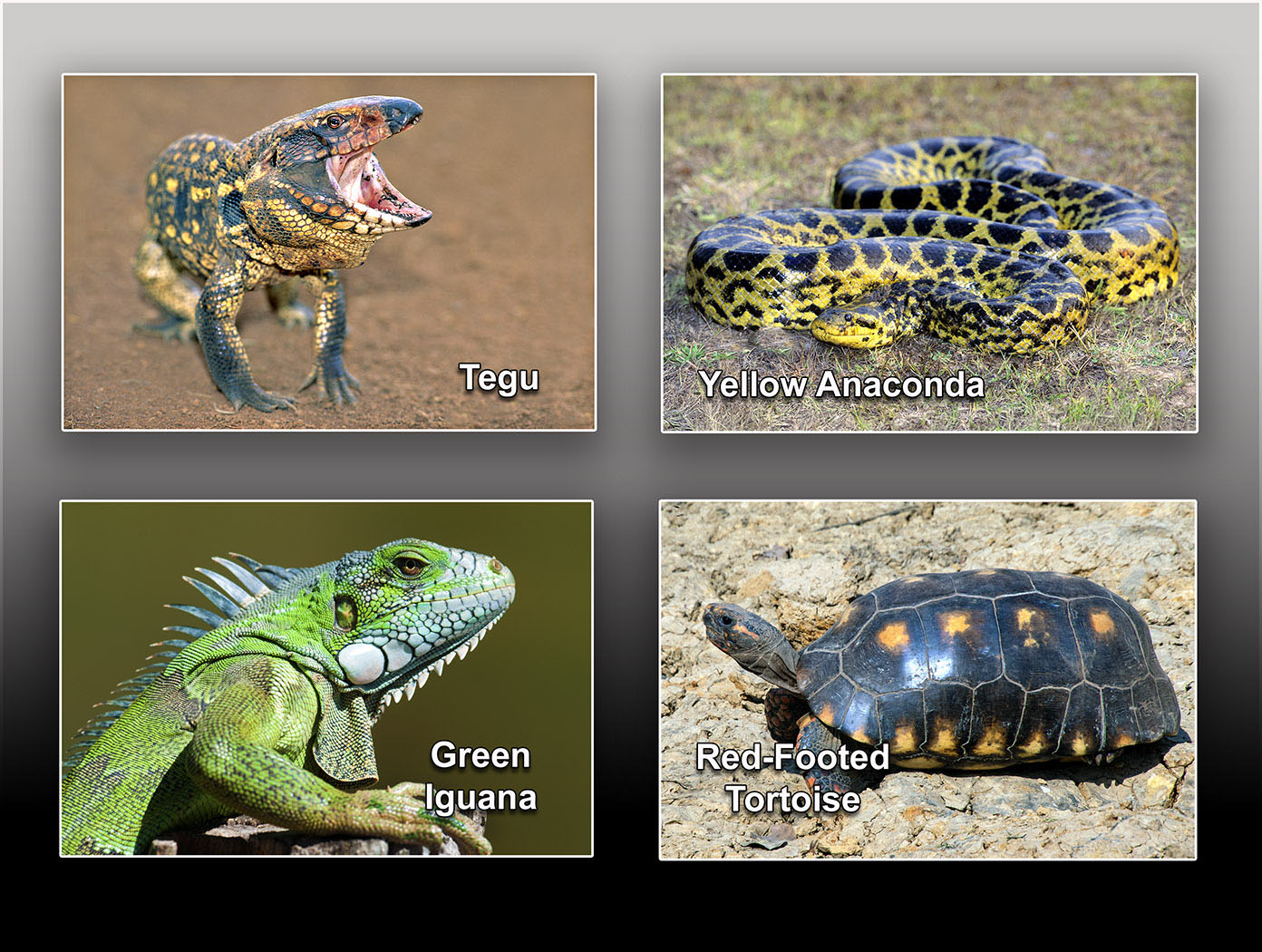
The jaguar is the only big cat that regularly hunts and eats reptiles. In the Pantanal, in addition to caiman, the cats’ reptile victims include tegu lizards, yellow anacondas, red-legged tortoises, and green iguanas.
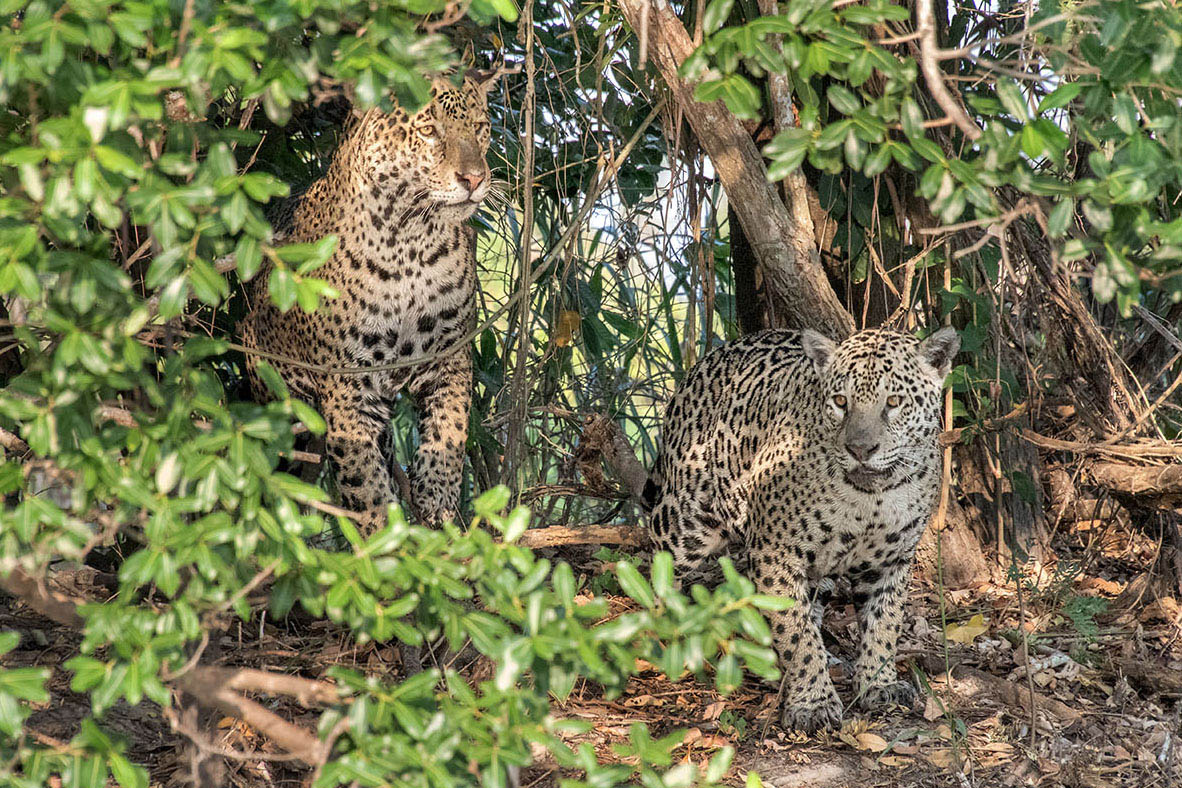
One of the rarest events I was lucky to see was the behaviour of a courting pair.
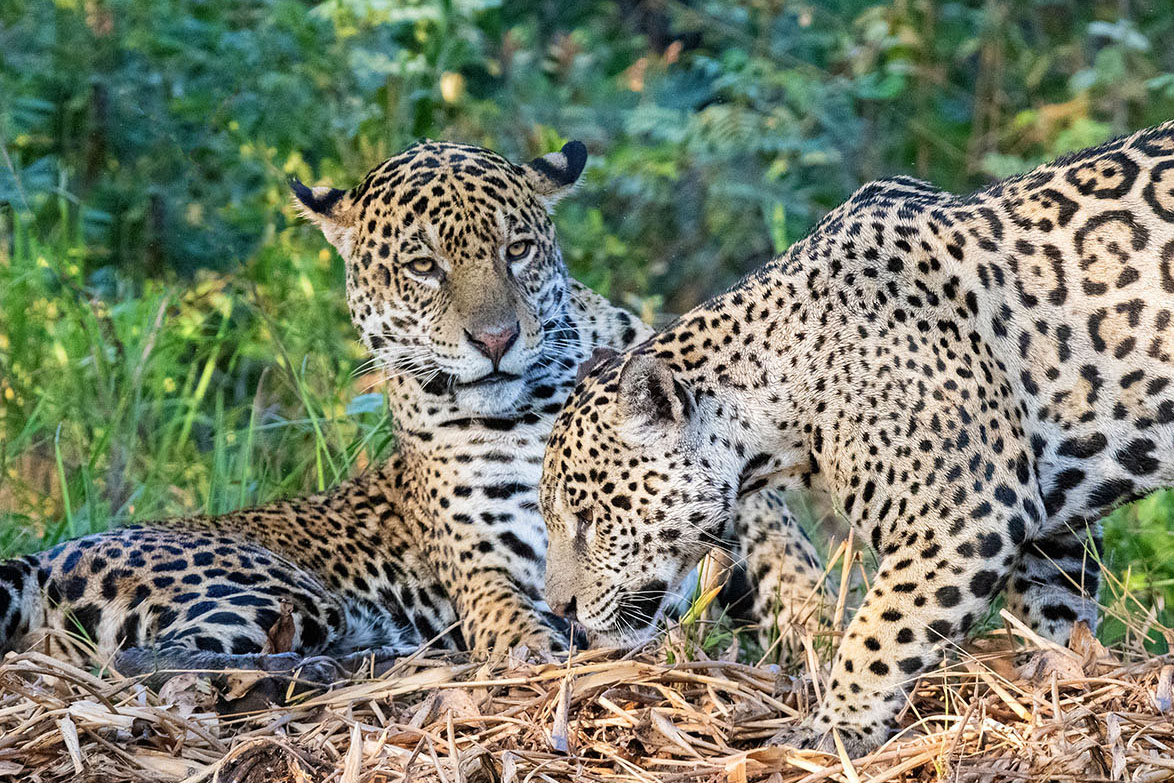
Normally, jaguars are solitary, but when a female (in the foreground) is in heat she may stay with her partner for 5-6 days.
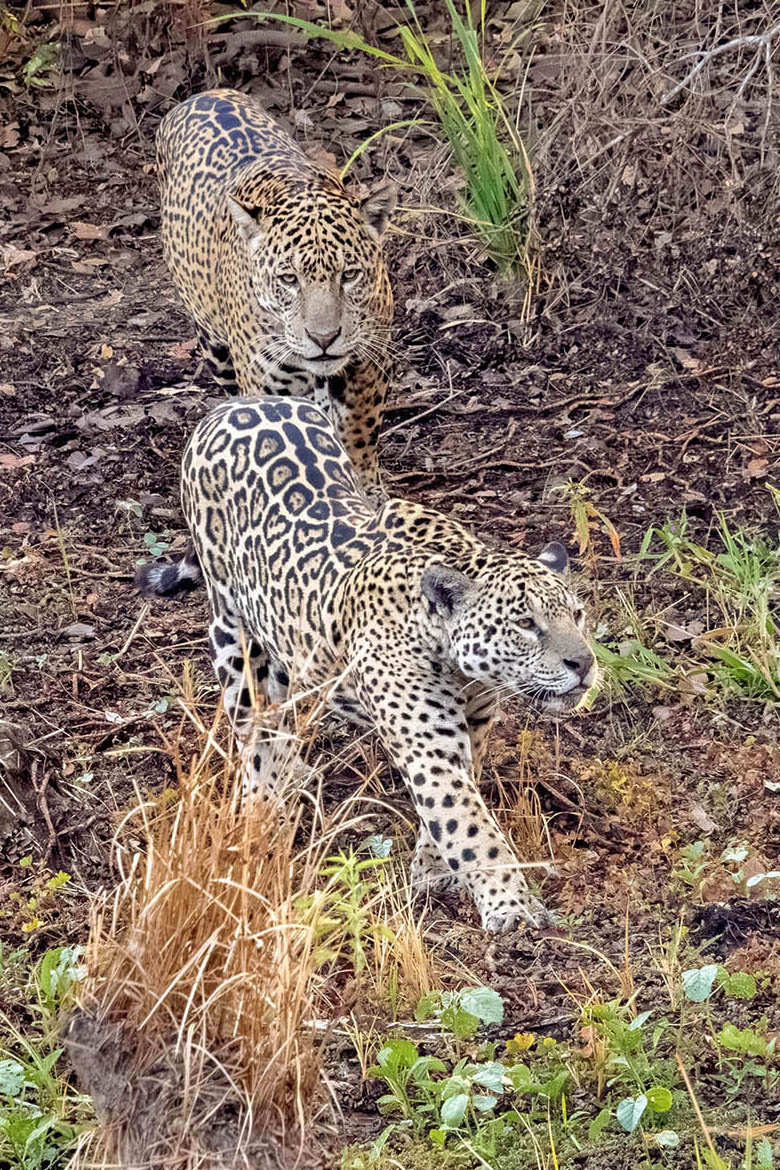
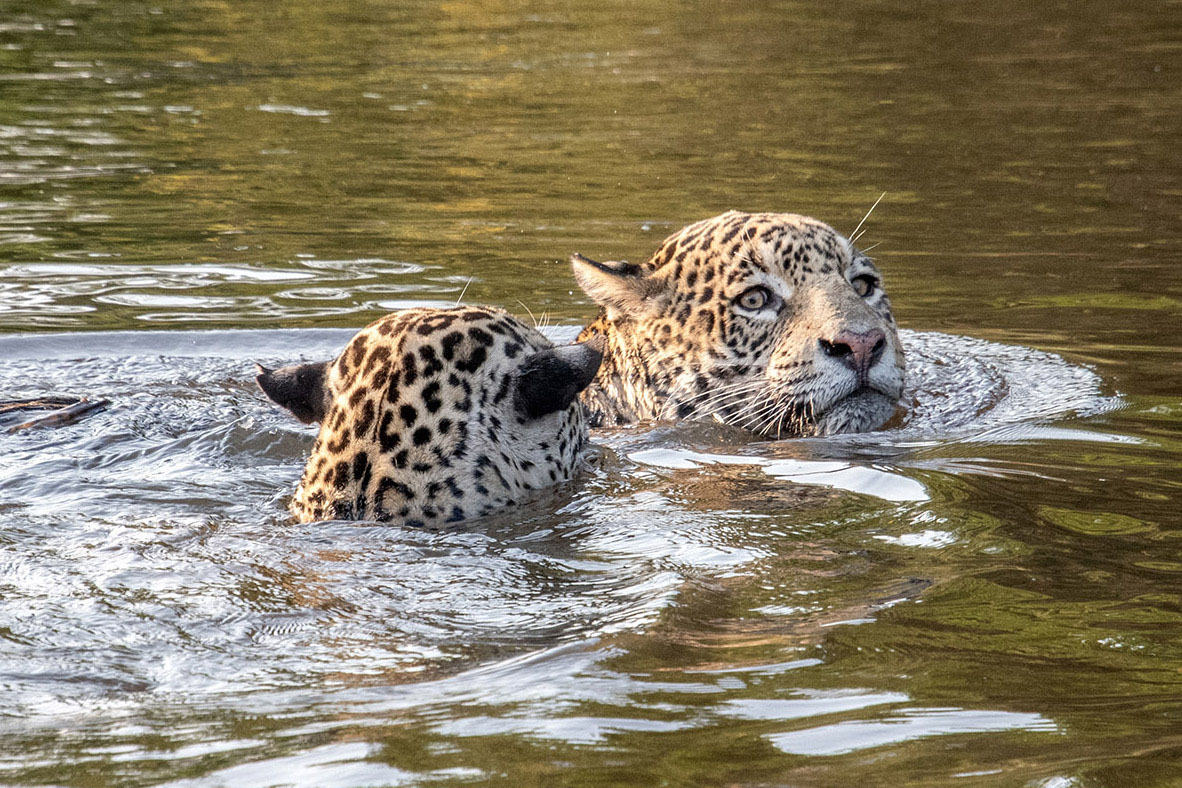
When the female is especially receptive the male stays as close to his consort as possible, even when she is fording a river.
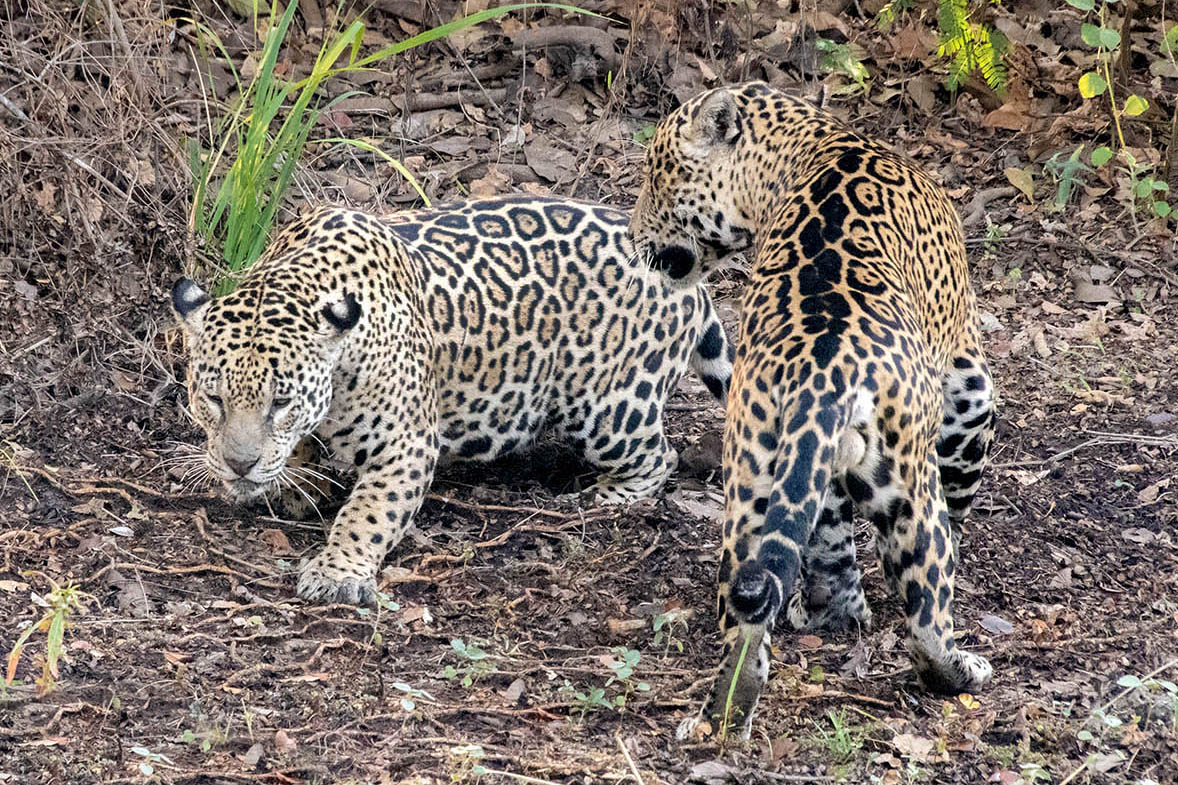
A female jaguar may mate with her partner up to 100 times in a single day. I watched this pair mate ten times in two and a half hours. Typically, when mating, a pair stays coupled for less than ten seconds.
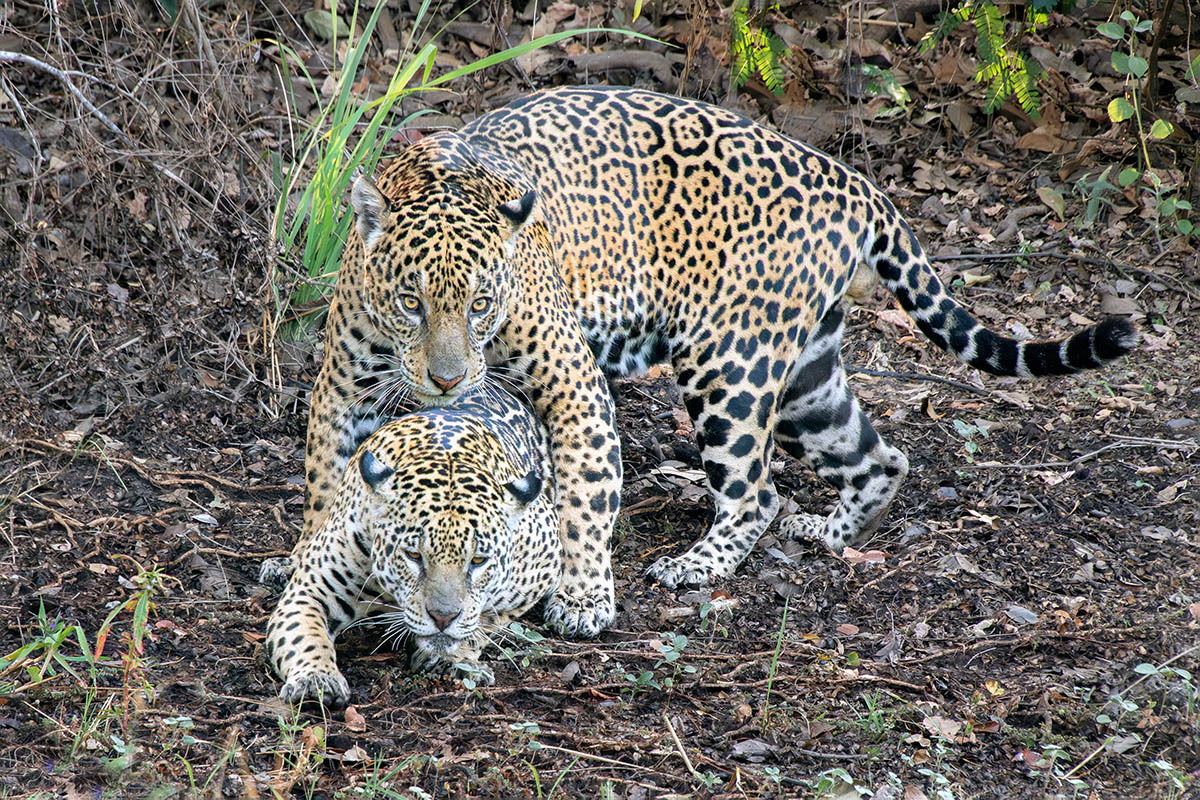
Female jaguars are induced ovulators, which means they need repeated genital stimulation before their ovaries will release an egg. Since a male jaguar may be up to 40% larger than his female partner, the female cannot prevent a large male from mating with her without risking significant injury, so she relies on her physiology to do the selection for her. Unless the male is strong, healthy, and free of disease and parasites, he cannot copulate with enough vigour and frequency to induce her to ovulate. In this way the female controls the genetic quality of the father of her offspring.
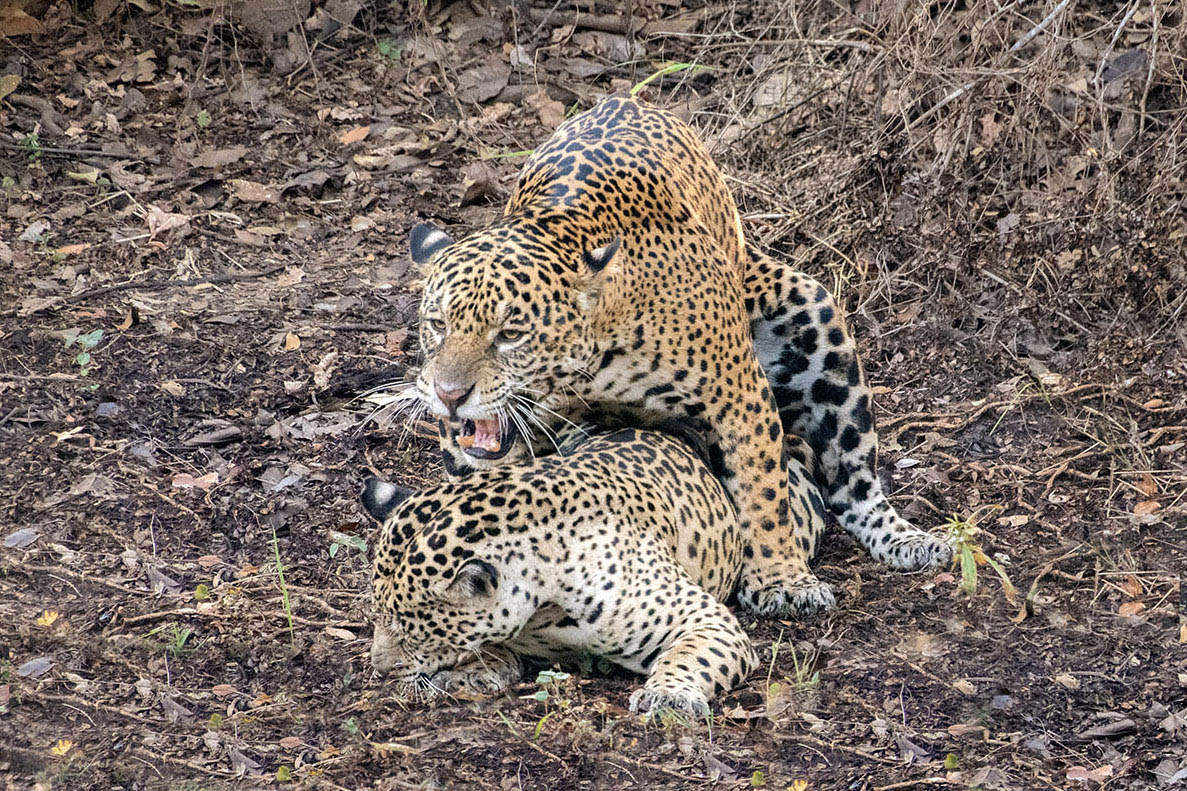
A female in heat may mate with multiple males during her receptive period. An important reason to do this is to confuse the paternity of her cubs. A male jaguar will often kill a cub unless he has previously mated with the female because he may be the cubs’ father. When a young cub is killed, known as infanticide, a female will stop nursing, and she will frequently come into heat again. This provides the cub-killing male with an opportunity to mate with her and perpetuate his genes.
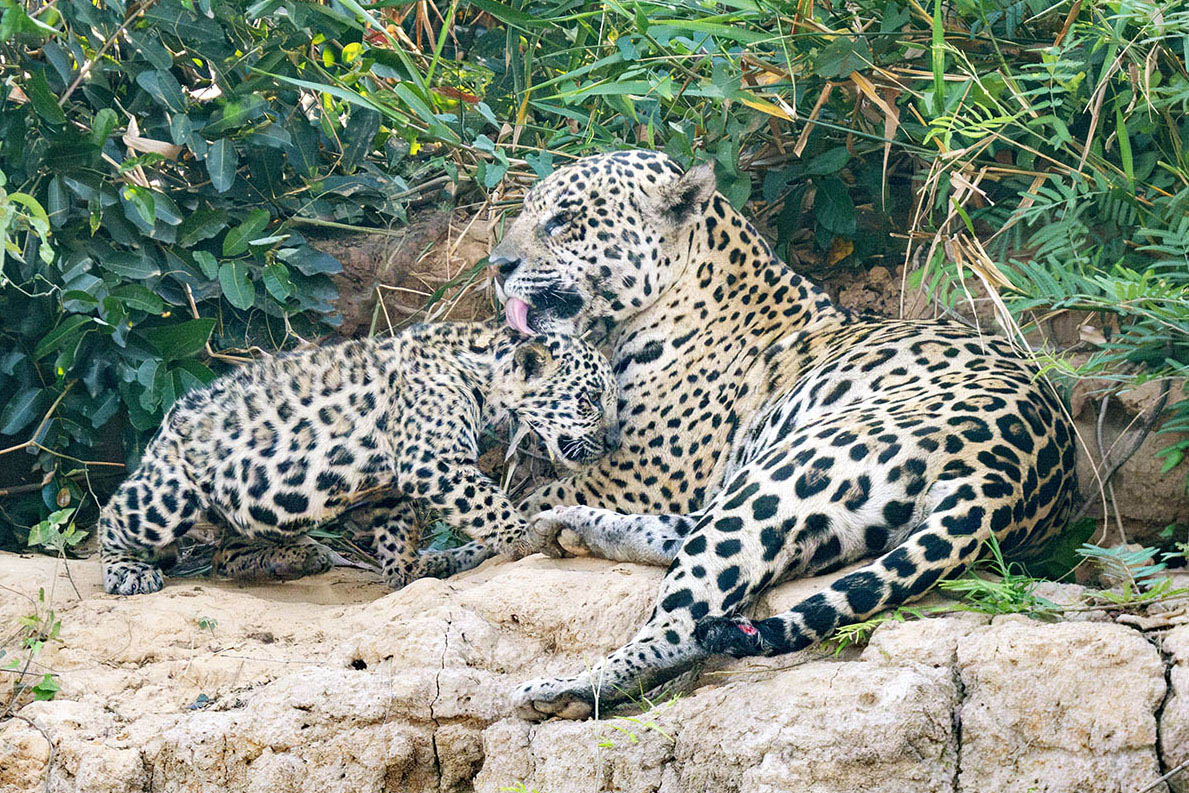
A mother jaguar may give birth to as many as four cubs, but most commonly two. This female had a single cub. Mothers keep their cubs hidden in thick vegetation or in a cave for 5-6 months when the young are most vulnerable to roving infanticidal males.
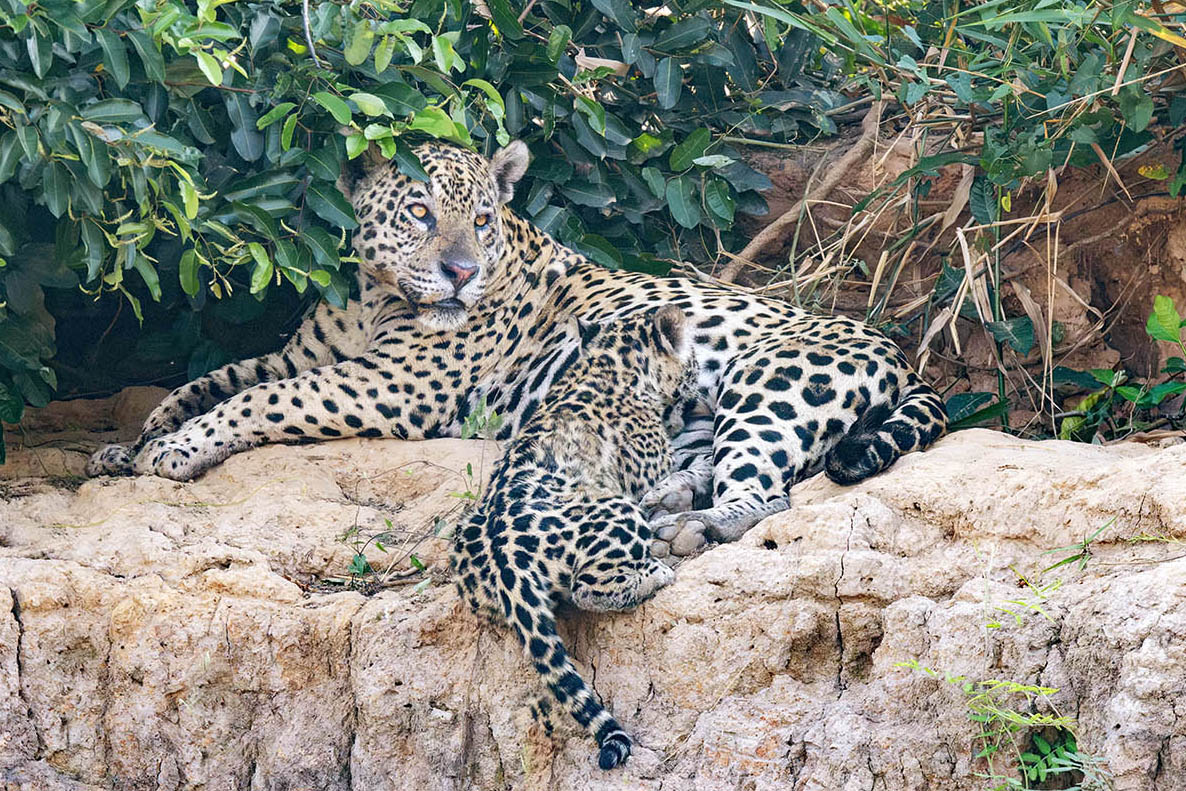
This cub is just 3-4 months old and is still entirely dependent upon its mother’s milk for nutrition.
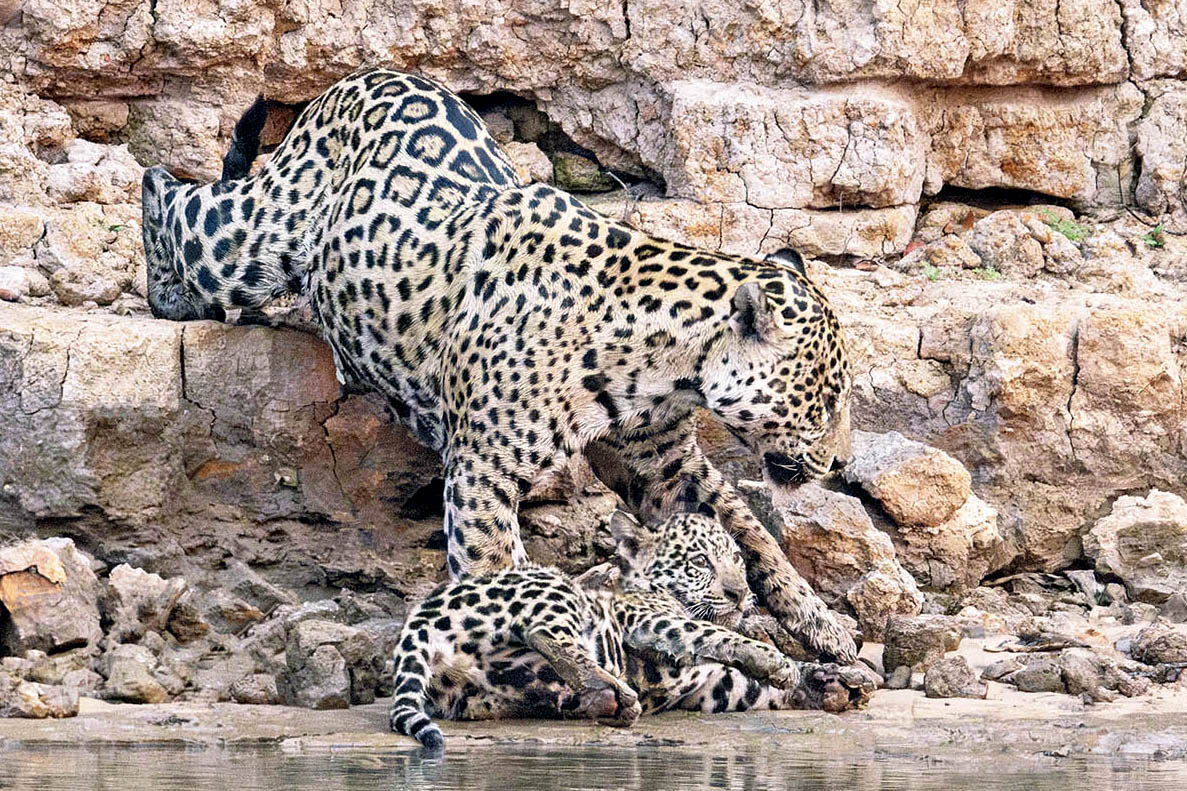
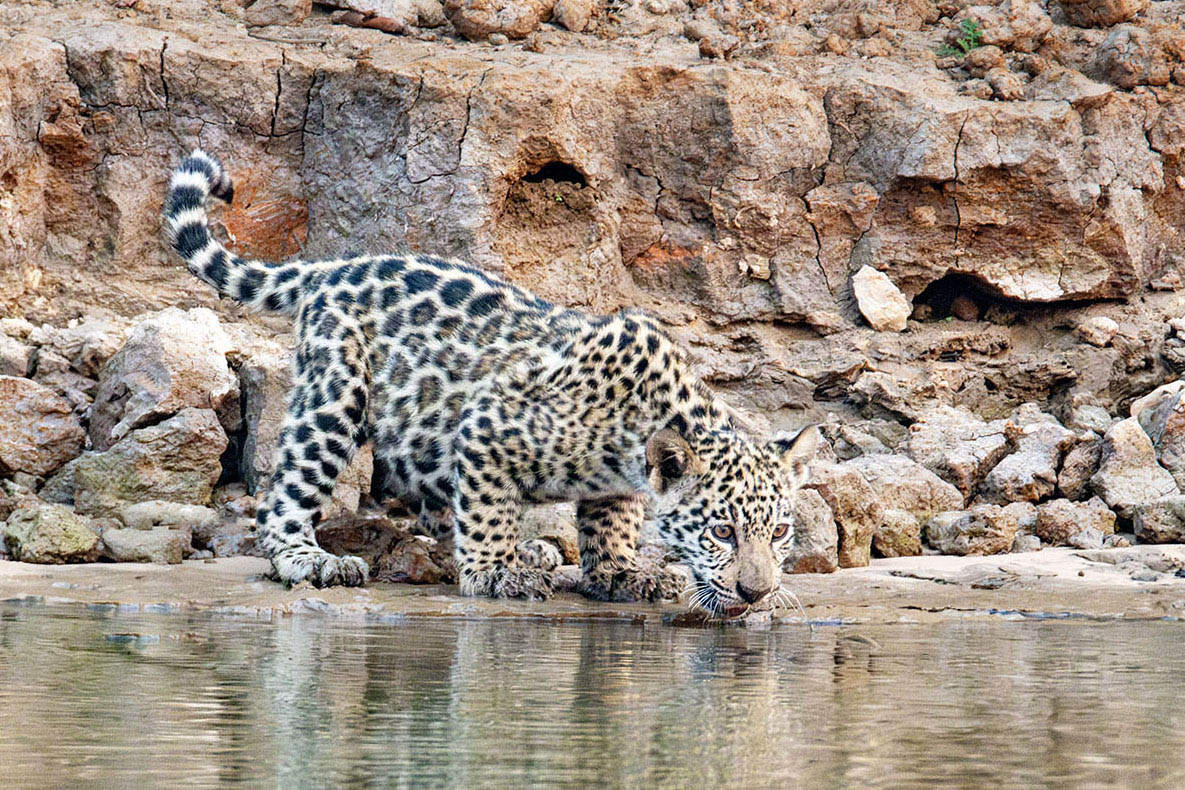
Because of the heat wave that occurred in the Pantanal in the summer of 2024 with temperatures reaching 41°C (106°), the mother jaguar led her cub to the river’s edge to drink and cool off at the end of the day, despite the risk that this behaviour presented.
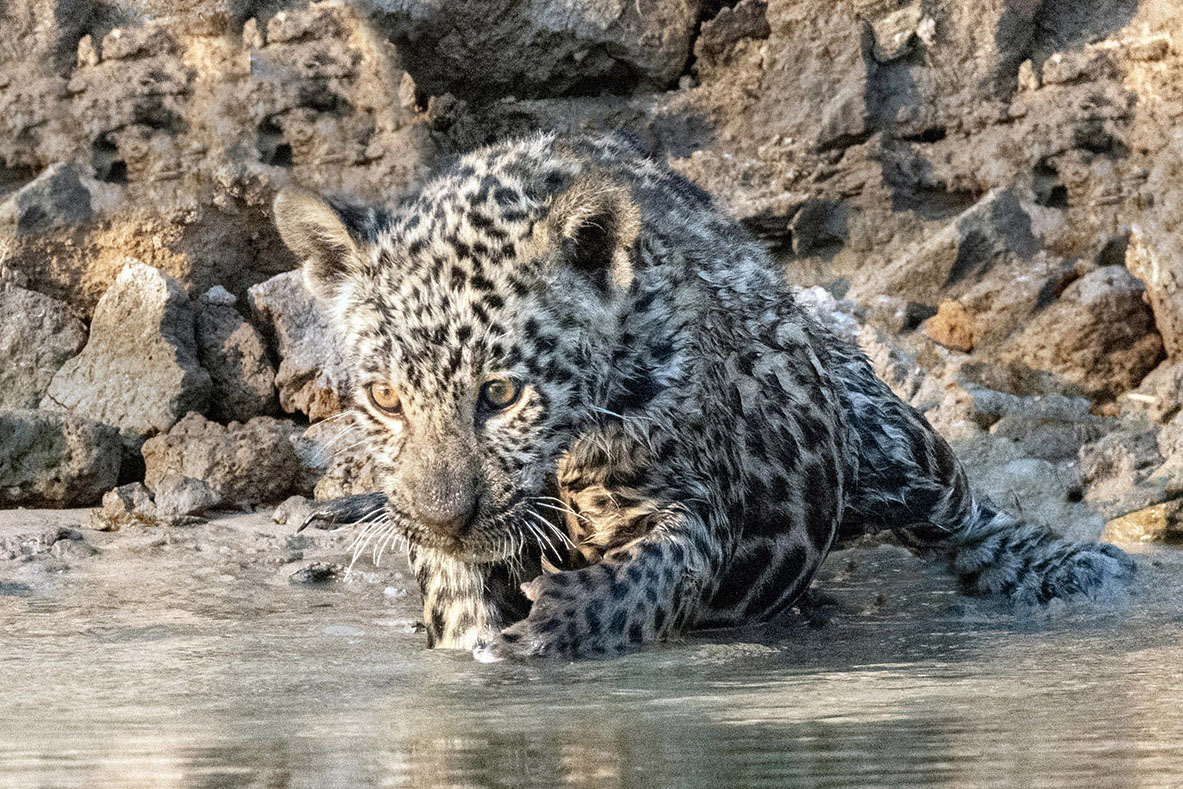
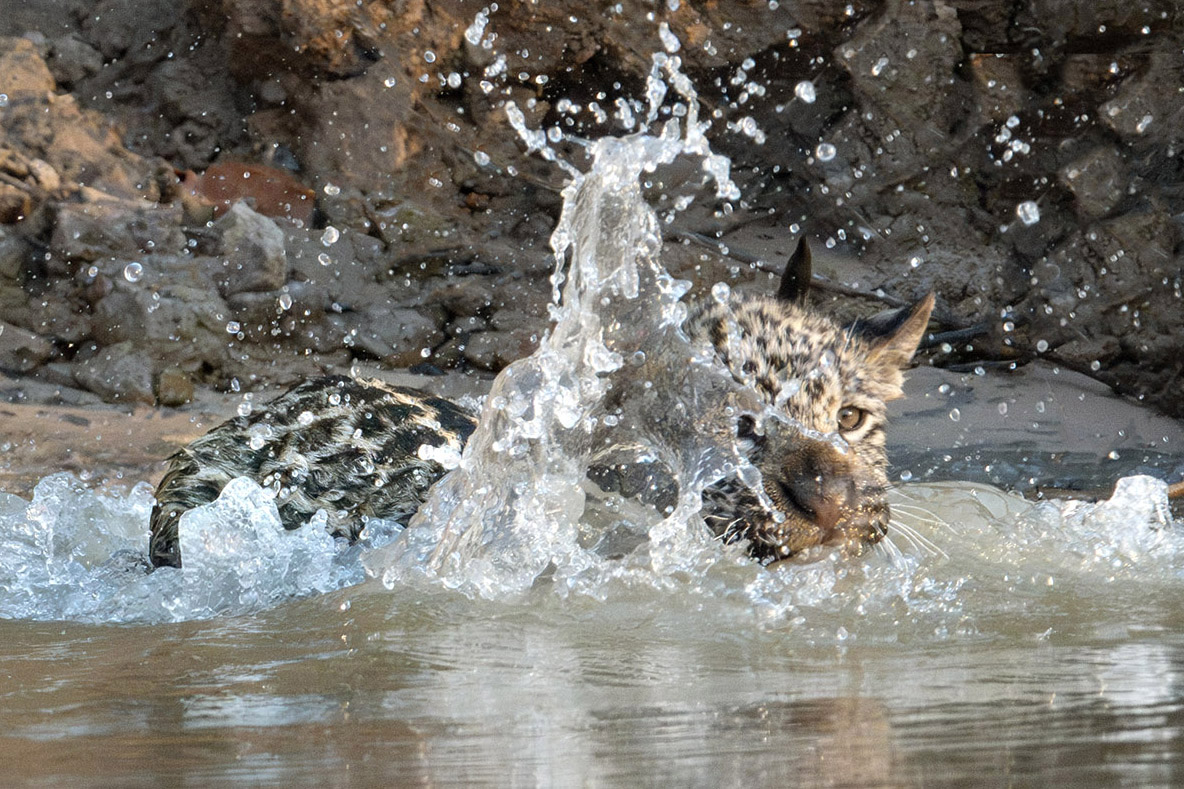
Usually when the cub finished drinking, it briefly played in the water.
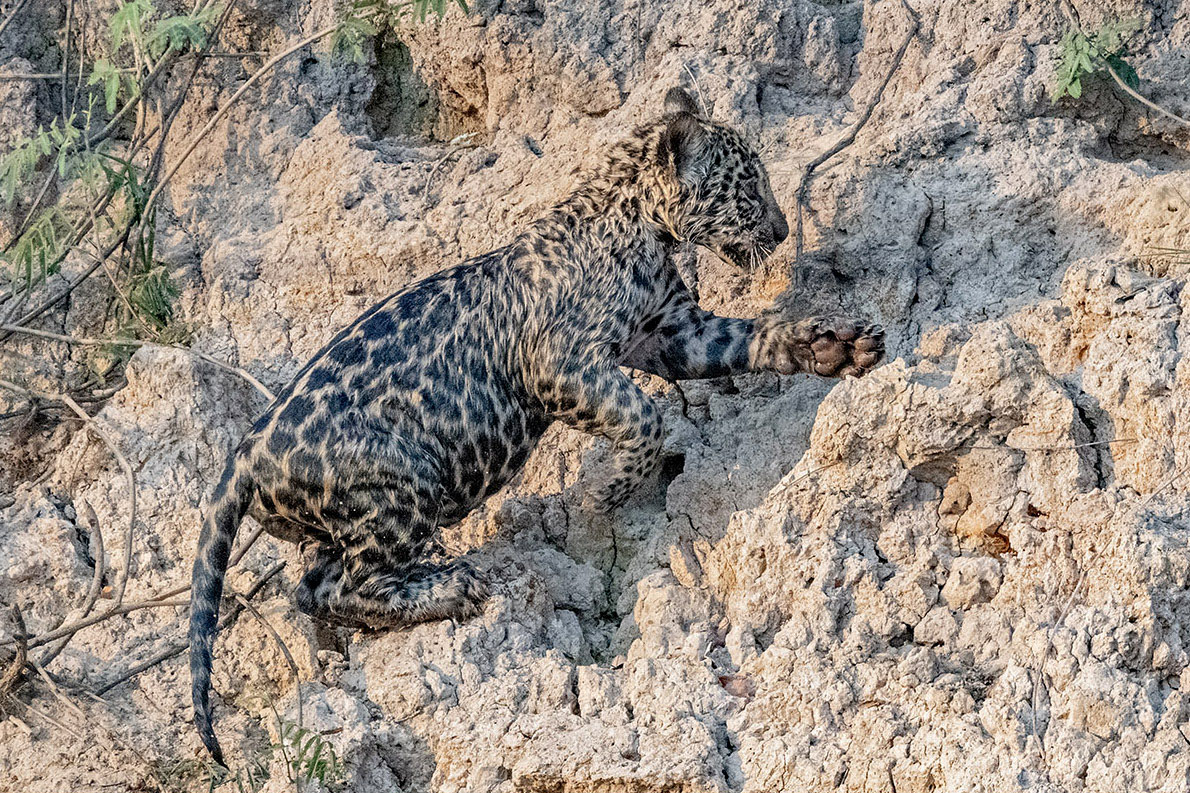
After the mother left the river and disappeared into the vegetation at the top of the riverbank the cub did not play long before its vulnerability motivated it to follow her.
Read the series:
About the Author – Dr. Wayne Lynch

For more than 40 years, Dr. Wayne Lynch has been writing about and photographing the wildlands of the world from the stark beauty of the Arctic and Antarctic to the lush rainforests of the tropics. Today, he is one of Canada’s best-known and most widely published nature writers and wildlife photographers. His photo credits include hundreds of magazine covers, thousands of calendar shots, and tens of thousands of images published in over 80 countries. He is also the author/photographer of more than 45 books for children as well as over 20 highly acclaimed natural history books for adults including Windswept: A Passionate View of the Prairie Grasslands; Penguins of the World; Bears: Monarchs of the Northern Wilderness; A is for Arctic: Natural Wonders of a Polar World; Wild Birds Across the Prairies; Planet Arctic: Life at the Top of the World; The Great Northern Kingdom: Life in the Boreal Forest; Owls of the United States and Canada: A Complete Guide to their Biology and Behavior; Penguins: The World’s Coolest Birds; Galapagos: A Traveler’s Introduction; A Celebration of Prairie Birds; and Bears of the North: A Year Inside Their Worlds. In 2022, he released Wildlife of the Rockies for Kids, and Loons: Treasured Symbols of the North. His books have won multiple awards and have been described as “a magical combination of words and images.”
Dr. Lynch has observed and photographed wildlife in over 70 countries and is a Fellow of the internationally recognized Explorers Club, headquartered in New York City. A Fellow is someone who has actively participated in exploration or has substantially enlarged the scope of human knowledge through scientific achievements and published reports, books, and articles. In 1997, Dr. Lynch was elected as a Fellow to the Arctic Institute of North America in recognition of his contributions to the knowledge of polar and subpolar regions. And since 1996 his biography has been included in Canada’s Who’s Who.



Amazing photographs! I really enjoyed this article, fascinating animals. It takes a certain love of nature and animals and also courage to do this work. Thank you.
Many thanks Georgette. I certainly have the love of nature, but I am not so sure about the courage part.
Wayne