



For the last couple of years, I have spent the month of August in the Pantanal wetlands of central Brazil. I first went to this remote area in South America in 1997 when I was on a scouting trip to determine if this little-known wilderness had any merit as a photo destination. What I discovered was a wildlife hotspot. Since that momentous first trip, I have been back to the Pantanal seven different times and my most recent trips were the best of them all. There is so much wildlife biodiversity to celebrate in this subtropical savannah that I want to share this with readers in three separate postings. This month, I will feature the fascinating mammals and reptiles that inhabit this seasonal wetland. The great diversity of birdlife and the magnificent jaguars will be featured in future postings.
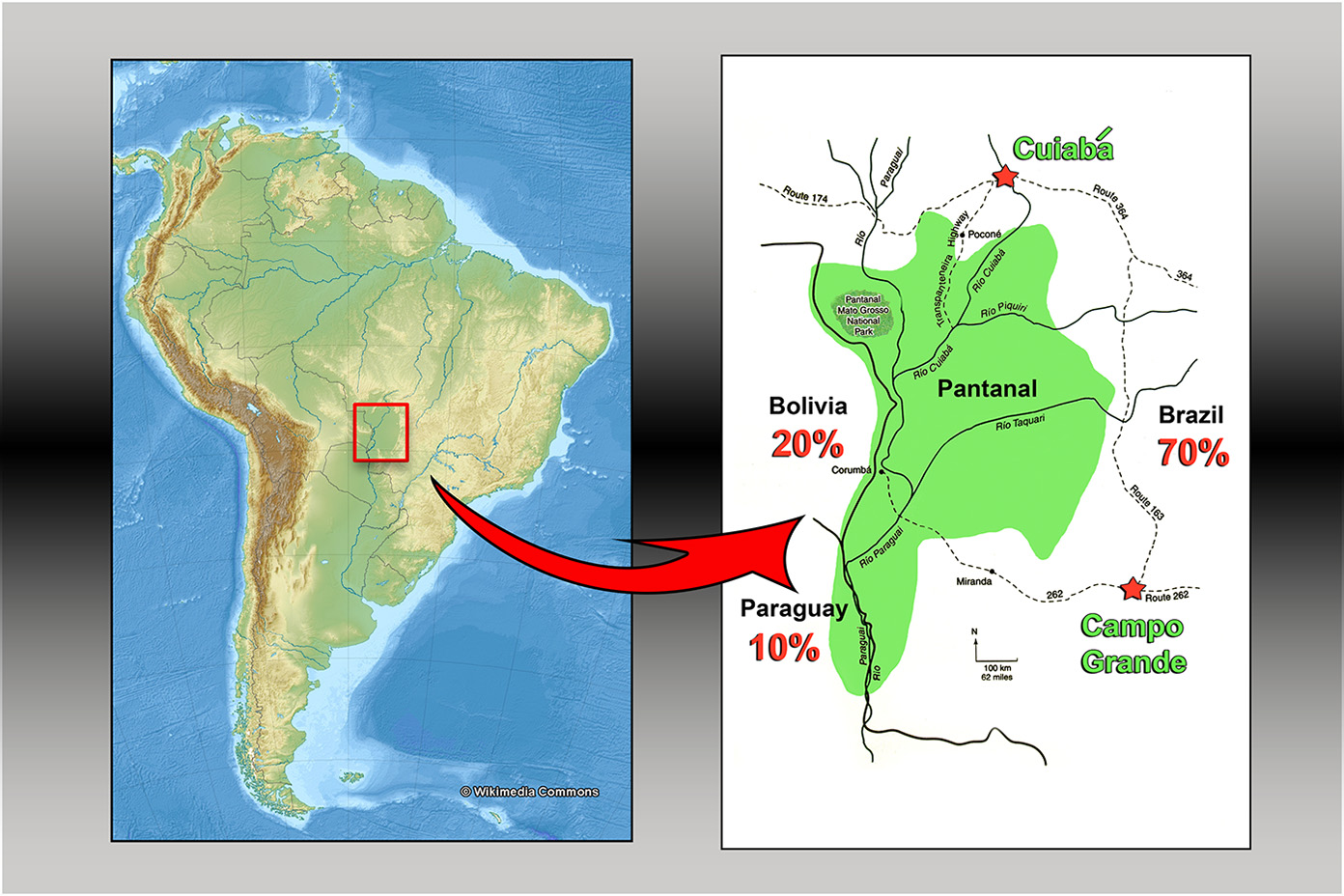
The Pantanal lies in the geographical heart of South America and is the largest seasonal floodplain on Earth – four times larger than the legendary Okavango Delta in Botswana and eight times the size of the Florida Everglades. The Pantanal spans three countries with 70% of it found in Brazil, 20% in Bolivia, and 10% in Paraguay.
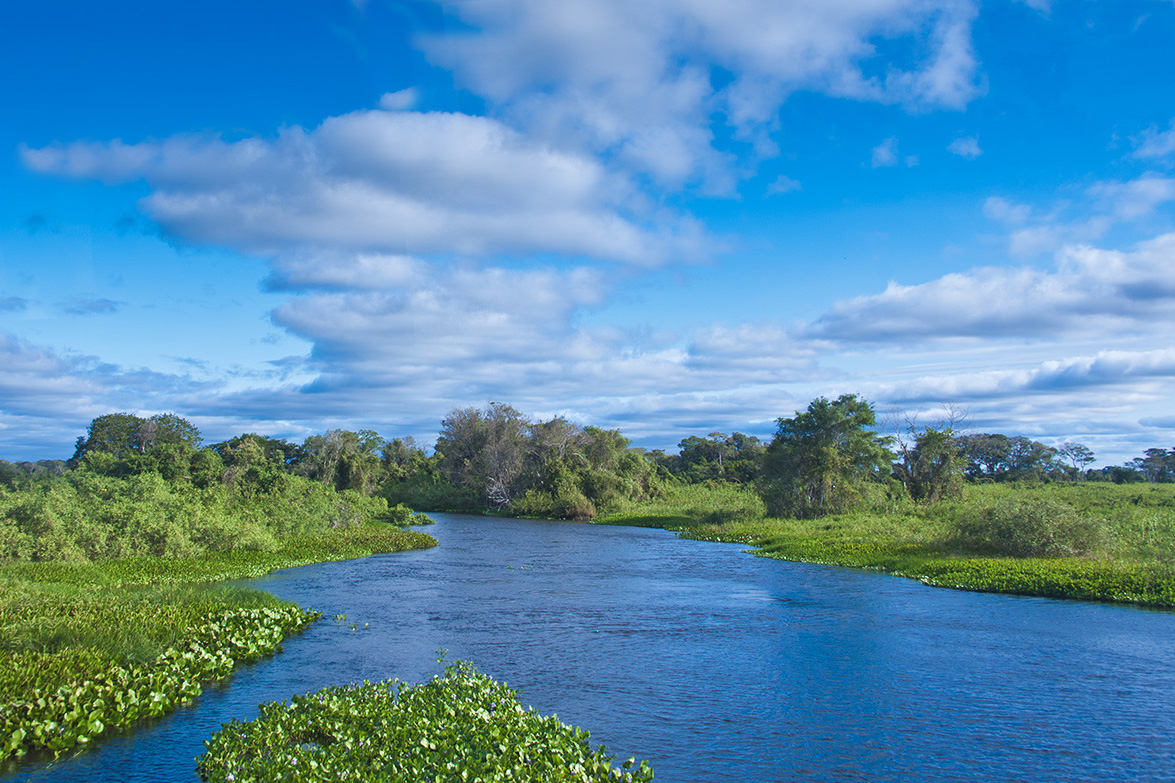
As a subtropical savannah the Pantanal has a wet season and a dry season. The wet season runs from November to March when water levels may rise as much as five meters (16 feet), inundating up to 75% of the land.
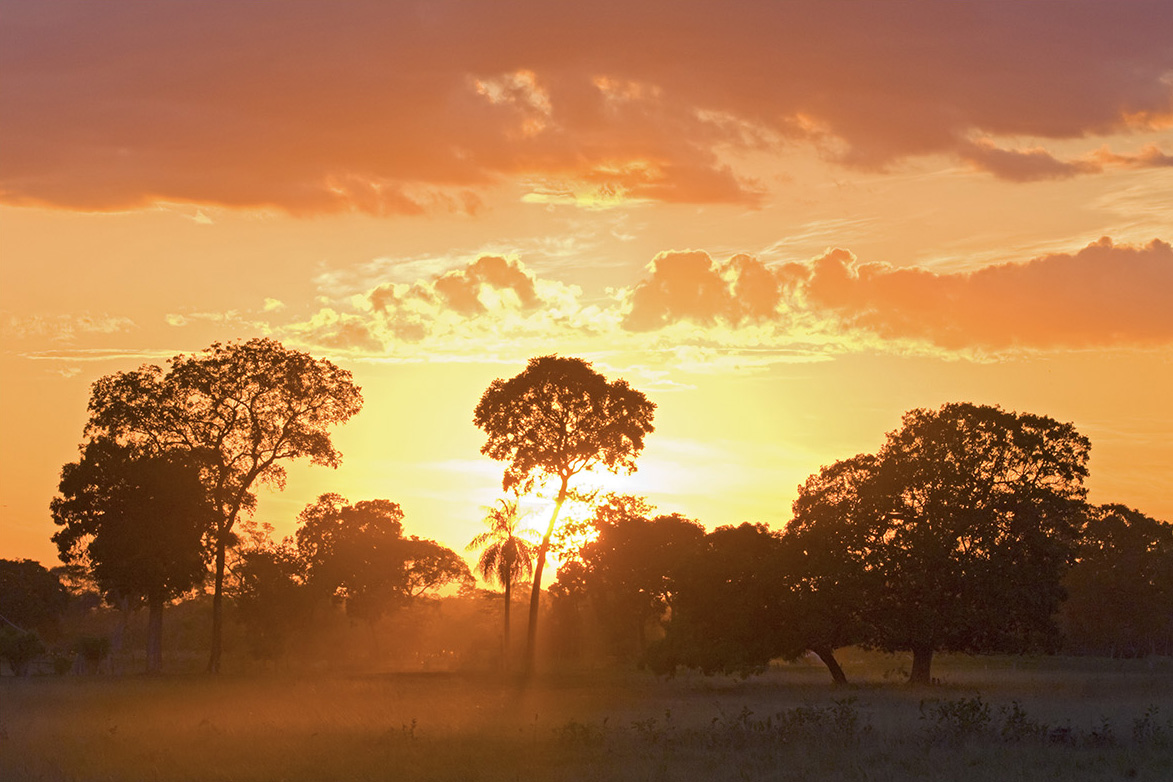
During the April-October dry season the flood waters recede dramatically, and great areas of the Pantanal dry out.
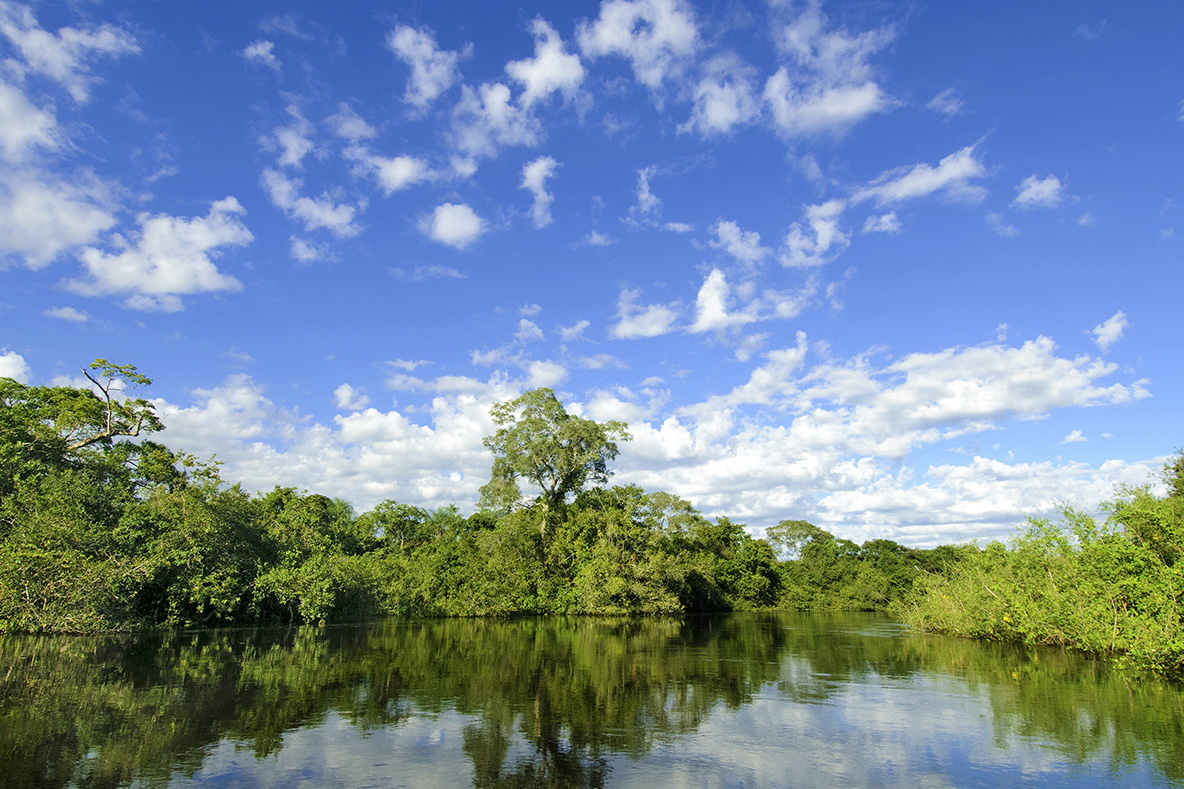
During the dry season, wildlife becomes concentrated along the few remaining rivers and around numerous waterholes, many of which gradually shrink as the water evaporates.
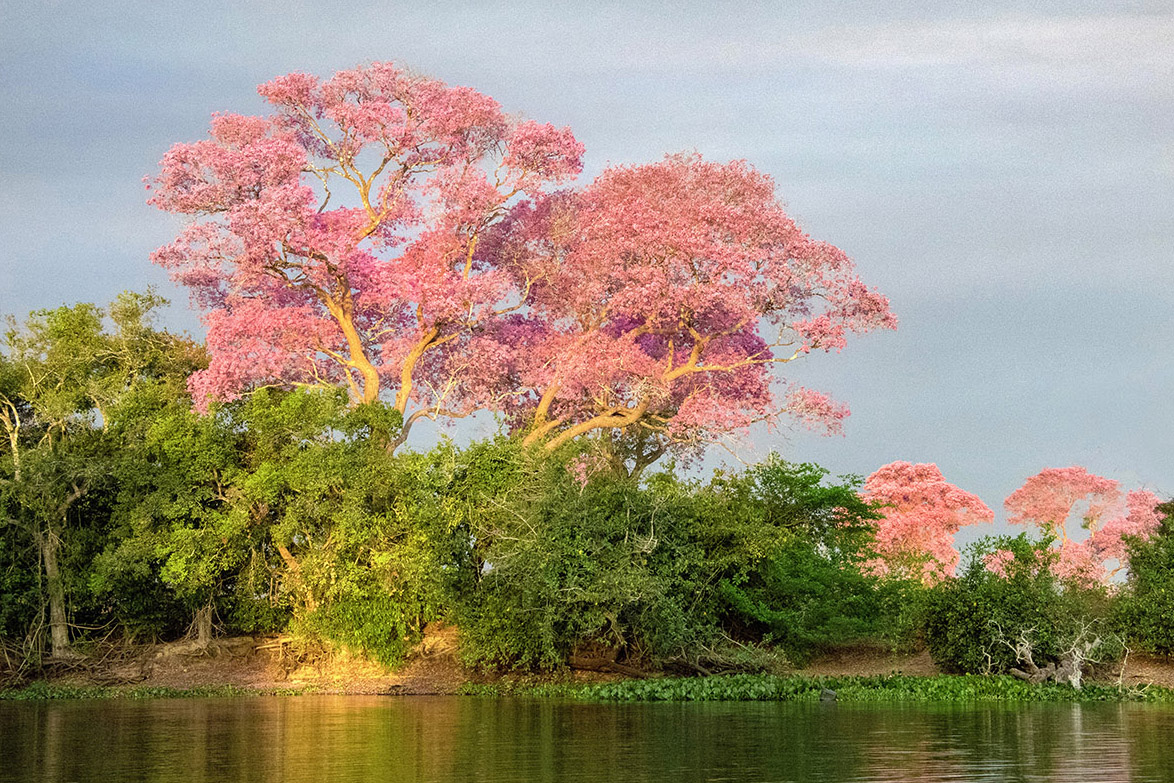
Many trees in the Pantanal, such as these colourful pink ipê trees, bloom during the dry season after they shed their leaves.
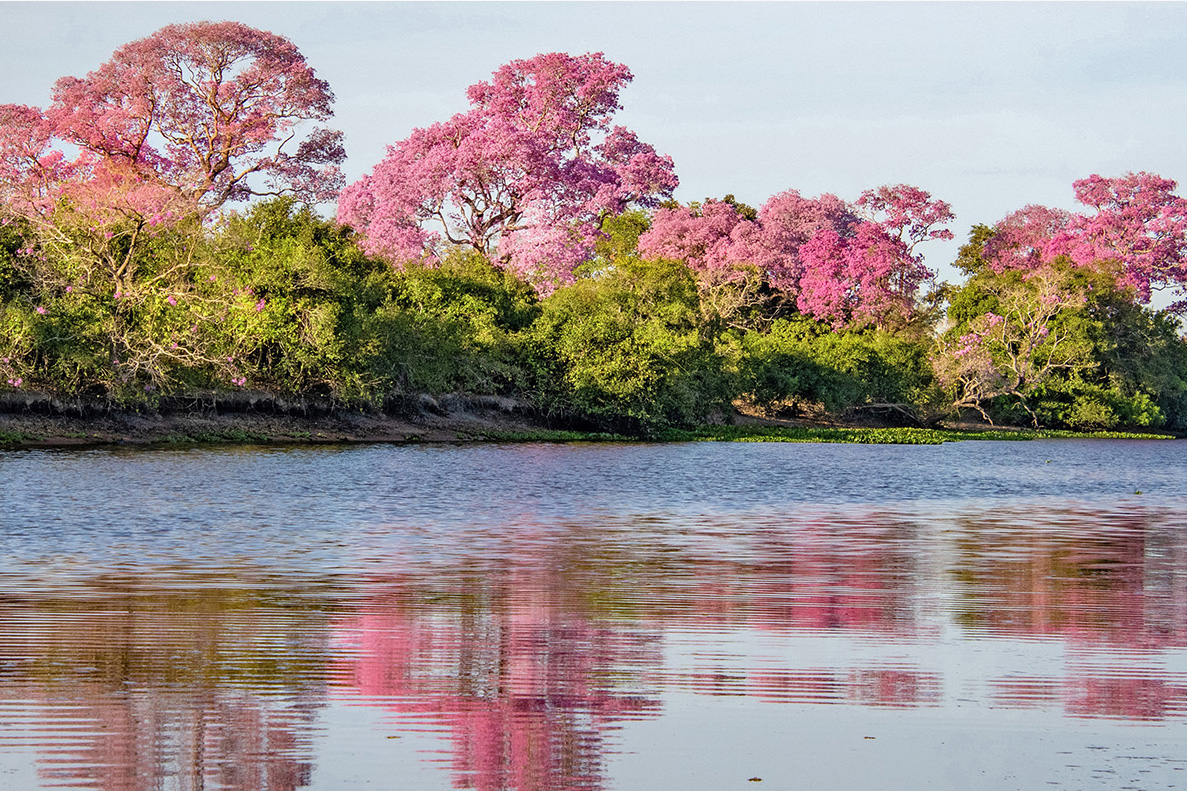
By shedding their leaves the trees make their blossoms more visible to pollinating insects. Eliminating the leaves also enhances the transmission of pollen for those species pollinated by the wind.
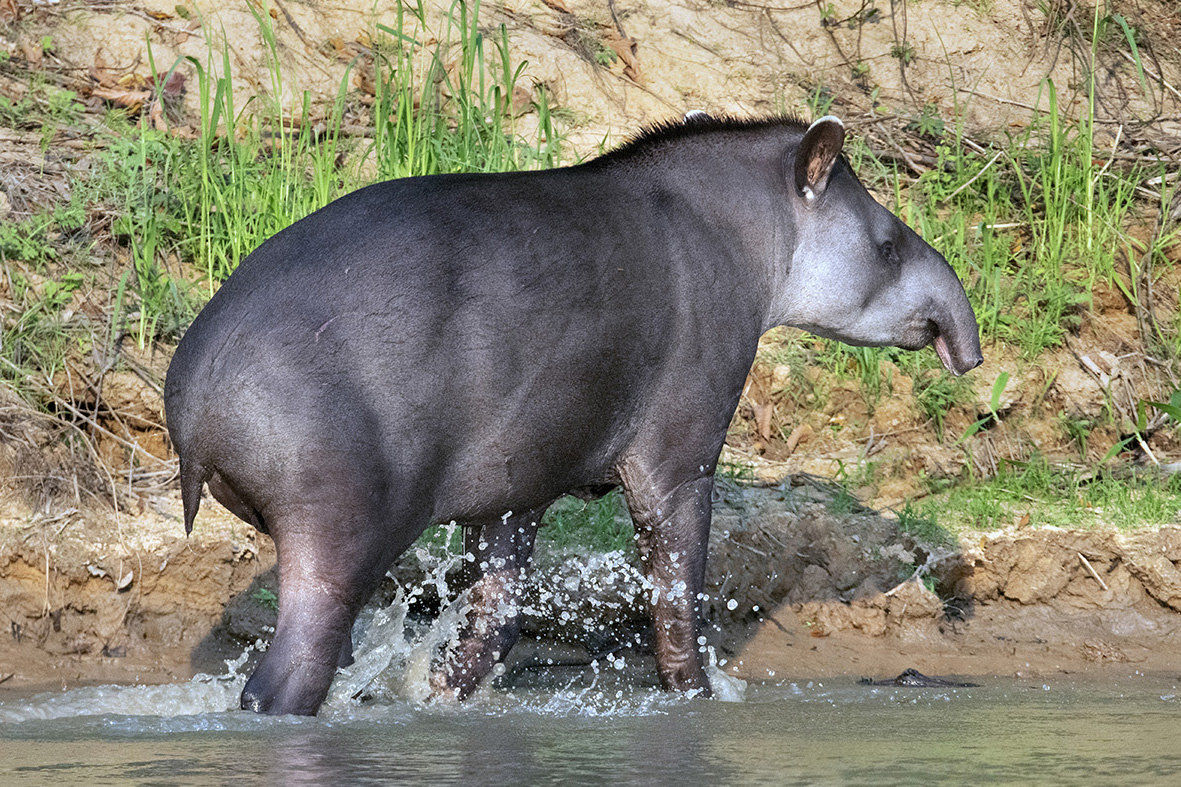
Roughly 12,000 years ago, there were at least 25 species of large herbivores weighing more than 1,000 kilograms (2,200 lbs.) living in South America. Today, the largest mammal on the continent is the 150-300 kilogram (330-660 lbs.) South American tapir, a hoofed mammal closely related to horses and rhinoceroses.
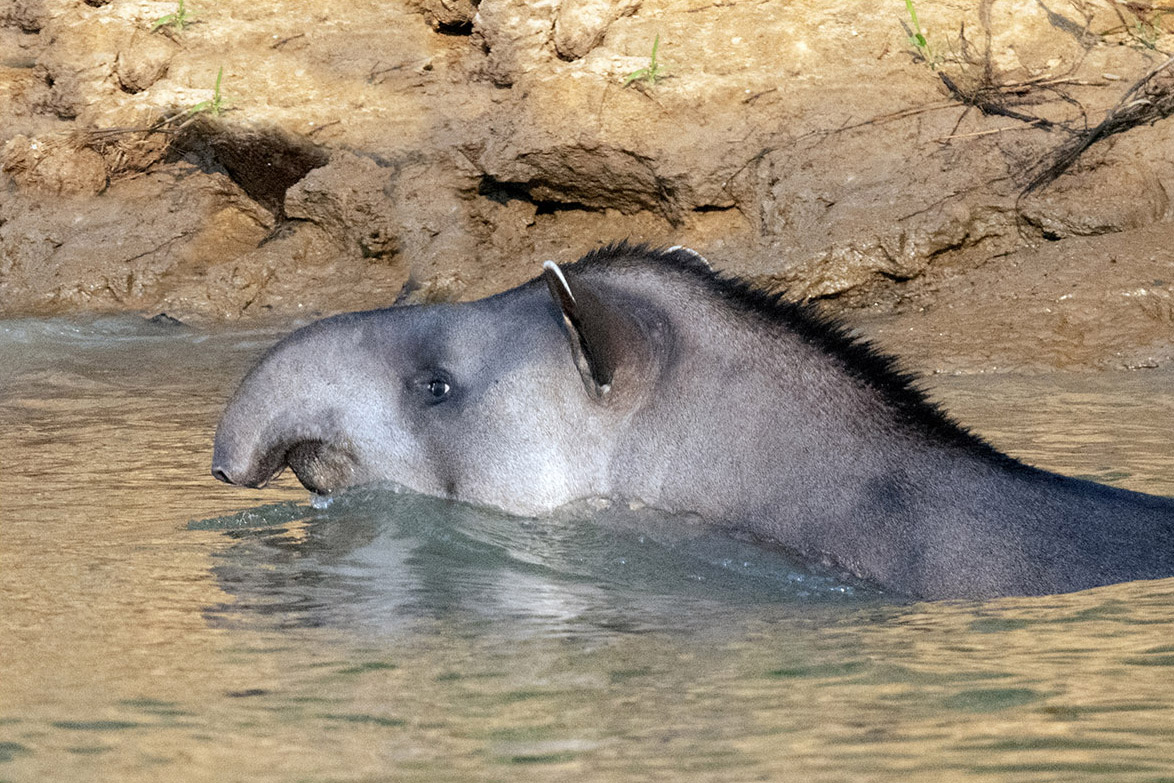
The tapir is an excellent swimmer and when escaping from predatory jaguars and pumas it commonly flees to the water where it can stay submerged for several minutes, using its elongated nose as a snorkel to breathe while staying hidden.
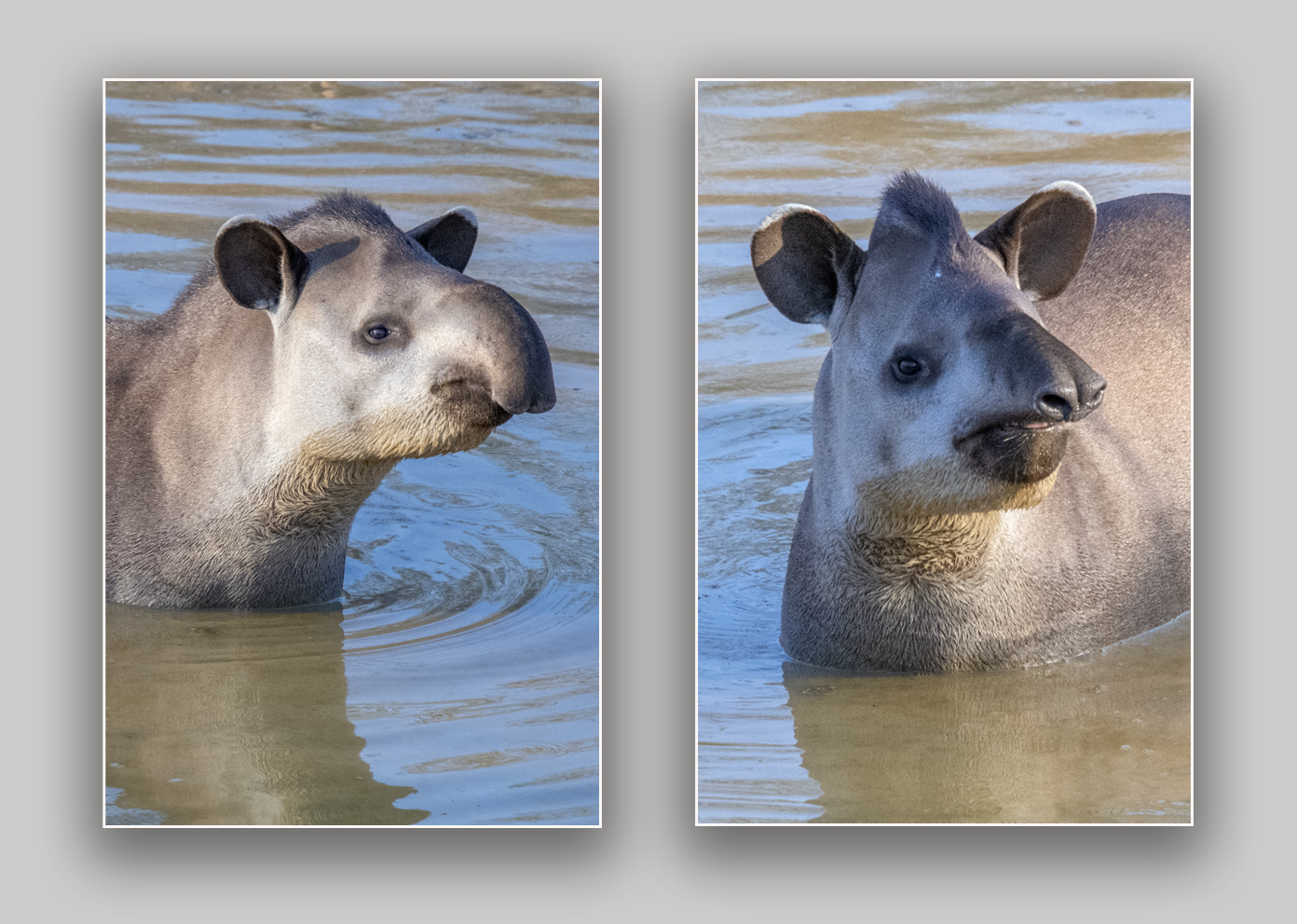
The tapir uses its long, fleshy nose, which is highly moveable, to pluck fruit, berries and leaves from vegetation.
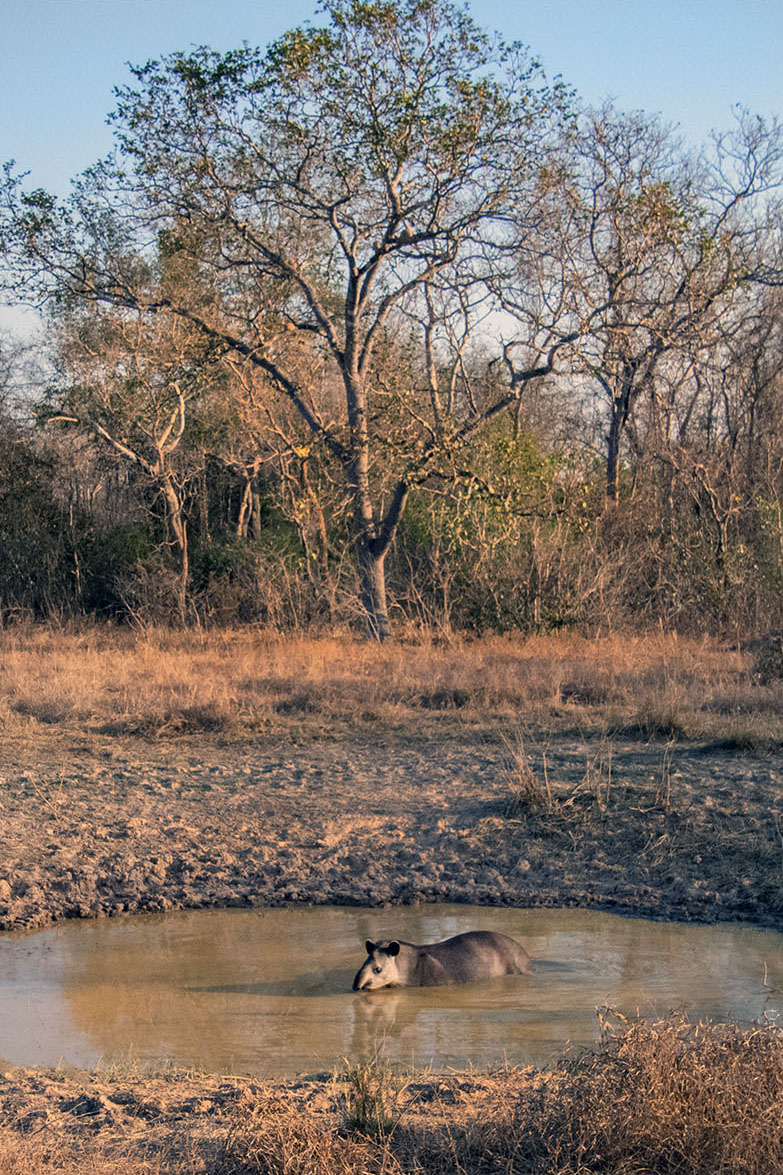
The temperature was 40°C (104°F) and this sub-adult tapir was cooling off in a shrinking water hole in the late afternoon, something that this normally nocturnal mammal rarely does.
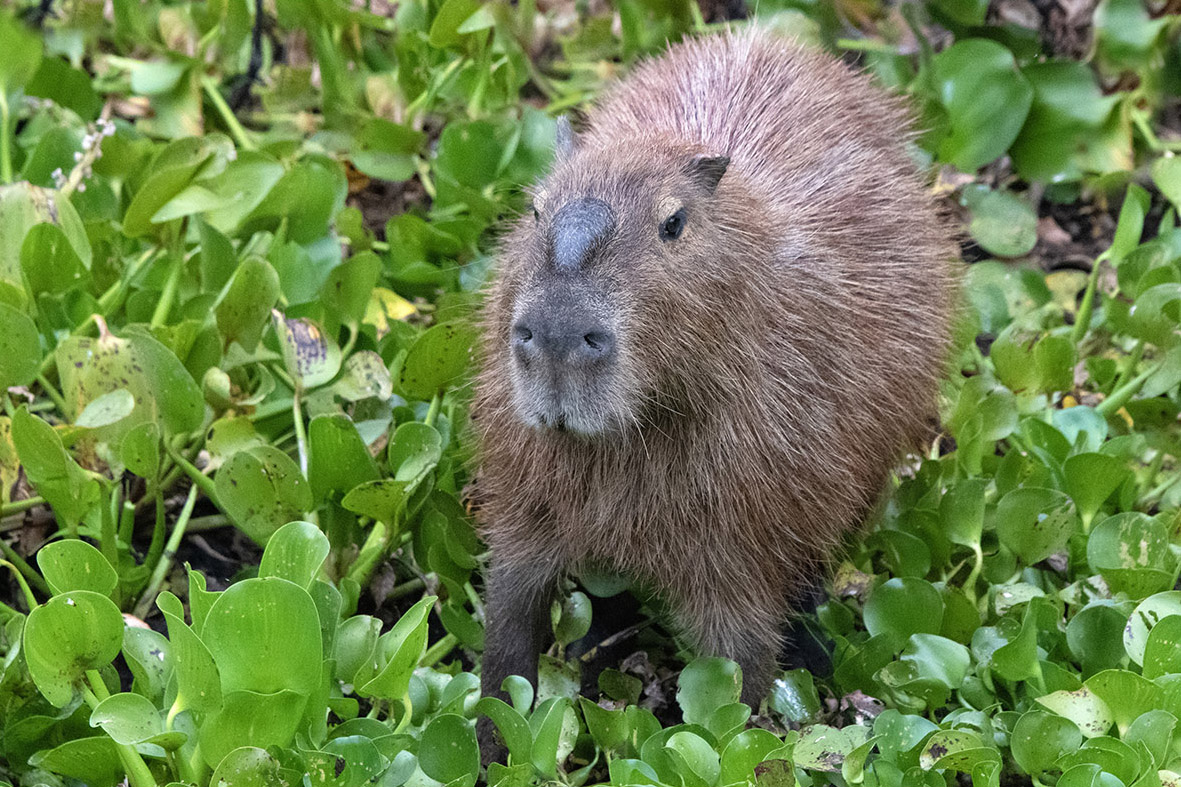
The capybara is the largest rodent in the world, weighing 36-63 kilograms (80-140 lbs). It’s roughly twice as large as the beaver which is ranked number two in size among rodents. This adult male uses the large gland on his nose to scent-mark objects in his home range.
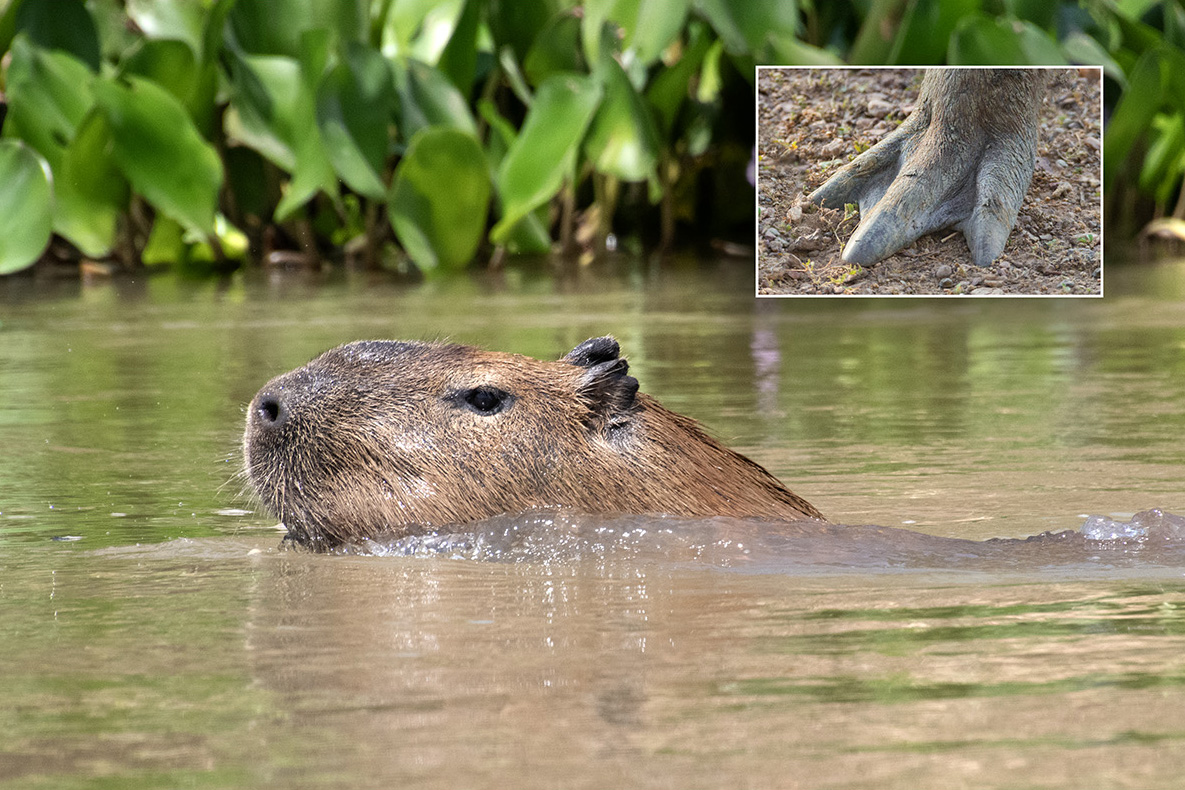
The capybara is almost as much at home in the water as the beaver is. It has slightly webbed feet, and its eyes, nose, and ears are near the top of its head so it can check for danger while remaining almost completely submerged.
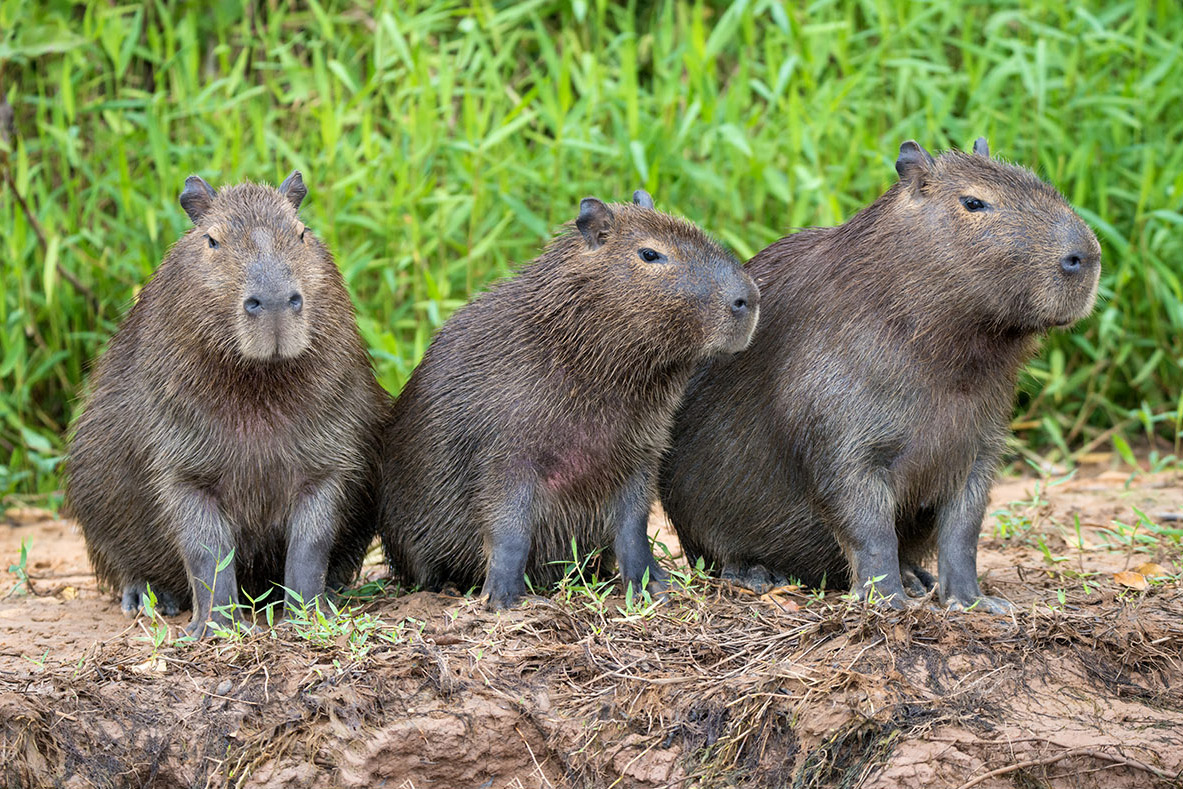
Capybaras most commonly occurs in groups containing 10-20 individuals, with three or four adult males, up to seven or eight adult females with the remainder being juveniles.
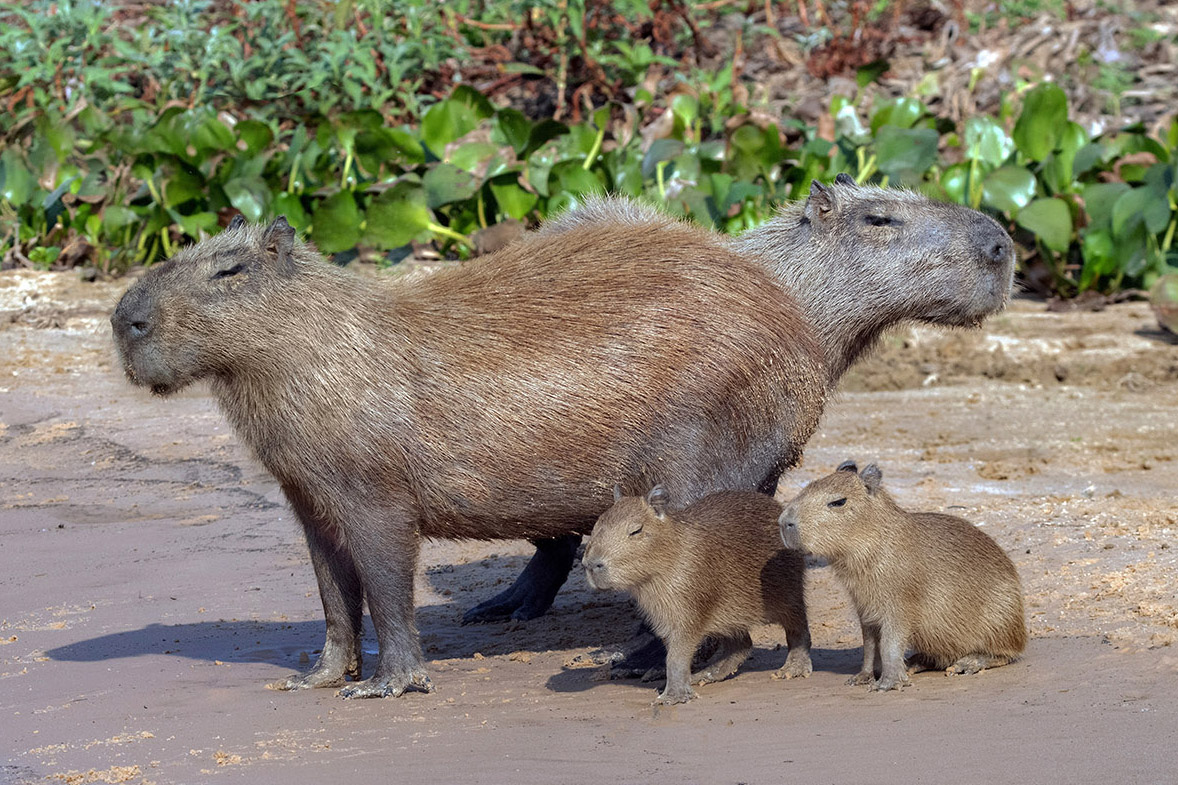
Capybara can often be hard to approach and frequently they are surrounded by vegetation and sticks which makes it difficult to get a clean photograph. This family group was a definite exception. They were unwary and drinking at the edge of a clean, sandy beach.
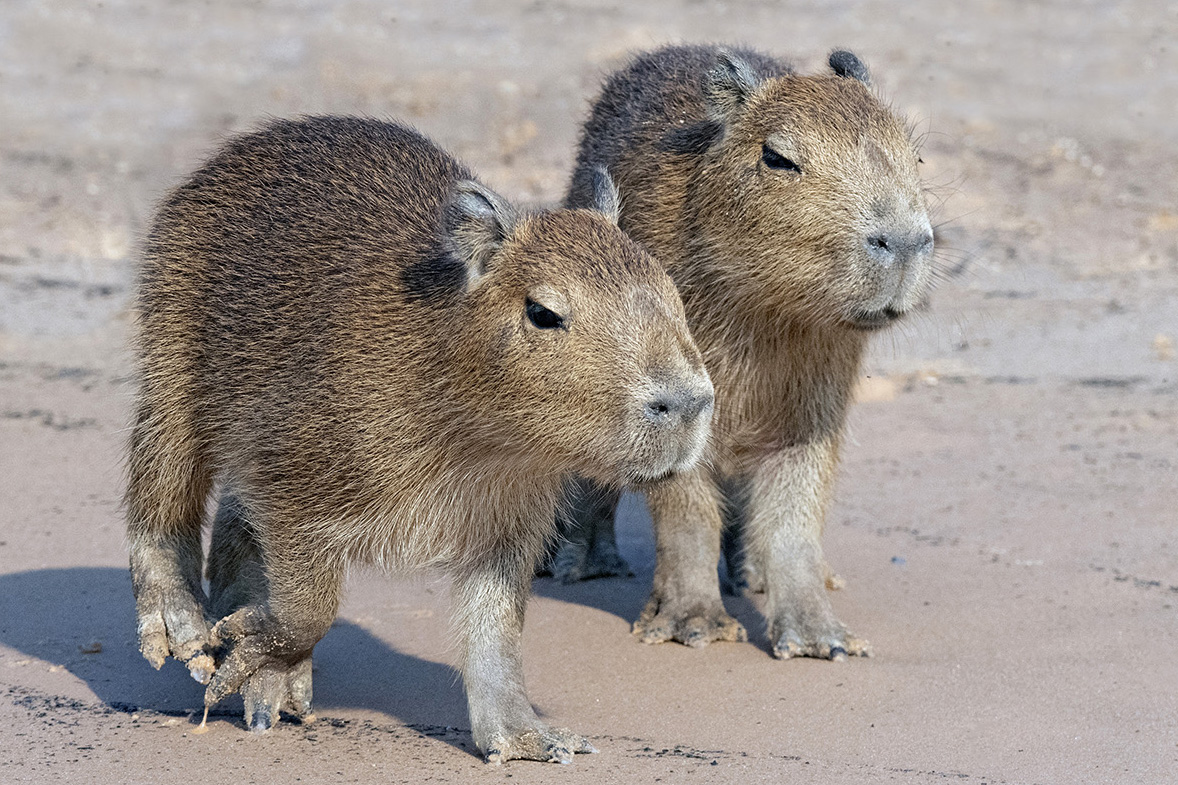
The two curious pups, each smaller than a loaf of bread, walked directly towards me as I stood on the beach. It was by far the most memorable and endearing capybara experience I have ever had.
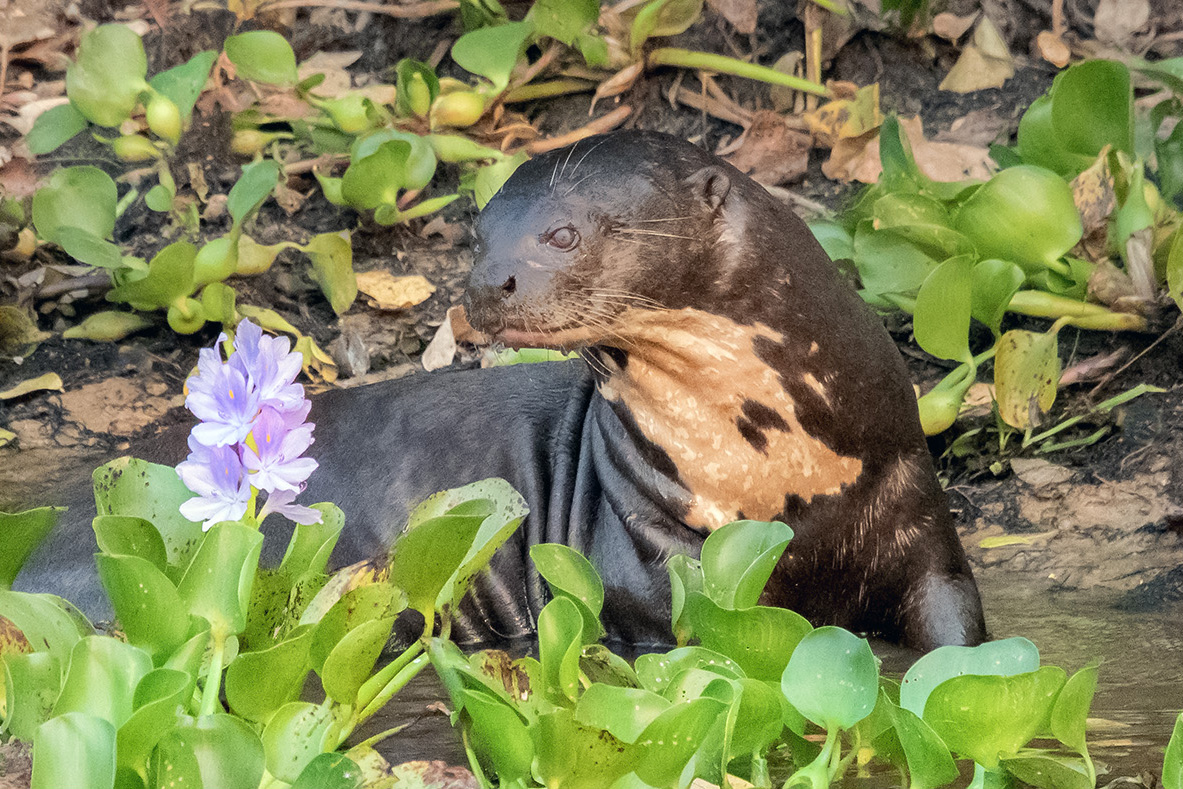
One of the most visible predators along the rivers in the Pantanal are the giant river otters. Although they are the longest otter in the world, reaching lengths up to 1.8 meters (5’ 11”), the sea otters of the northeastern Pacific can be as much as 10 kilograms (22 lbs.) heavier.
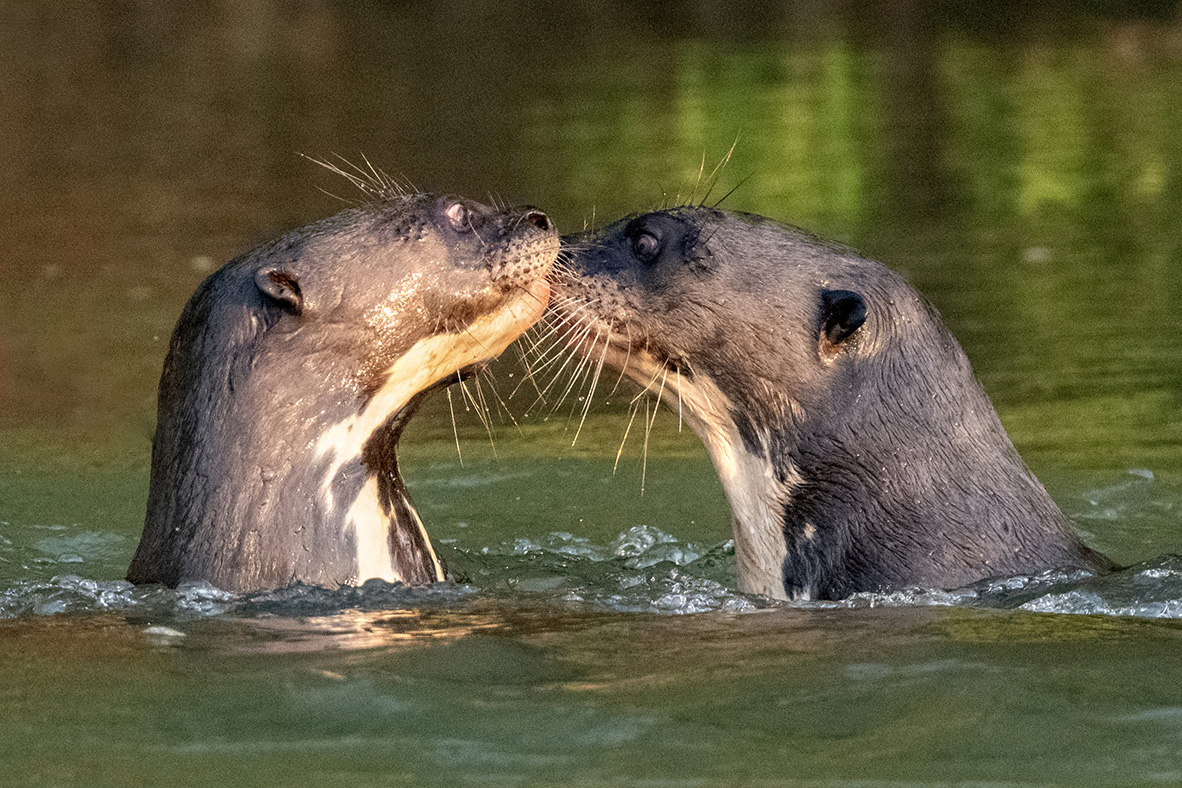
The giant otter is unique among otters in being a social species with groups containing up to eight members centered around a dominant breeding pair. It is an especially noisy animal that continually produces growls, snorts, barks, and whistles.
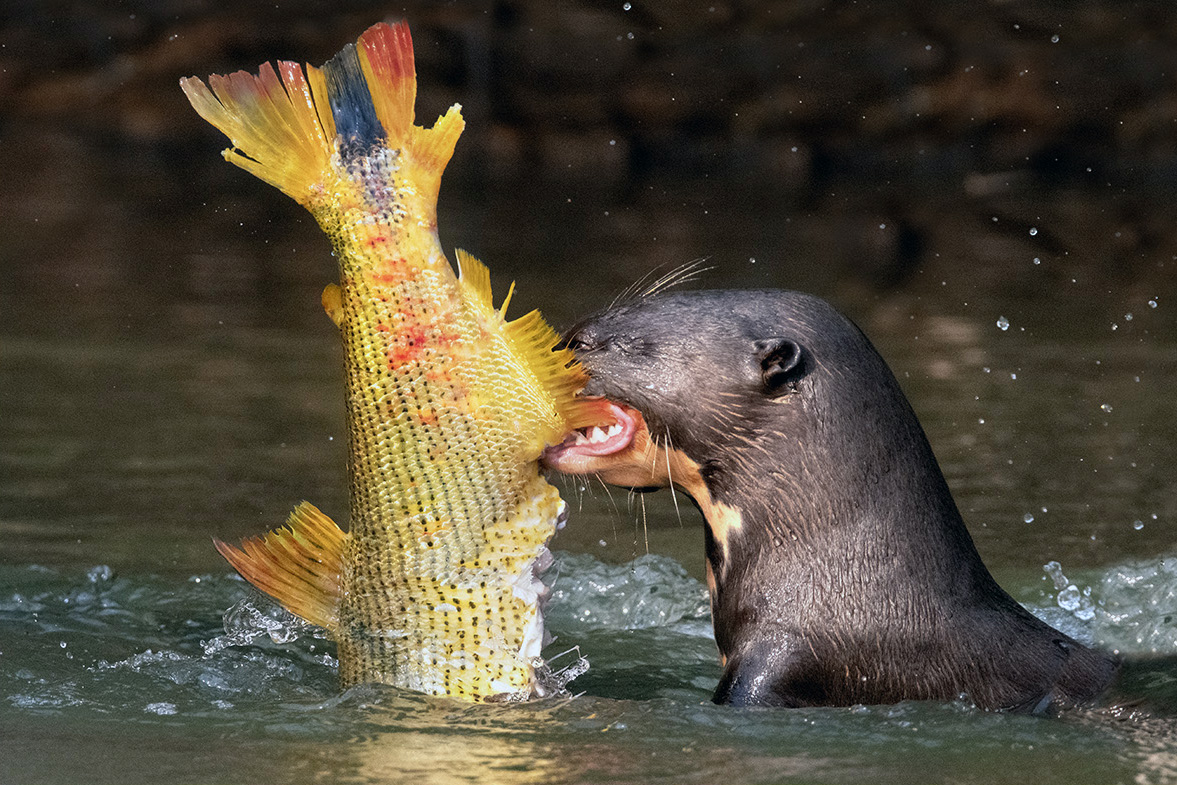
The otter is a voracious hunter of fish, especially catfish, perch, and piranha. They consume roughly 10% of their body weight each day, which for an adult, translates into about three kilograms (6.6 lbs.). This lucky otter had caught a magnificent golden dorado.
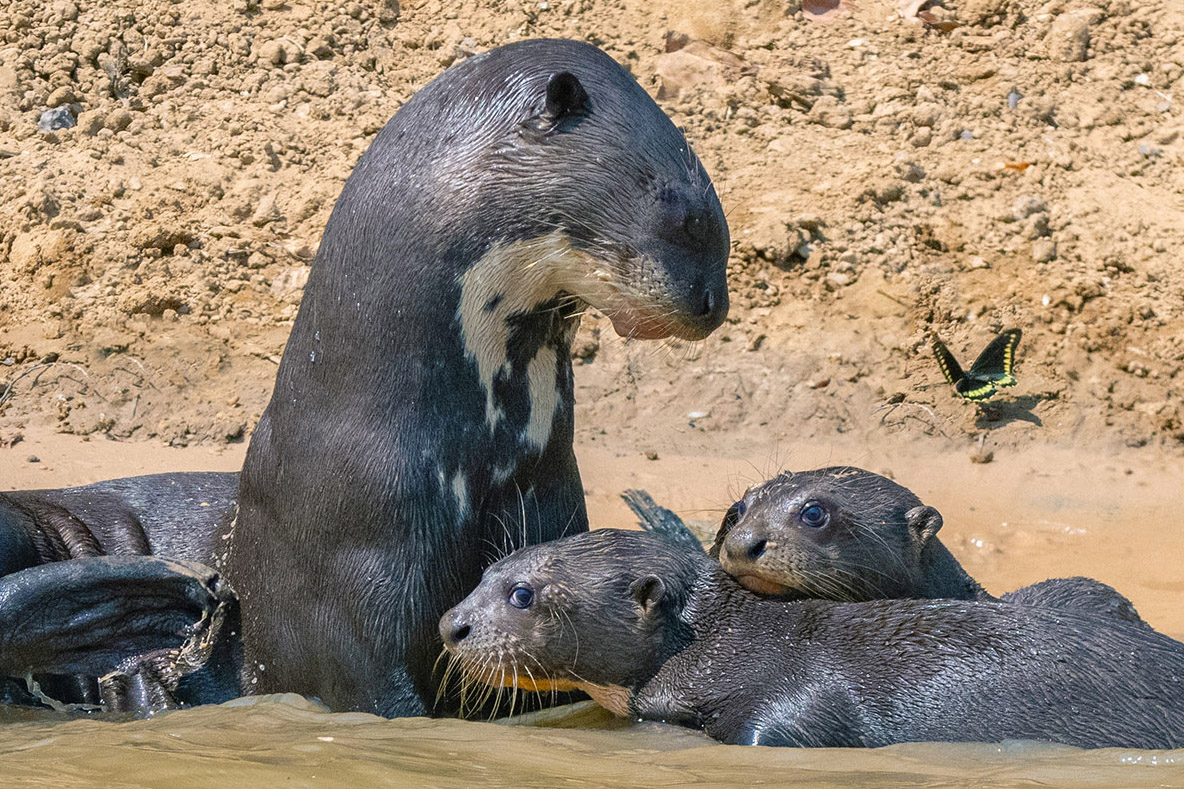
Giant otters can give birth year-round although many pups are born during the dry season. A litter may contain 1-5 pups. In this group there were three young pups.
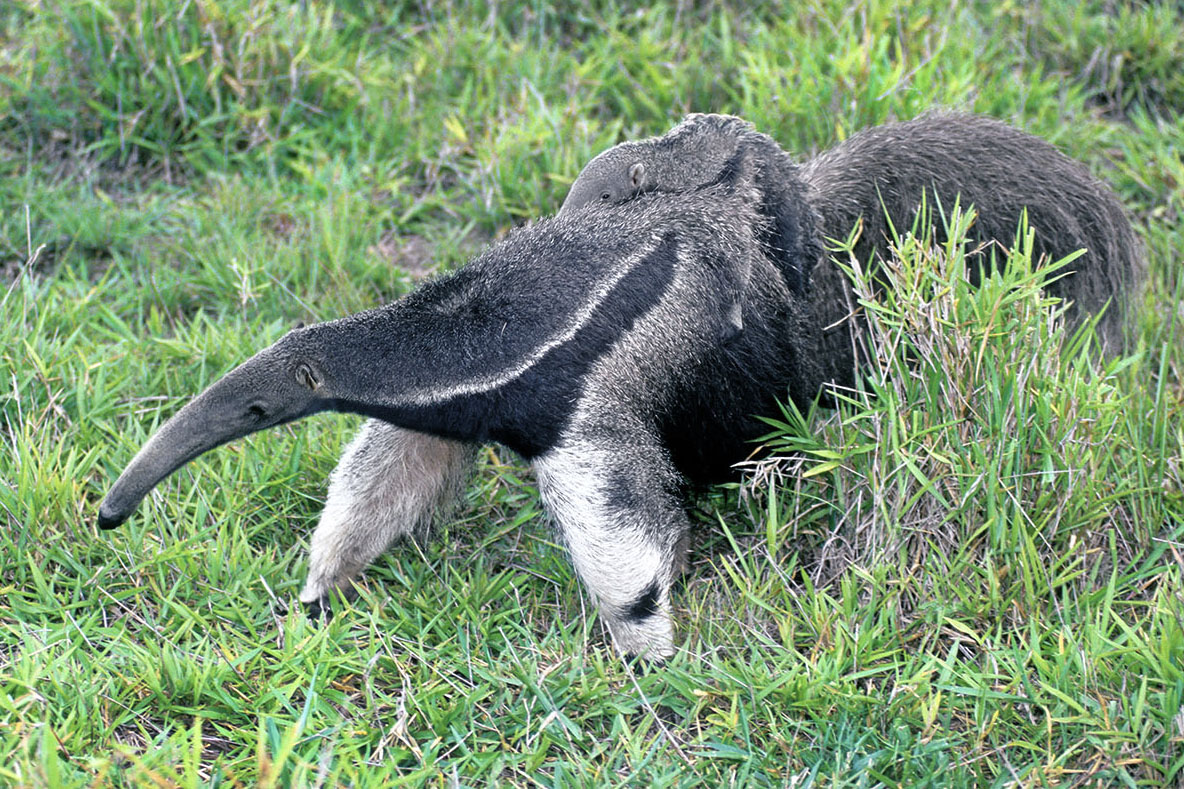
Anteaters are quite near-sighted, so a close approach is sometimes possible. After I crouched beside a termite mound downwind from this mother anteater, she passed so close to me that her bushy tail brushed my shoulder.
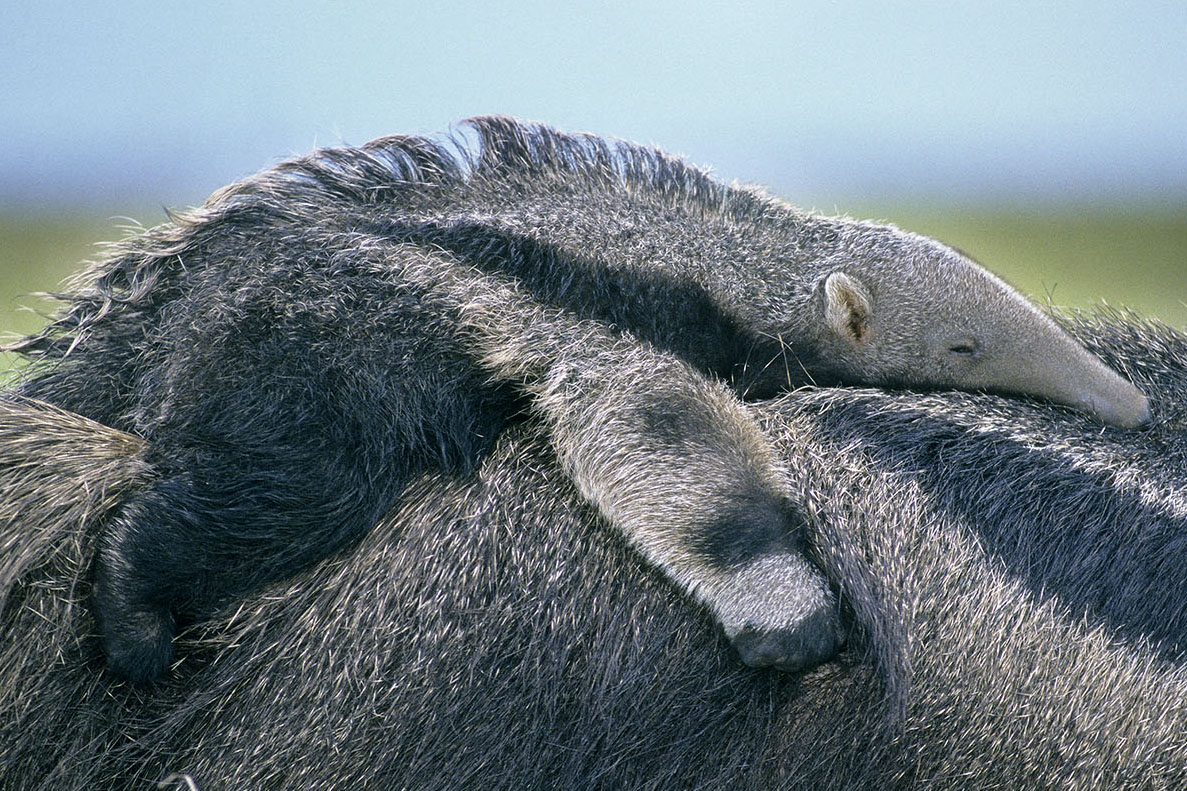
Termite mounds are sometimes far apart, and a mother anteater may travel many kilometers in a day of foraging. Her baby rides with her so that it is always nearby for nursing, warmth, and protection.
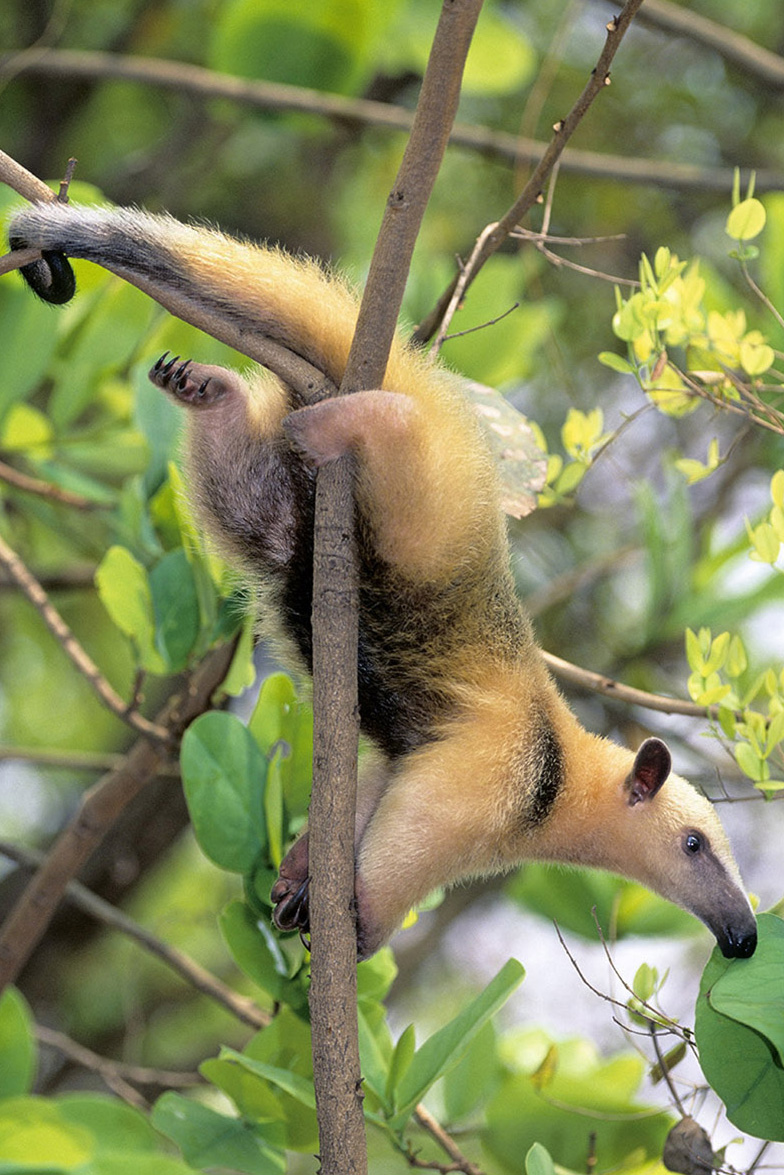
The collared tamandua is an arboreal anteater that attacks termite mounds in trees with the same determination and effectiveness displayed by giant anteaters on the ground.
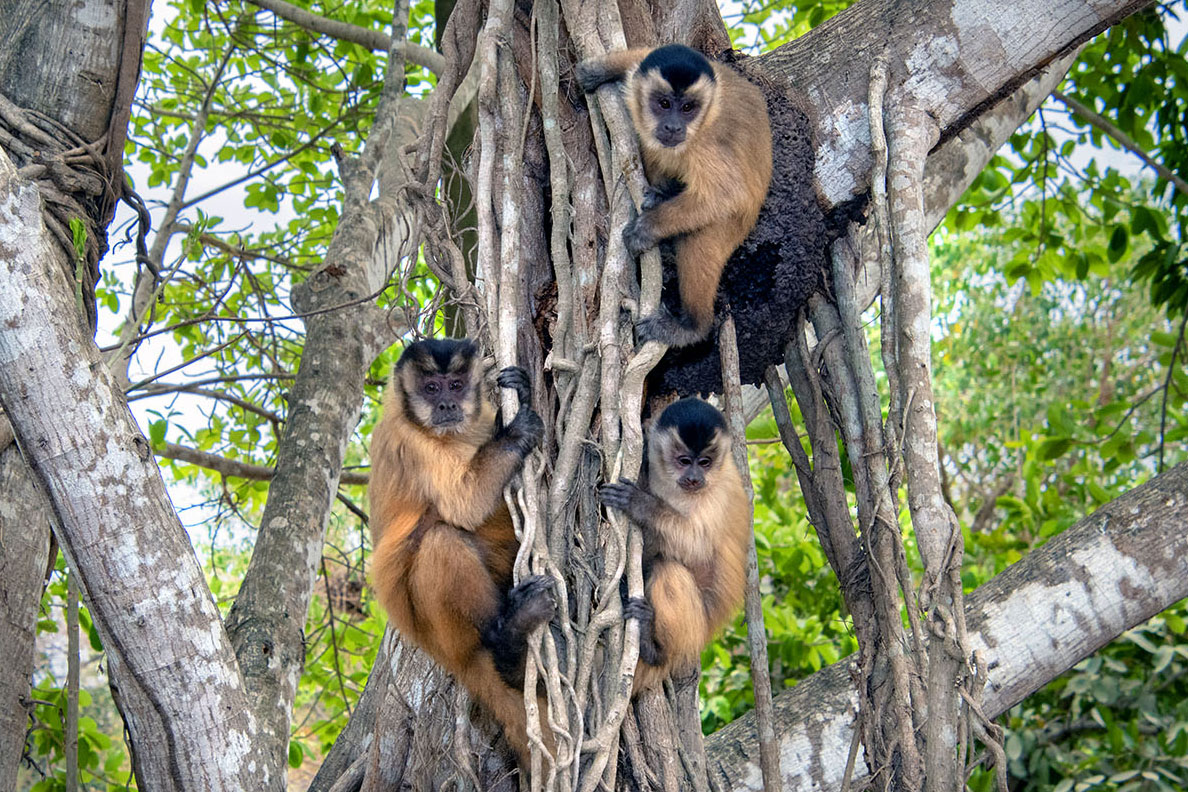
Hooded capuchins form multi-male/multi-female groups containing up to 40+ individuals. The groups are dominated by a large, aggressive alpha male who controls the group’s access to food and has priority breeding with the females.
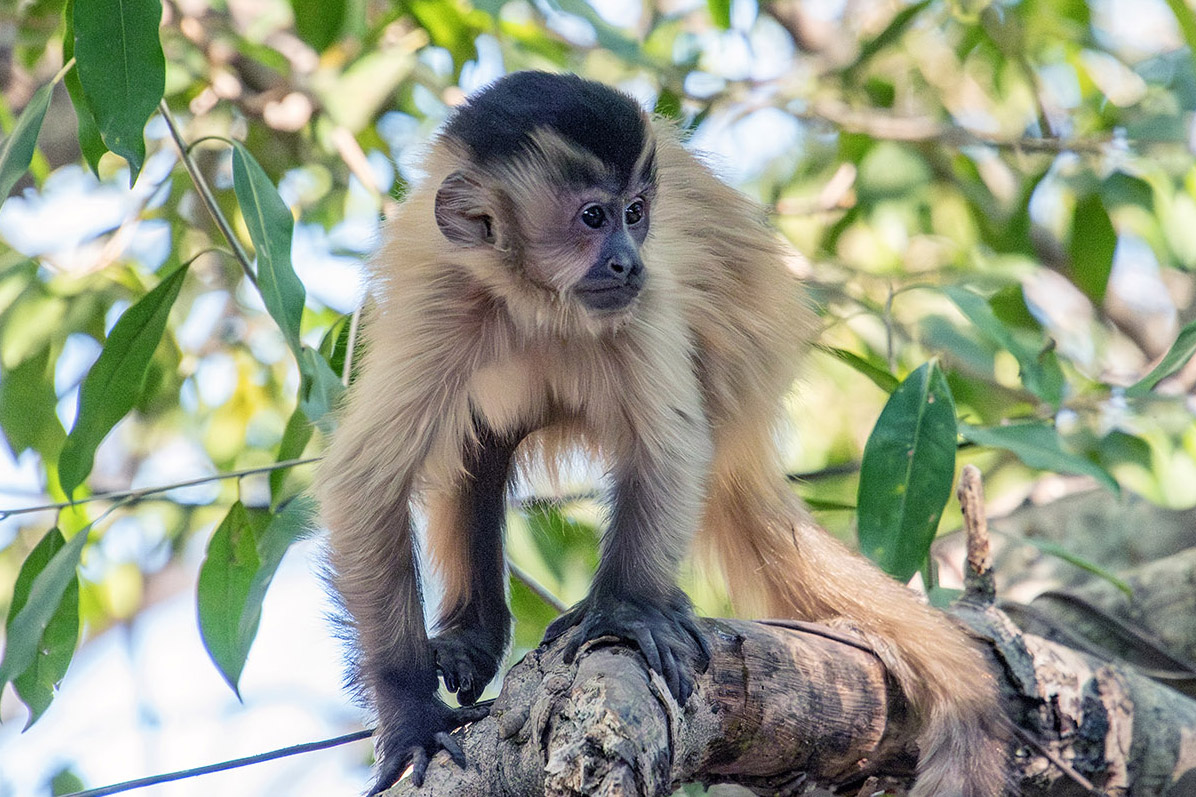
Female capuchins do not reach sexual maturity until they are 4-5 years old and males not until they are 8 years old. Both may live for 50 years in captivity but rarely more than 30 years in the wild.
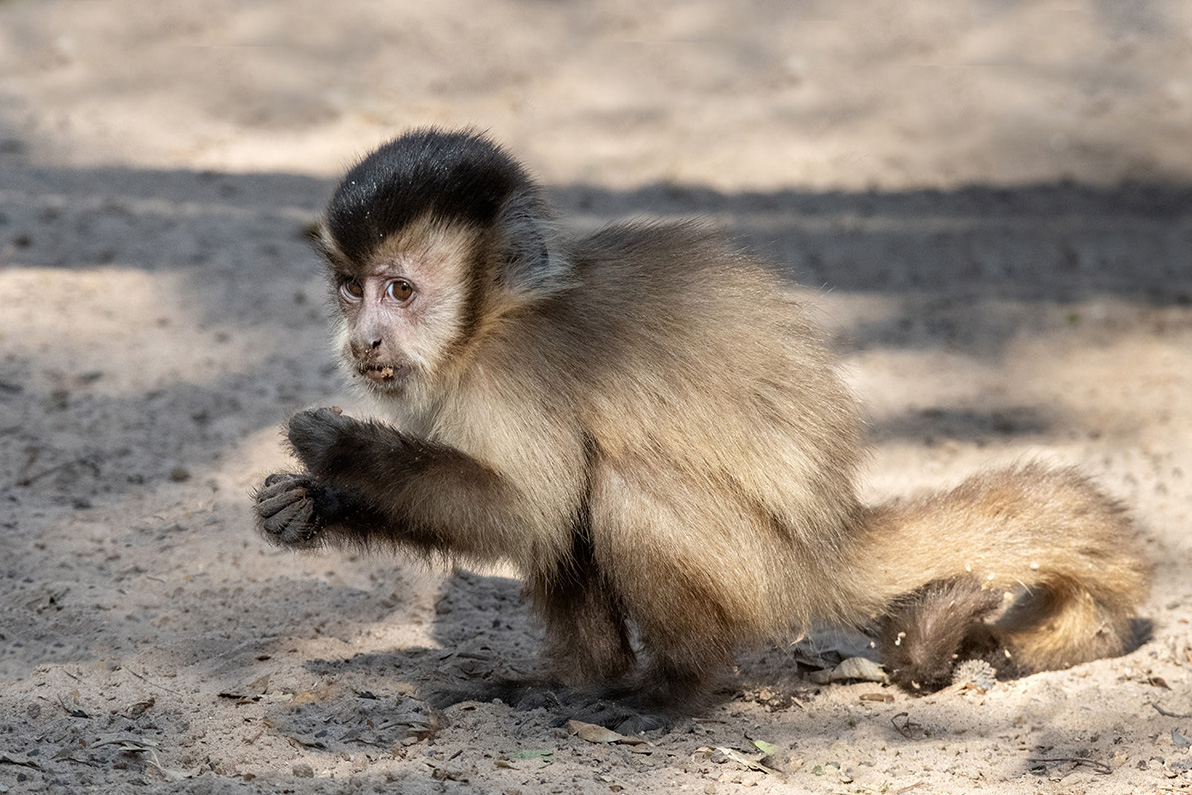
Hooded capuchins eat fruits, seeds, insects, frogs, and small rodents.
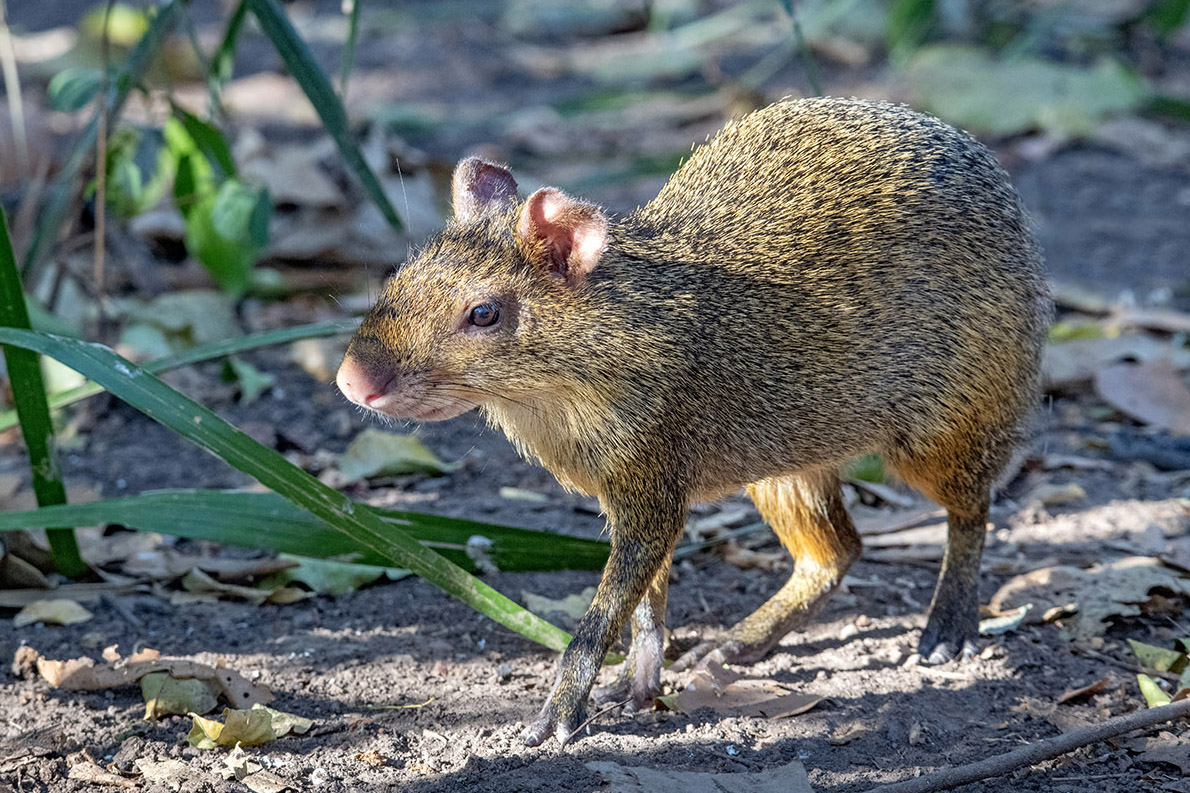
Azara’s agouti is a small, extremely shy tropical rodent related to the guinea pig. The agouti often buries seeds and nuts and then forgets to retrieve them, inadvertently helping plants to disperse and grow. This habit has earned it the nickname of the “jungle gardener.”
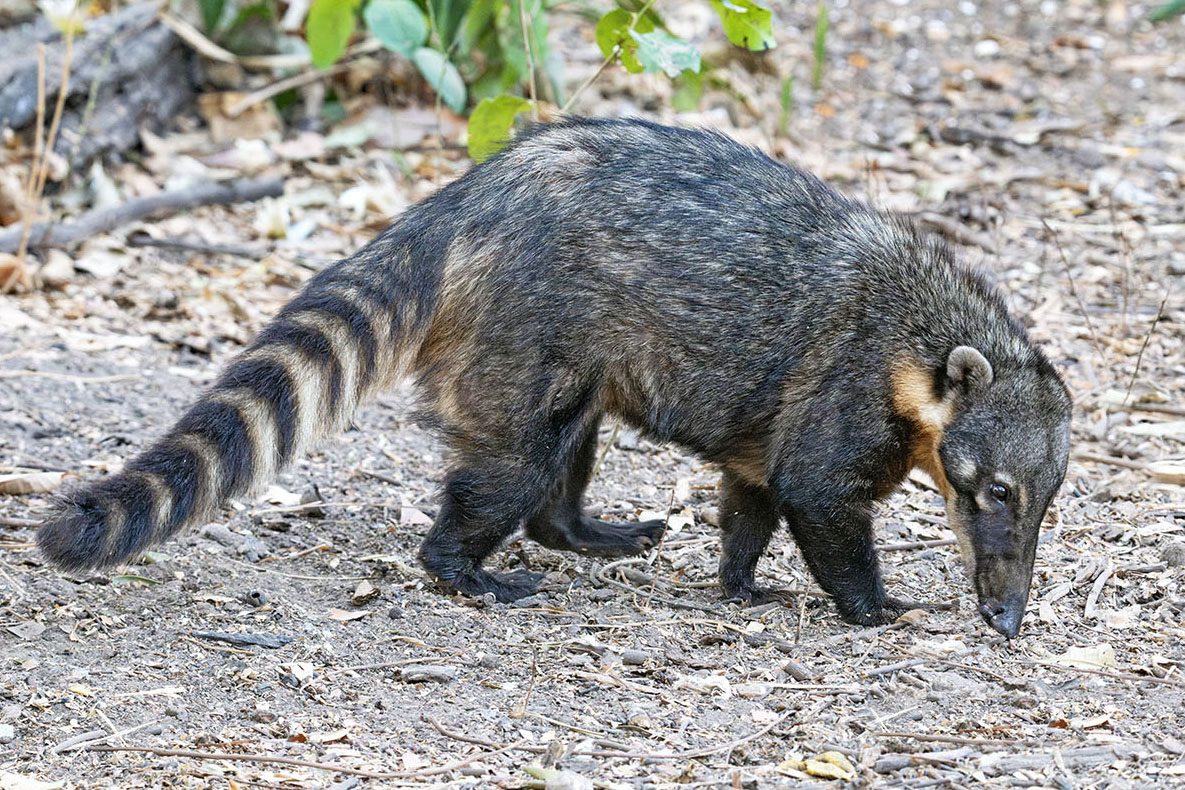
The coatimundi is a close relative of the raccoon. Its long, pig-like snout has earned it the nickname the “hog-nosed raccoon”. Its nose is extremely mobile and can rotate 60° in any direction. The coati uses its flexible nose to sniff out buried insects, spiders and other invertebrates which it then unearths with its long front claws.
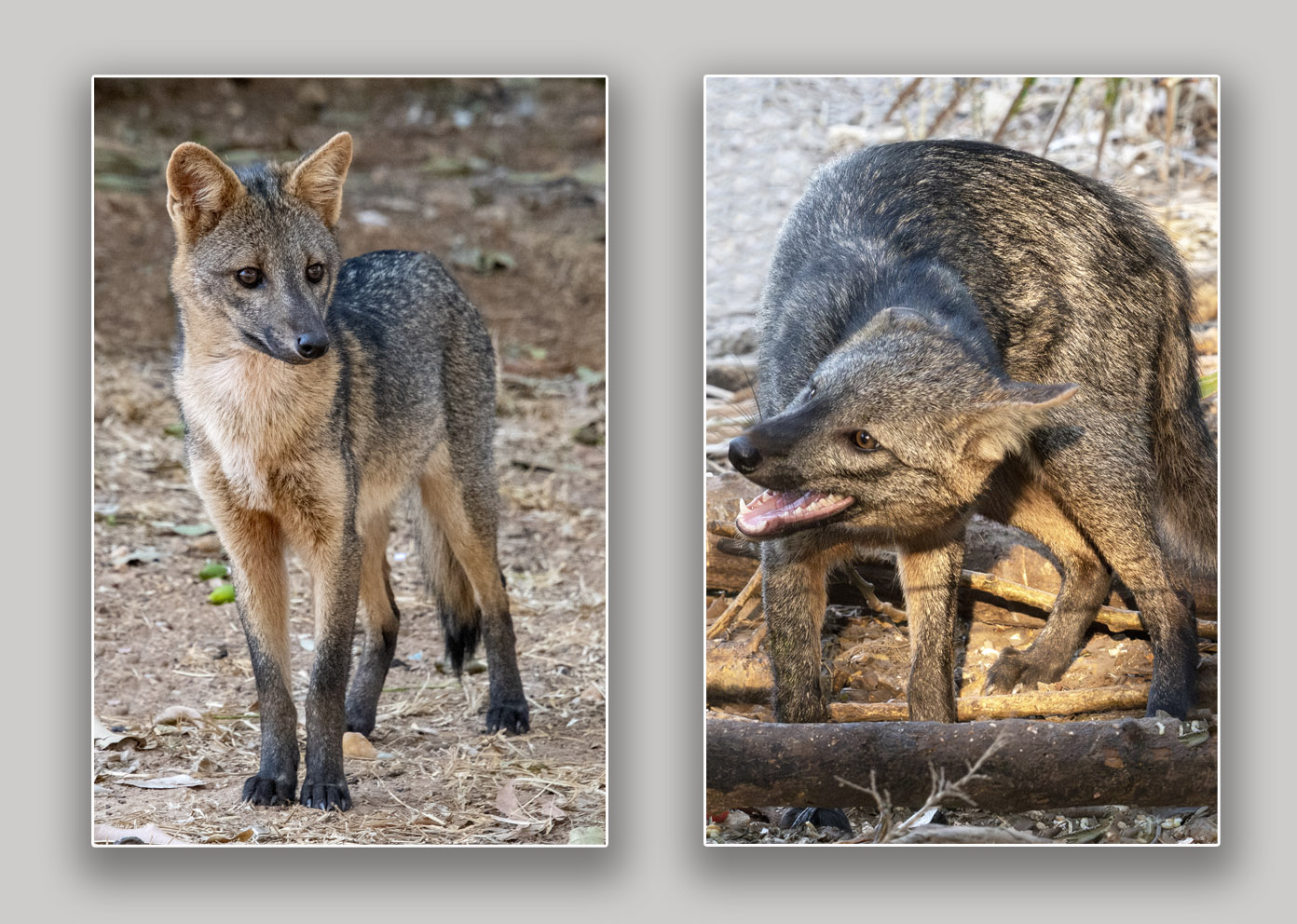
Like all members of the dog family, the crab-eating fox relies in part on its head and ear positions and grimacing to communicate its intentions and status. The fox on the left is dominant and confidant while the one on the right is subordinate and frightened.
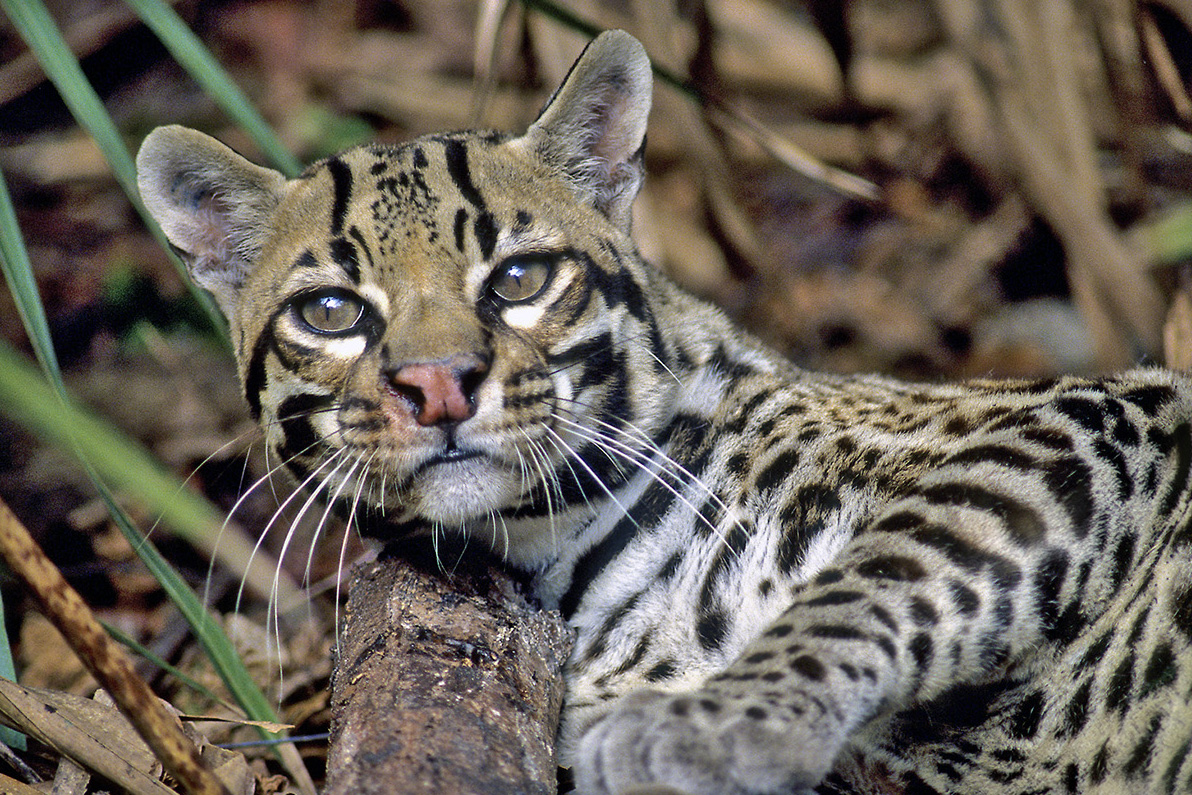
There are seven species of cats in the Pantanal. They range in size from the 3.5-kilogram (7.7-lb) oncilla, a small spotted cat the size of a housecat, to the 150-kilogram (330-lb) jaguar. In between these two extremes is the medium-size 12- to 16-kilogram (26 to 35-lb) ocelot, pictured here.
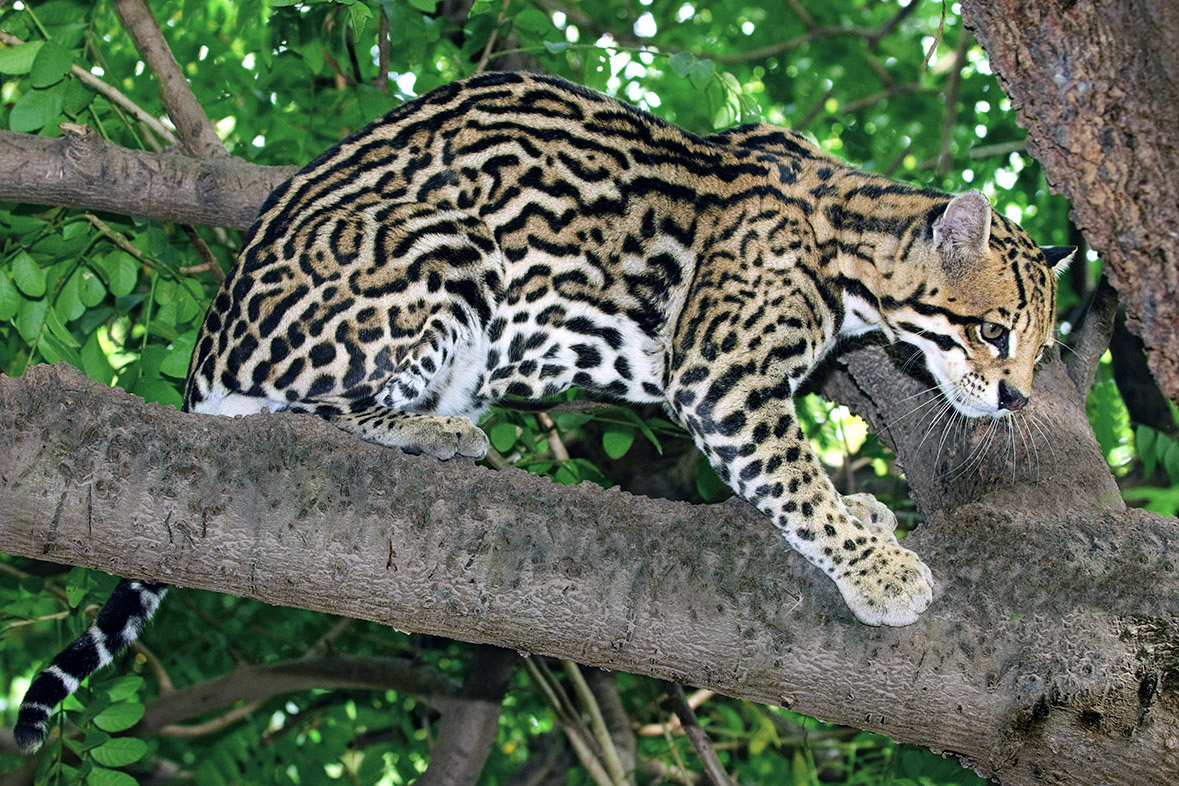
The ocelot commonly hunts rabbits, agoutis, opossums, and armadillos on the ground but will also skillfully scale trees to hunt iguanas, tamanduas, monkeys, and birds.
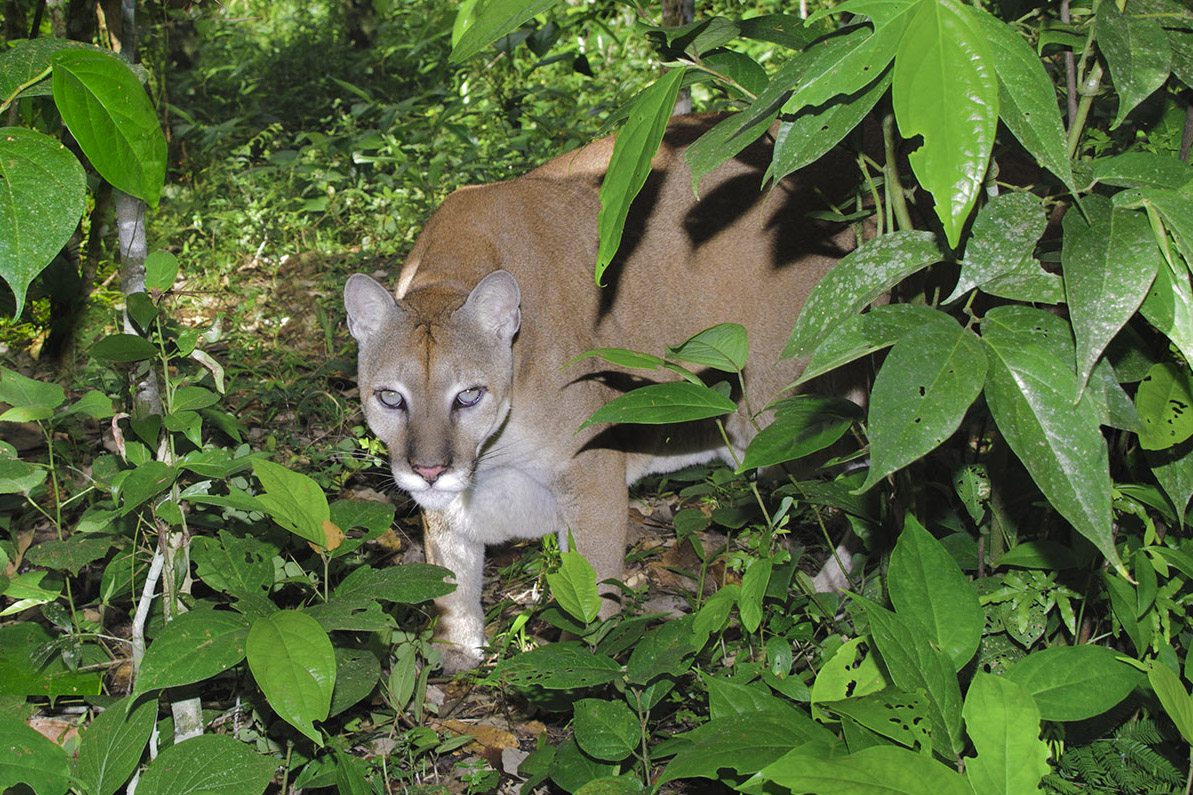
The puma has the greatest range of any wild land mammal in the Western Hemisphere, extending from the Yukon in the north to Tierra del Fuego in the south. Pumas are smallest close to the equator and larger towards the poles. Those in the Pantanal weigh up to 70 kilograms (154 lbs), roughly half the size of the largest jaguars. Where the ranges of the two predatory cats overlap, the puma hunts mainly in the drier upland areas while the jaguar hunts along the waterways.
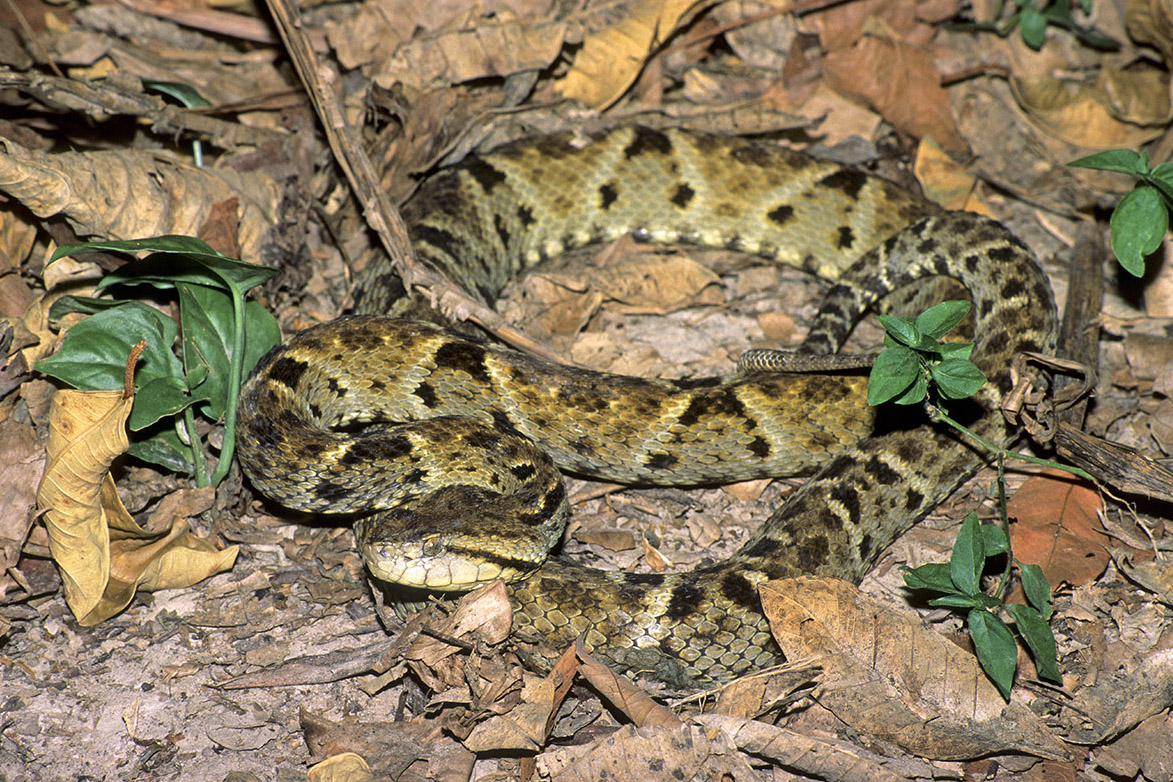
Because the Pantanal is seasonally flooded, it is home to just 80 species of reptiles, a relatively small number for such a subtropical location. Perhaps the most dangerous of the group is the highly venomous fer-de-lance.
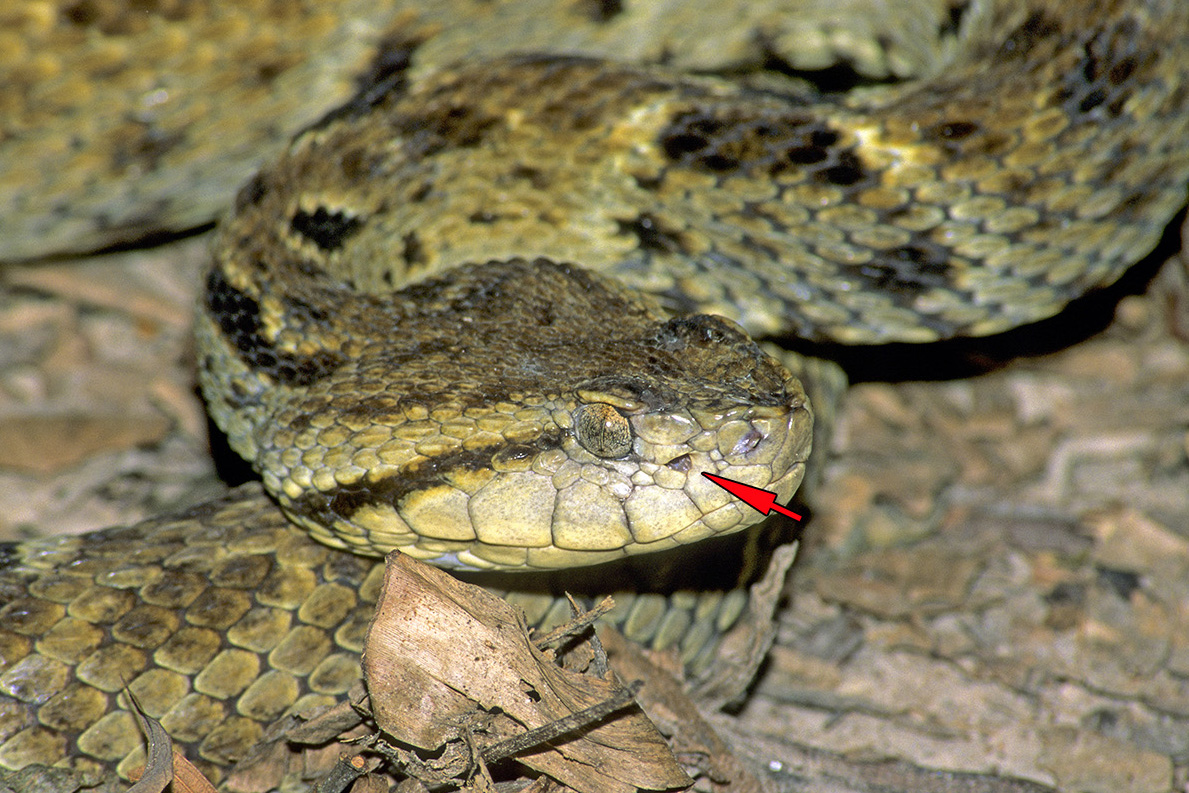
The fer-de-lance is one of the pit vipers, so named because of the presence of a heat-sensing facial pit in front of each of its eyes. The red arrow in the photo illustrates its location. The pits can detect a temperature difference as little as 0.2°C (0.36°F), which enables the snake to effectively hunt hot-blooded prey at night in total darkness.
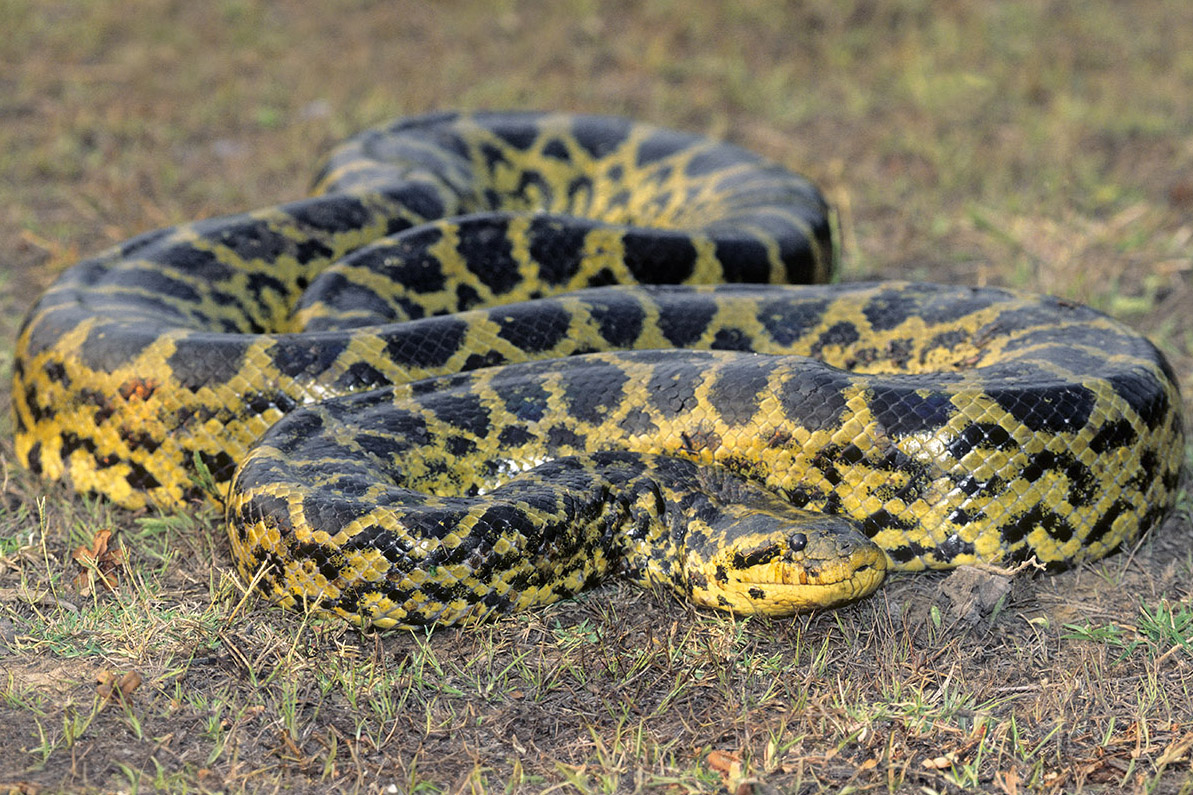
It is rare to find a snake in the Pantanal but the one that is seen most often is the yellow anaconda. The yellow anaconda is a large snake reaching lengths up to 3.7 meters (12 feet) and weighing as much as 54 kilograms (120 lbs.). It feeds on fish, reptiles, frogs, and small mammals. It is a smaller version of its larger cousin, the green anaconda, which is rare in the Pantanal.
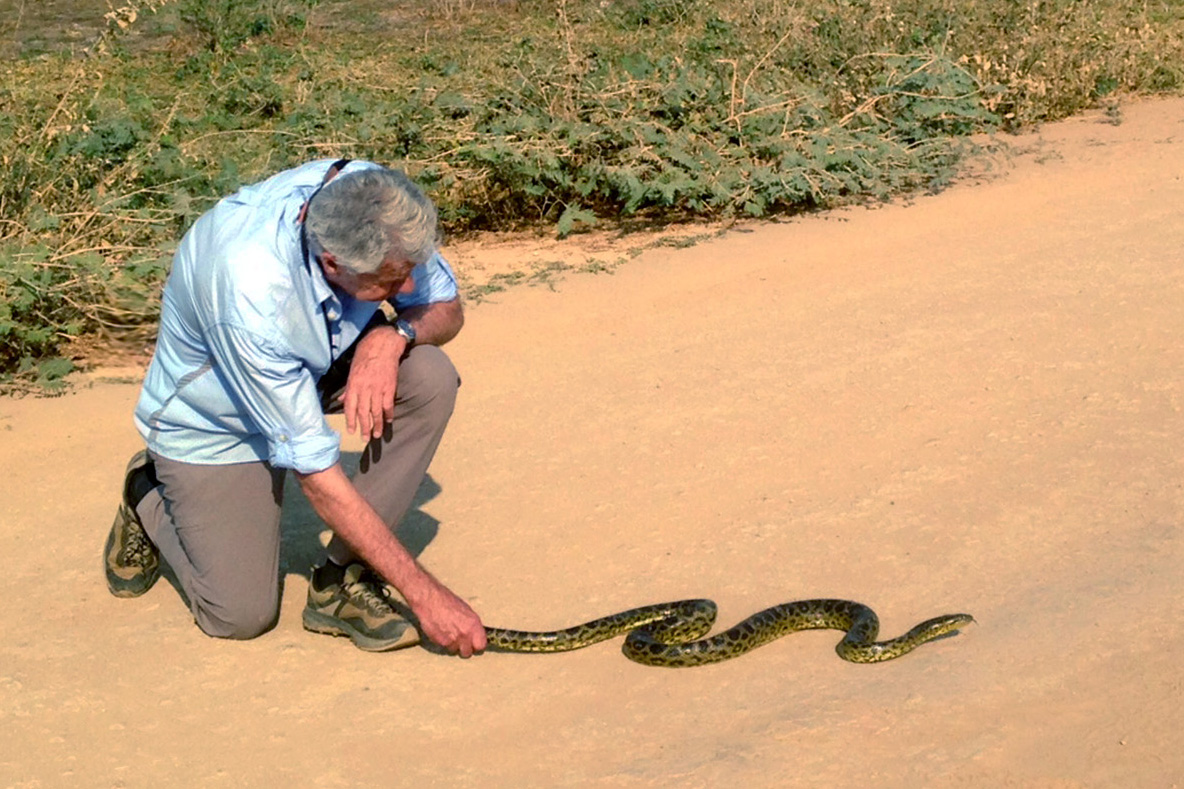
I saw this two-meter (7ft) long snake tangled in vegetation in shallow water beside the road. I brought the snake up onto the road for everyone to have a closer look. Photo © Pat Wismer.
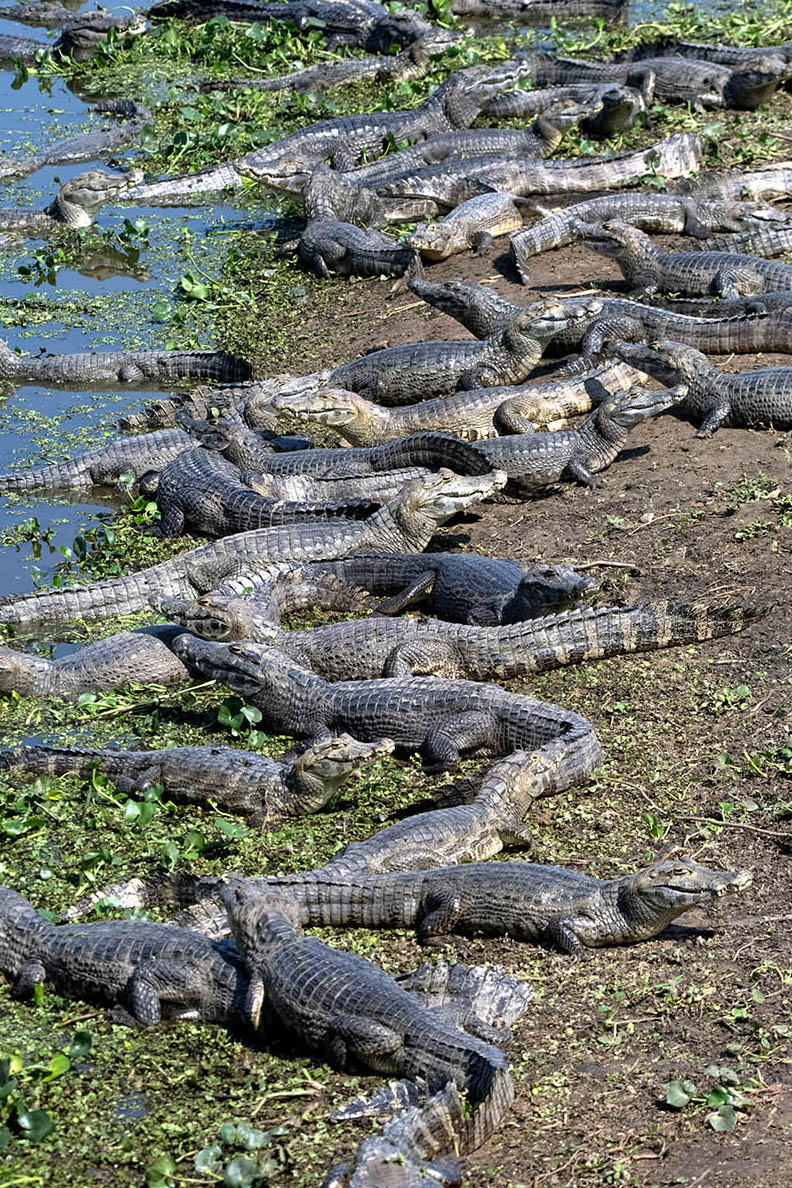
Scientists estimate that there are 15-20 million jacare caimans living in the Pantanal – the highest density of any crocodilian species in the world.
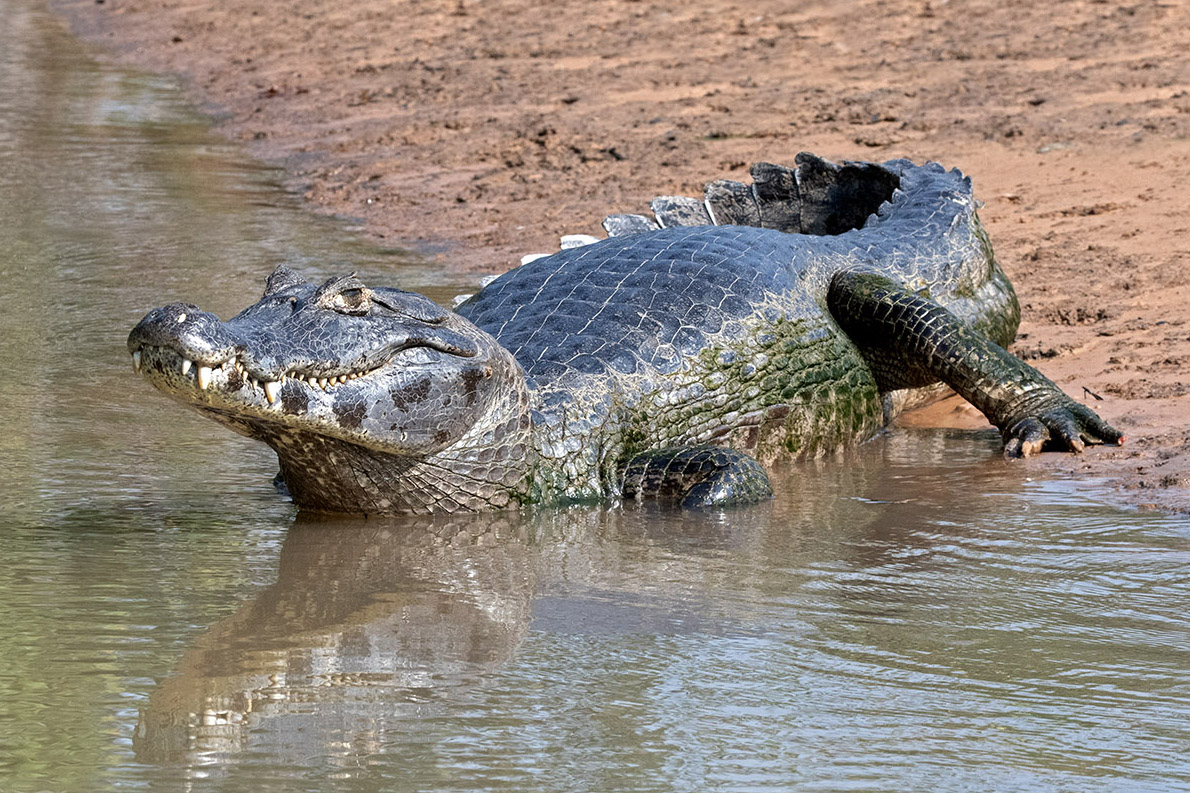
The jacare caiman, a close relative of the American alligator, is an endemic species found only in Argentina, Bolivia, and Brazil. Adult males can grow up to three meters (10 ft) in length and weigh as much as 58 kilograms (128 lbs); typically, adult females are half that size.
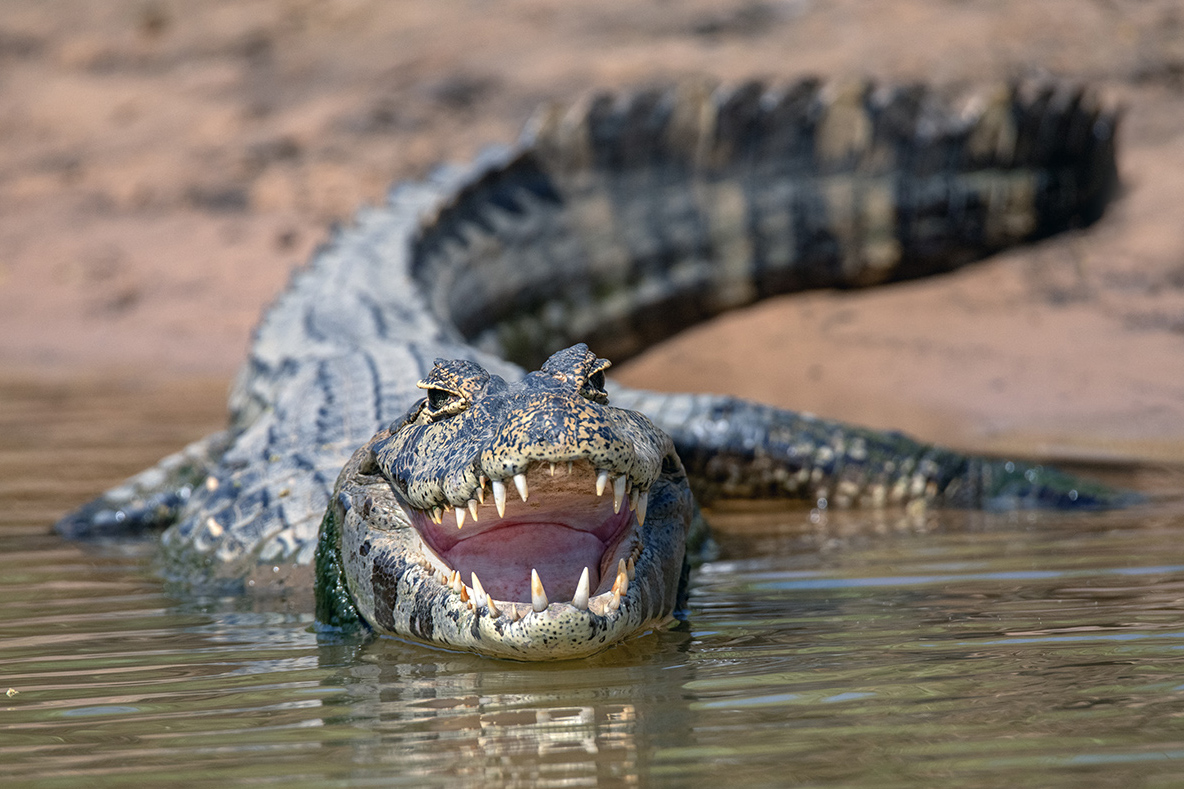
Gaping promotes evaporation from the moist linings of a caiman’s mouth and throat, cooling its brain and preventing it from becoming dangerously overheated while its core body temperature slowly warms up.
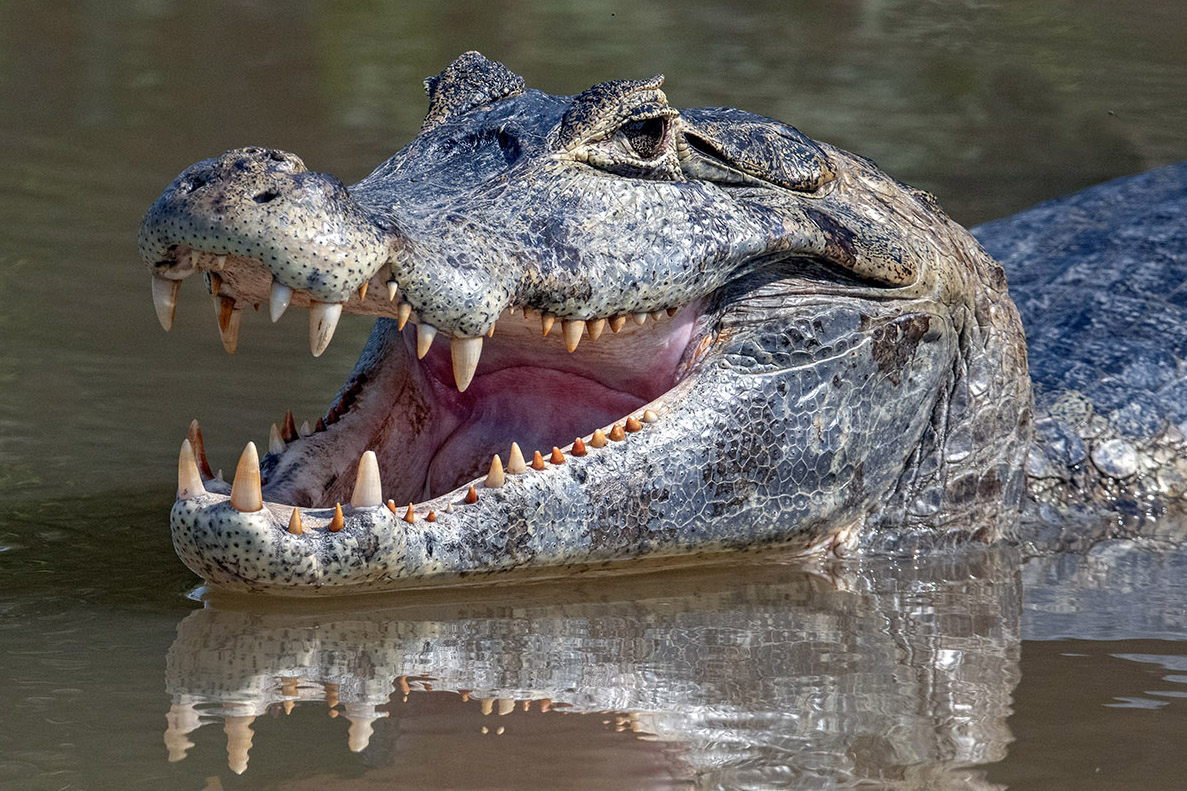
When it is young, a caiman hunts snails, aquatic insects, and small fish in the tangle of vegetation where it hides. As an adult, it graduates to larger fish, such as piranha and catfish, but also hunts yellow anacondas, capybaras, and wading birds that carelessly walk near the water’s edge.
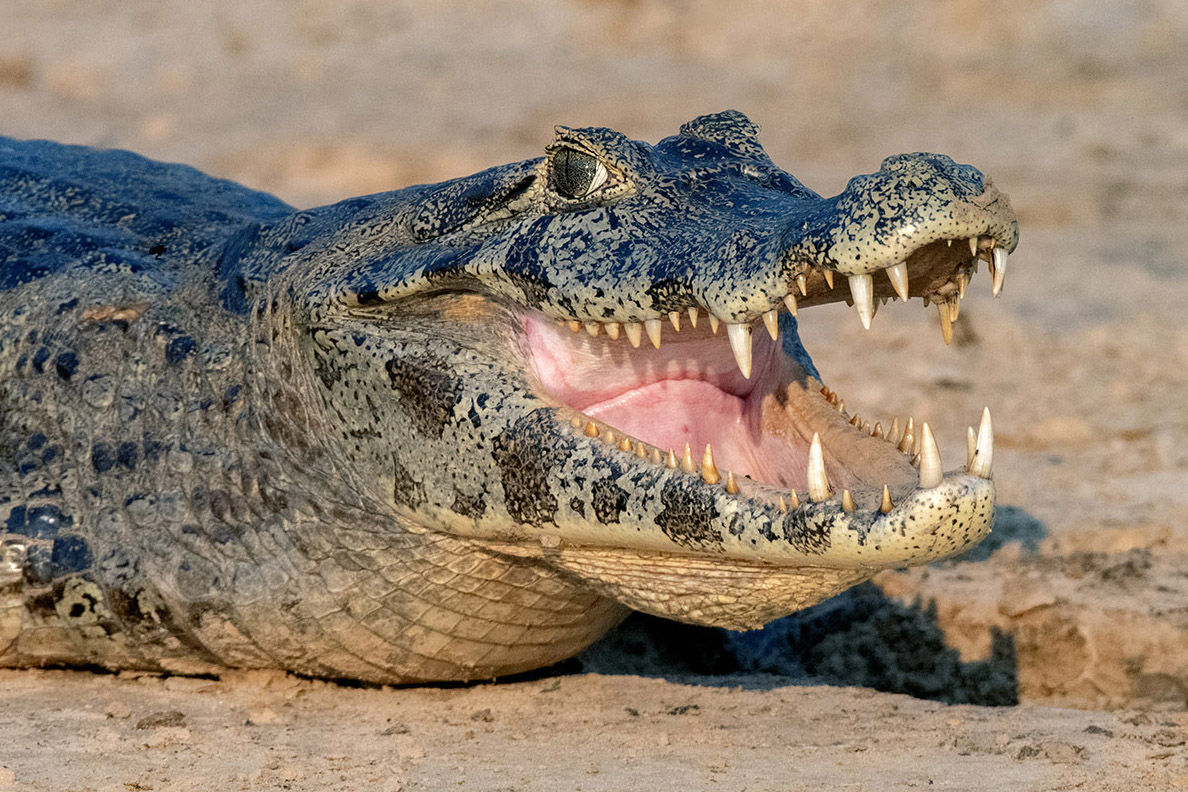
An adult caiman has 70-80 heavy, conical teeth which it replaces continuously throughout its life. On average, a tooth is replaced once per year, but in a staggered process so that the caiman always has enough teeth to effectively catch and kill its prey.
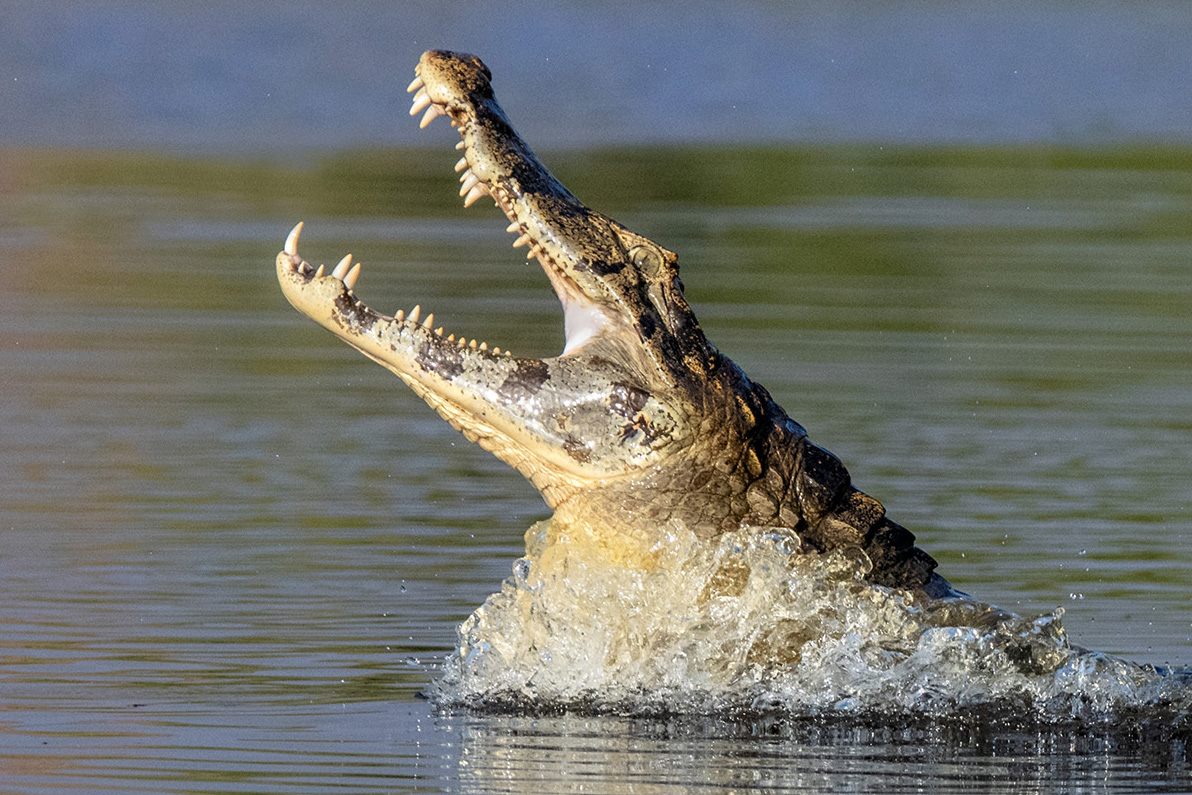
A hunting caiman may leap half out of the water when it is trying to catch an unsuspecting victim at the water’s edge.
Read the series:
About the Author – Dr. Wayne Lynch

For more than 40 years, Dr. Wayne Lynch has been writing about and photographing the wildlands of the world from the stark beauty of the Arctic and Antarctic to the lush rainforests of the tropics. Today, he is one of Canada’s best-known and most widely published nature writers and wildlife photographers. His photo credits include hundreds of magazine covers, thousands of calendar shots, and tens of thousands of images published in over 80 countries. He is also the author/photographer of more than 45 books for children as well as over 20 highly acclaimed natural history books for adults including Windswept: A Passionate View of the Prairie Grasslands; Penguins of the World; Bears: Monarchs of the Northern Wilderness; A is for Arctic: Natural Wonders of a Polar World; Wild Birds Across the Prairies; Planet Arctic: Life at the Top of the World; The Great Northern Kingdom: Life in the Boreal Forest; Owls of the United States and Canada: A Complete Guide to their Biology and Behavior; Penguins: The World’s Coolest Birds; Galapagos: A Traveler’s Introduction; A Celebration of Prairie Birds; and Bears of the North: A Year Inside Their Worlds. In 2022, he released Wildlife of the Rockies for Kids, and Loons: Treasured Symbols of the North. His books have won multiple awards and have been described as “a magical combination of words and images.”
Dr. Lynch has observed and photographed wildlife in over 70 countries and is a Fellow of the internationally recognized Explorers Club, headquartered in New York City. A Fellow is someone who has actively participated in exploration or has substantially enlarged the scope of human knowledge through scientific achievements and published reports, books, and articles. In 1997, Dr. Lynch was elected as a Fellow to the Arctic Institute of North America in recognition of his contributions to the knowledge of polar and subpolar regions. And since 1996 his biography has been included in Canada’s Who’s Who.



absolutely great photos & explanations of the animals . I thoroughly enjoy Dr Lynch’s pictures and stories and learn so much as well.
Thanks Marilyn. People will start to wonder if I am paying you for your wonderful reviews. Always appreciated.
Well done. Great article, wonderful images and VERY inspirational.
Many thanks Kevin.
What an inspiring article combined with fabulous photographs! Thank you for your generous introduction to the Jaguar.
Your a brave man!!!