



Last month I featured jaguars from South America, and because of the popularity of big cats I decided to share some photos of another spotted cat, the cheetah, with which I have a long history dating back to 1979, the first year of my freelance career. The International Union for the Conservation of Nature (IUCN) classifies the cheetah as vulnerable to extinction, a consequence of habitat loss, poaching, conflict with humans, and low genetic diversity which makes the cat less fertile and more susceptible to lethal infections. Today, fewer that 6,500 cheetahs remain in the wilds of Africa and Iran.
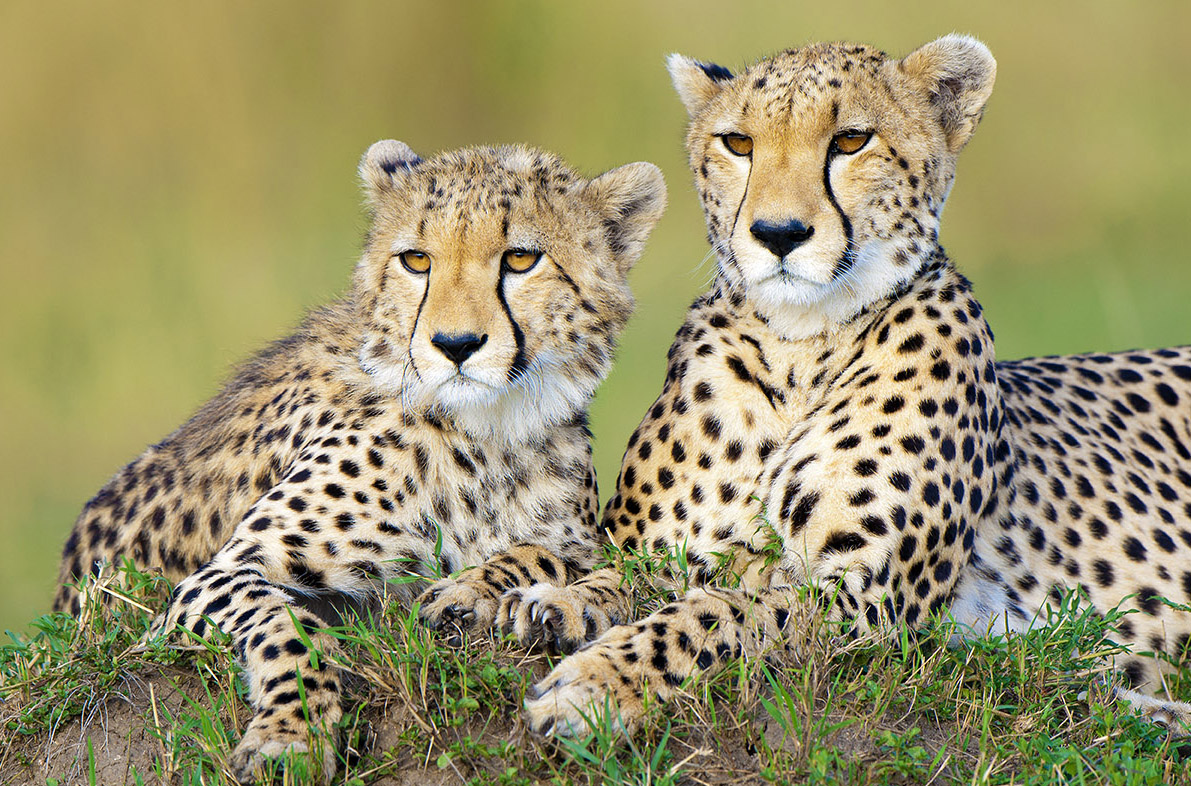
Since the 1940s, the lithe, long-legged beauty of the cheetah has inspired the fashion world to adorn fabrics with the cats’ characteristic spotted pattern. The trend was popularized by Hollywood legends like Marilyn Monroe who paraded in public wearing seductive cheetah-print outfits.
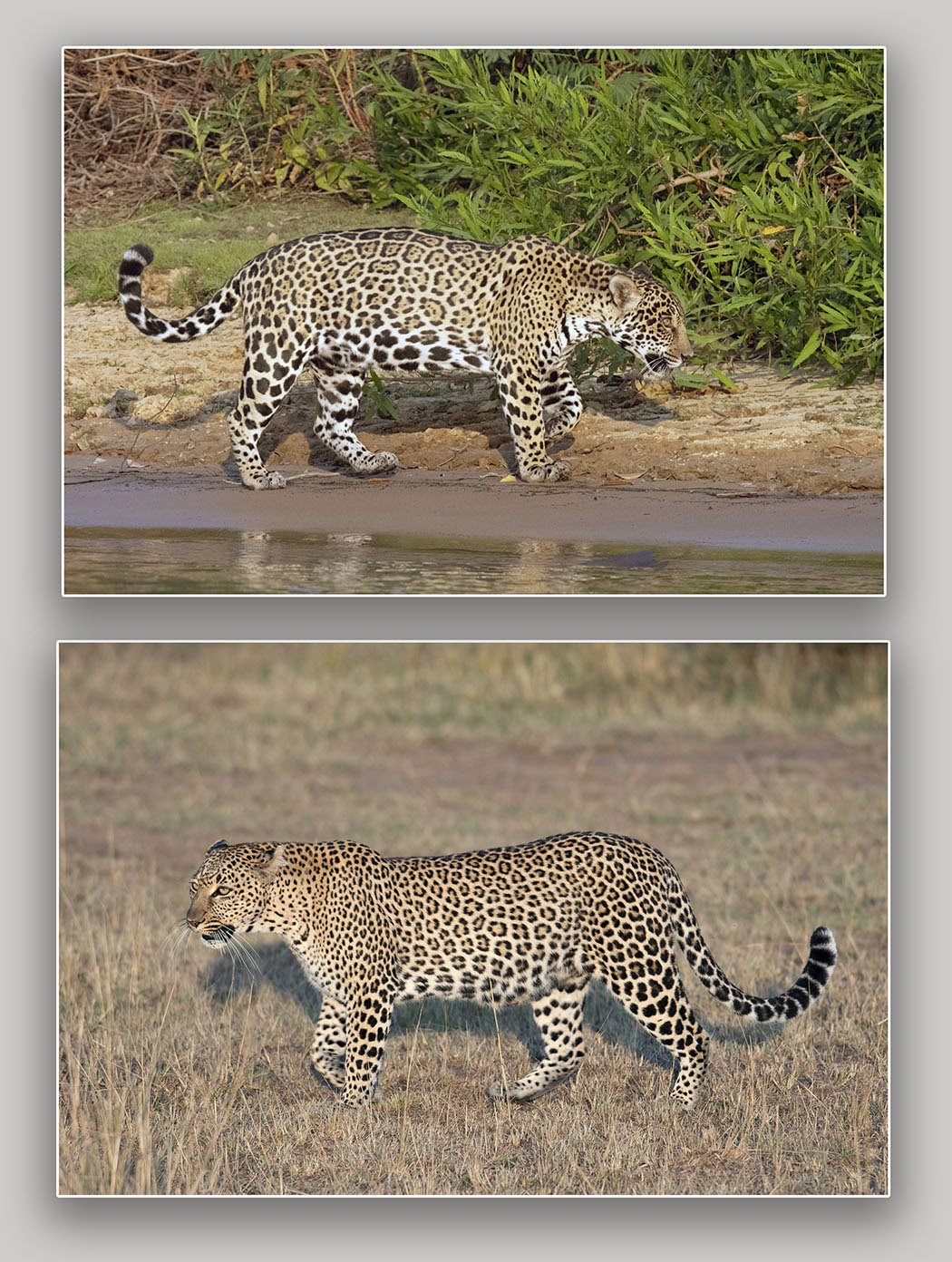
It is easy to confuse the different large spotted cats. As you may recall the large distinctive spots on the sides of jaguars and leopards, called rosettes, differ. The jaguar has fewer rosettes than the leopard and they are larger in size and often have one or more small spots in their centre.
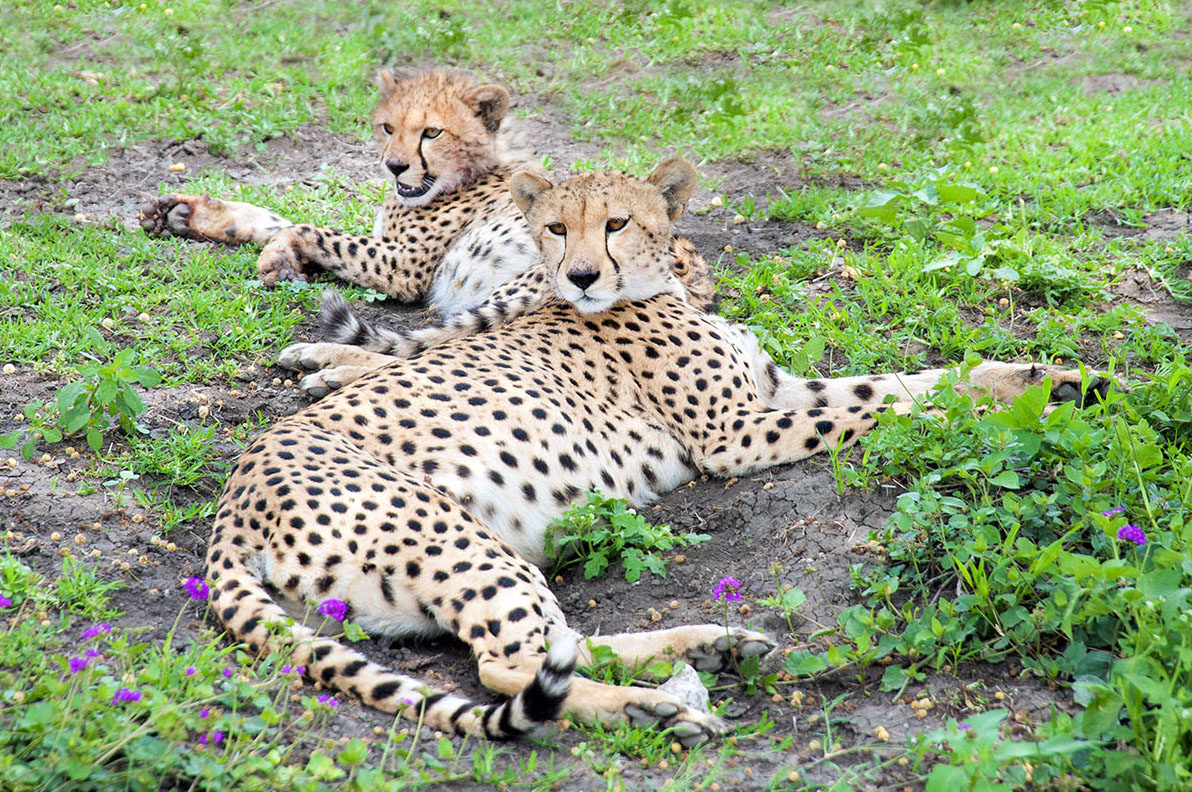
The cheetah has solid black, round spots evenly distributed over its entire body.
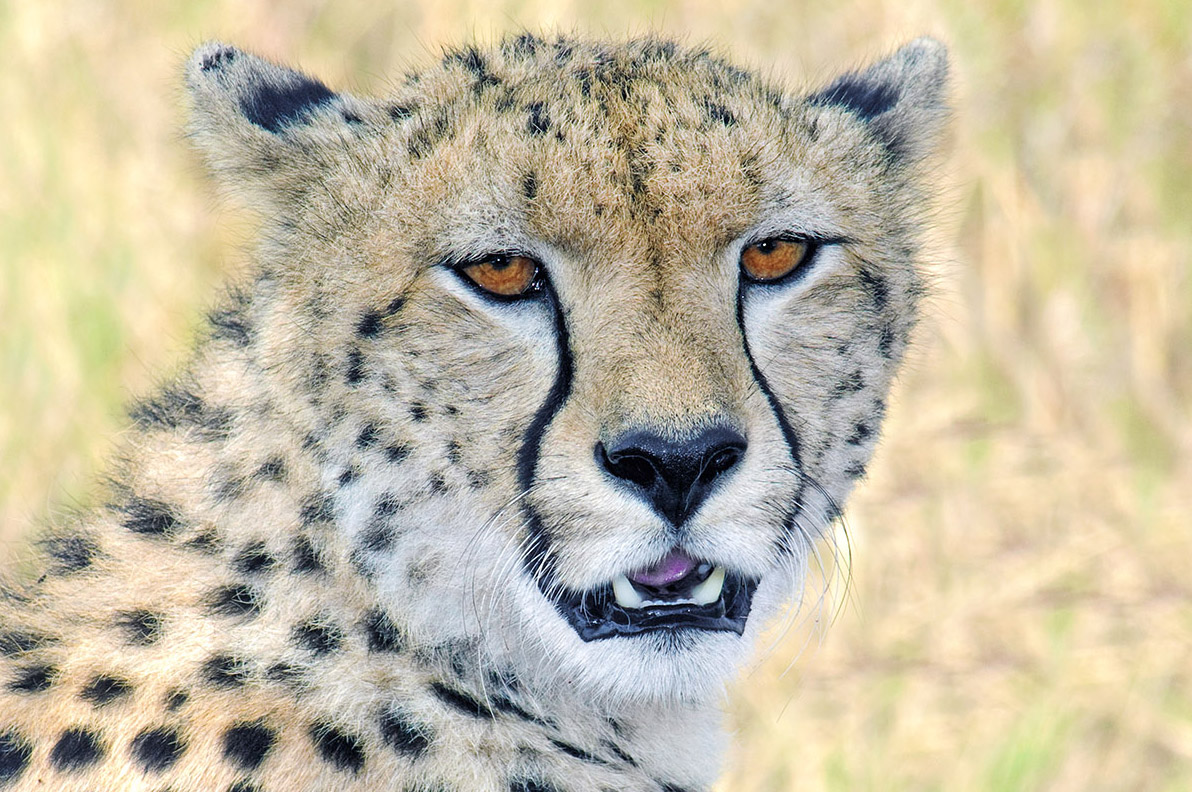
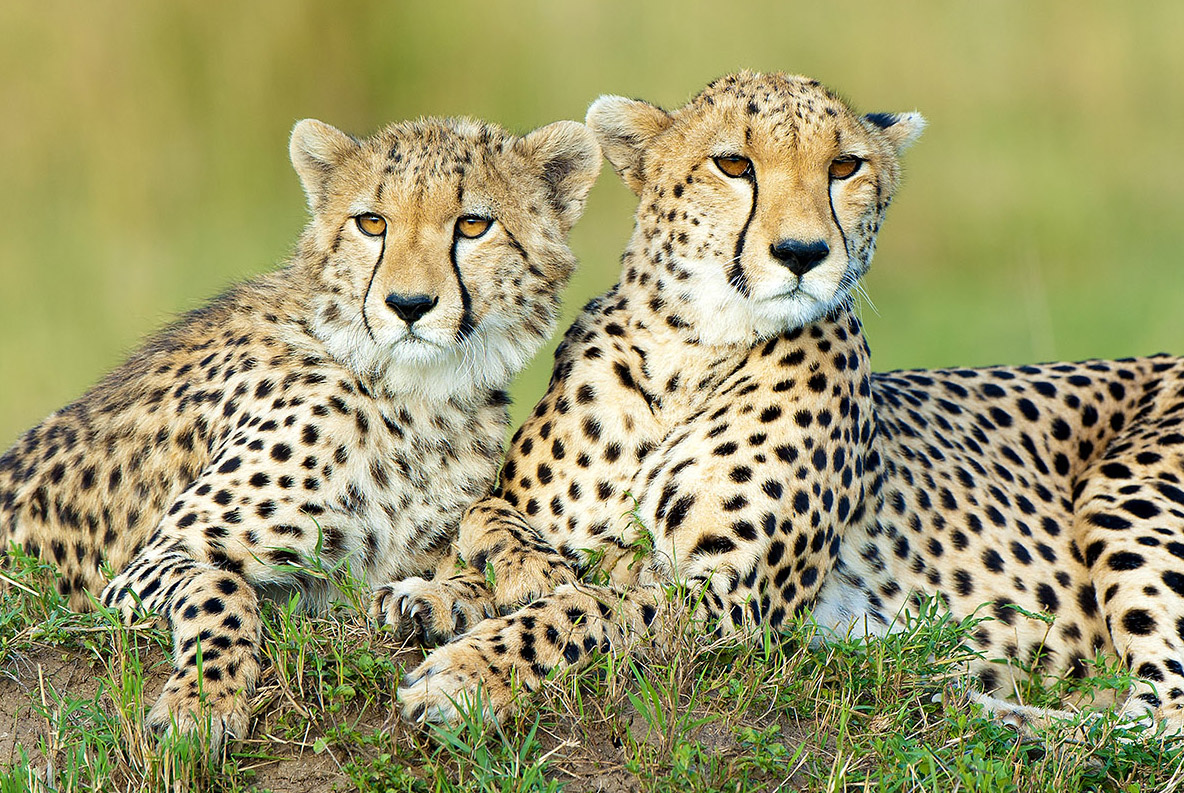
The cheetah is unique among the big cats in having a pair of conspicuous black tear streaks running from the inside corner of its eyes to the corners of its mouth. One fanciful explanation is that the streaks reflect the sun’s distracting glare which is the same explanation given for why football players wear black grease below their eyes. Spoiler alert. In the case of the football players there is no scientific proof that it lessens glare. For the cheetahs, the black streaks may accentuate different facial expressions.
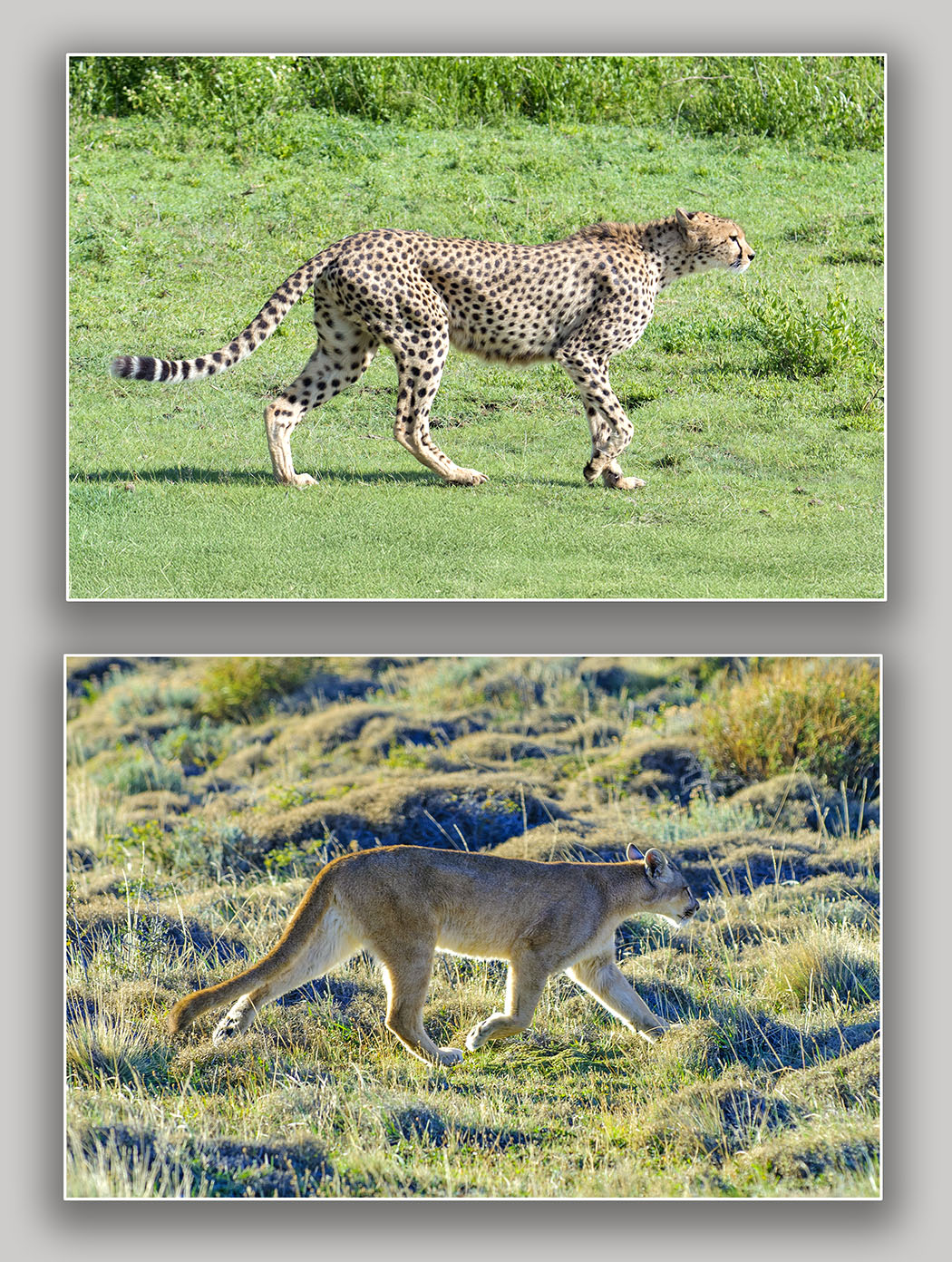
The 40 members of the cat family are subdivided into eight lineages, or evolutionary branches. One of the closest relatives of the cheetah is not any of the big cats such as the jaguar, leopard or tiger which belong to a different lineage, but the familiar cougar, the most widespread cat in the Americas, whose range stretches from the Yukon to Tierra del Fuego.
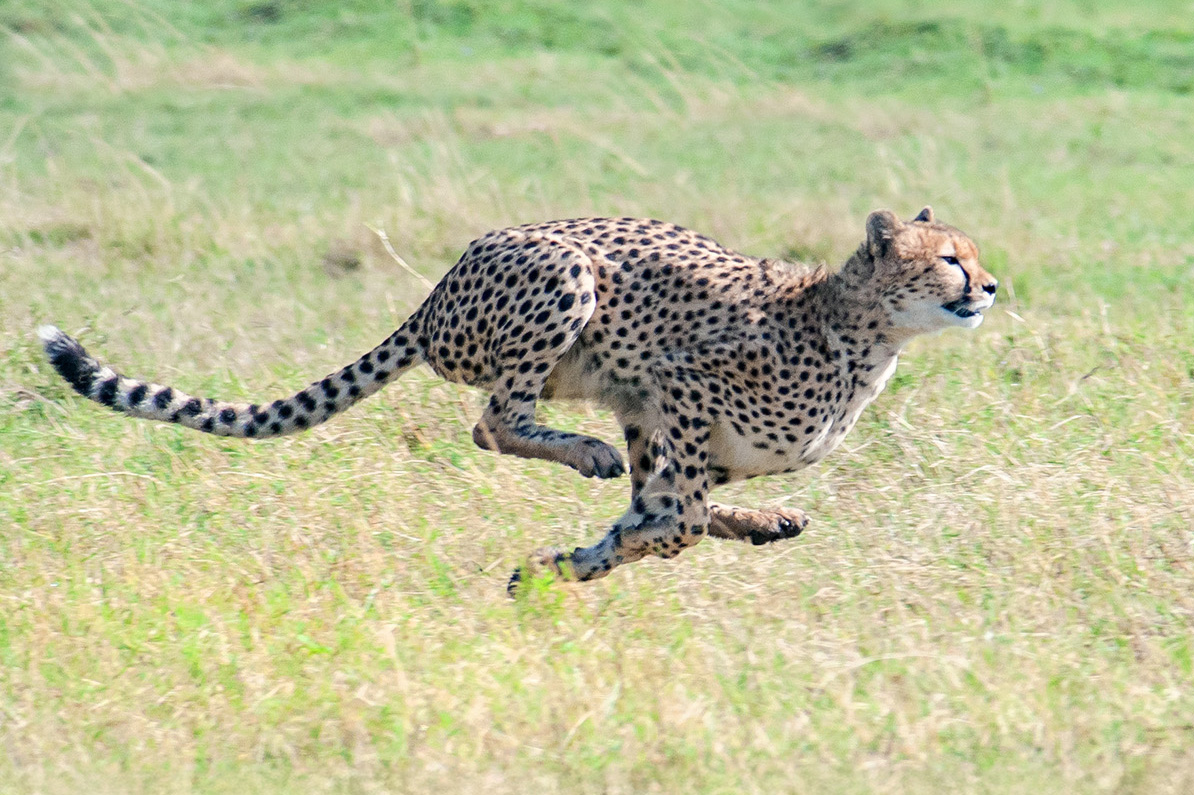
Everyone knows that the cheetah is the world’s fastest land mammal reaching peak recorded speeds of 98 kph (61mph). During more than half the duration of a chase, the cheetah has all four limbs in the air, which enables it to cover up to seven meters (23 ft) in a single stride. Even more impressive than its speed is its rate of acceleration, going from 0 to 97 km/h (0 to 60 mph) in less than 3 seconds.
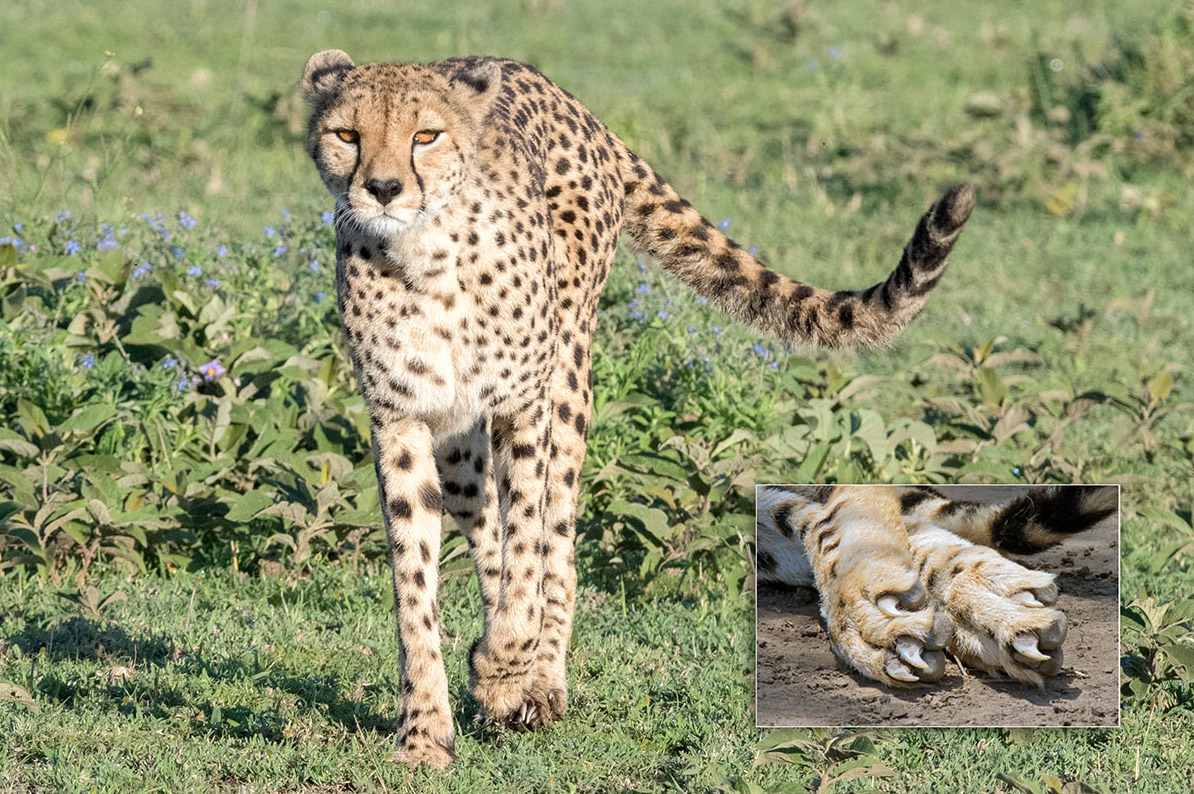
Several adaptations enable the cheetah to run as fast as it does. It has a lightweight skeleton, long thin legs, blunt semi-retractable claws that function like running cleats, and a long muscular tail, up to 89 cm (35 in) in length that acts as a vital counterbalance when making the sharp turns needed to outflank fleeing antelopes which often rapidly change direction when trying to escape.
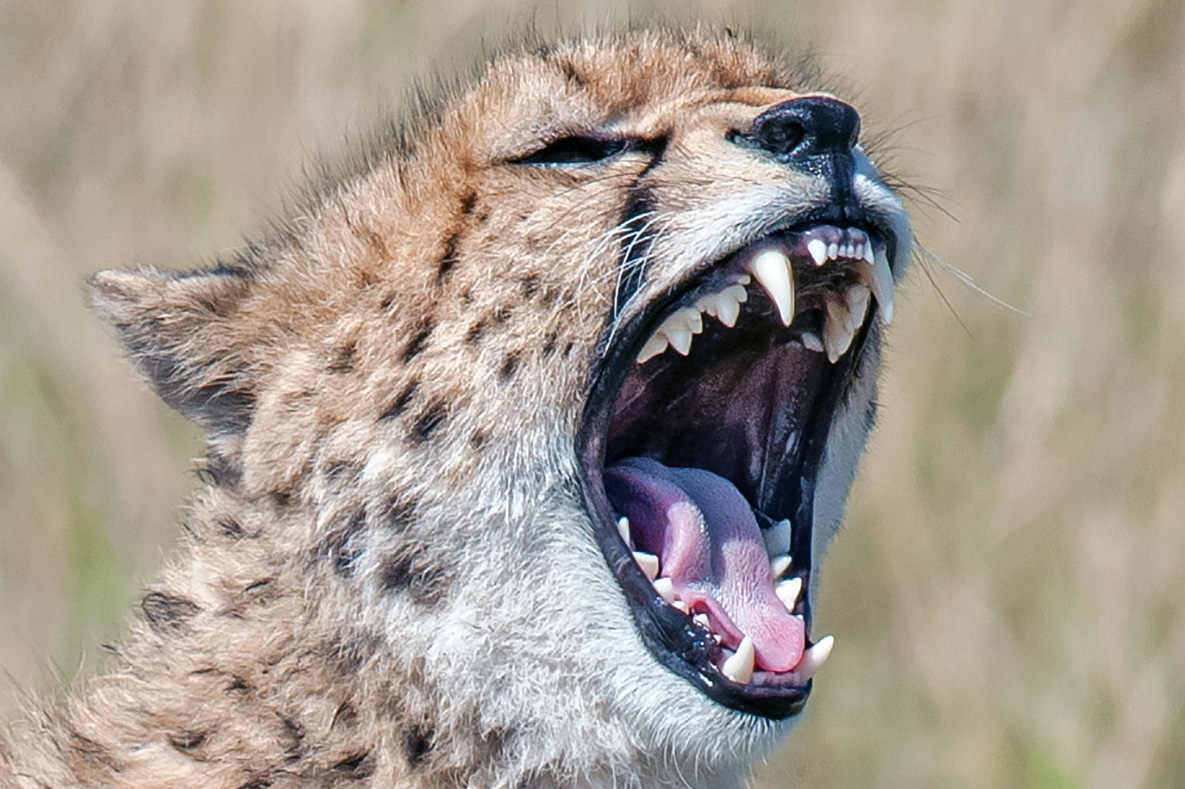
The cheetah has relatively small canine teeth with small roots which leave space for the cat’s large nasal passages needed for the rapid respiration during high-speed pursuits. Typically, chases last less than a minute and average between 300-500 meters in length.
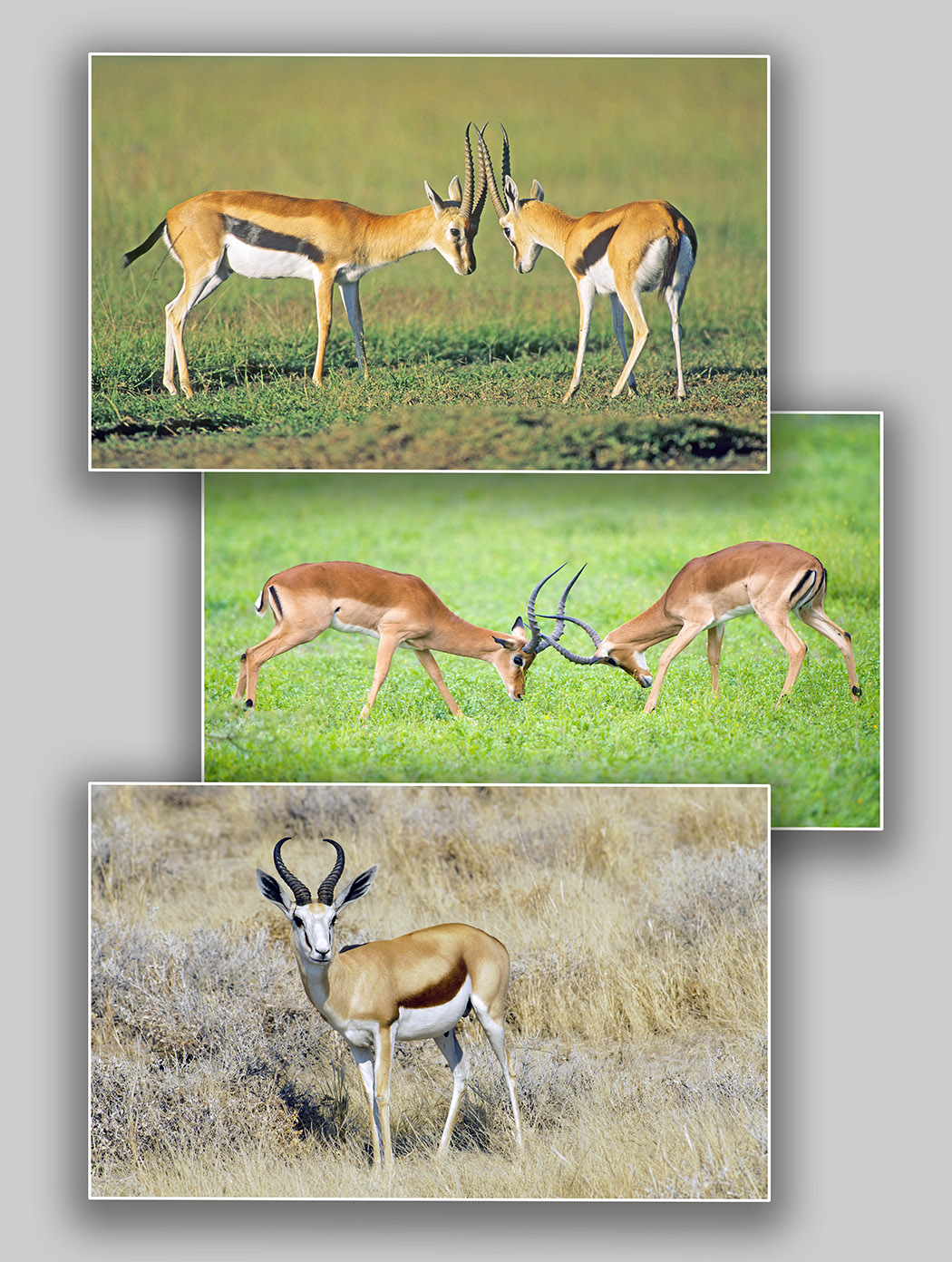
The cheetah is a predator of small to medium prey, which usually weighs less than 40 kg (88 lbs). Three common prey species include Thomson’s gazelles, impala, and springbok. Distracted sparring males and solitary bachelors on territories are frequent victims.
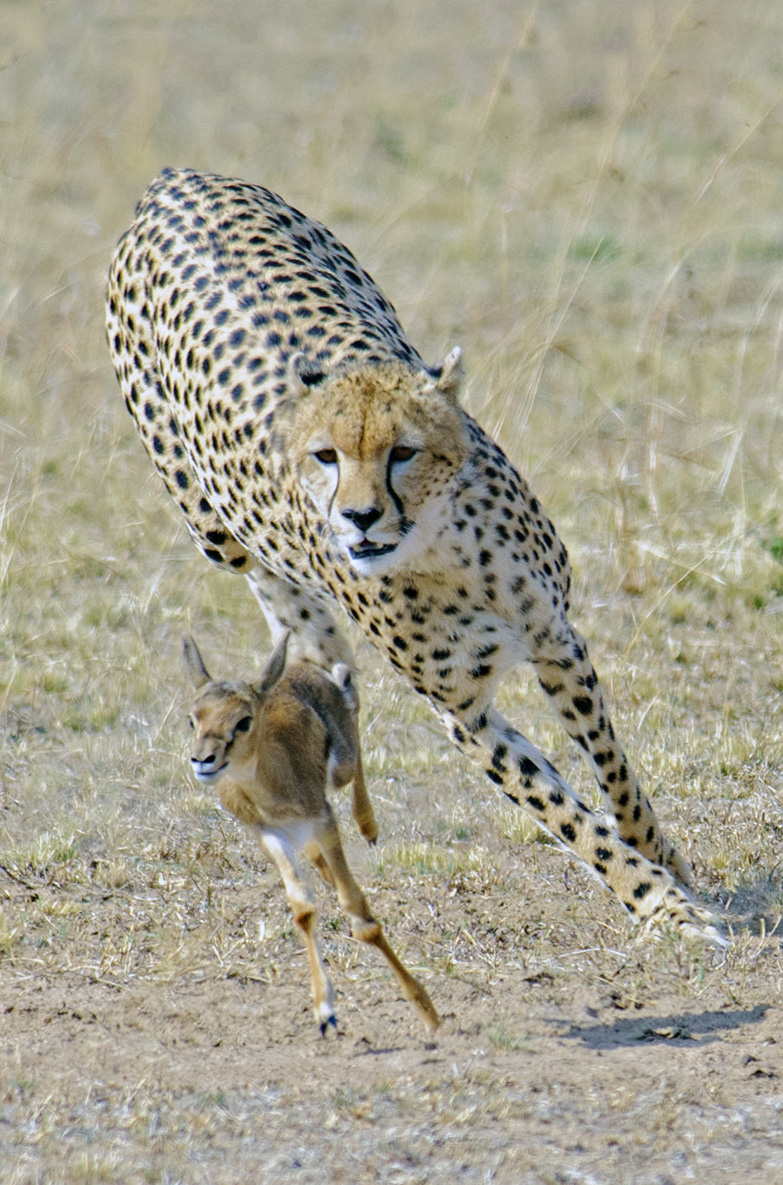
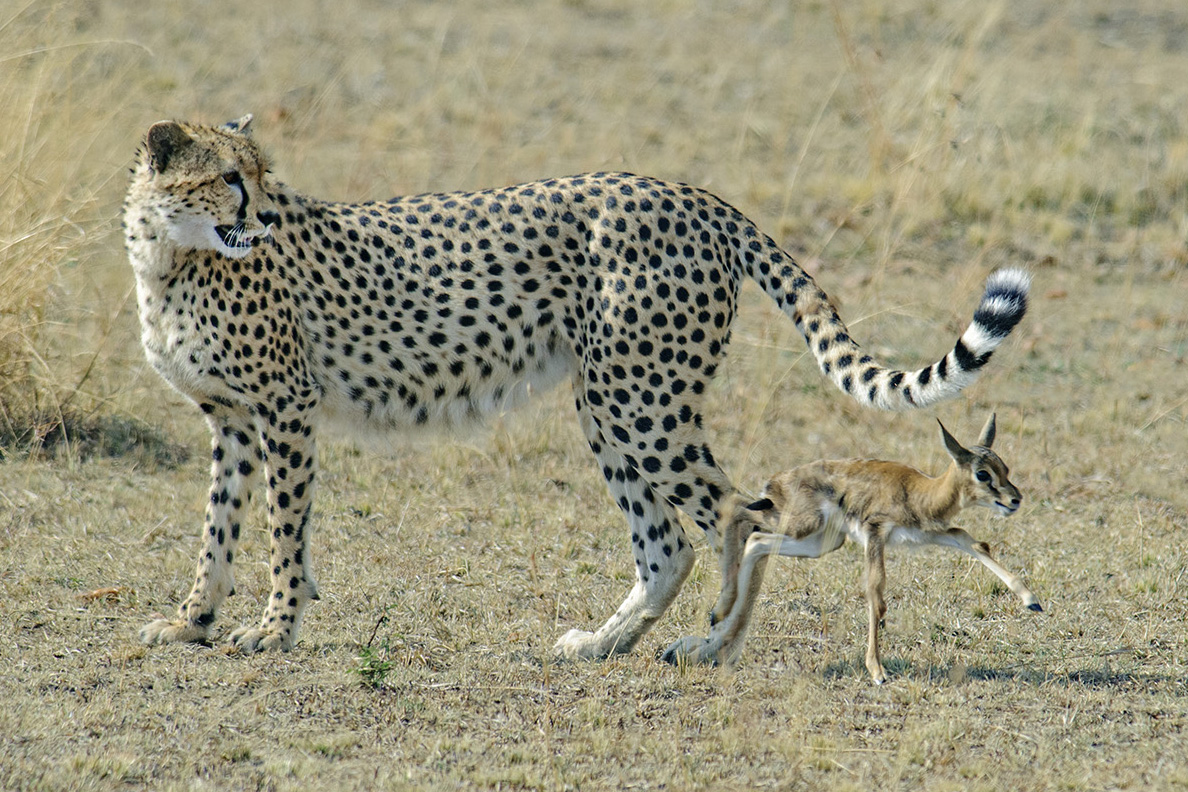
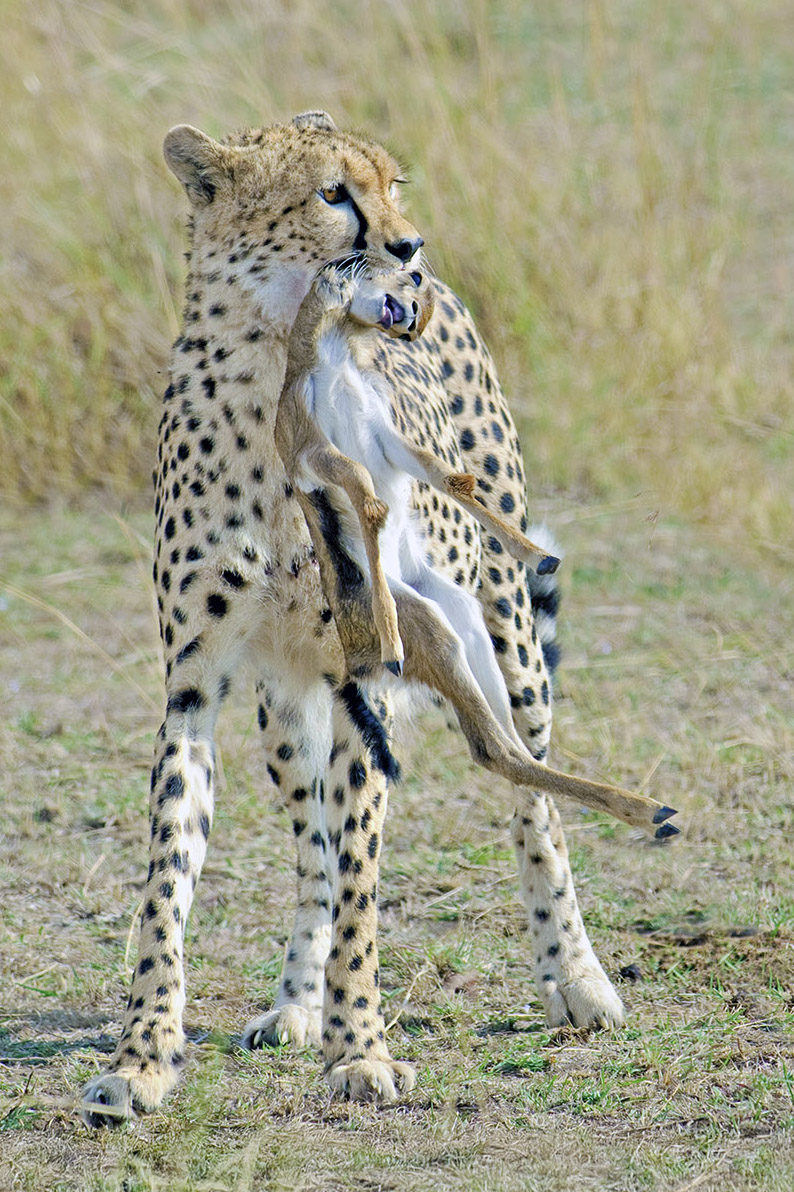
The cheetah hunts most often during the day, especially at dusk and dawn. By doing so it lessens the chances of meeting nocturnal lions, leopards and spotted hyenas that might steal its kills and try to kill it. The cheetah’s average hunting success is 25-40%, but this increases to 100% when targeting newborn Thomson’s gazelles as seen in these three photos.
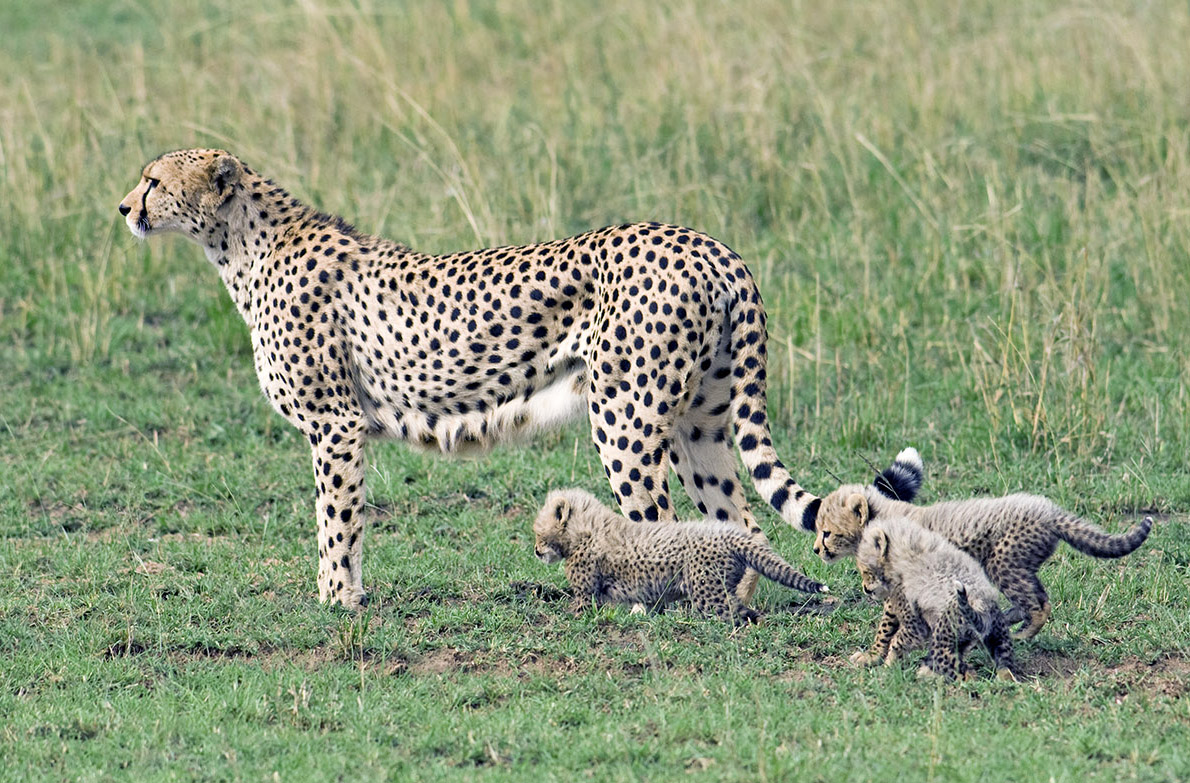
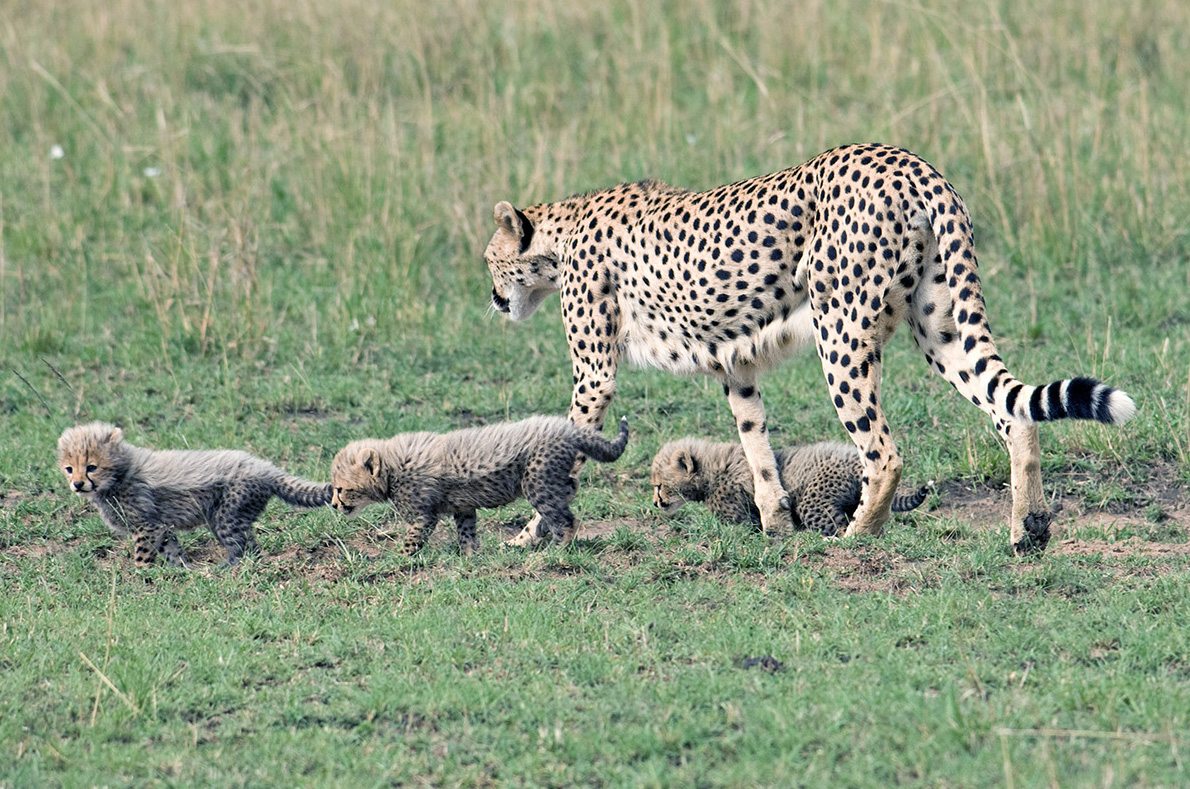
A mother cheetah may have up to eight cubs, but three or four is more common. The back, shoulders, and head of young cubs are thickly covered with long greyish hair, roughly resembling the appearance of a honey badger – a muscular, ferocious member of the weasel family. It is speculated that the mimicry may dissuade predators from attacking the vulnerable cubs.
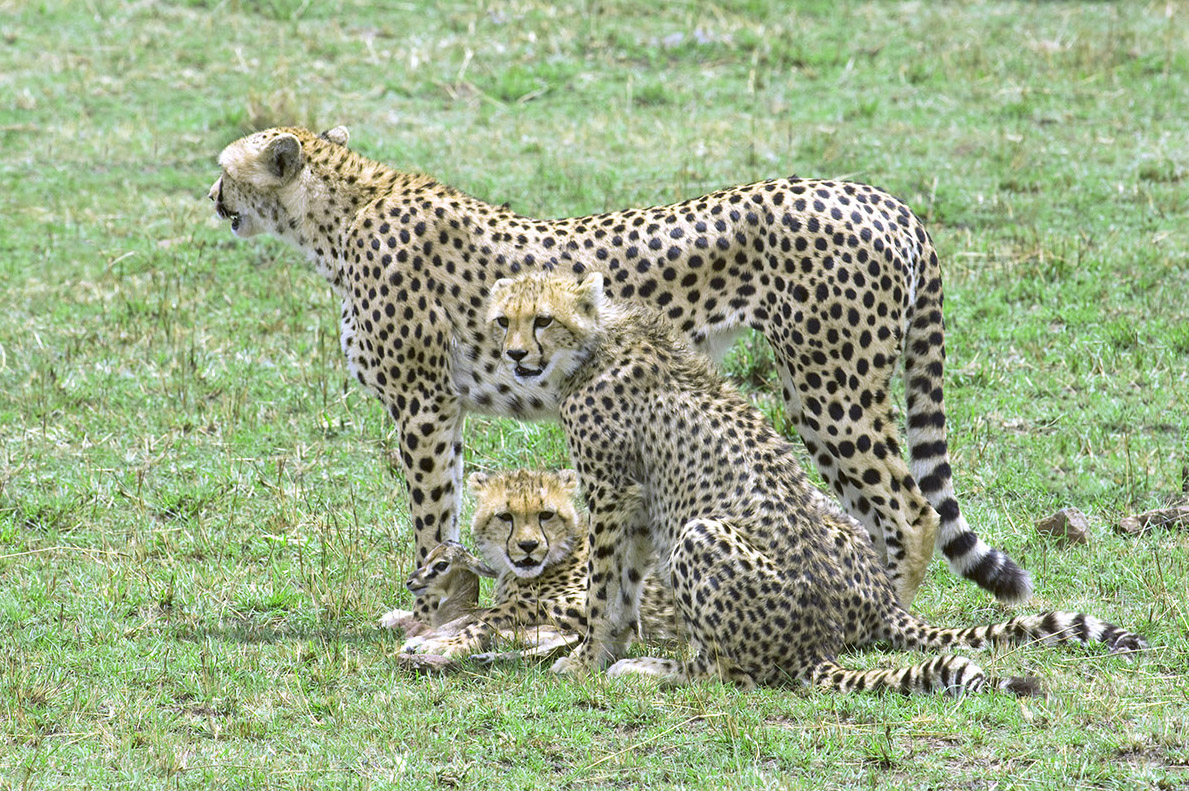
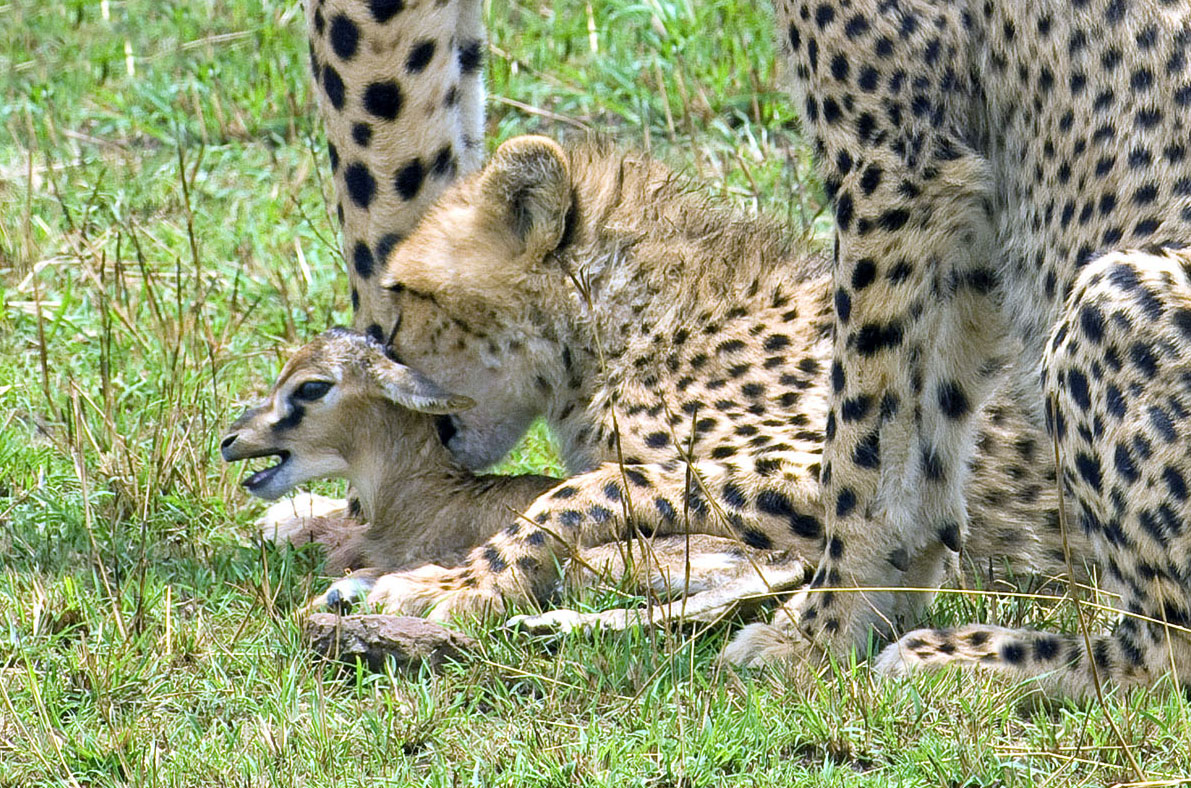
At roughly six months of age, a mother cheetah will start to bring live prey to her cubs to teach them how to chase, subdue and kill their victims. Notice the live Thomson’s gazelle fawn being held down by the lower cub.
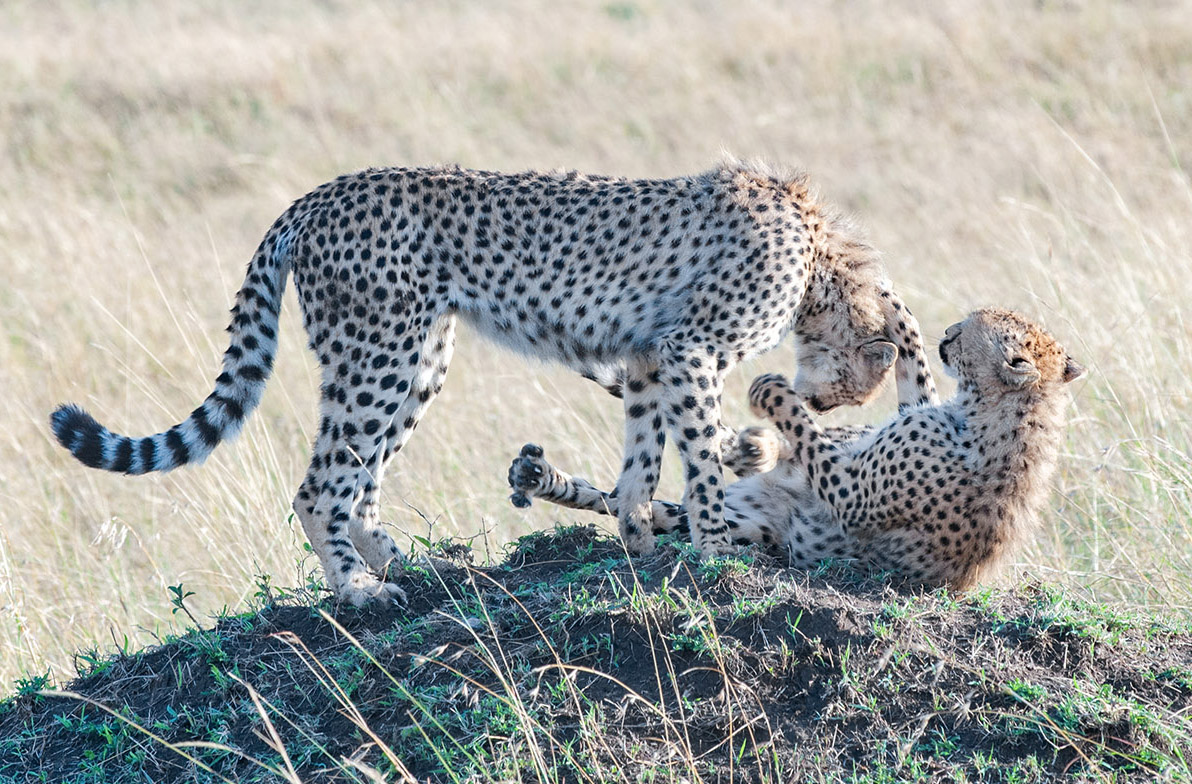
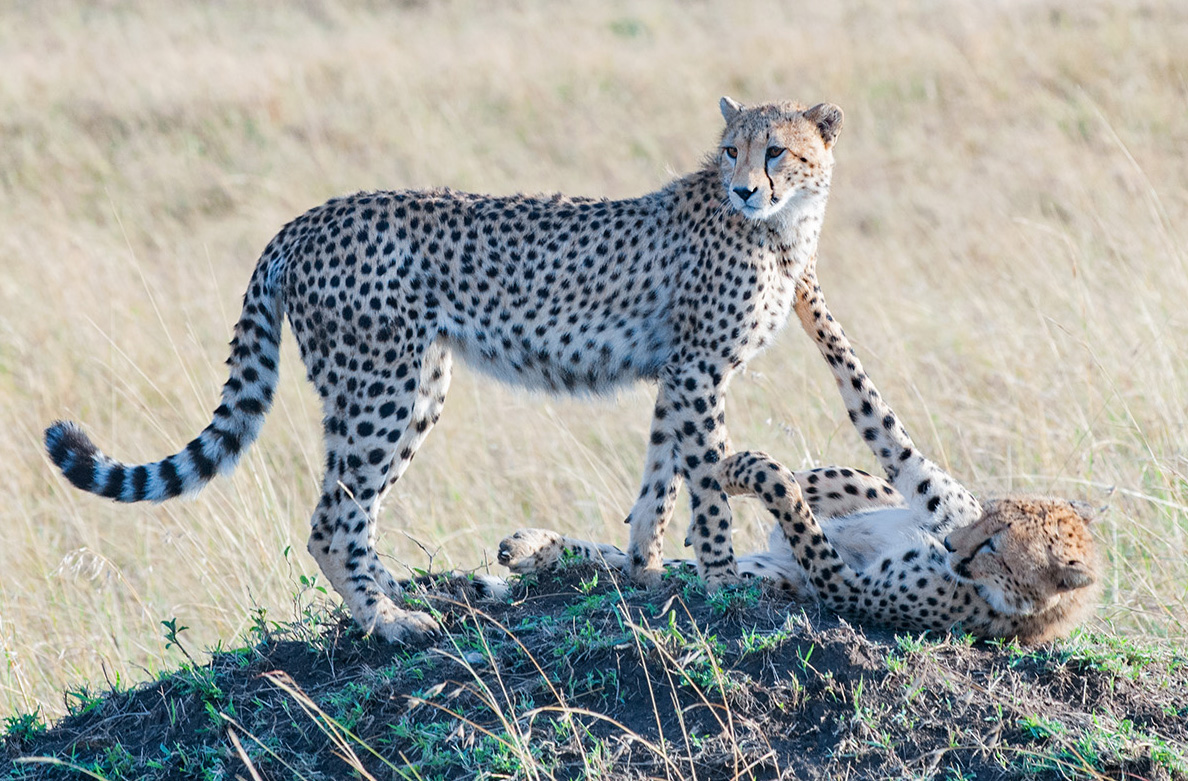
Cheetah cubs become independent at 15-20 months of age, often during the wet season when Thomson’s gazelle fawns are abundant and easy to catch. In East Africa where there are lions, leopards and hyenas, fewer than 20% of cheetah cubs reach independence. Most are killed by these predators, especially by lions.
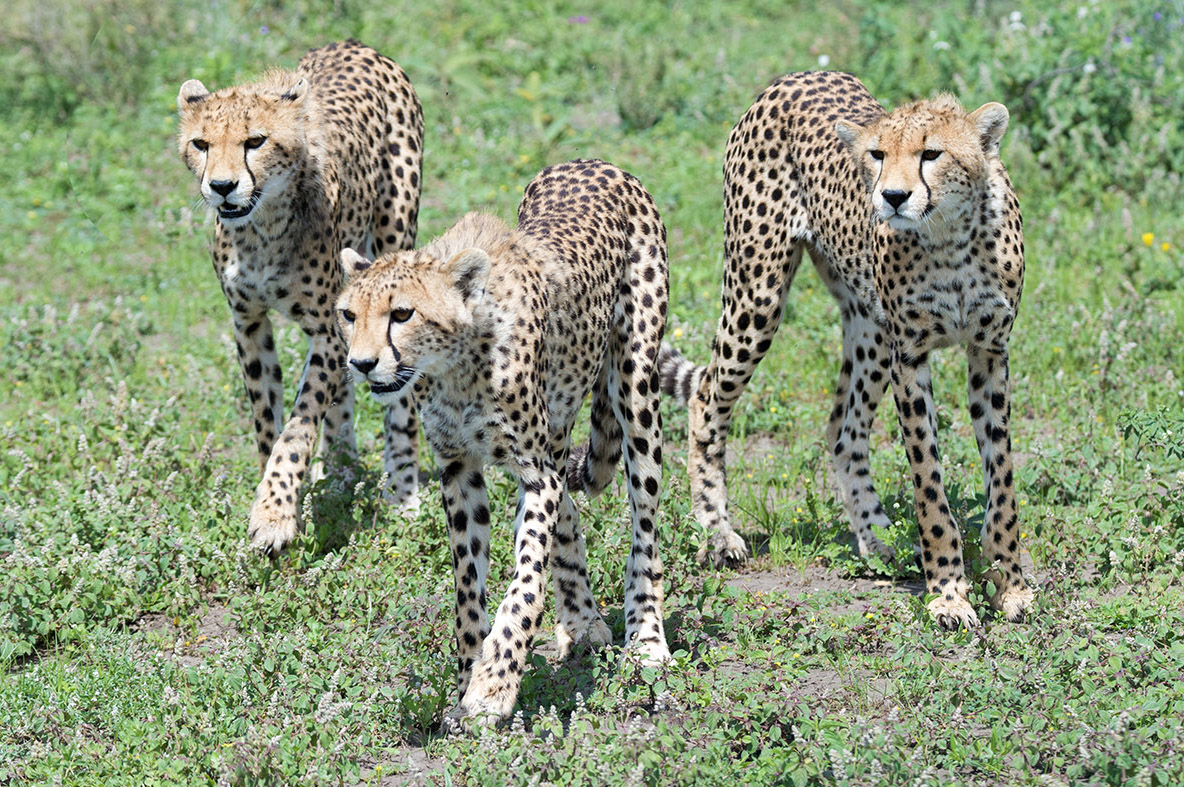
Independent males may form coalitions where they guard and control prey-rich territories with the prospect of attracting adult females with whom they can mate. Males in a coalition may or may not be related.
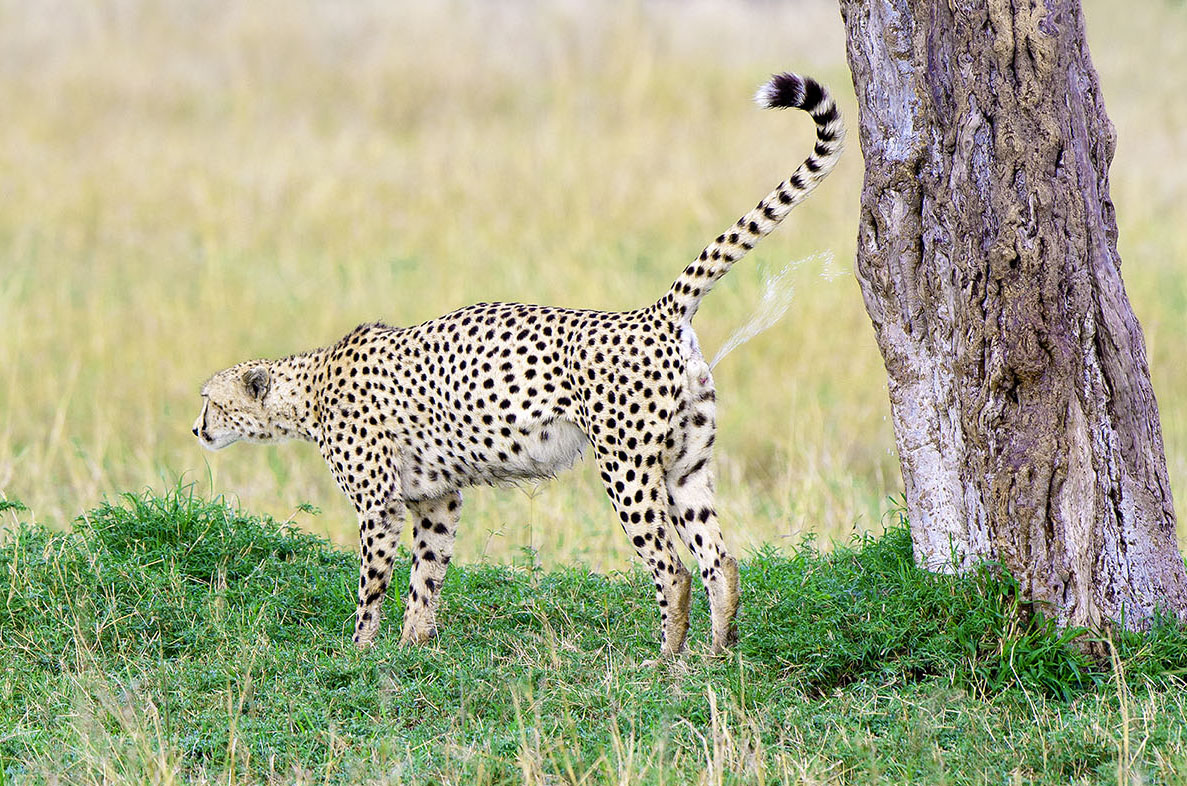
Like most cats that defend a territory, a male cheetah will spray urine on trees, bushes and rocks to advertise its presence hoping to discourage intruders.
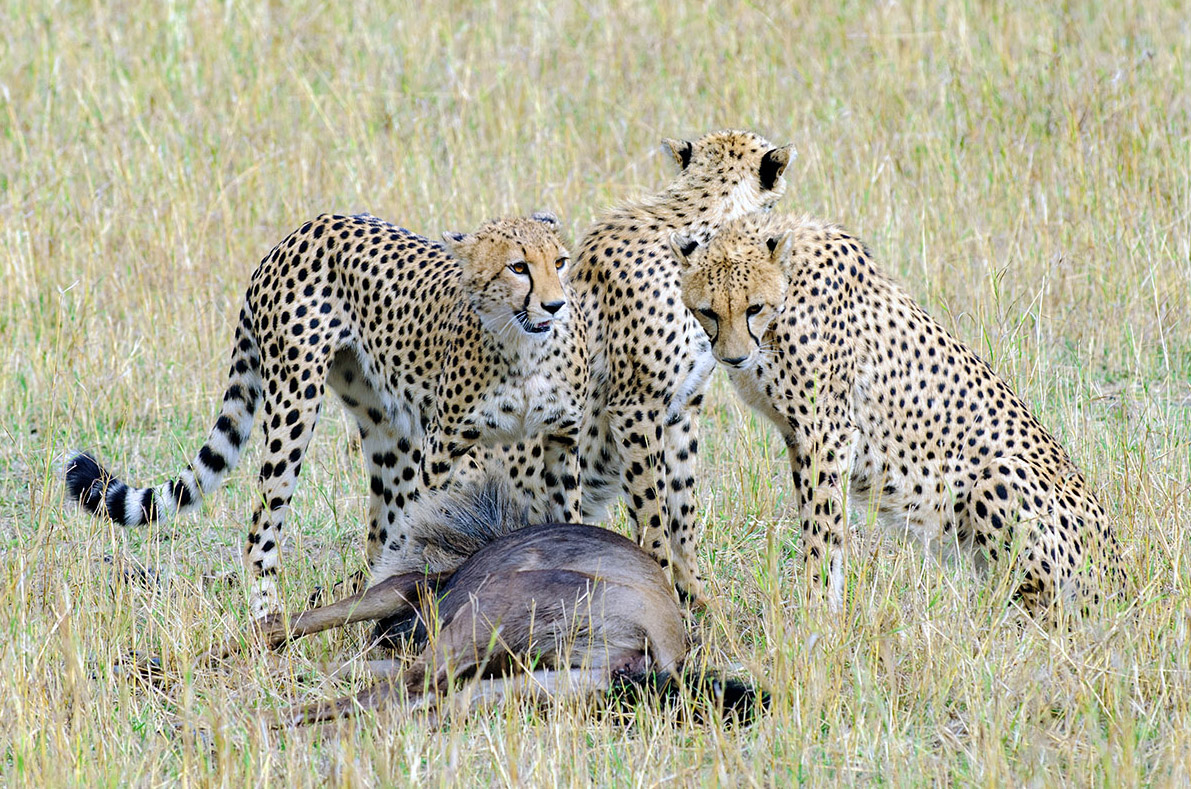
Male coalitions are able to tackle larger prey than a solitary cheetah could ever subdue. In this photograph the males have killed a juvenile wildebeest that likely weighed more than any individual in the trio.
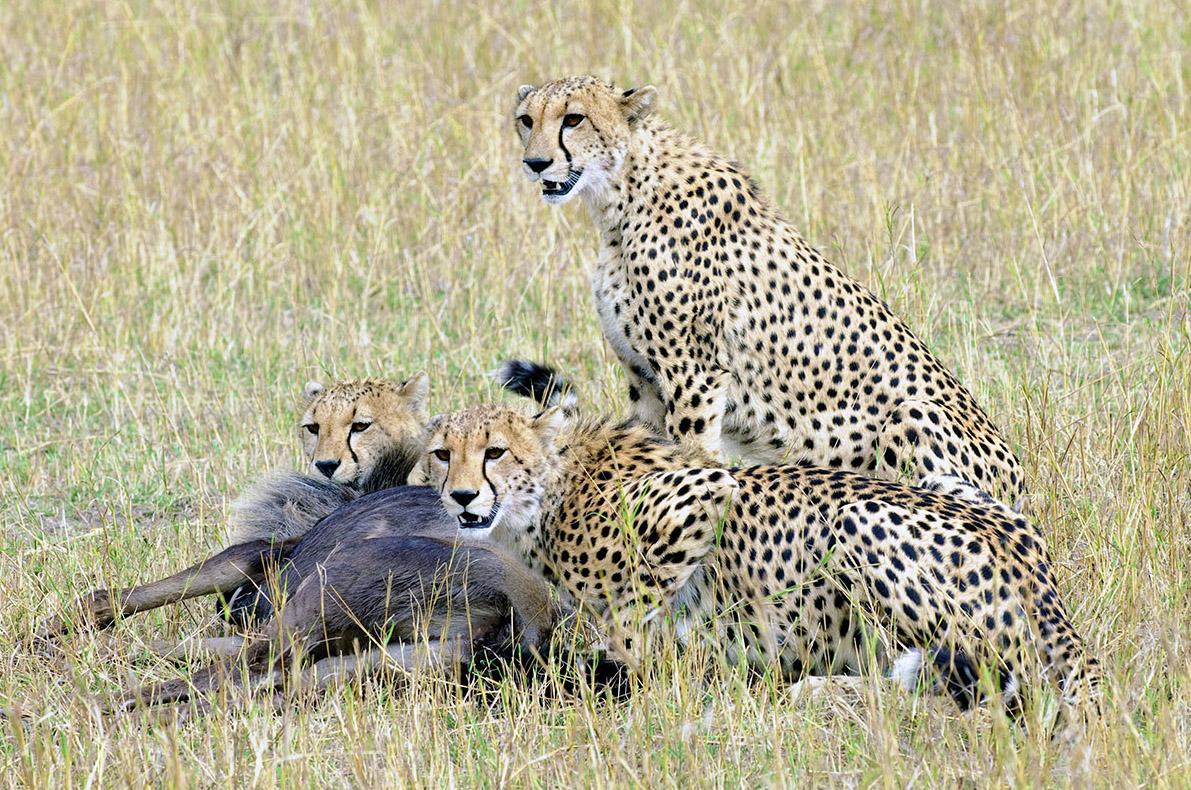
At a kill, cheetahs are always vigilant watching for hyenas and lions that would try to steal their meal.
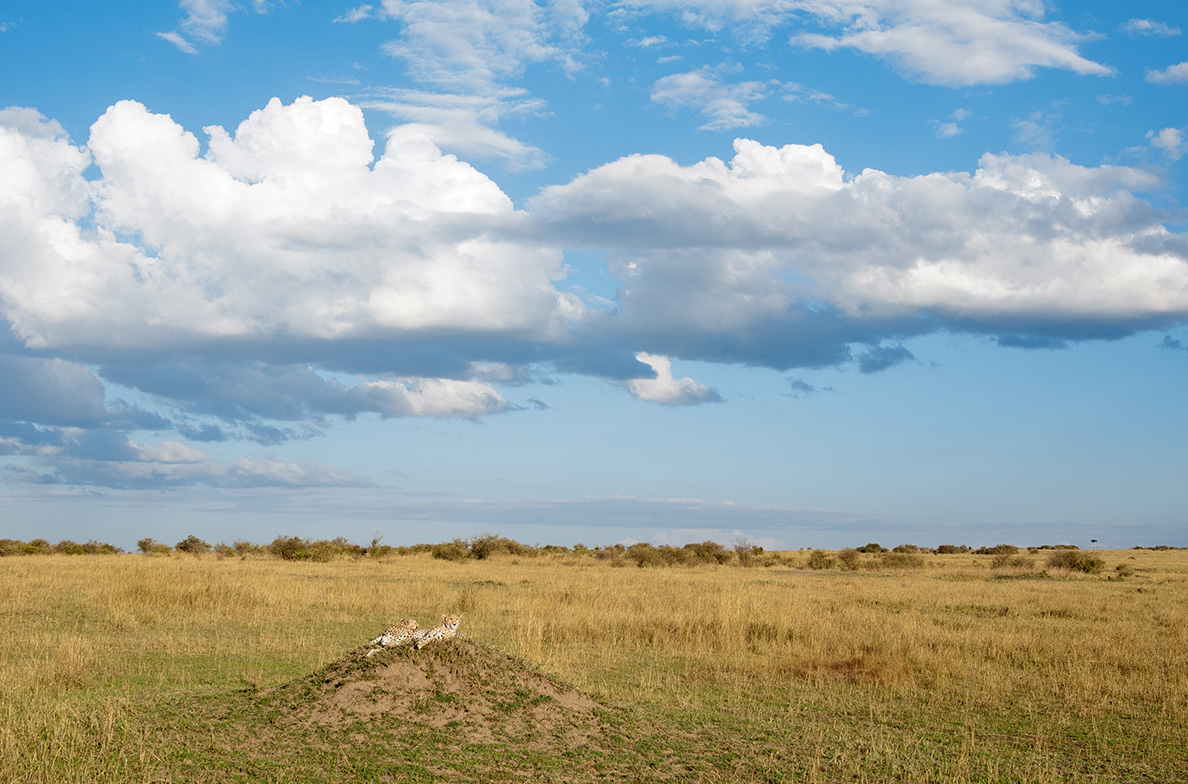
Hunting cheetahs will often select an elevated termite mound from which to search for prey.
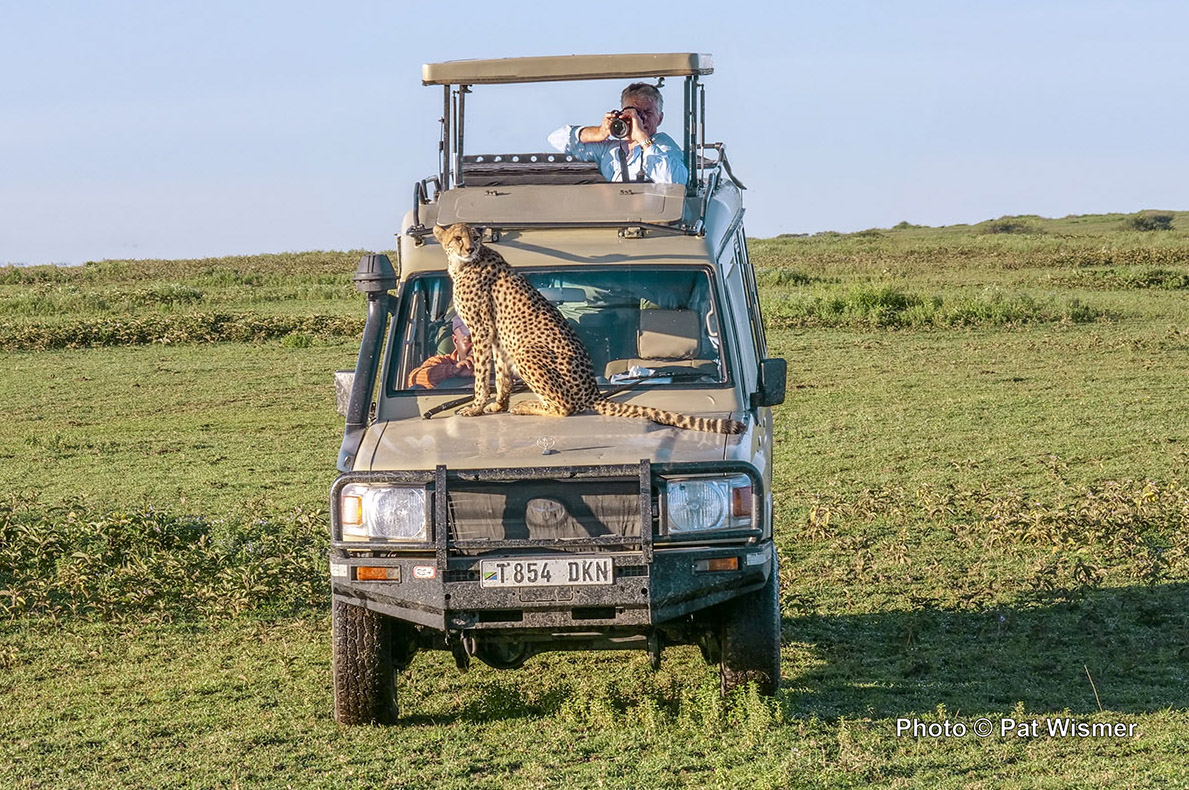
Sometimes the most elevated perch available to a hunting cheetah is the hood of a safari vehicle. This bold, habituated female cheetah rested in front of me for almost 10 minutes.
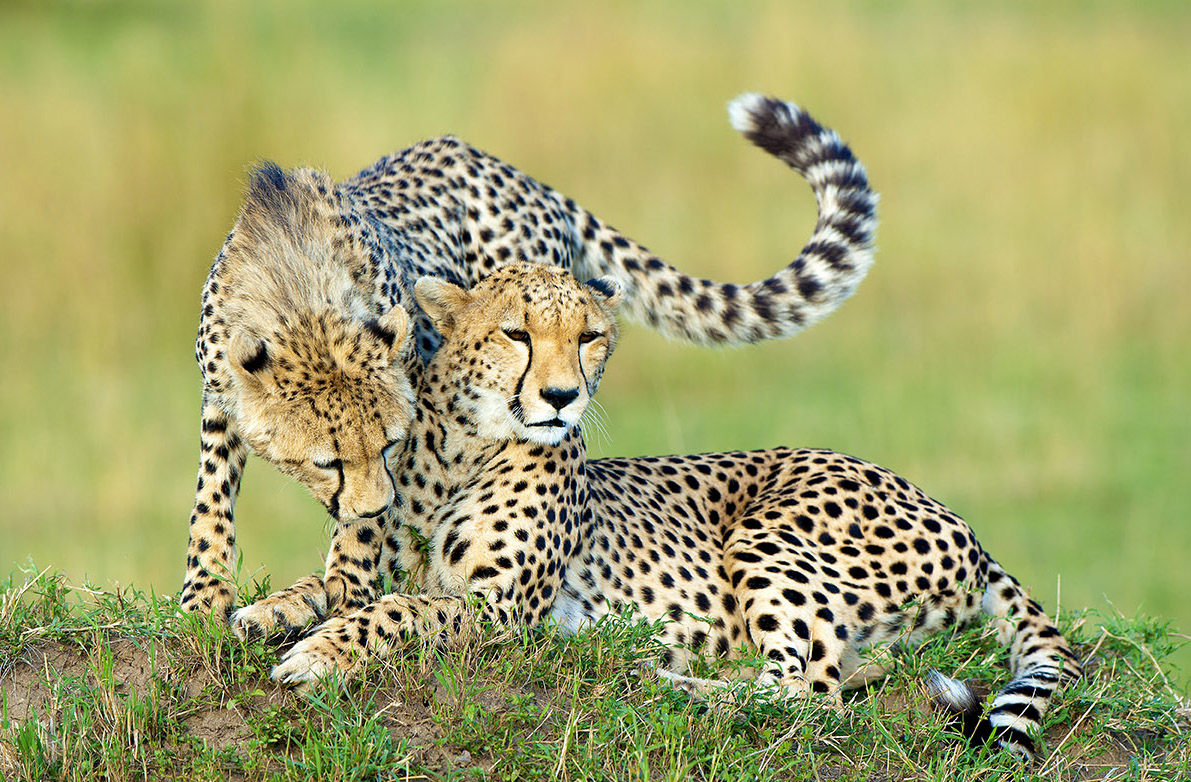
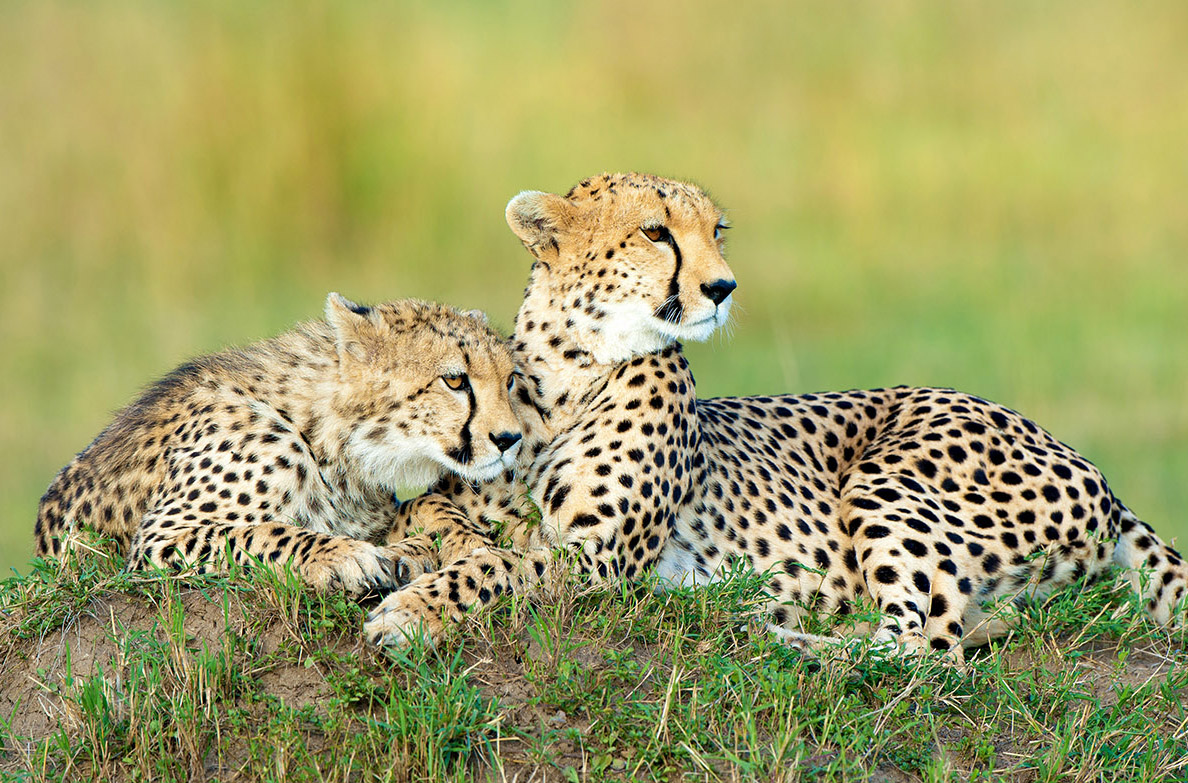
Every wildlife photographer dreams of encountering calm, cooperative subjects in beautiful golden light at the end of a day, like this adult female with her solitary cub.
Read the series:
- Pantanal Wildlife #1 – Mammals & Reptiles
- Pantanal Wildlife #2 – Birds
- Pantanal Wildlife #3 – Jaguar
About the Author – Dr. Wayne Lynch

For more than 40 years, Dr. Wayne Lynch has been writing about and photographing the wildlands of the world from the stark beauty of the Arctic and Antarctic to the lush rainforests of the tropics. Today, he is one of Canada’s best-known and most widely published nature writers and wildlife photographers. His photo credits include hundreds of magazine covers, thousands of calendar shots, and tens of thousands of images published in over 80 countries. He is also the author/photographer of more than 45 books for children as well as over 20 highly acclaimed natural history books for adults including Windswept: A Passionate View of the Prairie Grasslands; Penguins of the World; Bears: Monarchs of the Northern Wilderness; A is for Arctic: Natural Wonders of a Polar World; Wild Birds Across the Prairies; Planet Arctic: Life at the Top of the World; The Great Northern Kingdom: Life in the Boreal Forest; Owls of the United States and Canada: A Complete Guide to their Biology and Behavior; Penguins: The World’s Coolest Birds; Galapagos: A Traveler’s Introduction; A Celebration of Prairie Birds; and Bears of the North: A Year Inside Their Worlds. In 2022, he released Wildlife of the Rockies for Kids, and Loons: Treasured Symbols of the North. His books have won multiple awards and have been described as “a magical combination of words and images.”
Dr. Lynch has observed and photographed wildlife in over 70 countries and is a Fellow of the internationally recognized Explorers Club, headquartered in New York City. A Fellow is someone who has actively participated in exploration or has substantially enlarged the scope of human knowledge through scientific achievements and published reports, books, and articles. In 1997, Dr. Lynch was elected as a Fellow to the Arctic Institute of North America in recognition of his contributions to the knowledge of polar and subpolar regions. And since 1996 his biography has been included in Canada’s Who’s Who.



Beautiful images and a very informative article. Thank you Wayne!
Hi Ian. Thanks for the kind words. If you are the Ian Darragh I worked with for years at Canadian Geographic I hope all is going well with you and your family. It’s really nice to hear from the “ old guard” of magazine publishing.
Wayne