
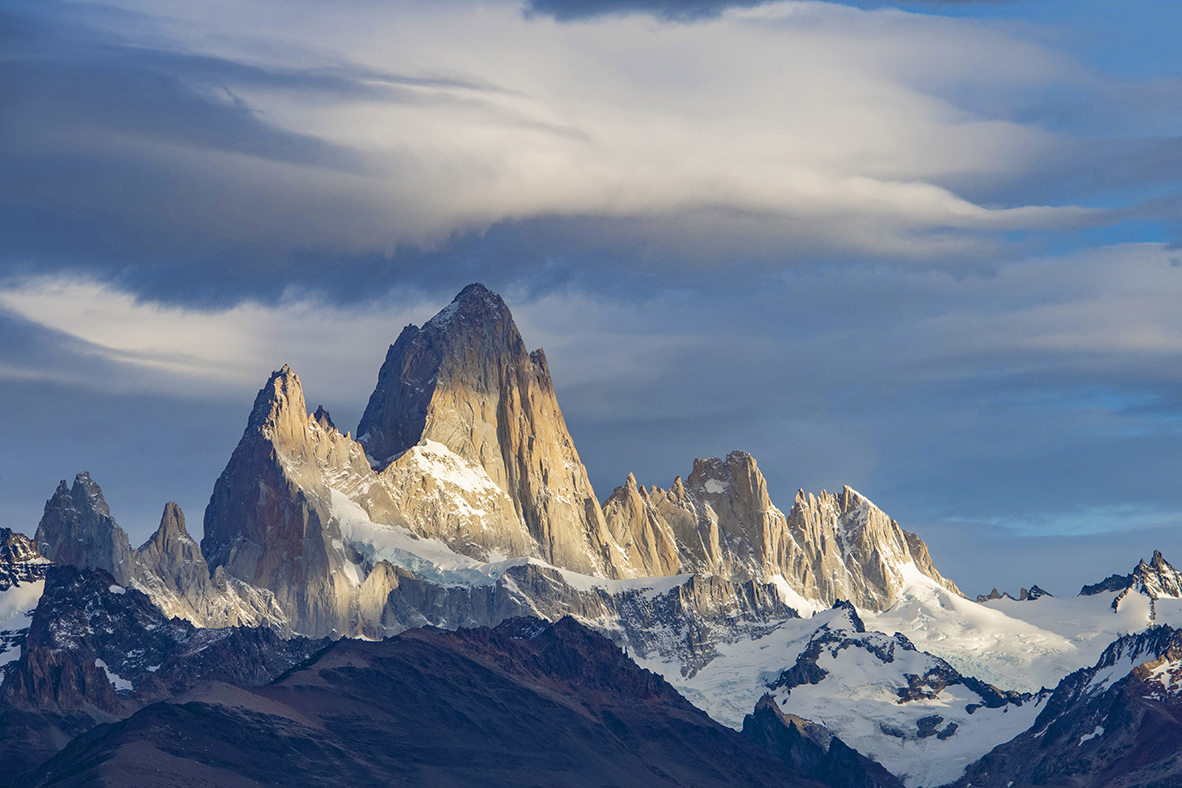
Most people know Patagonia as the trademark name of a famous line of outdoor clothing that started in California some 50 years ago. The name was co-opted by the company’s owner, Yvon Chouinard, an American climber who scaled one of the technically most difficult mountains in South America – the 3,404-meter (11,171-foot), daunting granite spire of Mount Fitzroy in southern Argentina. This legendary mountain is in the area of South America that geographers refer to as Patagonia, a region known for its majestic mountain peaks and rolling grassy steppes.
This past April, I was hired to lead a photo trip focusing on the splendour of the autumn colour in Patagonia, and as always, the area did not disappoint. I have been to Patagonia many times but the area may not be well known to most of our readers, so this month I will focus on the springtime wildlife wonders of the area, next month showcase guanacos which are a keystone wildlife species, and end the year in December with elusive pumas and the area’s autumn splendour.
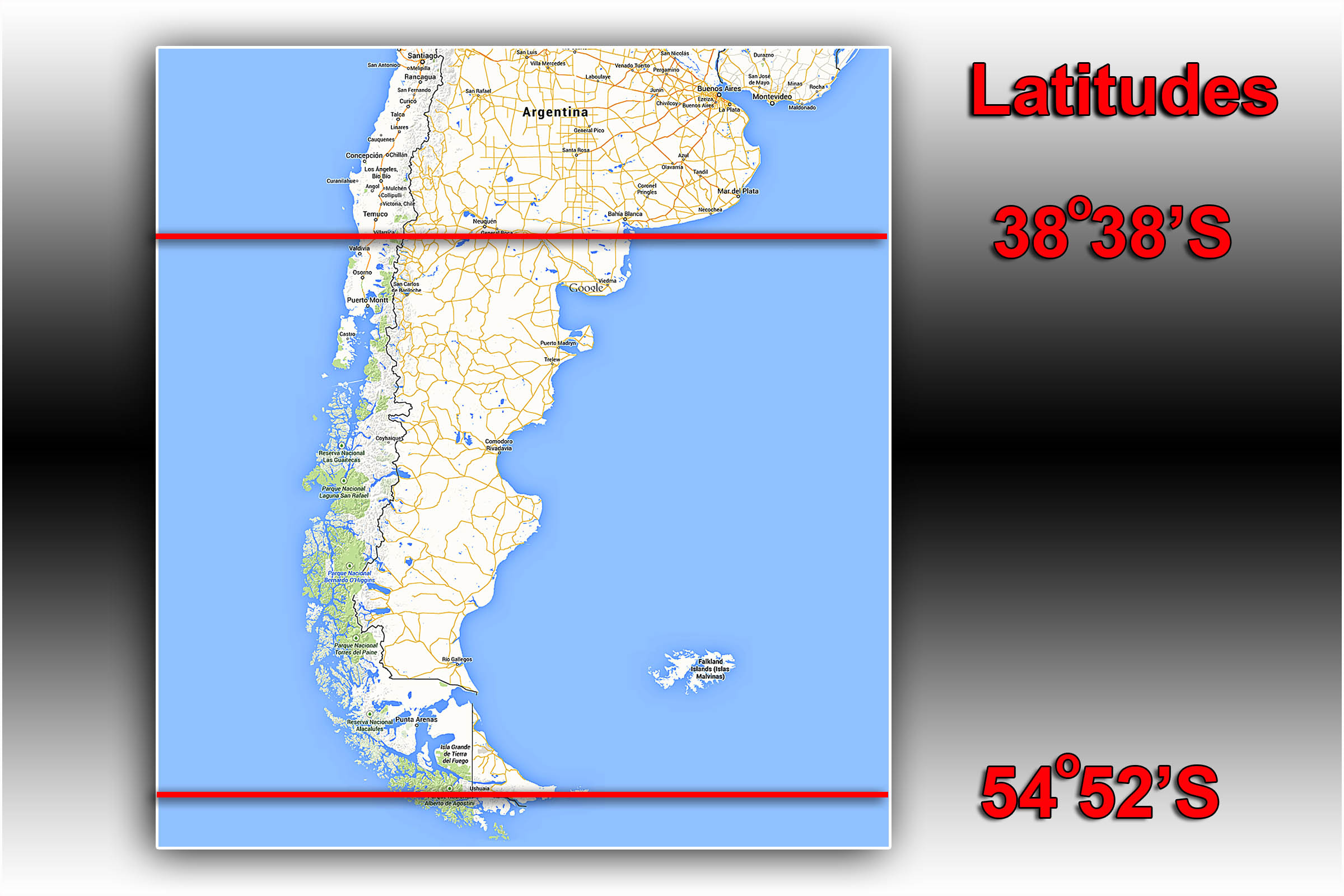
Geographers commonly define Patagonia as that part of southern Argentina and Chile lying between the Rio Colorado in Argentina at a latitude of 38°38’S and the Beagle Channel near the tip of Tierra del Fuego at latitude 54°52’ S. It encompasses an area of roughly 1,000,000 sq. km, around a third larger than my home province of Alberta, which has an area of 662,000 sq. km.
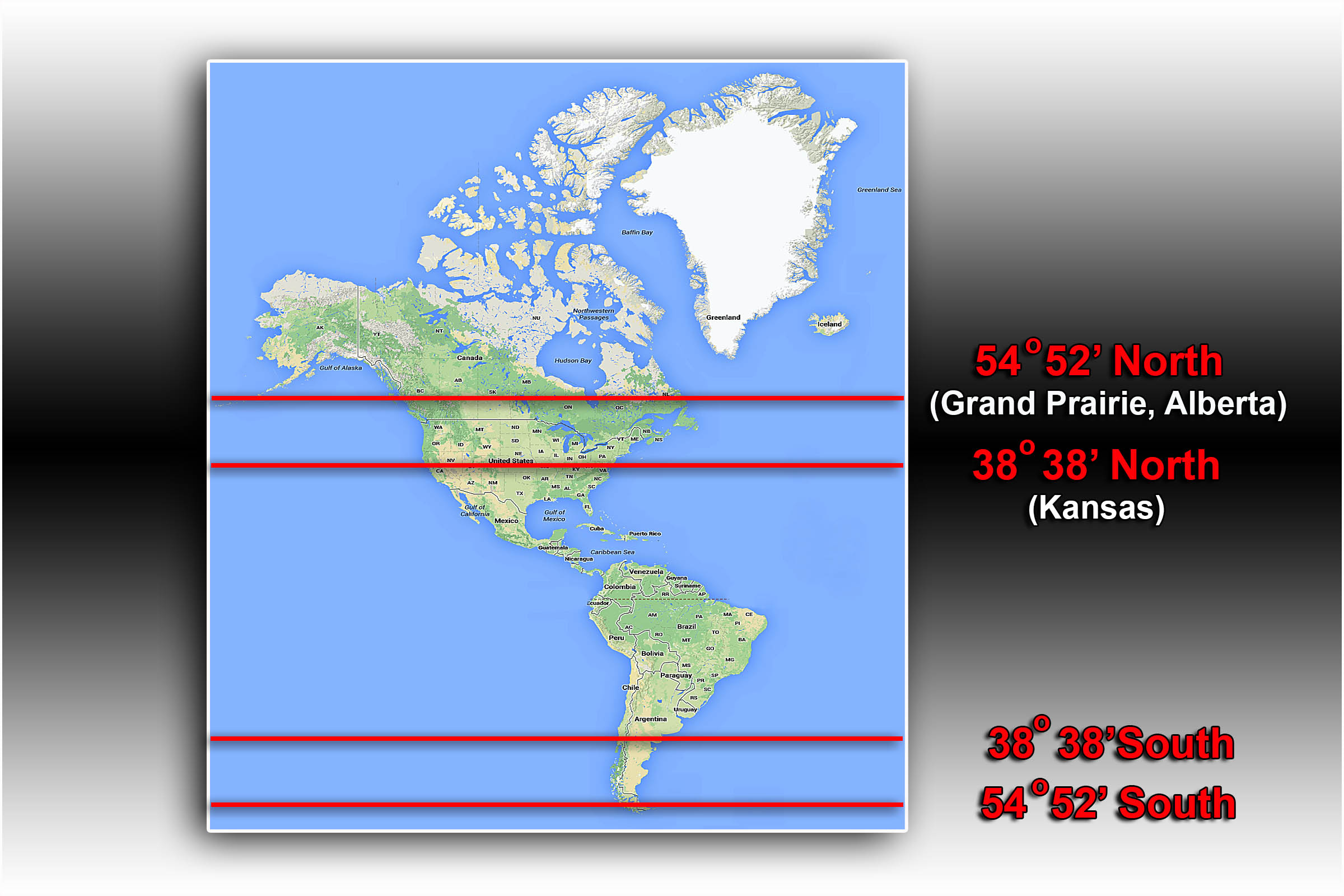
The boundaries of Patagonia fall between the latitudes of 38°38’ South and 54°52’ South. In the Northern Hemisphere, those latitudes run from central Alberta in the north to Kansas in the south.
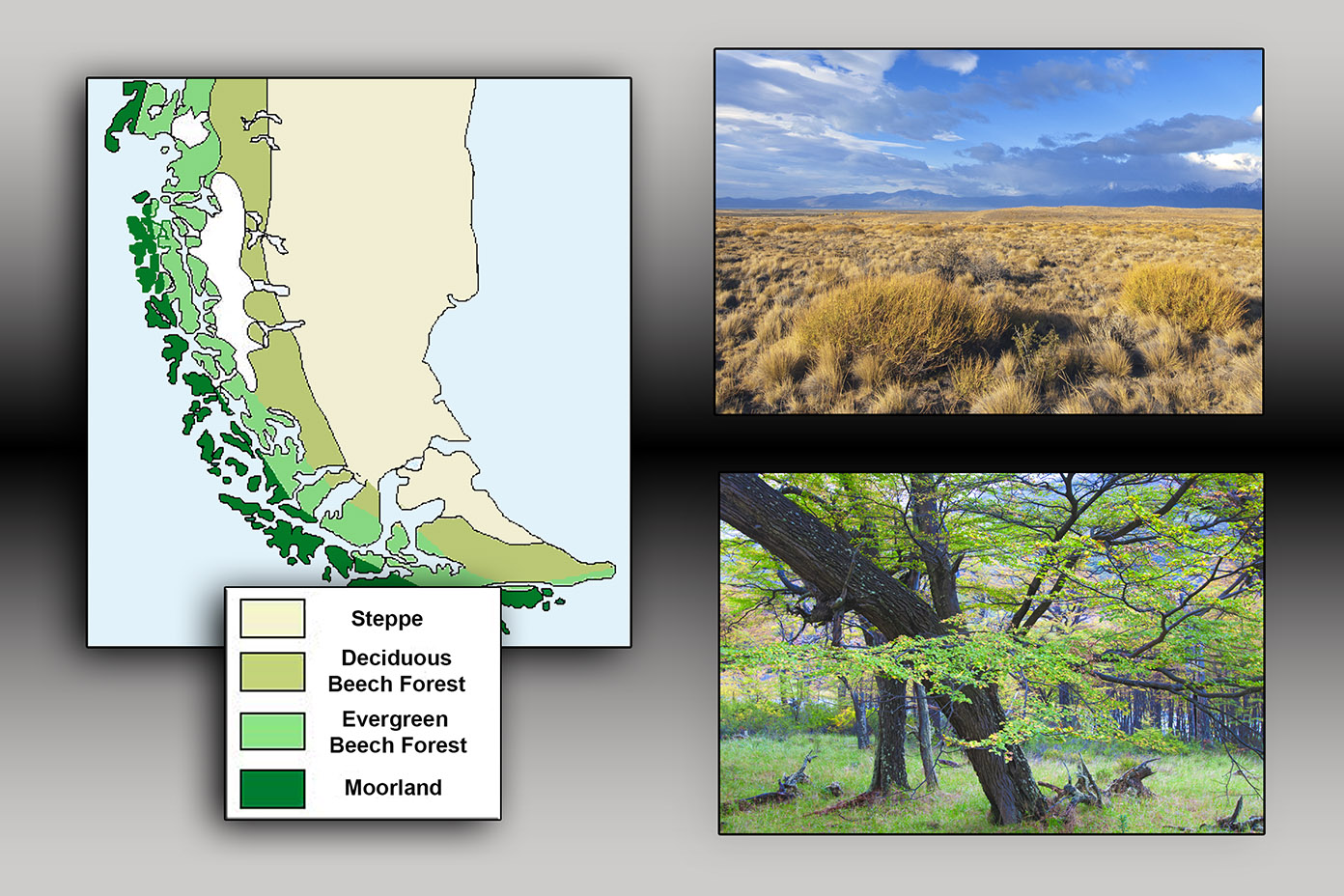
Roughly three-quarters of Patagonia is covered by steppe – a treeless, arid, grassy plain (the tan coloured area in the map). The plain rises gently westward from the Atlantic coast to the foothills of the Andes Mountains, where it’s replaced by forests of southern beeches.
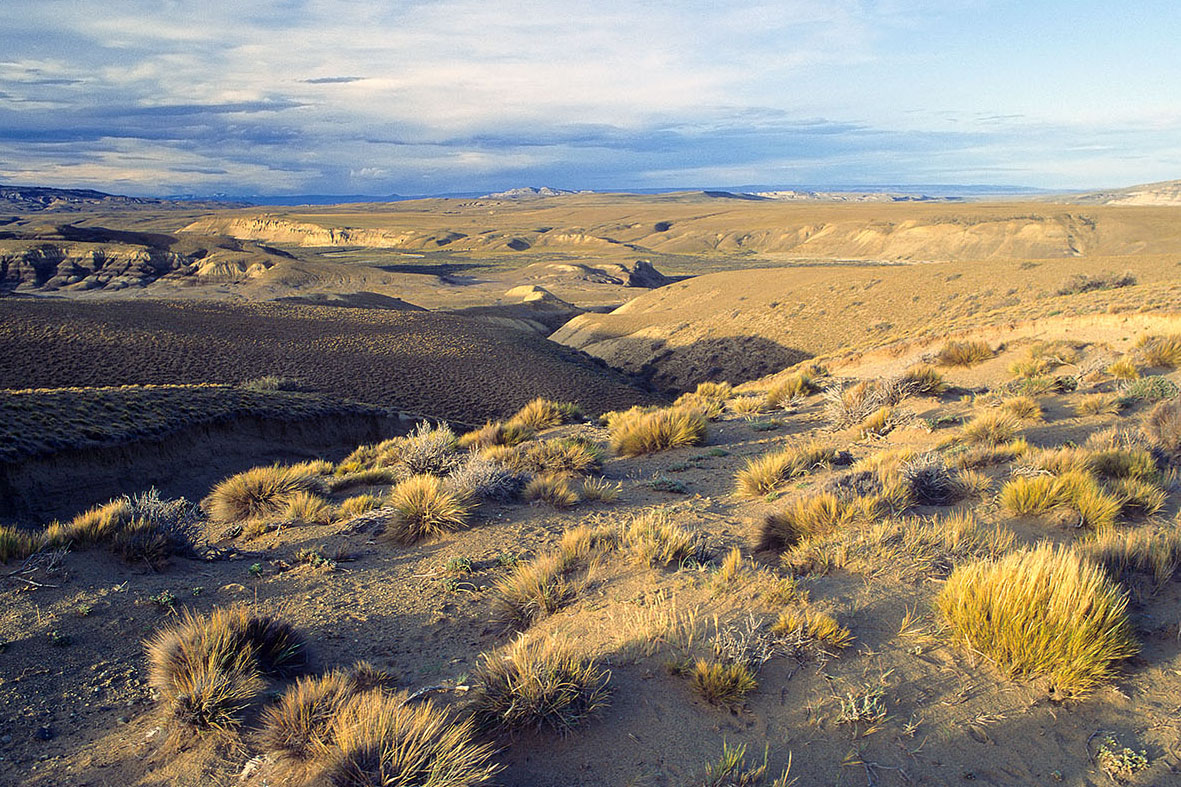
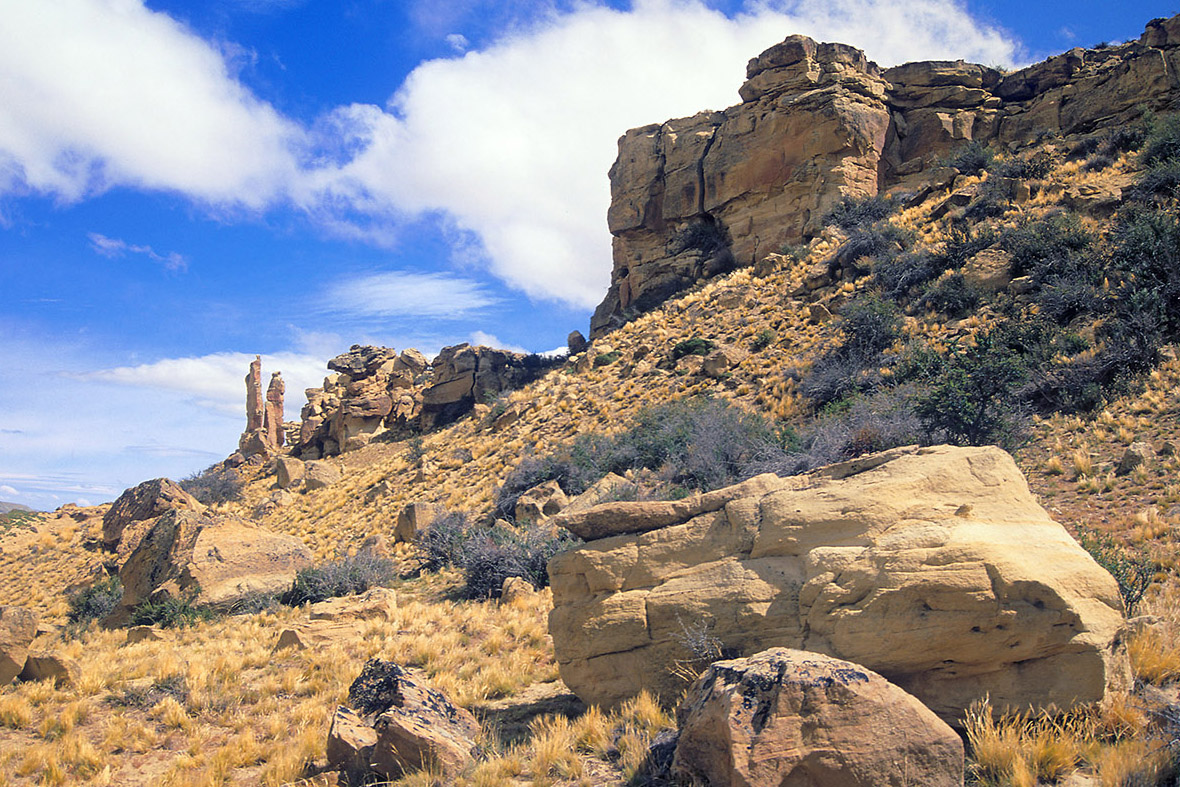
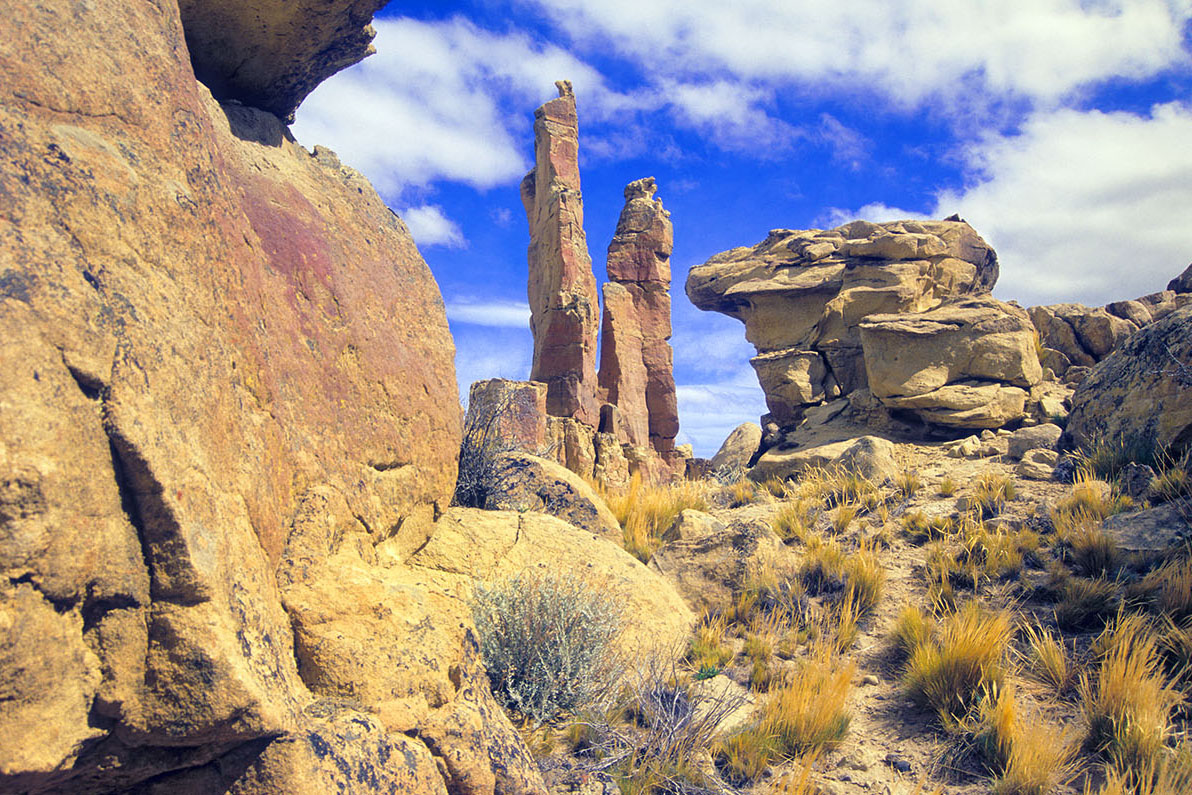
The steppe is often cut by valleys that lead from the mountains to the Atlantic coast. They are the remnant channels of ancient meltwater streams formed when massive Andean icefields melted 12,000-15,000 years ago. The slopes of some valleys have interesting rock formations that resemble the familiar badlands of Alberta and Saskatchewan.
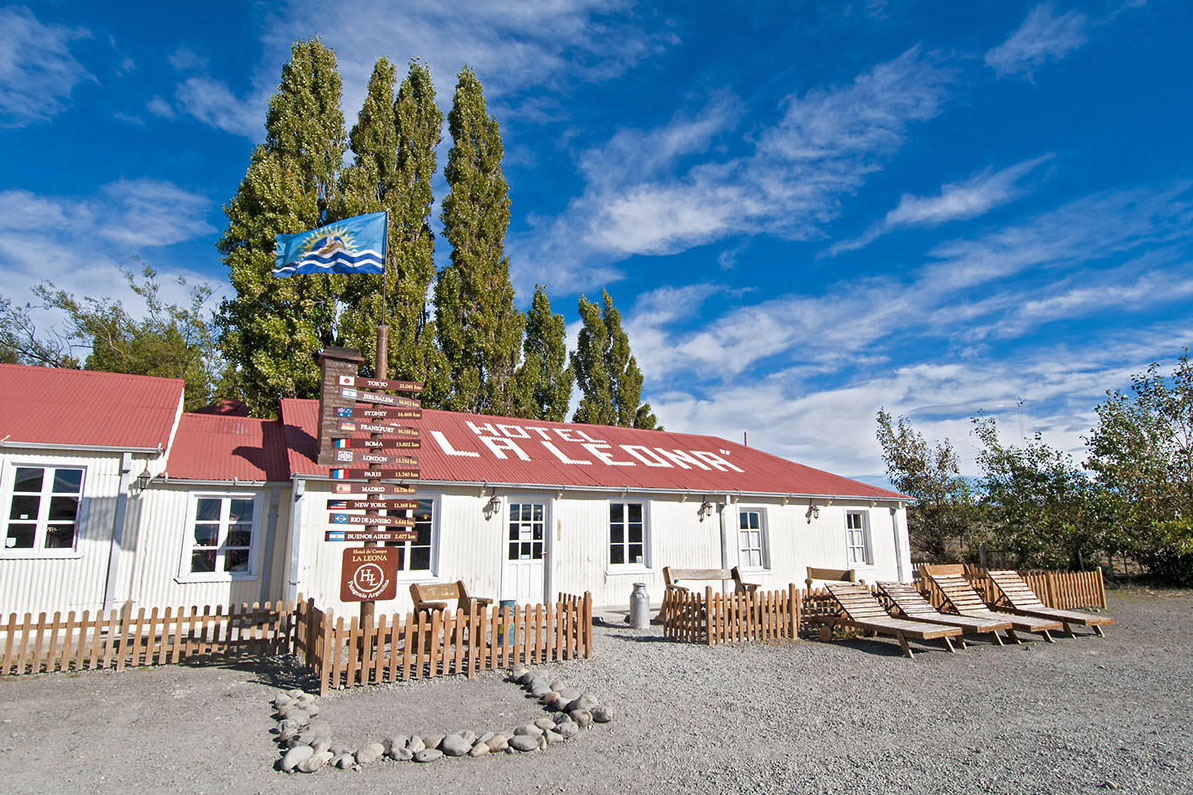
On every Patagonia tour I have led, I always stop at the historically fascinating La Leona Roadhouse, built in 1894 to temporarily house sheep ranchers moving their flocks to markets on the eastern coast of Argentina.

As the story goes, in 1905, three gringos, two men and a woman, stayed for a day or two at the legendary roadhouse. The strangers were later identified as Butch Cassidy, the Sundance Kid and his wife Ethel Place who were fleeing to Chile after robbing the bank in Rio Gallegos on the Argentine coast. A $4,000 reward was offered for Butch Cassidy, dead or alive. Today, that reward would be equivalent to $152,000. Cassidy was charged with bank robbery, cattle and horse theft, and robbing travellers.
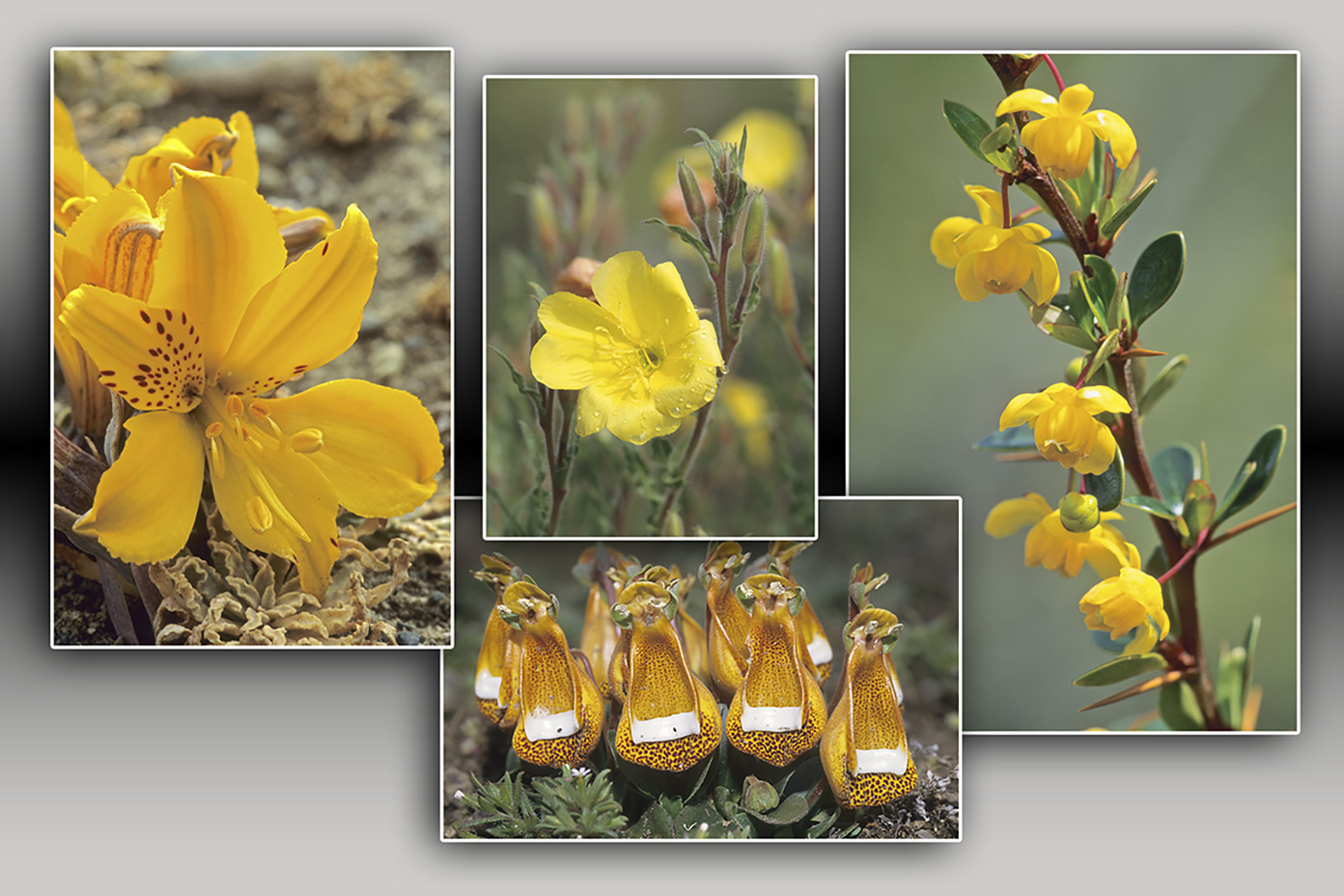
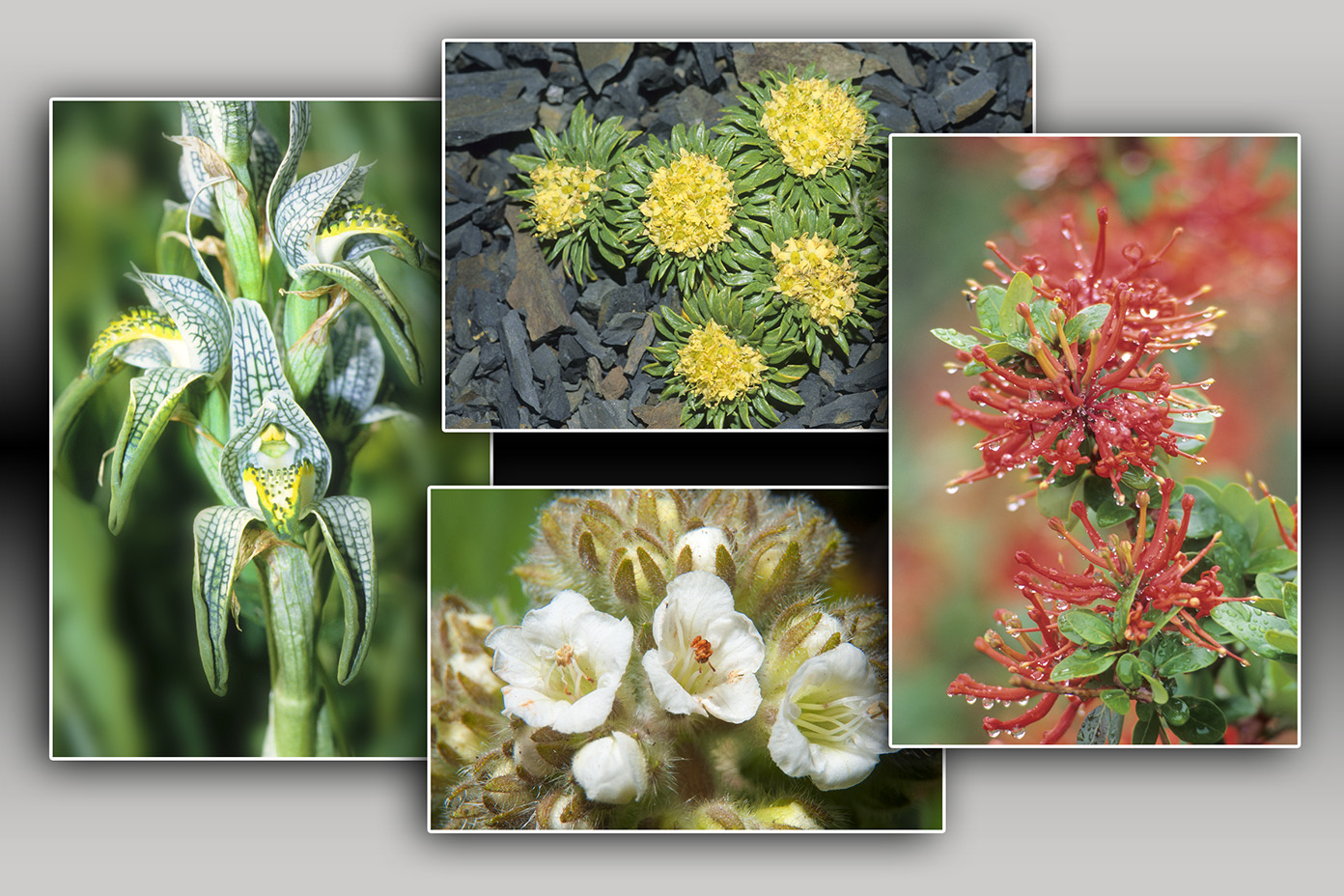
In spring, a great variety of wildflowers add colour to the grassy landscape of the steppe.
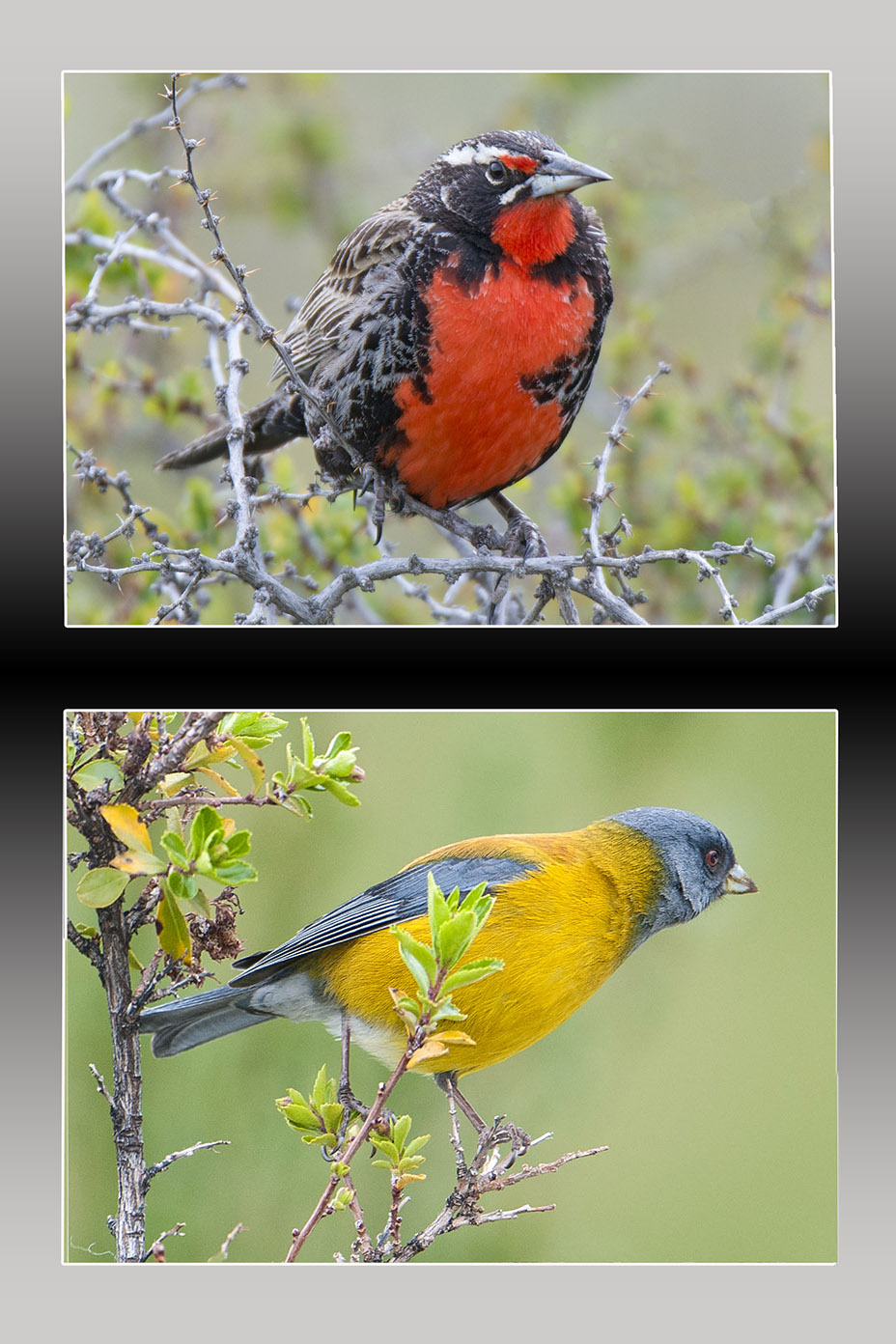
The crimson-breasted long-tailed meadowlark is the South American version of the North American, yellow-breasted western and eastern meadowlarks. The cone-shaped bill of the Patagonian sierra finch indicates that much of its diet consists of seeds.
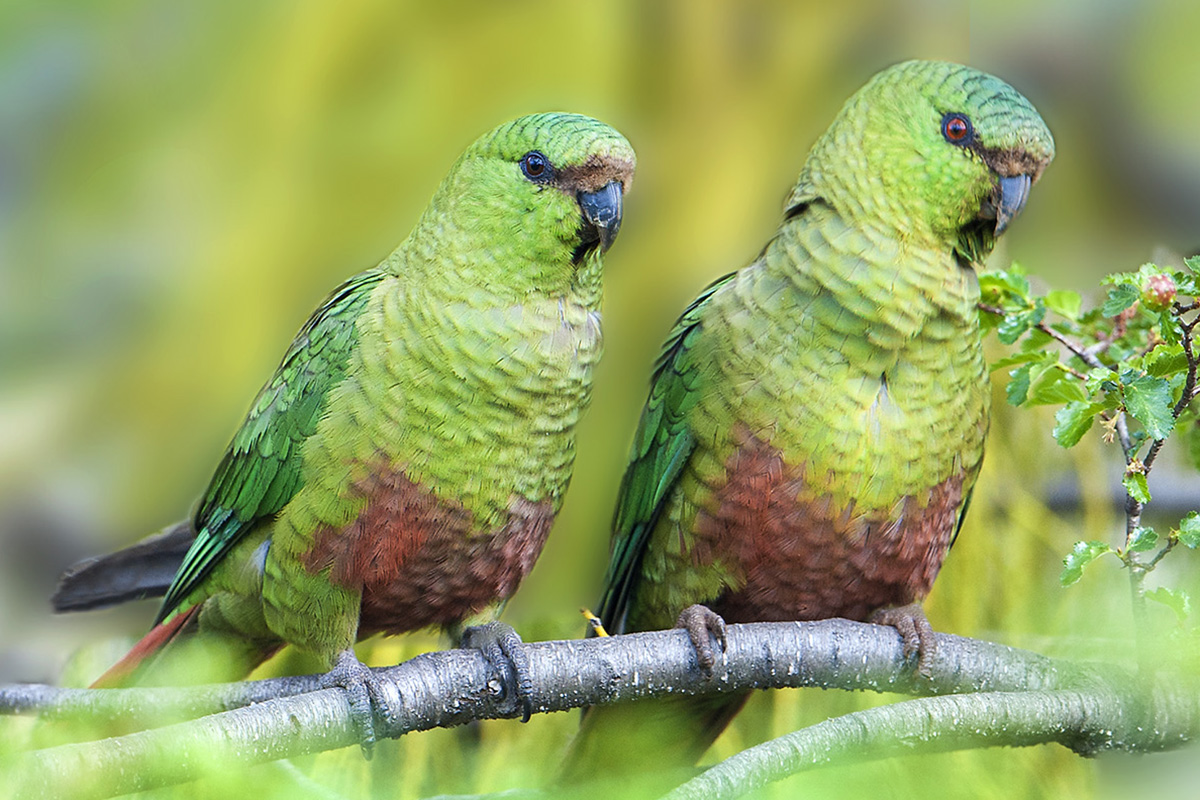
One of the world’s favourite groups of birds are the parrots and parakeets, and the southern Andes is home to the lovely green and red austral parakeet, the most southerly-ranging parrot in the world. The parakeet feeds on the buds and seeds of southern beeches.
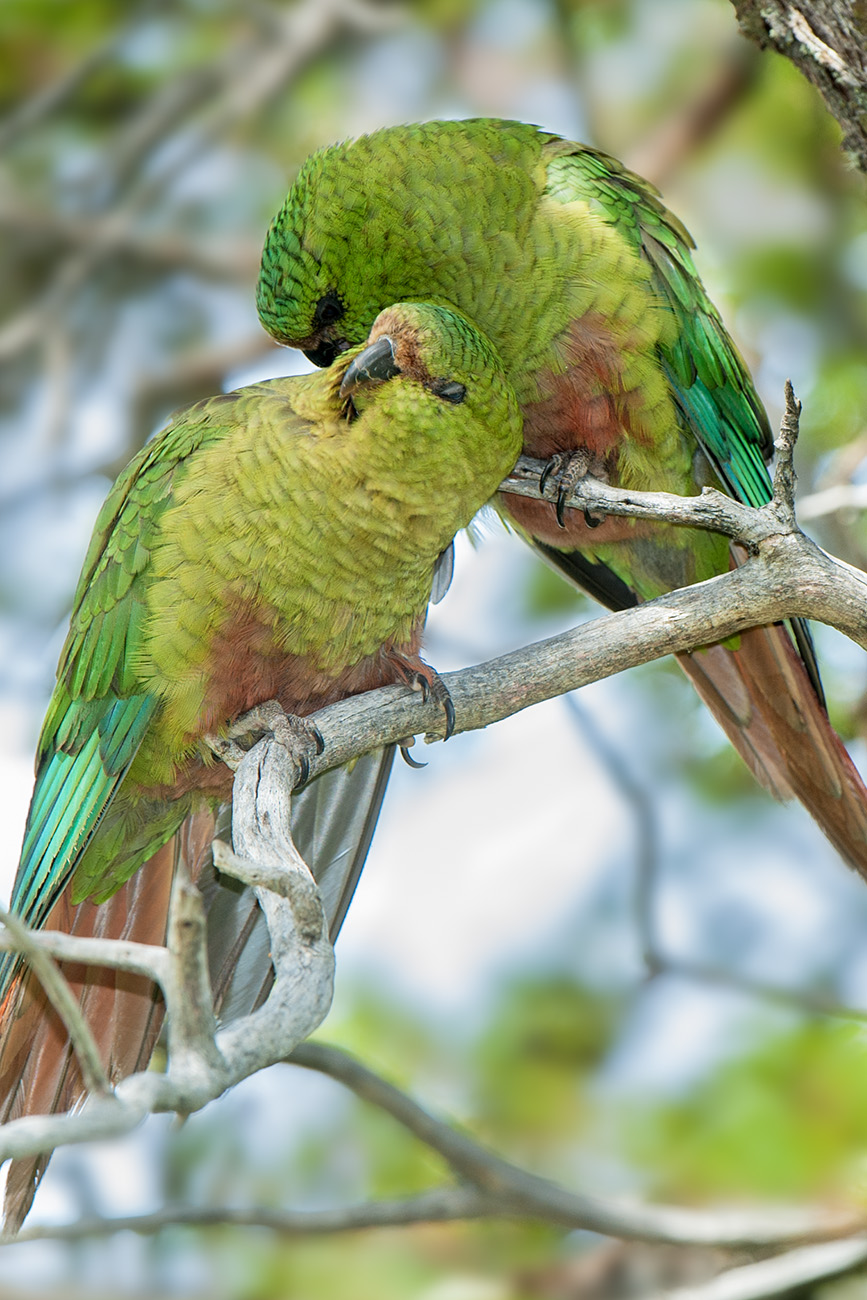
Austral parakeets, like most parrot species, pair for life and they periodically reinforce the bond between them by preening their partner’s head and neck feathers.
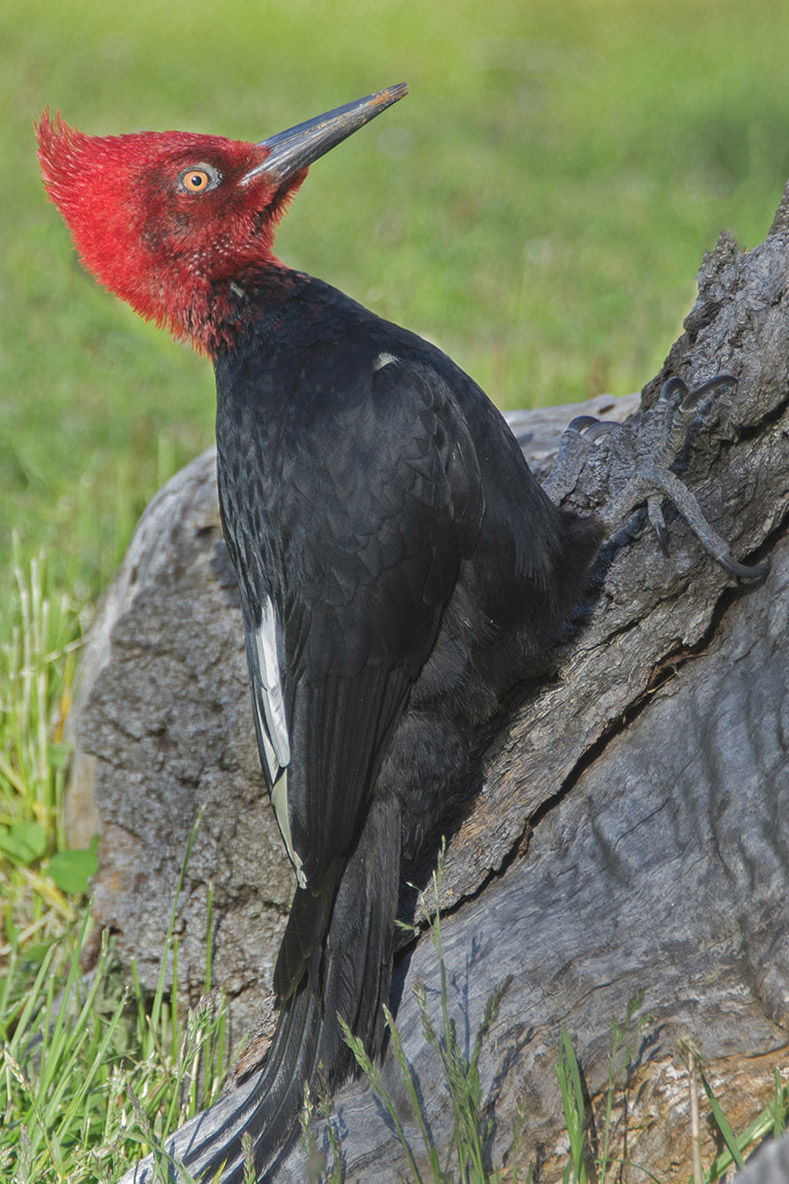
The crow-sized Magellanic woodpecker is the largest woodpecker in South America. The male has a crimson head and crest, whereas the female has a mainly black head. Male Magellanics weigh an average of 340 grams (12 oz), which is heavier than the pileated woodpecker of North America, making the Magellanic the heaviest woodpecker in the Americas.
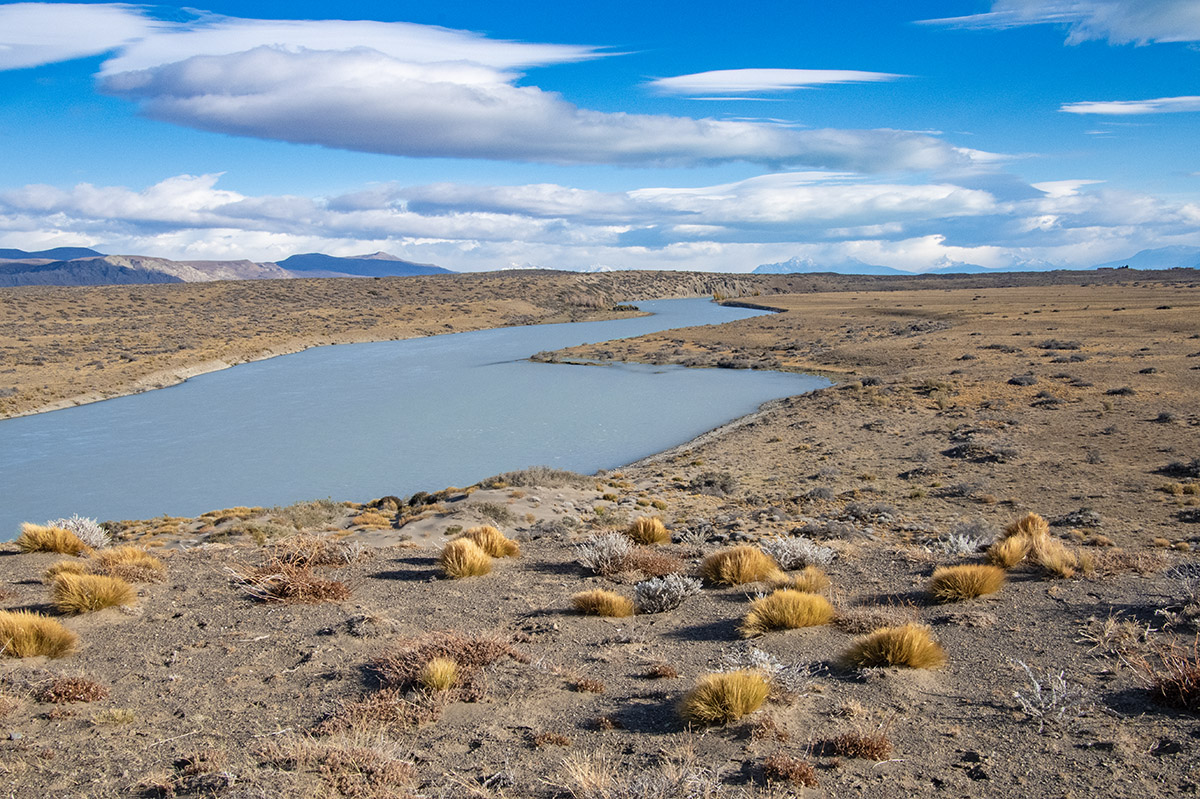
Autumn and winter rains temporarily fill many shallow lake beds in the steppe. They are used by a variety of waterbirds during the spring nesting season, although many dry up by late summer.
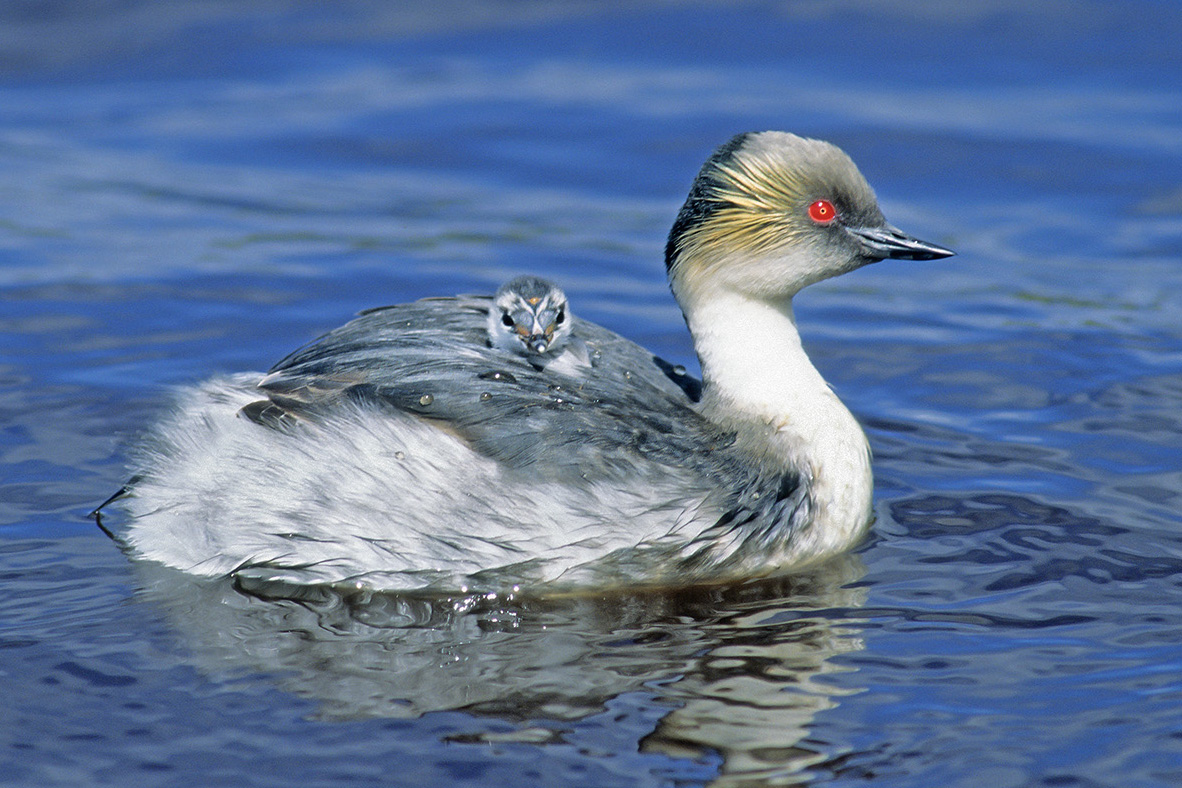
The silvery grebe is often mistaken for a kind of duck, but it has a slender, pointed beak, not a flat one like most ducks have. A characteristic of all grebes is that the chicks spend the first several weeks of life riding on their parents’ backs. From recent genetic studies, scientists have determined that the closest relatives of the grebes are the flamingos, a textbook example of divergent evolution.
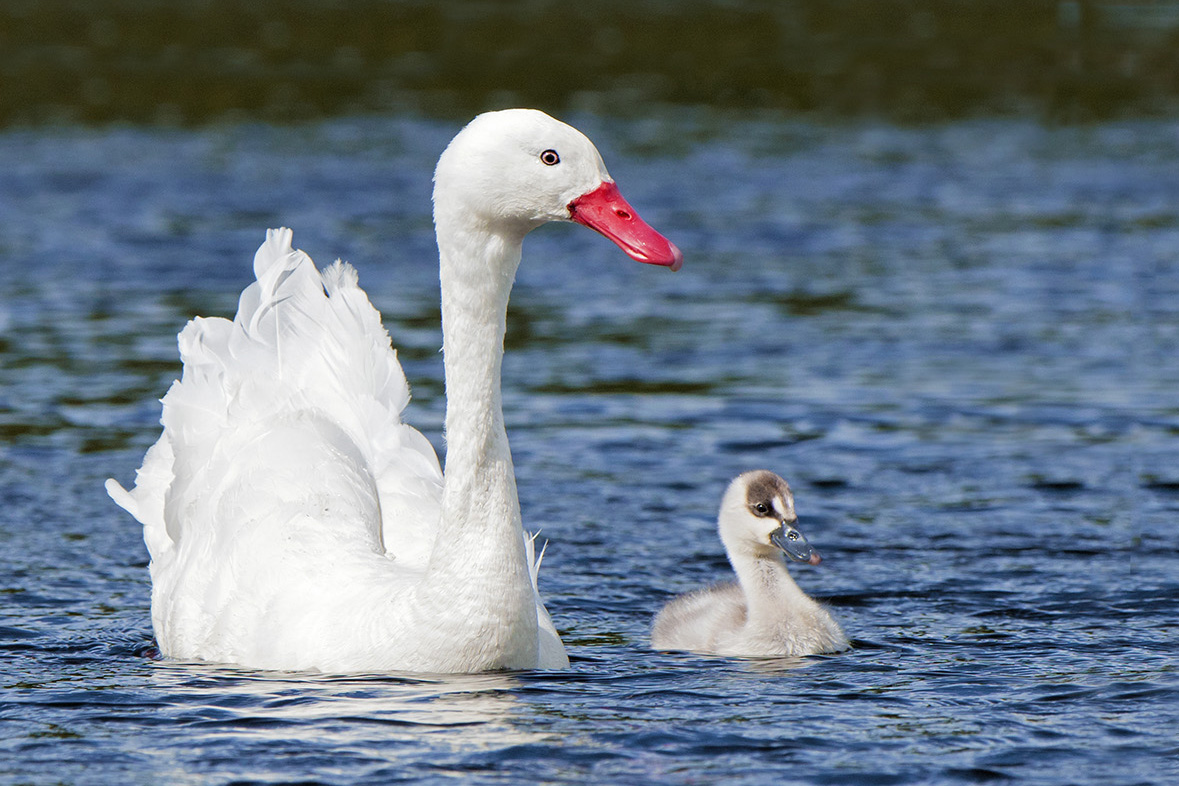
Another waterbird of the steppe is the coscoroba. Its name is onomatopoeic of its trumpeting call. Formerly, it was considered to be a species of swan, but it is now thought to be a type of goose.
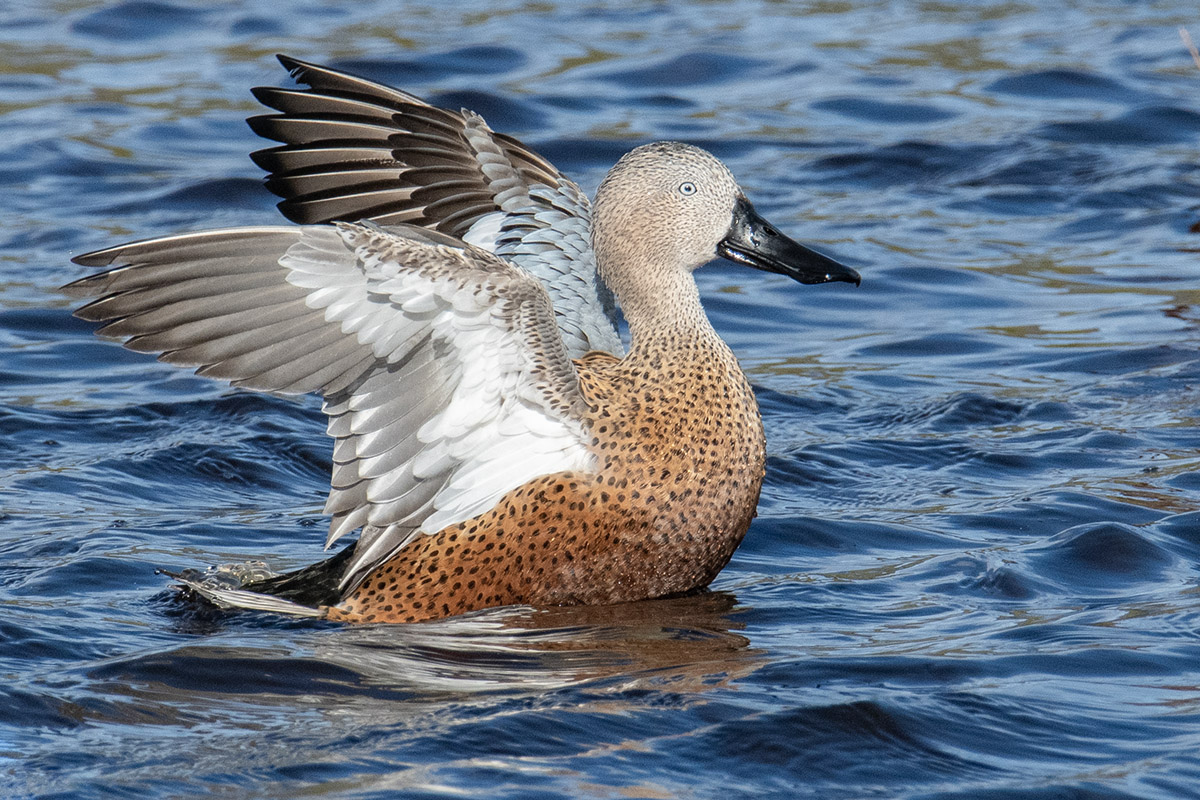
Patagonia is home to many waterfowl species like those we have in Canada. For example, the South American red shoveler is identical in shape and behaviour to our northern shoveler.
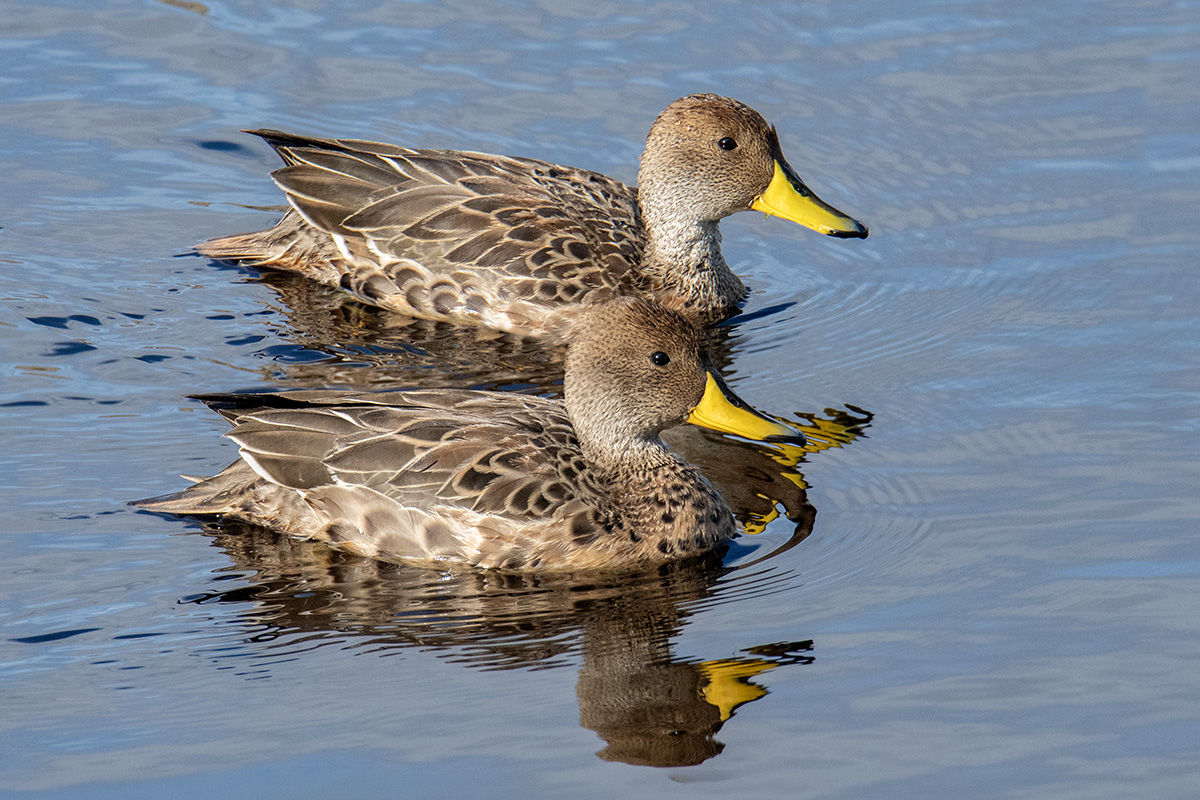
Another “lookalike” duck species is the yellow-billed pintail which bears a strong resemblance to Canada’s northern pintail.
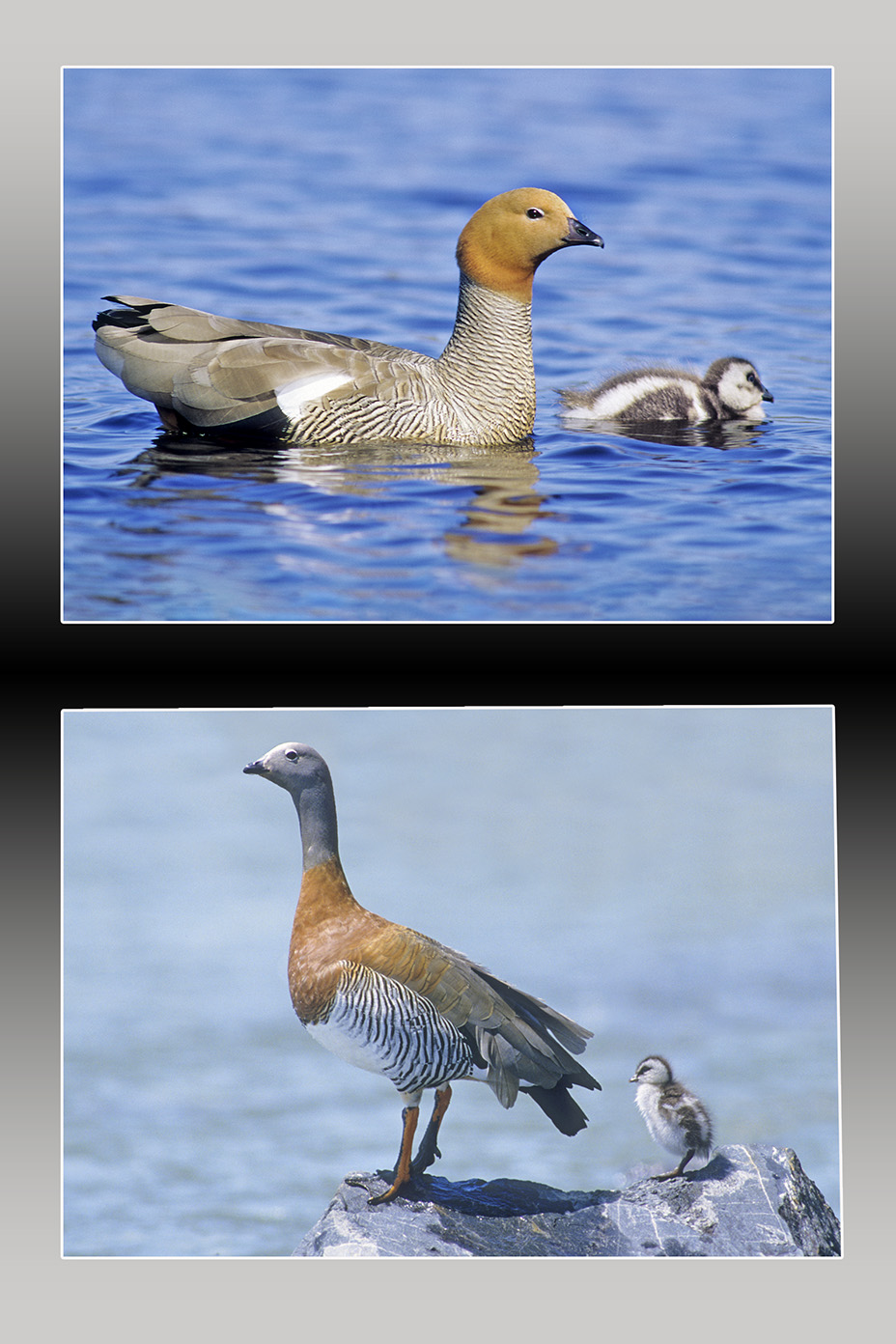
The ruddy-headed goose (top) and ashy-headed goose are sheldgeese found only in South America. Sheldgeese differ from the “true” geese of North America in several ways. The voices of male and females are strikingly different, and both sexes have a bony knob on the bend of their wing that they use for fighting.
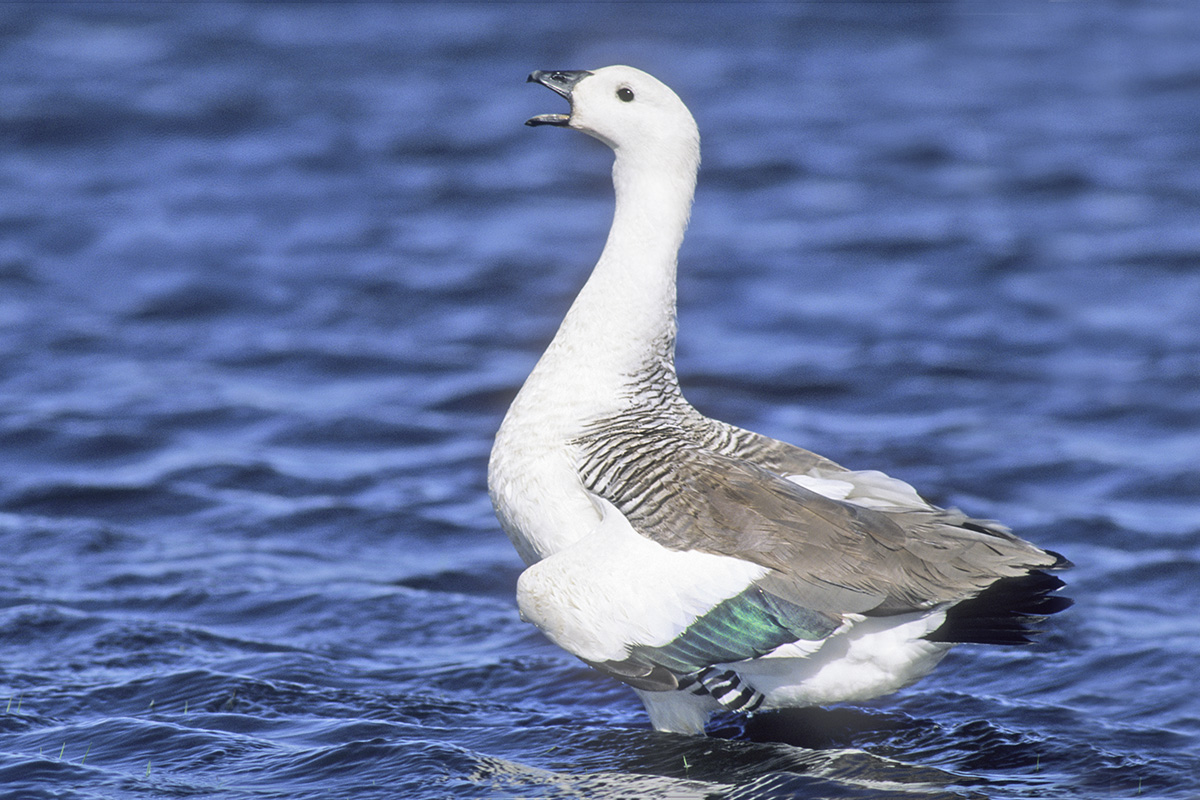
This male upland goose, one of the sheldgeese, was calling loudly and displaying its bony wing joints as a threat to a rival male.
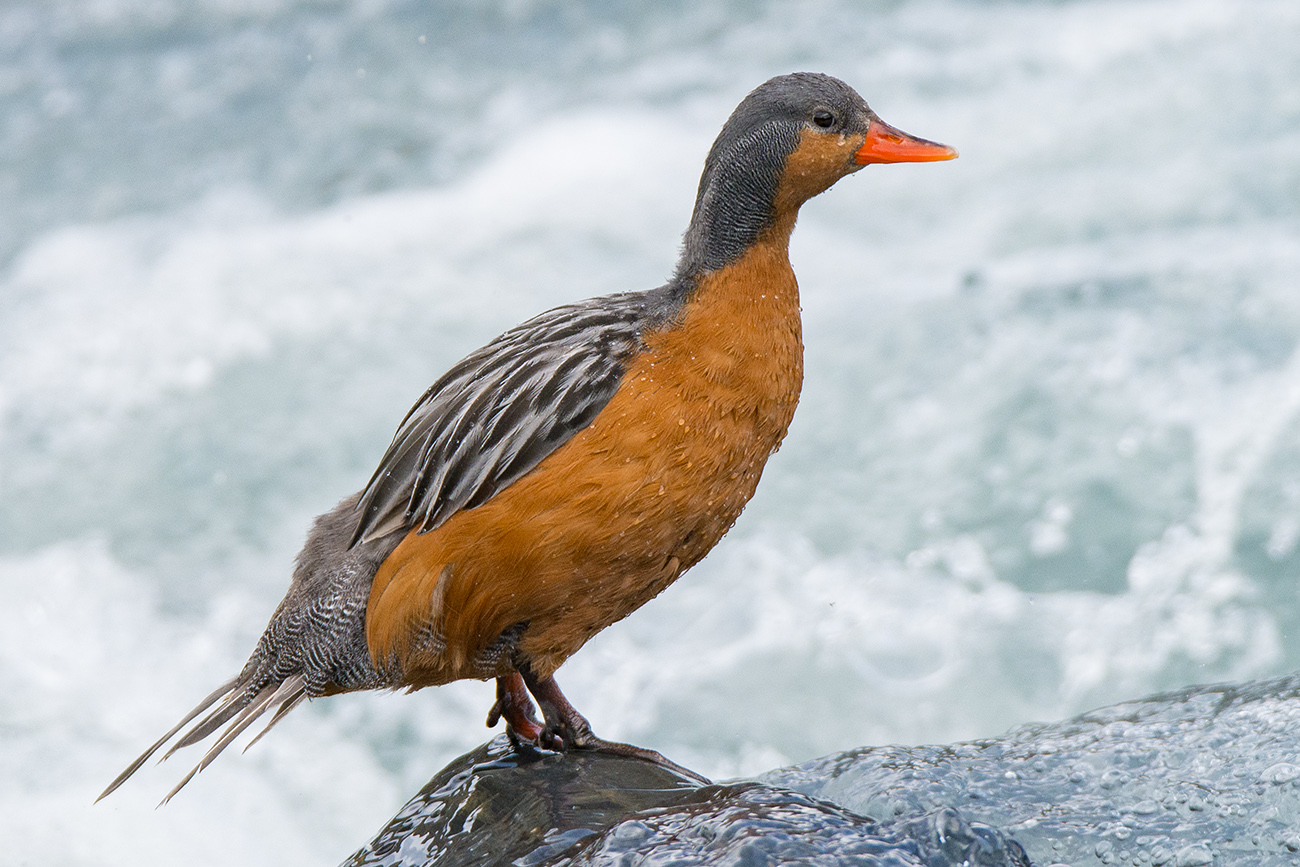
The torrent duck of South America fills the same niche as the harlequin duck does in North America. Both are strong swimmers that occur in fast-flowing mountain rivers where they dive underwater to feed on aquatic invertebrates.
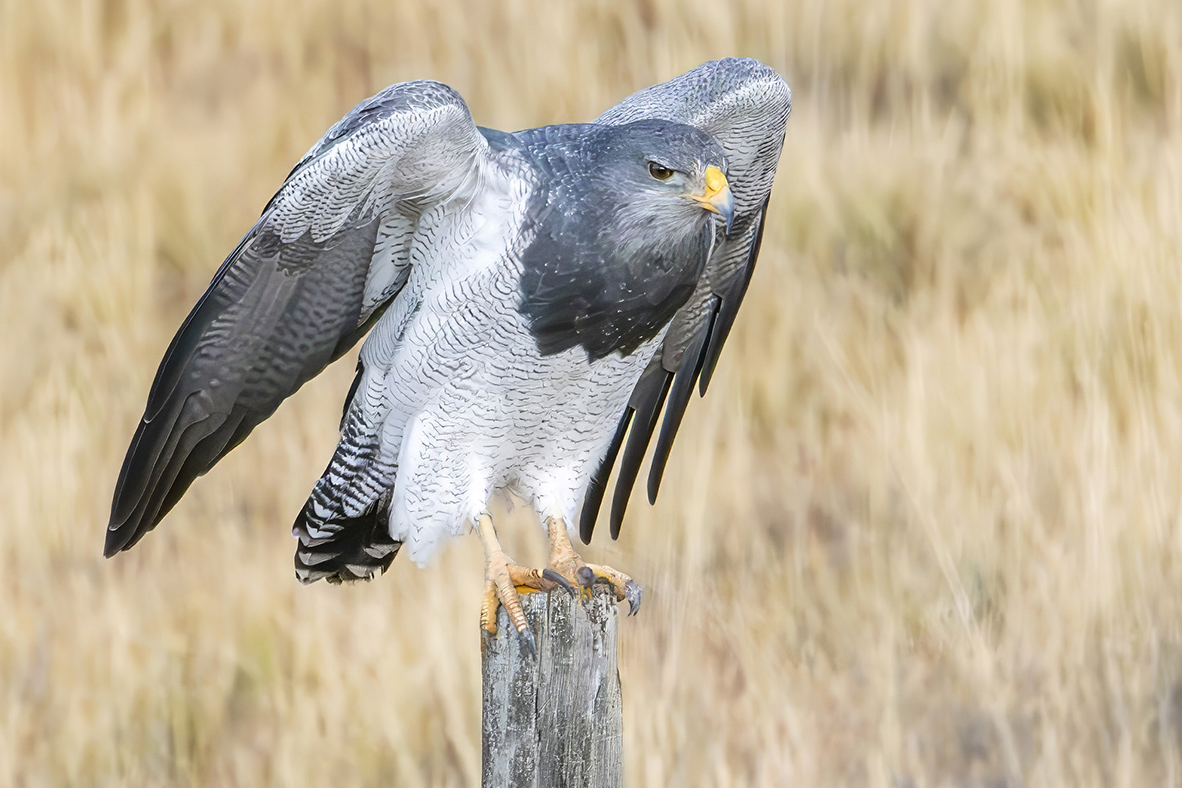
Patagonia is home to an entire guild of avian scavengers. When a carcass is found, whether the victim died of natural causes, was killed by a puma, or was hit by a vehicle, the cleanup crew arrives soon afterwards. One of the conspicuous scavengers is the handsome black-chested buzzard-eagle.
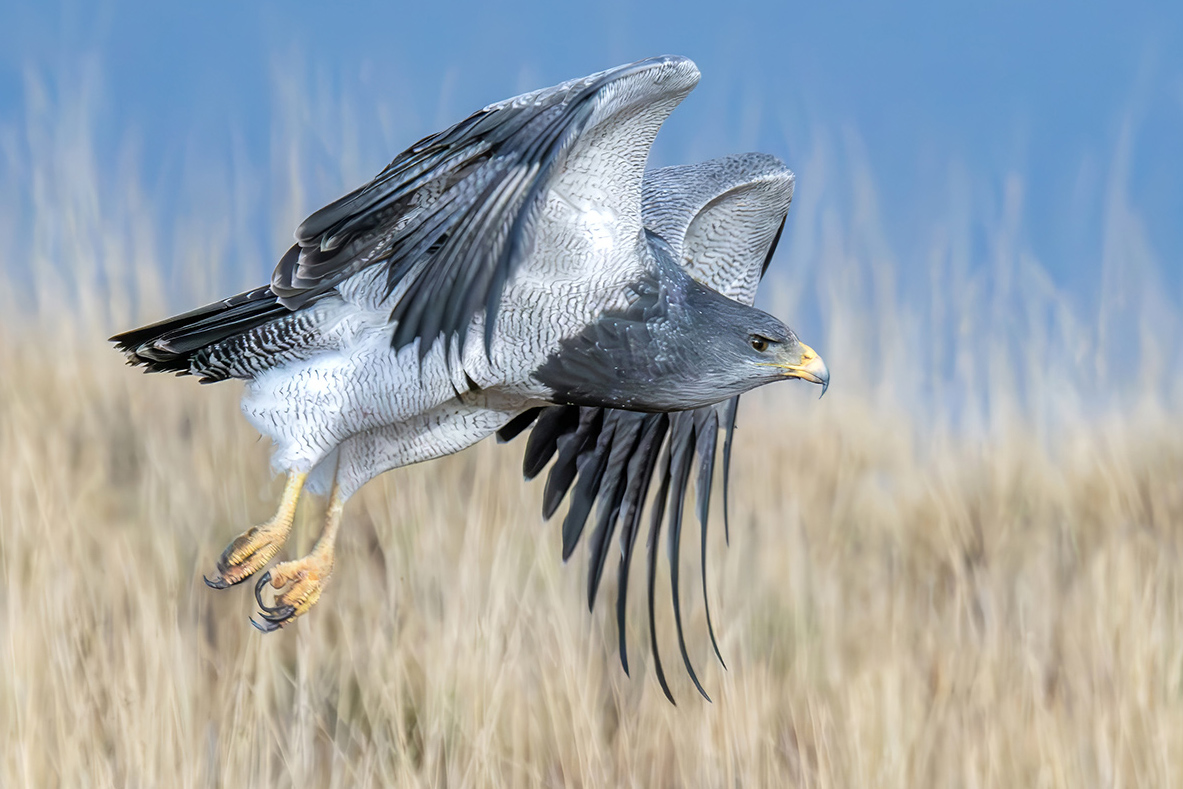
In most birds of prey, females are larger than males. In the case of black-chested buzzard-eagles, females average 30% heavier than their male partners and have a wingspan of up to 2 metres (6.6 feet).
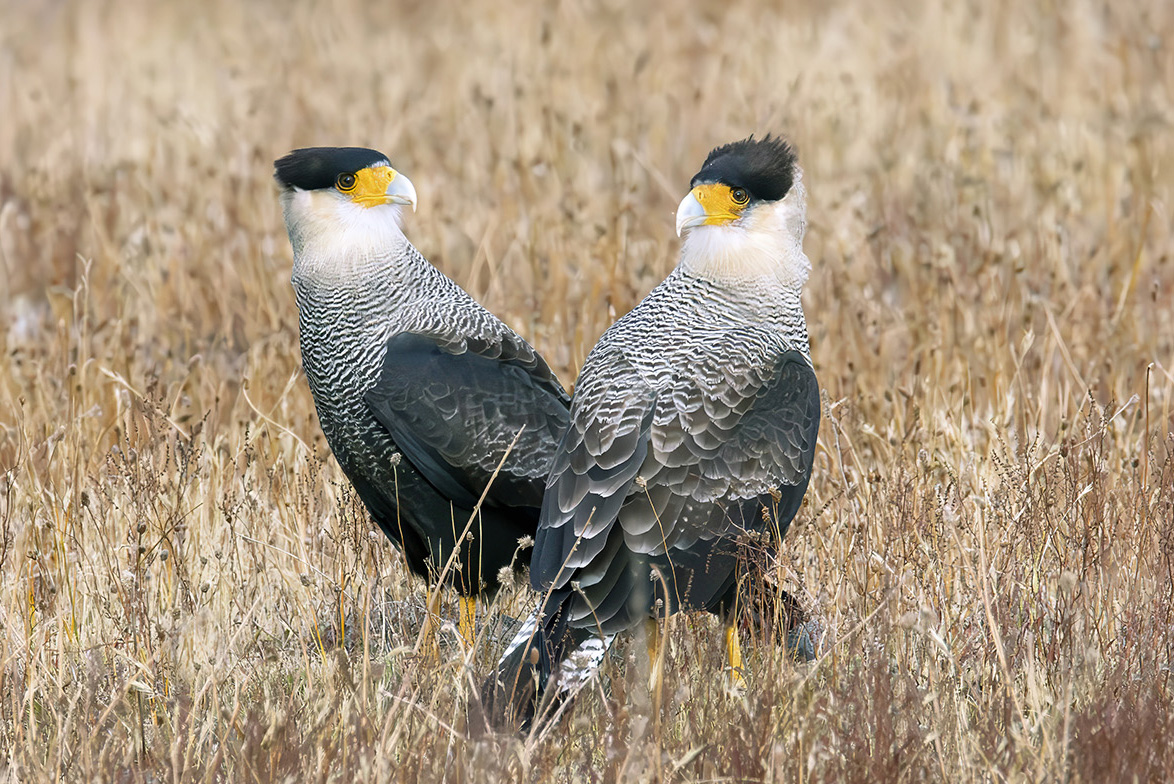
Caracaras are birds of prey in the same family as the falcons. One big difference between them is that falcons are fast-flying aerial hunters, and caracaras are slow-flying scavengers. They have a heavy, sharp-edged beak that is ideally adapted for shearing, and typically they are the first scavengers to locate a carcass.
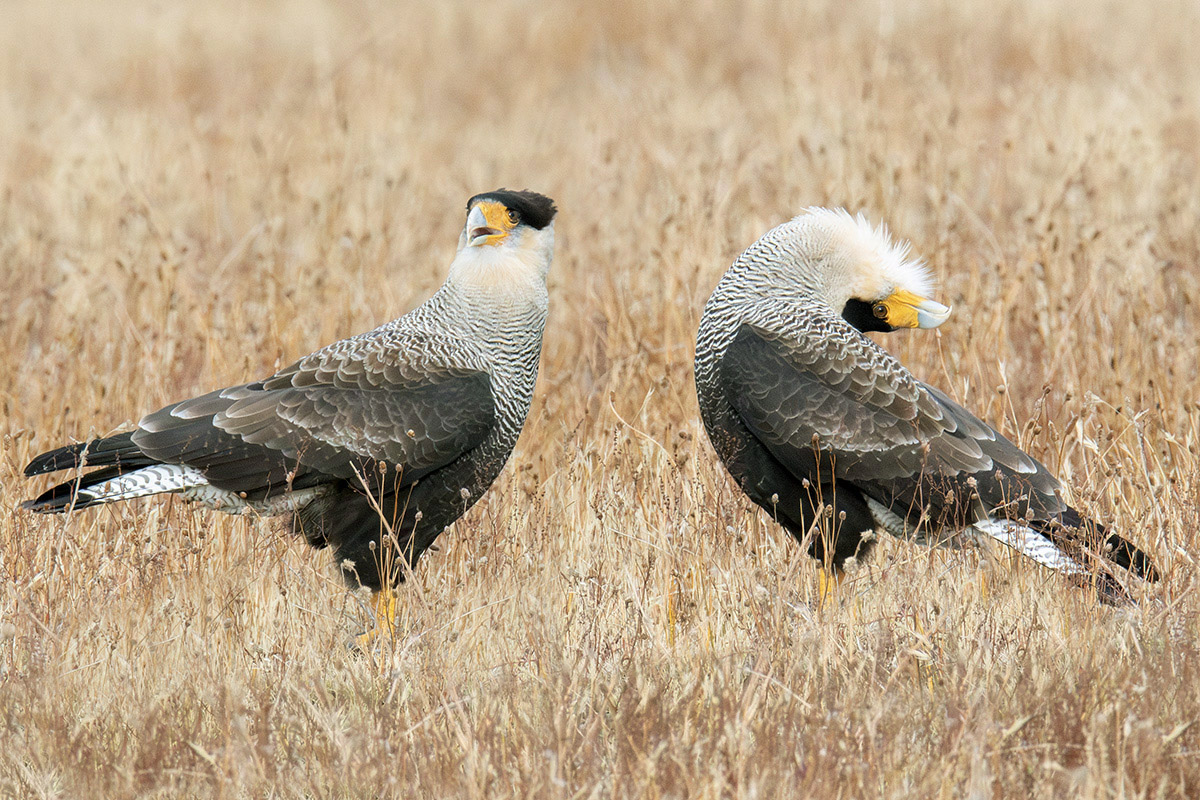
The caracara on the right is performing a head-throwback display and communicating its superior rank.
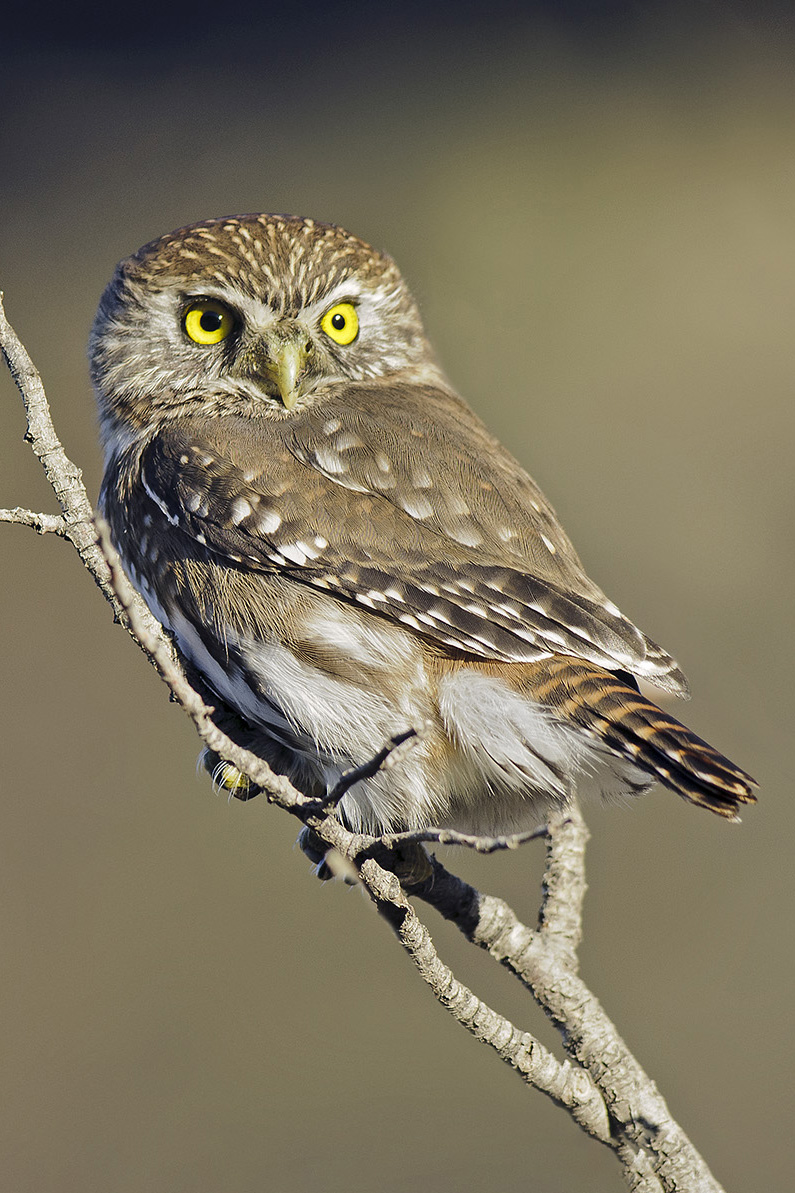
The austral pygmy-owl hunts day and night. This voracious little predator preys on insects, rodents, songbirds, and lizards. Nonetheless, if an opportunity arises, it will tackle prey much bigger than itself, including the quail-sized, Chilean tinamous that can weigh twice as much as the owl.
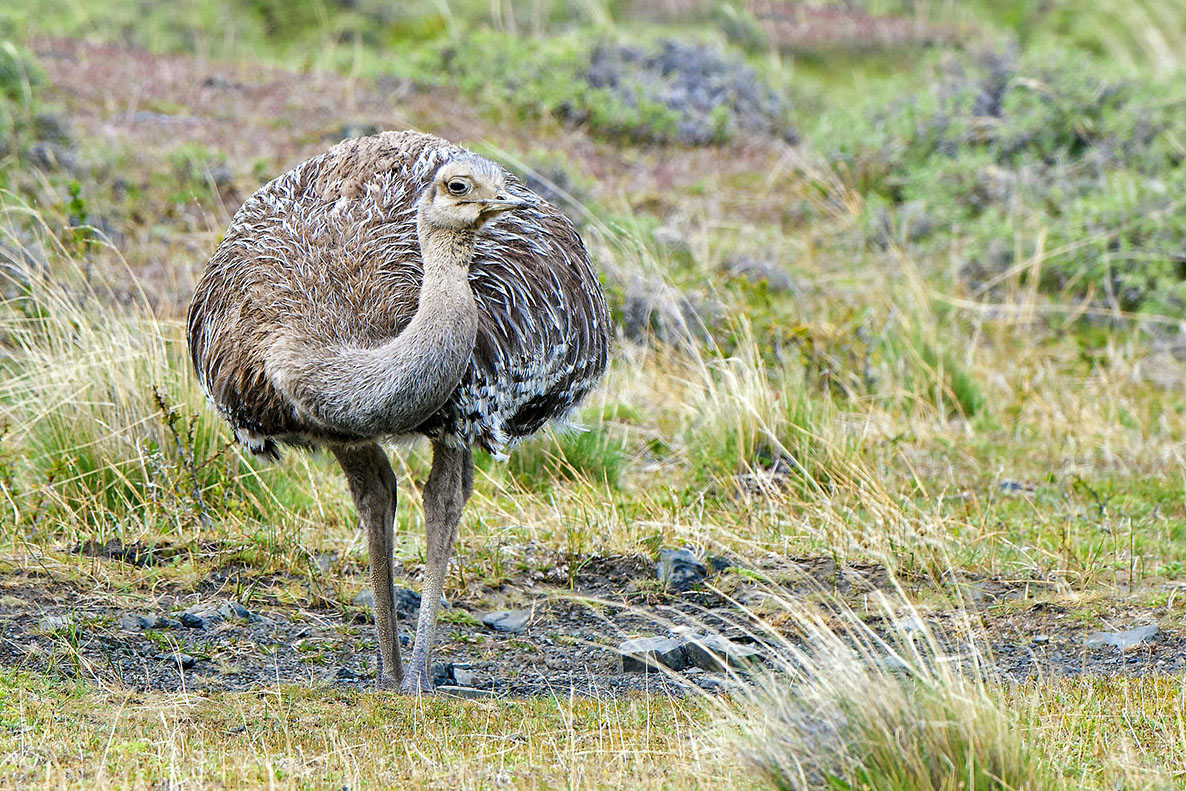
The lesser rhea was originally called Darwin’s rhea, as it was Charles Darwin who collected the first specimen of this bird during his celebrated around-the-world voyage aboard the HMS Beagle in the mid-1800s.
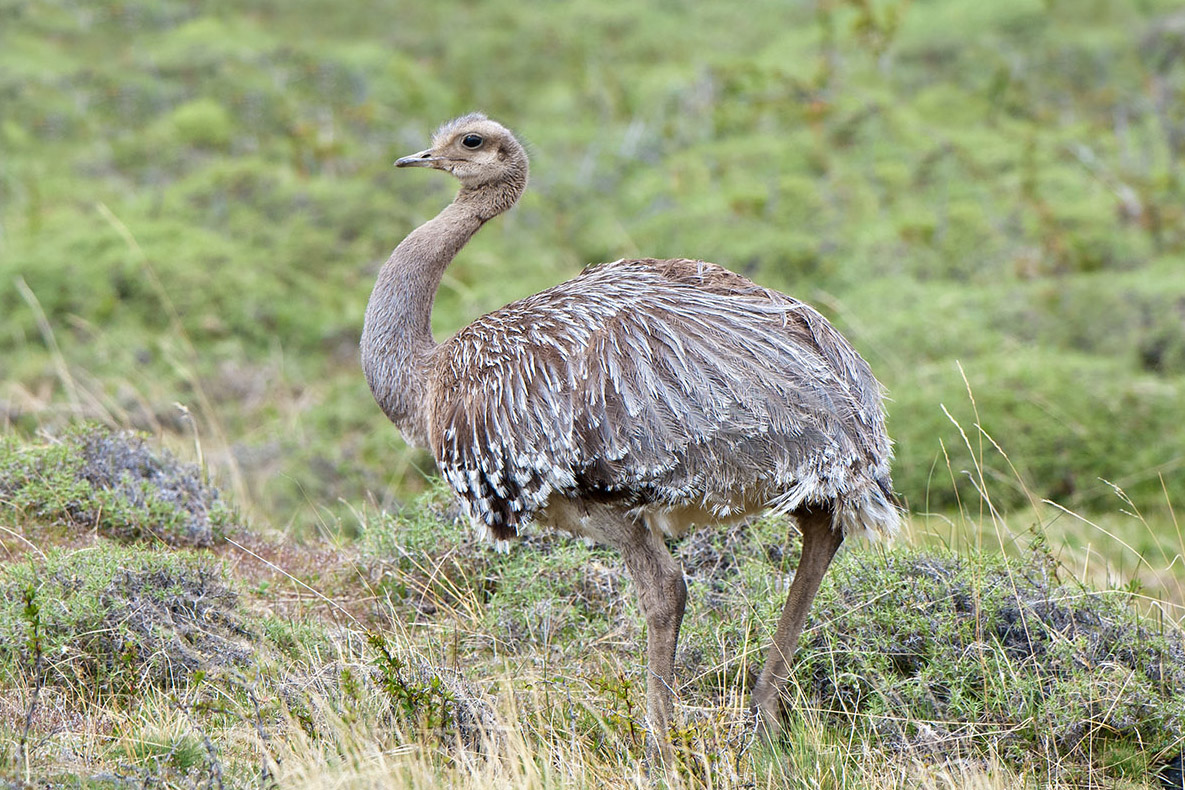
The lesser rhea is the largest bird in Patagonia, standing a meter (39 in) tall and weighing between 15 and 25 kg (35-55 lbs).
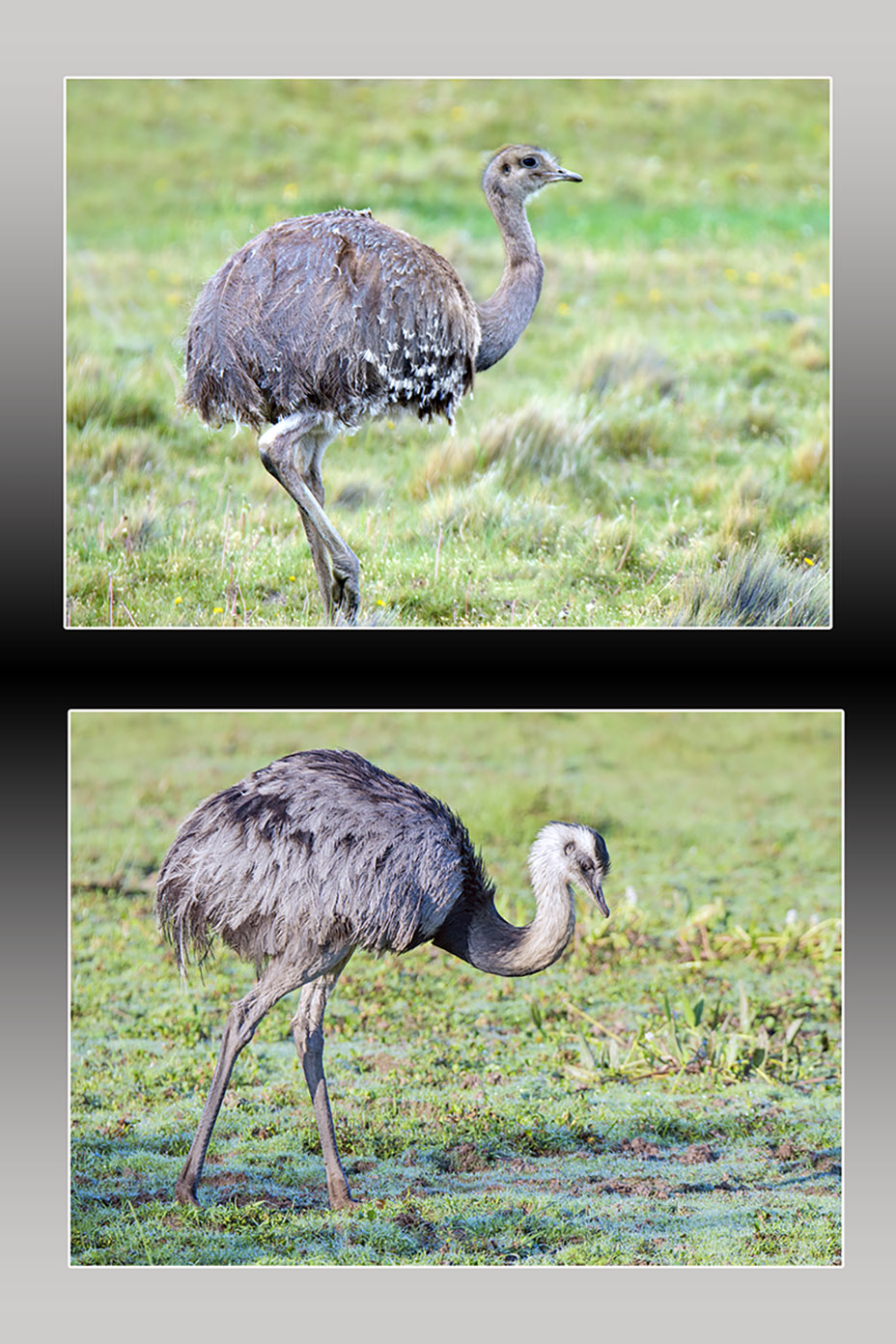
The rhea belongs to a group of flightless birds known as ratites whose members include: the ostrich, the emu, four species of cassowary, and two species of rhea. Both the lesser rhea (top) and the greater rhea (bottom) of northern Argentina, Bolivia, and Brazil have a long neck, large eyes with good vision, a big, round, hefty body, long, powerful legs, and degenerate wings.
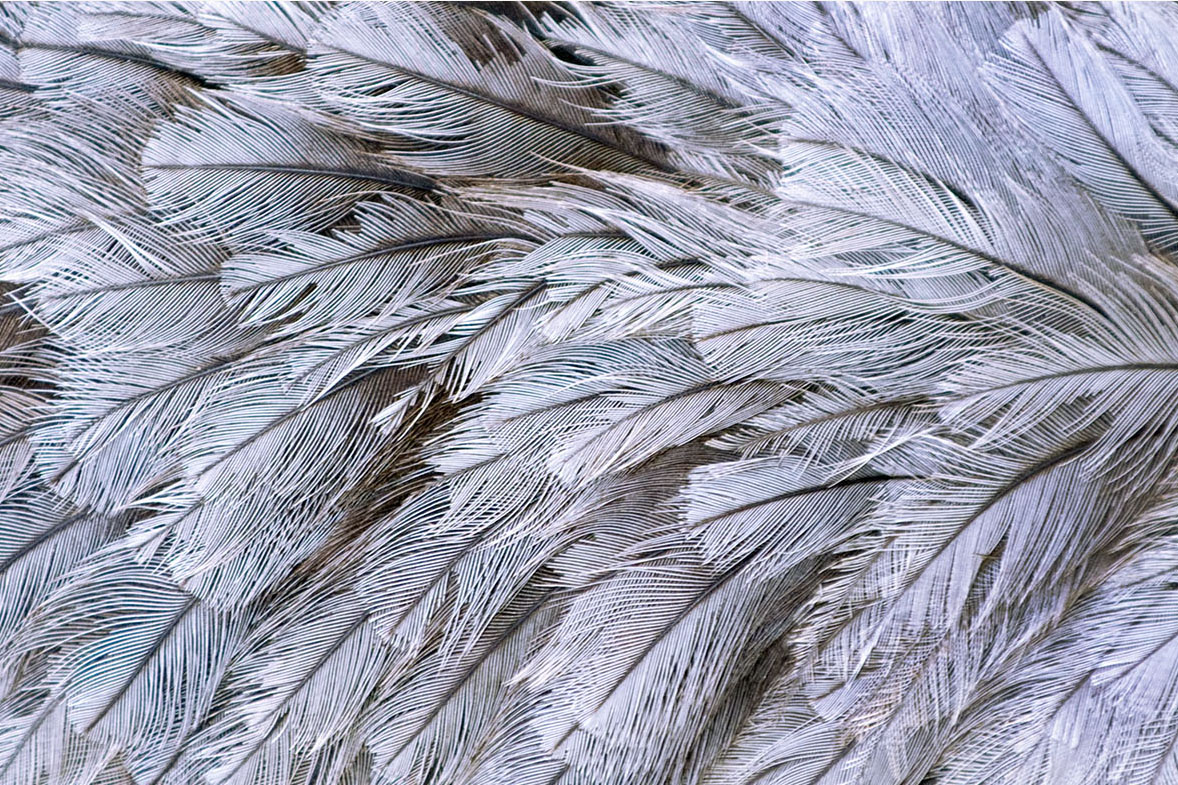
A rhea’s feathers are soft and fluffy, providing warm insulation against the cold, and the grey, speckled colouration is remarkably good at camouflaging such a large bird.
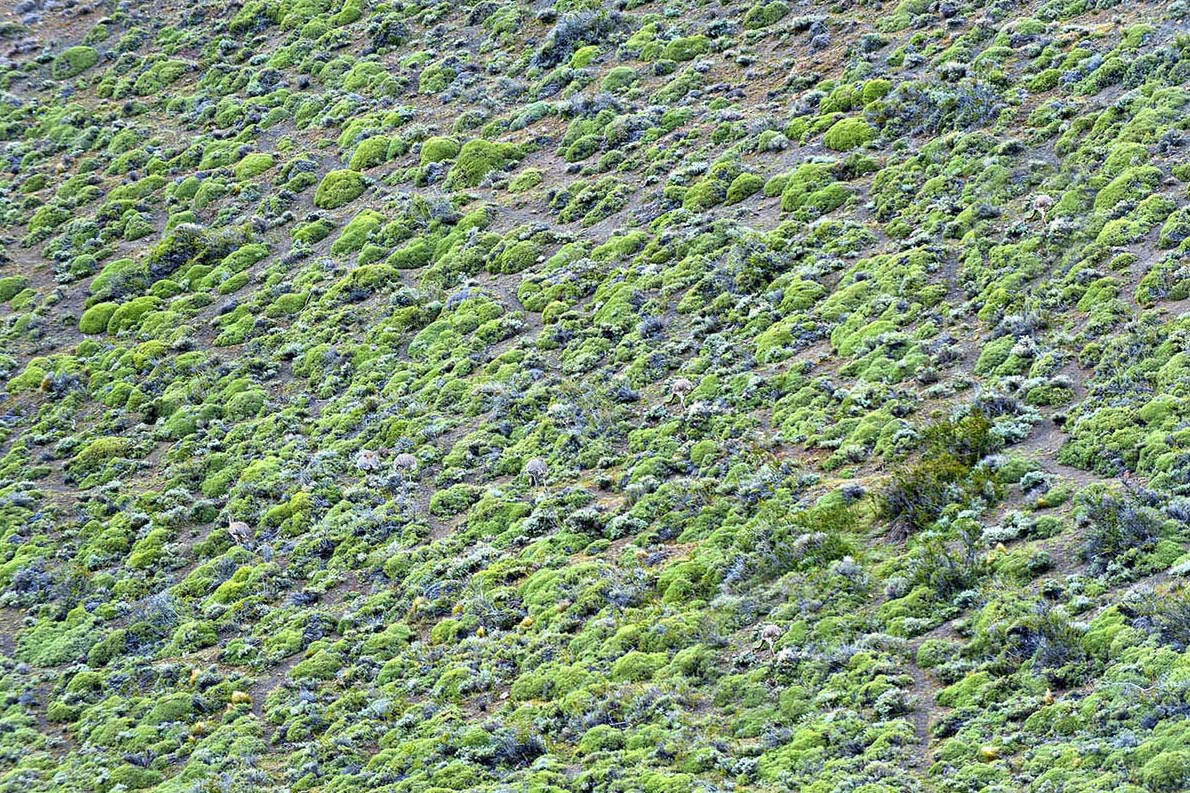
How many lesser rheas can you count on this slope?
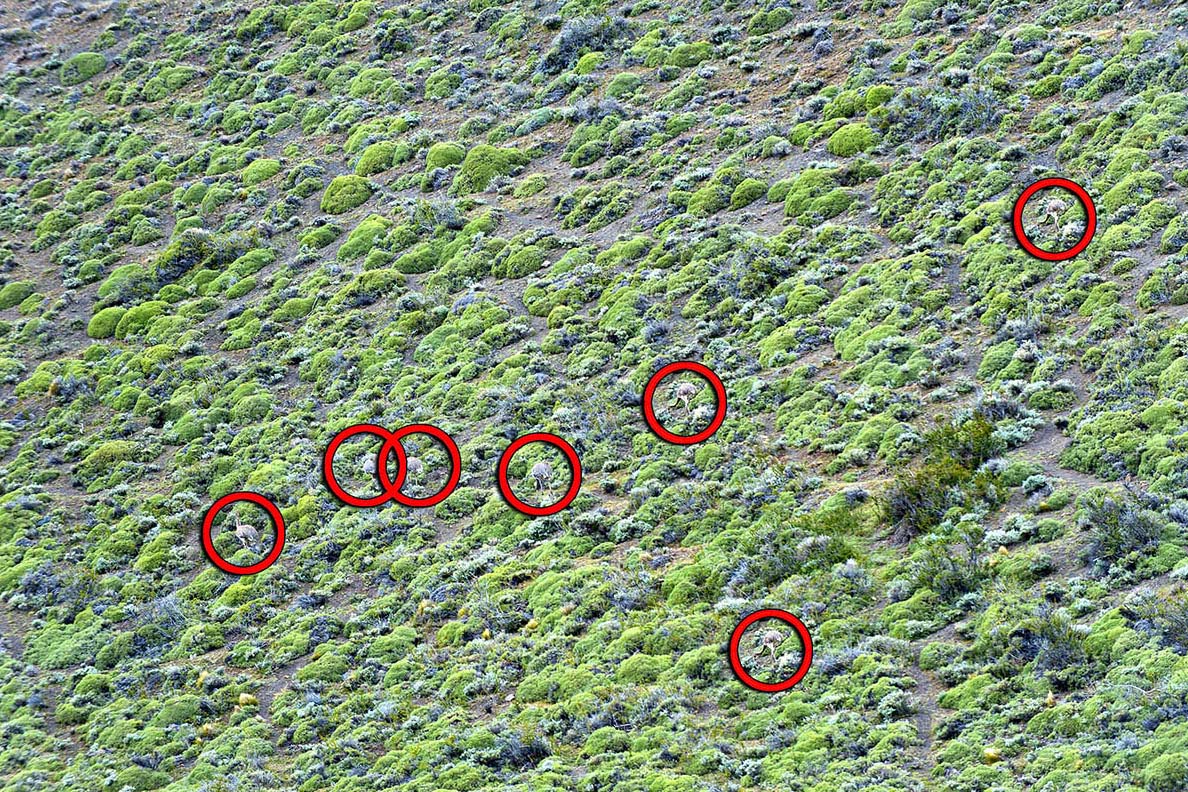
There are seven rheas.
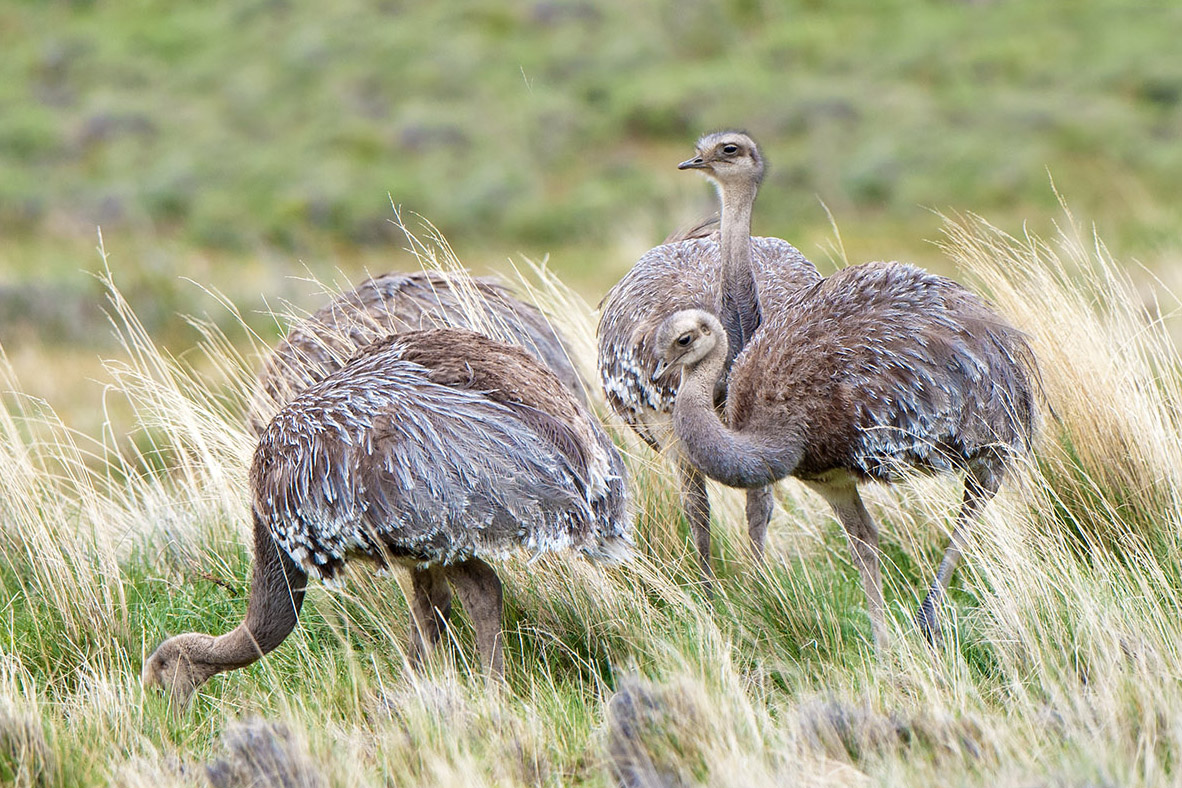
The breeding cycle of the rhea is one of the most interesting aspects of the bird’s life. Male rheas fight with each other to win a territory, after which they search for a safe nesting location and clear a hollow on the ground. They then court groups of females that travel around together in parties of three to a dozen.
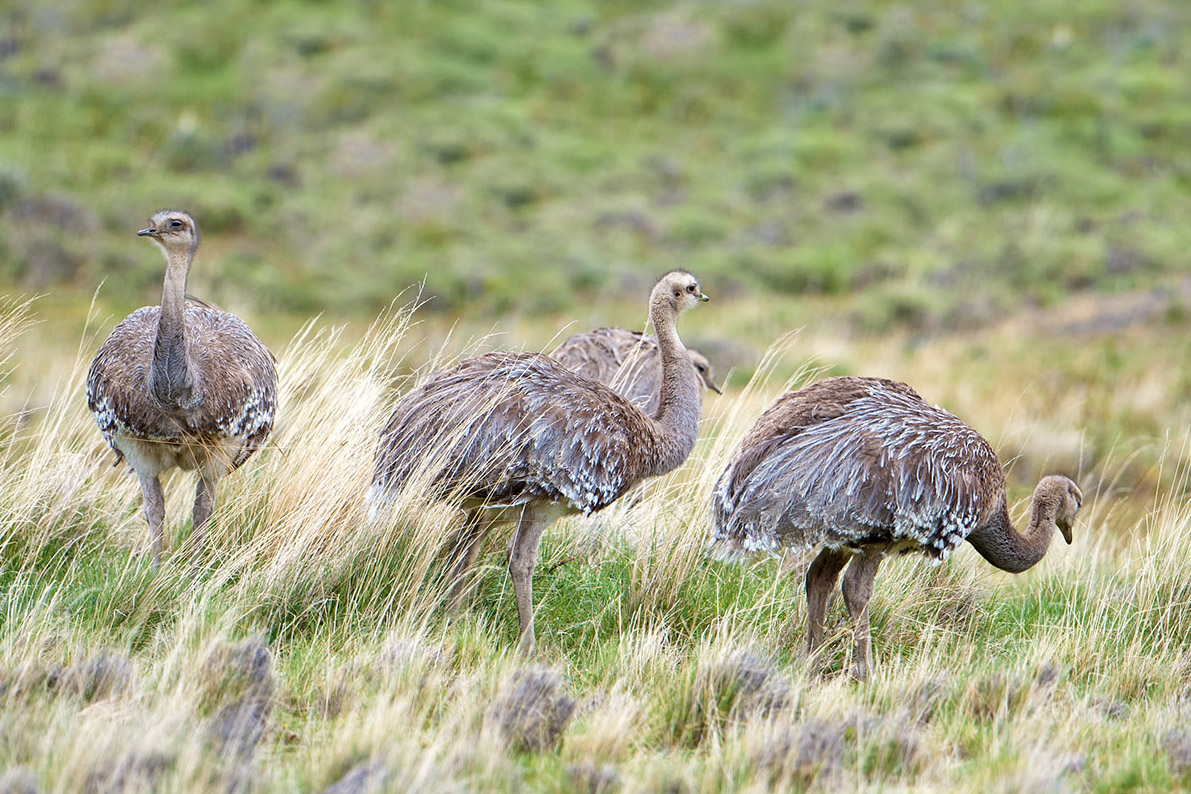
If the females are impressed by a male’s puffy-necked zig-zag displays, they mate with him and then sequentially lay eggs in his nest until there are 15 to 30 eggs. The male alone will incubate the eggs for 35-40 days while the female group abandons his territory and searches for another male to mate with and produce eggs.
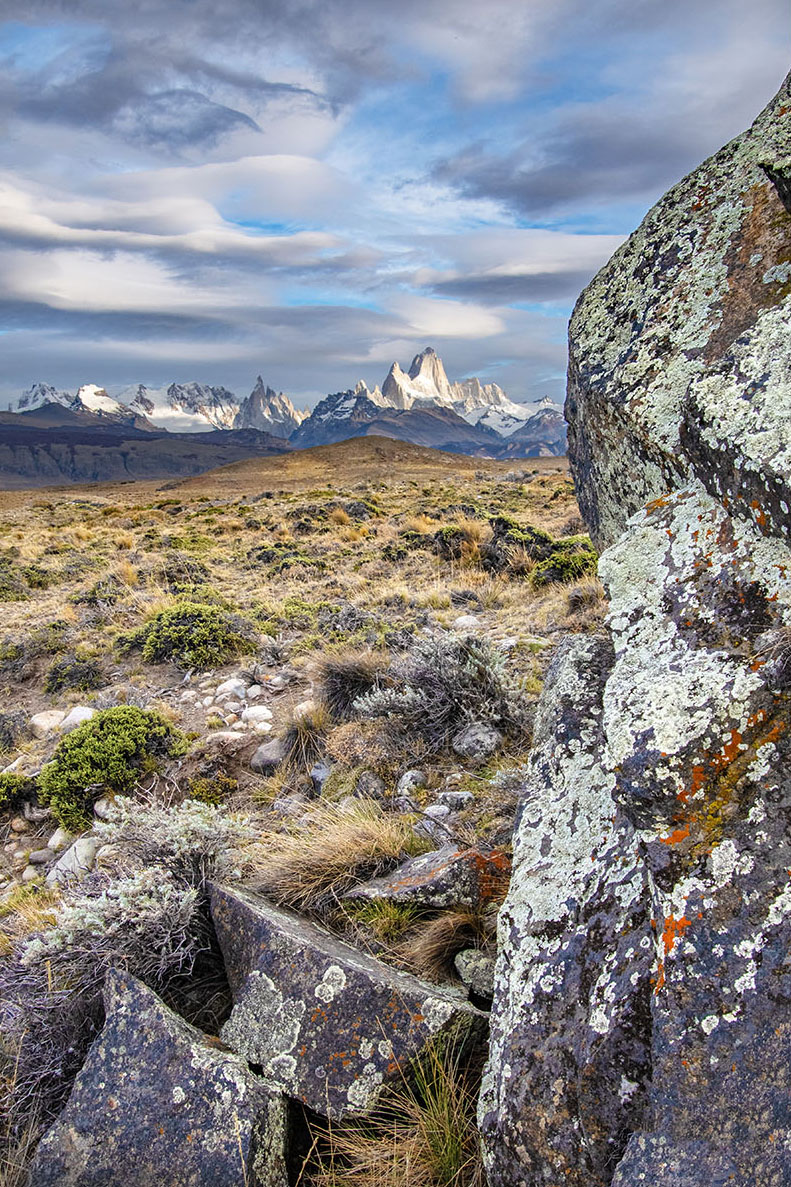
Eventually, the grassy steppe runs into the jagged wall of the Andes Mountains.
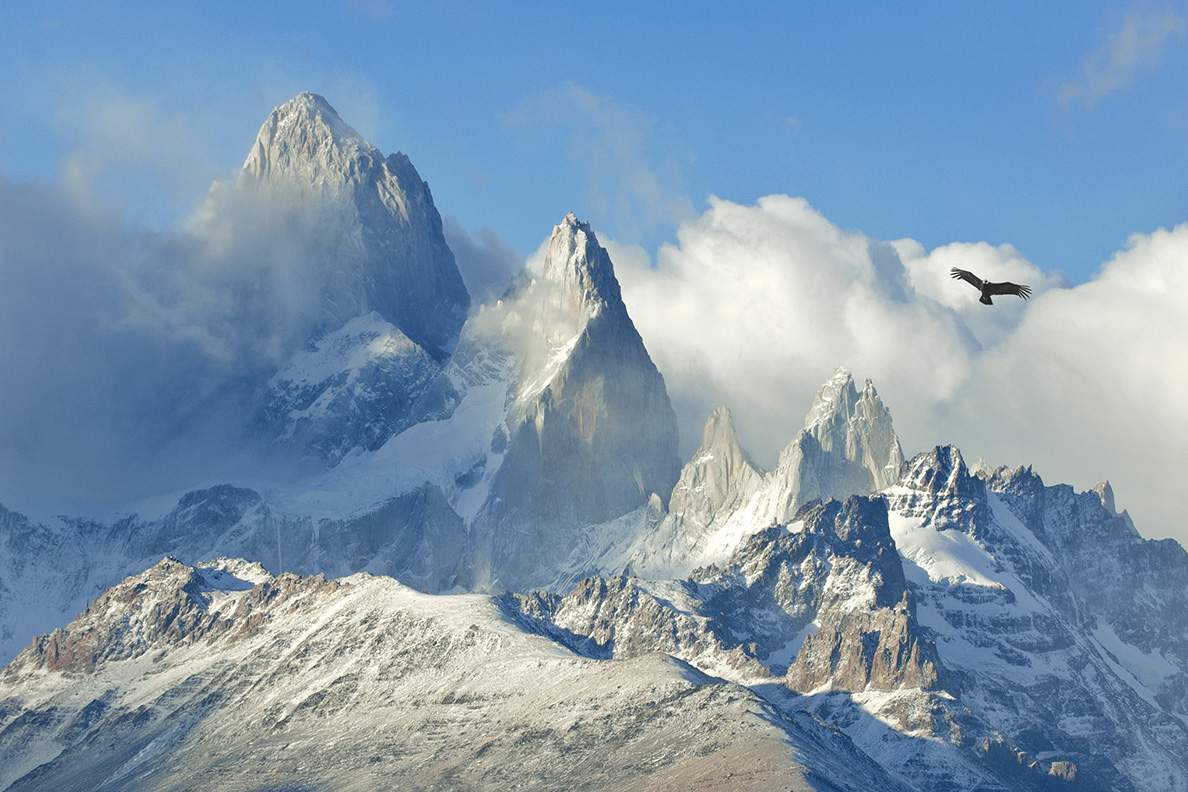
The mountains in Patagonia are the southern end of the Andes that run along the entire western edge of South America. The Andes are the longest continental mountain range in the world, roughly 8,900 km (5,530 mi) in length, 200 to 700 km (124 to 435 mi) wide, and with an average height of about 4,000 m (13,123 ft).
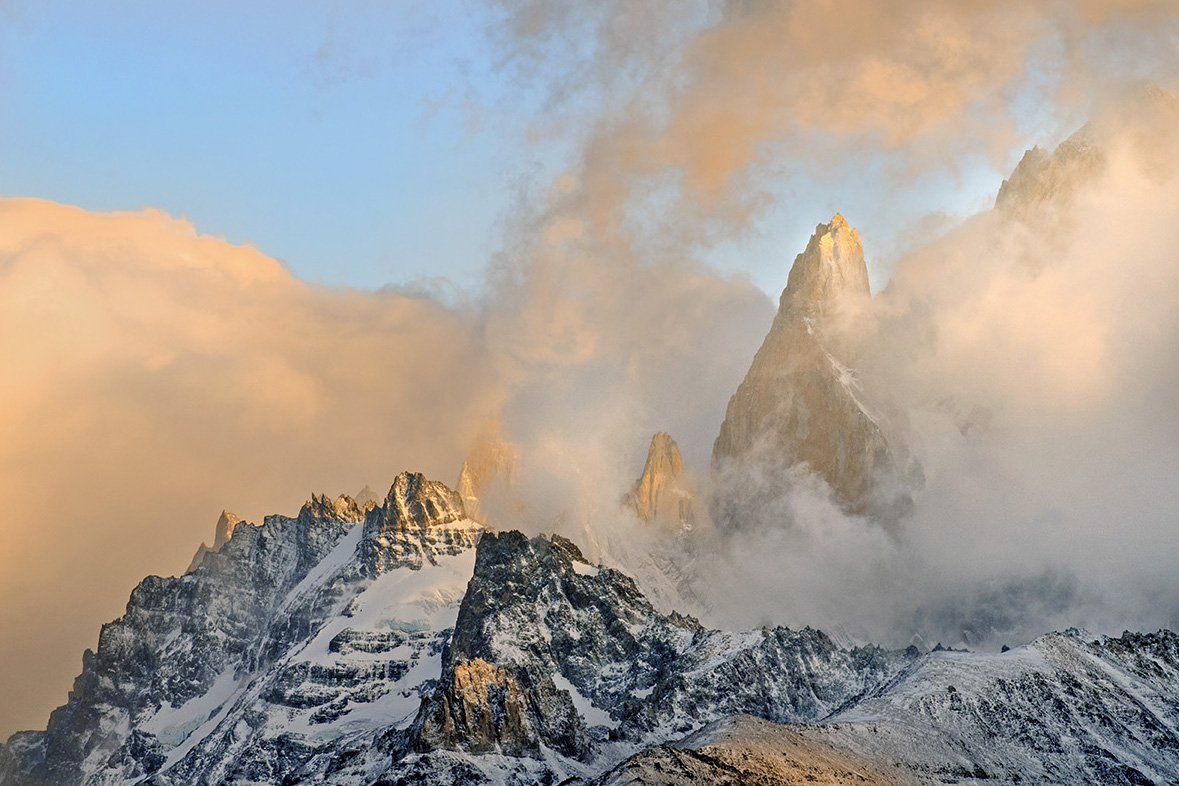
The native Tehuelche people named some of the mountain peaks in Patagonia, El Chaltén, which means the “smoking mountains” because the summits are often cloaked in clouds.
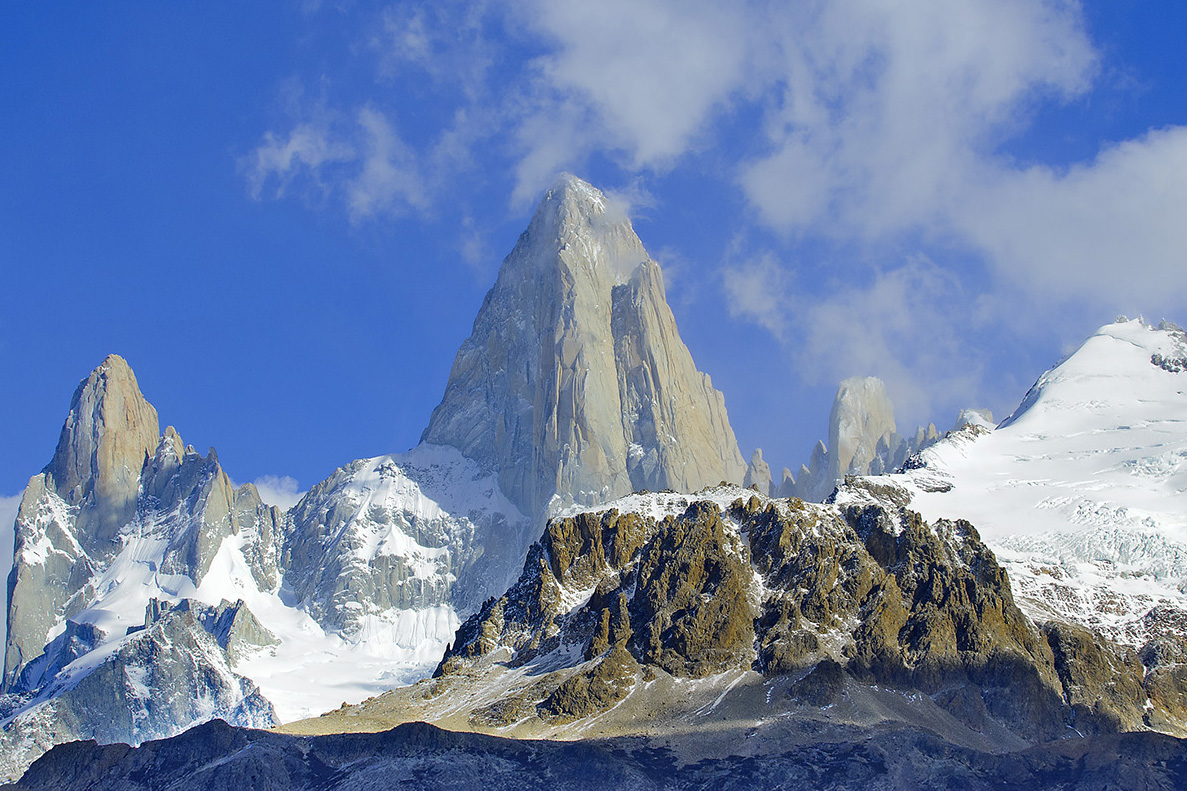
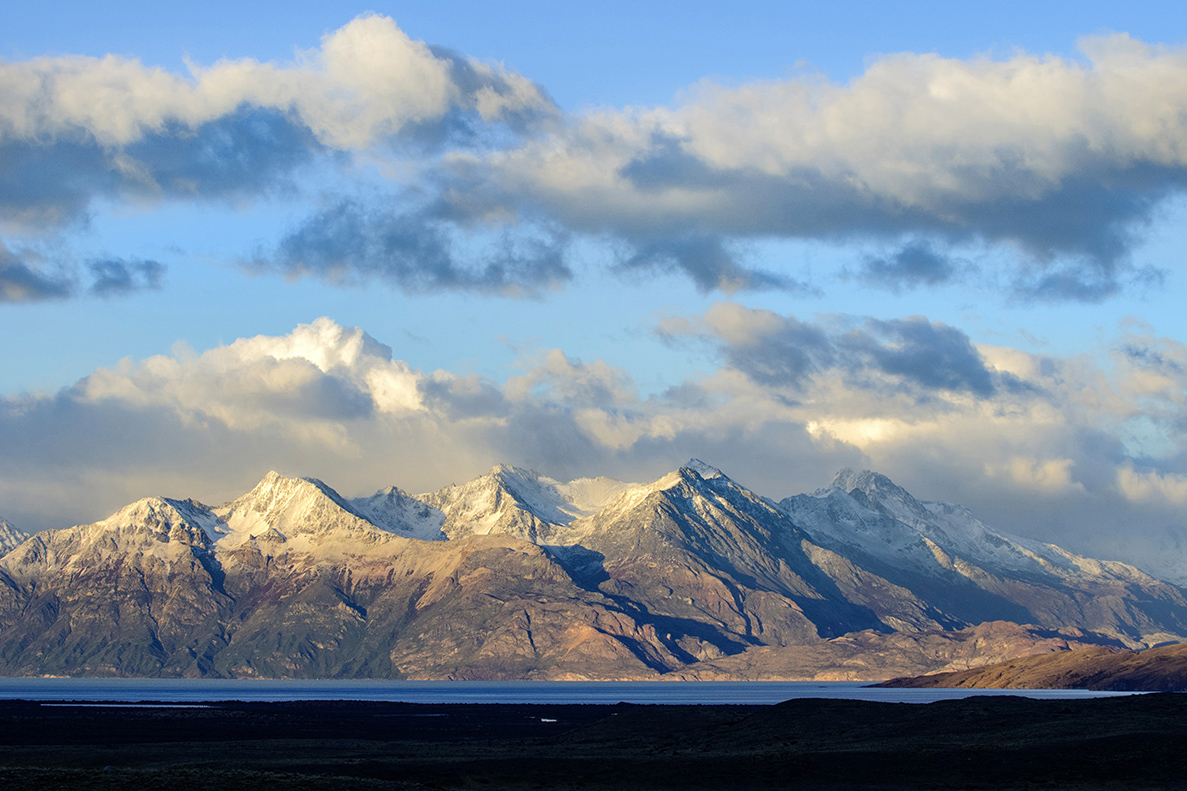
The Andes formed over the past 60 million years, and millennia of erosion have yet to dull their sharp, angular ridges and peaks.
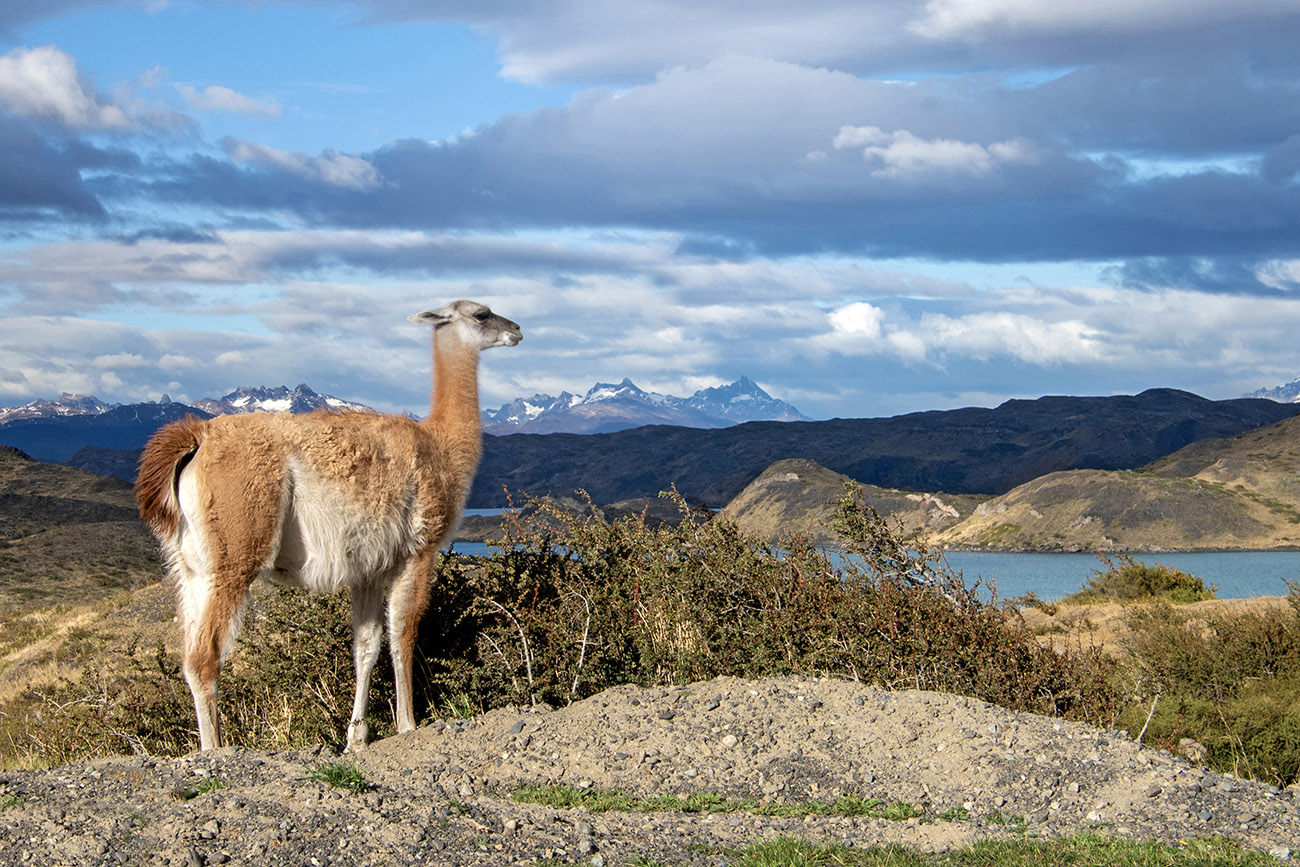
The guanaco is the largest animal in Patagonia. It is the at the centre of a vital food web which I will explore in the postings in my upcoming columns in November and December.
About the Author – Dr. Wayne Lynch

For more than 40 years, Dr. Wayne Lynch has been writing about and photographing the wildlands of the world from the stark beauty of the Arctic and Antarctic to the lush rainforests of the tropics. Today, he is one of Canada’s best-known and most widely published nature writers and wildlife photographers. His photo credits include hundreds of magazine covers, thousands of calendar shots, and tens of thousands of images published in over 80 countries. He is also the author/photographer of more than 45 books for children as well as over 20 highly acclaimed natural history books for adults including Windswept: A Passionate View of the Prairie Grasslands; Penguins of the World; Bears: Monarchs of the Northern Wilderness; A is for Arctic: Natural Wonders of a Polar World; Wild Birds Across the Prairies; Planet Arctic: Life at the Top of the World; The Great Northern Kingdom: Life in the Boreal Forest; Owls of the United States and Canada: A Complete Guide to their Biology and Behavior; Penguins: The World’s Coolest Birds; Galapagos: A Traveler’s Introduction; A Celebration of Prairie Birds; and Bears of the North: A Year Inside Their Worlds. In 2022, he released Wildlife of the Rockies for Kids, and Loons: Treasured Symbols of the North. His books have won multiple awards and have been described as “a magical combination of words and images.”
Dr. Lynch has observed and photographed wildlife in over 70 countries and is a Fellow of the internationally recognized Explorers Club, headquartered in New York City. A Fellow is someone who has actively participated in exploration or has substantially enlarged the scope of human knowledge through scientific achievements and published reports, books, and articles. In 1997, Dr. Lynch was elected as a Fellow to the Arctic Institute of North America in recognition of his contributions to the knowledge of polar and subpolar regions. And since 1996 his biography has been included in Canada’s Who’s Who.