
It was recently announced that Collingwood, Ontario, resident Leah den Bok, internationally known for her photos and stories of people experiencing homelessness, has been awarded the Governor General’s Award for her project ‘Humanizing the Homeless.’ “I’m really shocked to receive the award,” Leah told PHOTONews. “A friend recommended me for it three years ago. But when I didn’t hear anything back, I assumed I didn’t get it. I kind of forgot,” said Leah, with a laugh.
Since 2015, when Leah was just 15 years old, this project has taken her to countries worldwide, including the United States, Spain, and Australia. However, one recent trip held special significance for Leah. She, along with her partner Alejandro, her brother Daniel, and her mother Sara, went to India. The reason this is so significant is that an inspiration for her project is the fact that her mother was once homeless herself as a young child in Kolkata, India, before being rescued by the famous Catholic nun, Mother Teresa. What follows are some of the photos and stories captured by Leah on this trip.
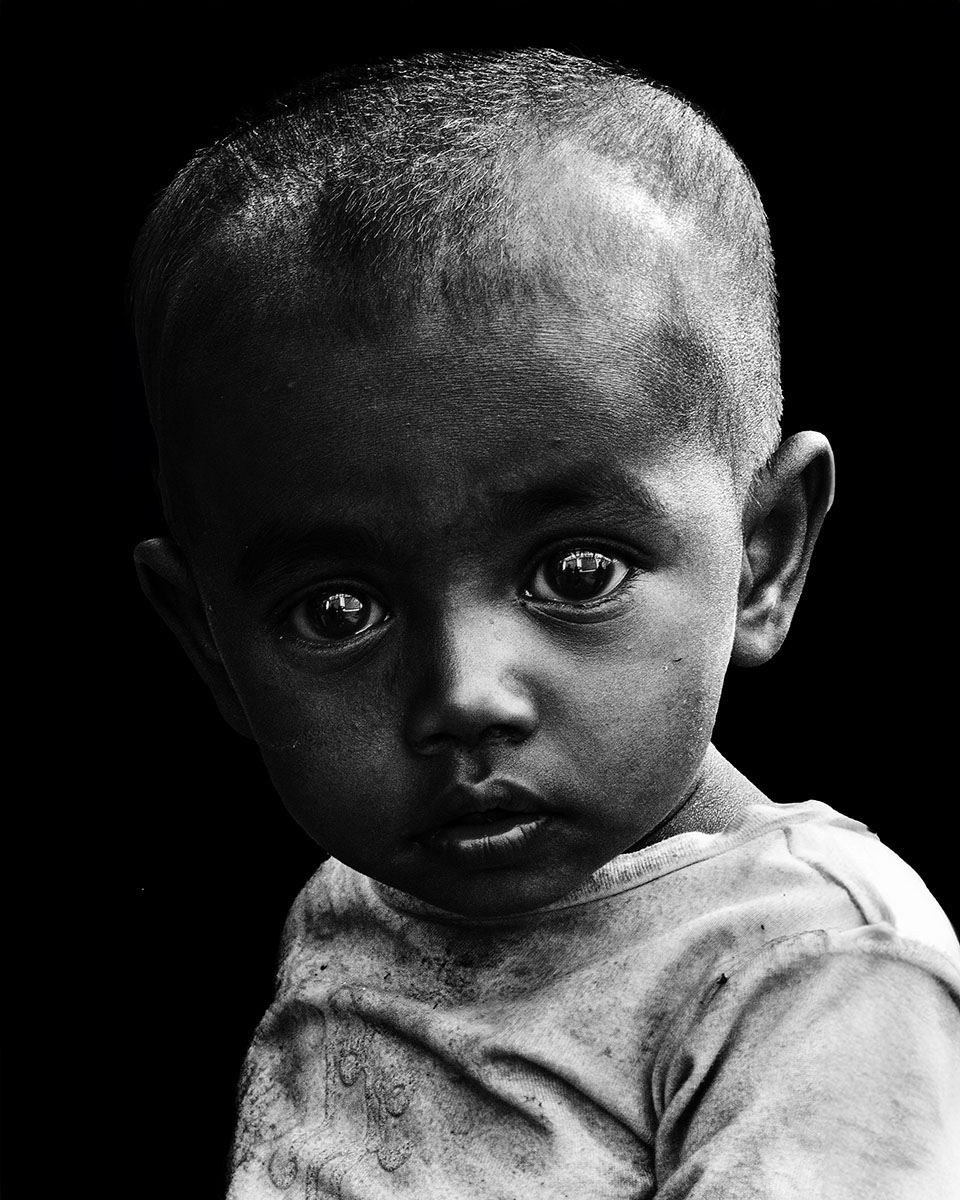
Leah came across Bani on a crowded, noisy street in Kolkata. At two years old, she is one of the youngest people experiencing homelessness she has ever photographed. As she photographed her, she couldn’t help but think that her mother was just one year older when she was rescued from these same streets a half-century earlier.
Bani wore grey pants with pictures of a bicycle. Over this, she had a tan dress decorated with flowers and sparkles. She lives with her mother, Amala, and four brothers, Arnab (eleven), Benoy (seven), Debesh (seven), and Shamik (one). Bani’s father abandoned her and her family when she was just one year old. Because of this, her mother and older siblings must beg for money to survive. They take turns carrying her and her younger brother Shamik while doing so. They sleep in a slum with other people experiencing homelessness. When Leah met them, they were begging from passersby on a busy sidewalk.
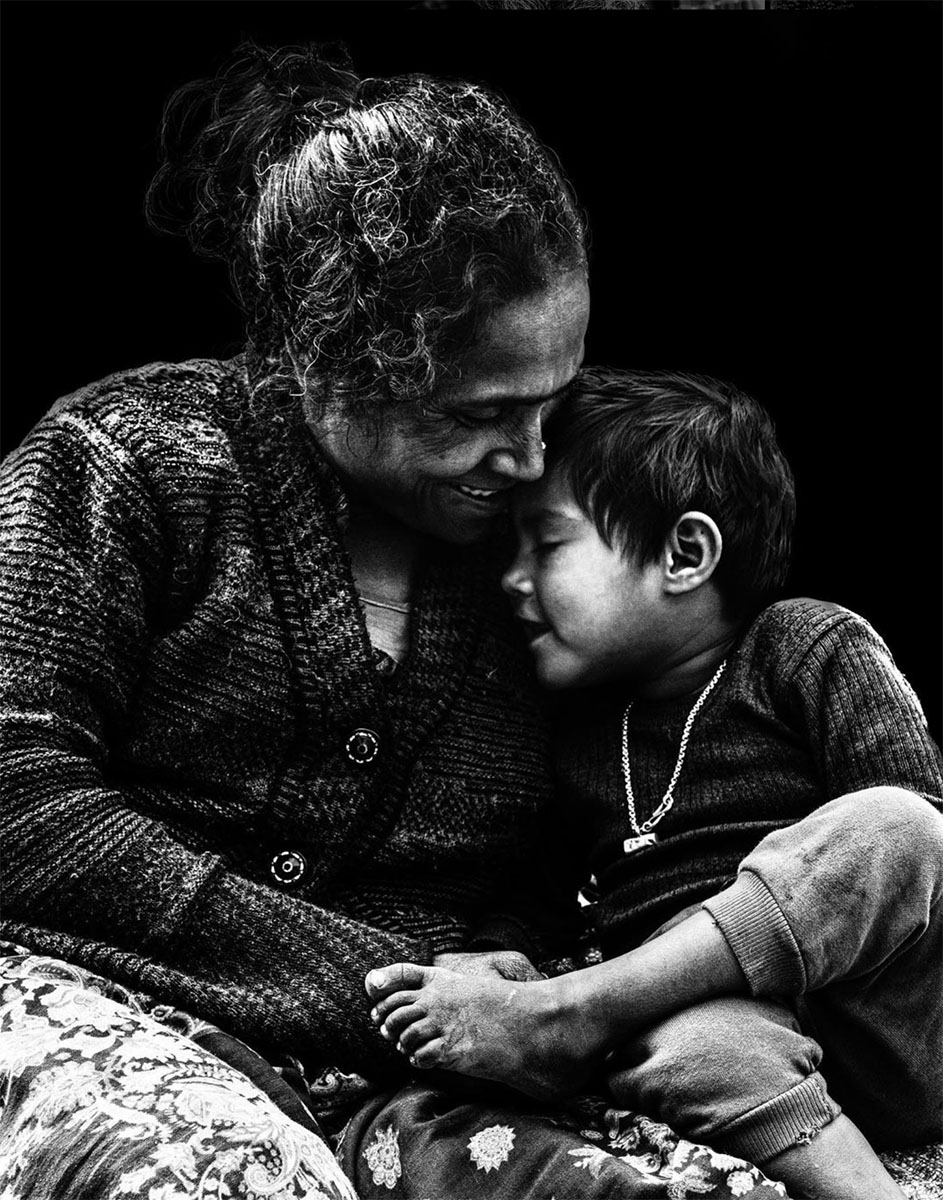
Leah came across Begun and her three-year-old daughter, Mamuni, in Darjeeling, a town in the West Bengal state, in the foothills of the Himalayan mountains. Begun was sitting on a sidewalk, begging with Mamuni at her side. Our guide and interpreter, a native of Darjeeling, told Leah that Begun has been begging in the same place for years.
Speaking in Hindi, Begun told Leah and her interpreter that she was “around fifty” and was from Bihar, a town in eastern India bordering Nepal. “My husband is blind. I couldn’t find work in Bihar, so I had to come here to beg. I have two older children, who are four and seven. They go to school in Bihar. I am happy my children go to school. I used to collect bottles and things to sell, but I cannot do that anymore because I have problems with my legs. I have no other family here. I don’t have options, so I am fine here. We survive from the money I make begging.” However, later she confided in them that she wished she could go somewhere else to live, but can’t because of her children. Begun told them that she and Mamuni live “below the town in a slum.” They sleep in a tent. “Are people nice to you?” I asked Begun through our interpreter. “Yes, some people give. Some, they do not,” she replied.
Near the end of her interview with Begun, Leah’s mother handed a small banana to Mamuni that she had saved from breakfast. At first, Mamuni was too scared to take it, so my mother placed it in her lap. At this, Mamuni relaxed and immediately began to peel the banana. Within a minute, she had devoured it.
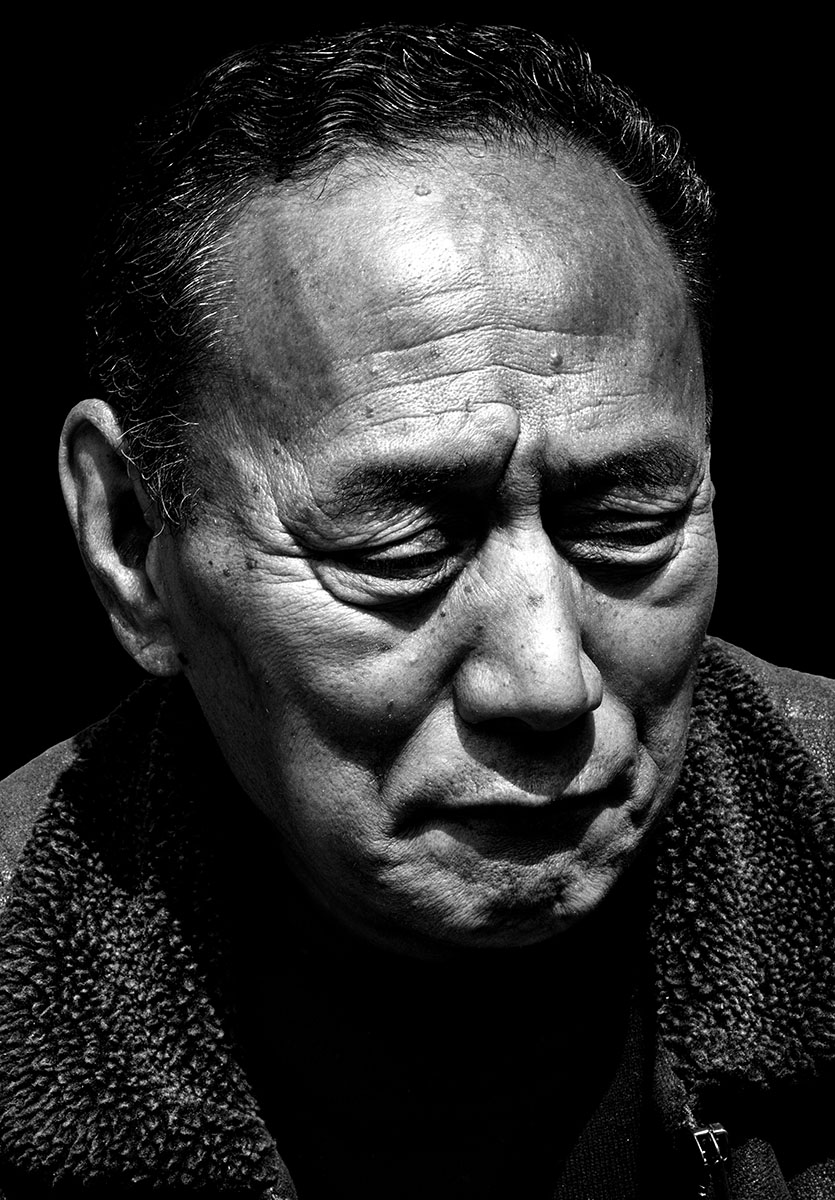
During their last day in Darjeeling, Leah’s translator, Anthony, took her to the Tibetan Refugee Self-Help Centre. Established to support Tibetans fleeing their country, it is a rehabilitation centre for Tibetan refugees in the Darjeeling Himalayan hill region. Upon arriving at the centre, Leah saw people sitting together, chatting, and children playing. Unlike other people experiencing homelessness whom she met in the rest of the country, almost everyone spoke English fluently. This fact made it easy for her to communicate with them directly. She only needed help occasionally with translation.
While at the centre, Leah met Pempa, who was 69. When she asked him how long he had been there, he replied, “I was born here, but my parents came from Tabet.” Pempa told her that he used to work as an ambulance driver before retiring. Although a practicing Buddhist, he said, “But I believe in the Hindu gods.” Not surprisingly, Pempa told us, “I want to [go to Tibet], but I cannot because of the Chinese government. Ah … otherwise, ah, if it were not for them preventing me, that’s where I would be.” Speaking of his family, Pempa said, “I’ve got two sons. One son is lost. My [surviving] son was in the army. Now he has come back to retire. My other son died from an illness.”
Leah’s time at the Centre left a lasting impression on her, reminding her of the resilience and strength of the human spirit in the face of adversity. Despite their unimaginable challenges, the people there displayed resilience and hope. Witnessing the remarkable perseverance and determination of the Tibetan people to create a better life for themselves and their community was a humbling experience.
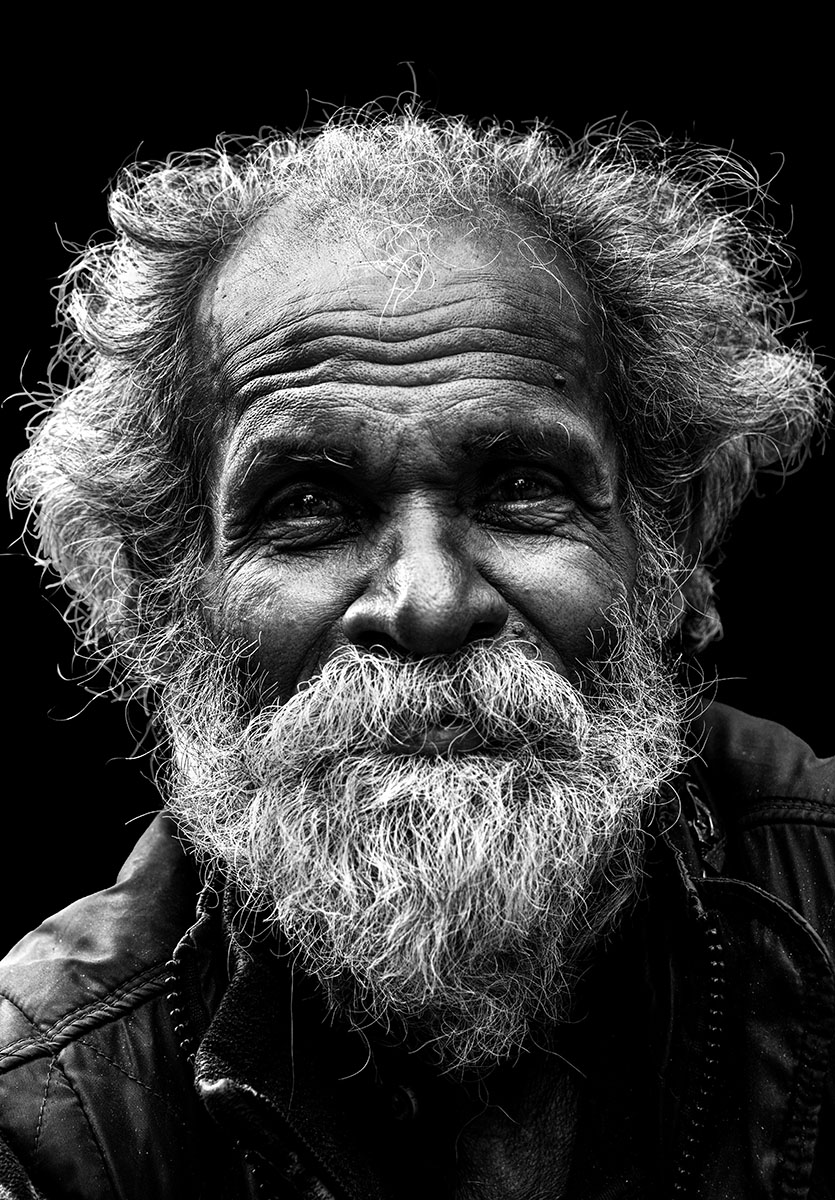
Shayak’s story is filled with immense hardship and struggle. Being deaf and mute, he could not communicate his own name, so Leah gave him the pseudonym Shayak. She and her interpreter encountered Shayak on the streets of Kolkata where he was a beggar struggling to survive daily. Despite the language barrier, they communicated with Shayak through nods, shakes of his head and hand motions.
During their conversation, Shayak revealed that he had no family or children. When Leah asked where he slept, he pointed to the sidewalk a few steps away. Her interpreter said that Shayak had been begging at the same spot for about eight years.
When Leah asked Shayak if he was happy, he motioned that he was somewhat content. His life was clearly filled with challenges and difficulties, but he was doing his best to find some measure of contentment.
During her photoshoot with Shayak, Leah and her interpreter encountered some hostility from passersby. Some people began yelling at them. At first, Leah was confused by this. However, her translator explained that many people in India deeply empathize with people experiencing homelessness.” If anyone is staring, or kind of, ah, taking pictures,” he said, “other people think we’re trying to do something wrong with them because if anything happens to them, nobody cares.”
Hearing this helped Leah to realize how differently people experiencing homelessness are often viewed in India than in North America.
As happy as Leah is to receive the Governor General’s Award, she says she is happier still with the added focus that the award is drawing to her project ‘Humanizing the Homeless.’ “I am hoping that the award will continue to open doors for me to humanize people experiencing
homelessness and shine a spotlight on their plight,” she says.
ABOUT THE AUTHOR

Leah den Bok is a Collingwood and Toronto-based photographer with a drawing, painting and art history background. After earning her BA in Photography, she travelled globally, developing a bold and innovative style. As an image-maker and storyteller, her work focuses on shape, colour, unusual angles and genuine emotions, resulting in visually striking compositions.