
Fourteen species of owls occur throughout Canada, and one of them, the great grey owl, is on the bucket list of most birdwatchers and wildlife photographers. Every winter, these phantoms of the forest move to the snow-choked edges of rural roadways from the Yukon Territory to western Quebec where they hunt voles and mice that tunnel beneath the drifts. Many of these owls migrate from remote forest areas where they rarely encounter humans which makes them wonderfully unwary and approachable and the perfect models for photography.
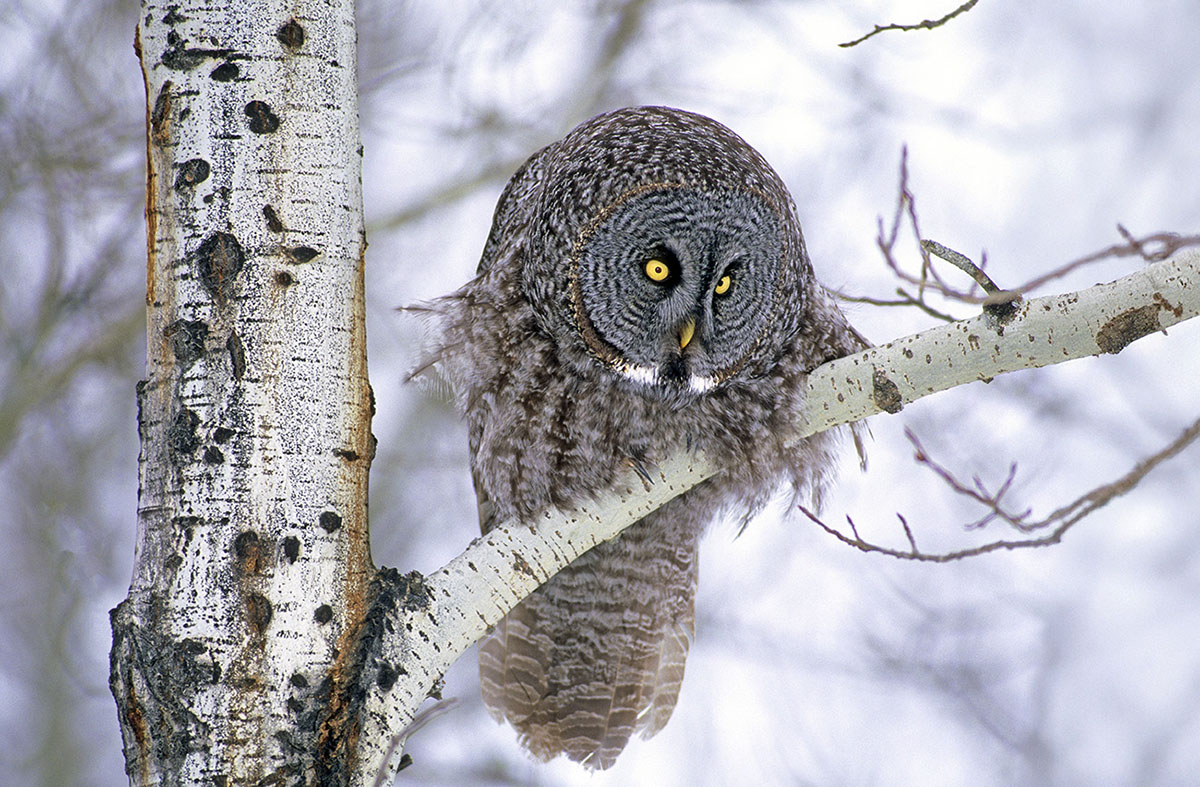
This hunting great gray owl was listening for rodents hidden under the snow.
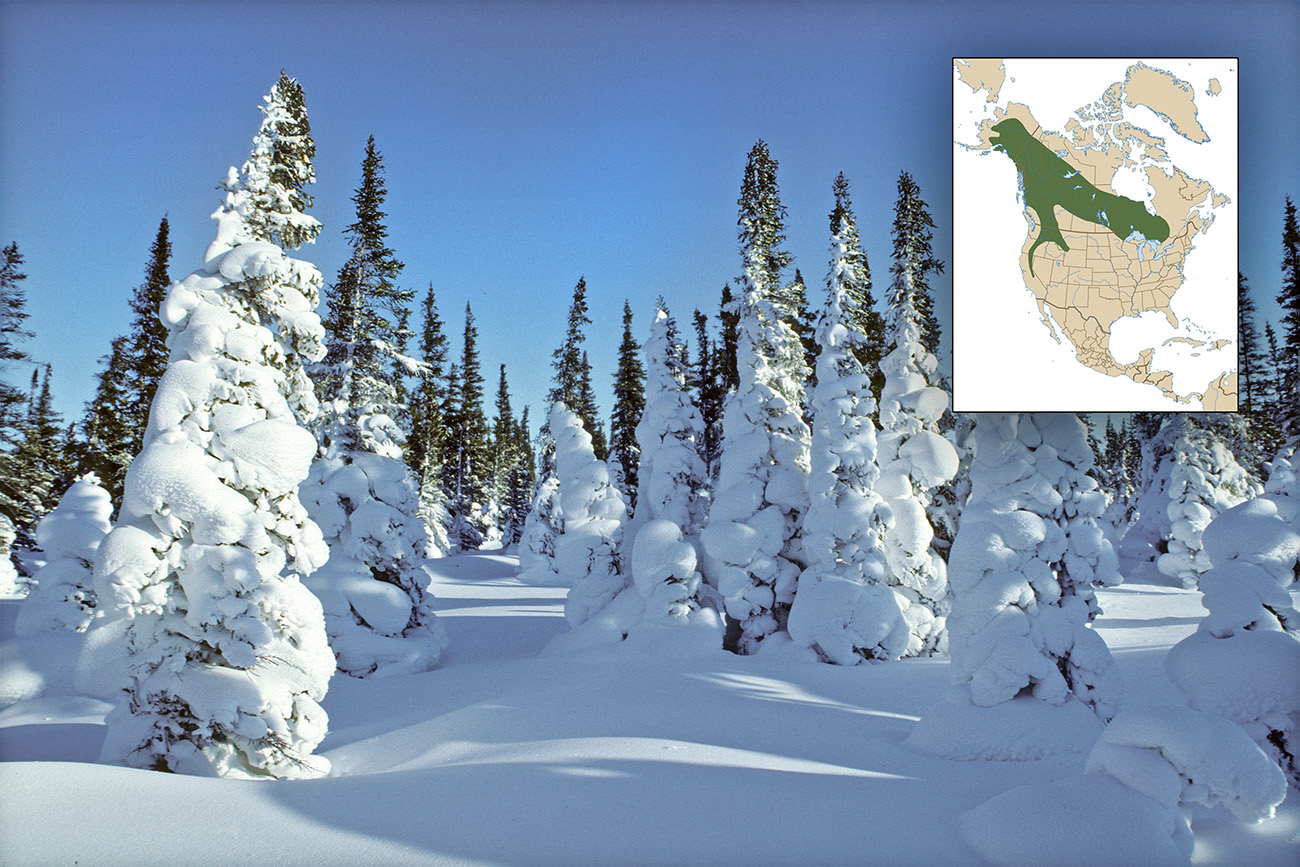
Great greys are commonly found in dense coniferous forests, often near open areas such as bogs and meadows. (Inset illustration © Johns Hopkins University Press)
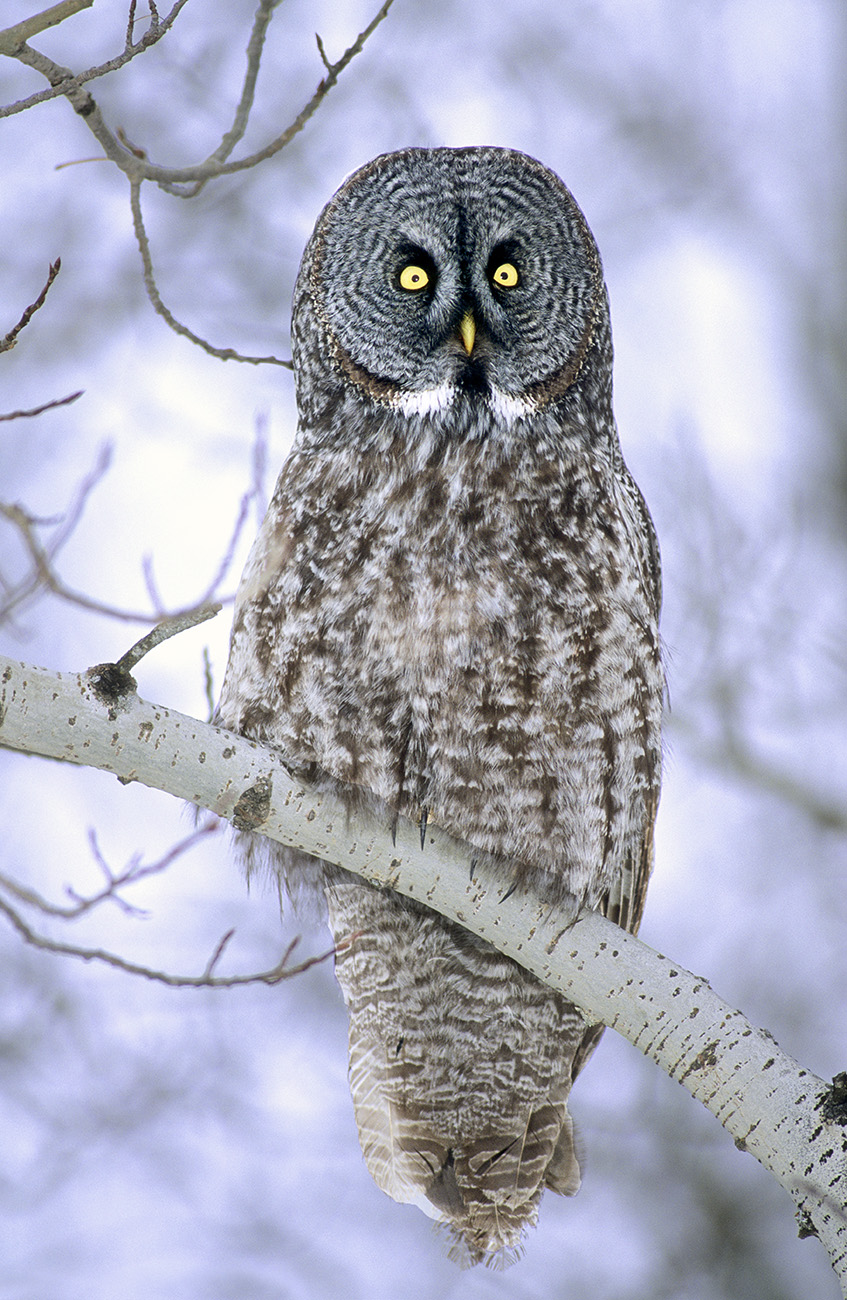
The stately great grey is the tallest owl in North America, standing up to 0.8 metres tall. But its large size is deceptive.
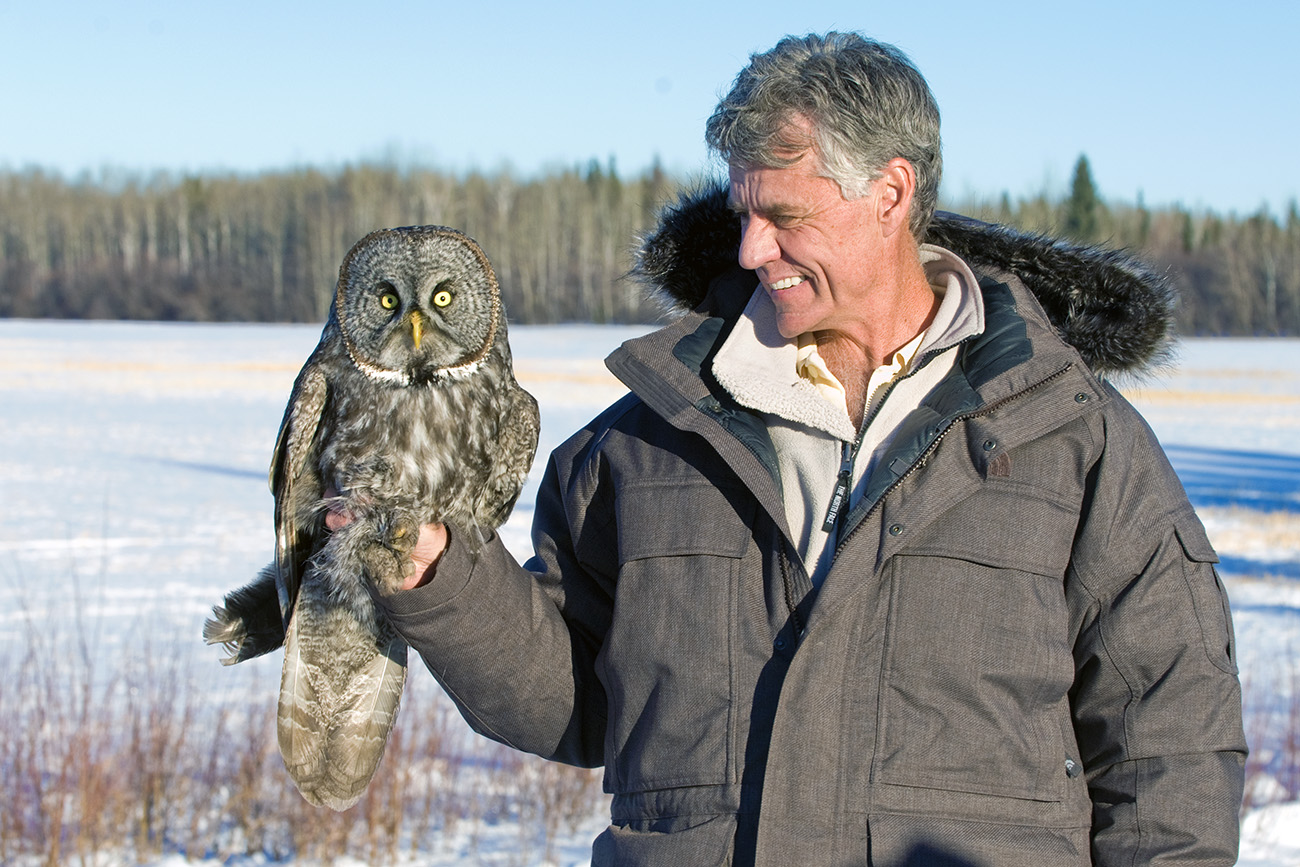
I remember the first time I held a great grey to attach a band around its leg. I was surprised at how little it weighed, and the experience gave a new meaning to the expression “as light as a feather.” A thick loft of billowy flumes covered its chest and belly.
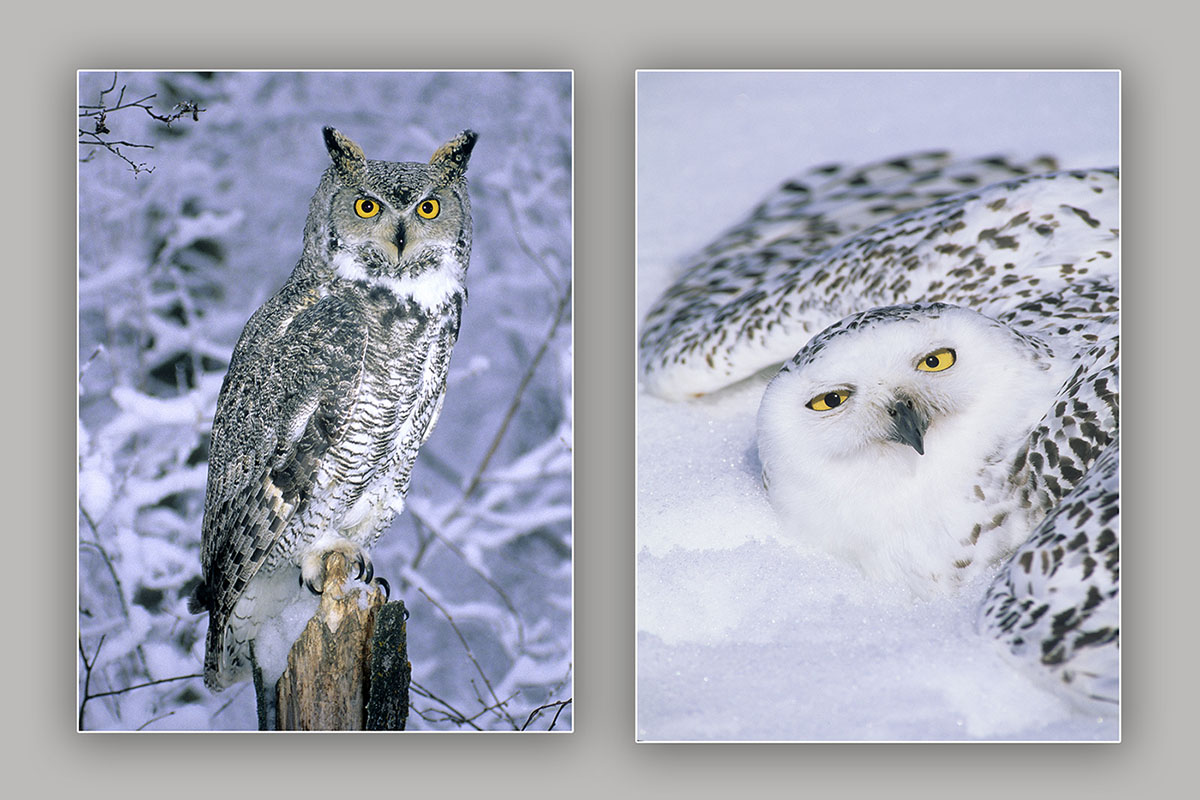
The great gray is easily outweighed by the burley great horned owl (left) and the even more muscular snowy owl.
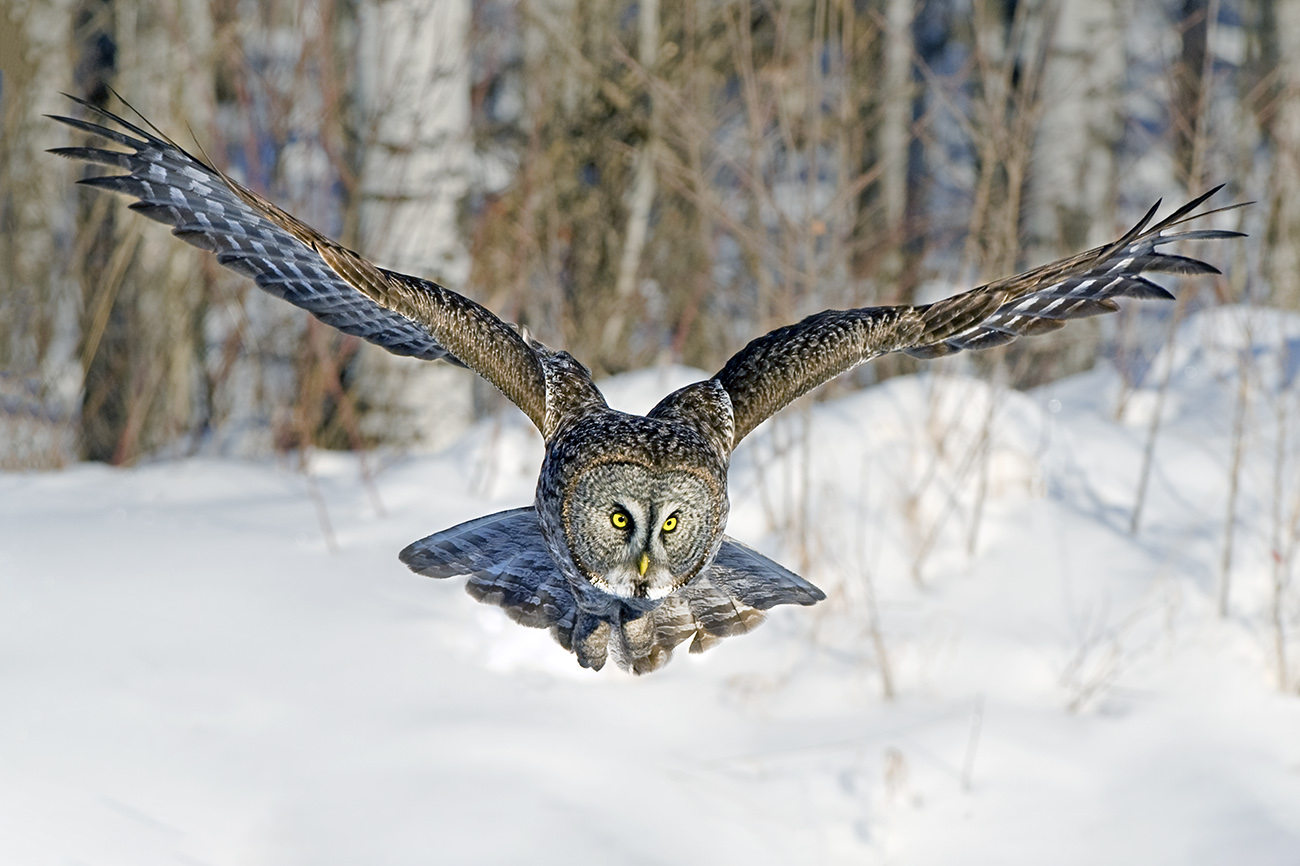
The wings of a great gray are larger than those of either the great horned or the snowy owl, allowing it to drift slowly over its prey with a minimum of feather noise.
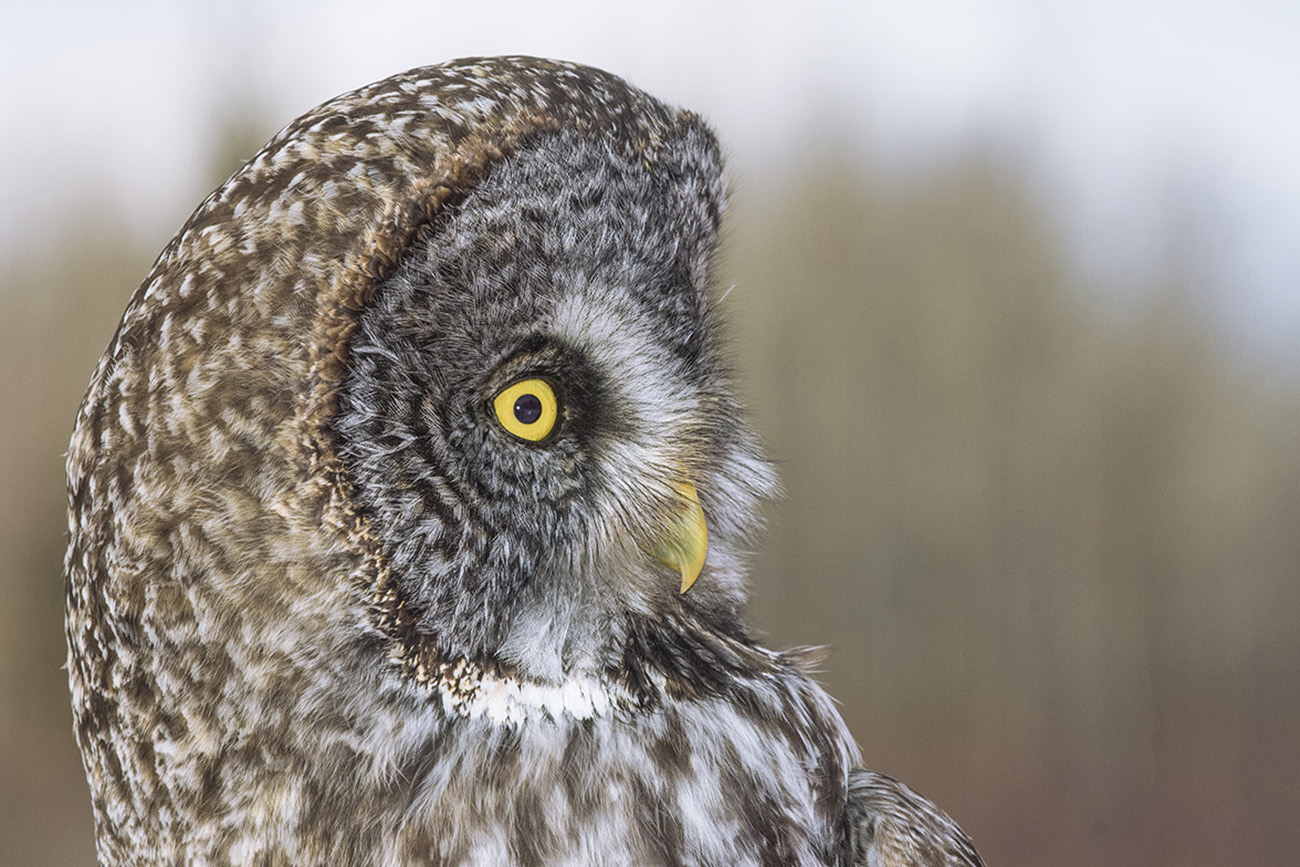
The most common hunting tactic of the great grey is to sit and wait from an elevated perch while it monitors a stretch of terrain. From this vantage point it can launch an attack as soon as a vulnerable target is detected.
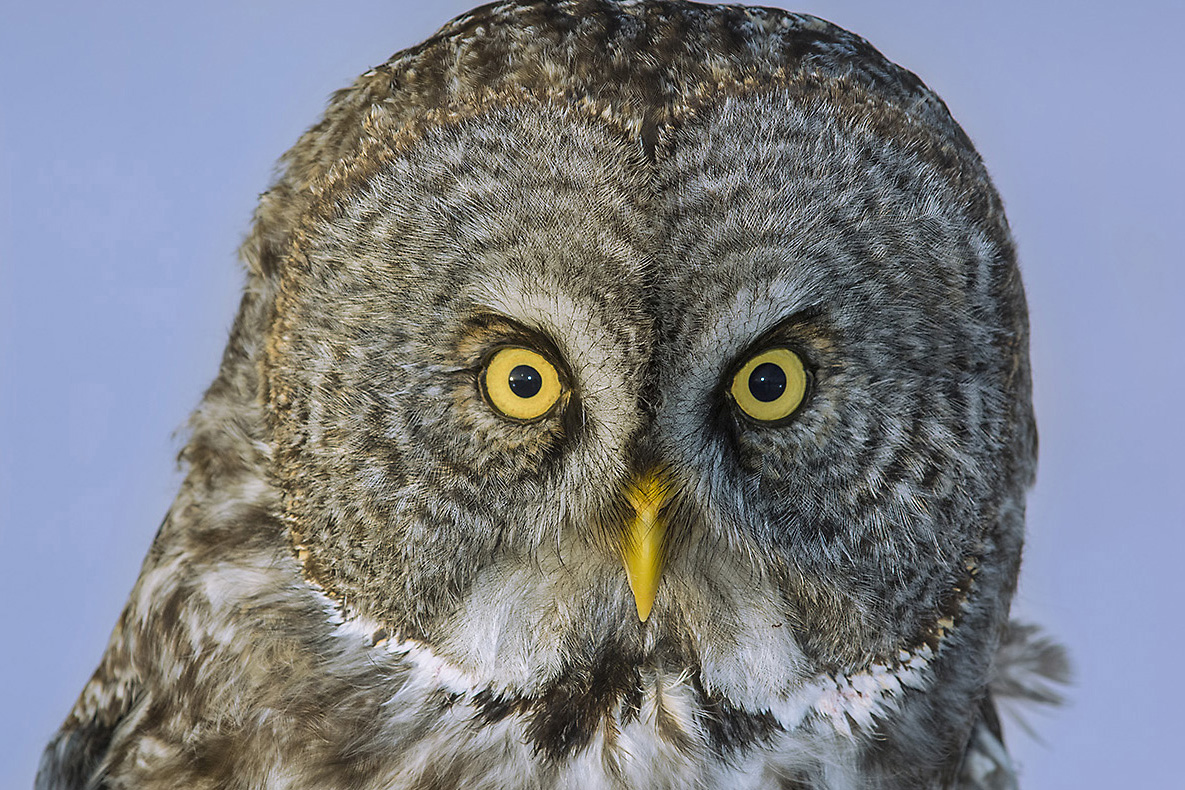
Great grey owls rely heavily on their acute hearing to help them zero in on their prey. Their facial feathers are arranged in a disk up to 16.5 centimetres in diameter which helps to focus sounds at the openings of its ears.
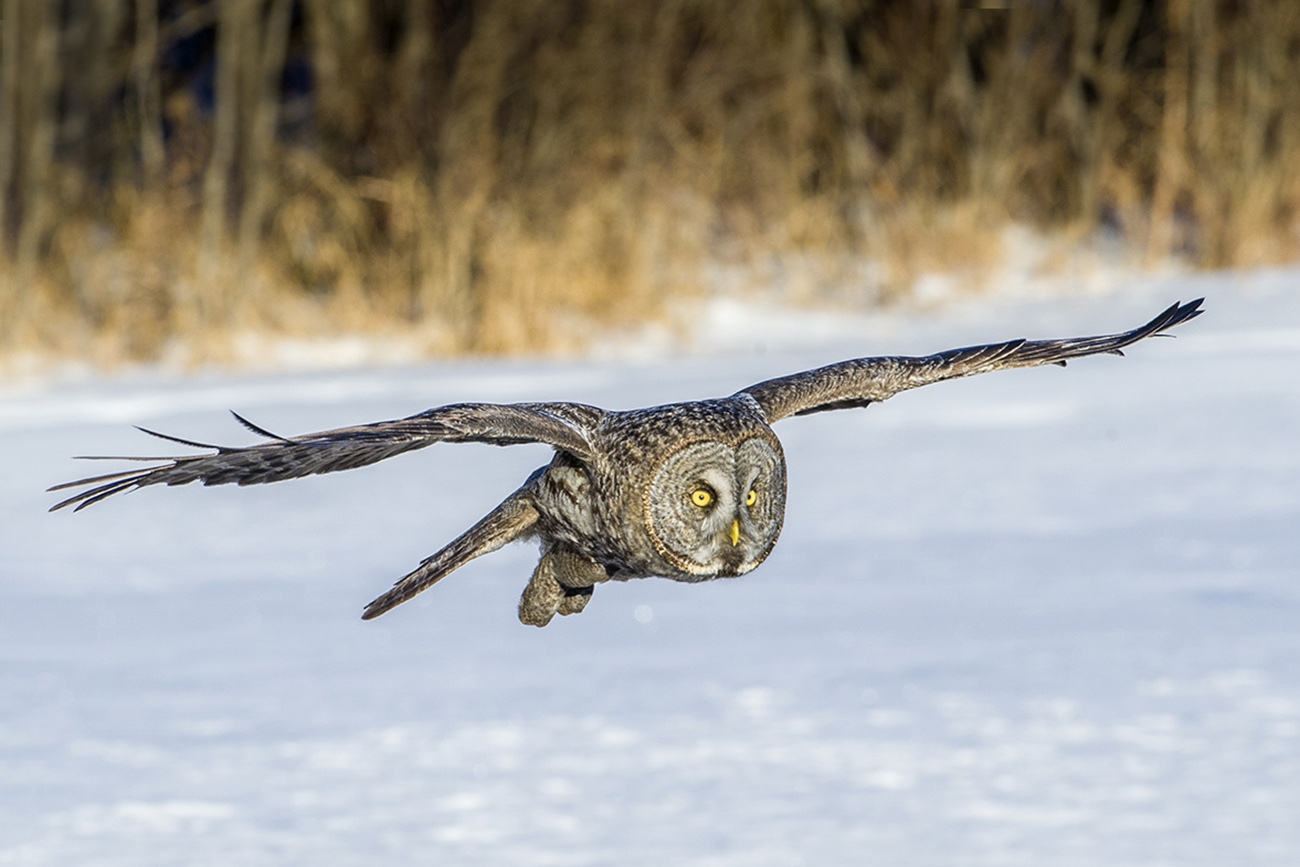
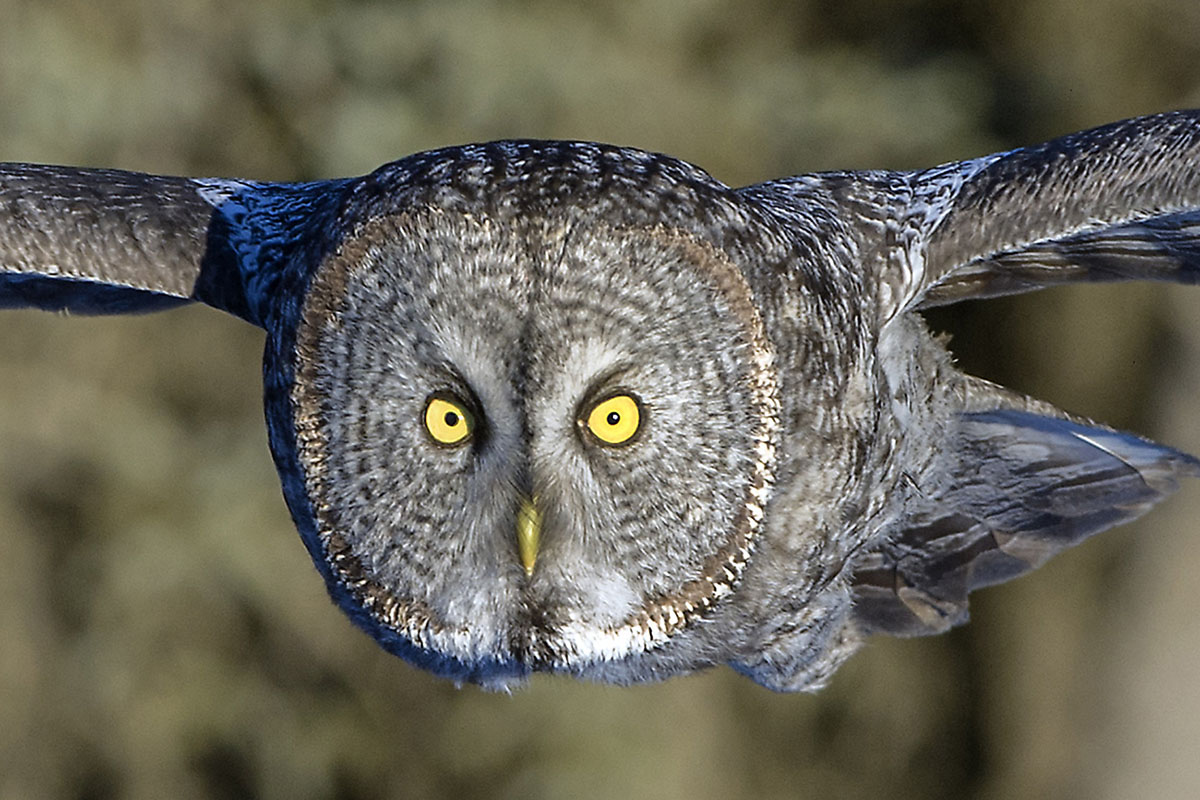
Once a great grey locks onto a target it appears oblivious to anything else, even a vehicle on a collision course with it. This so-called “focal concentration” explains why these owls, as well as many other species of owls, frequently get killed while hunting the rodent-rich grassy areas alongside many roadways.
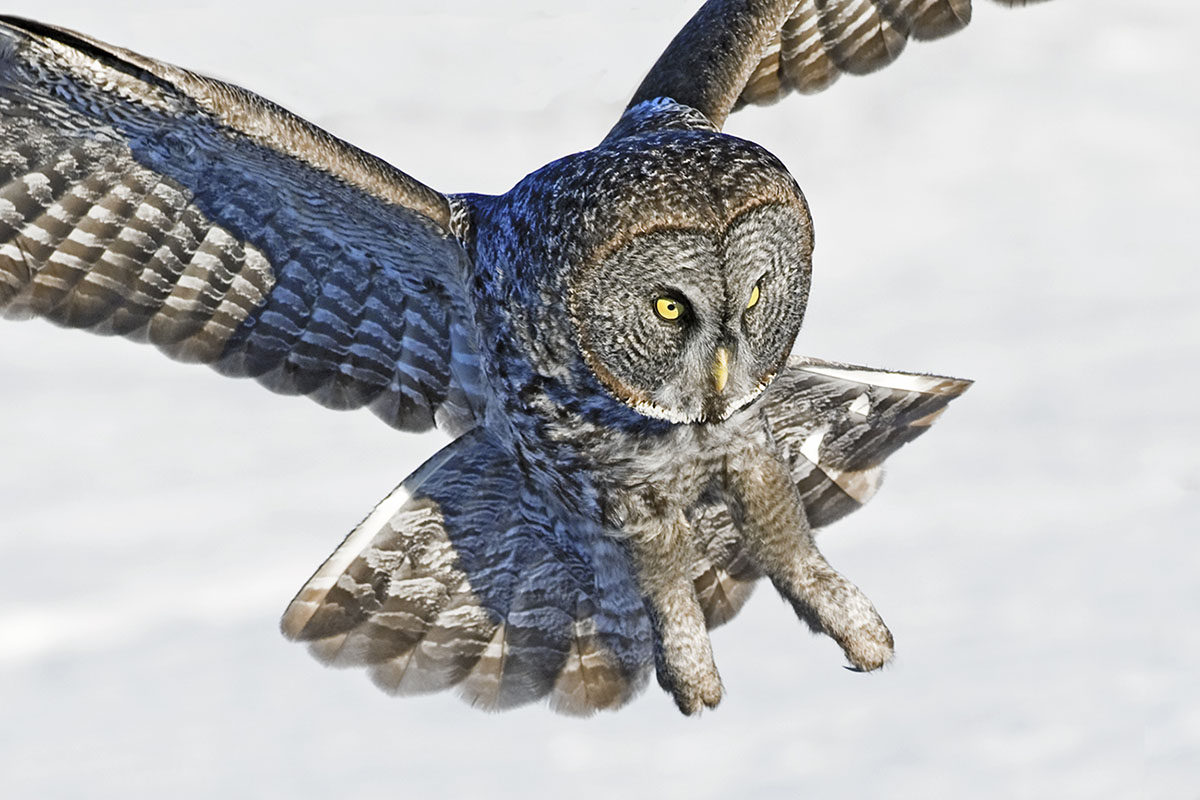
The great grey, like most owls, captures prey with its feet.
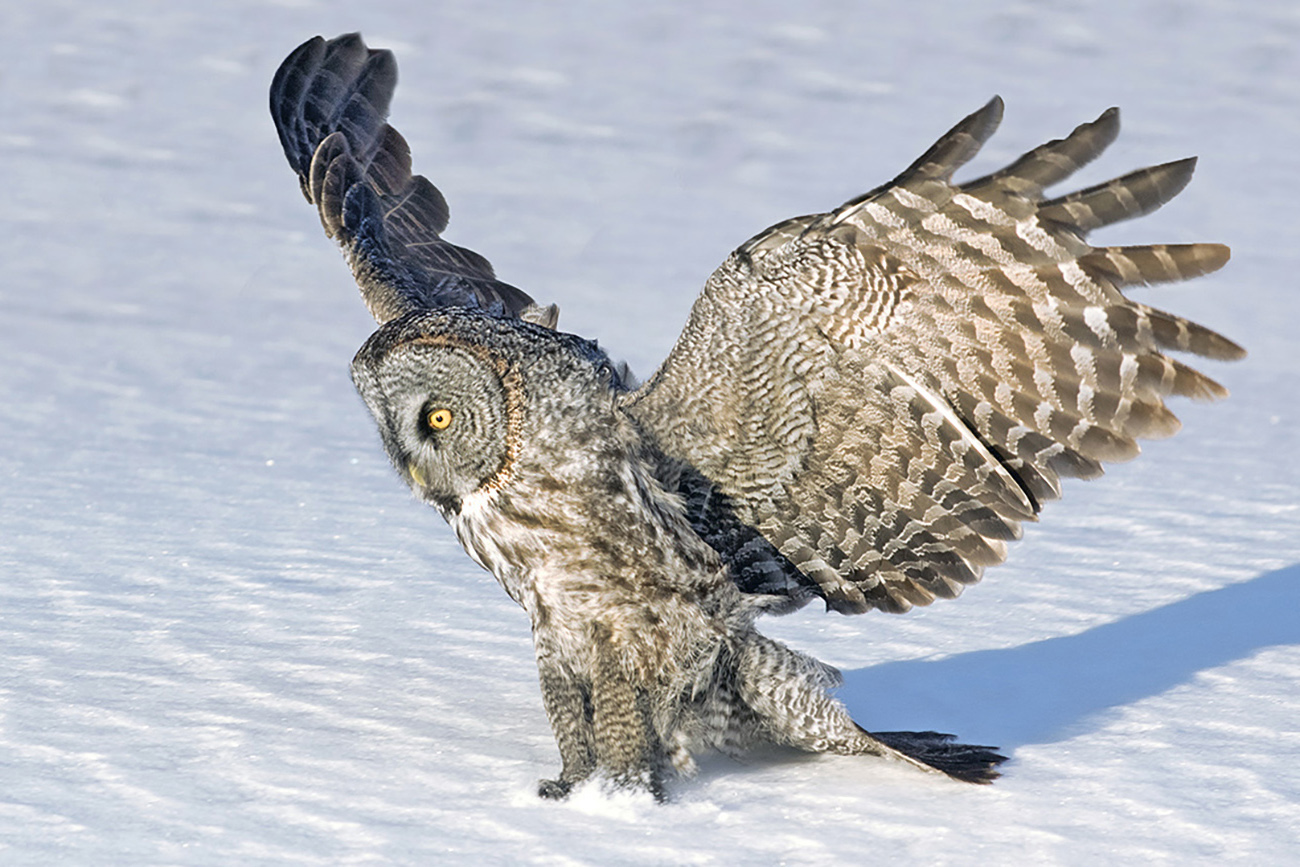
In the final moments before the strike, the owl swings its legs forward, so they follow the identical path that its face was following.
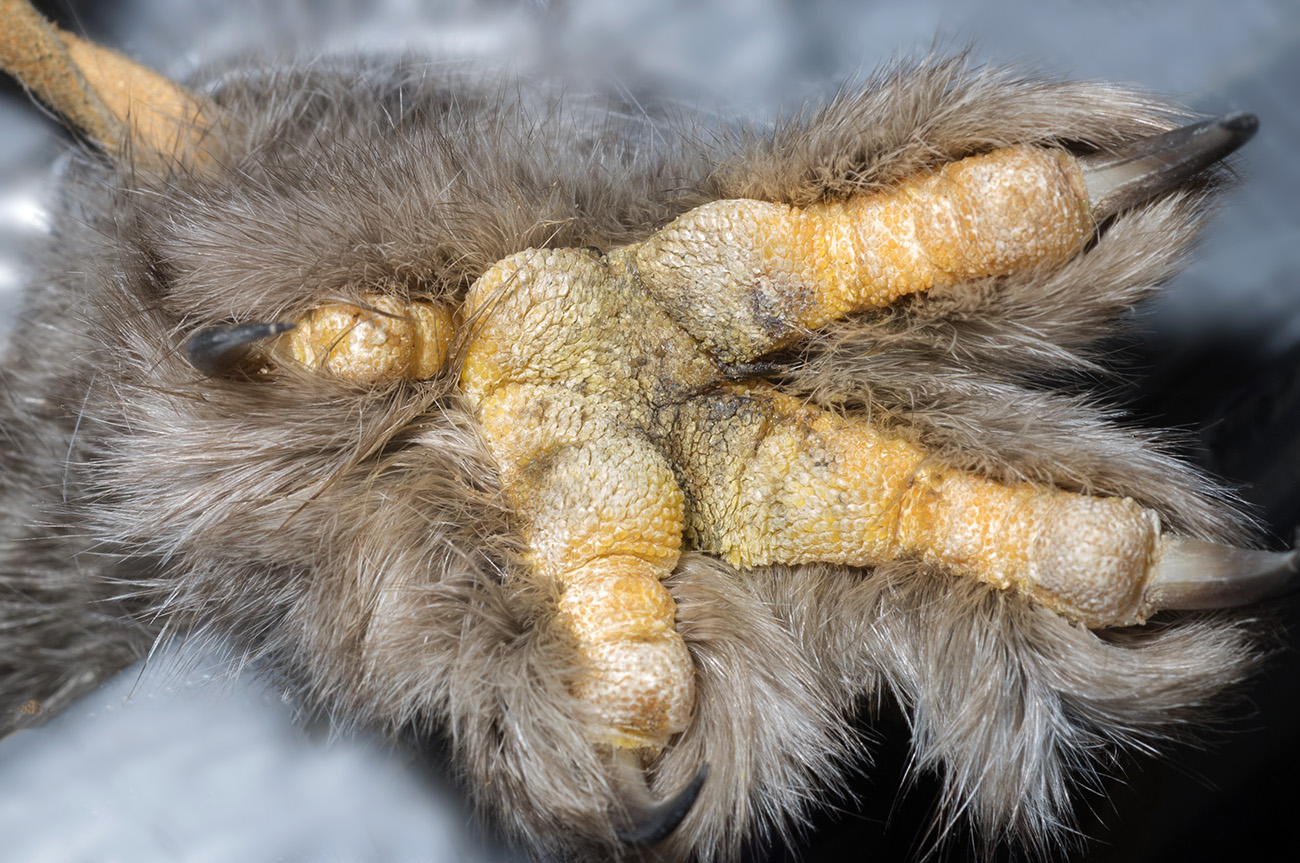
Even if the owl is inaccurate in judging the exact position of its hidden prey, the spread of its talons allows for a margin of error. The talon spread in a great grey covers an area of 150 square centimetres so the bird can afford to miscalculate slightly and still hook the prey.
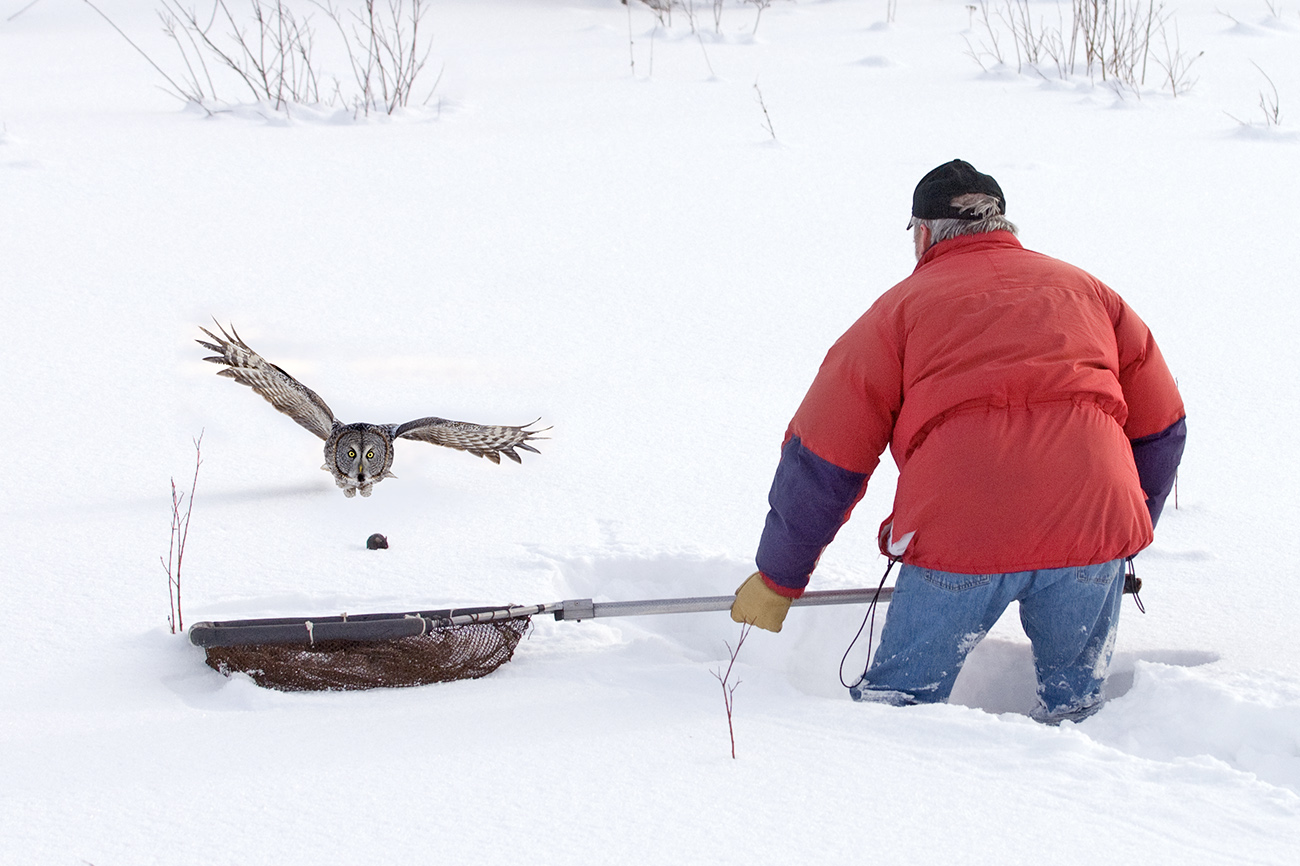
Most of my winter great grey owl photographs were made while I was assisting bird banders with permits from the Canadian Wildlife Service. The owls were lured to the roadside with a live mouse and then captured with a dip net. Researchers have been using this simple technique for over 50 years, yielding valuable census and movement information.
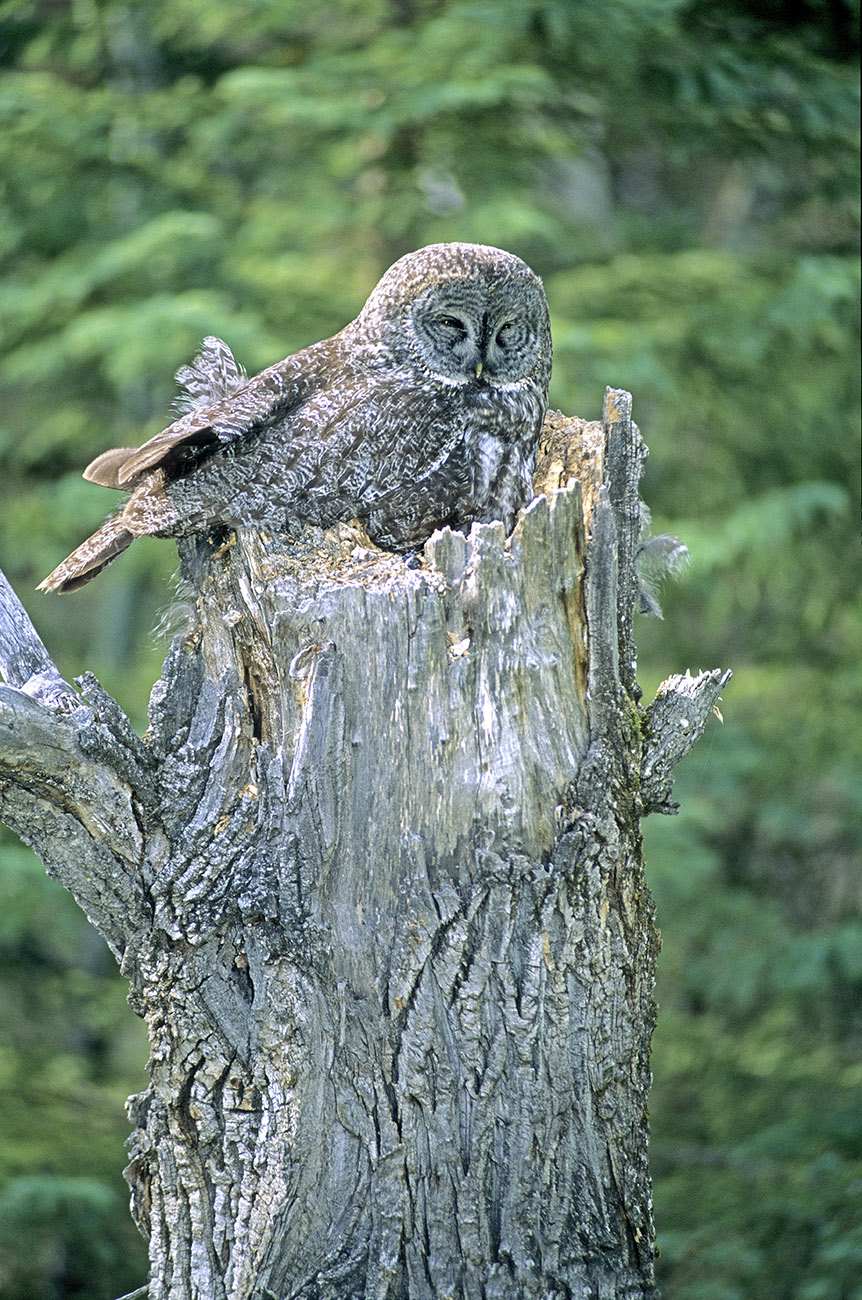
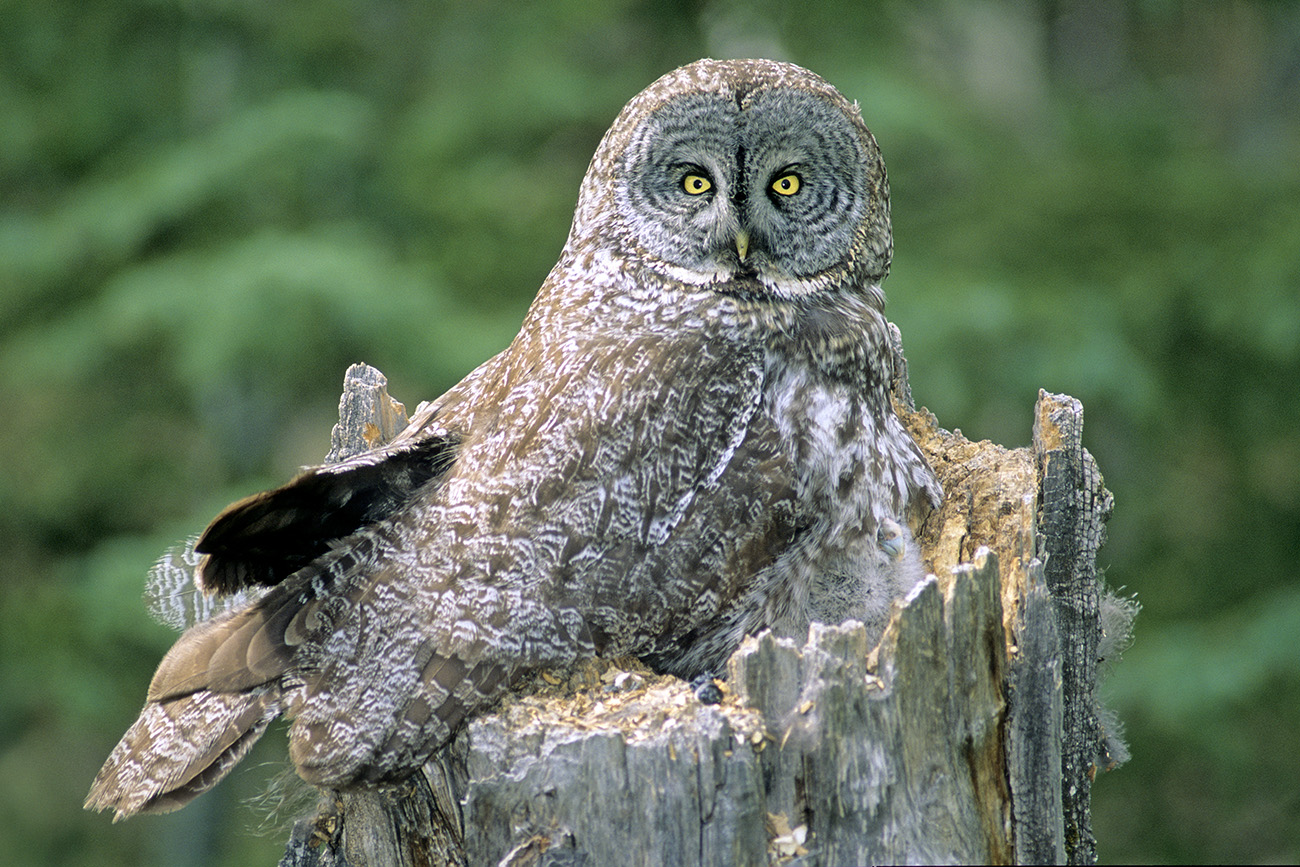
Biologists who band adult owls during the winter often band young great greys before they leave the nest and I was invited to photograph several different owl families while they were nesting. The great gray pictured here had settled into the broken top of an ancient balsam poplar tree, nine metres off the ground. She added no material to the nest before laying her two eggs.
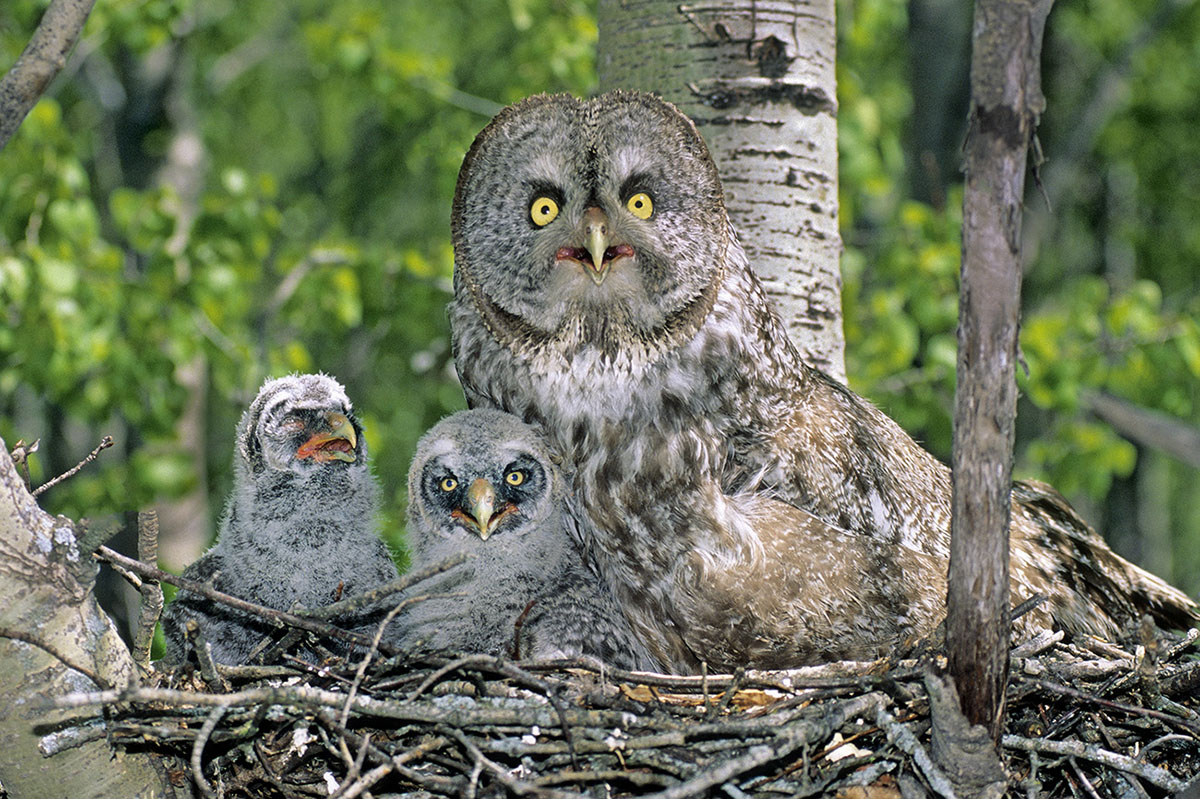
Aside from the burrowing owl, no species of owl in Canada builds its own nest. Many take over the abandoned nest of a hawk, raven, crow or magpie. This great grey owl family had settled into an old raven nest.
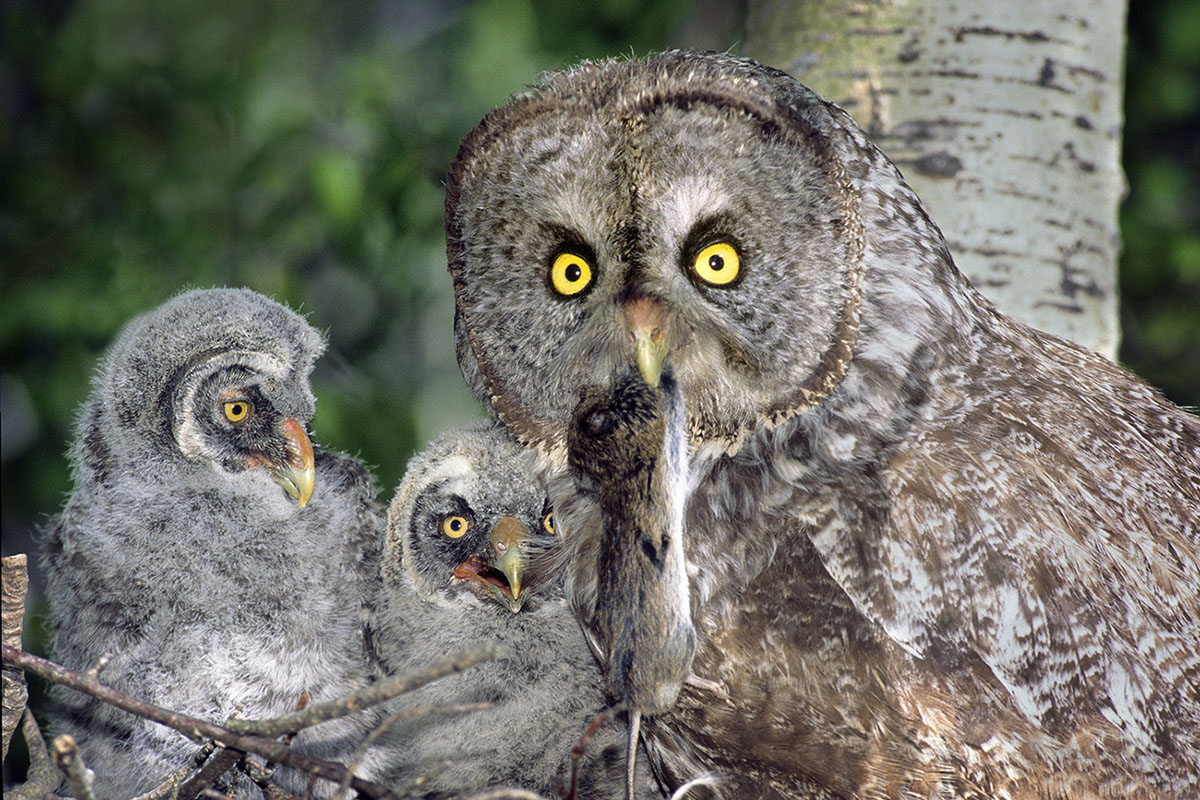
Young great grey chicks stay in the nest until they are three to four weeks old while both parents feed them.
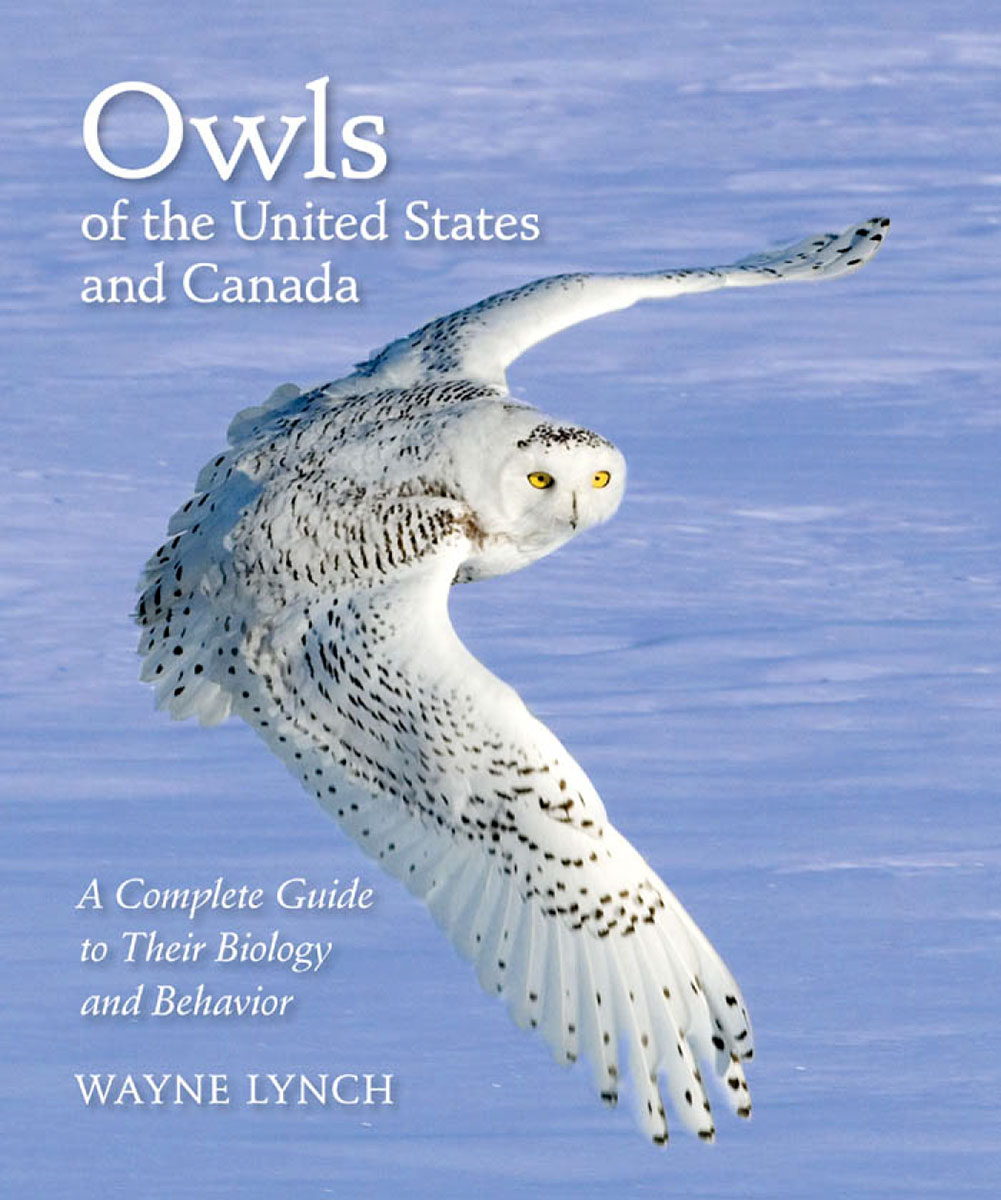
If readers are interested in learning more about great grey owls and the 18 other owl species found in Canada and the United States they can check out the critically acclaimed book I wrote for Johns Hopkins University Press on the birds’ biology and behaviour.
About the Author – Dr. Wayne Lynch

For more than 40 years, Dr. Wayne Lynch has been writing about and photographing the wildlands of the world from the stark beauty of the Arctic and Antarctic to the lush rainforests of the tropics. Today, he is one of Canada’s best-known and most widely published nature writers and wildlife photographers. His photo credits include hundreds of magazine covers, thousands of calendar shots, and tens of thousands of images published in over 80 countries. He is also the author/photographer of more than 45 books for children as well as over 20 highly acclaimed natural history books for adults including Windswept: A Passionate View of the Prairie Grasslands; Penguins of the World; Bears: Monarchs of the Northern Wilderness; A is for Arctic: Natural Wonders of a Polar World; Wild Birds Across the Prairies; Planet Arctic: Life at the Top of the World; The Great Northern Kingdom: Life in the Boreal Forest; Owls of the United States and Canada: A Complete Guide to their Biology and Behavior; Penguins: The World’s Coolest Birds; Galapagos: A Traveler’s Introduction; A Celebration of Prairie Birds; and Bears of the North: A Year Inside Their Worlds. In 2022, he released Wildlife of the Rockies for Kids, and Loons: Treasured Symbols of the North. His books have won multiple awards and have been described as “a magical combination of words and images.”
Dr. Lynch has observed and photographed wildlife in over 70 countries and is a Fellow of the internationally recognized Explorers Club, headquartered in New York City. A Fellow is someone who has actively participated in exploration or has substantially enlarged the scope of human knowledge through scientific achievements and published reports, books, and articles. In 1997, Dr. Lynch was elected as a Fellow to the Arctic Institute of North America in recognition of his contributions to the knowledge of polar and subpolar regions. And since 1996 his biography has been included in Canada’s Who’s Who.