



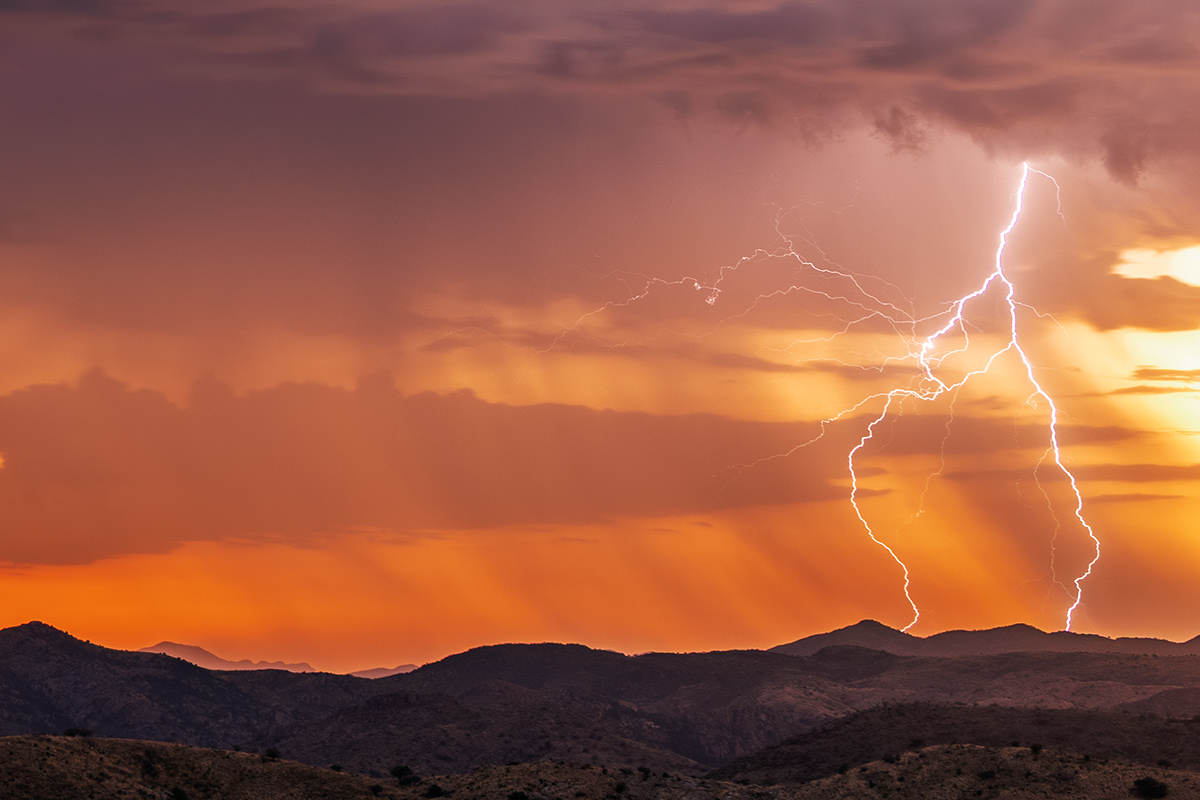
Answering a desert call
As a photographer from Saskatchewan, Canada, I’ve long been mesmerized by images of the Arizona desert lit up by forked bolts of lightning. Saskatchewan’s summer thunderstorms are dramatic enough, but Arizona’s monsoon season seemed other‑worldly; the intensity of the bolts and the dramatic colours looked like the next level for someone who has long marvelled at the beauty of lightning. For more than 10 years I talked about heading down for the monsoon, and after a difficult year emotionally I decided that life was too short, I just had to do it. Here is a traveller’s diary, and photographer’s guide to monsoon storms.
What is the Arizona monsoon?
The word monsoon comes from the Arabic mausim, meaning “season.” In the Southwest, it describes a seasonal shift in wind patterns rather than individual storms. As summer heating builds, the subtropical high over Mexico migrates north, reversing Arizona’s typical westerly wind. Southerly or southeasterly winds pull moist air from the Gulf of California and Gulf of Mexico, and when hot desert surface air rises and mixes with this moisture, convective thunderstorms form. The monsoon season typically runs from June 15 until September 30, but storms don’t happen every day. Instead, activity varies with bursts of intense thunderstorm activity and lulls when high pressure suppresses convection. As the summer storm season was winding down on the Canadian prairies, I started checking the weather models in Arizona and saw a steady stream of dew‑points around 55 °F (12.8 °C) indicating a potentially active week.
Getting there
While most people will fly into Arizona, I love being on the road, so the 5,000 km round trip didn’t bother me. In fact, it allowed me to take a couple‑day detour to enjoy an amazing chase in Colorado. Another perk of driving is that lightning photography is impossible without mobility. Having my trusted Jeep meant I didn’t need to rent a vehicle and, although a 4×4 is not required for most lightning spots, it gave me the confidence to venture off the beaten path.
A few essentials help make monsoon chasing safer and less stressful. A GPS unit, paper maps and offline navigation apps ensure you won’t get lost if storms knock out cell service. Always top off your gas before heading out, carry a first‑aid kit, make sure the air conditioning is working properly, and keep at least a gallon (3.8 L) of water per person in your vehicle.
Arizona’s heat kills quickly, and if you get stuck or stranded, having water is essential.
Packing for the desert
Summer in southern Arizona is brutally hot. Temperatures frequently exceed 110 °F (43 °C), especially before the afternoon storms offer temporary relief. Lightweight, light‑coloured clothing, a wide‑brimmed hat, UV‑protective sunglasses and SPF 30+ sunscreen are a must. Monsoon storms can produce strong winds and flying debris, pack protective eyewear and tie down hats. Portable rain covers protect cameras, and a microfibre cloth helps wipe away dust and water. Even in summer, desert nights can feel cool after rain, so pack a thin fleece or jacket.
Bring a travel health kit with bandages, antiseptic wipes and medications. Because lightning and dust storms can knock out power, carry a flashlight or headlamp with extra batteries; it can also help you find interesting foregrounds when storms keep rolling late into the night. A portable battery bank will help keep your phone charged.
Hazards beyond lightning
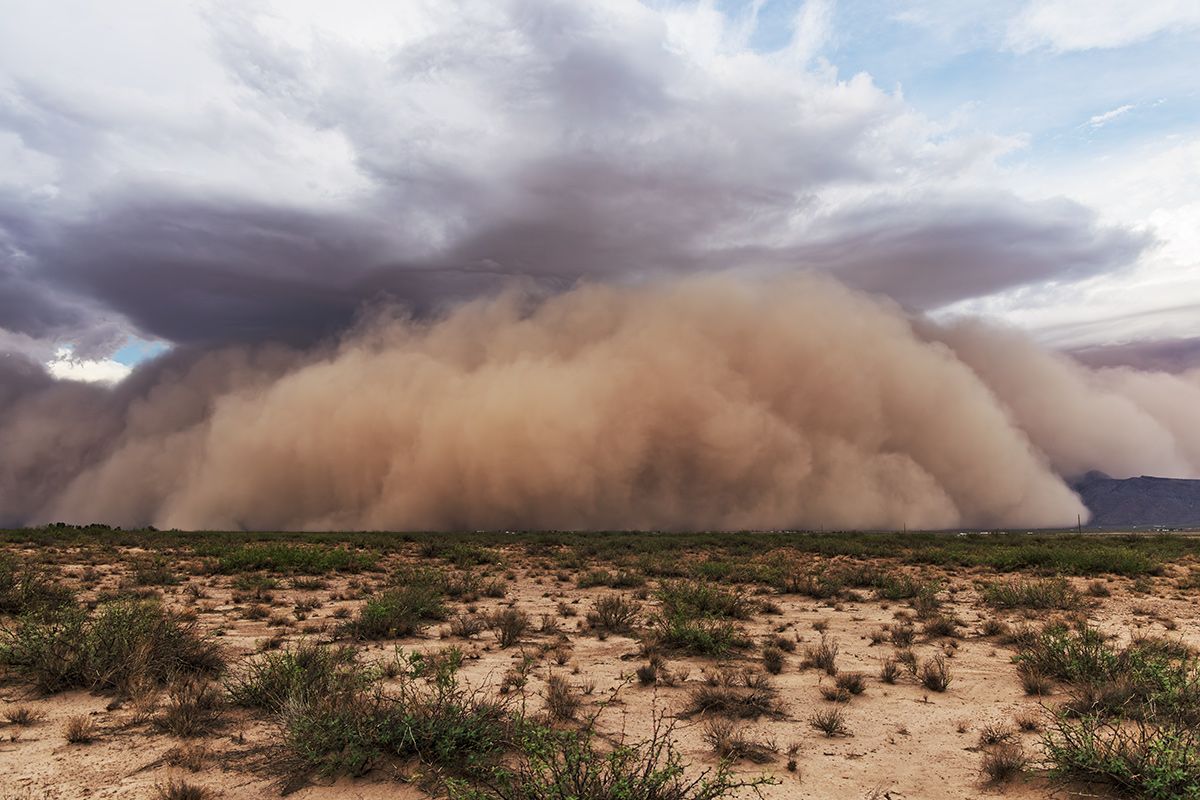
Monsoon storms bring more than lightning. Haboobs (dust storms) occur when downdrafts sweep desert soil into towering walls hundreds of feet high. These storms can reduce visibility to zero. I was fortunate enough to experience my first ever haboob on this trip, it was incredible to watch a massive wall of sand sweeping across the landscape. After capturing a few shots I quickly packed my gear away and weathered the storm, thankful for the weather sealing on my ThinkTank camera bags.
Microbursts and downbursts are sudden blasts of cold air that slam into the ground, creating winds strong enough to topple trees and structures. Flash floods are common because the desert’s dry soil cannot absorb intense rainfall; washes fill quickly and roads become rivers. I encountered multiple flash floods and took the “turn around, don’t drown” motto very seriously, any water running across the road deserved respect.
Lightning physics 101
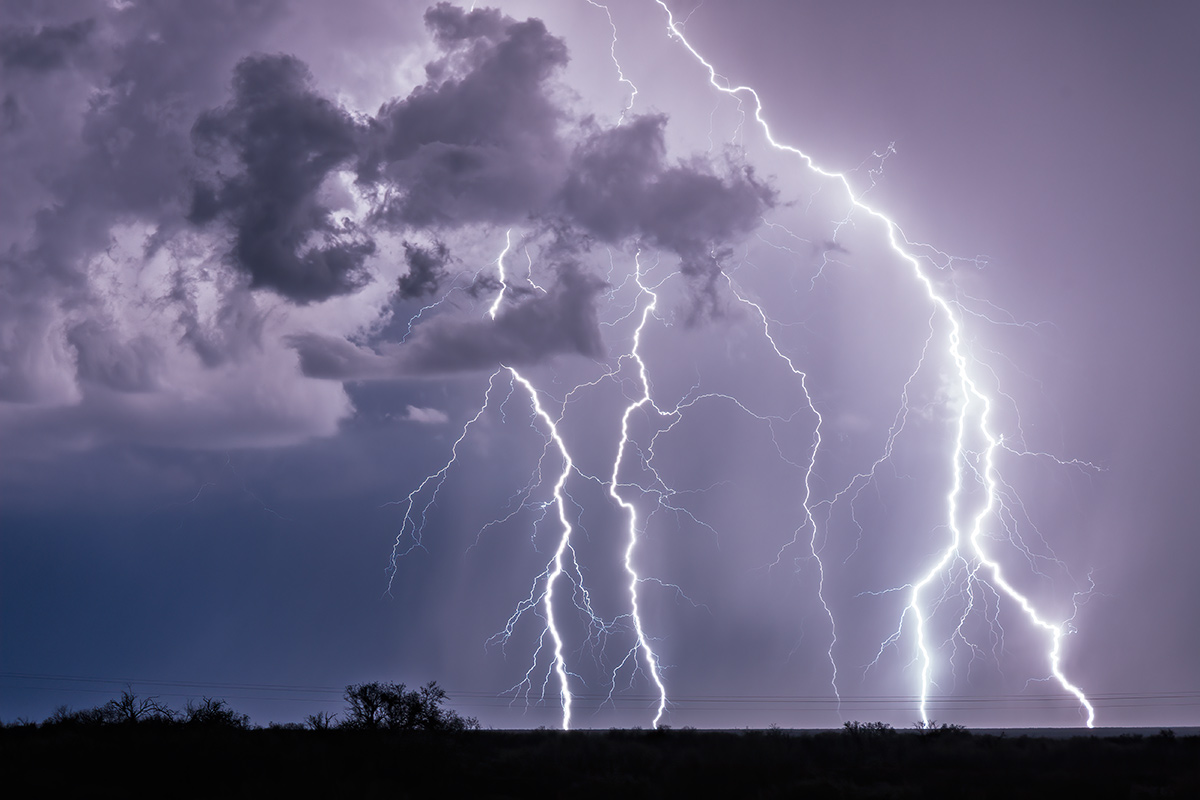
Lightning is a fascinating natural phenomenon and the main reason I travelled south to chase the monsoon. Arizona experiences more than half a million cloud‑to‑ground lightning strikes each year and probably over two million total flashes when intra‑cloud lightning is counted. Most cloud‑to‑ground strikes are negatively charged: an invisible stepped leader descends from the cloud and meets a streamer of positive charge rising from the ground; when they connect, a return stroke shoots back up at over 50 000 miles per second. Positive lightning originates at the top of the storm and meets a negative streamer; these bolts can be ten times more powerful and strike farther from the storm.
Safety first: respecting the elements
Monsoon storms are mesmerizing, but they can be deadly. The National Weather Service states that lightning can strike people 10 miles away from a storm and, in rare cases, arcs can travel up to 200 miles. The United States averages around 87 lightning fatalities annually—more than tornadoes or hurricanes.
When thunder roars, follow these guidelines:
- Avoid lone trees, fences, power lines and open fields. Lightning often strikes tall or isolated objects. Stay away from open water, golf clubs, umbrellas, metal tripods and fences.
- Do not shelter under a ramada or picnic shelter unless it has proper grounding. If you can’t reach a car, avoid the highest object and crouch low (but only as a last resort).
- Shoot from the safety of your car if lightning is close. A hard‑topped vehicle offers better protection than standing outside with your tripod.
- Recognize flash‑flood and dust‑storm danger. If you see a wall of dust approaching, exit the roadway, turn off lights and wait. Never enter water on foot or in a vehicle—six inches can knock you down and two feet can sweep away a car.
- Prepare for extreme heat. Carry water, stay hydrated and wear sun protection. Drink water continuously and eat hydrating snacks such as watermelon or grapes.
Gear and camera setups for lightning photography
Capturing lightning – triggers, settings and focusing
Lightning requires careful technique. At night, long exposures on a sturdy tripod give bolts time to appear. I recommend manual mode with shutter speeds of 10–30 seconds; set your apertures around f/8 to start and ISO near 200. Adjust these settings depending on how close or intense the lightning is so you don’t blow out the highlights. At twilight, narrow the aperture to f/10–f/16 and shorten exposures to a few seconds. During the day, ambient light demands shorter exposures (1/8–1/4 second), so invest in a lightning trigger or neutral‑density filter. Triggers detect the initial flash and fire your shutter faster than human reflexes.
Camera settings are guidelines, not rules. Keep ISO low (50–400) for optimal dynamic range. Adjust aperture to control lightning brightness—open up for distant or faint bolts and stop down when lightning strikes nearby. Focusing is critical: autofocus on distant lights or the moon, then switch to manual focus. Use live view to magnify a star or city light and refine focus. Review your first strike at high magnification and fine‑tune if needed.
Composition makes lightning photos compelling. Include foreground elements like saguaros ormountains to provide scale, use wide‑angle lenses to increase your chances of catching bolts, and frame for multiple strikes. Shoot in RAW, pack extra memory cards and batteries, and remember that safety always outranks the shot.
A Saskatchewan photographer’s experience
One of my favourite chase days was a setup north of Phoenix towards Sedona. After a couple of days forecasting storms accurately, I decided to take on the almost four‑hour drive for what looked like a promising setup. I had learned in just a few short days that chasing monsoon thunderstorms is very different from chasing supercells on the open plains, but I felt confident that I was getting a good understanding of the nuances. Sure enough, late in the afternoon storms started to fire and I was treated to some of the most spectacular lightning of the trip. The storms just kept going, and a highlight was watching lightning streak across the sky over a forest of saguaro cacti.
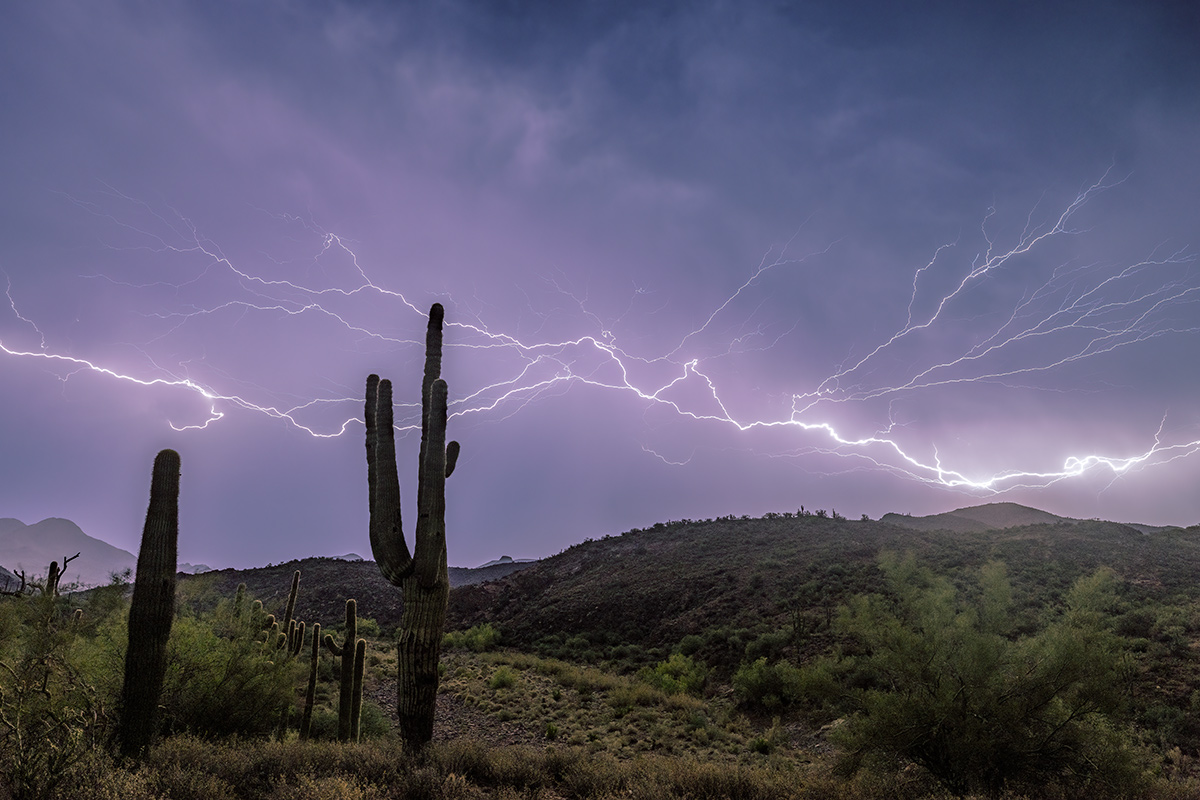
Coming from Saskatchewan’s prairies, I was struck by how isolated and intense Arizona’s storms are—lightning feels closer because high‑based storms reveal the entire channel. The desert also smells different after rain, and the colours of the monsoon sunsets, with magenta clouds over golden saguaros, were unlike anything back home. Arizona’s monsoon season is a sublime interplay of heat, moisture and electricity. For a Canadian accustomed to long winters and gentle summer showers, the desert’s sky‑borne fireworks were humbling. The photographic challenge of chasing these intense but short‑lived storms, navigating remote areas with few road options and nailing the perfect exposure and composition makes each bolt captured feel like a triumph.
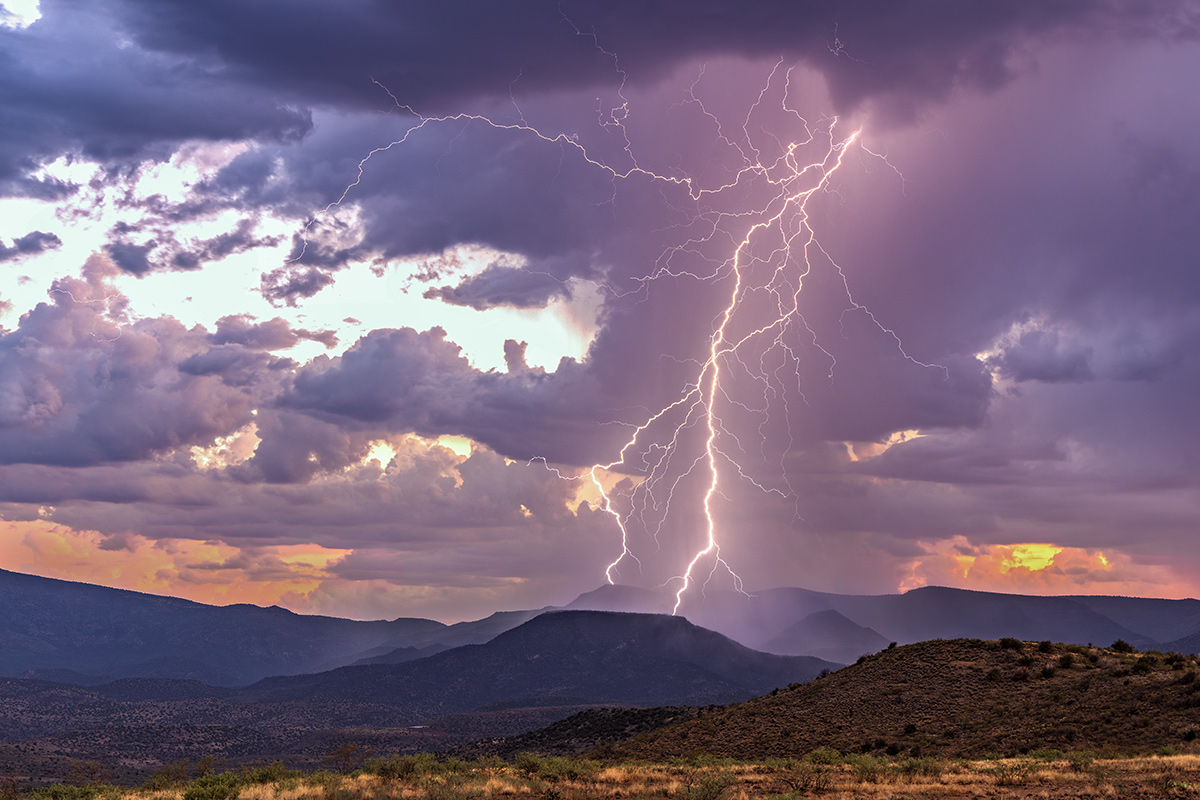
Monsoon chasing isn’t for everyone. It demands long days, late nights, dust‑choked roads and very hot temperatures. Yet, those who heed and respect the power of nature are rewarded with images and memories that last a lifetime. Whether you’re a seasoned storm chaser or a Canadian dreaming of desert skies, the Arizona monsoon deserves a place on your bucket list. Listen to the rumble, watch the clouds build, feel the hair on your arms stand up, and then retreat to safety as lightning dances across the horizon and lights up the sky.
About the Author – Craig Hilts
Craig Hilts is an award-winning photographer based in Swift Current, Saskatchewan, renowned for his captivating work under the banner of Prairie Fire Photography. With a deep passion for capturing the raw beauty of nature, Hilts specializes in photographing Saskatchewan’s dramatic landscapes, wild weather, and unique wildlife, earning him recognition as a leading storm chaser and nature photographer in Canada. His portfolio showcases the essence of the prairies, featuring the electric energy of summer storms, the glow of the northern lights, starry skies that stretch endlessly, weathered old barns, iconic grain elevators, and the untamed wildlife of the region. His work vividly embodies the spirit of Saskatchewan, often referred to as the “Land of Living Skies,” celebrating its vast, ever-changing beauty.
Hilts’ journey in photography is driven by a relentless commitment to capturing fleeting, breathtaking moments that others might miss. He travels over 30,000 kilometers annually across Saskatchewan and anywhere else that adventure might be waiting. His pursuit of extraordinary scenes is both an art and an adventure, requiring patience, intuition, and a deep understanding of the fleeting experiences he chases.. Hilts transforms these moments into high-definition art, often using innovative aluminum metal prints that amplify the vibrancy and depth of his images. This signature medium creates immersive wall art that brings the wild energy of a thunderstorm or the quiet majesty of a starlit night into homes and galleries, captivating viewers with its lifelike clarity.
Craig Hilts | Prairie Fire Photography
Wild | Weather | Wonder – Capturing one of a kind moments
web: pfphoto.ca livingskytours.com
email: cdhilts@prairiefirephoto.com
phone: (306)741-4540
Find Me On Facebook – Prairie Fire Photography
Find Me On Instagram – craig_hilts



Hi Craig. Really great article. Lots of good science, useful photo tips and wonderful imagery. Many thanks for sharing.
Thanks for the comment Wayne, I’m glad you enjoyed the article.
What an incredible adventure! The drama and intensity of monsoon lightning over Arizona are captured beautifully, you can almost feel the charge in the air. You’re braver than me!
Hahaha not sure about being brave but I’m pretty dedicated to getting out there and having some amazing experiences. Thanks for the comment
Great article Craig and some great shots!!