
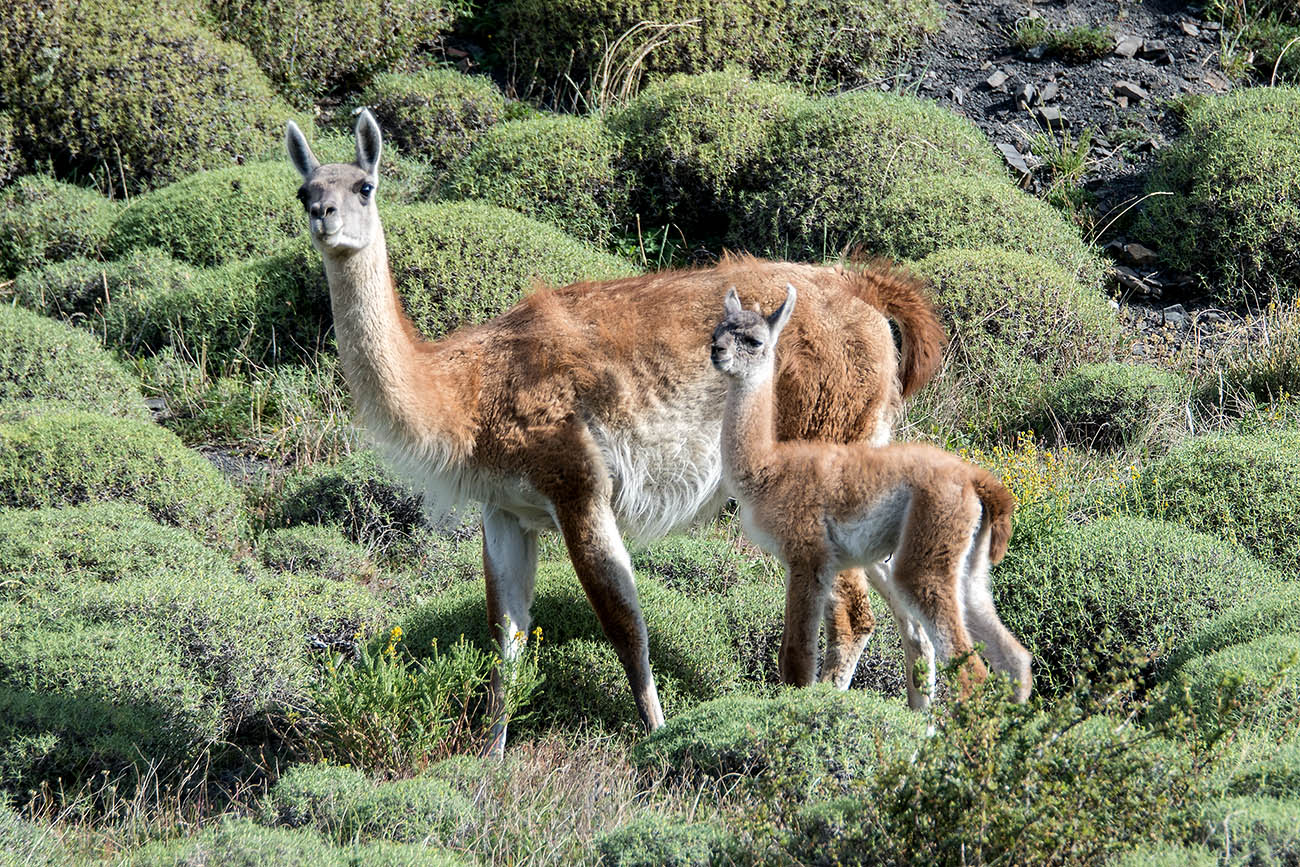
Last month, I featured the natural history beauty of Patagonia in the austral spring. As promised, this month, I want to focus on the guanaco, one of the largest mammals in South America and its importance as a keystone species in the ecosystem.
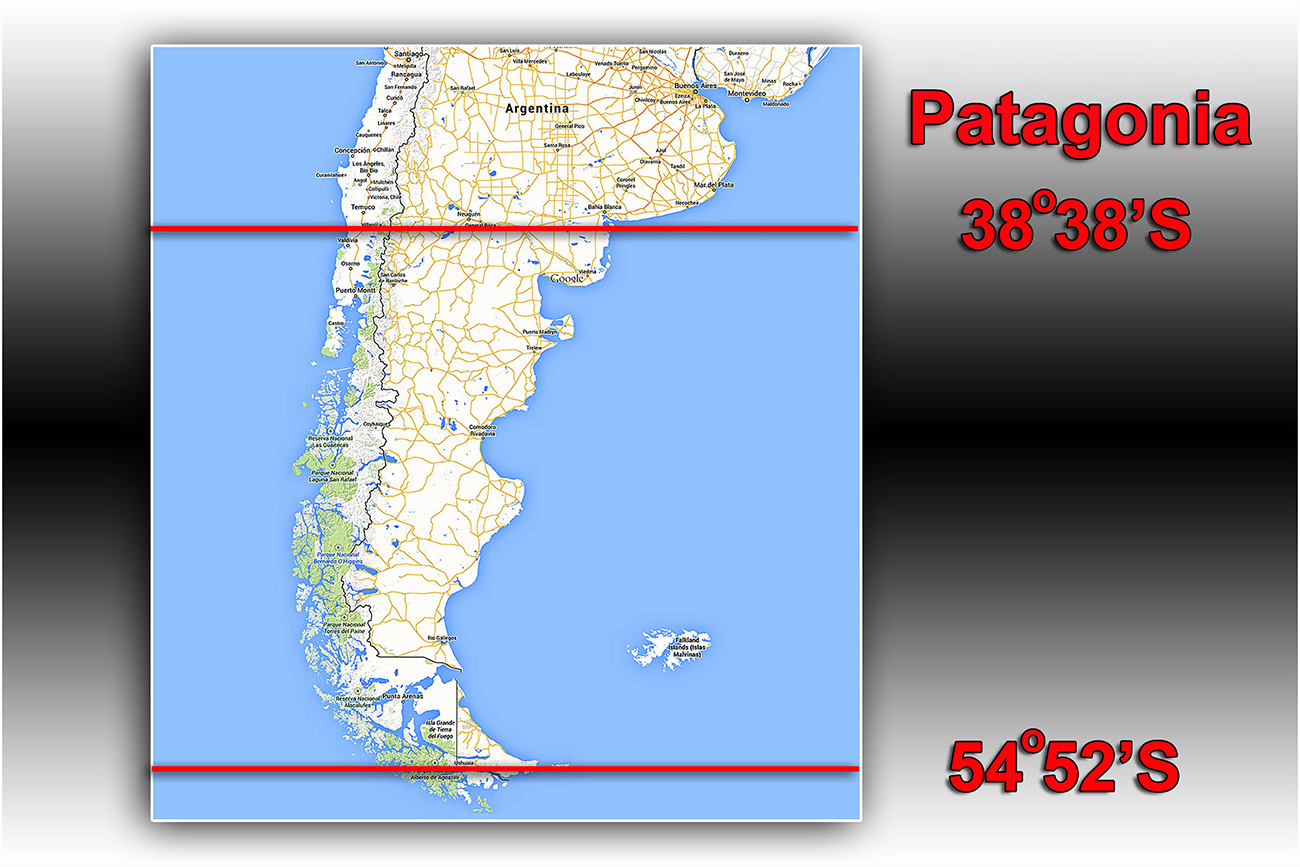
To refresh your memory, here once again, is a map of South America highlighting the boundaries of Patagonia in the southern horn of the continent.
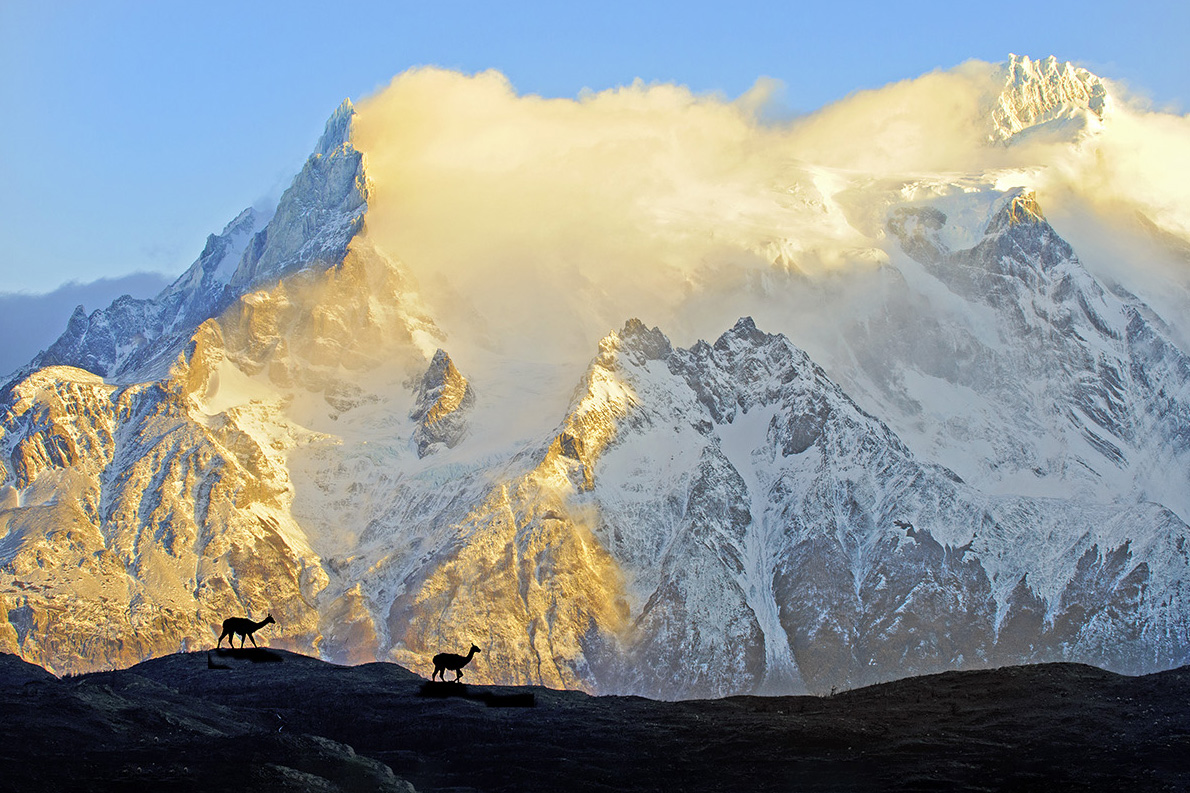
One animal, the guanaco (pronounced WAH-nah-ko), seen here walking along a distant ridge line, is pivotal to the lives of many wild creatures in the southern Andes.
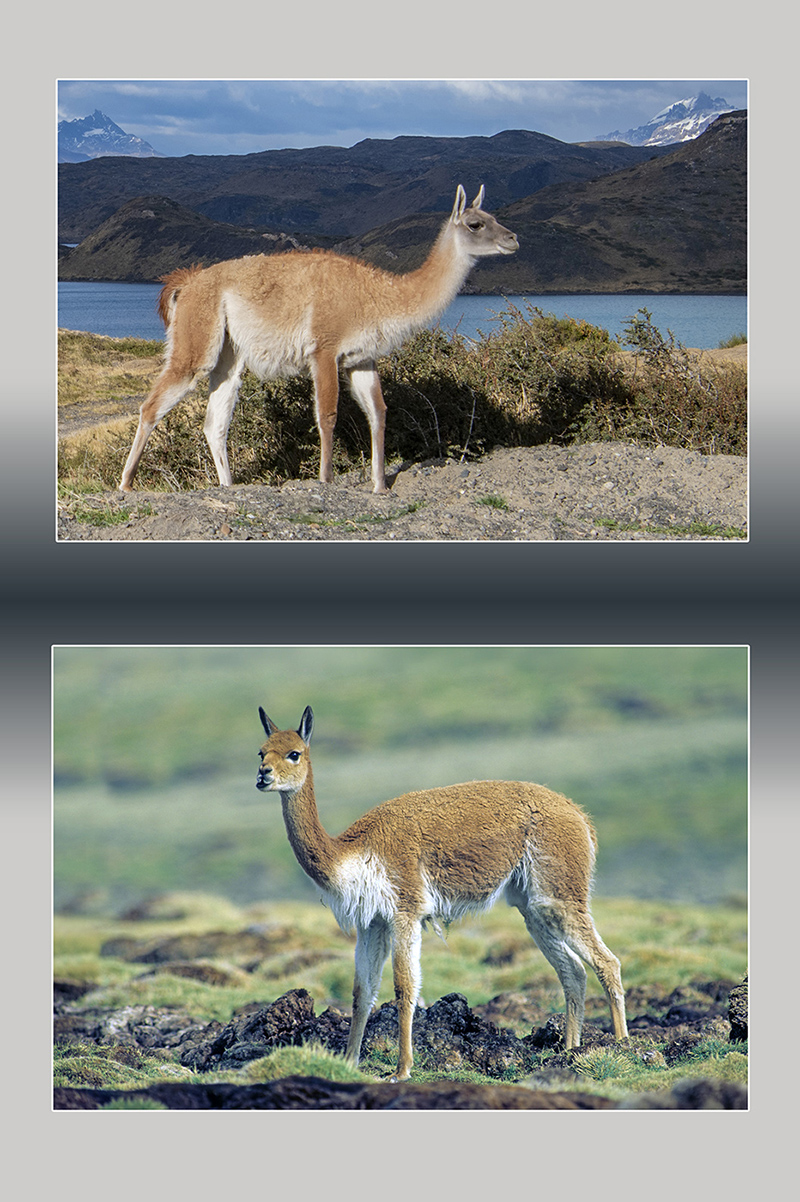
The guanaco belongs to the camel family, of which there are 6 species worldwide. In South America, there is the wild guanaco (top), the ancestor of the domestic llama, and the wild vicuna (bottom), the ancestor of the domestic alpaca. The two remaining camelids include the wild Bactrian camel which lives in the Gobi Desert of central Asia and the domestic dromedary camel that no longer lives free in the wild except for the large feral population in the central deserts of Australia.
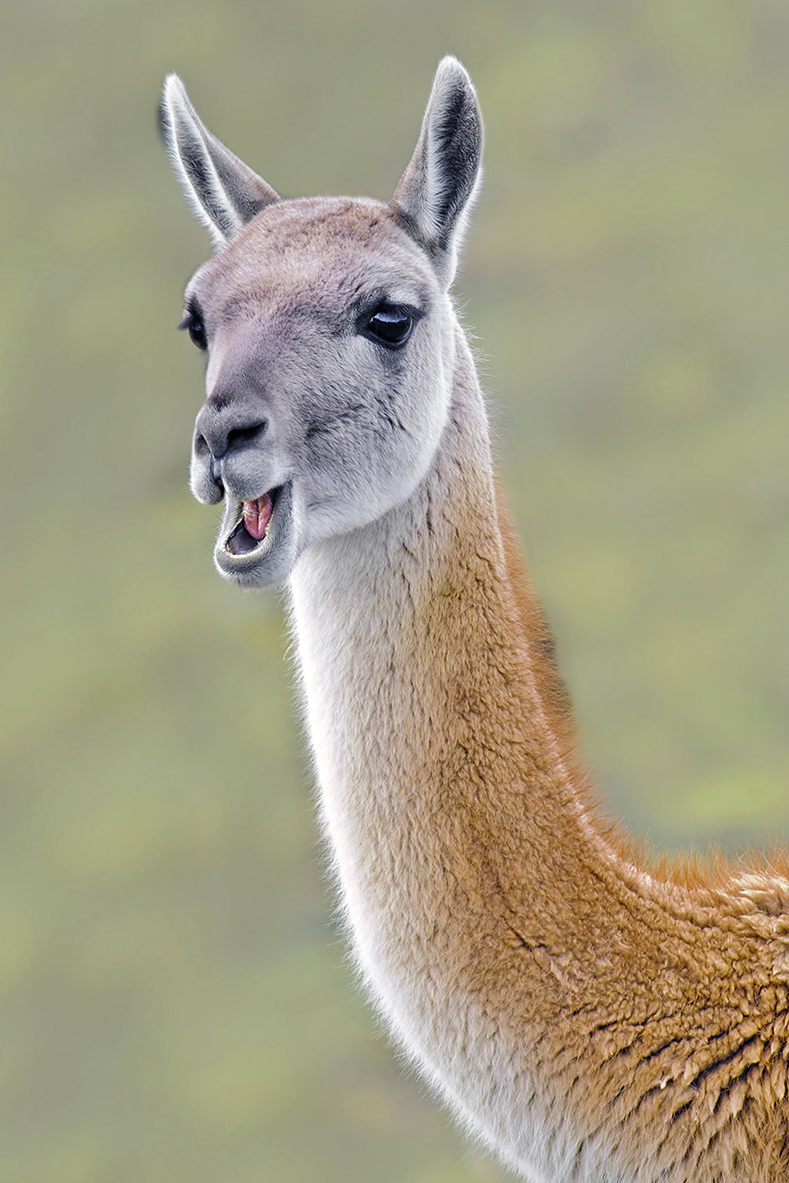
All camelids have a distinctive harelip and a long-curved neck.
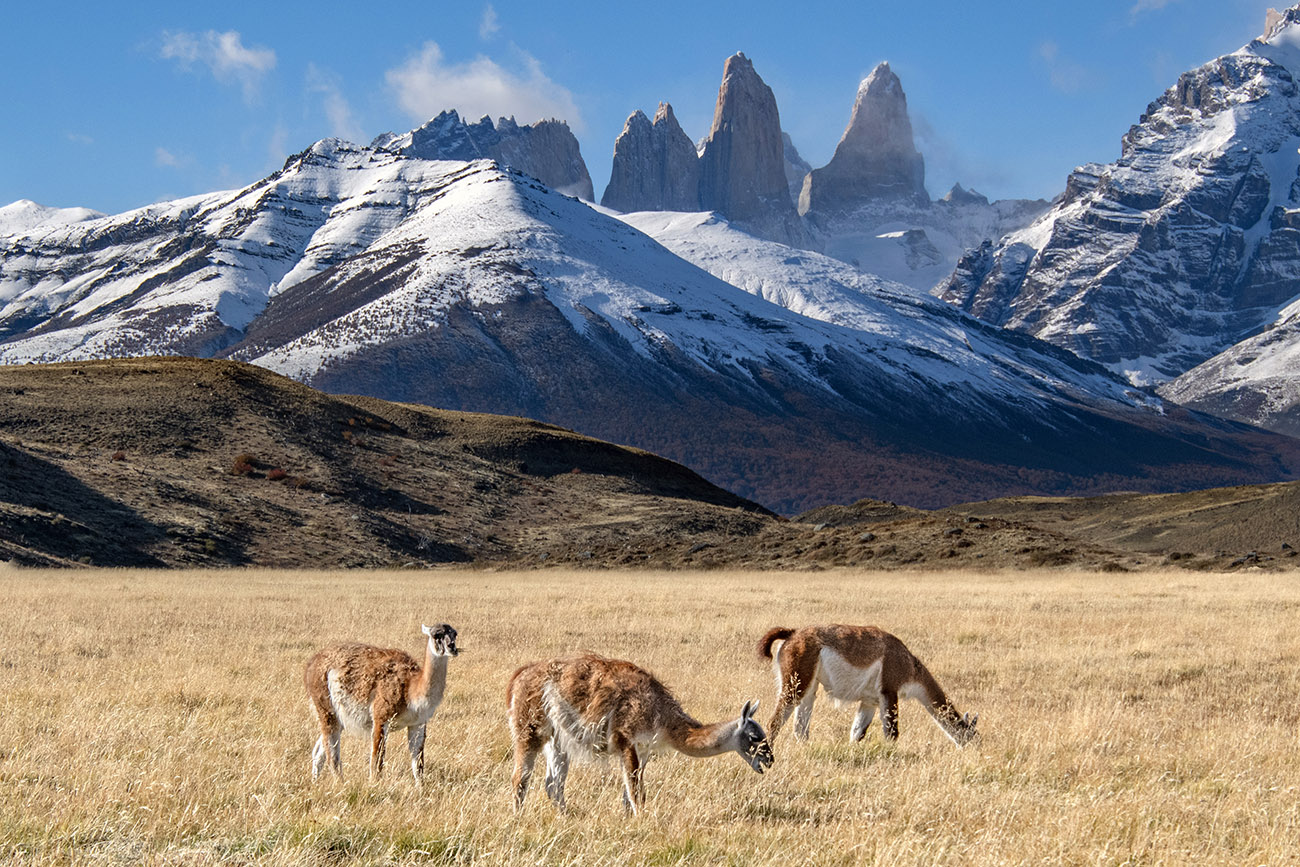
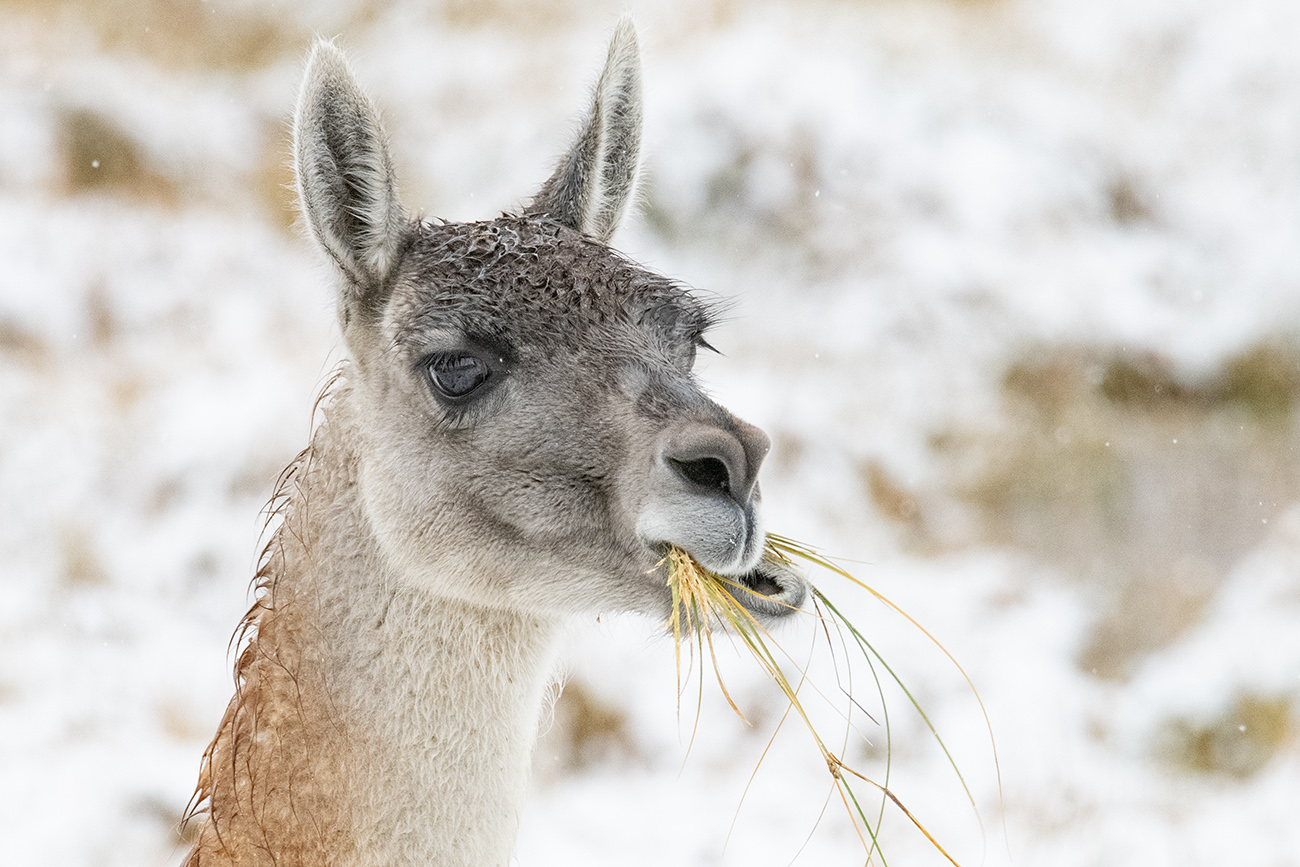
Guanacos, which can weigh up to 140 kilogram (308 lbs), eat mainly grasses, but also lichens, cacti, and wildflowers.
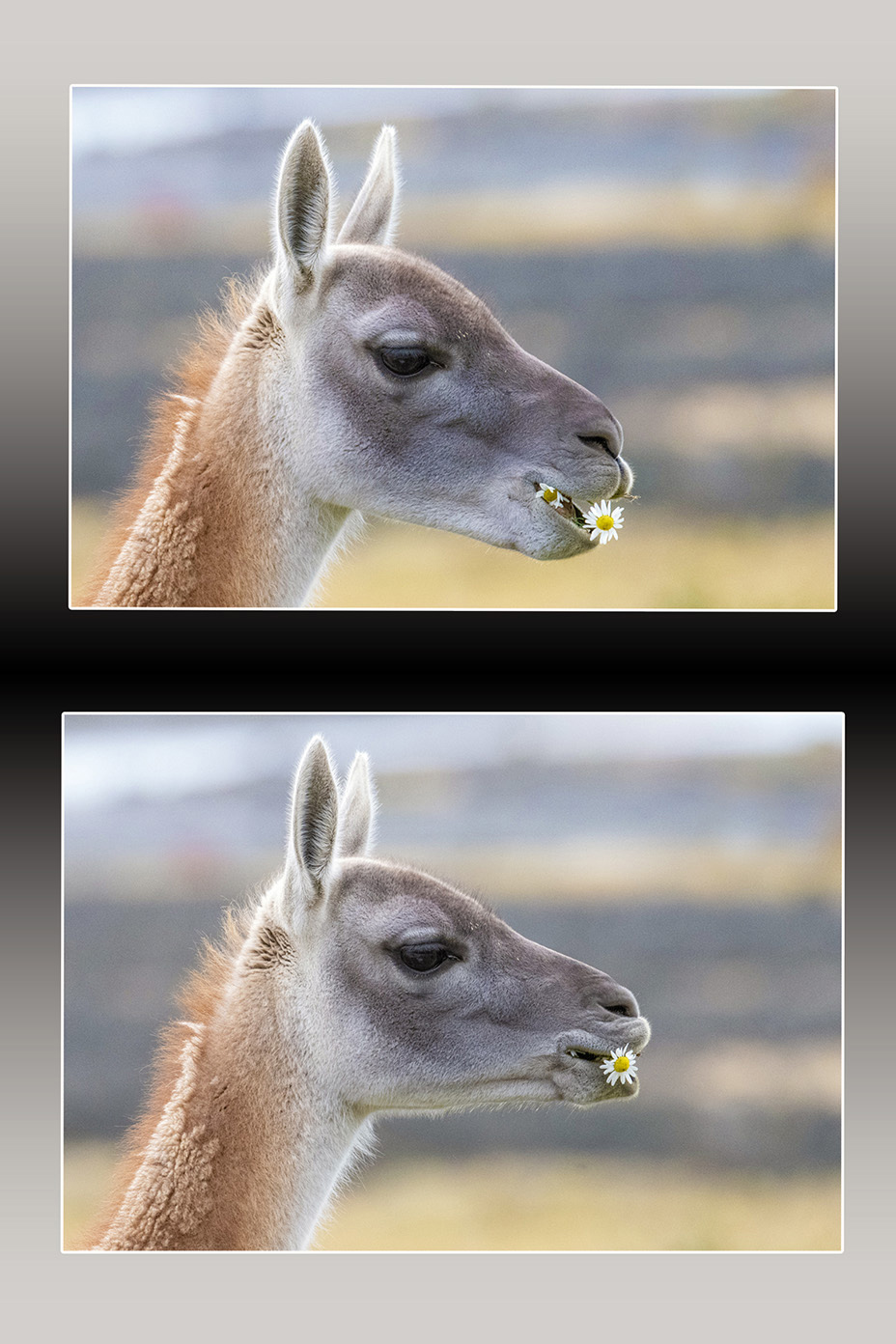
The guanaco pictured here was eating scentless mayweed, a variety of chamomile.
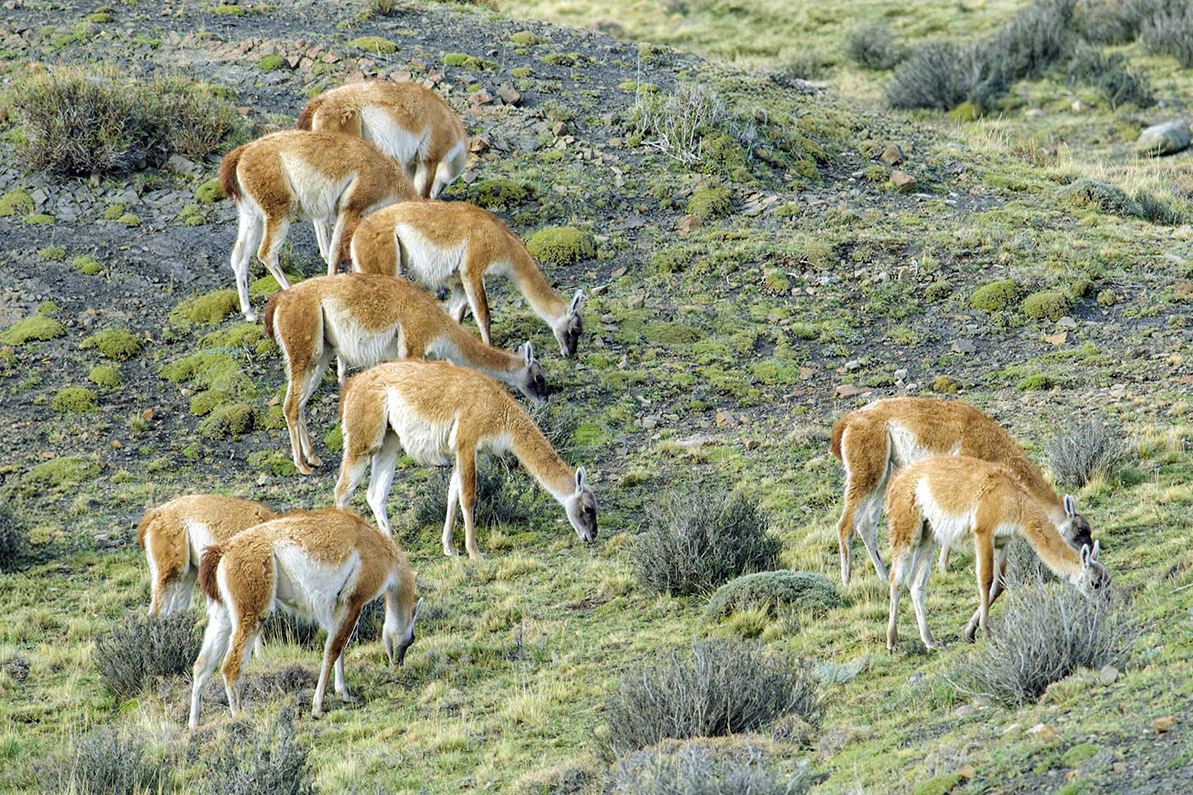
In winter, guanacos aggregate into large mixed herds of both sexes and all ages. These winter herds can range in size from 50 to 500 animals. They clump together as a surveillance system against predatory pumas.
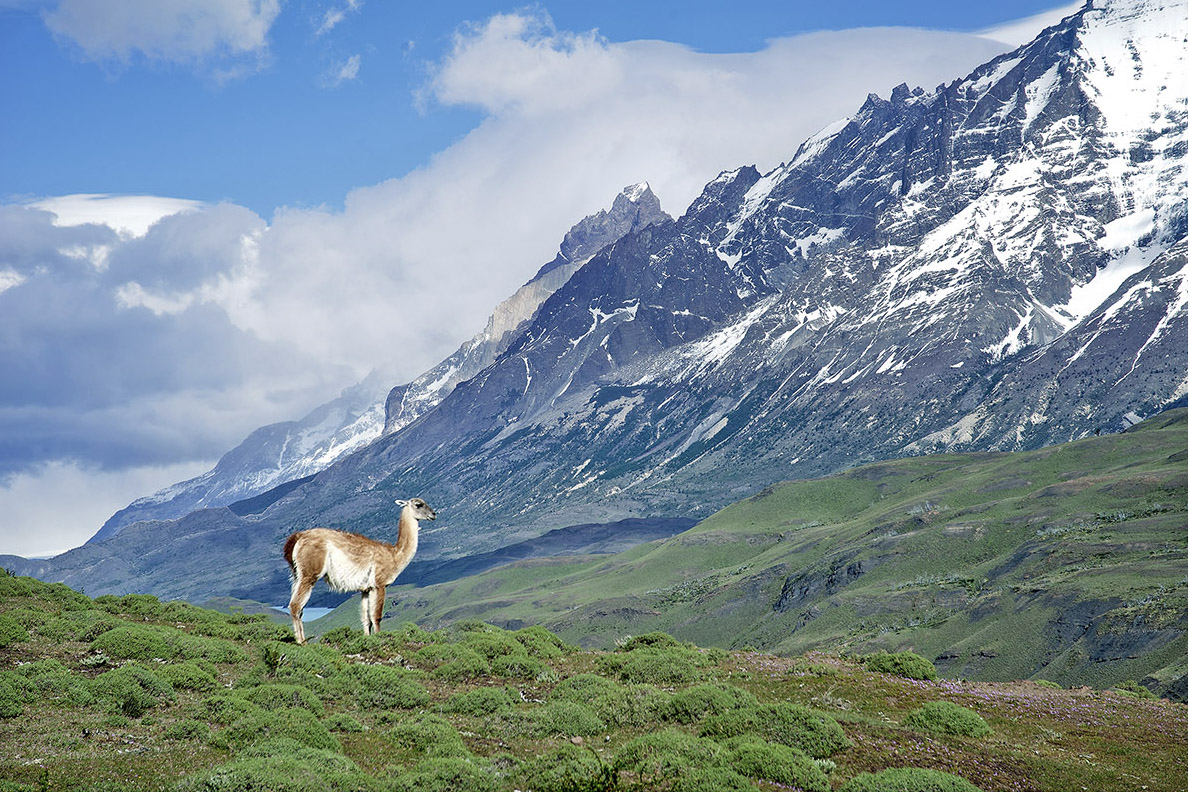
In summer, the wintering groups of guanacos split into three social groupings: solitary males on territory (pictured here), mixed-age bachelor herds, and adult and juvenile females and young.
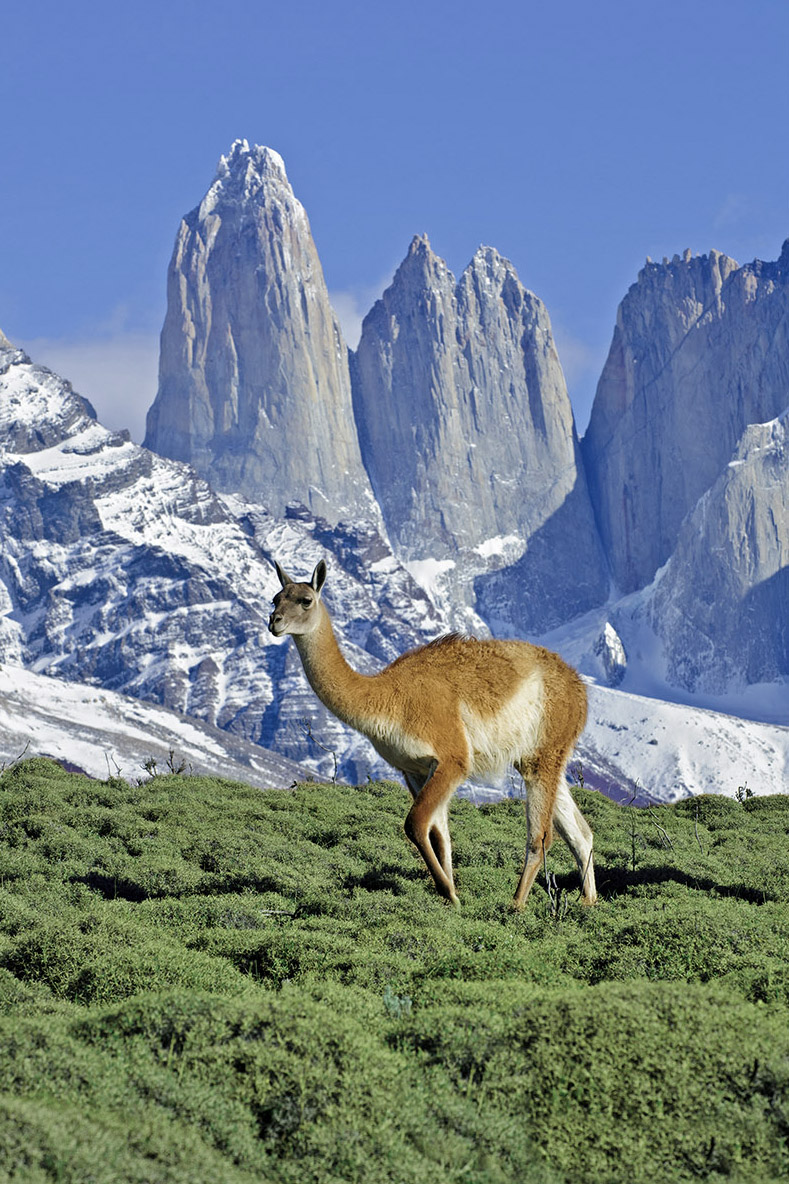
Owning a territory is a prerequisite to mating, so once a male reaches sexual maturity at 3-4 years of age, this is his goal. Even so, in any given summer breeding season, 81% of territorial males will not breed.
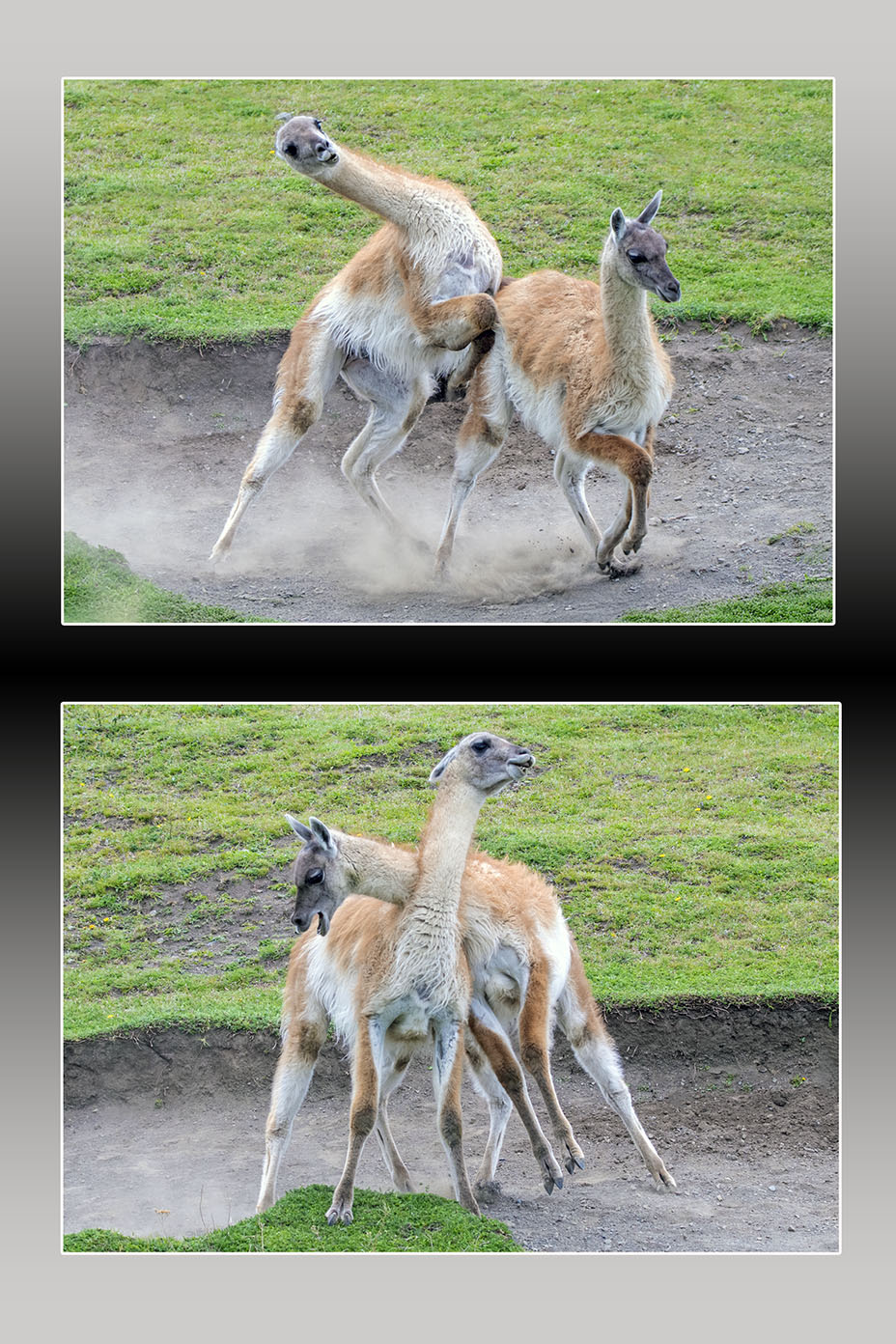
Competition for the best territories is fierce and rival males spit aggressively, chest-ram, neck wrestle, bite, and chase each other in fights that can last for many minutes.
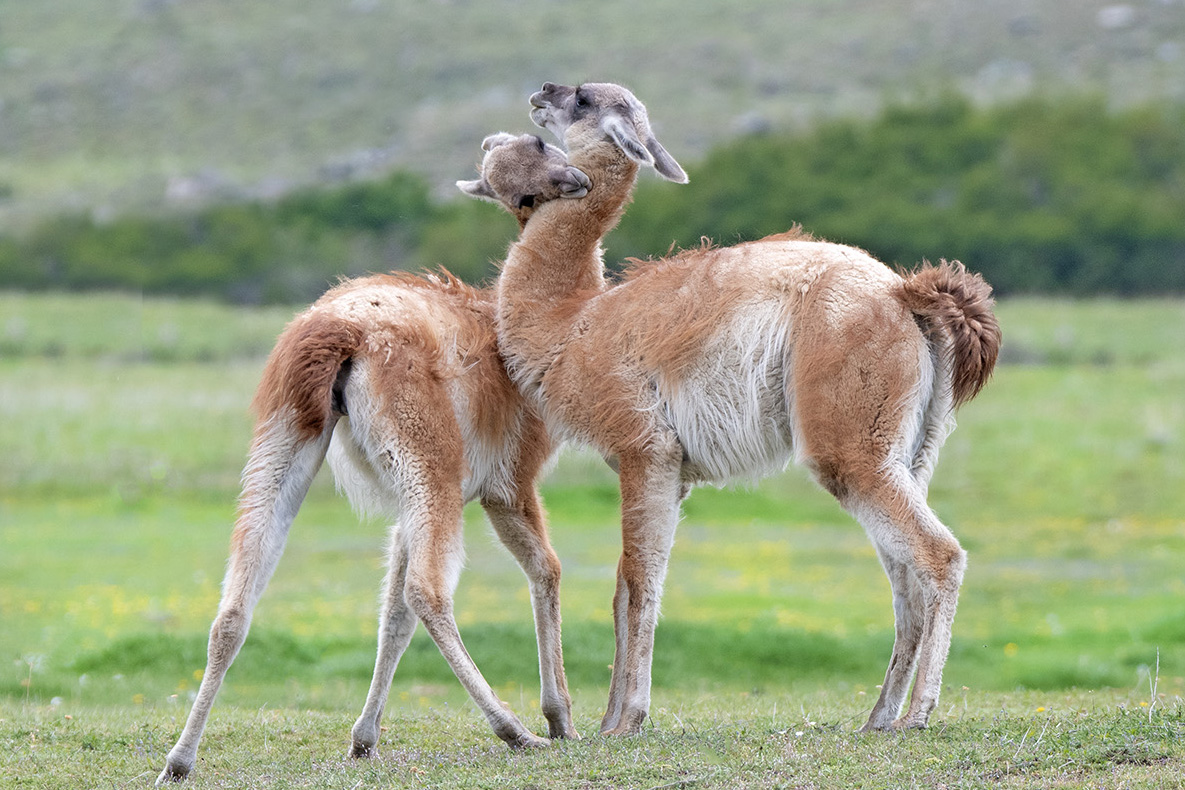
The skin on the neck of a guanaco is especially thick. This protects them from the predatory attacks of pumas and, in males, lessens the injuries from the bites of rivals during fights for territorial ownership.
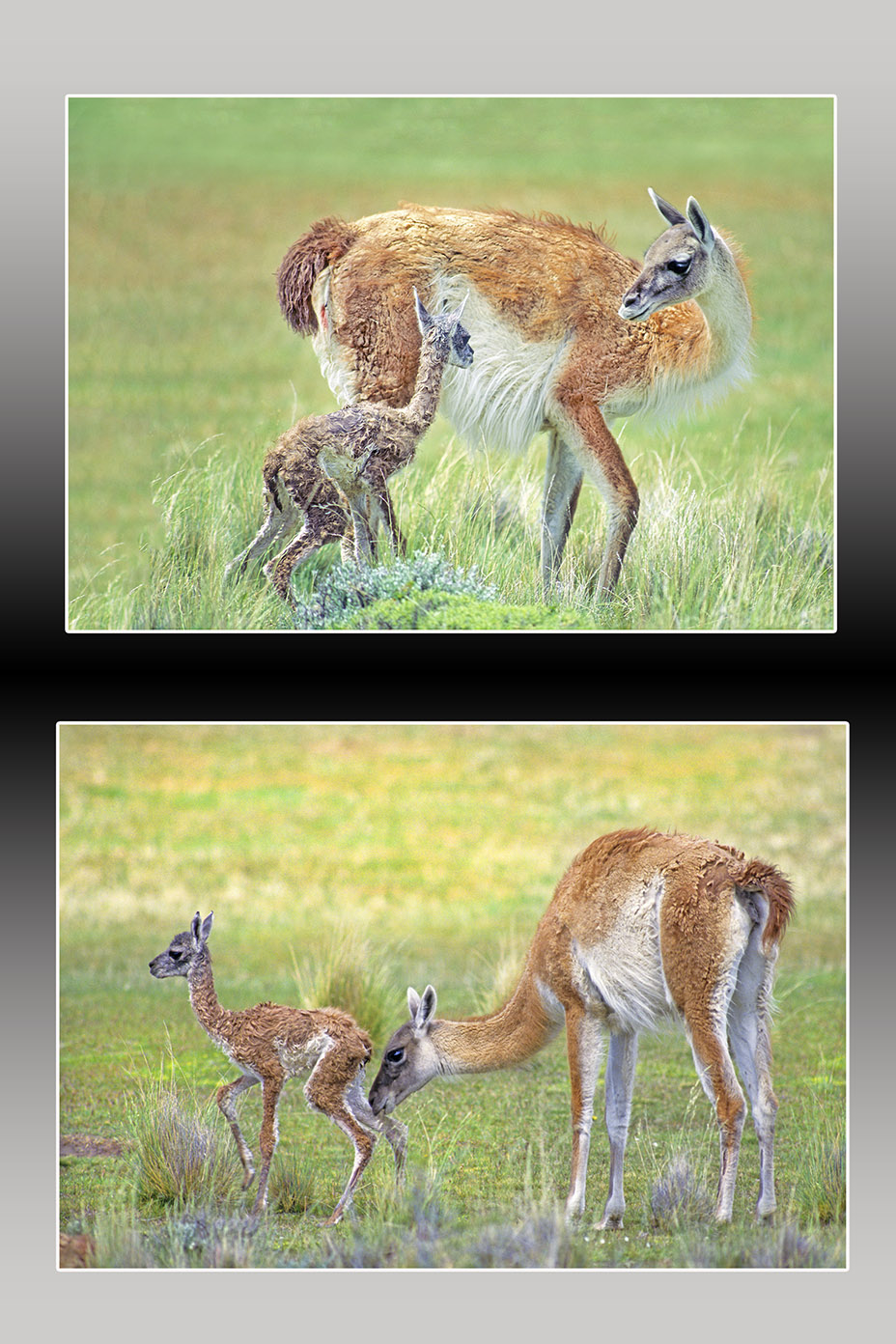
Baby guanacos, called chulengos, are born from November to January. They stand within minutes and run within hours of birth. Chulengos are preyed upon heavily by pumas, and less than 40% of them survive their first year.
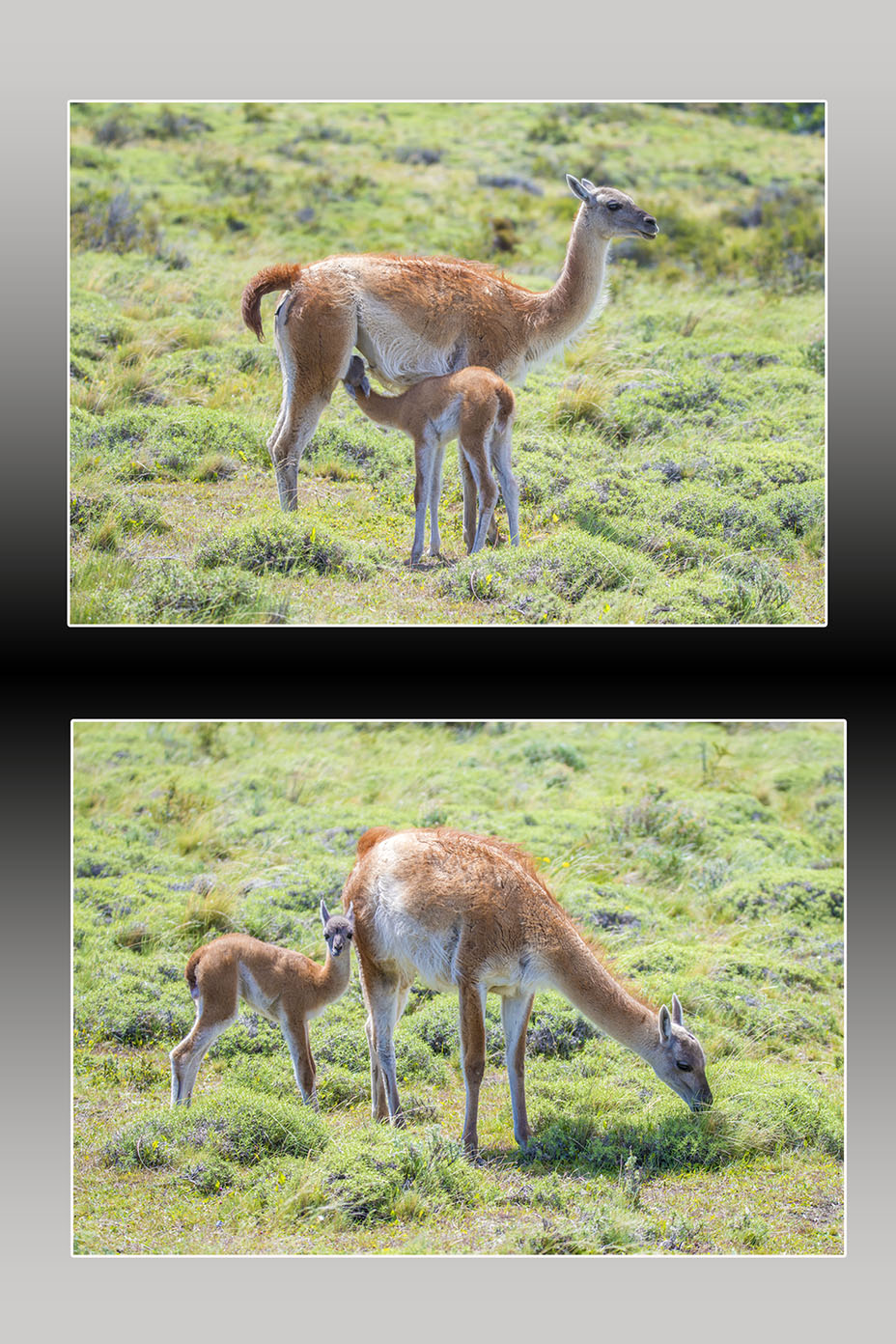
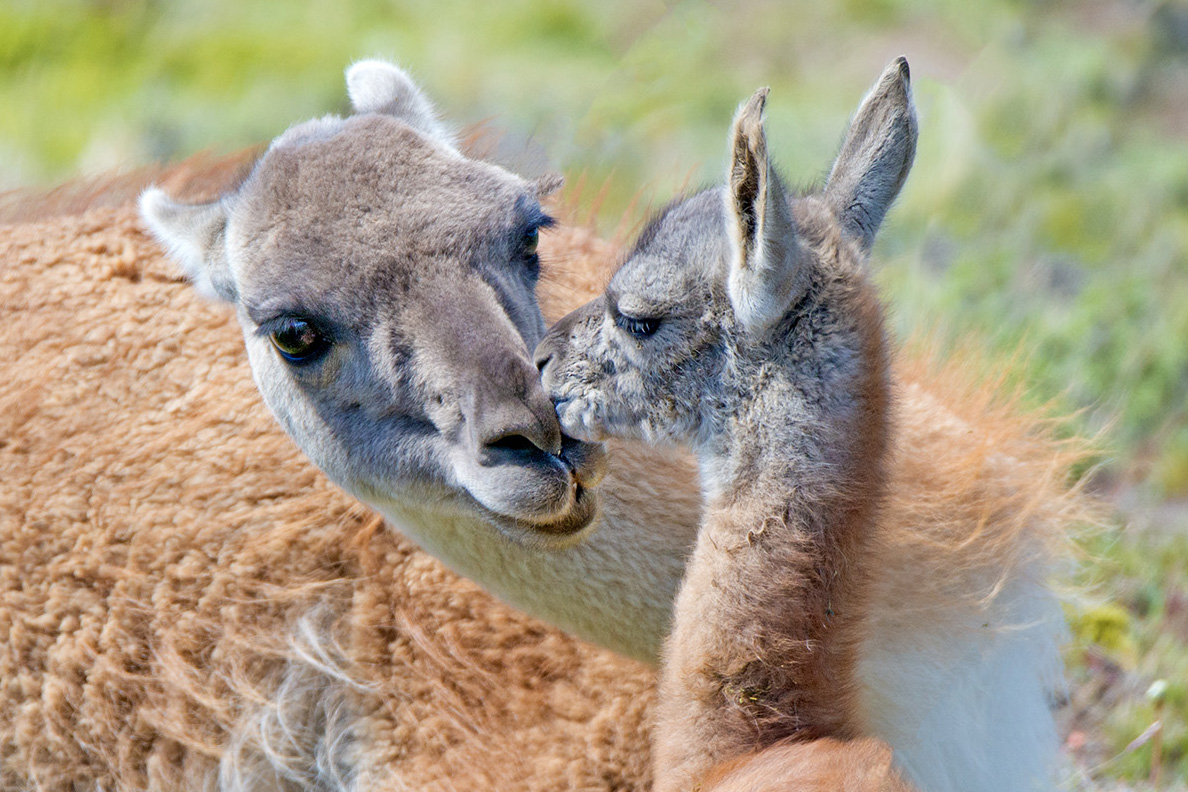
Young guanacos start to nibble on grass when they are just a week old but rely on nursing until they are 6-8 months old.
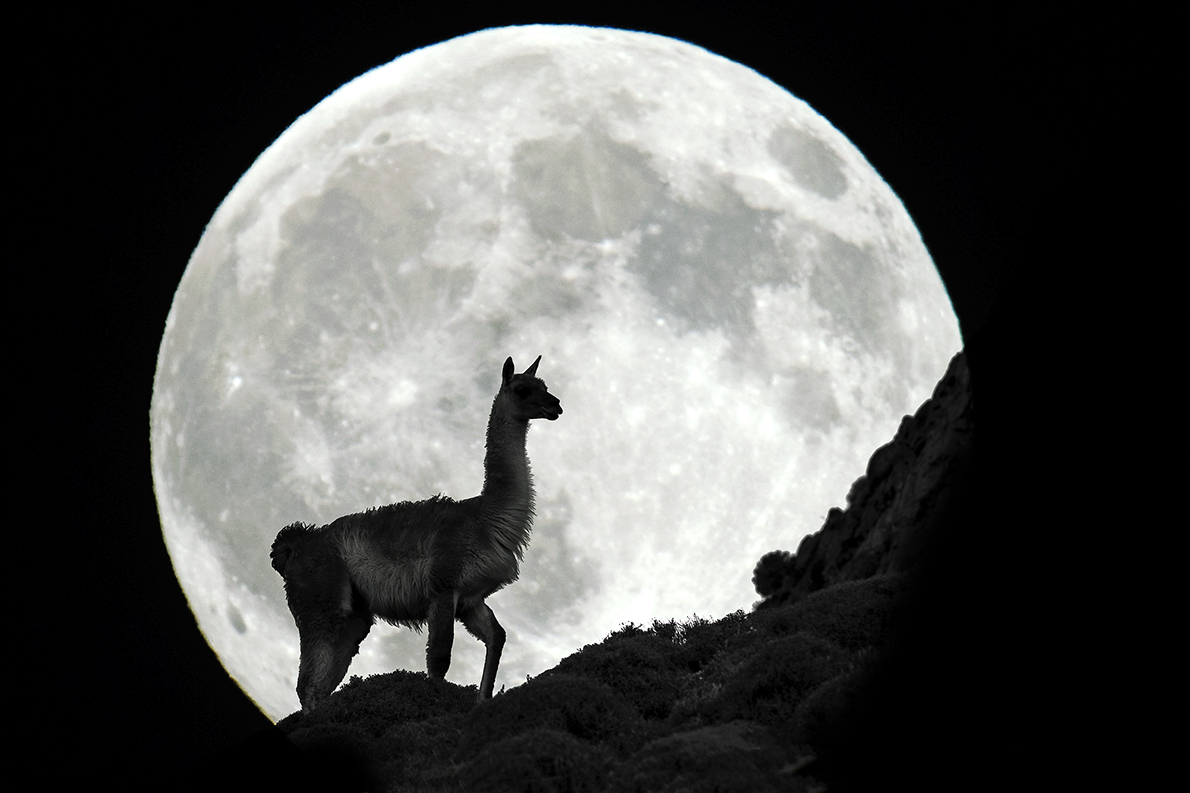
So many animal populations are declining, and it is heartening to know that the world population of guanacos is stable at an estimated 1.5-2.0 million. Most of the animals are in Argentina (87%), and Chile (11%), with a small remainder in Peru and Bolivia. Nonetheless, the two million guanacos surviving today represent just 3–7% of the guanaco population present when the Spanish conquistadors first arrived in South America.
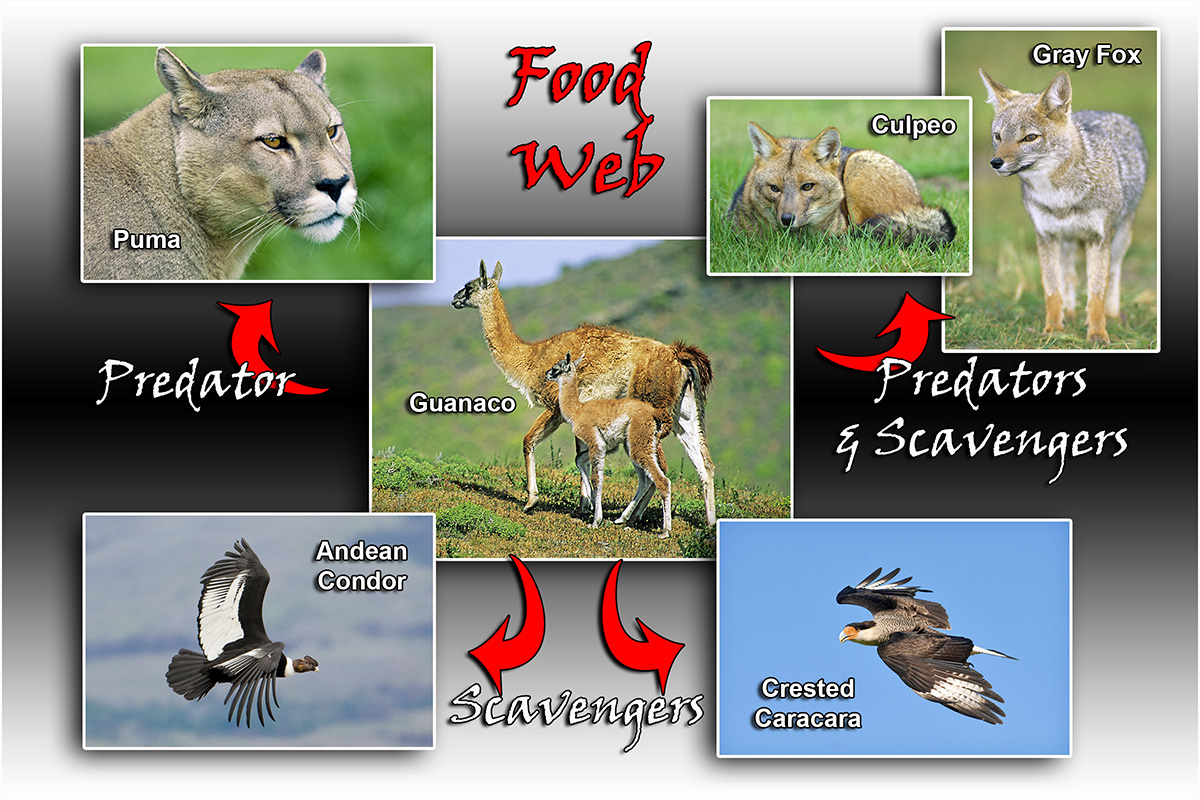
In Patagonia, the guanaco is at the centre of a vital food web.
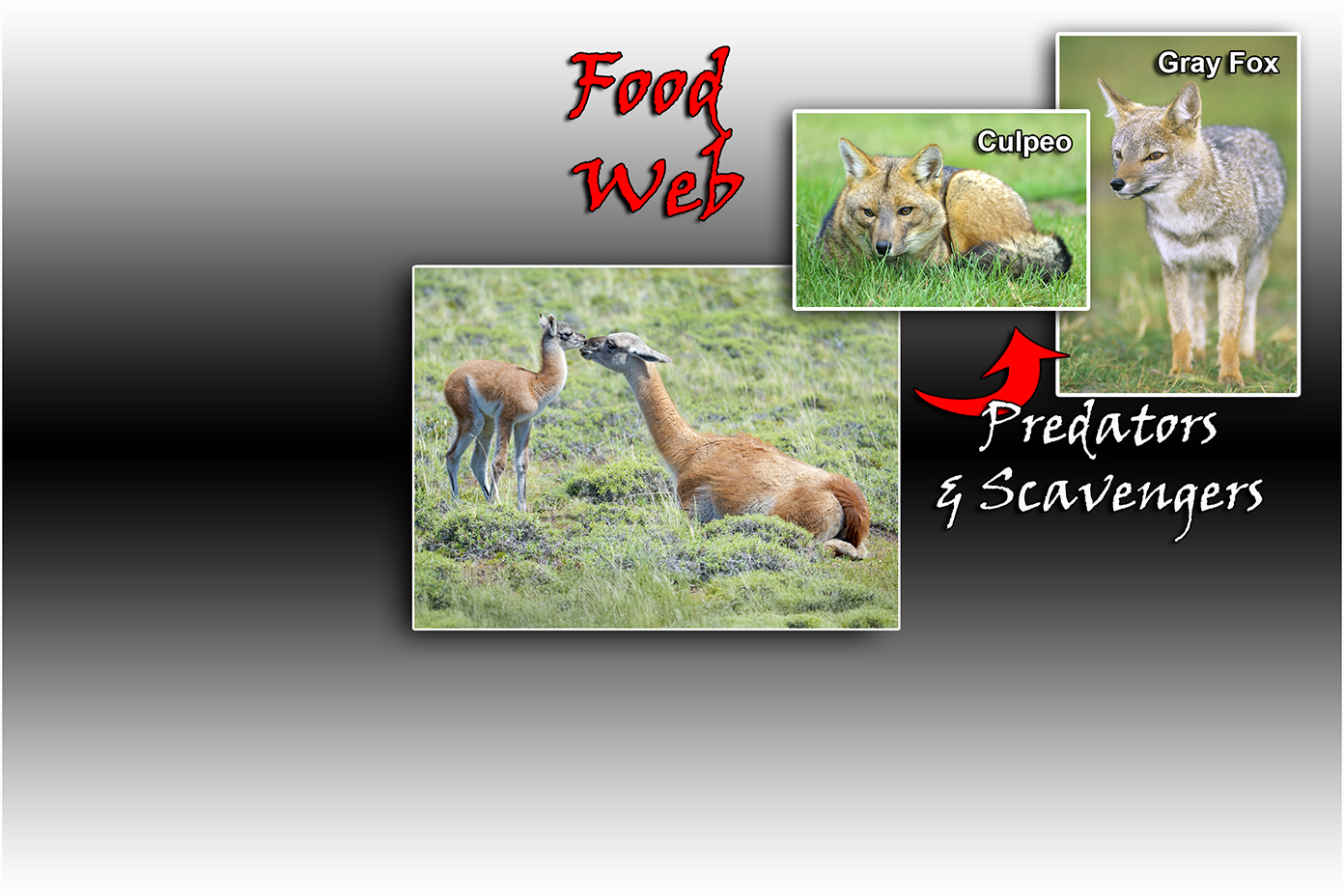
The first connection in the food web includes two species of foxes, the culpeo and the South American gray fox. Both are predators and scavengers.
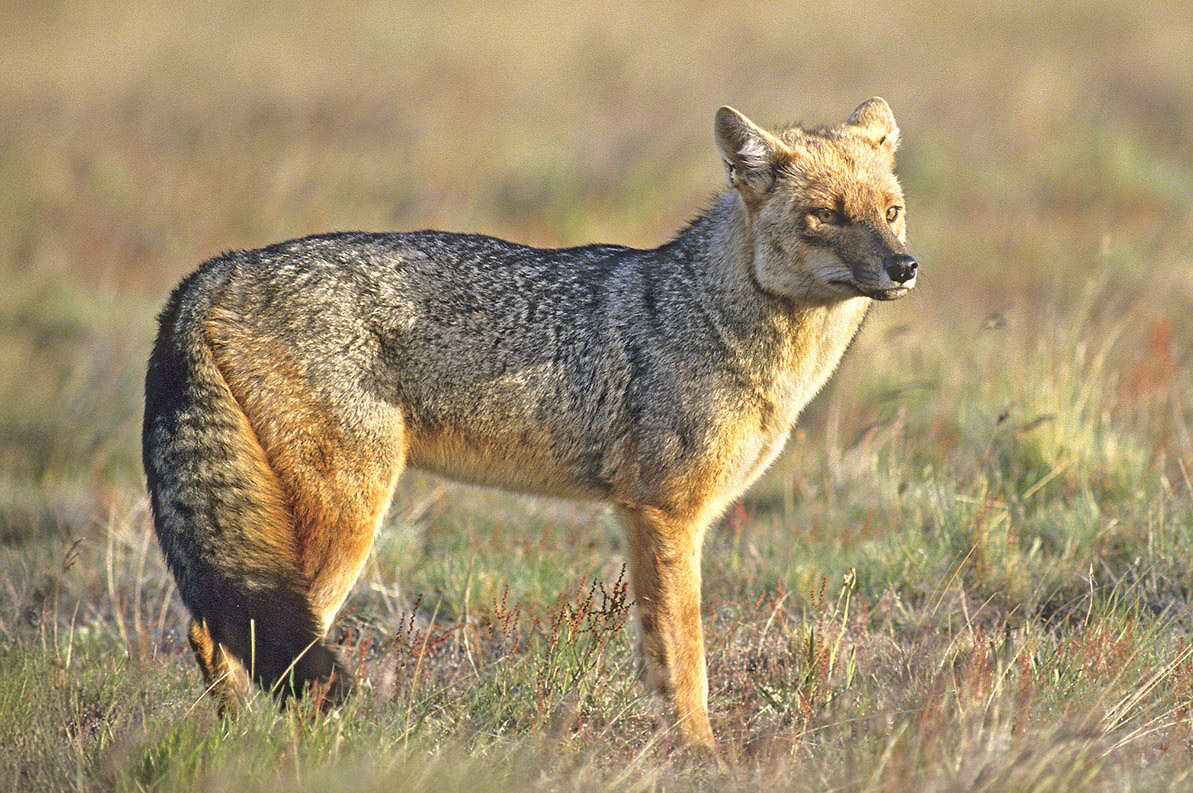
The culpeo is a coyote-sized canid, weighing 8-14 kg (18-31 lbs).
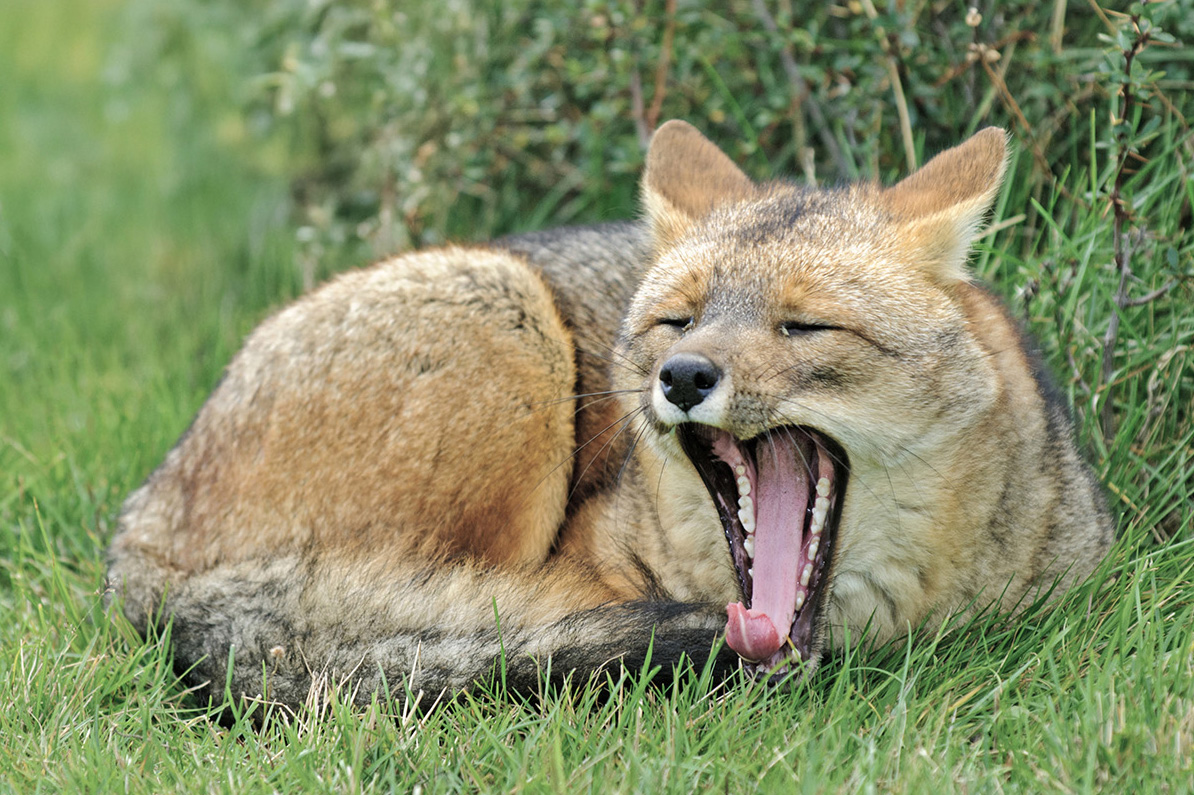
The culpeo is large enough to tackle newborn chulengos but more often eats hares, rodents, birds, insects, and fruit.
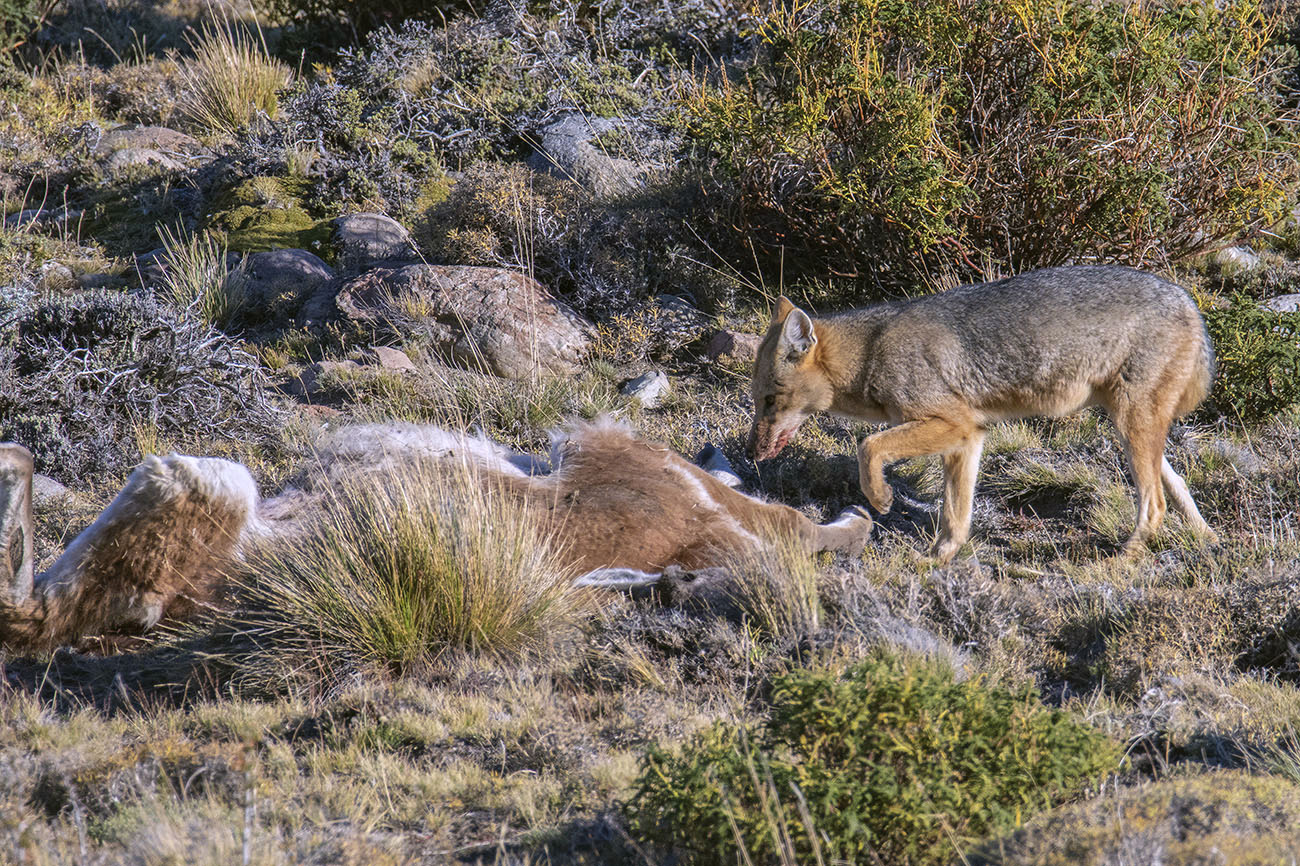
This culpeo found the carcass of a guanaco that had been killed the night before by a puma. If a puma is especially timid it will abandon a carcass that is near the road as this one was.
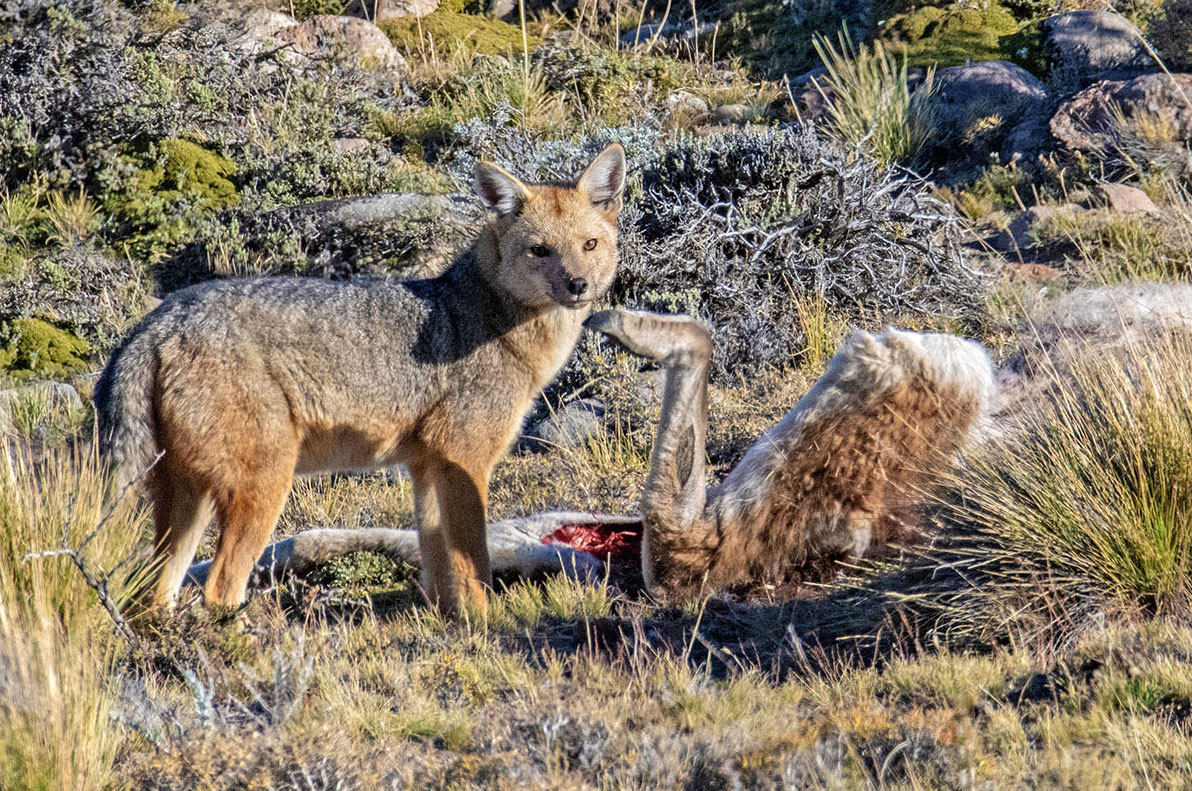
The culpeo kept looking around nervously because half a dozen caracaras were noisily flying around and the commotion might bring the puma back to claim its kill. meal.
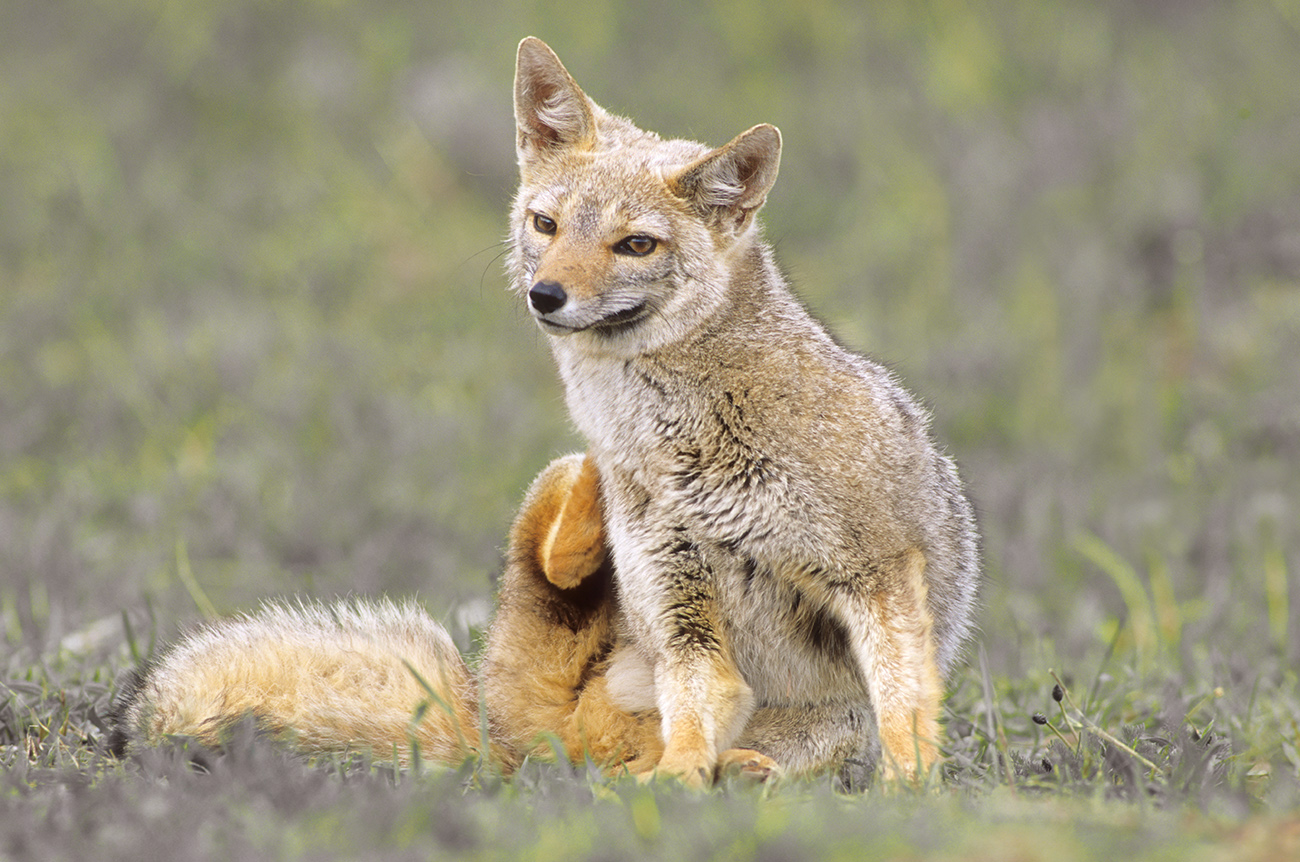
The South American gray fox is much smaller than the culpeo, roughly the same size as a red fox, weighing 2-5 kilograms (4.5-11 lbs). It is too small to prey on young guanacos although it will eagerly scavenge an unclaimed carcass.
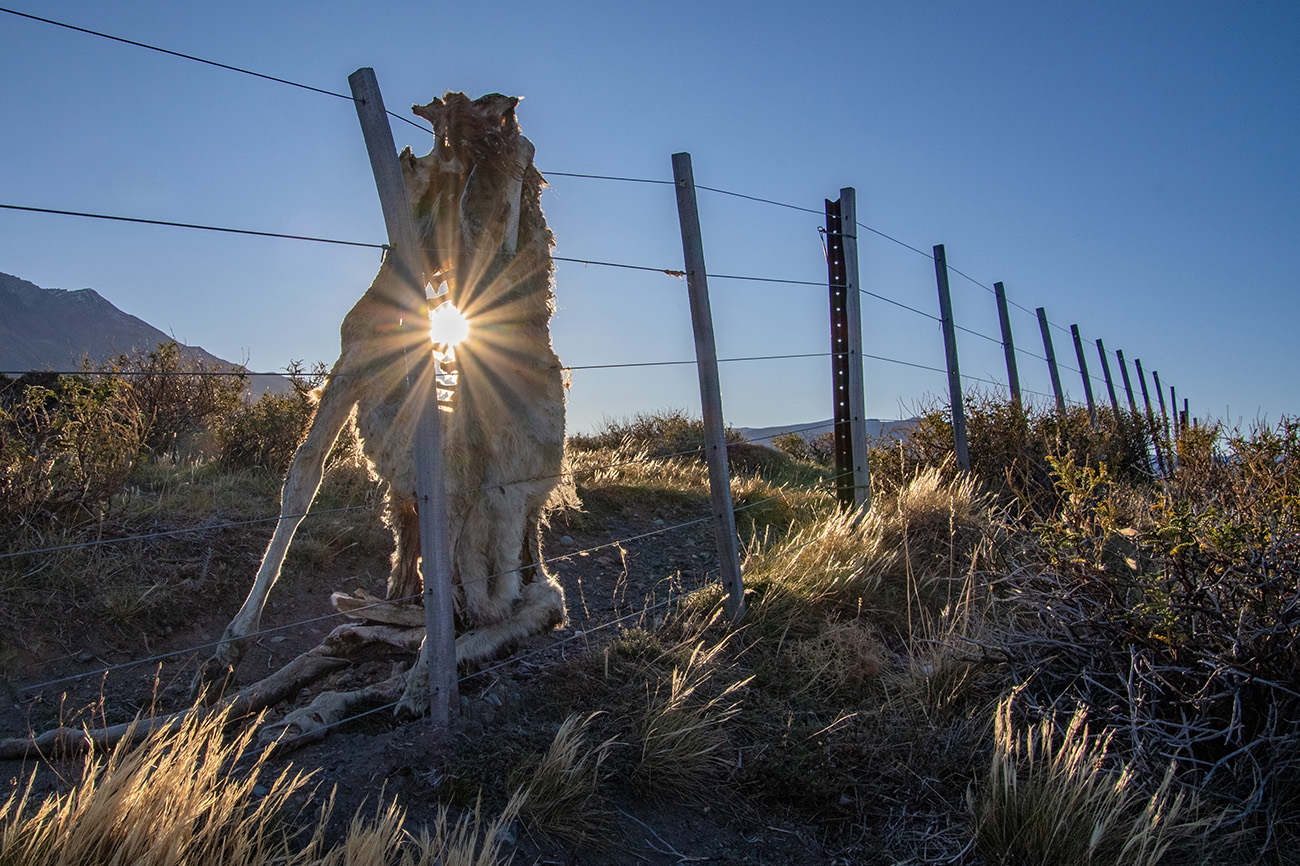
Normally, an adult guanaco can jump over a cattle fence, but sadly, some become fatally tangled in the wires and die a painful death. Countless others die in collisions on the roadways. These fatalities are commonly scavenged by both the gray foxes and the culpeos.
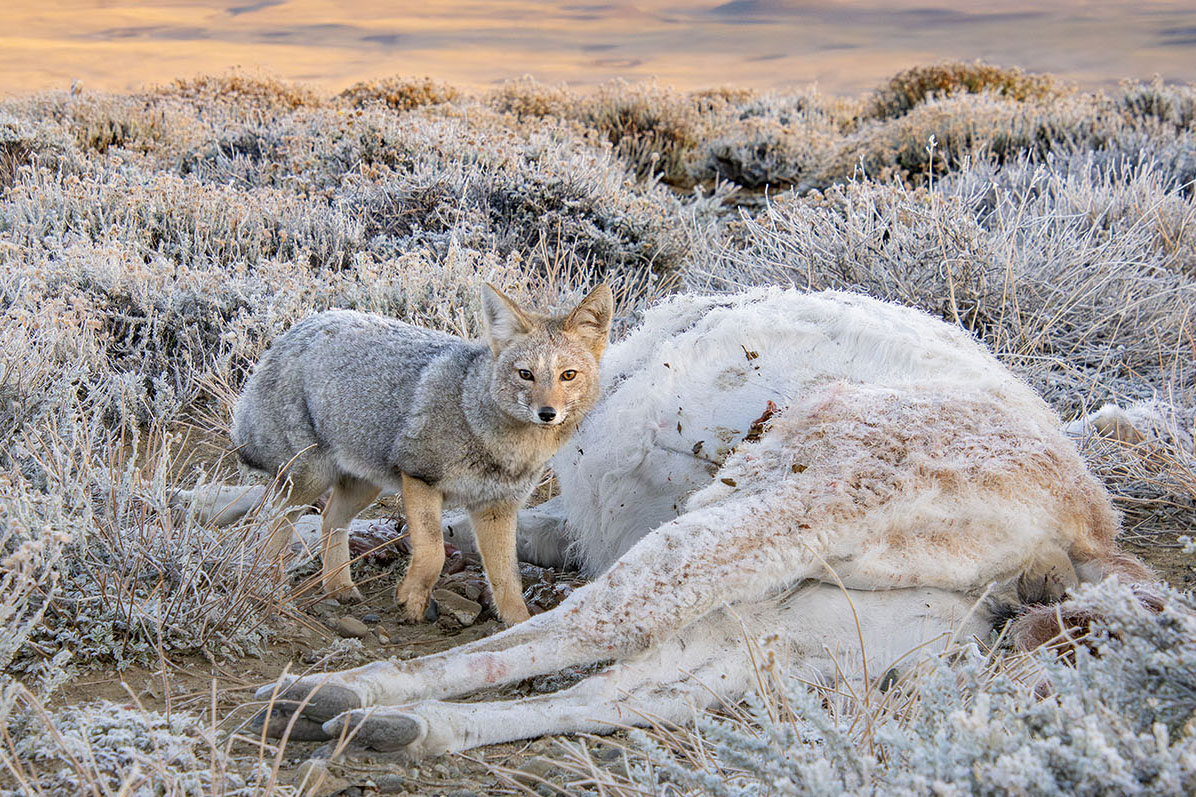
This guanaco was killed by a vehicle while crossing the road at night. I happened upon it shortly after a frosty sunrise; about the same time as it was discovered by a hungry grey fox.
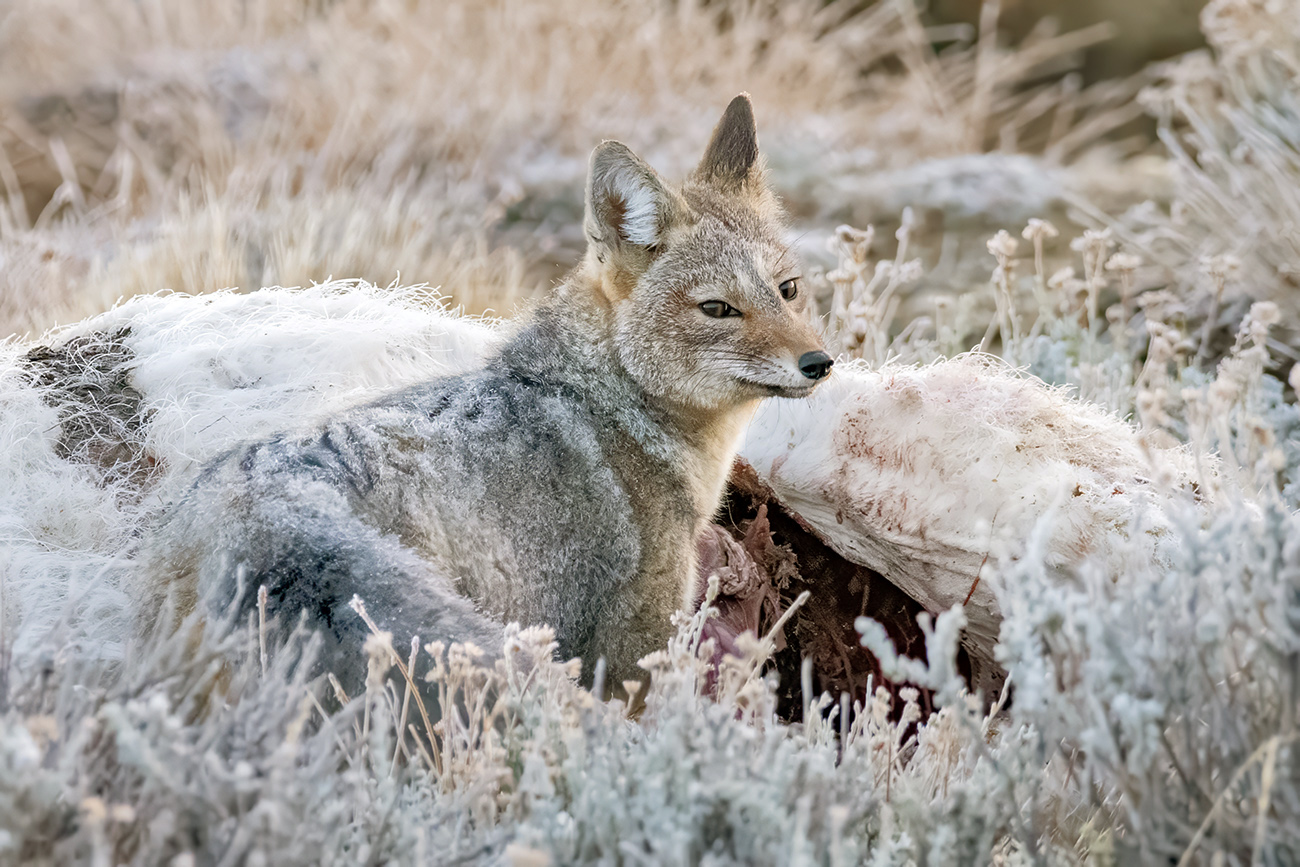
The fox spent roughly 20 minutes feeding on the carcass before a group of incautious, noisy tourists frightened it away.
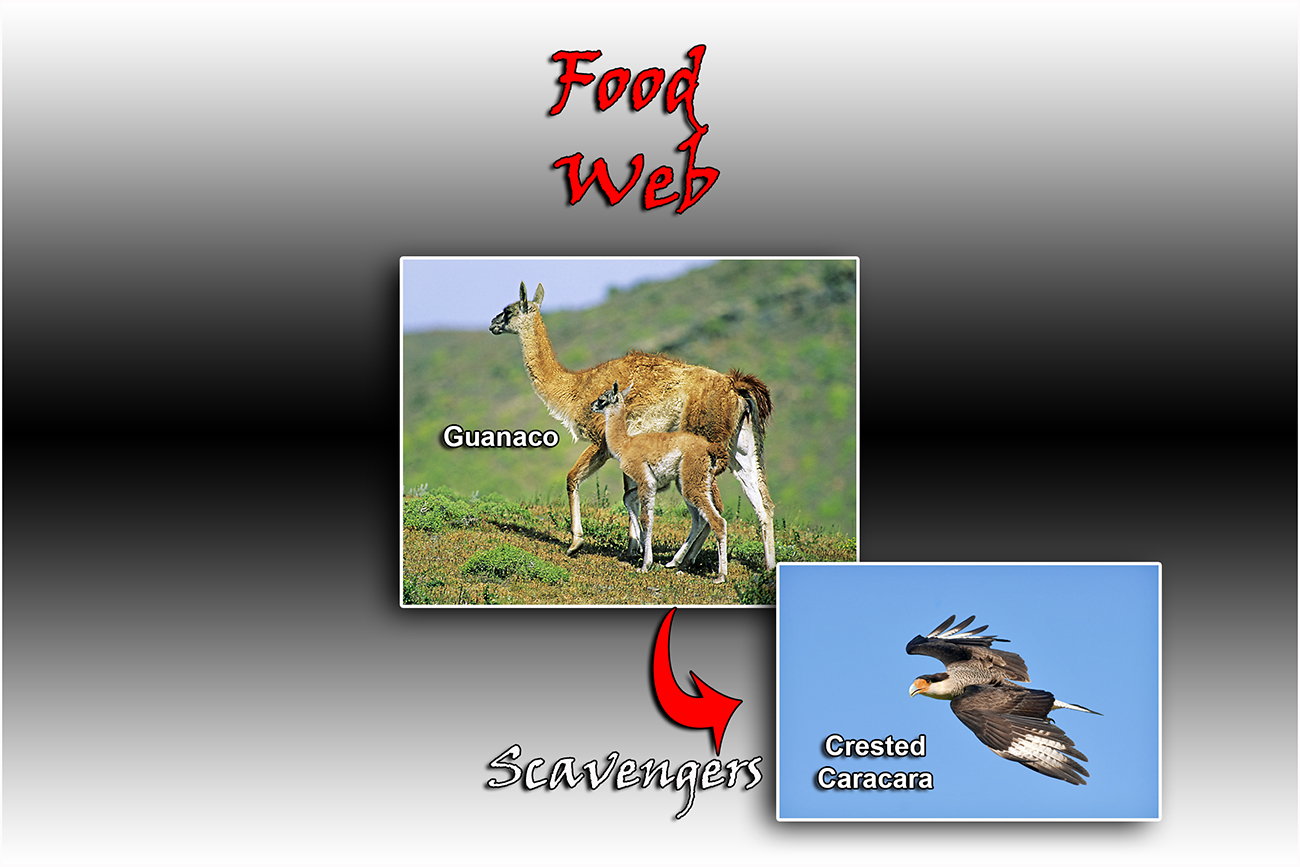
The next connection in the food web is the crested caracara.
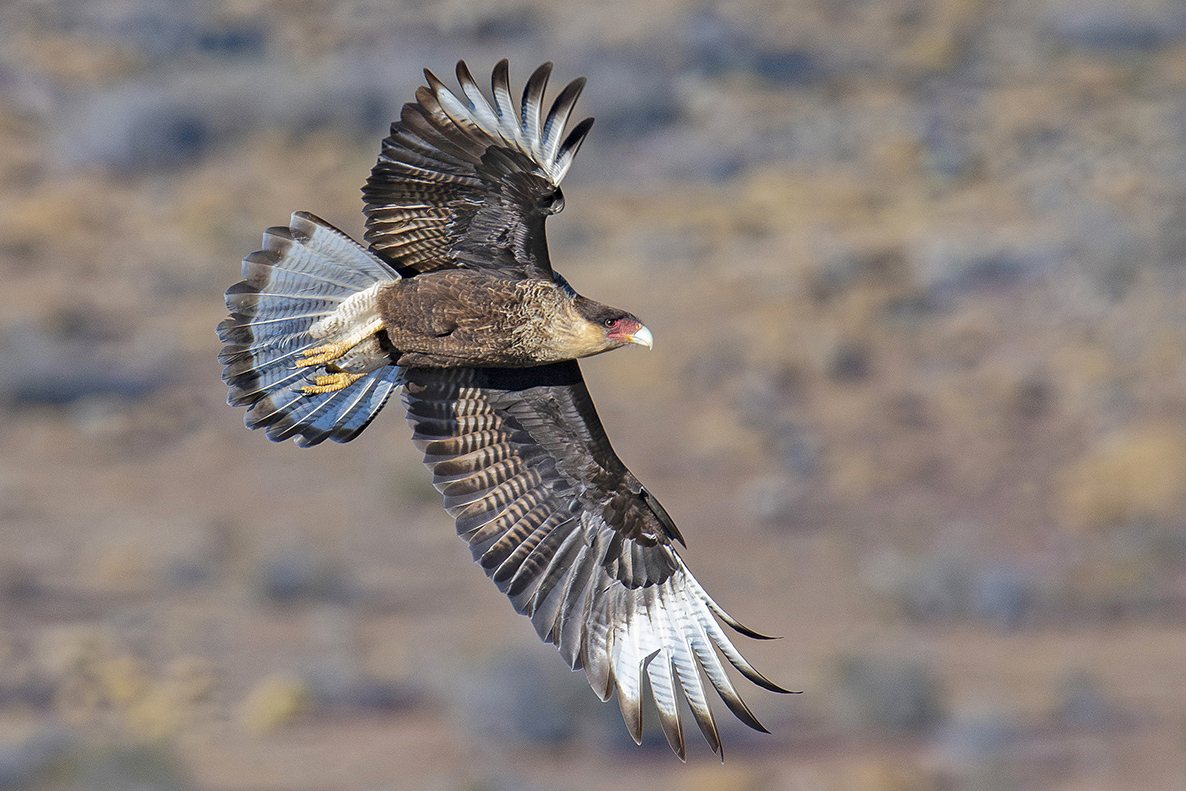
Caracaras are birds of prey in the same family as the falcons. One big difference between them is that falcons are fast-flying aerial hunters, and caracaras are slow-flying scavengers.
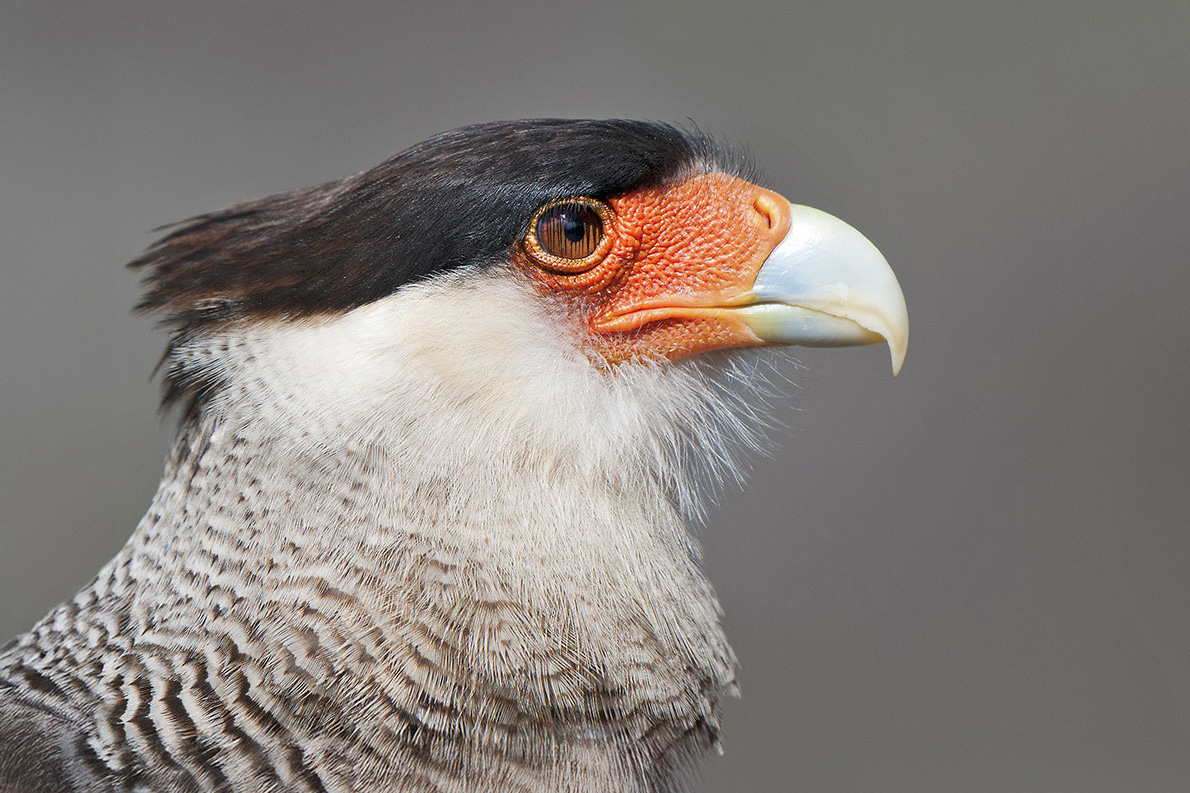
The caracara has a heavy, sharp-edged beak that is ideally adapted for shearing.
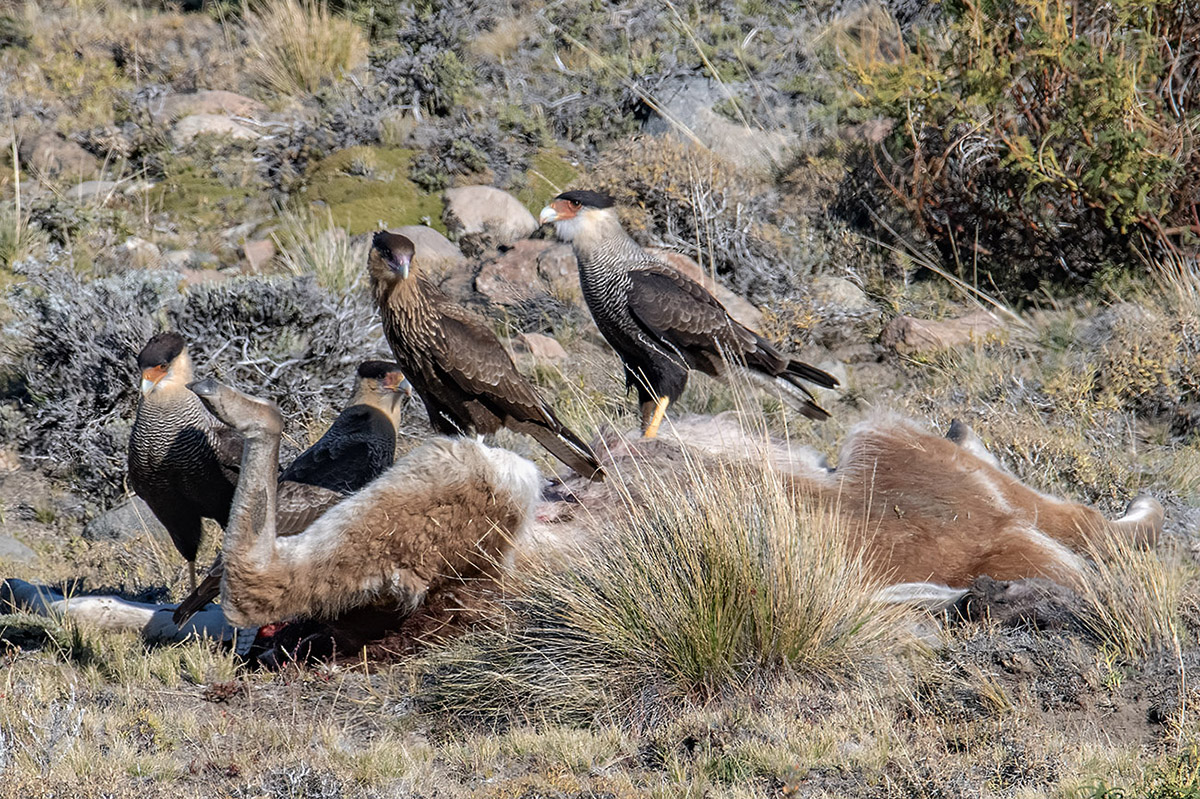
The caracara feeds mainly on carrion and is commonly one of the first scavengers to locate a carcass, followed by black-chested eagles, Andean condors, and the two species of fox.
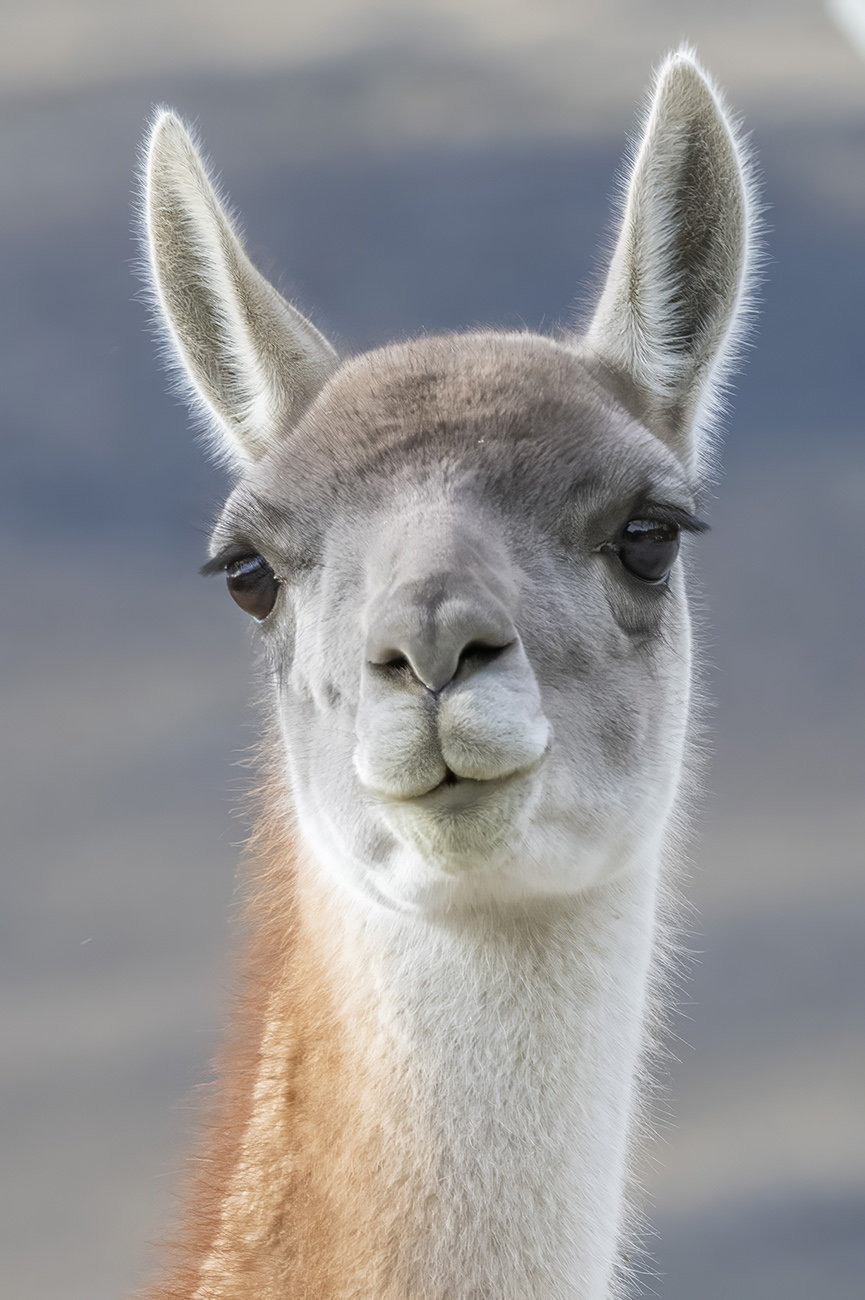
I wanted to end with a few of my favourite guanaco photos. This handsome animal has especially large eyes set on the sides of its head which gives it a panoramic view of its surroundings to check for predators.
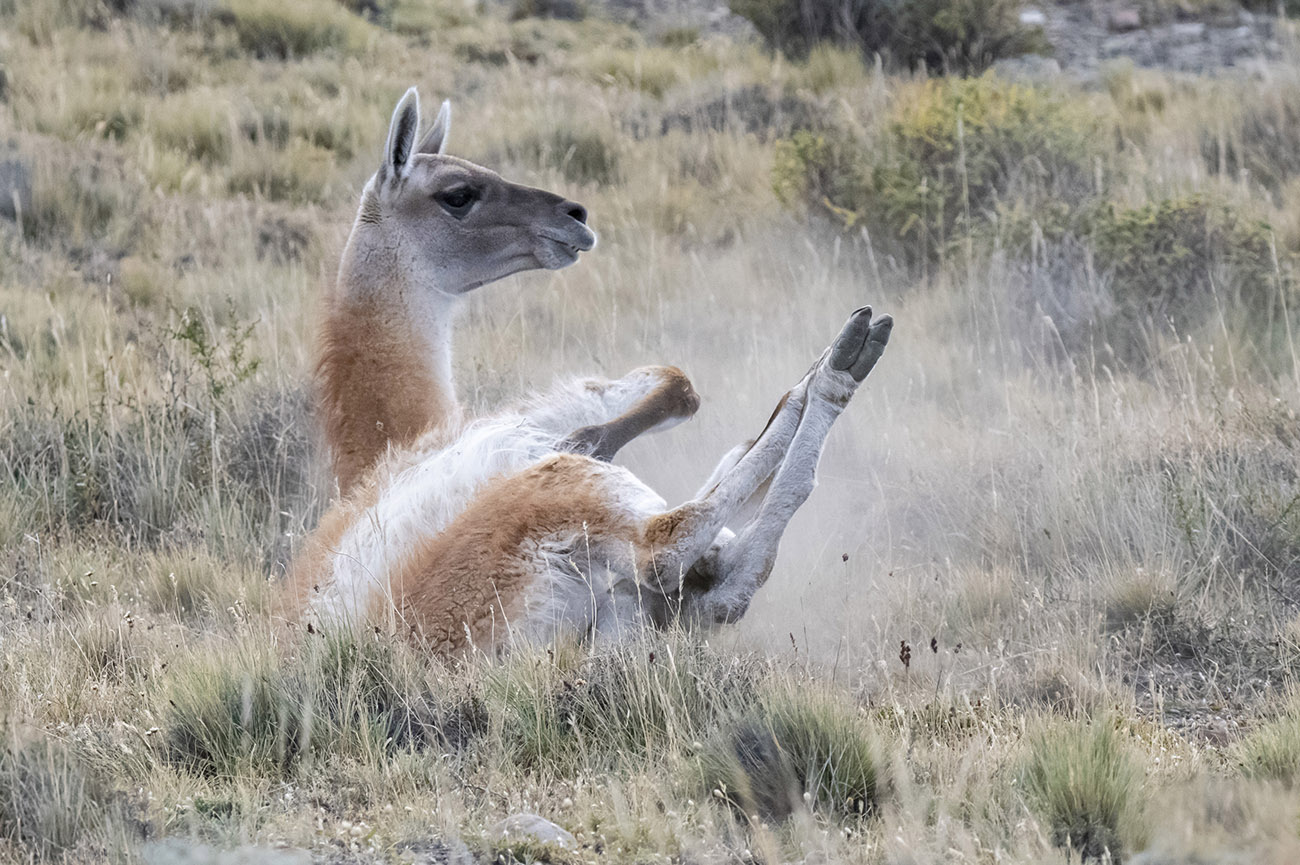
Dustbathing in dry earth removes excess oils from the animal’s thick fleece.
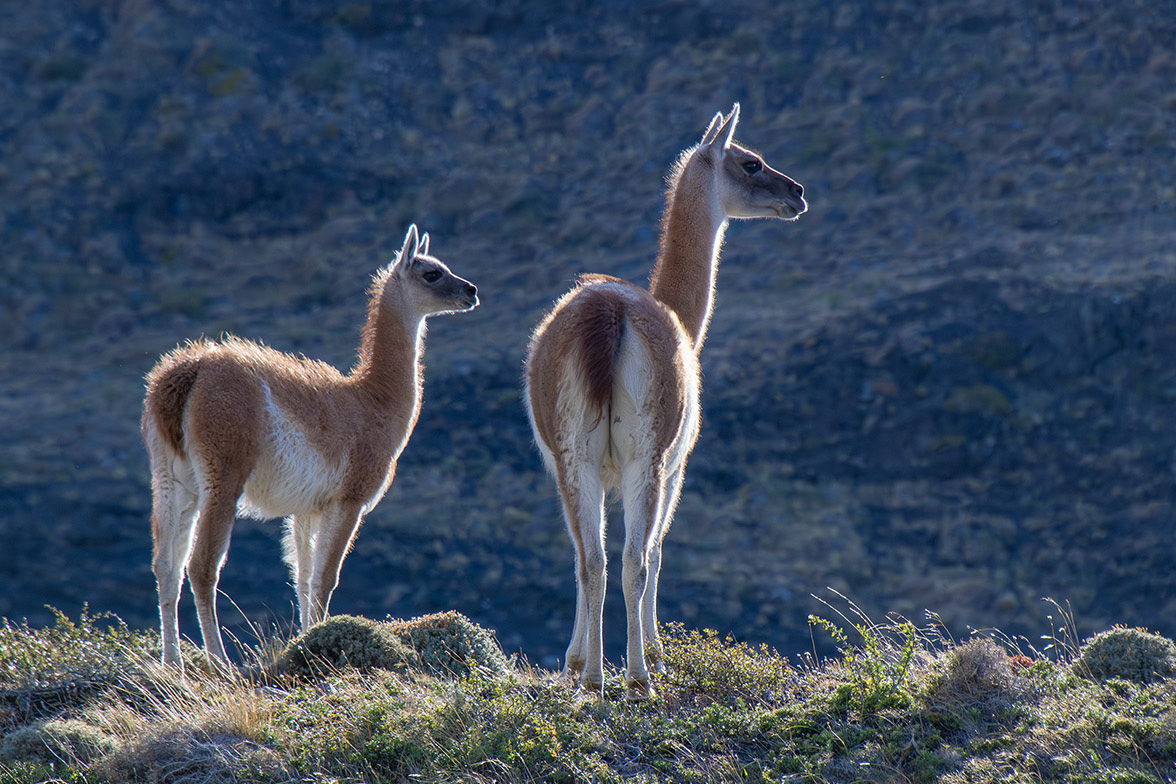
This mother and young were alerted to the alarm call of the territorial male.
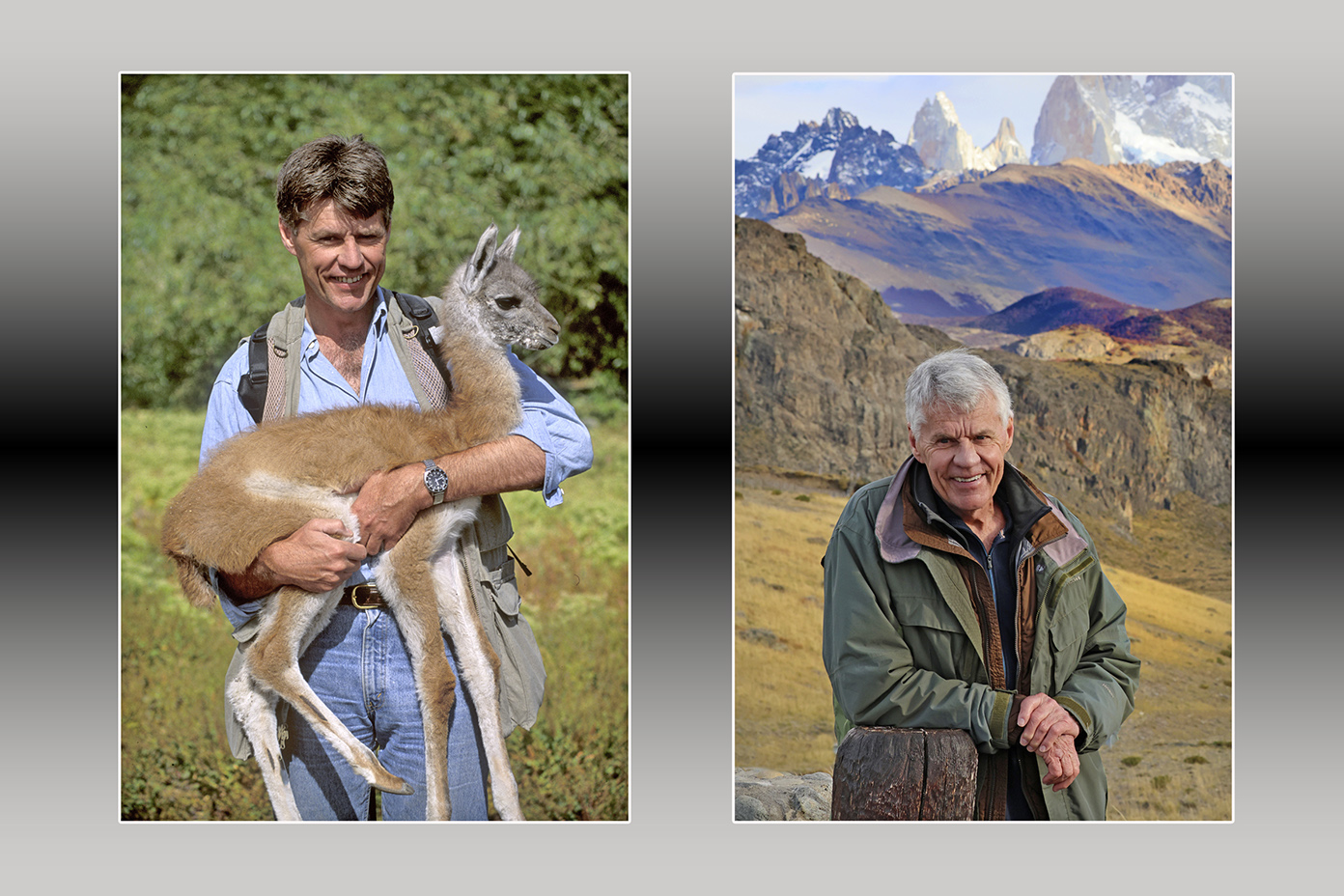
The author in 1992 cradling an orphan chulengo. Thirty-three years later, in April 2025, I had lost my chulengo companion but not my love of guanacos and Patagonia.
About the Author – Dr. Wayne Lynch

For more than 40 years, Dr. Wayne Lynch has been writing about and photographing the wildlands of the world from the stark beauty of the Arctic and Antarctic to the lush rainforests of the tropics. Today, he is one of Canada’s best-known and most widely published nature writers and wildlife photographers. His photo credits include hundreds of magazine covers, thousands of calendar shots, and tens of thousands of images published in over 80 countries. He is also the author/photographer of more than 45 books for children as well as over 20 highly acclaimed natural history books for adults including Windswept: A Passionate View of the Prairie Grasslands; Penguins of the World; Bears: Monarchs of the Northern Wilderness; A is for Arctic: Natural Wonders of a Polar World; Wild Birds Across the Prairies; Planet Arctic: Life at the Top of the World; The Great Northern Kingdom: Life in the Boreal Forest; Owls of the United States and Canada: A Complete Guide to their Biology and Behavior; Penguins: The World’s Coolest Birds; Galapagos: A Traveler’s Introduction; A Celebration of Prairie Birds; and Bears of the North: A Year Inside Their Worlds. In 2022, he released Wildlife of the Rockies for Kids, and Loons: Treasured Symbols of the North. His books have won multiple awards and have been described as “a magical combination of words and images.”
Dr. Lynch has observed and photographed wildlife in over 70 countries and is a Fellow of the internationally recognized Explorers Club, headquartered in New York City. A Fellow is someone who has actively participated in exploration or has substantially enlarged the scope of human knowledge through scientific achievements and published reports, books, and articles. In 1997, Dr. Lynch was elected as a Fellow to the Arctic Institute of North America in recognition of his contributions to the knowledge of polar and subpolar regions. And since 1996 his biography has been included in Canada’s Who’s Who.