



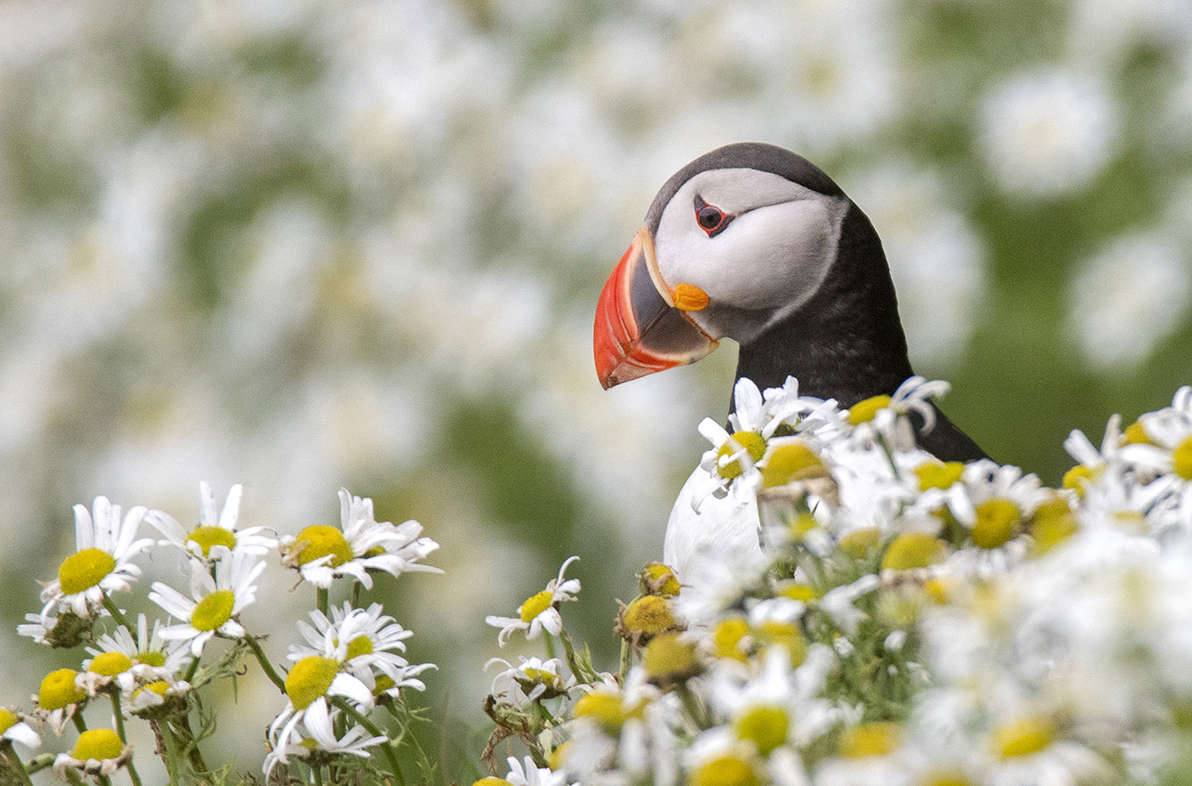
Last summer, I led two photo tours to Iceland. Tourism in that country changed significantly in 2010. Between March and June of that year, a series of powerful volcanic eruptions generated dangerous ash clouds which dramatically disrupted air travel between North America and Europe, ushering in a wave of “volcano tourism”. This natural tectonic event, combined with the substantial efforts of internet influencers on Facebook, Tik Tok, and Twitter, successfully extoled the beauty of the country’s volcanoes, glaciers, waterfalls, and northern lights causing visitor numbers to swell from 400,000/year to over 2.5 million today. I was in Iceland, not for the geology, the rolling, green terrain, or the tumbling waterfalls, but for a 20-cm (8”) tall, 500-gram (17 oz.) seabird with an outlandish beak and a captivating personality.
The Atlantic puffin, known by early whalers as the sea parrot, is arguably the most colourful and comical of northern seabirds. Worldwide, there are somewhere between three and four million pairs of Atlantic puffins, half of which breed in Iceland, and some of Iceland’s most productive and bountiful puffin colonies occur on the cliffs of tiny Grimsey Island, 40 kilometres (25 mi) off the northern coast of the country. Grimsey was the destination for my tours.
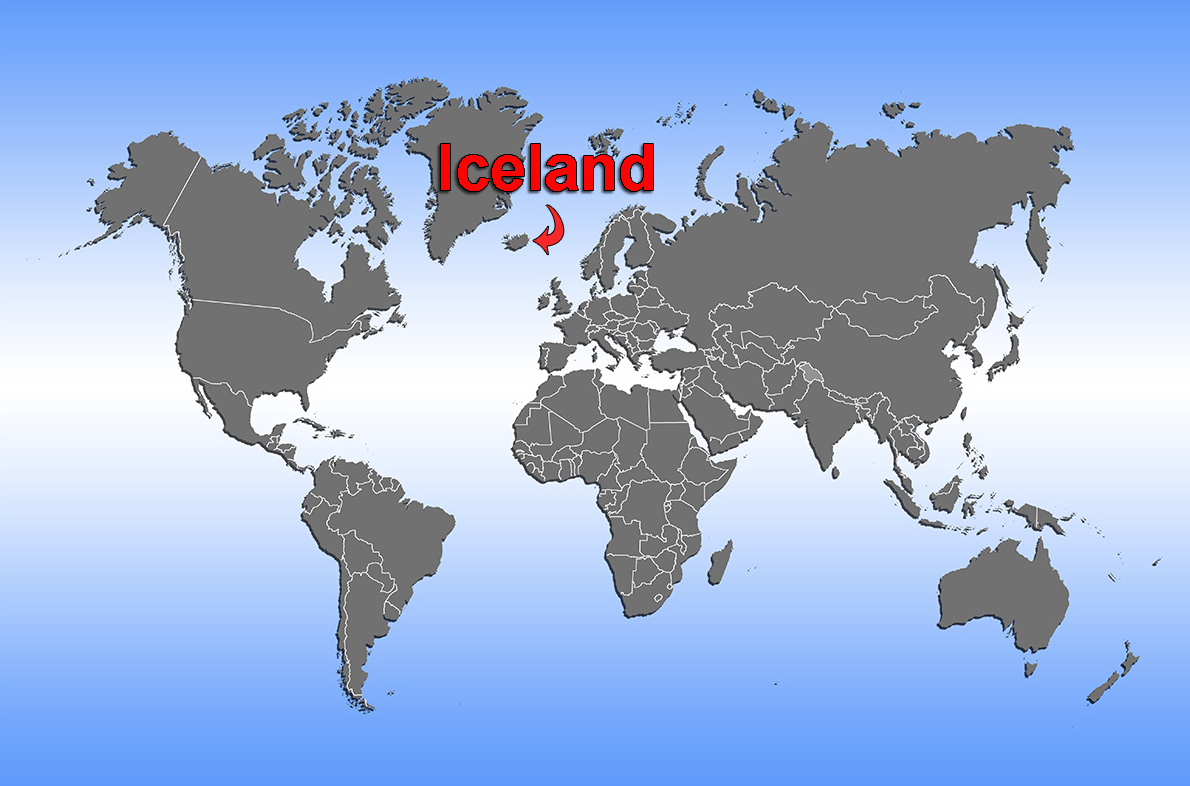
Iceland straddles the boundary between the North Atlantic and the Arctic Oceans with the northern part of the country being cool, wet, and windy.
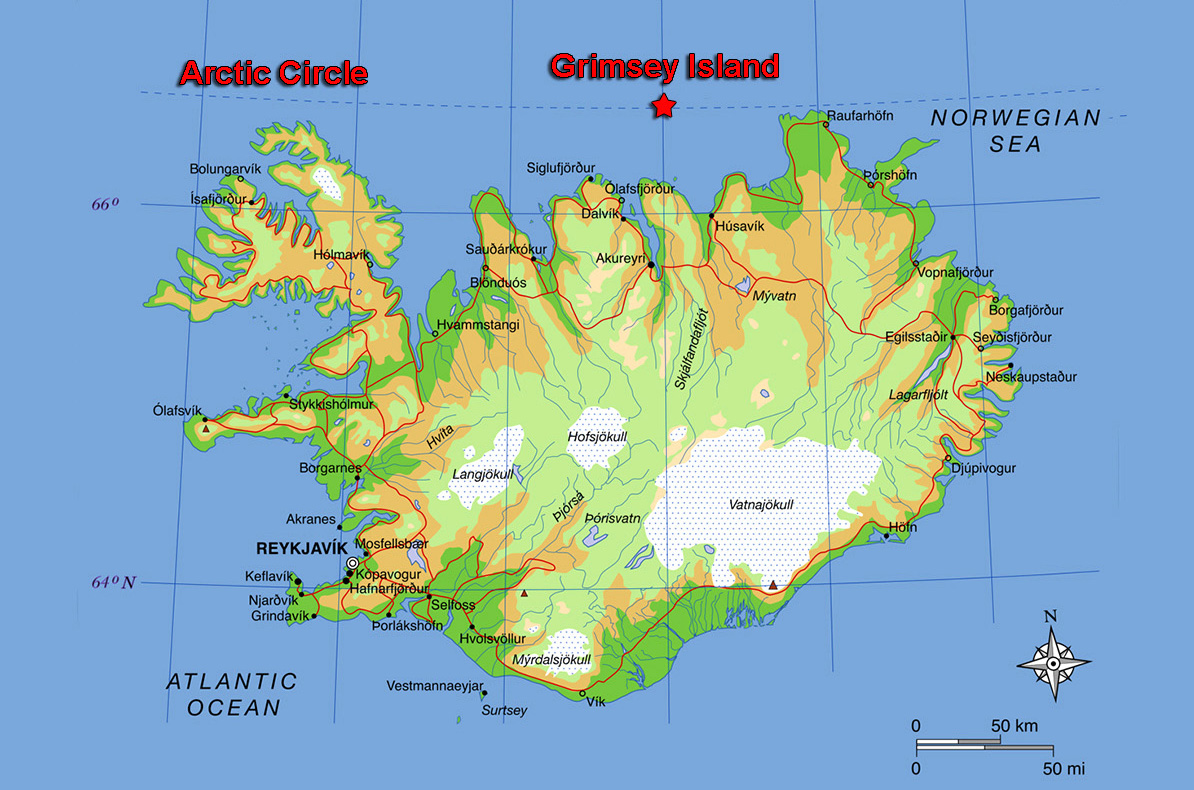
Tiny Grimsey Island, a mere 4 kilometres (2.4 mi) long and 2 kilometres (1.2 mi) wide, rests on the Arctic Circle at 66.5°North and is the most northern location in the country.
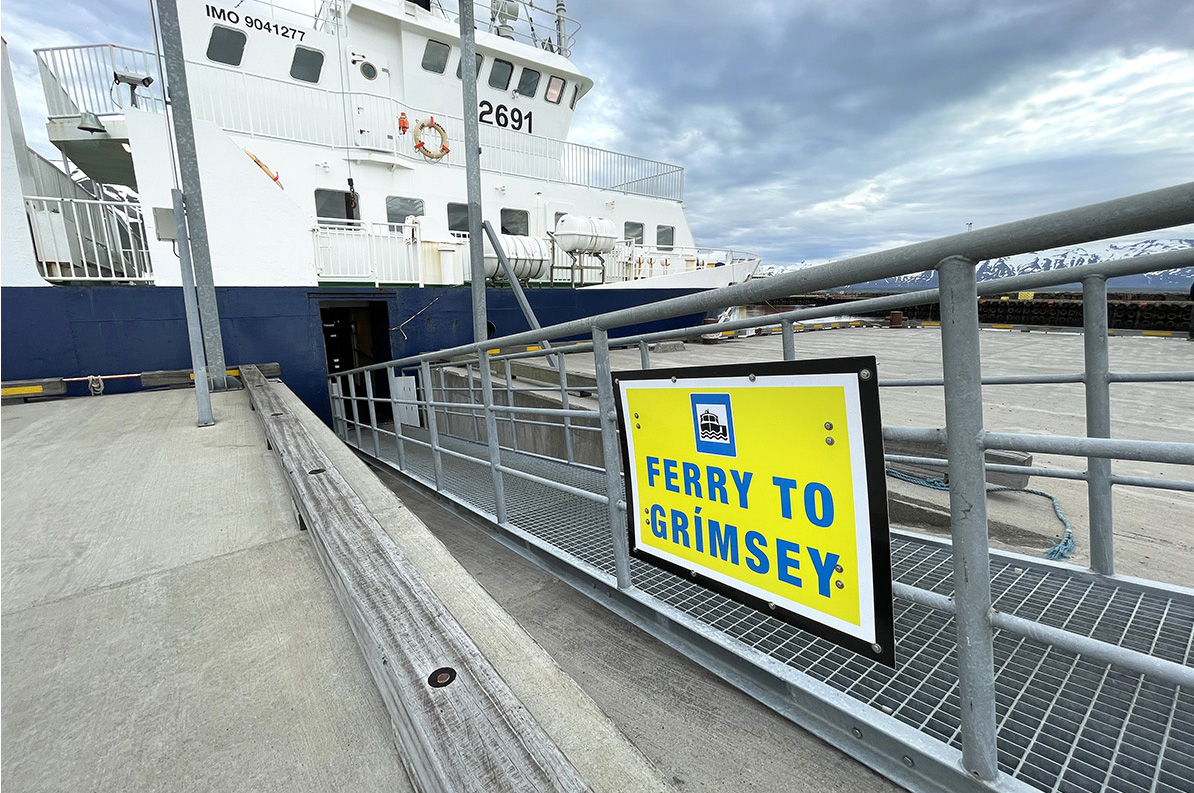
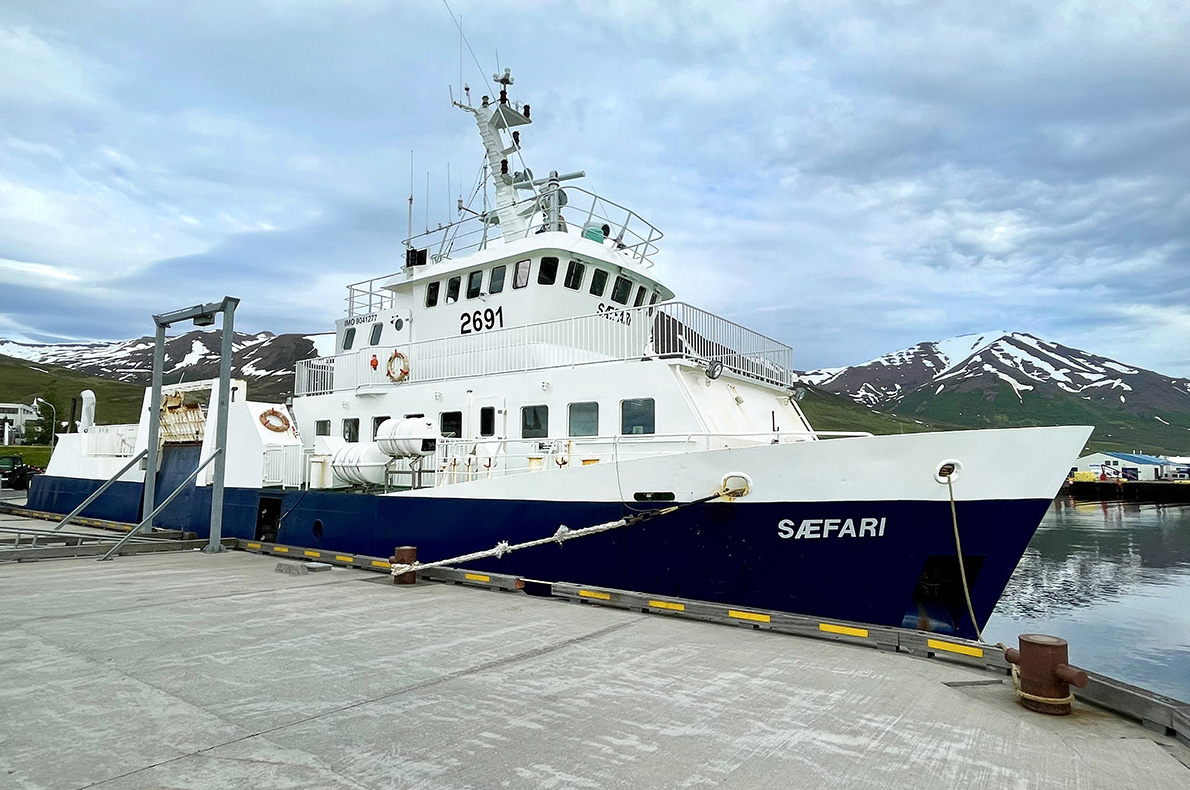
To reach the island we took a three-hour ferry ride from the coastal village of Dalvik. The ferry is not the most stable of seagoing vessels. Throughout the year, strong westerly winds can generate five-metre swells forcing the ferry to stay in port.
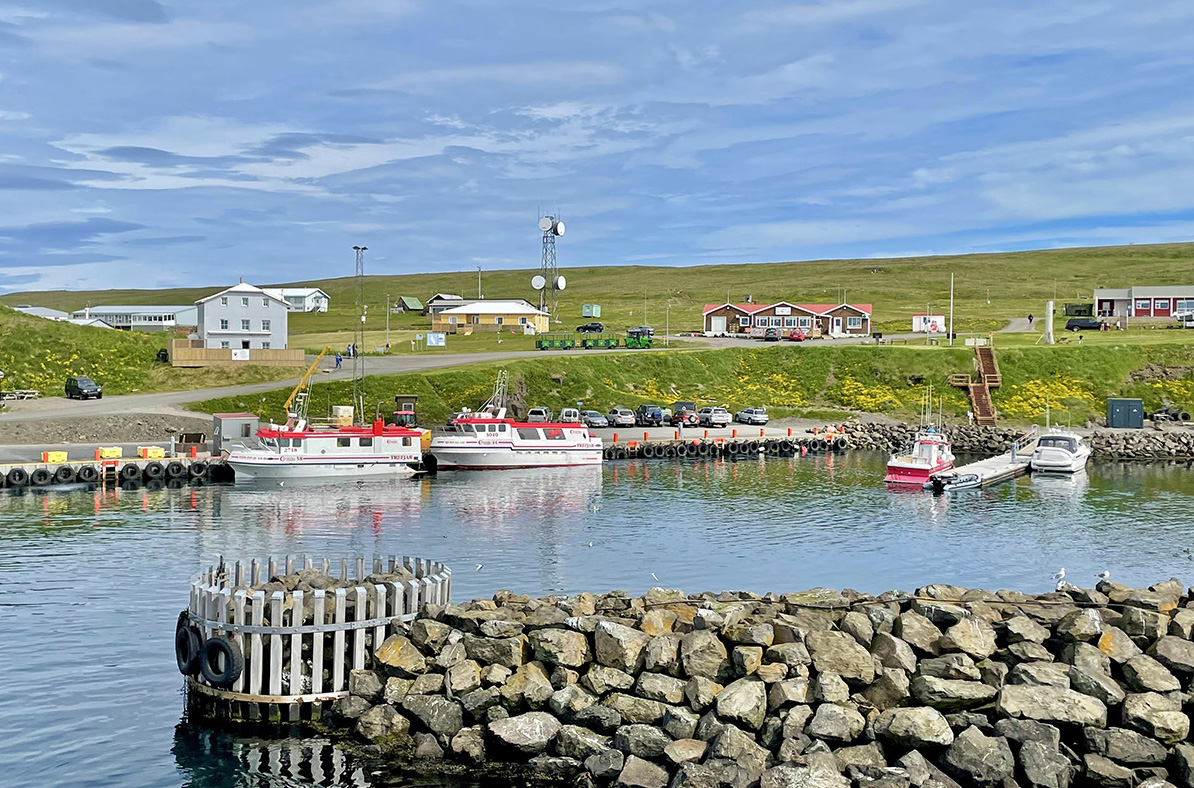
Grimsey has 58 permanent residents, the majority of whom are involved in commercial fishing.
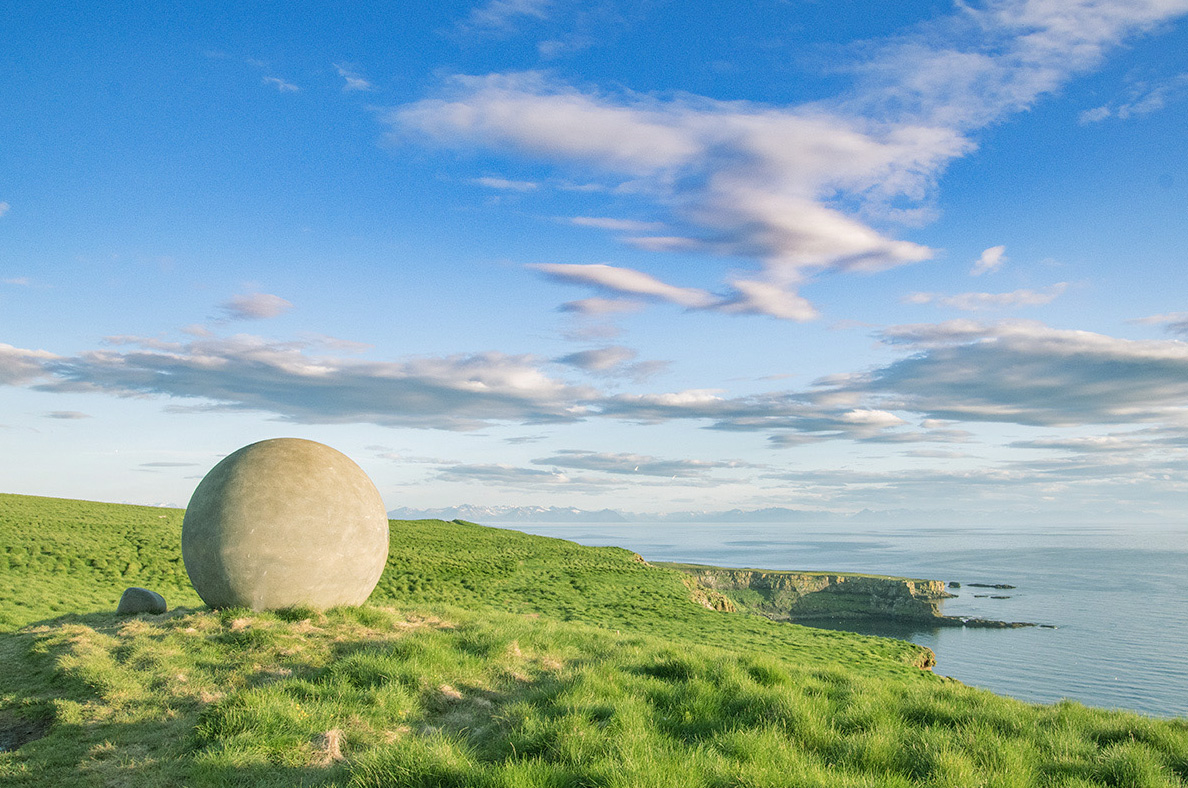
A few locals also work as tour guides, leading visitors on a hike to see the eight-tonne stone sphere that marks the location of the Arctic Circle.
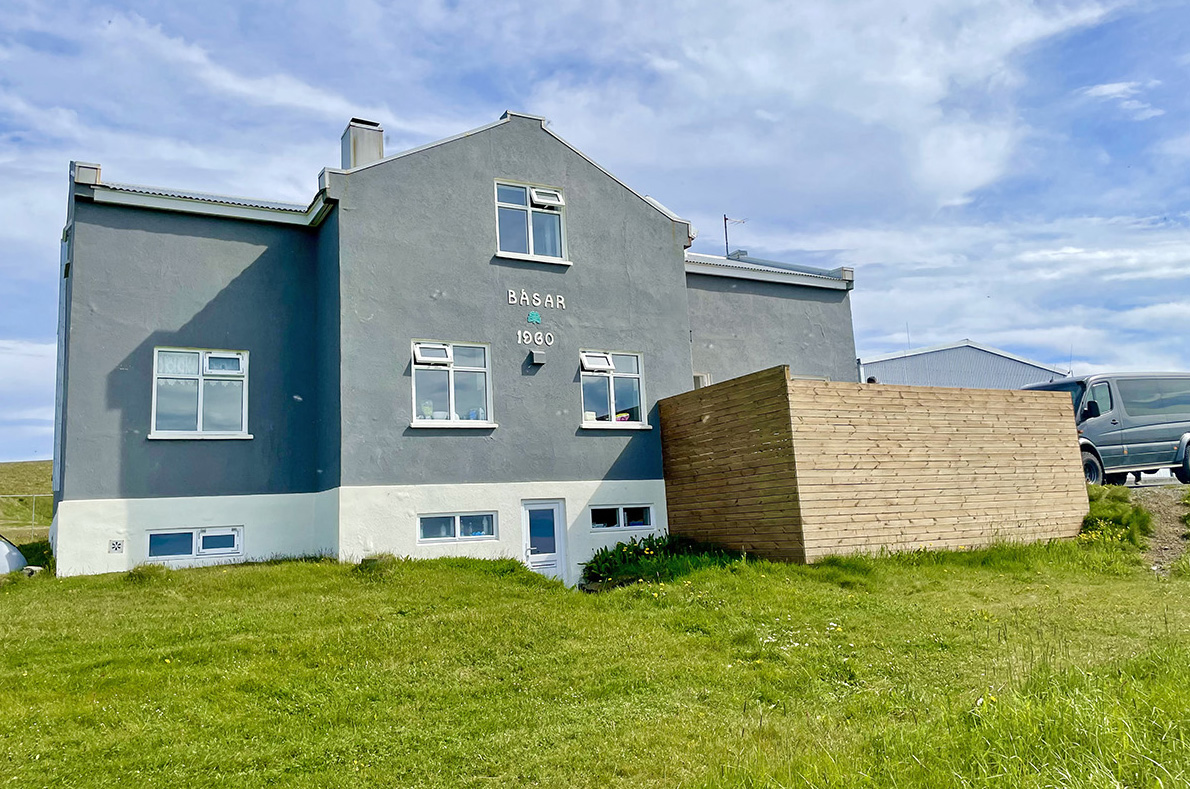
Naturally, on such a small island, accommodations are limited and our group stayed in an eight-bedroom, private, guest house with our own personal chef.
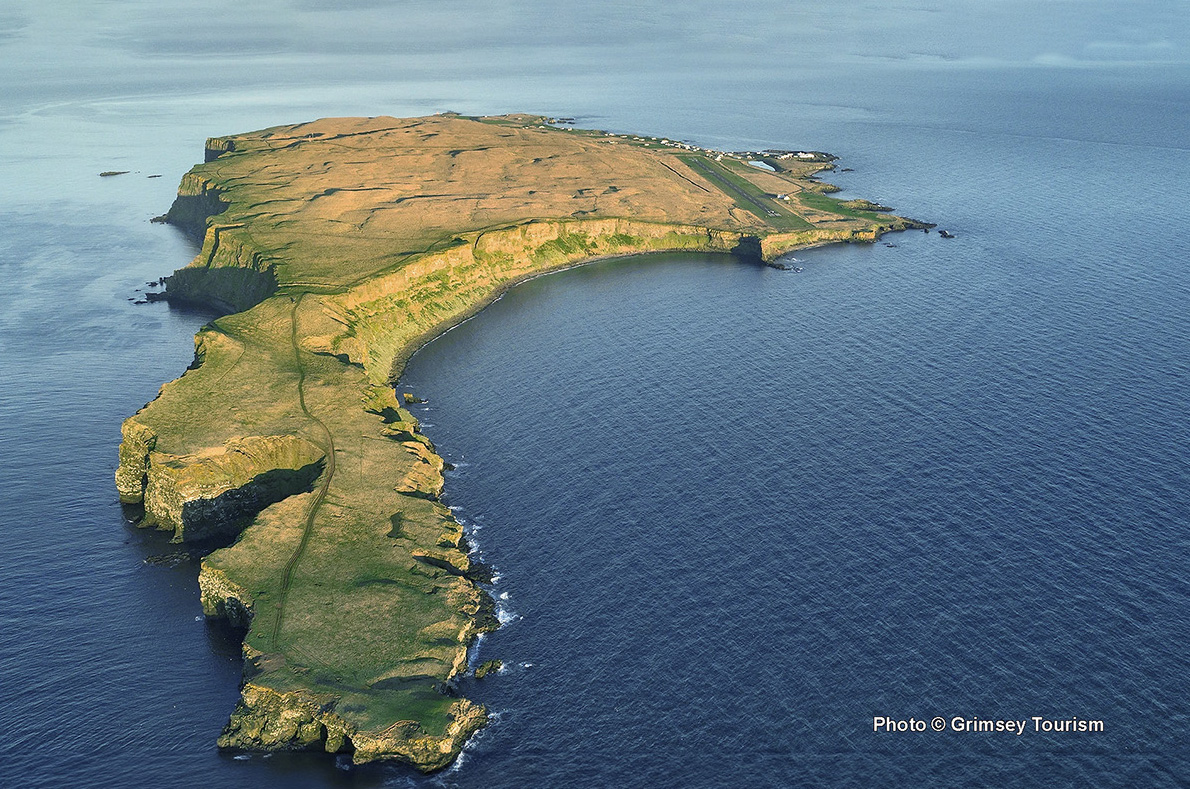
Steep cliffs, some up to 105 metres (344 ft.) high, rim the coastline of Grimsey except for the southwestern shore of the island where the harbour and hamlet are located.
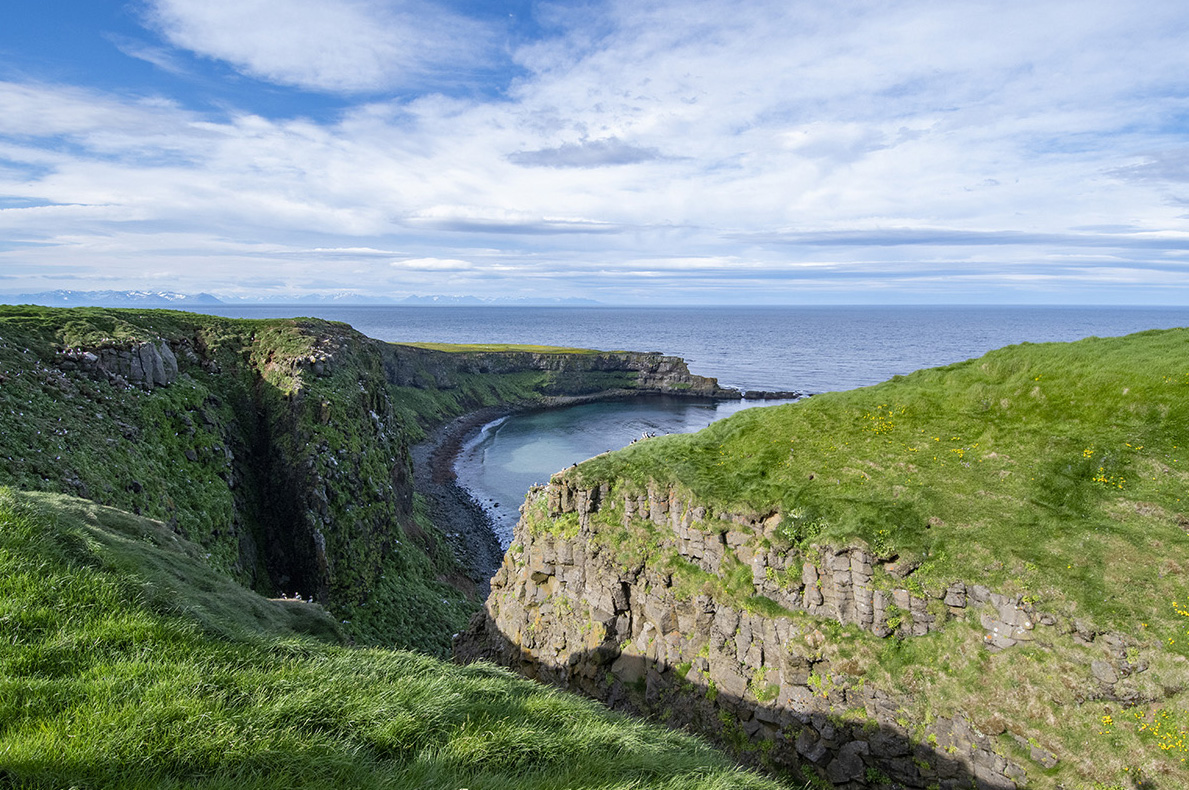
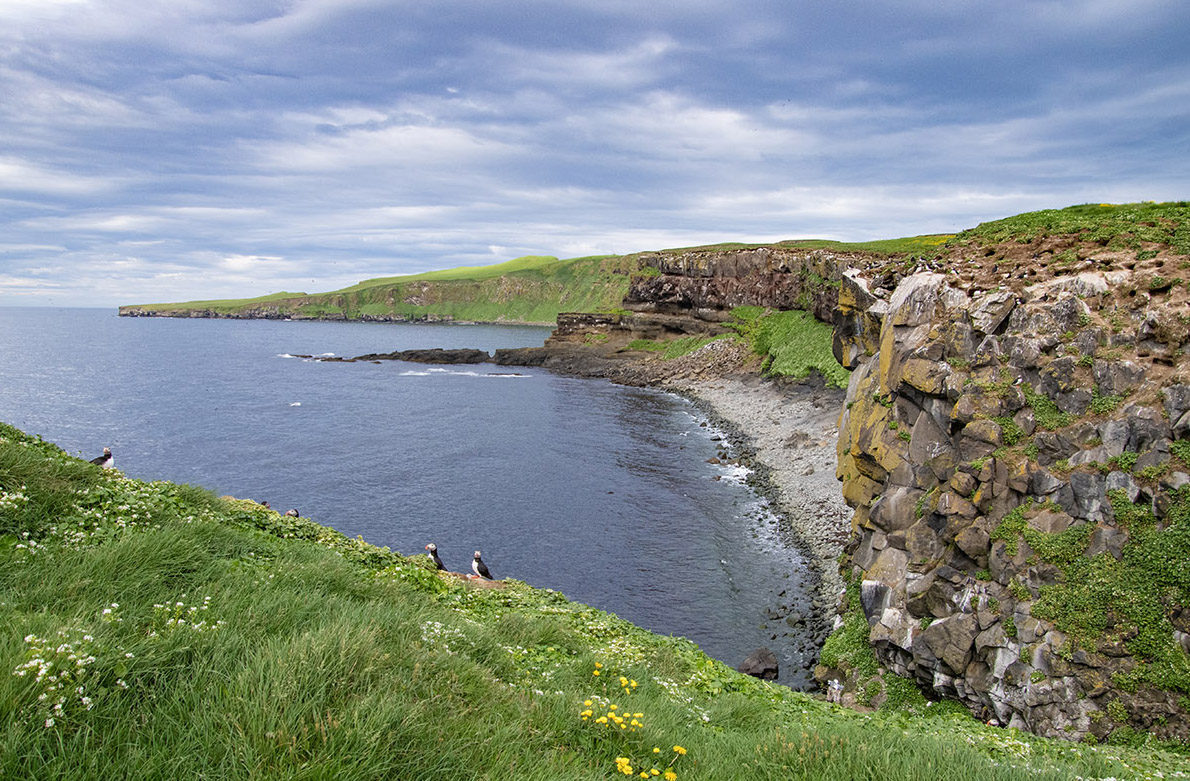
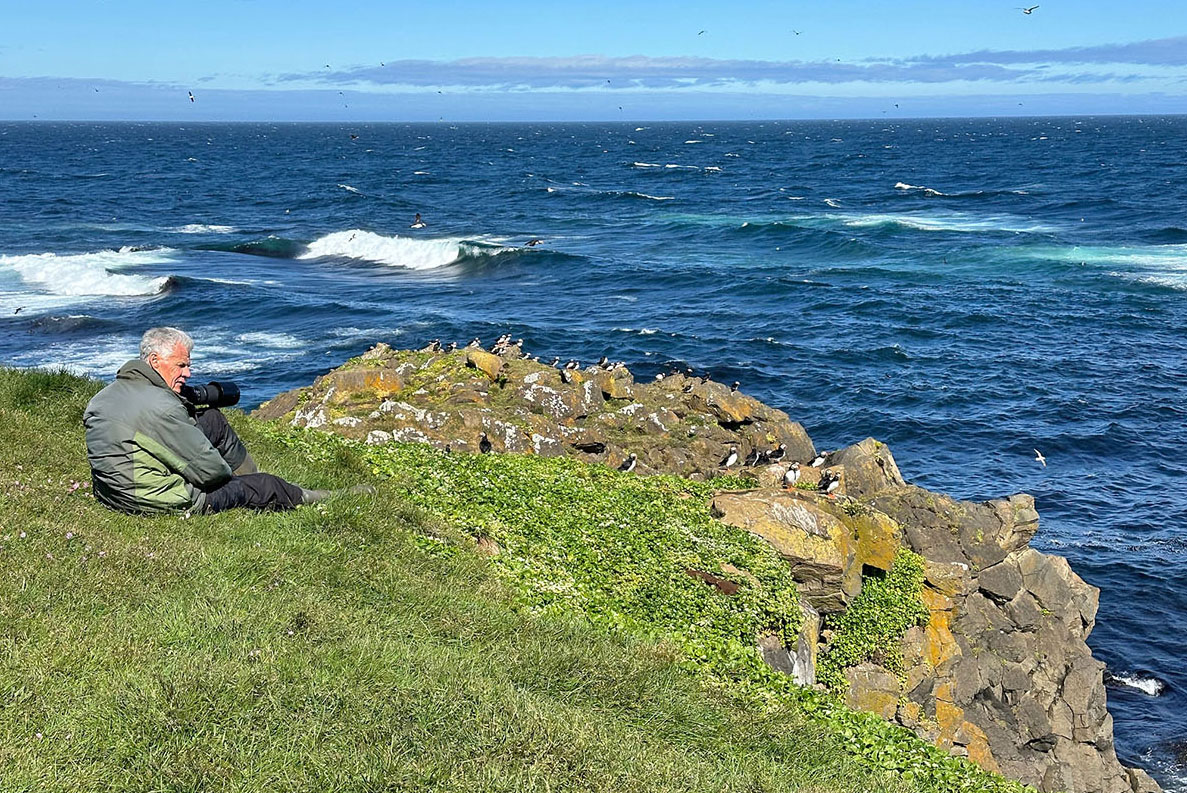
Grimsey Island is treeless and covered with thick meadows of grasses and sedges, and I spent many relaxing hours watching the puffins and other seabirds come and go.
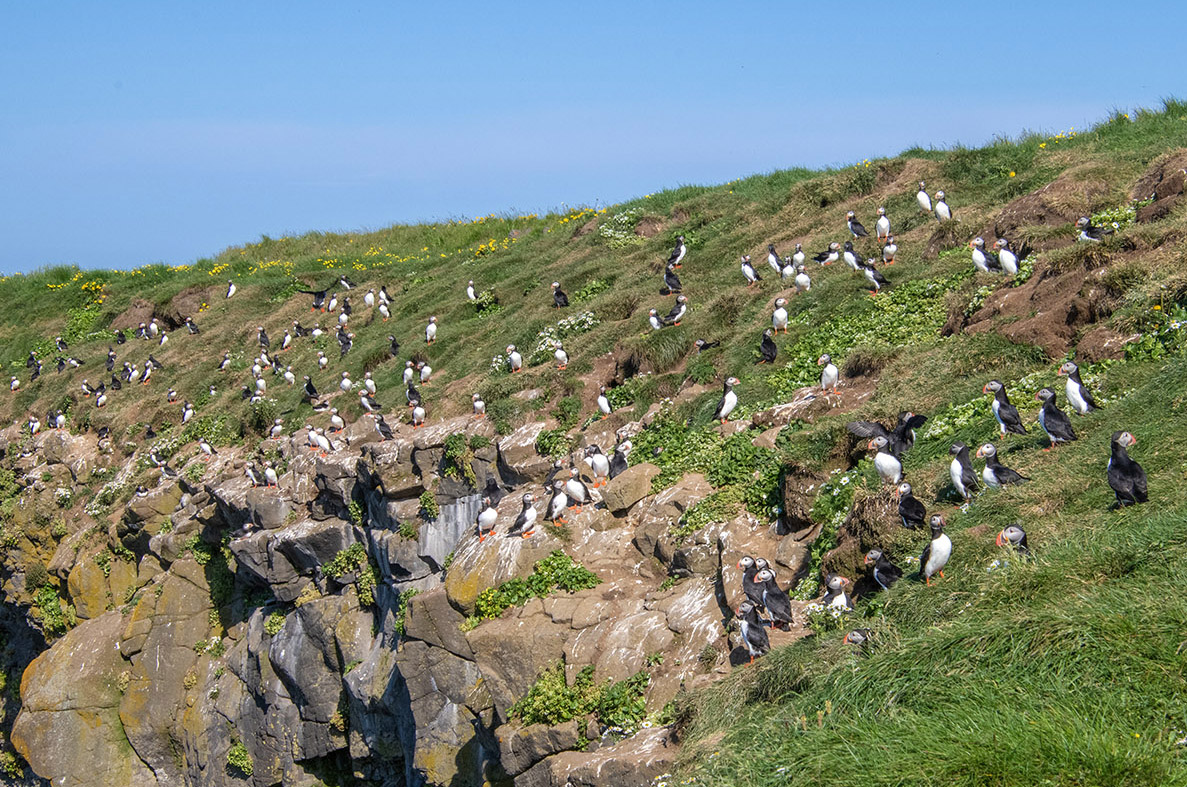
Puffins dig their nesting burrows in the thick soil on the upper rim of the cliffs.
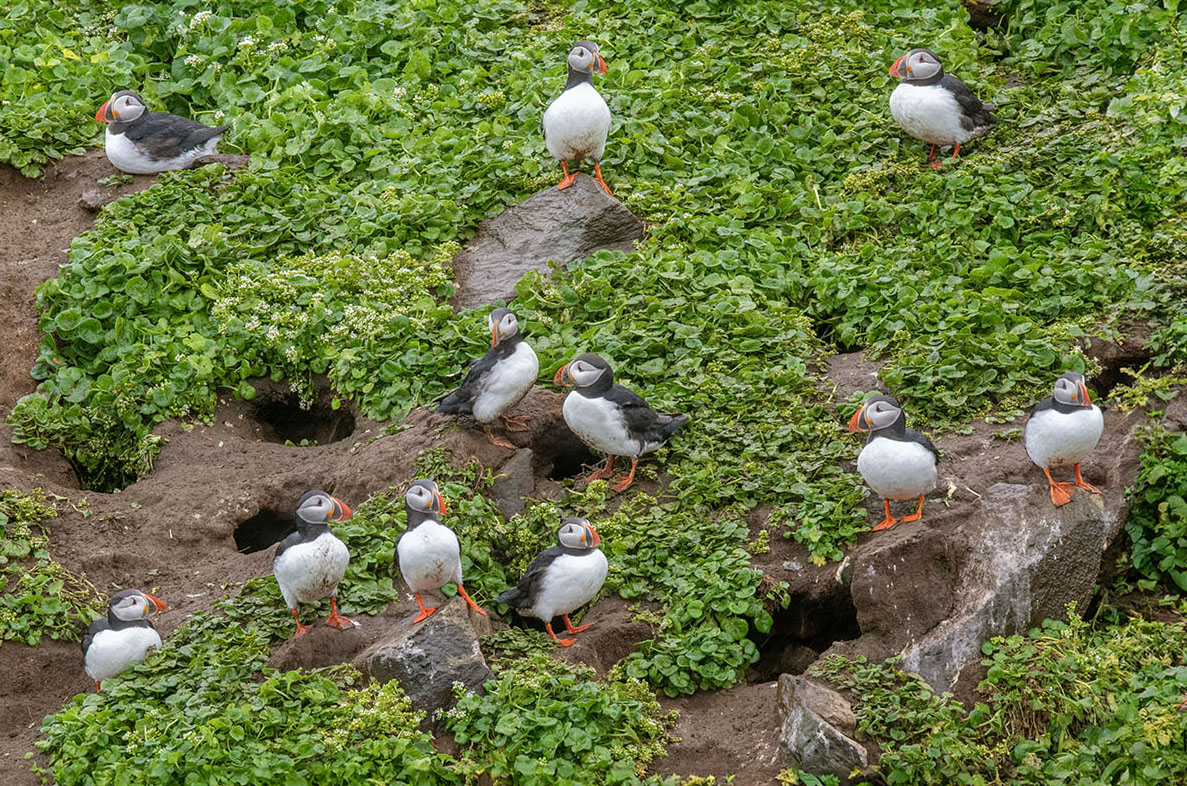
Burrows can be very close together and neighbours don’t seem to squabble much as long as each respects the other’s doorway.
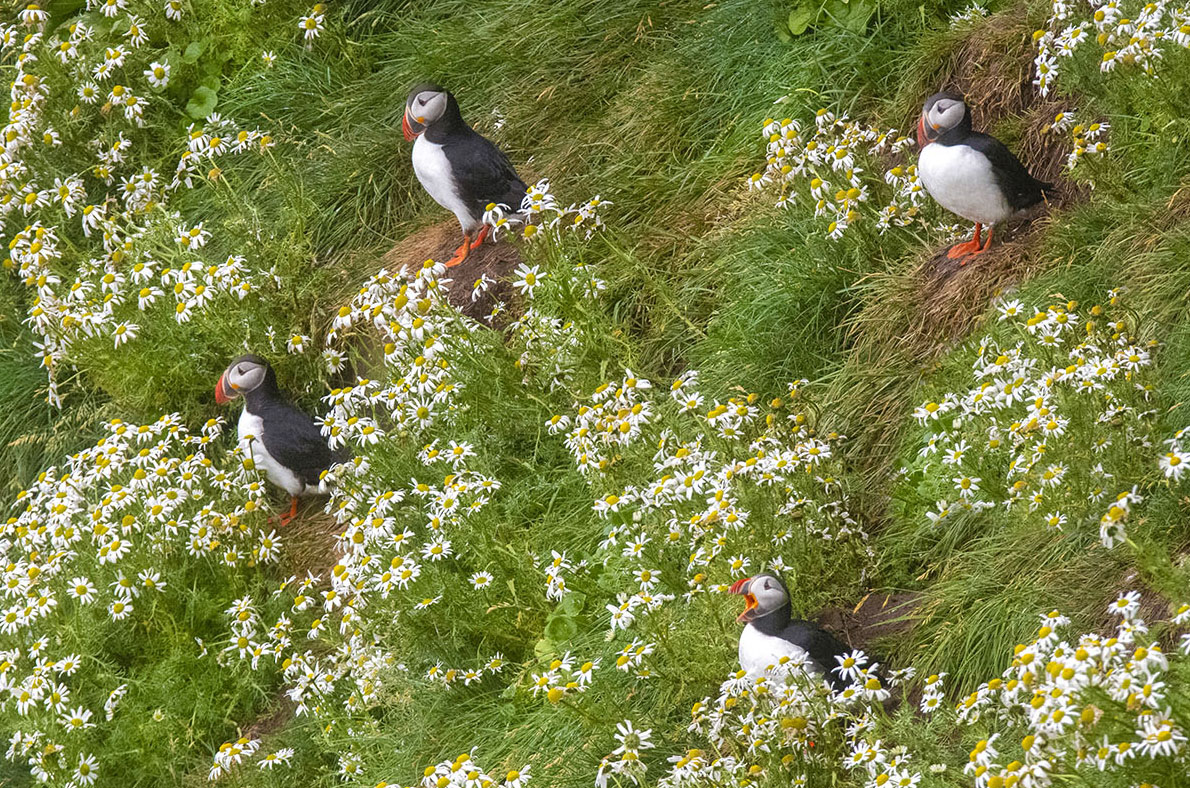
The most photogenic burrows were located on slopes cloaked with salt-tolerant daisies, known locally as sea mayweed.
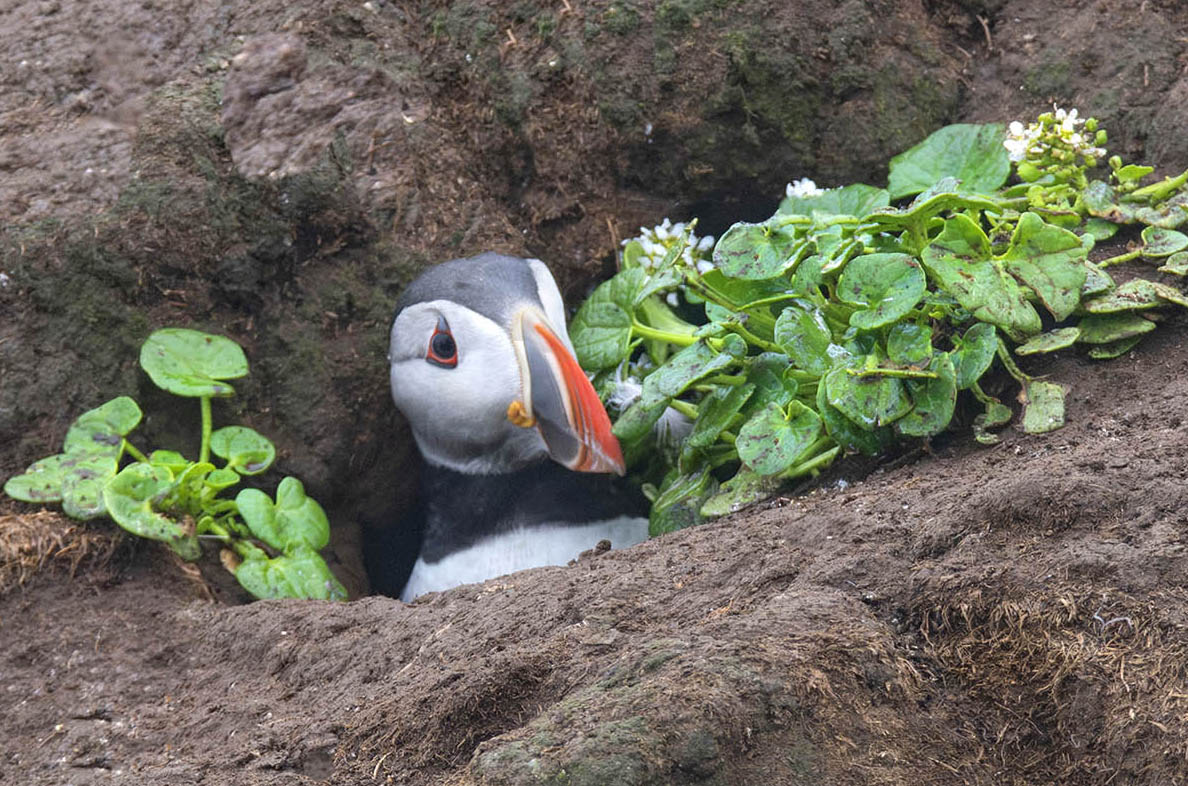
A nesting burrow can be up to two metres (6.6 ft.) deep, dictated in part by the thickness of the soil.
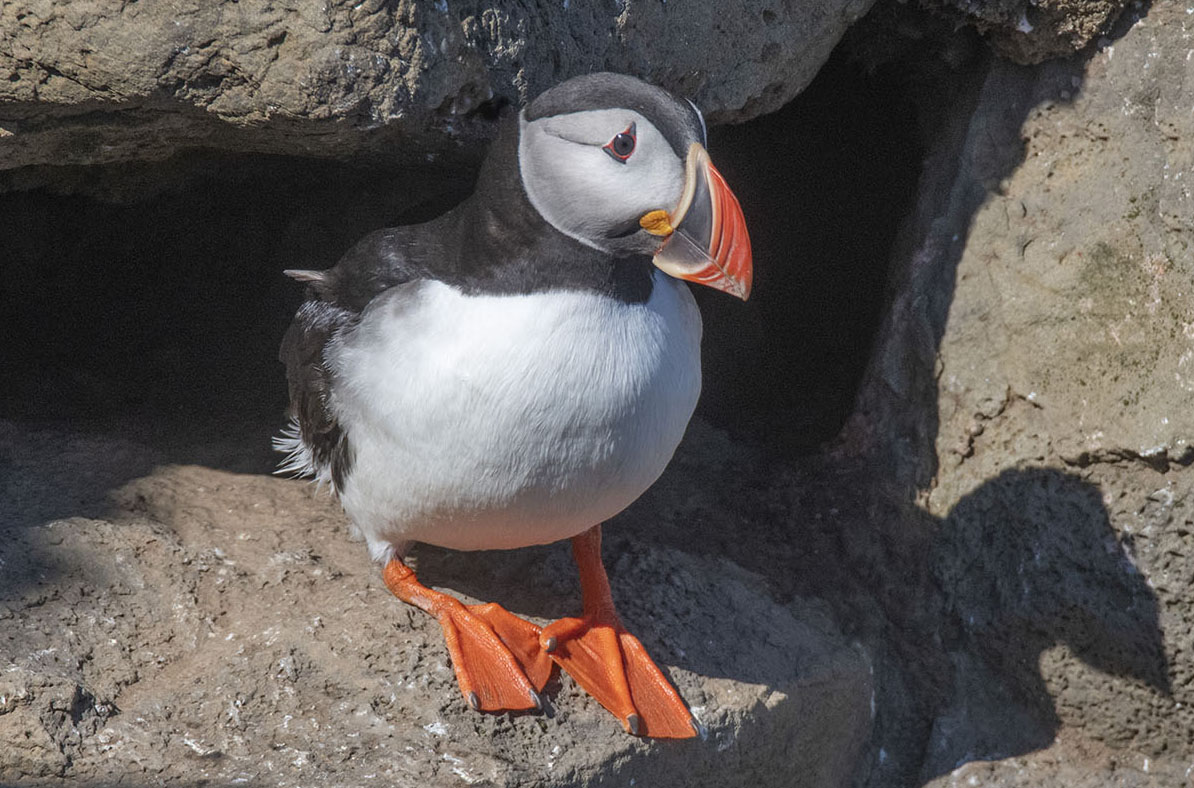
Less commonly, a puffin may lay its single egg inside a rocky crevice as this one did.
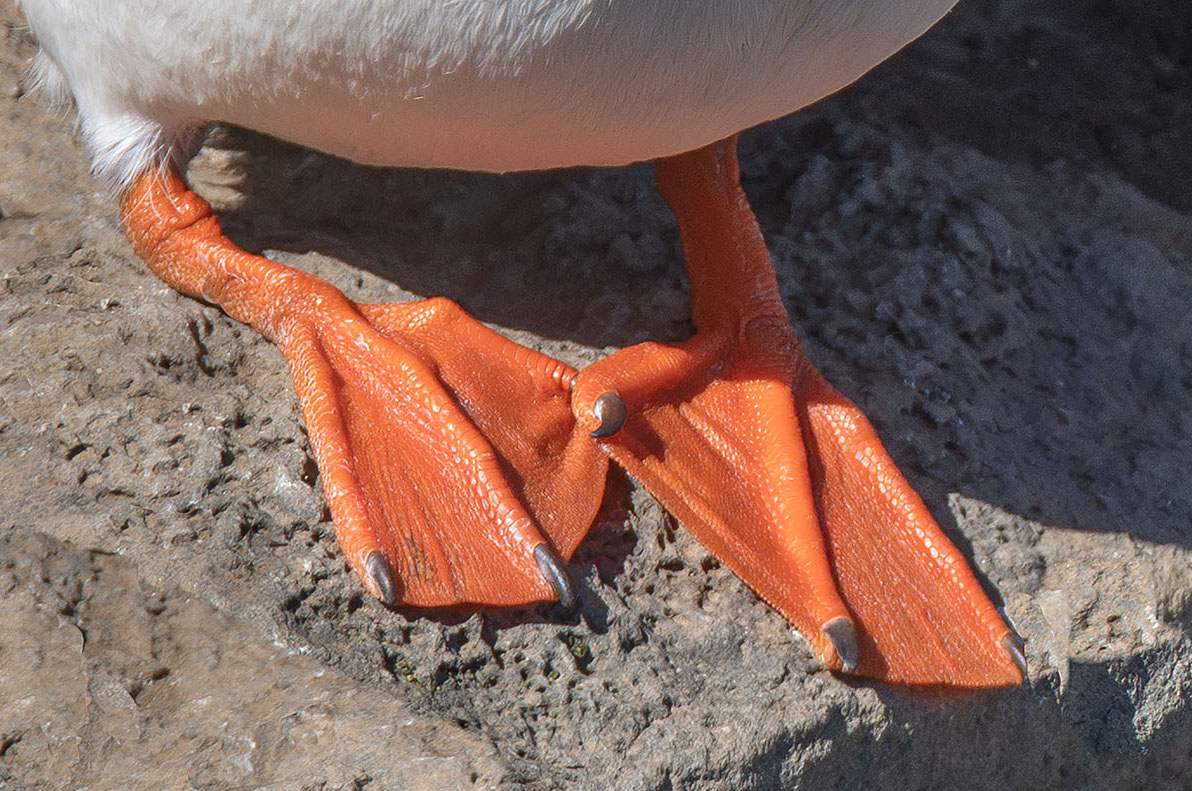
A puffin’s webbed feet are used mostly for paddling on the surface. When diving for food, they primarily use their stubby wings, reaching depths of 60 metres (196 ft.) and staying submerged for up to two minutes.
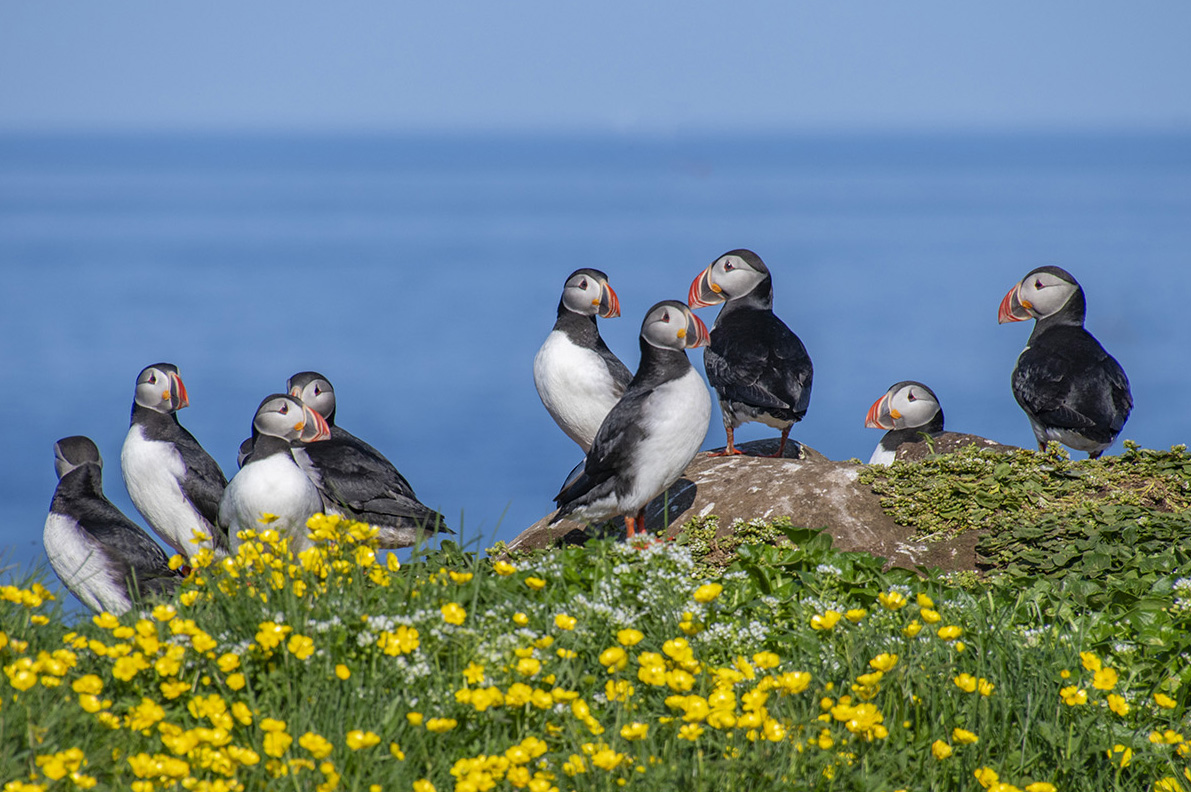
Most Atlantic puffins don’t start breeding until they are 5 or 6 years old, but individuals start returning to the colonies where they were raised when they are just two to three years old.
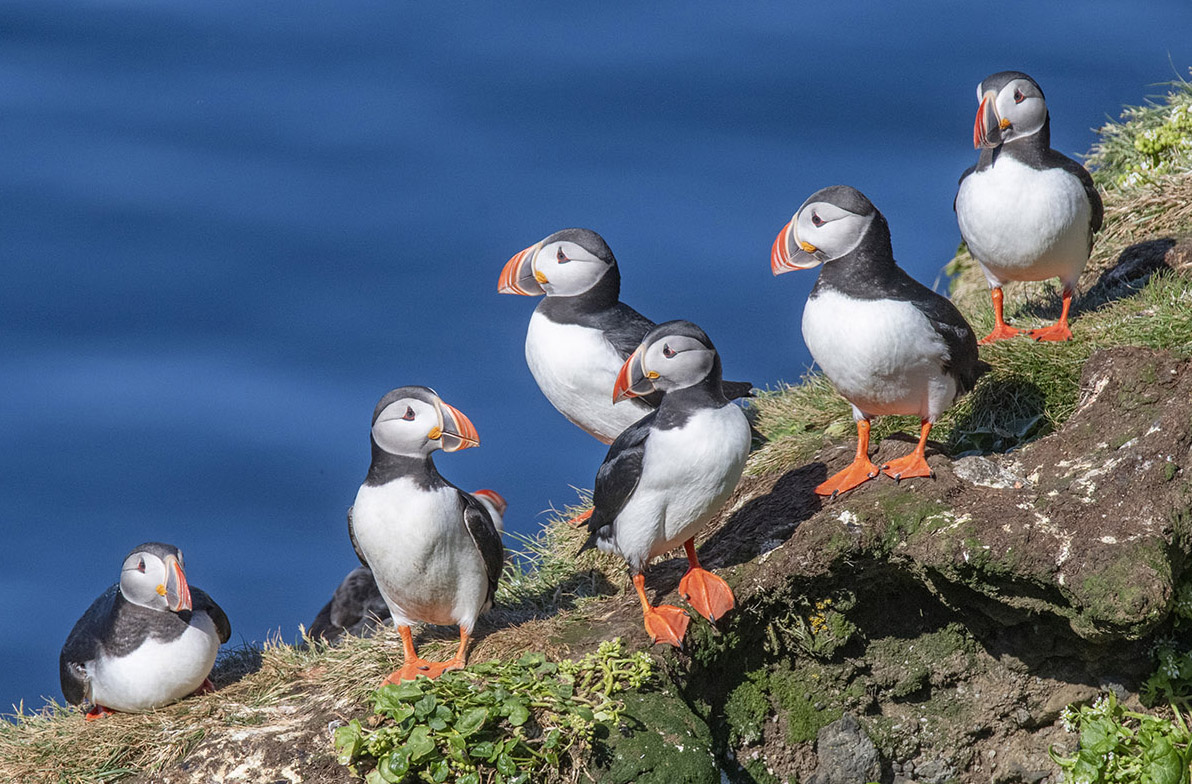
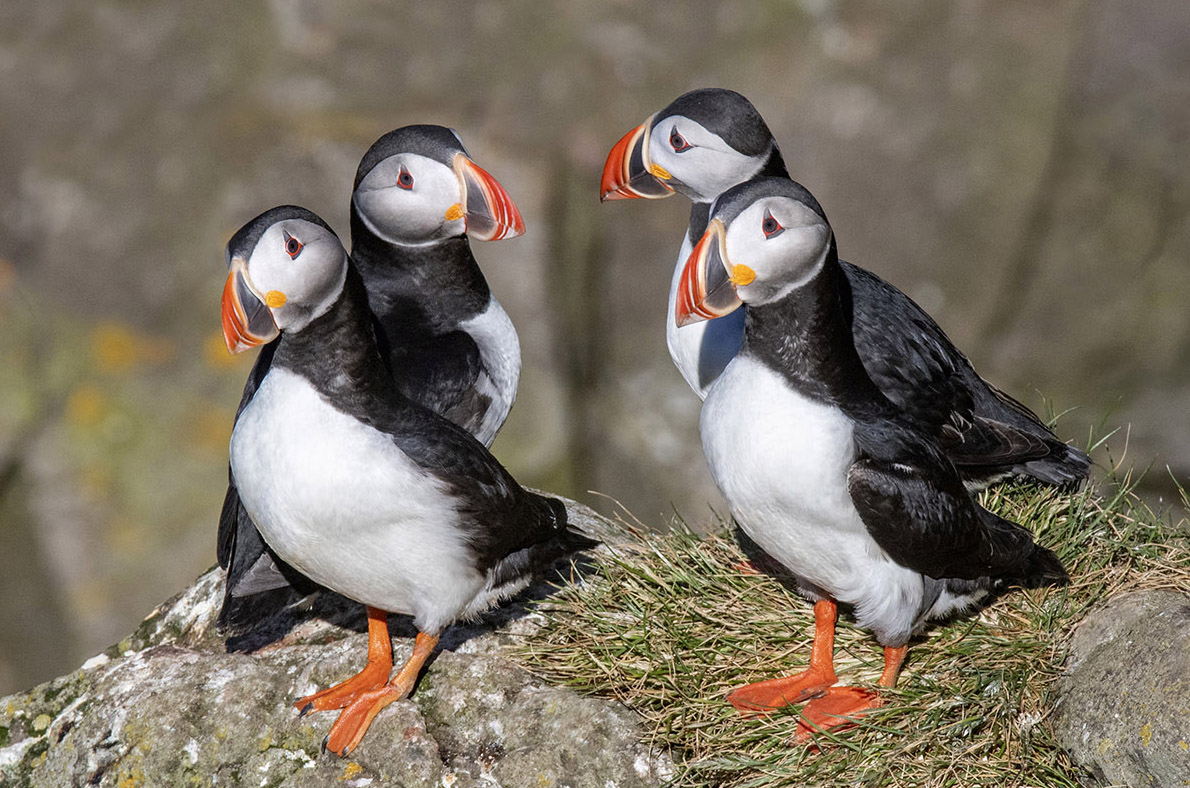
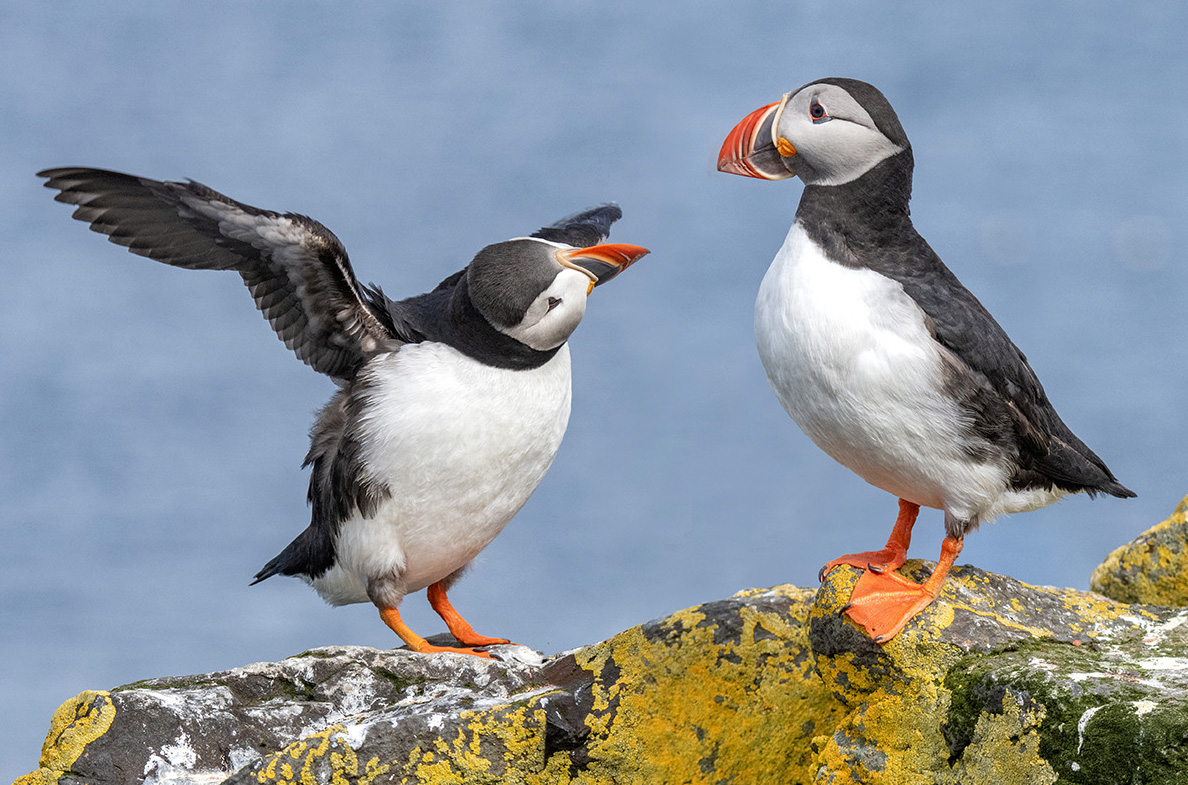
Every puffin cliff contained numerous non-breeding juvenile birds searching for a partner and a prospective nesting site.
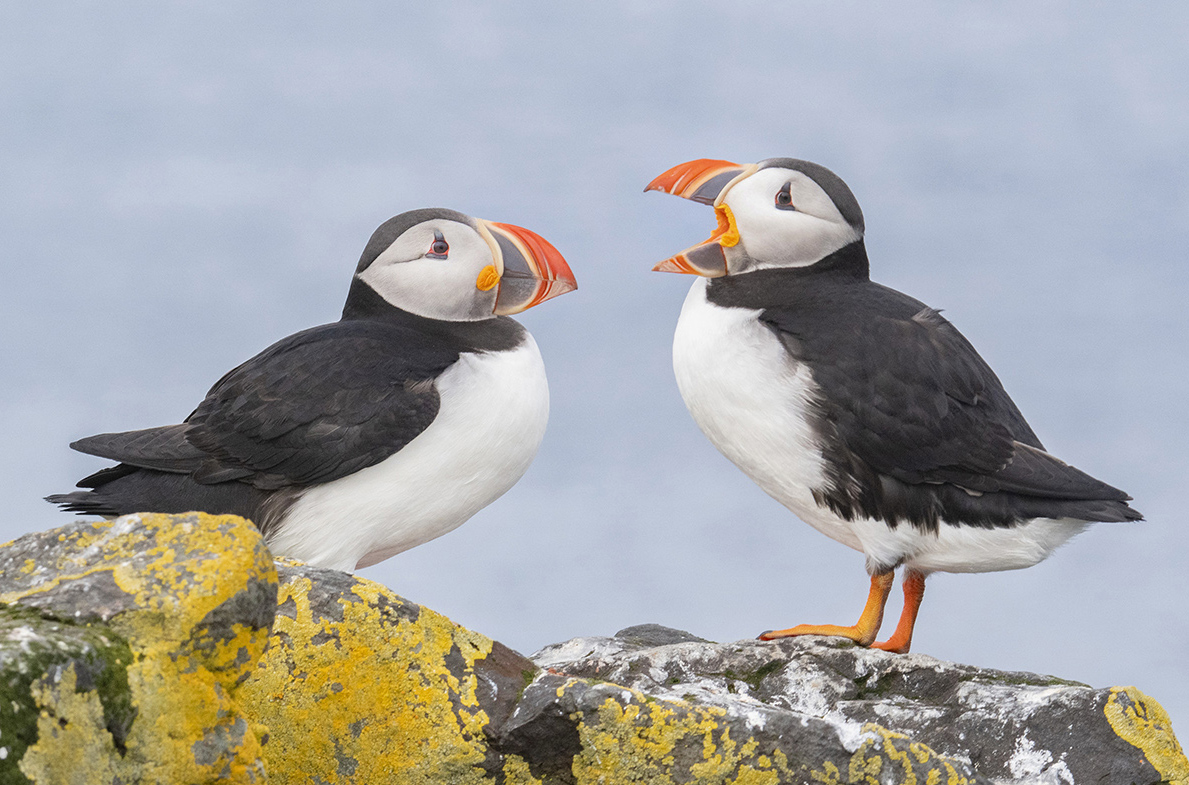
Gaping is a threat display in puffins and a warning to the bird on the left not to approach any closer.
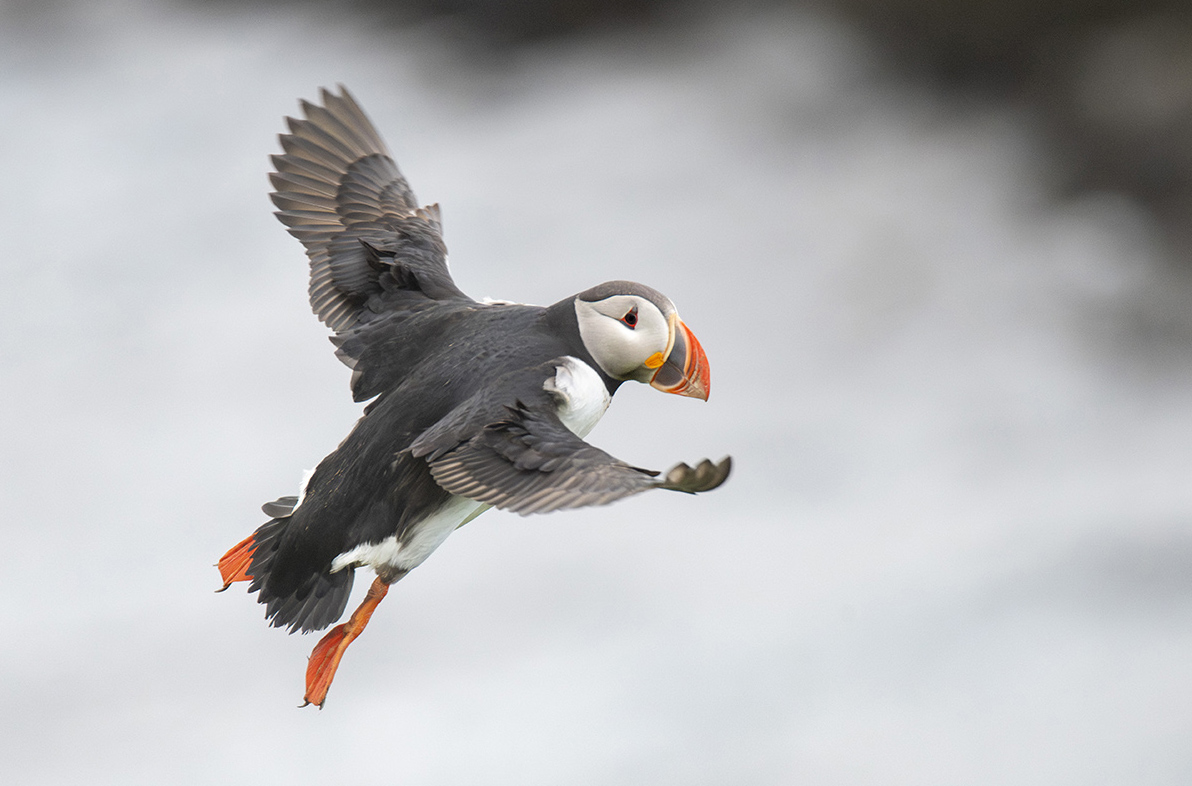
Puffins have relatively small wings so they must flap up to 400 times/minute and travel at speeds up to 80 kph (50 mph) to stay airborne. Their lifestyle constrains the size of their wings since they use them for both aerial flight and underwater propulsion. Larger wings would help them to fly with less effort but would hinder them underwater.
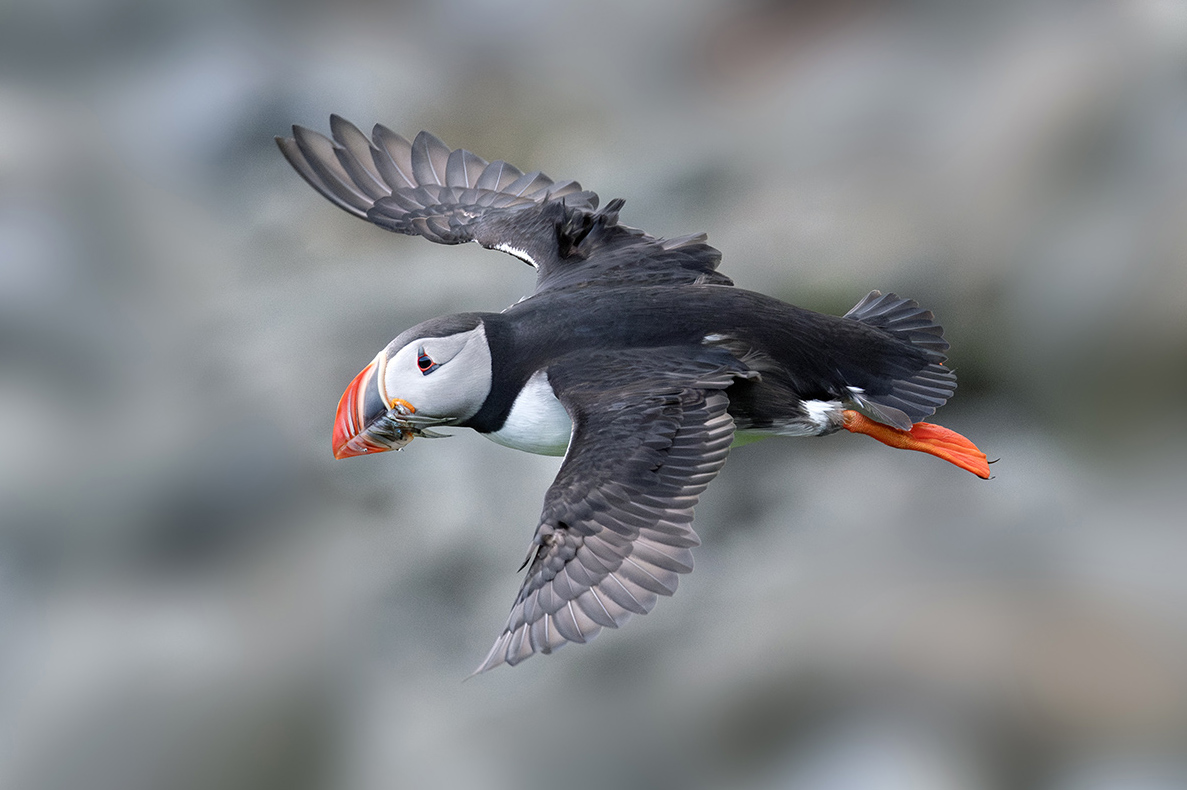
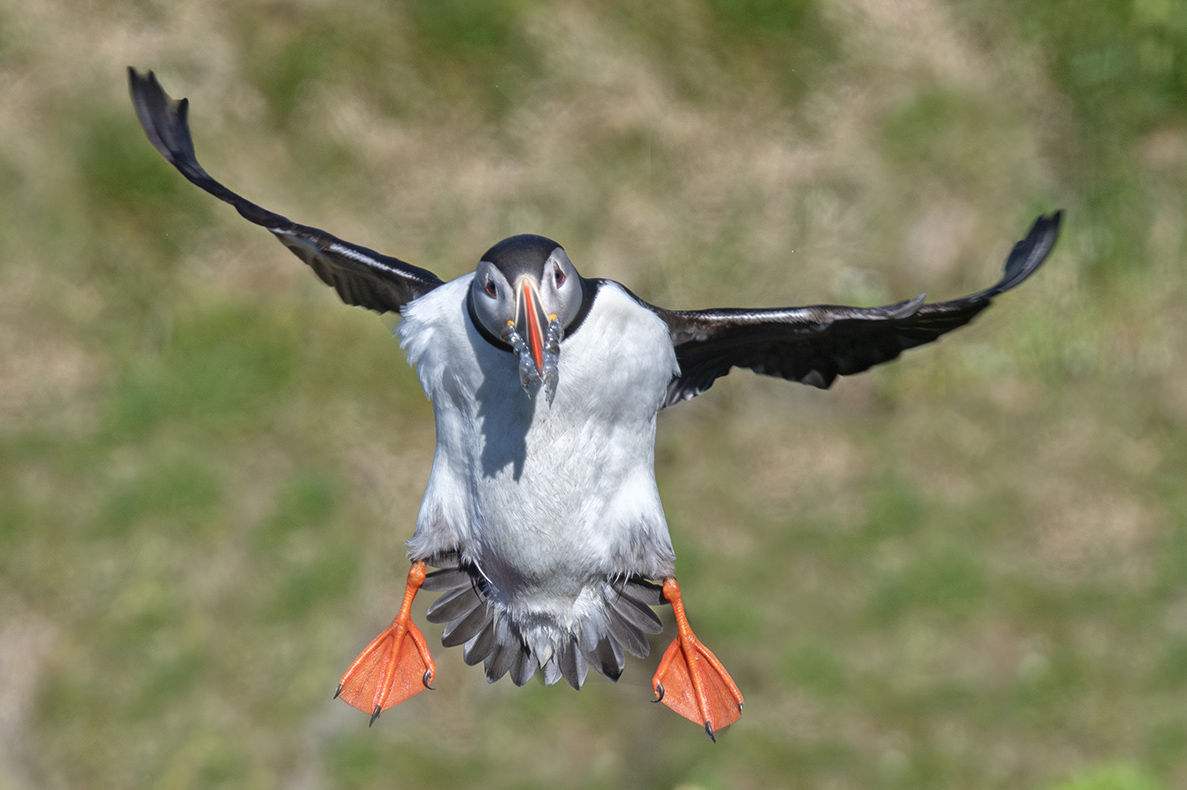
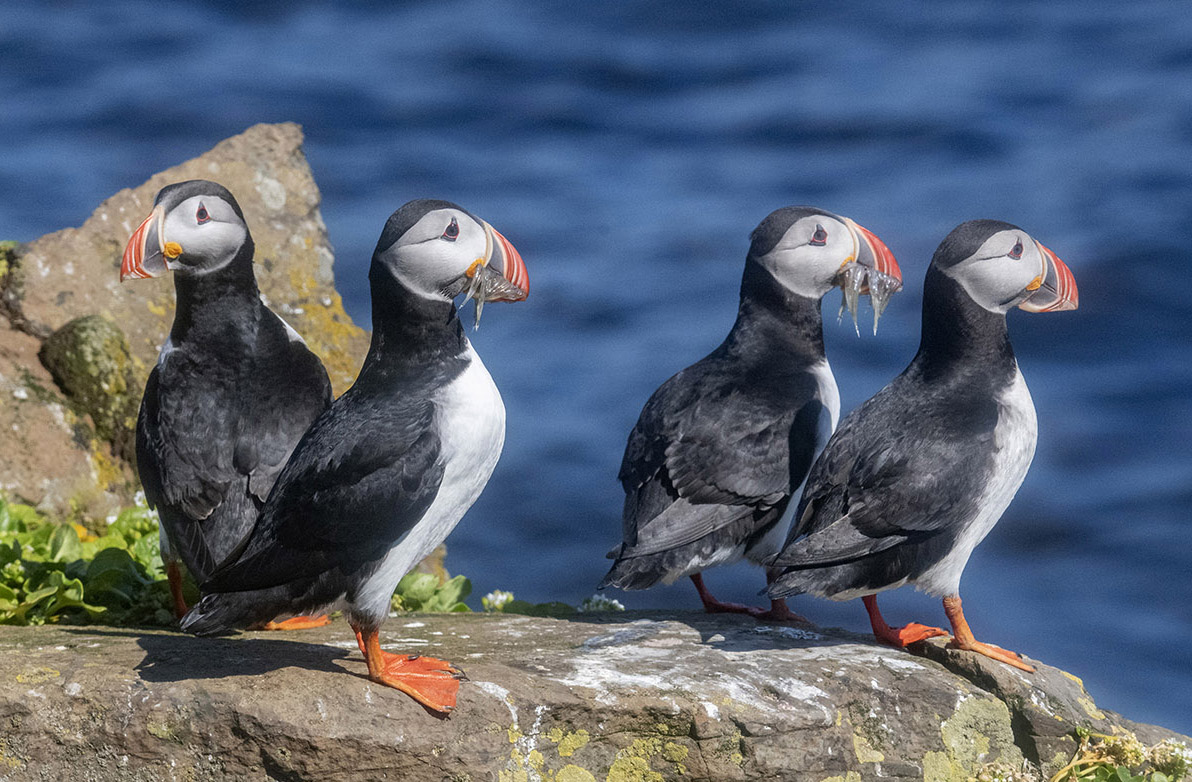
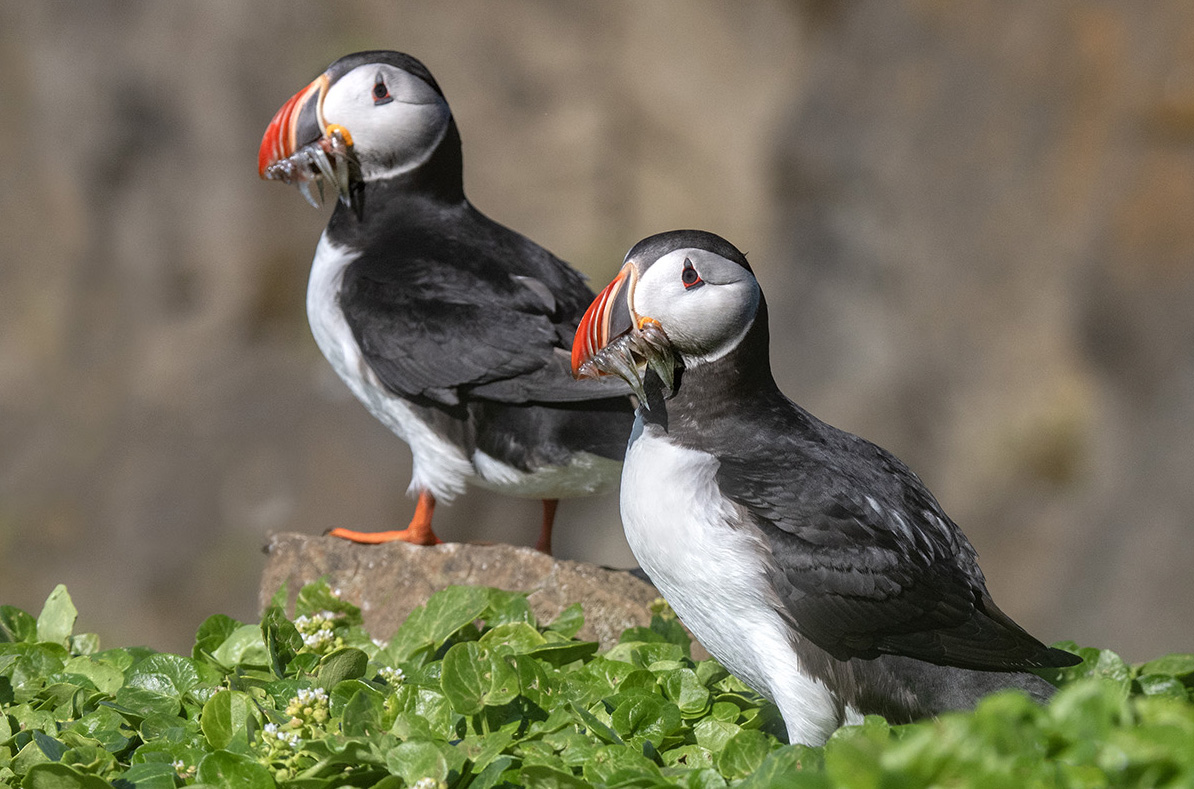
After spending the night on the water, puffins with chicks to feed return to the breeding cliffs in the early morning carrying beakfuls of food.
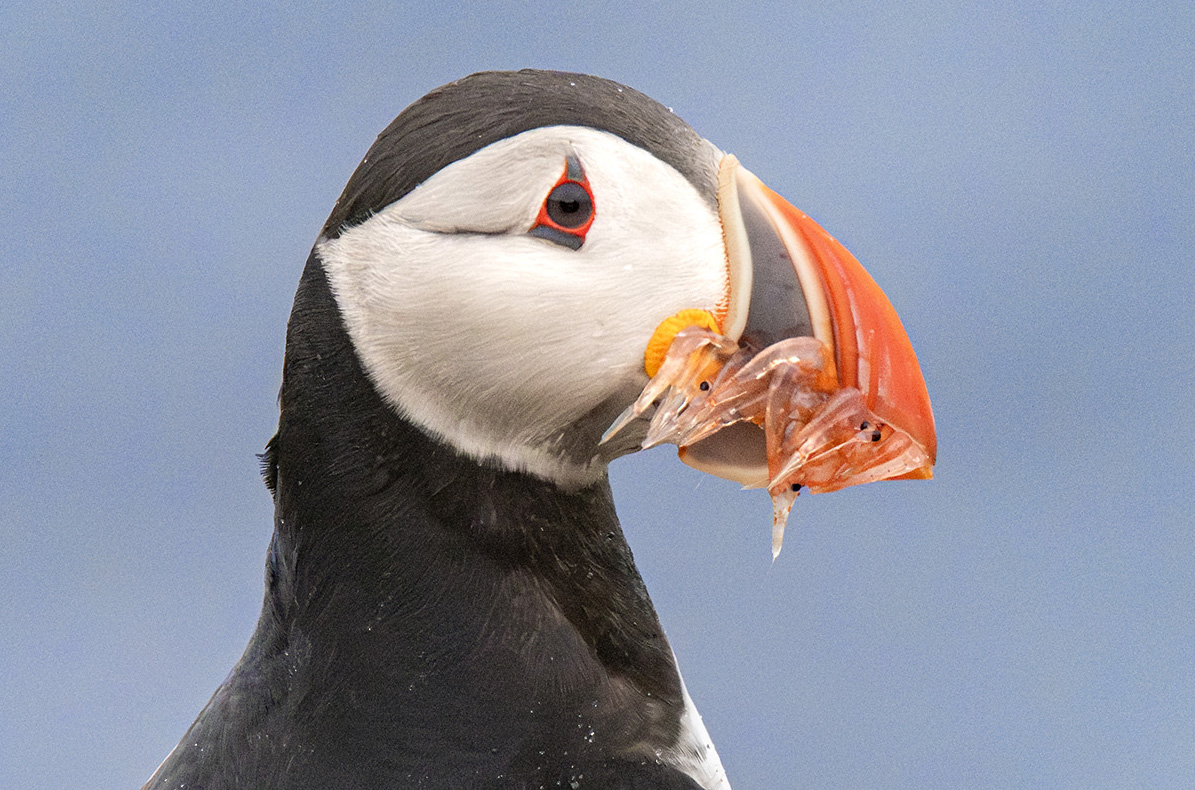
In the early days of the tour some of the puffins were catching krill-like invertebrates.
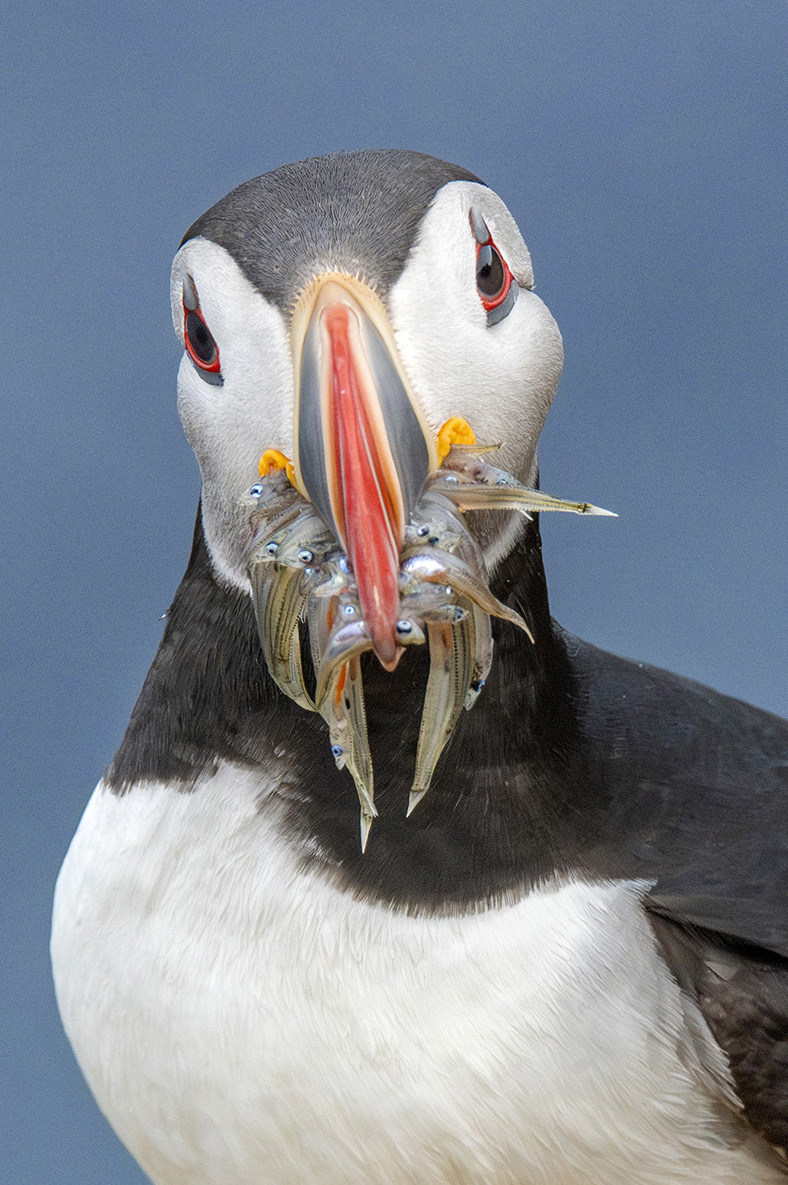
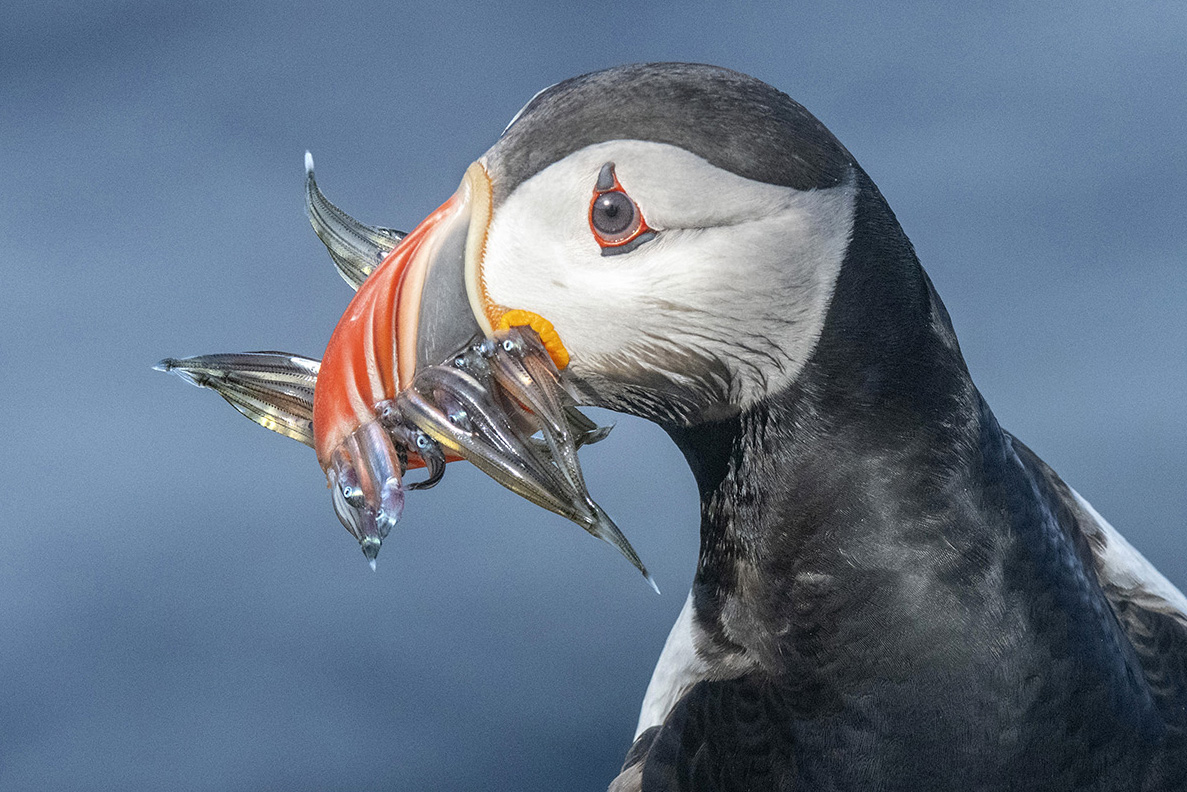
Much of the time the puffins were catching larval sand eels that swim in schools near the ocean bottom.
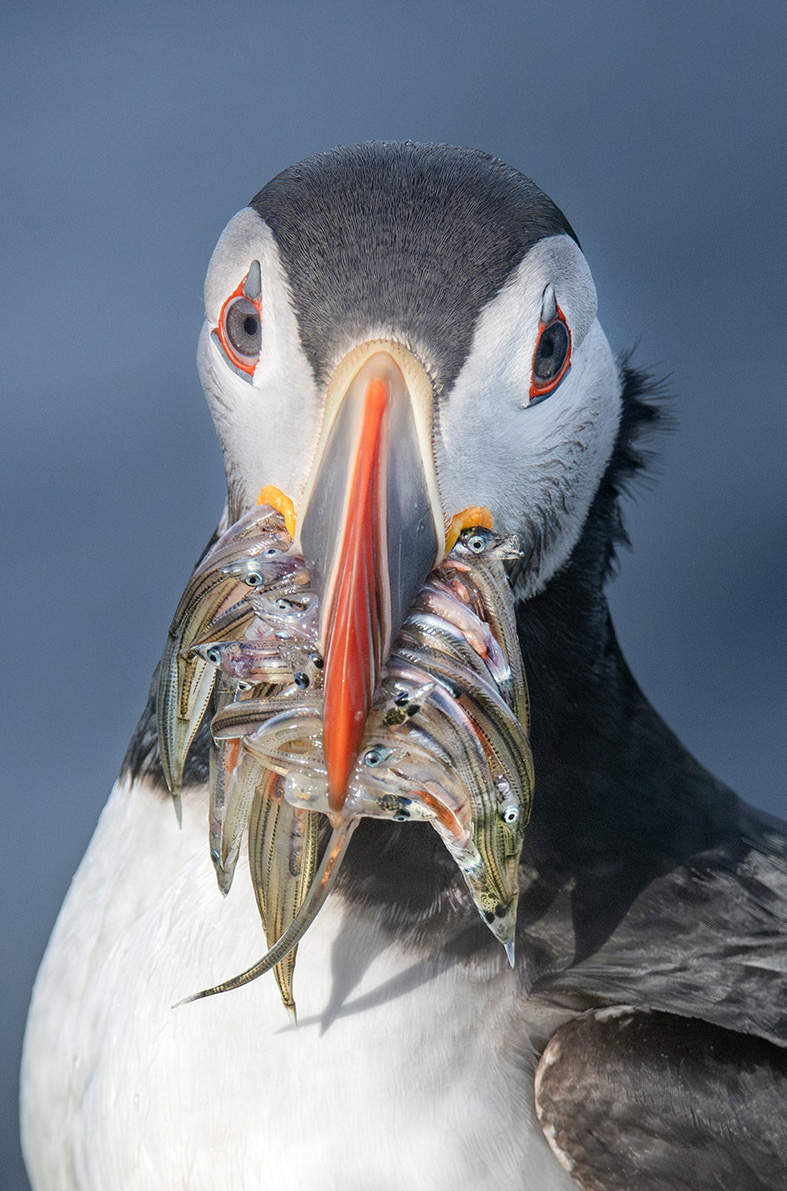
The record number of fish carried at one time is 62.
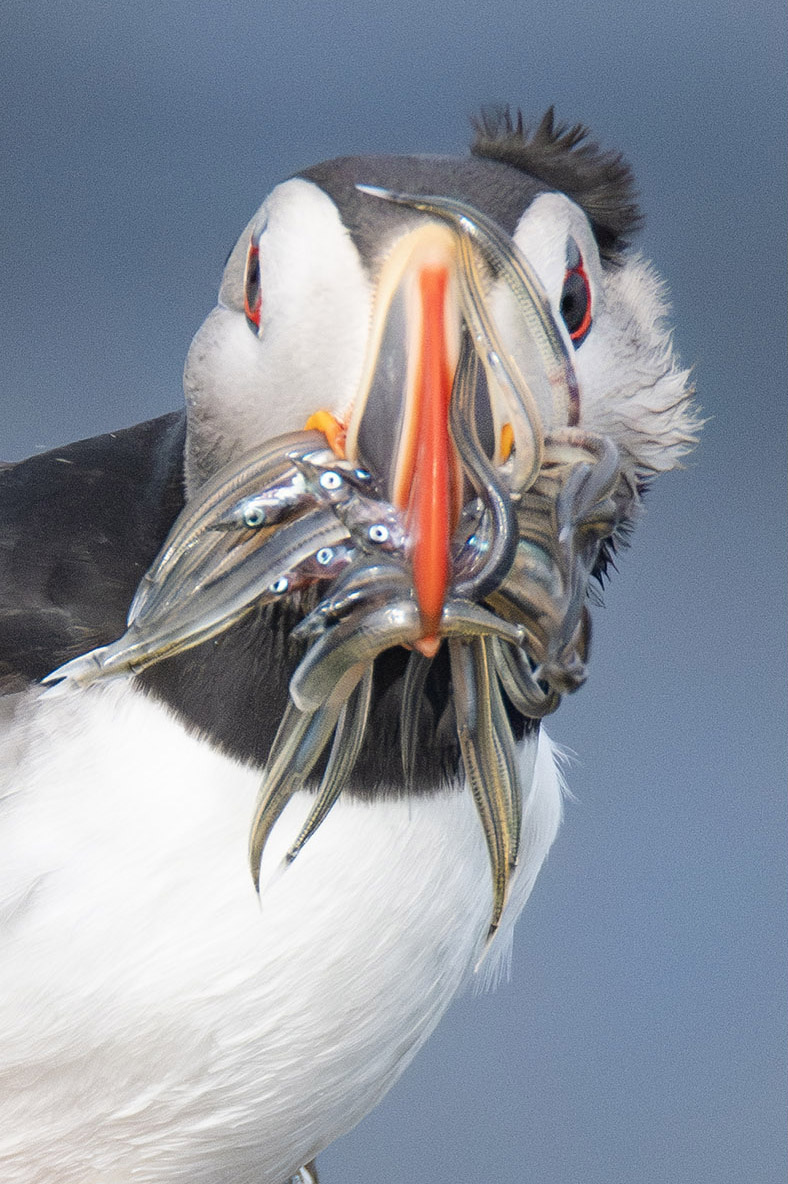
Often there was a strong onshore wind that would whip the fish around in the puffin’s beak, sometimes slapping it in the face and eyes. In the photograph you can see where the wind is ruffling the feathers on the right side of the puffin’s face and has plastered a couple of sand eels on the upper part of its beak.
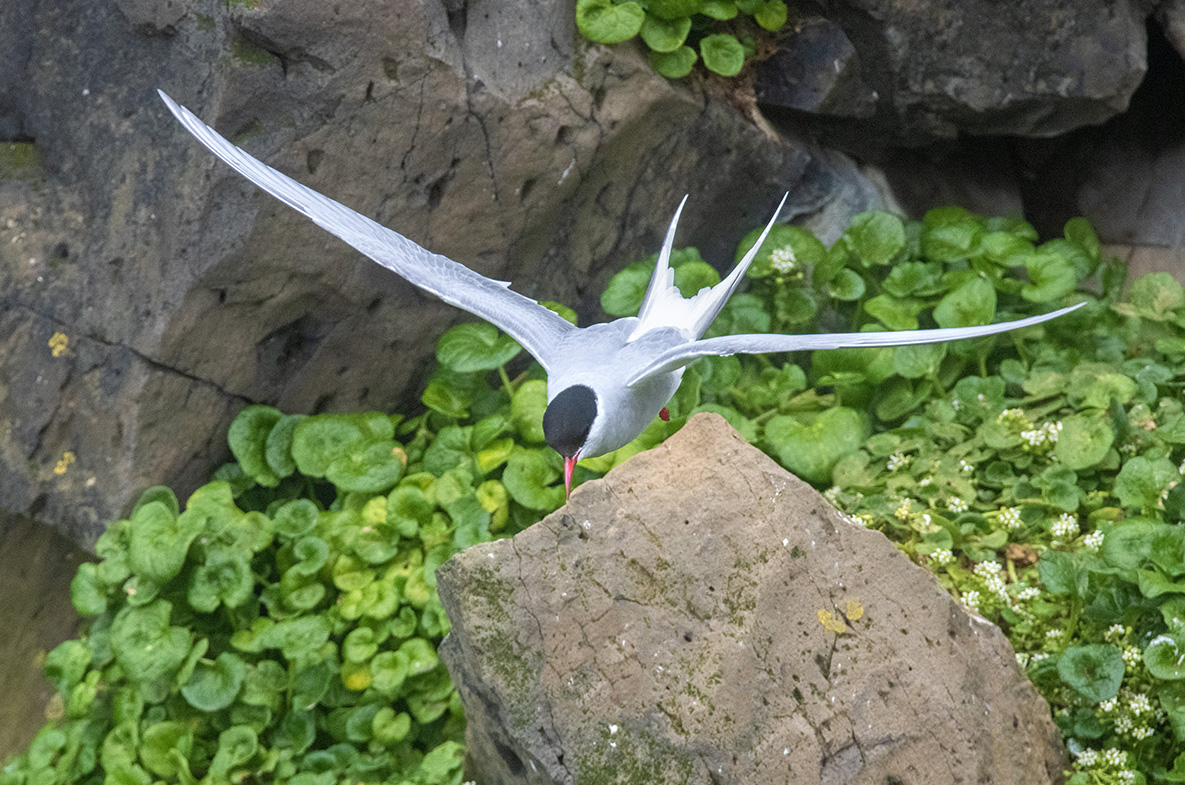
On Grimsey, if puffins landed with beaks full of fish and loitered outside their burrows, they were sometimes strafed by Arctic terns. The harassment occasionally caused a puffin to drop a fish or two that was then retrieved by the tern. I have never read about such piracy behaviour occurring anywhere else.
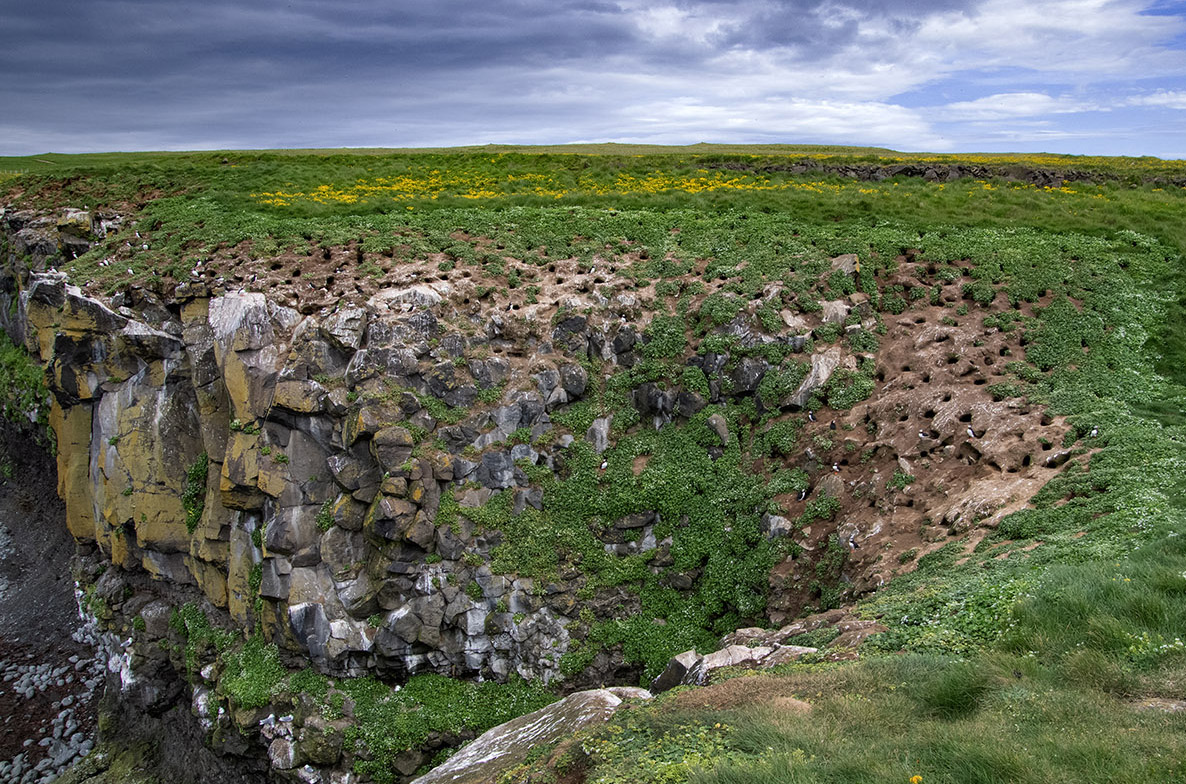
At nightfall, all the puffins that weren’t inside a burrow tending to a chick, would abandon the cliffs and spend the night offshore rafting in groups.
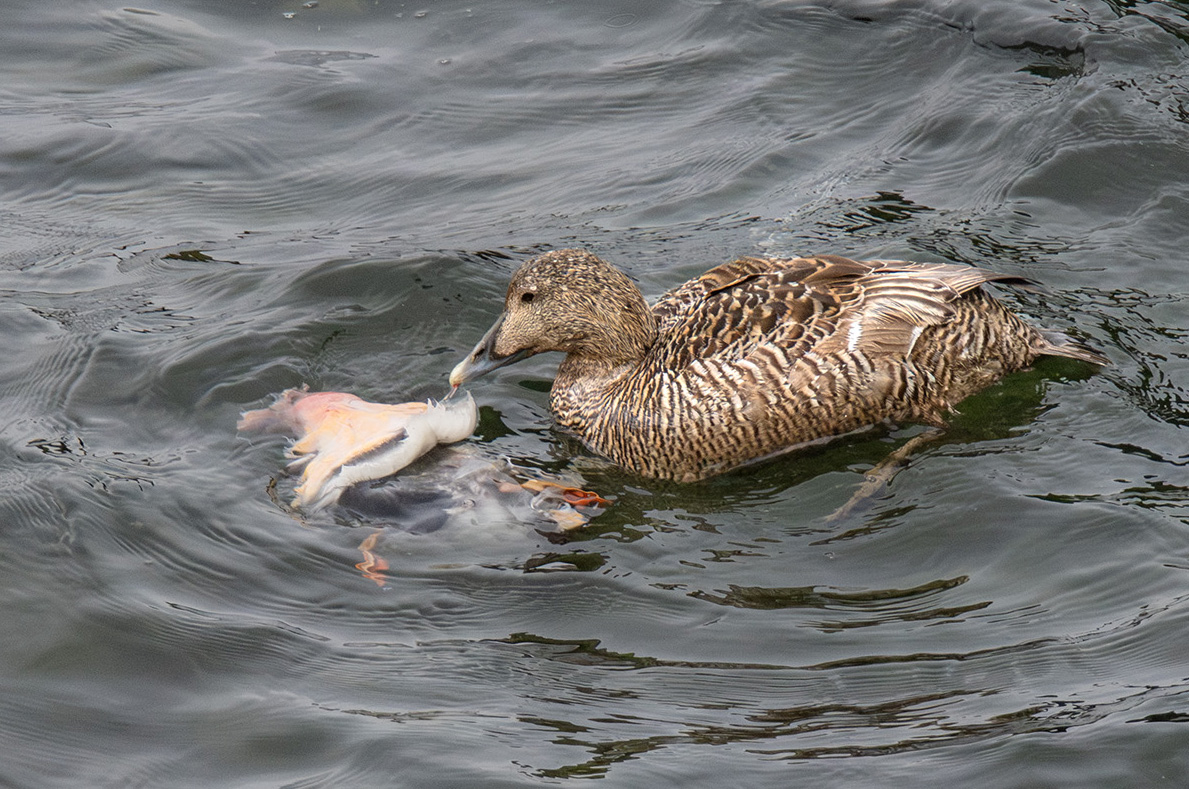
The main predators of adult puffins are humans and great black-backed gulls, the largest gulls in the world. This dead puffin was being scavenged by an adult female eider duck, something I had never seen reported. How the puffin died is unknown.
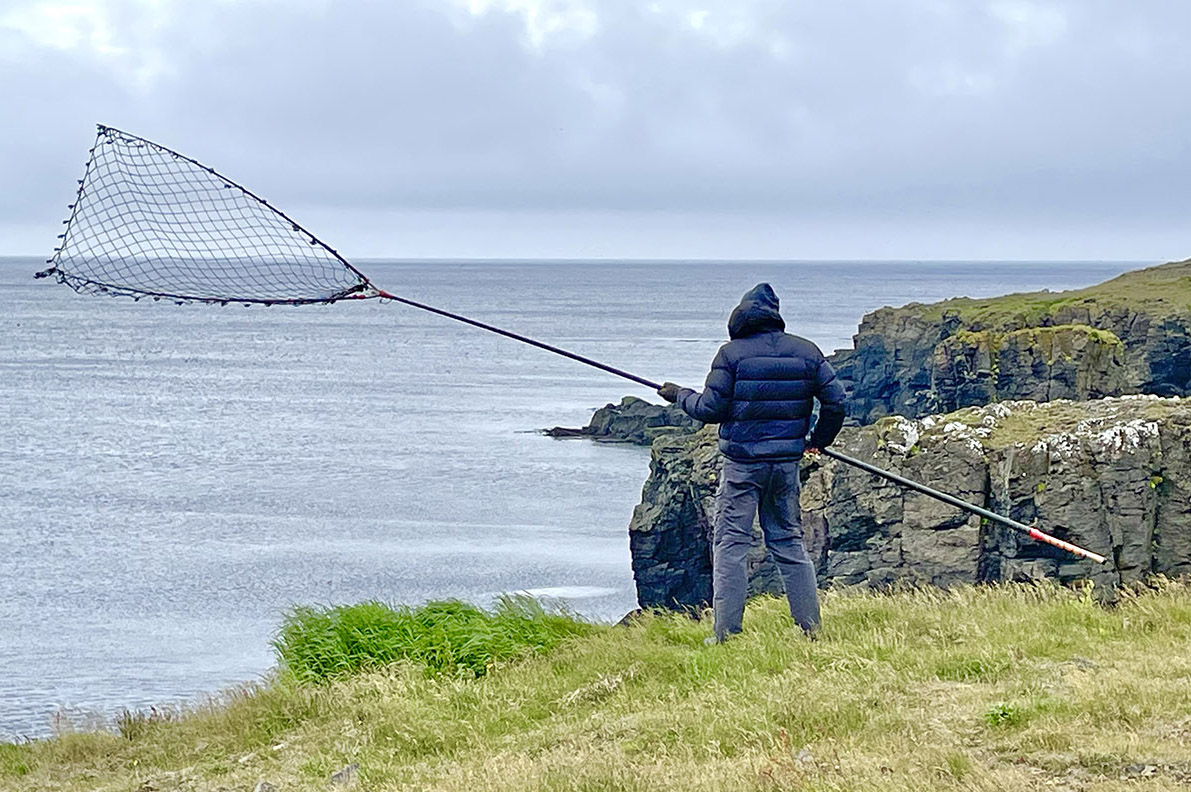
Icelanders still harvest puffins, including some of the few people living on Grimsey Island. The hunters use a long-handled net to catch the birds as they fly by the cliff face. Puffins, with their short wings, have limited maneuverability and they can’t easily avoid the net.
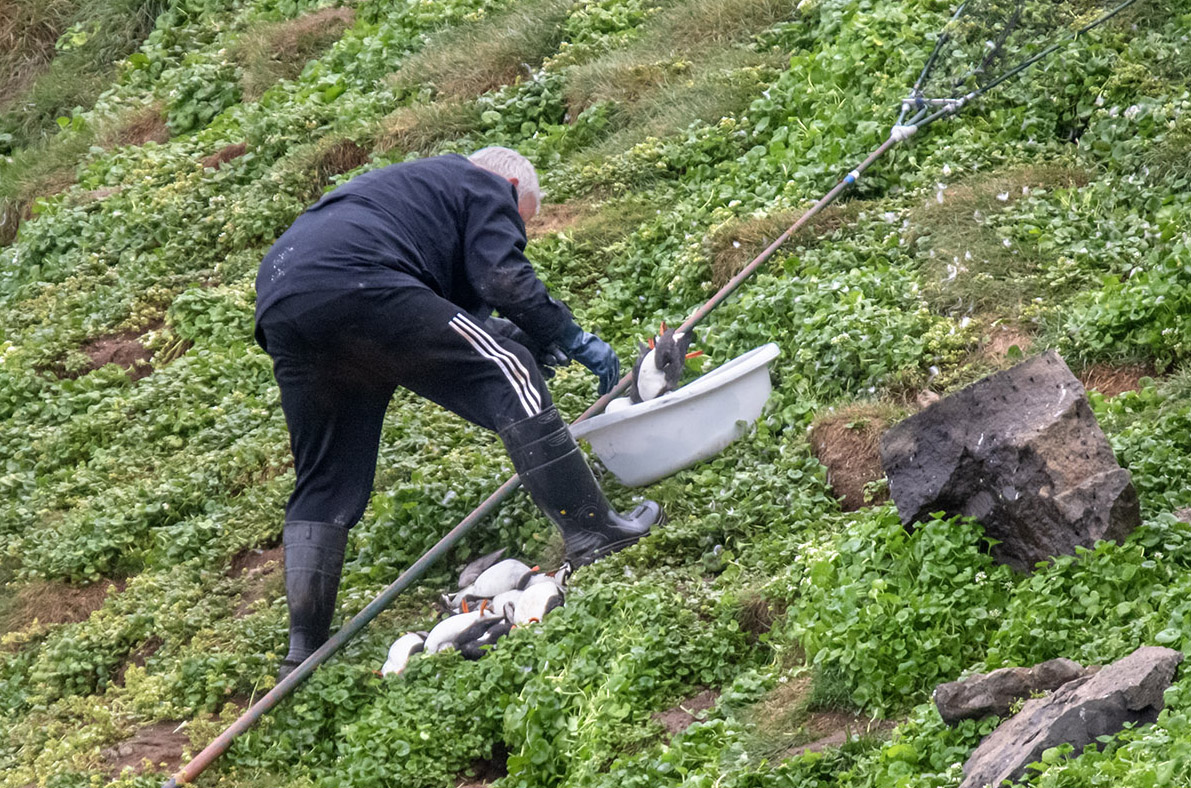
This man had caught over two dozen adult puffins. The hunters claim they kill only non-breeding sub-adults, but when a puffin flies by the cliff at 60-80 kph I believe it is next to impossible for a hunter to assess a puffin’s age and breeding status before the victim is fatally netted.
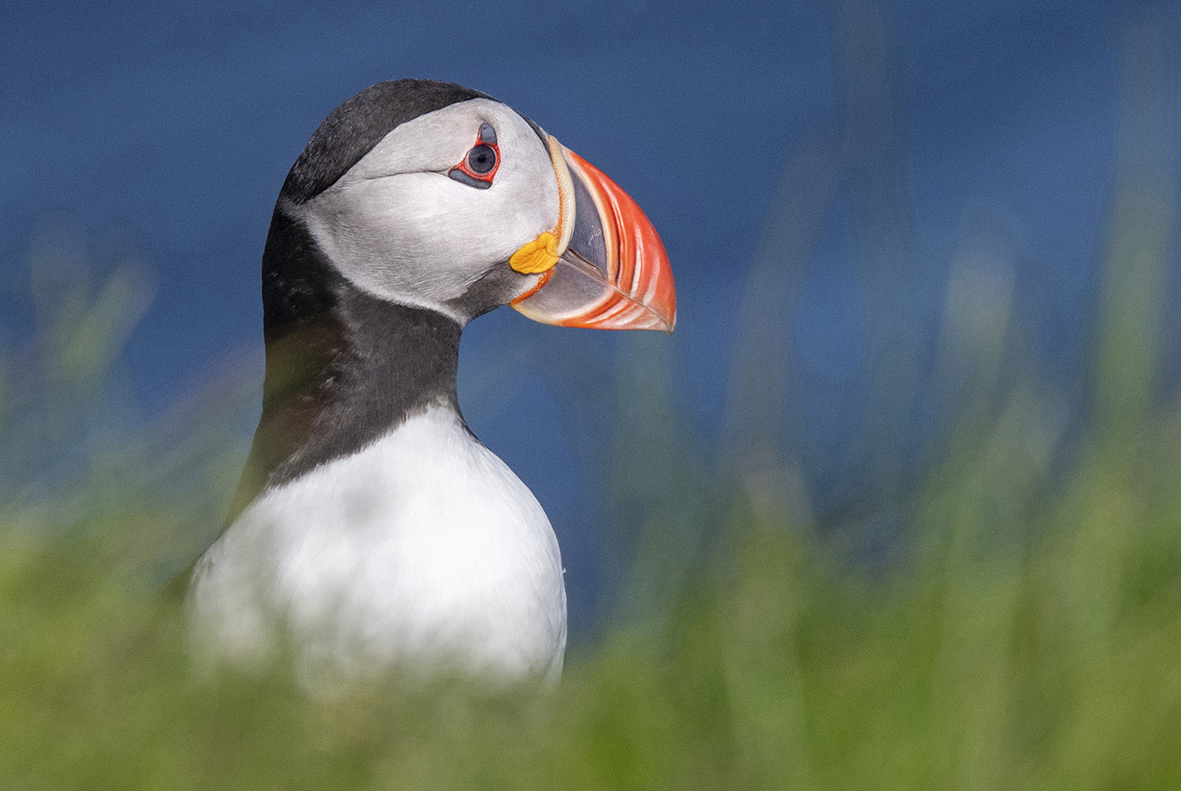
In Newfoundland and Labrador the puffin is protected and their official provincial bird. The largest puffin breeding colony in the western Atlantic, containing 225,000 pairs, is located in Witless Bay Ecological Reserve, south of St. John’s, Newfoundland.
About the Author – Dr. Wayne Lynch
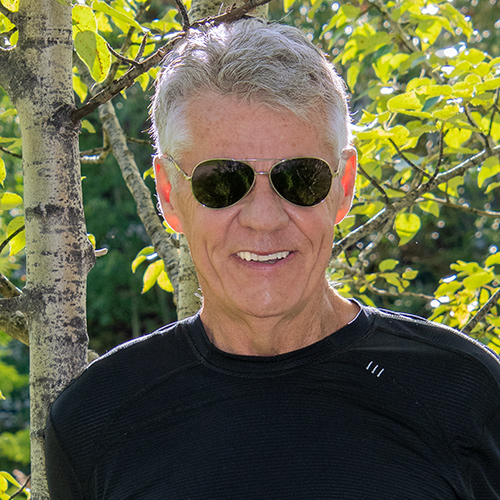
For more than 40 years, Dr. Wayne Lynch has been writing about and photographing the wildlands of the world from the stark beauty of the Arctic and Antarctic to the lush rainforests of the tropics. Today, he is one of Canada’s best-known and most widely published nature writers and wildlife photographers. His photo credits include hundreds of magazine covers, thousands of calendar shots, and tens of thousands of images published in over 80 countries. He is also the author/photographer of more than 45 books for children as well as over 20 highly acclaimed natural history books for adults including Windswept: A Passionate View of the Prairie Grasslands; Penguins of the World; Bears: Monarchs of the Northern Wilderness; A is for Arctic: Natural Wonders of a Polar World; Wild Birds Across the Prairies; Planet Arctic: Life at the Top of the World; The Great Northern Kingdom: Life in the Boreal Forest; Owls of the United States and Canada: A Complete Guide to their Biology and Behavior; Penguins: The World’s Coolest Birds; Galapagos: A Traveler’s Introduction; A Celebration of Prairie Birds; and Bears of the North: A Year Inside Their Worlds. In 2022, he released Wildlife of the Rockies for Kids, and Loons: Treasured Symbols of the North. His books have won multiple awards and have been described as “a magical combination of words and images.”
Dr. Lynch has observed and photographed wildlife in over 70 countries and is a Fellow of the internationally recognized Explorers Club, headquartered in New York City. A Fellow is someone who has actively participated in exploration or has substantially enlarged the scope of human knowledge through scientific achievements and published reports, books, and articles. In 1997, Dr. Lynch was elected as a Fellow to the Arctic Institute of North America in recognition of his contributions to the knowledge of polar and subpolar regions. And since 1996 his biography has been included in Canada’s Who’s Who.



Wayne, absolutely amazing photos of the puffins with their beaks full of sand eels!
Wonderful pictures. We were in Iceland about ten years ago. Unfortunately didn’t see Puffins as we were on the other side of the Island.
I did notice that a few of the restaurants served up Puffin recipes. I was a little upset. I also realized that is there way of life.