



This month, I want to feature two of my wife Aubrey’s favourite prairie birds, the American avocet and the black-necked stilt.
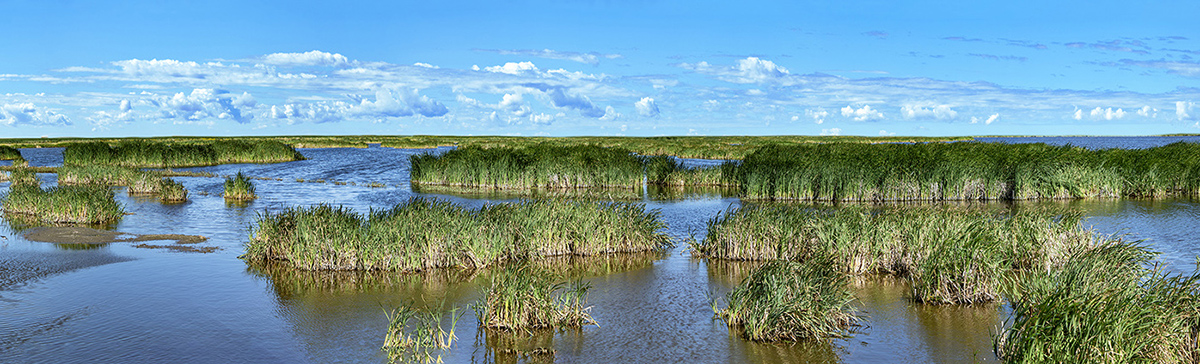
Both of these handsome shorebirds are widespread and common on shallow sloughs and marshes throughout the prairies.
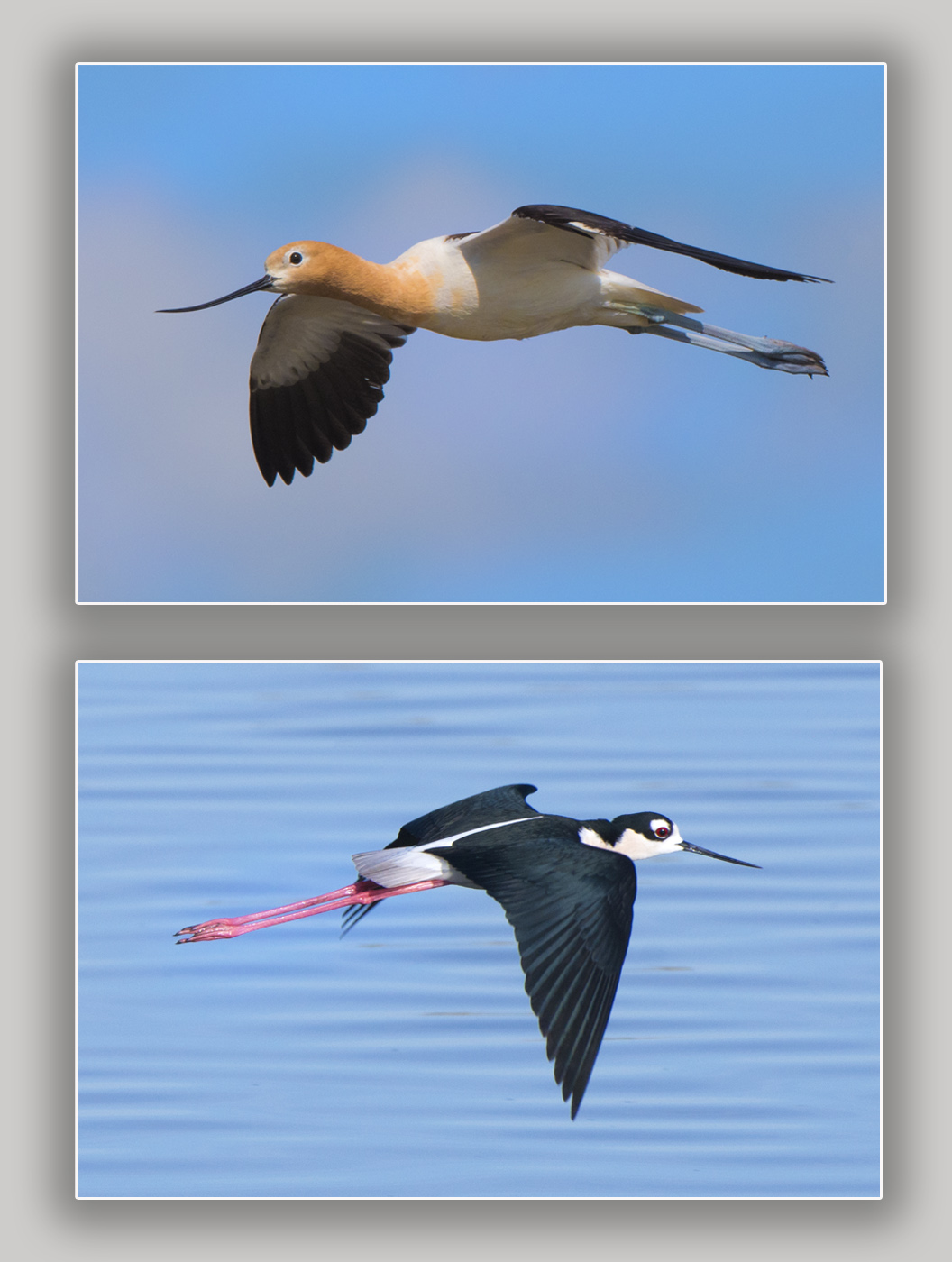
The avocet (top) and stilt belong to a small family of elegant, slim shorebirds whose bodies are slightly larger than that of a robin, but both have a long, flexible neck and especially long legs. For its size, the black-necked stilt has proportionally the longest legs of any bird in the world.
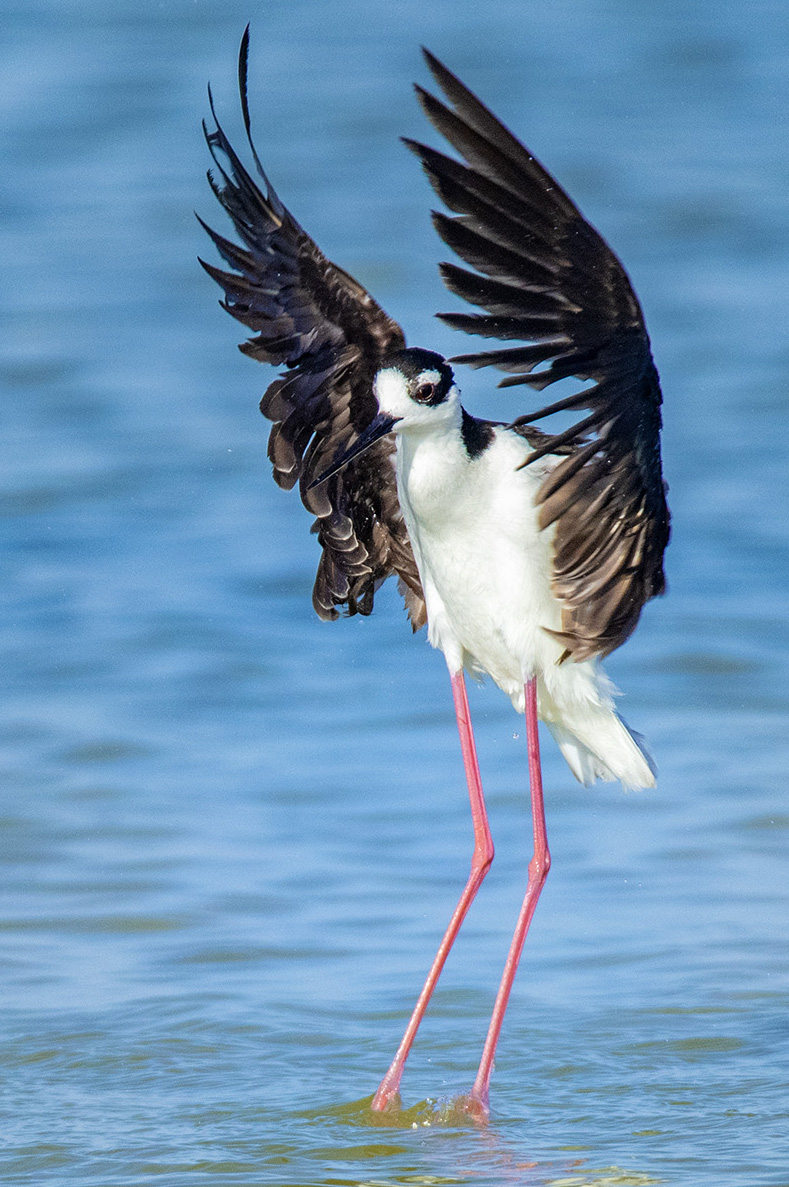
Until the 1990s, the black-necked stilt was listed as an erratic visitor and very rare breeder in prairie Canada. Two nests found in Alberta in 1977 were attributed to drought conditions, which presumably encouraged the birds to nest farther north than usual. In the spring of 1998—a warm, dry El Nino year—hundreds of stilts were seen in southern Alberta, and dozens of nests were reported. Since that time, stilt numbers have slowly increased, and the bird is now a relatively common breeder in the shallow sloughs of Saskatchewan and Manitoba as well as Alberta.
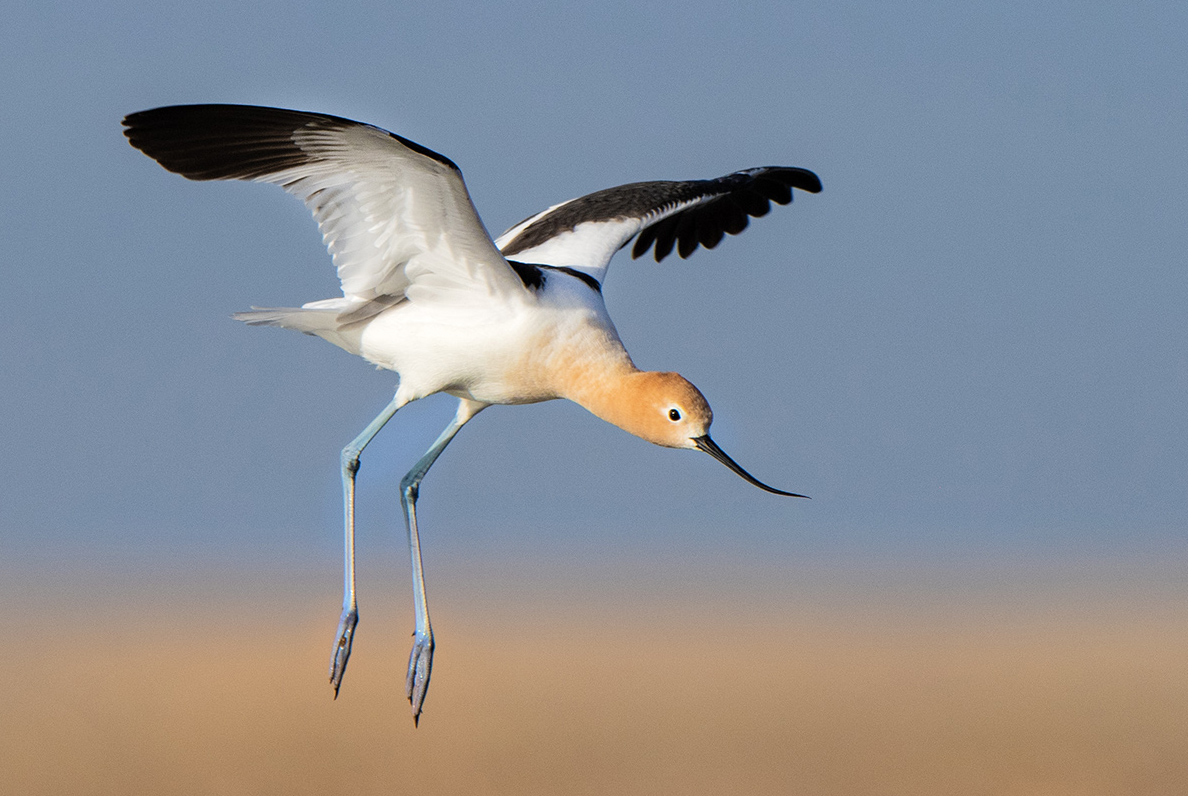
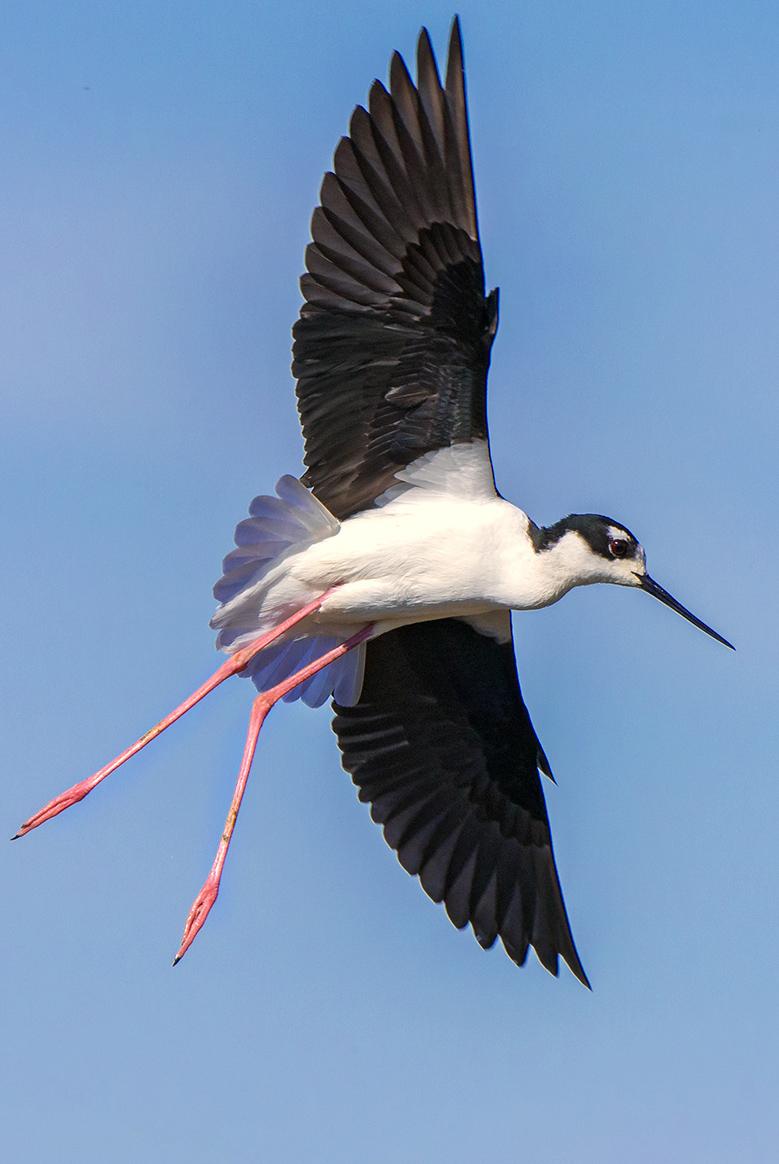
Both the avocet and stilt return to the prairies in late April and early May.
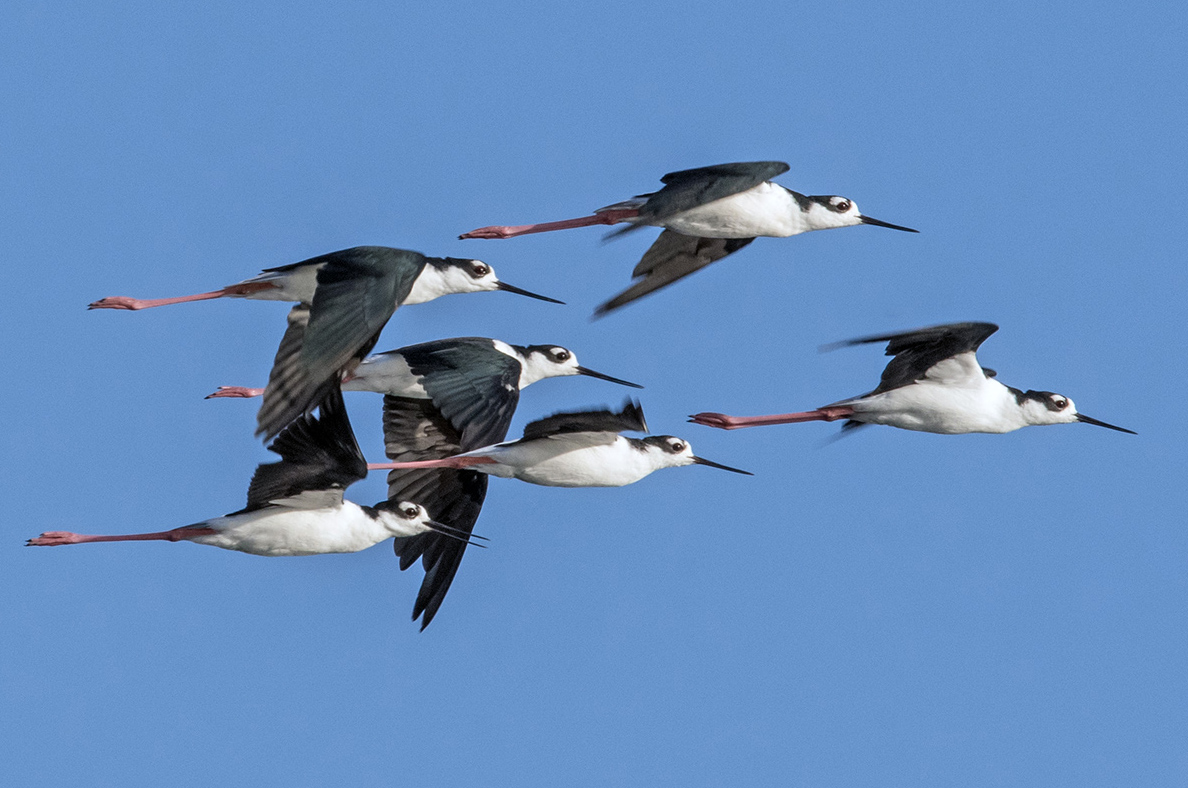
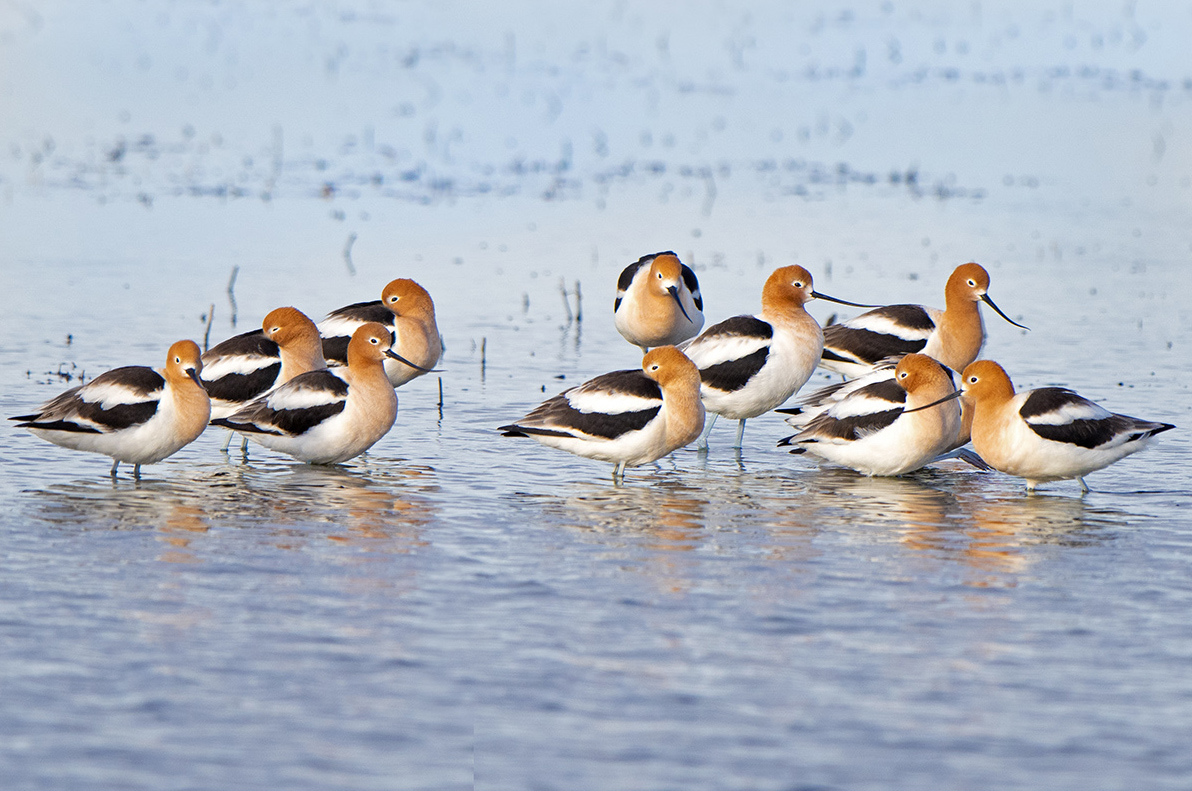
Typically, after having spent the winter on intertidal mudflats along the Pacific and Atlantic coasts of Mexico, stilts and avocets migrate to the prairies in small flocks.
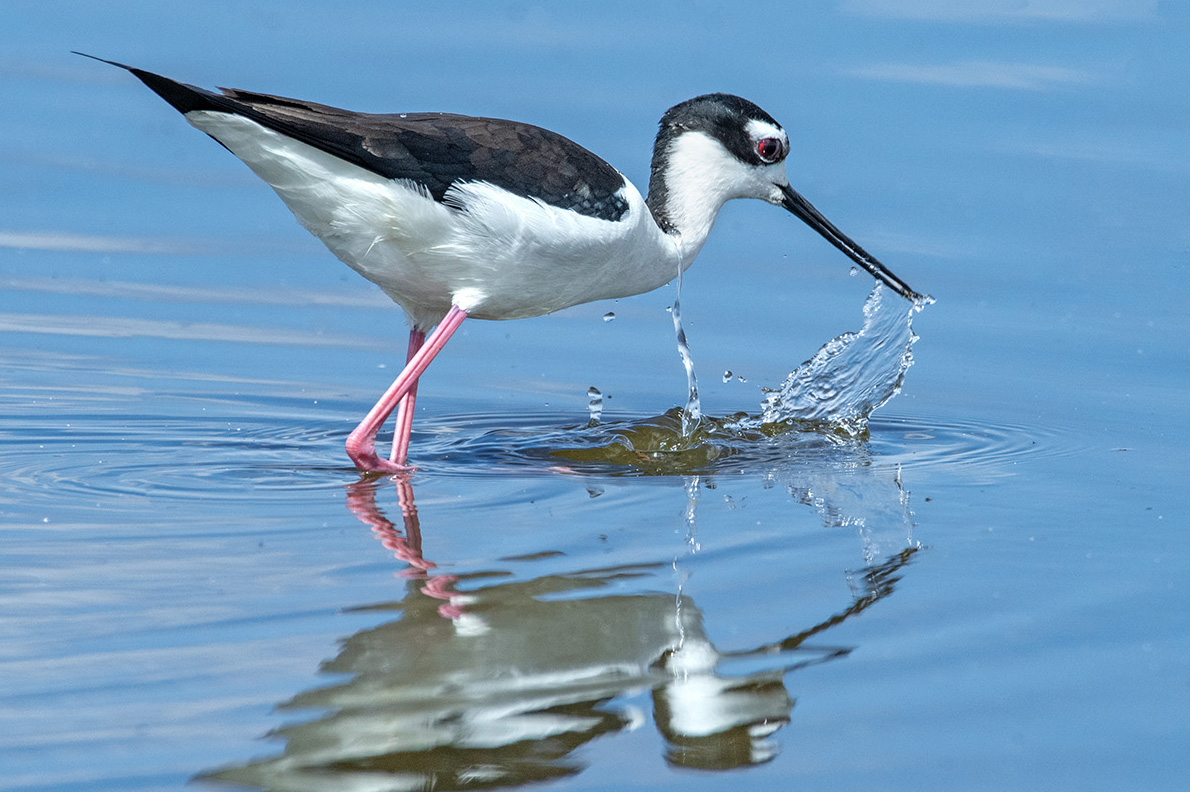
The black-necked stilt eats mosquito larvae, diving beetles, caddisflies, mayfly and dragonfly nymphs, grasshoppers, snails, and tiny fish. It has unusually strong jaw muscles, and this enables it to rapidly close its beak and get a firm grasp on small prey. Typically, it feeds in shallow water where its breast feathers can stay dry, picking food from the surface and the upper few centimetres of the water column.
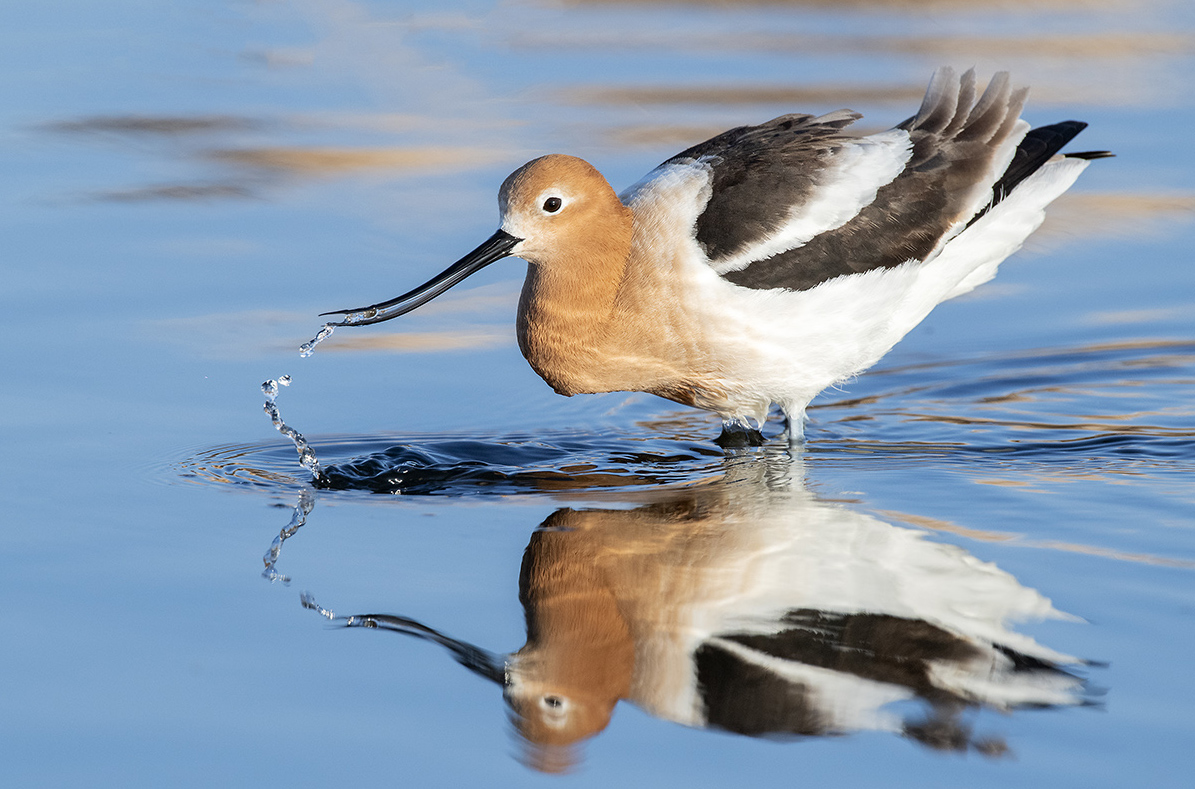
The stilt and the avocet share the same diet, and they reduce competition by focusing on slightly different water depths— the stilt on the surface and the avocet slightly deeper. The inside of an avocet’s bill is fringed, which it uses to filter tiny food items from the water. The classic feeding method for an avocet involves sweeping its bill from side to side through the water, wielding its beak like a scythe. The birds also pick food off the surface and submerge their heads to catch prey underwater.
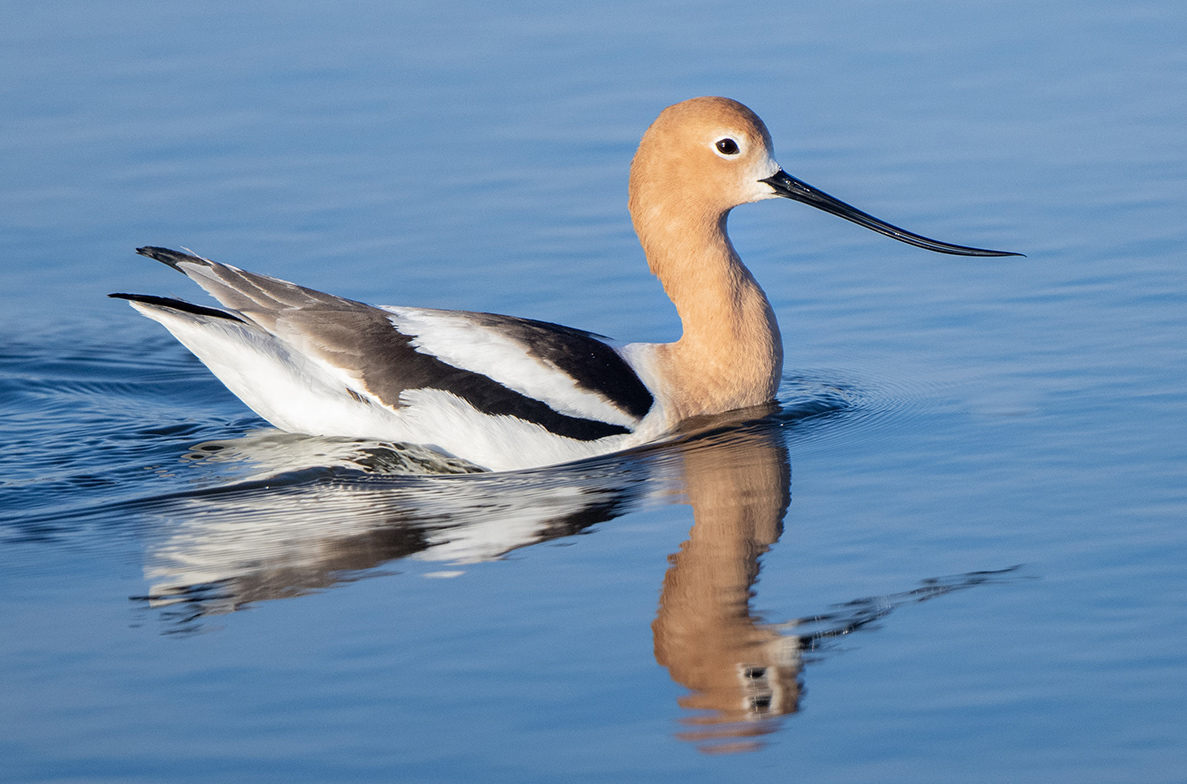
An avocet’s feet are partially webbed, and it is a good swimmer, able to forage in deeper water than most shorebirds.
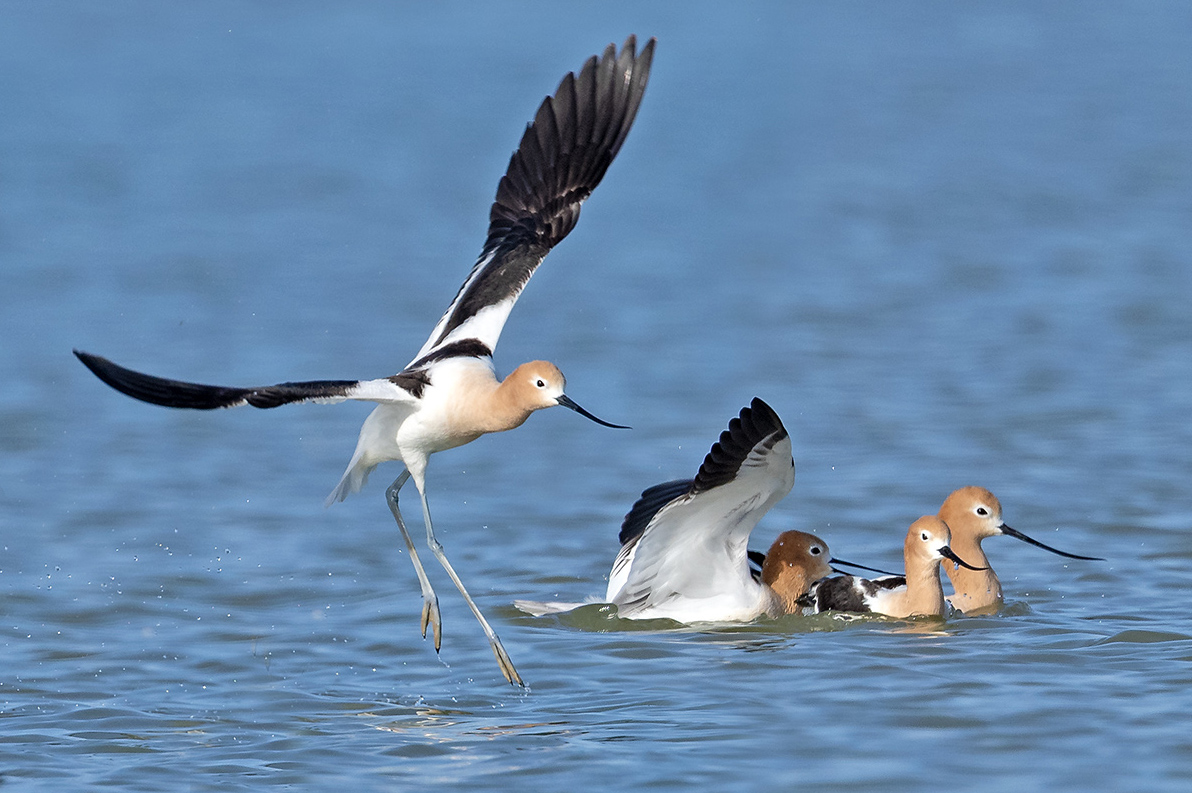
Avocets usually form pairs on their wintering grounds or during their spring migration. Soon after they return to the prairies in late April, the pairs stake out and defend small feeding territories. These territories may or may not be close to their eventual nest site. Both the male and the female will aggressively drive away rival avocets.
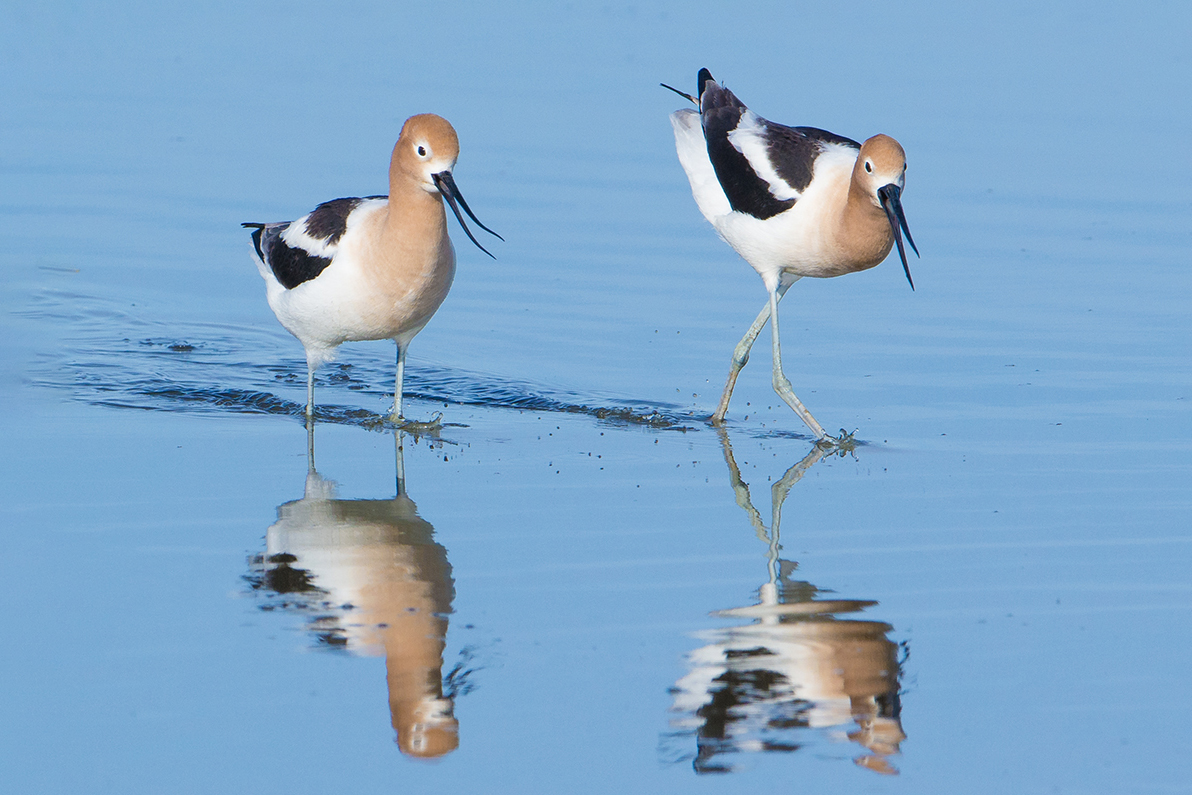
I have spent dozens of hours watching avocets, and I have seen their elaborate mating ritual many times. One year, I described the behaviour in my journal. It was early evening, and a pair of avocets was very close to my blind, their elegant bodies perfectly reflected in the smooth blue water of the slough.
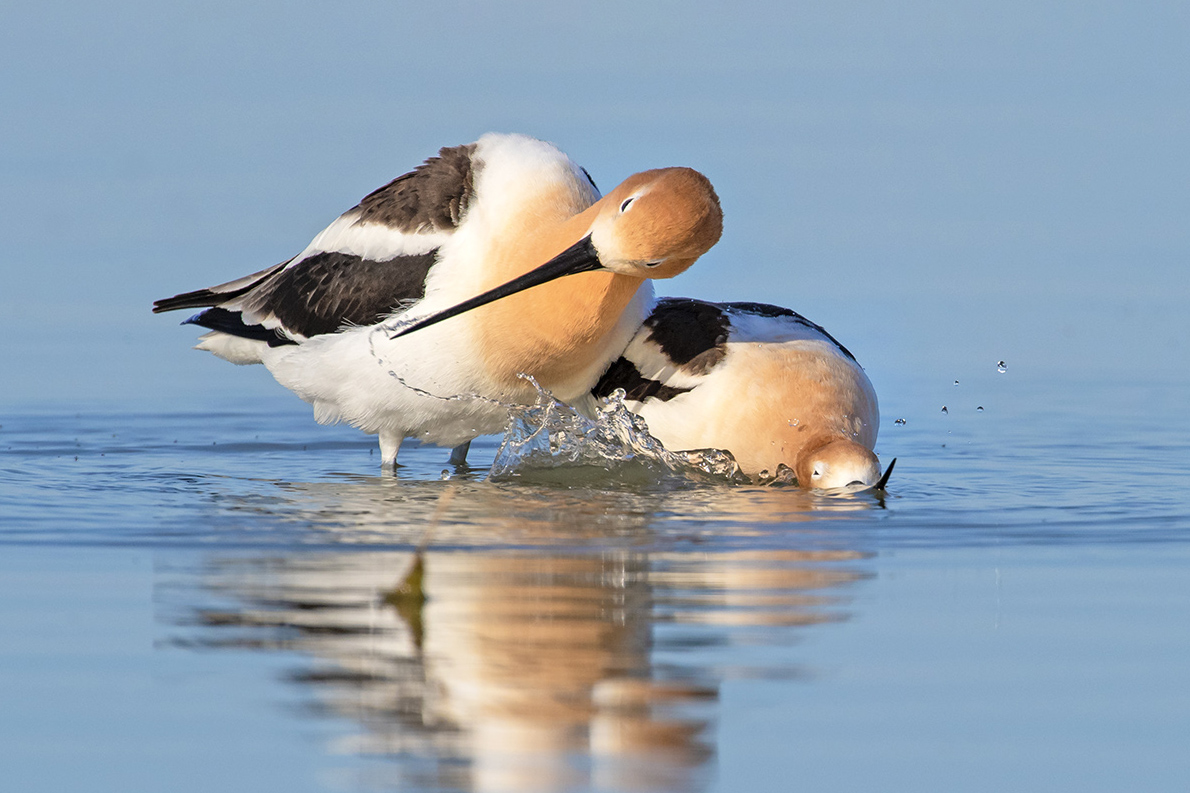
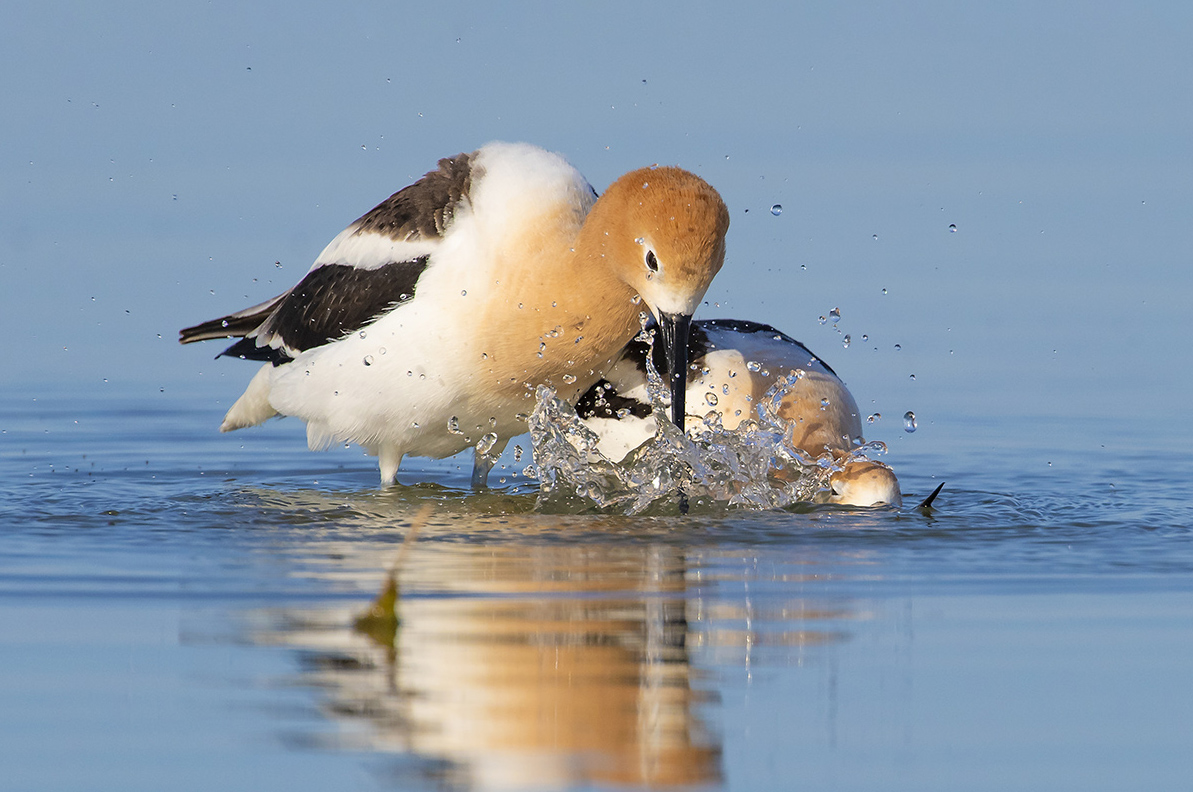
Suddenly, the female bowed forward and stretched her neck low down, just above the surface of the water. She stayed frozen in this pose. I could tell it was the female by the greater curve in her beak. Her mate began to preen vigorously, dipping his bill in the water and splashing the female in the process. The male walked excitedly from one side of the female to the other, the intensity of his preening and water splashing increasing with every moment.
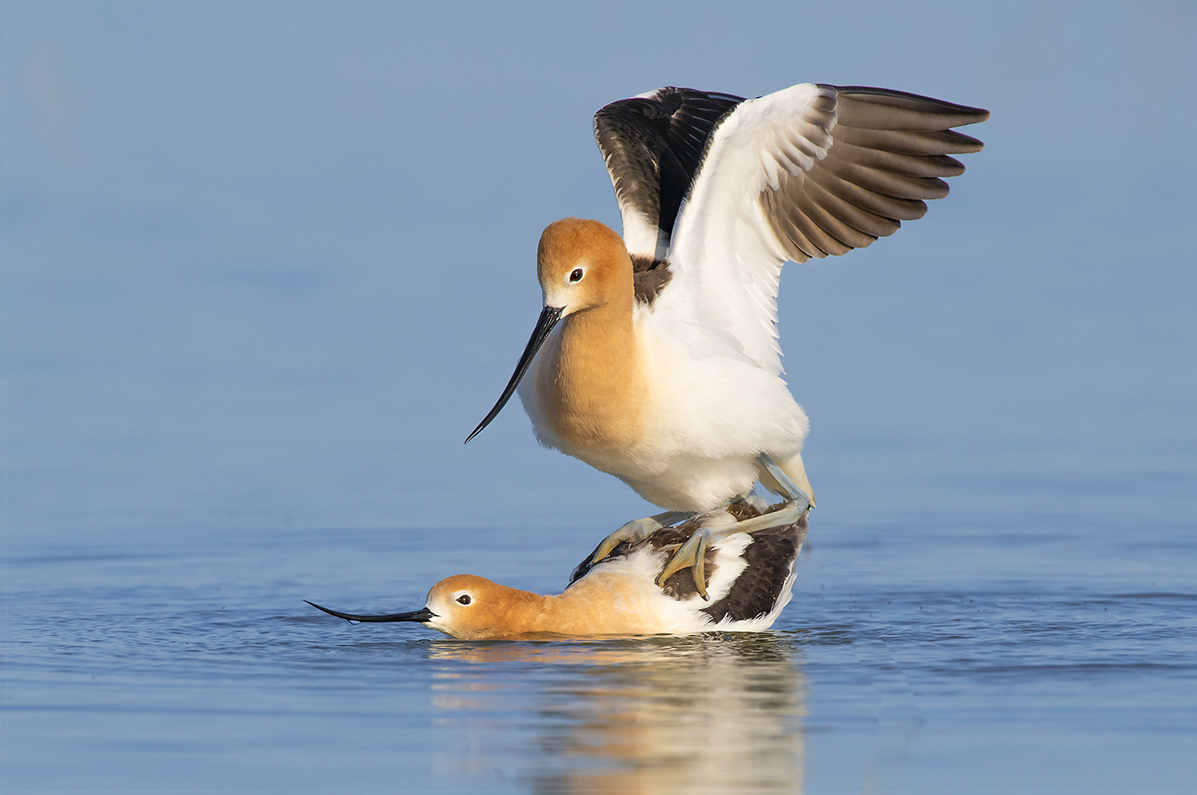
After eight or nine changes in position, the male jumped onto the female’s back, fluttering his wings to keep his balance.
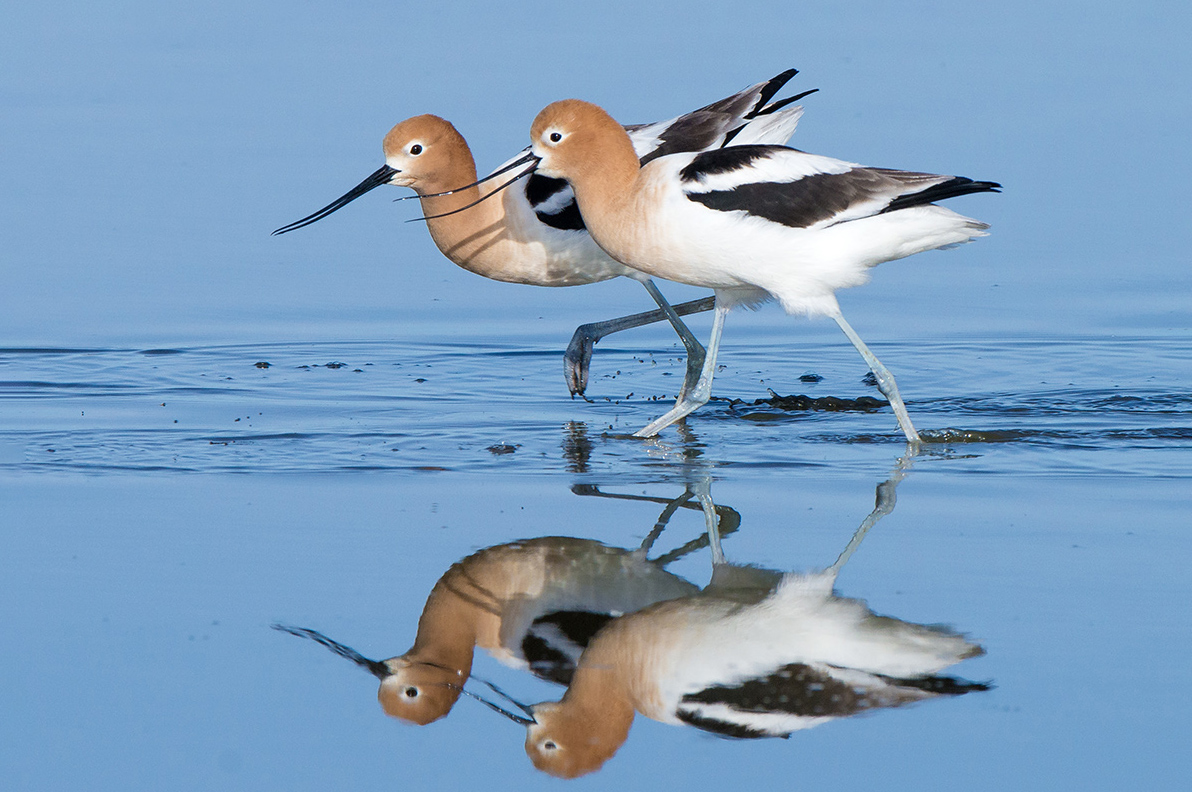
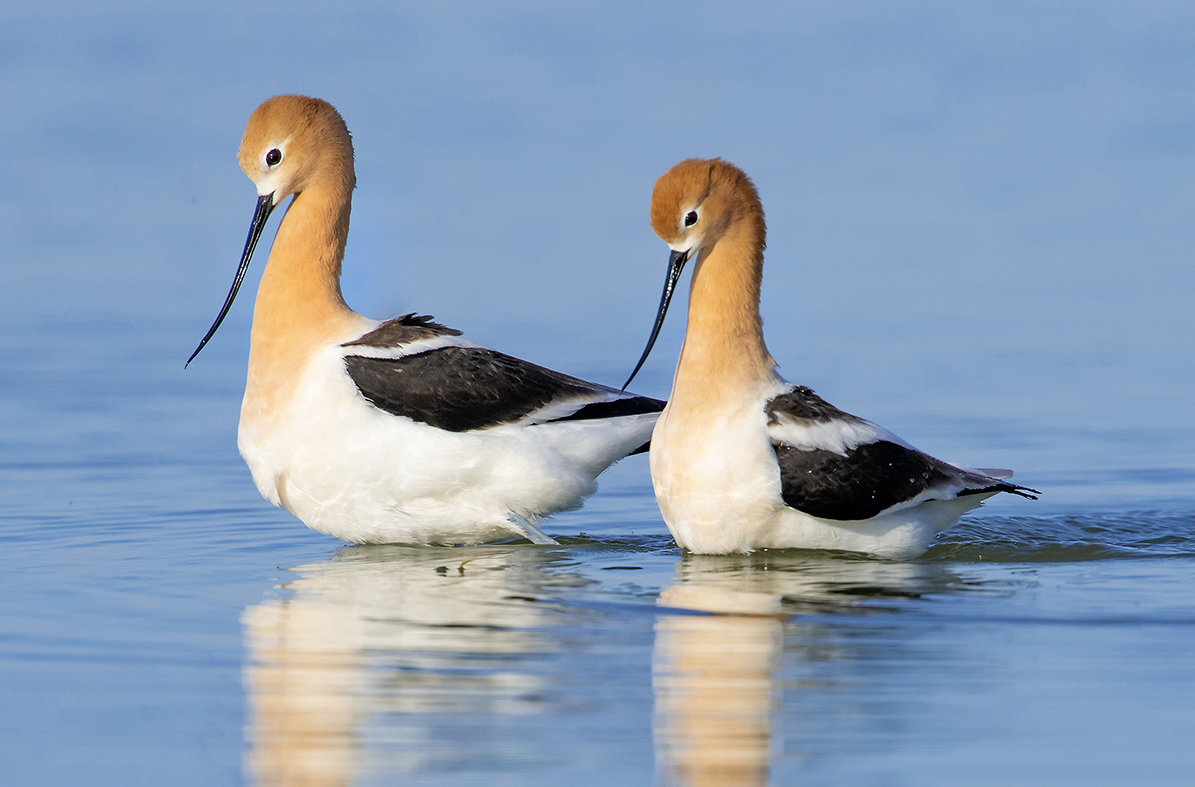
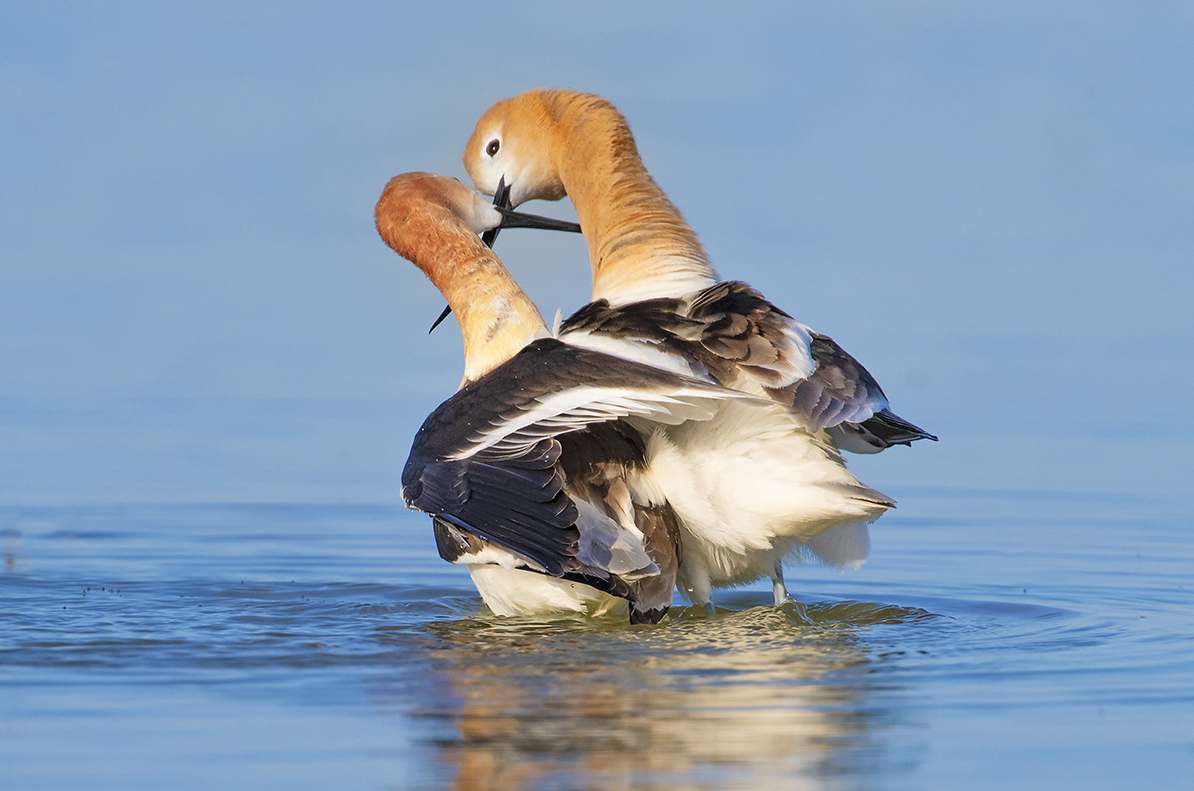
For an instant their cloacas ‘kissed,’ then the male slid off and the pair ran together through the water for a dozen steps. At the end of the rush, they crossed their bills like the swords of two fencers.
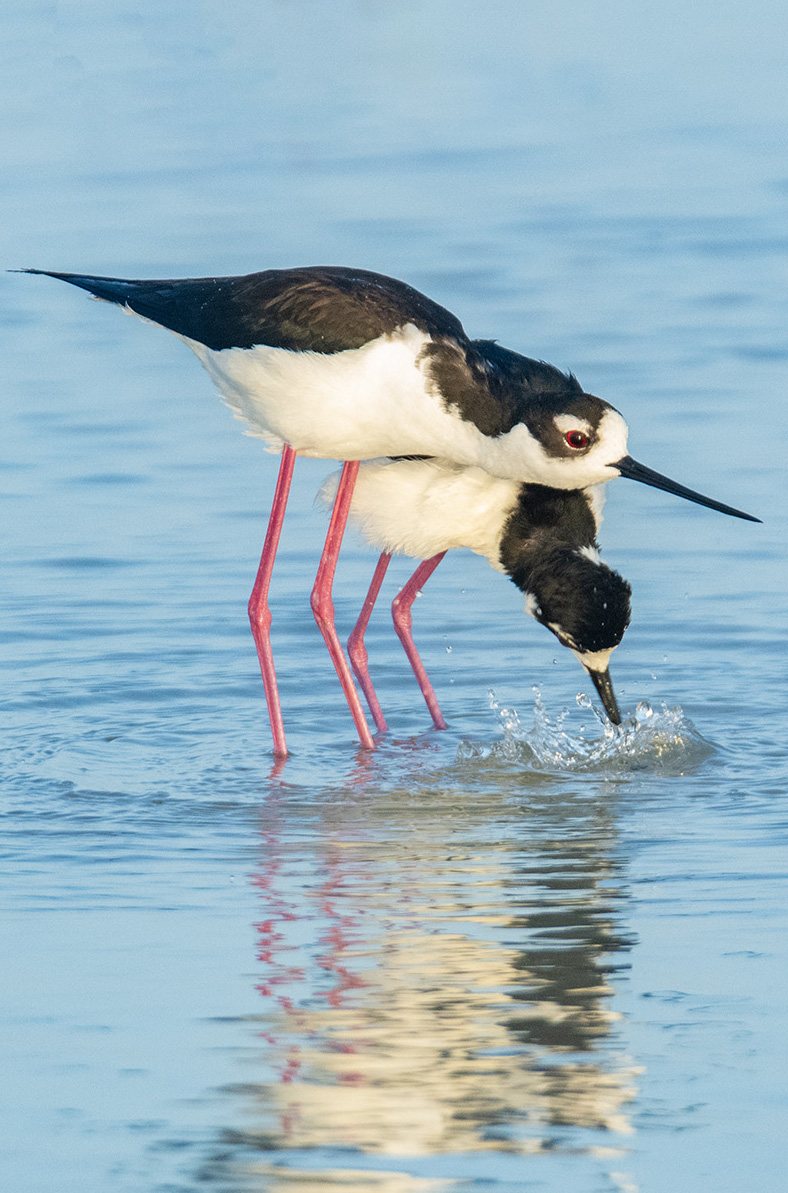
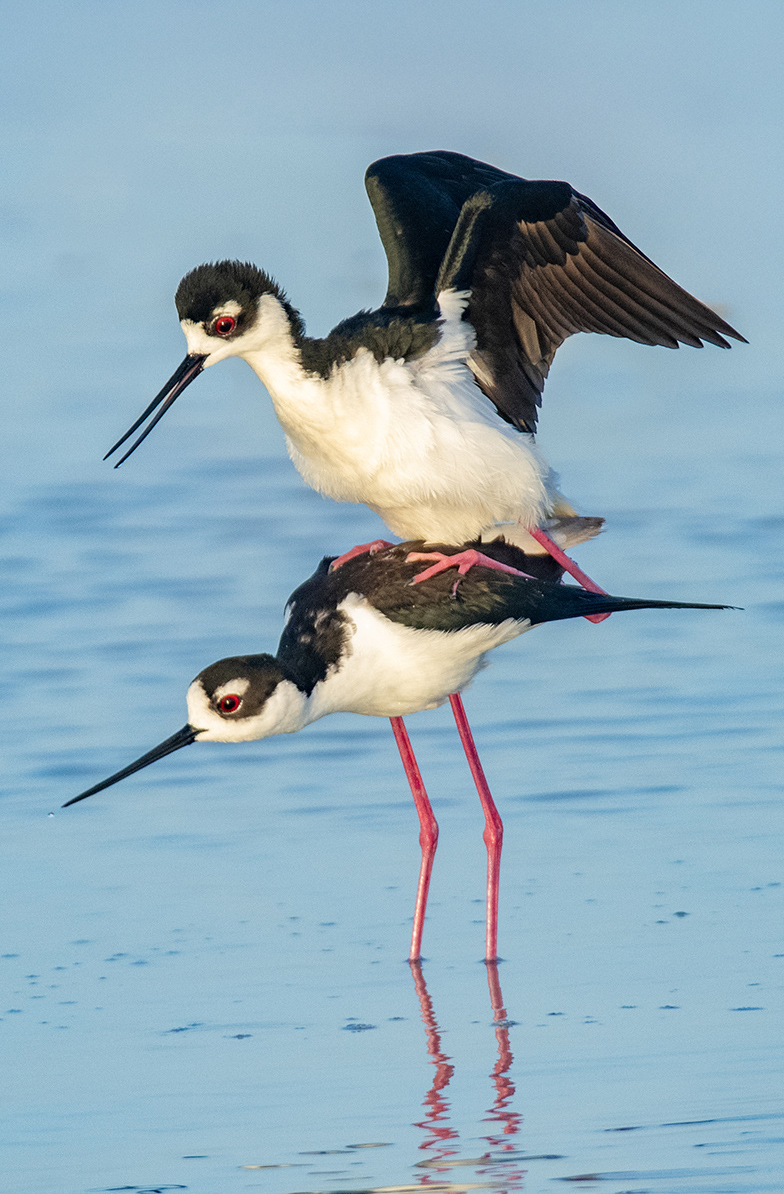
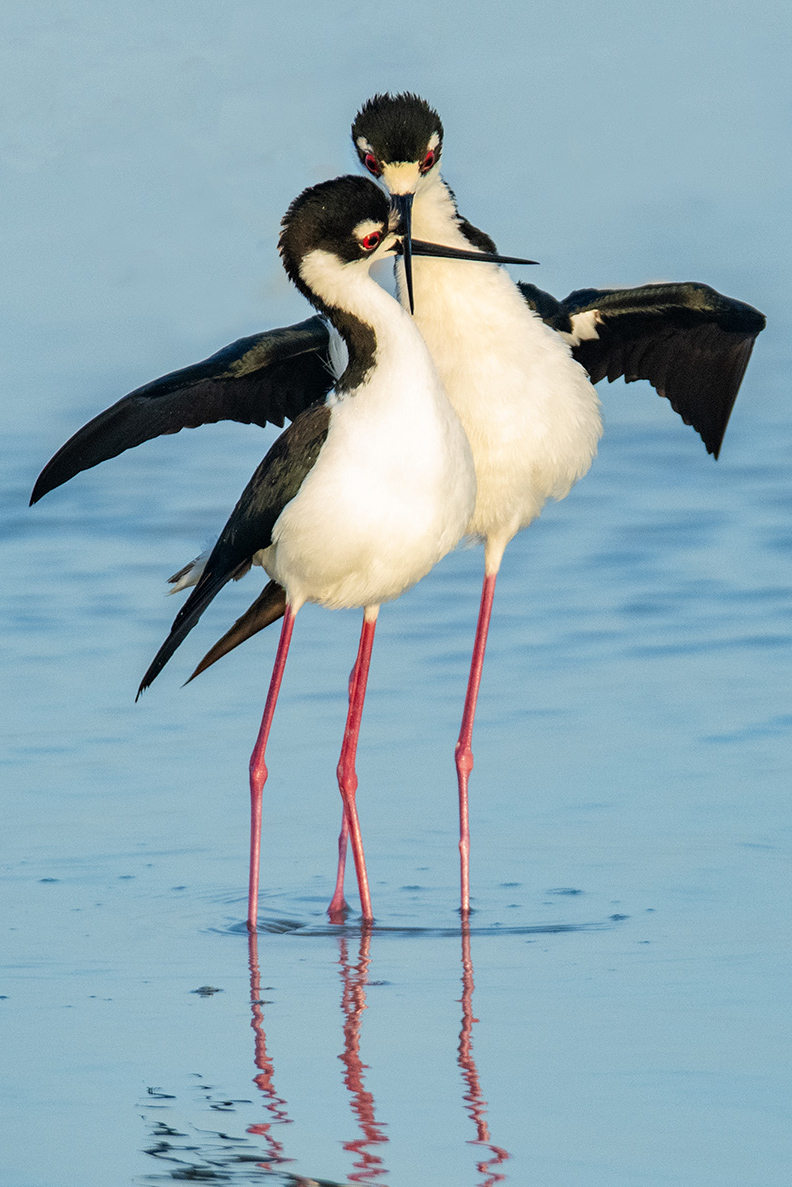
The courtship sequence is almost identical in black-necked stilts.
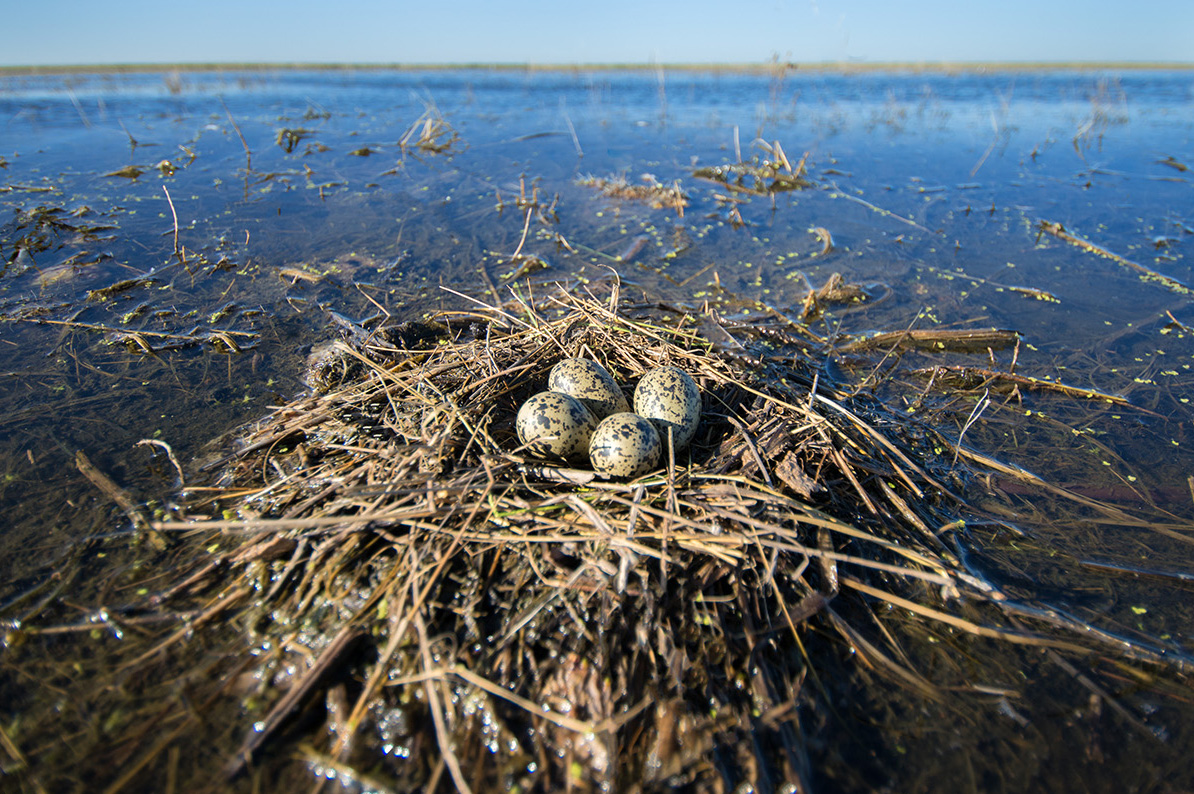
Both the stilt, whose nest is pictured here, and the avocet lay a clutch of four pale brownish, cryptic eggs covered with dark spots and blotches. Both sexes take turns incubating the eggs for 23 days. The birds alternate frequently throughout the day, changing places every 40 to 80 minutes.
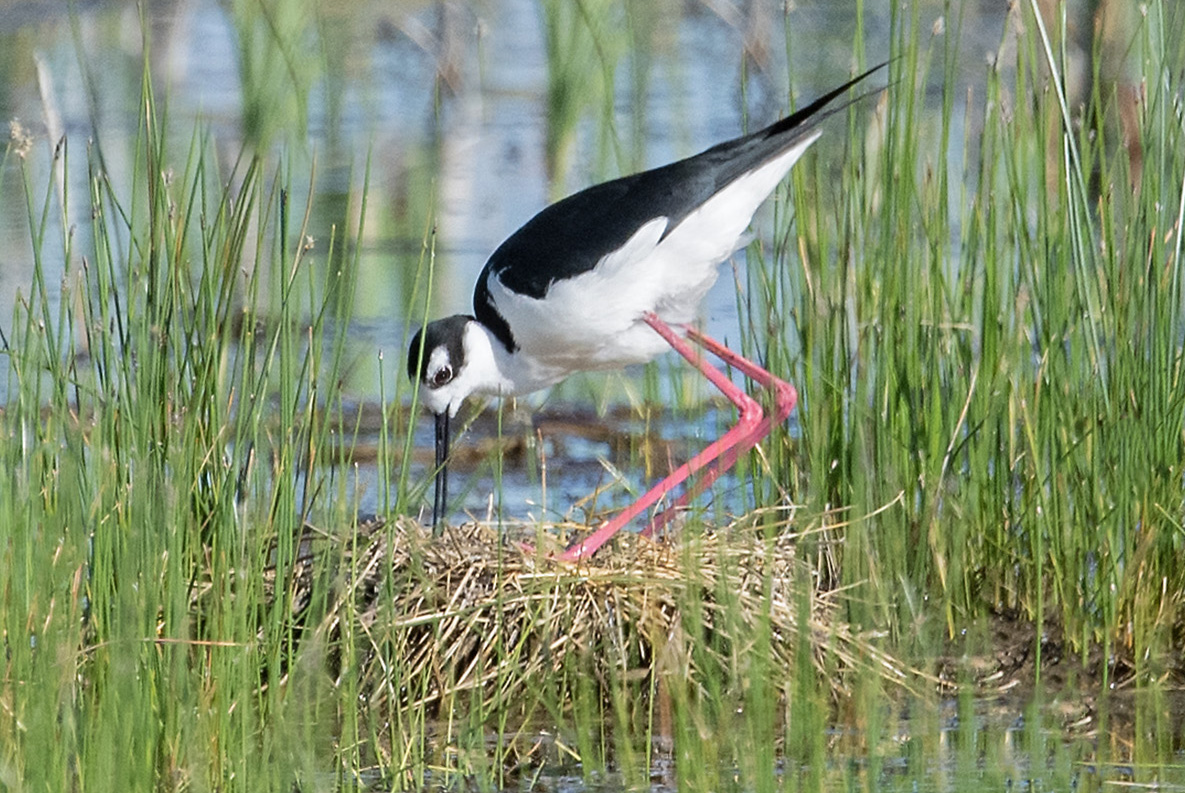
In hot weather, an incubating pair might make more than 100 daily trips to soak their belly feathers in water to cool the eggs and keep them from lethally overheating.
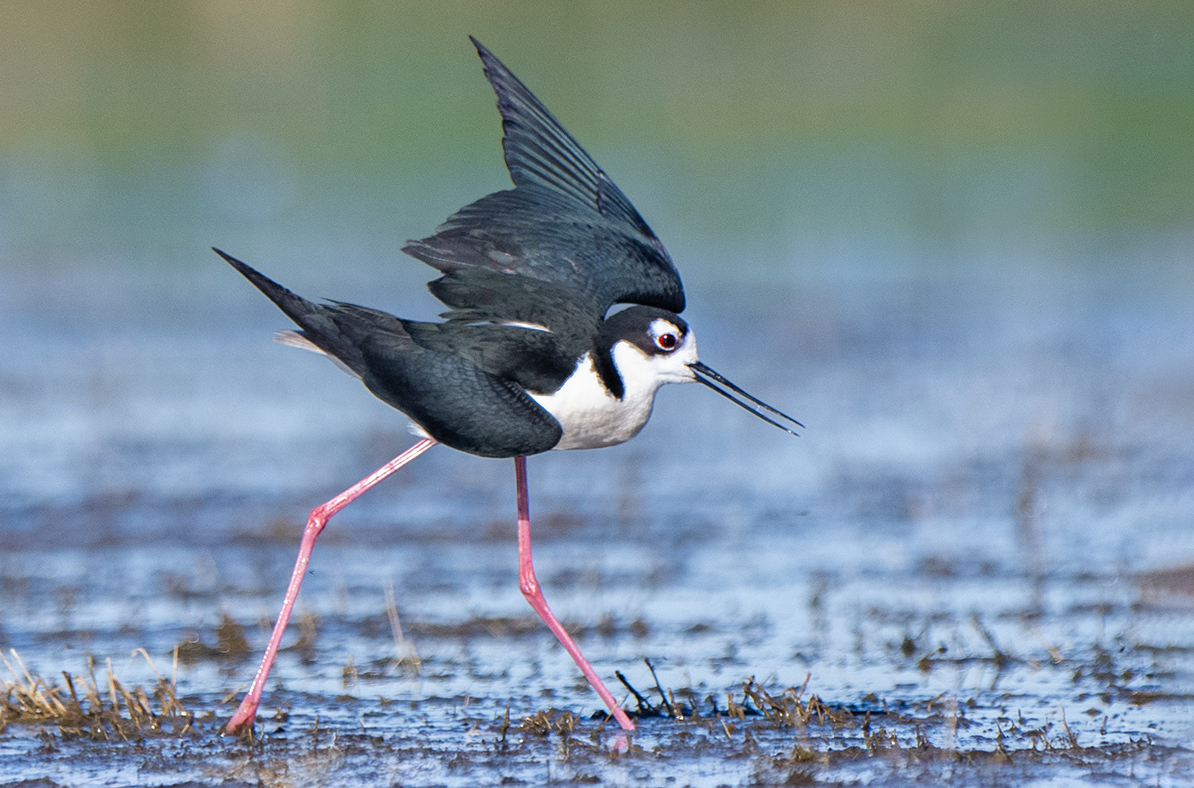
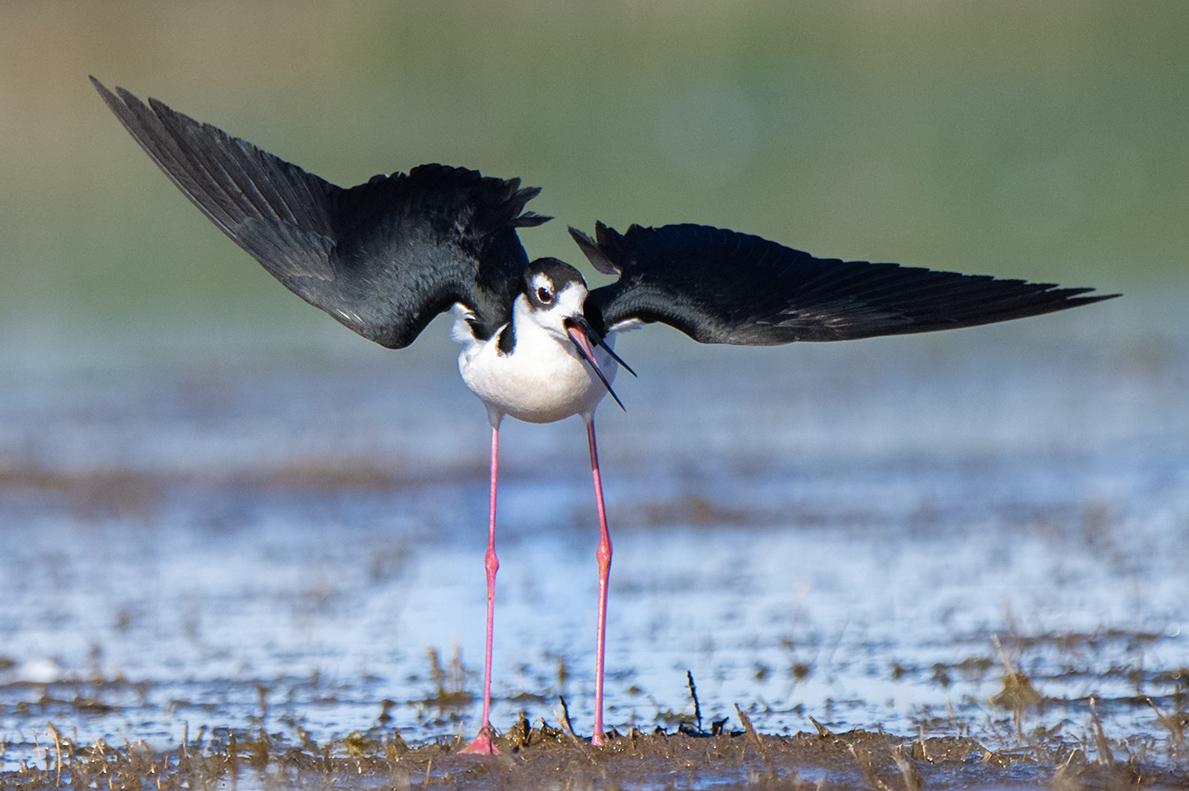
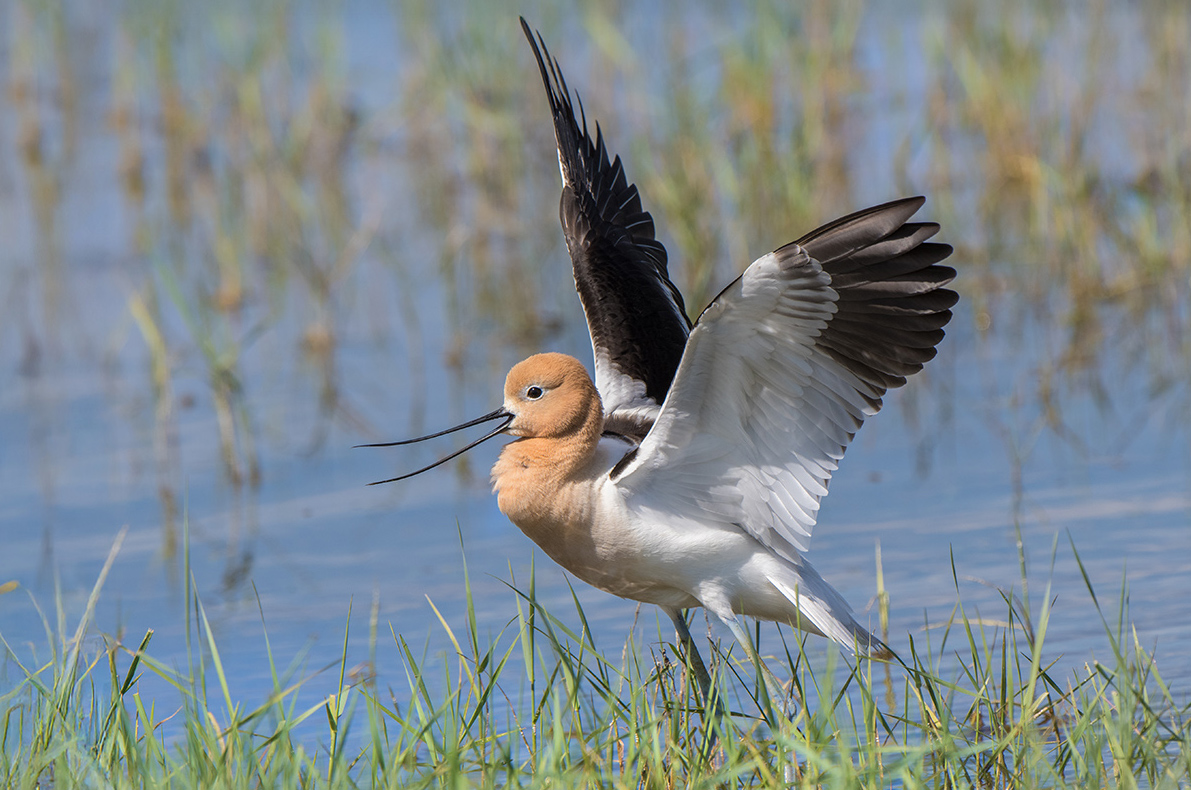
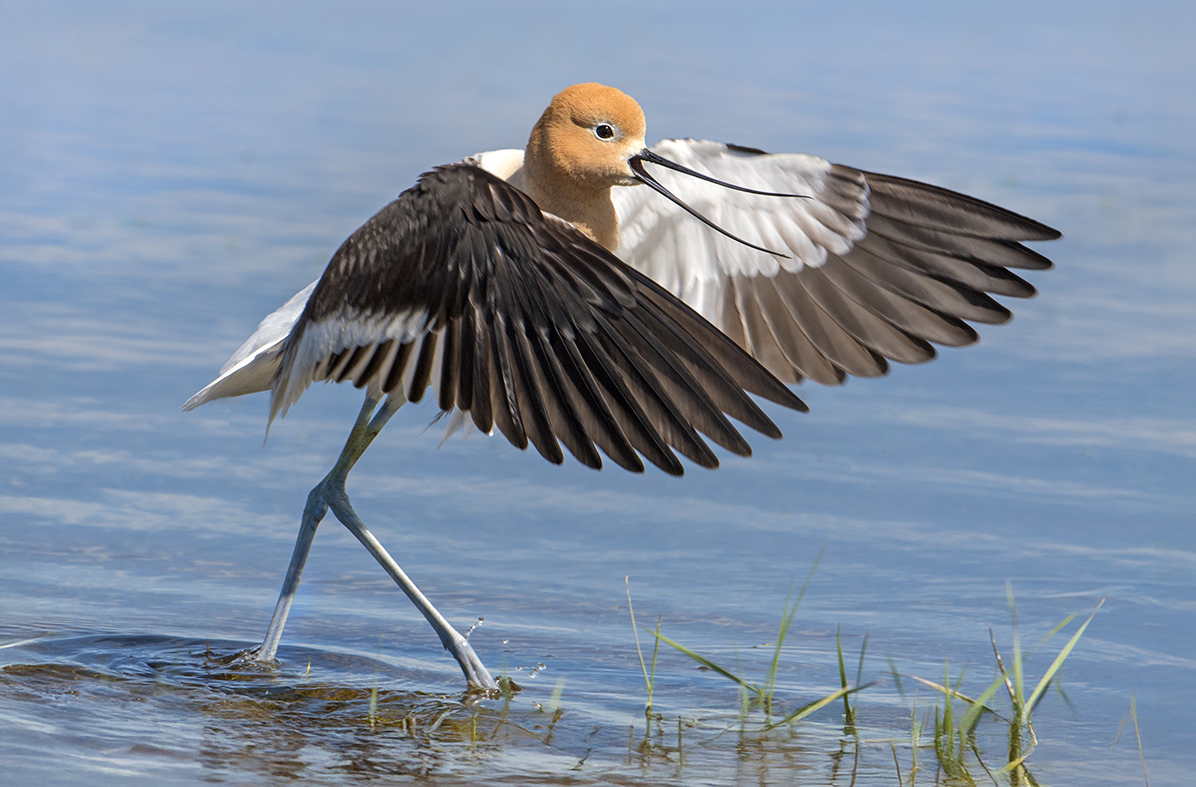
Both species perform similar elaborate distraction displays to lure a predator away from their nest. The aggressive, vocal displays also drive other nonpredators away from their nesting areas, including American coots, Canada geese, and teal.
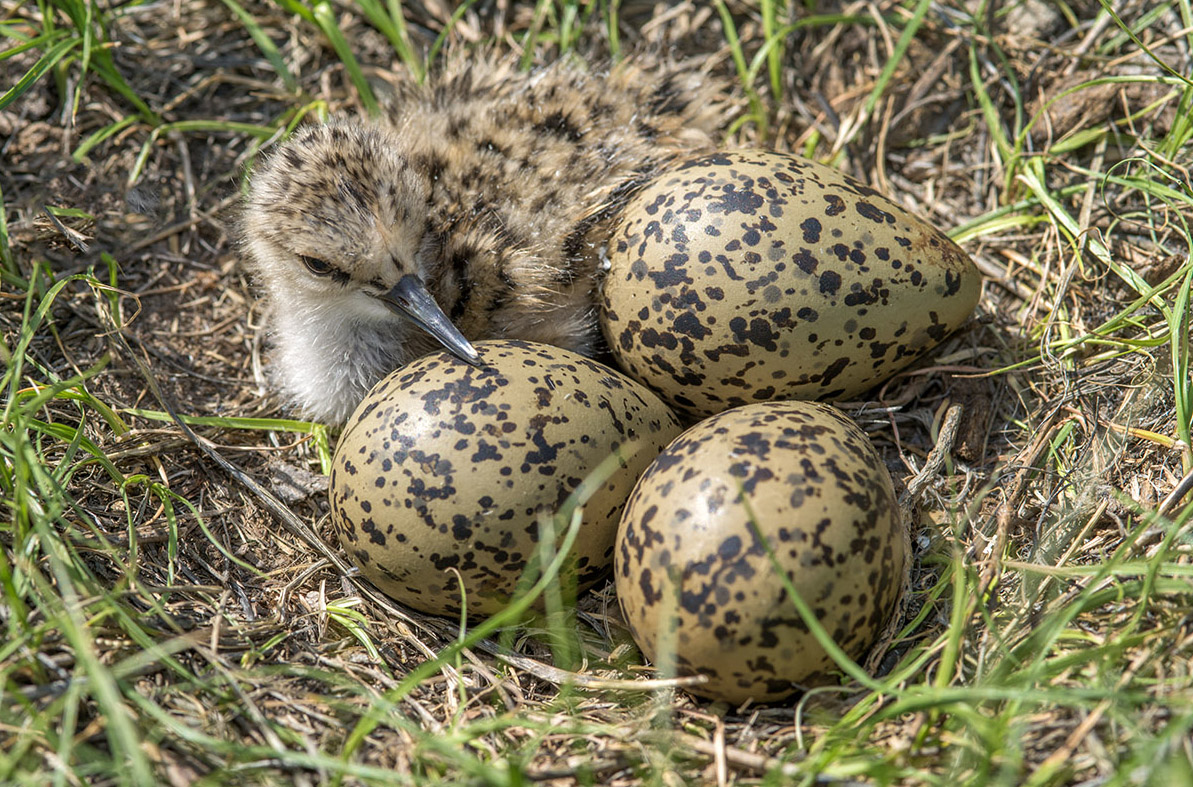
New hatchlings, like this young avocet, look like tiny clumps of down balanced on a pair of toothpicks.
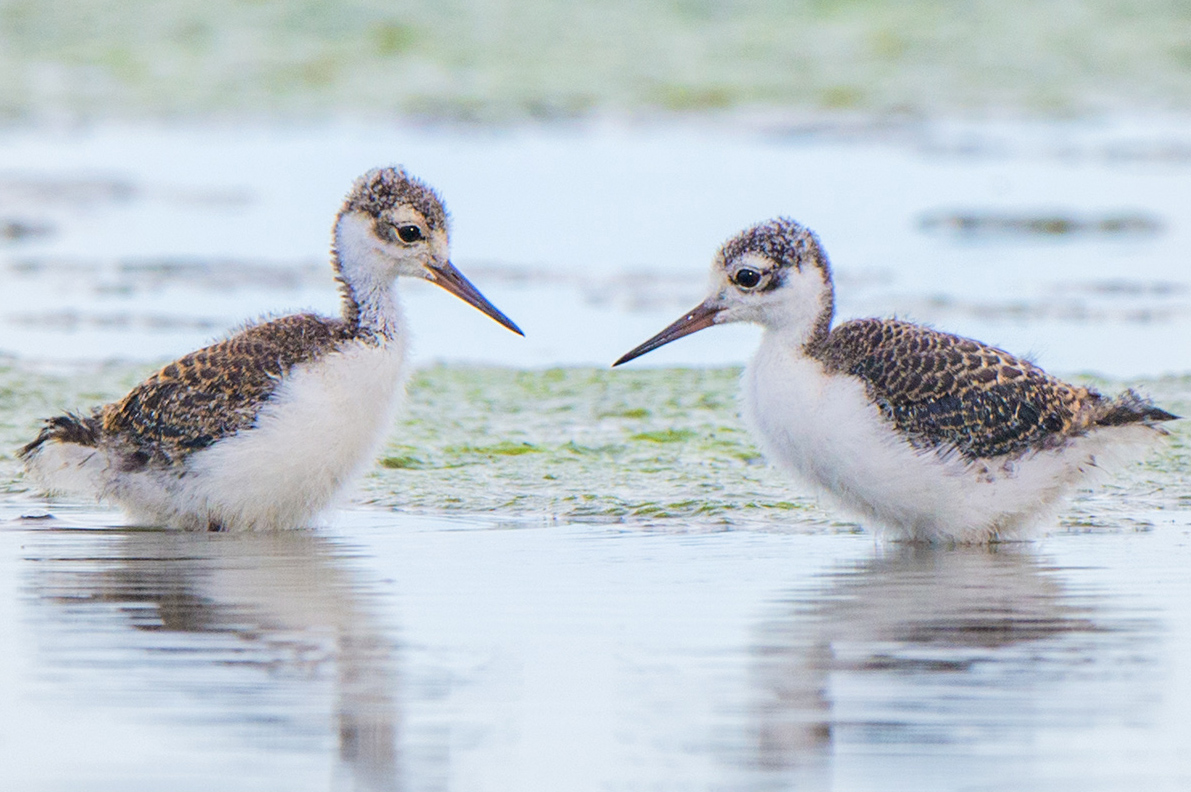
Young chicks can run and feed themselves almost from the moment they hatch, but they follow their parents around for about a month, until they begin to fly.
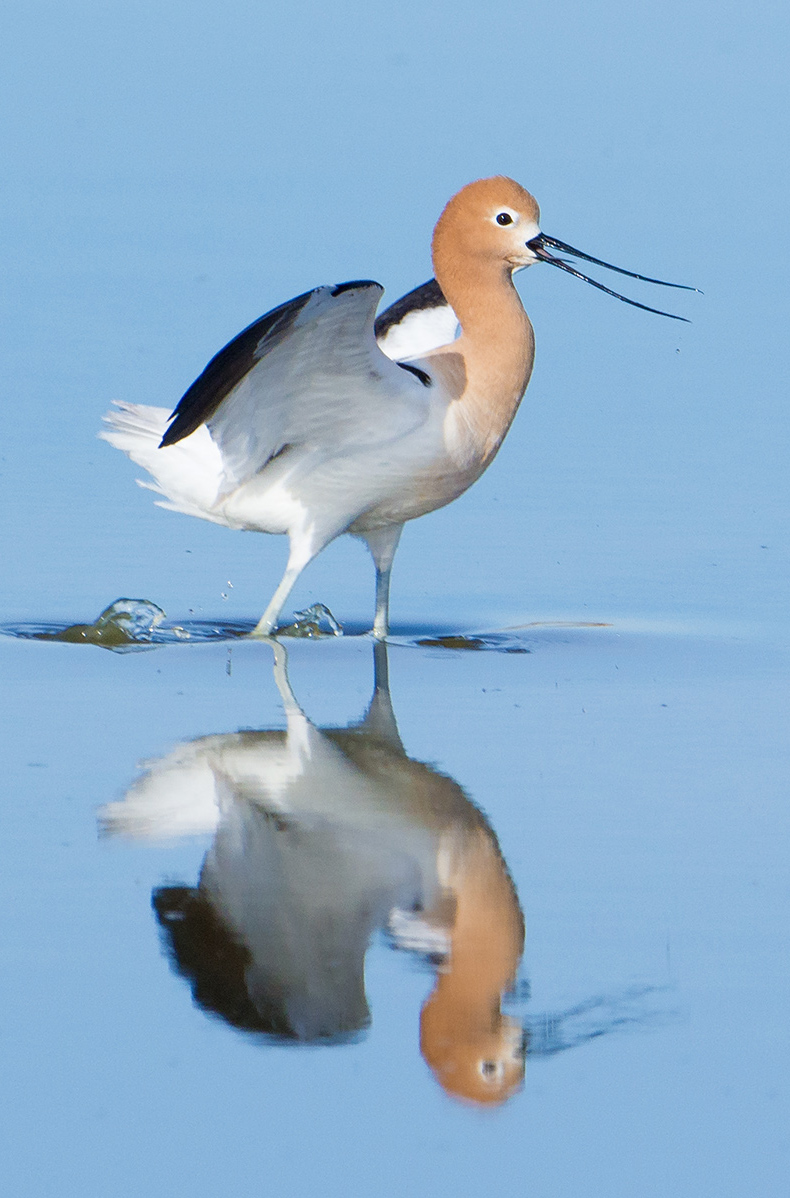
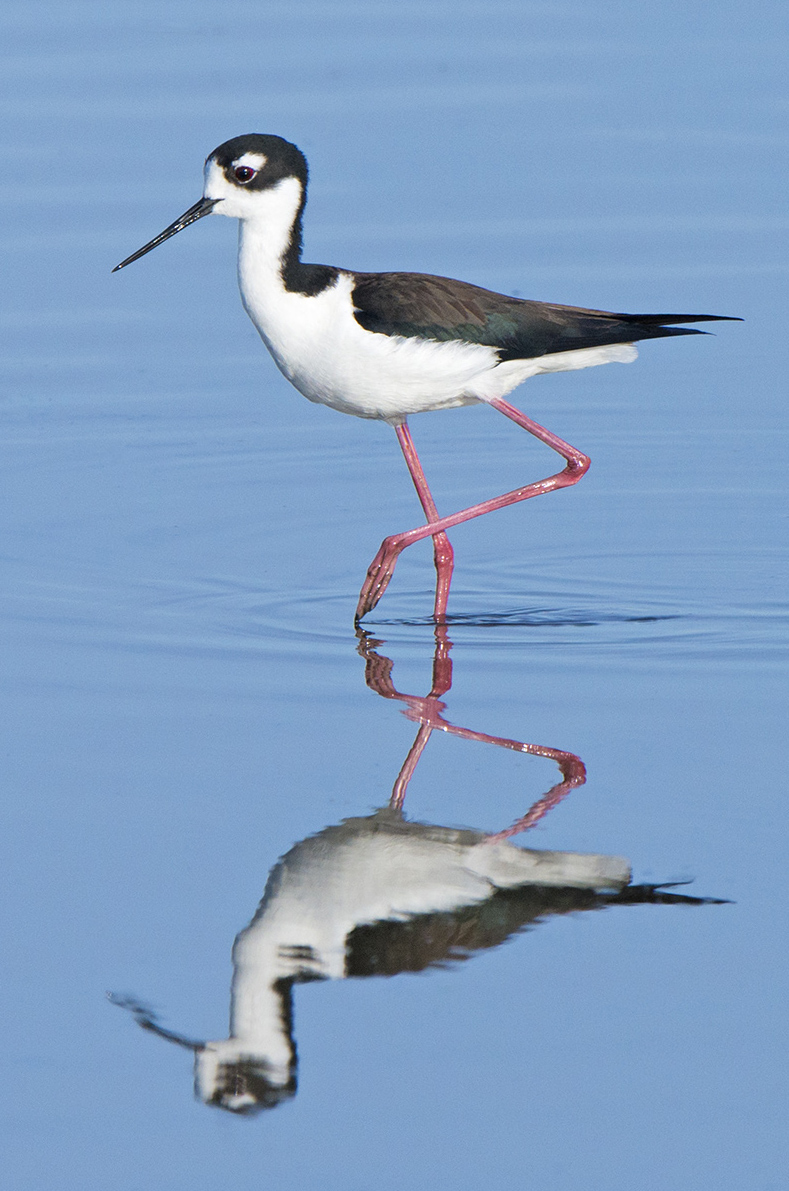
If you spend a day watching the graceful beauty of American avocets or black-necked stilts on a prairie slough, you will quickly understand why these birds are Aubrey’s prairie favourite.
About the Author – Dr. Wayne Lynch

For more than 40 years, Dr. Wayne Lynch has been writing about and photographing the wildlands of the world from the stark beauty of the Arctic and Antarctic to the lush rainforests of the tropics. Today, he is one of Canada’s best-known and most widely published nature writers and wildlife photographers. His photo credits include hundreds of magazine covers, thousands of calendar shots, and tens of thousands of images published in over 80 countries. He is also the author/photographer of more than 45 books for children as well as over 20 highly acclaimed natural history books for adults including Windswept: A Passionate View of the Prairie Grasslands; Penguins of the World; Bears: Monarchs of the Northern Wilderness; A is for Arctic: Natural Wonders of a Polar World; Wild Birds Across the Prairies; Planet Arctic: Life at the Top of the World; The Great Northern Kingdom: Life in the Boreal Forest; Owls of the United States and Canada: A Complete Guide to their Biology and Behavior; Penguins: The World’s Coolest Birds; Galapagos: A Traveler’s Introduction; A Celebration of Prairie Birds; and Bears of the North: A Year Inside Their Worlds. In 2022, he released Wildlife of the Rockies for Kids, and Loons: Treasured Symbols of the North. His books have won multiple awards and have been described as “a magical combination of words and images.”
Dr. Lynch has observed and photographed wildlife in over 70 countries and is a Fellow of the internationally recognized Explorers Club, headquartered in New York City. A Fellow is someone who has actively participated in exploration or has substantially enlarged the scope of human knowledge through scientific achievements and published reports, books, and articles. In 1997, Dr. Lynch was elected as a Fellow to the Arctic Institute of North America in recognition of his contributions to the knowledge of polar and subpolar regions. And since 1996 his biography has been included in Canada’s Who’s Who.



Love this article and the images are outstanding. Can you provide some locations in the Prairies where we can go and photograph these beautiful birds?
Hello Christine. Both birds are widespread across the prairie regions of Alberta, Saskatchewan and Manitoba. You need to look for areas that have seasonal sloughs. You can check on the website eBird and that may help you narrow down the search. I don’t know where you live so I can’t be more specific. Good luck. When you find them you be happy you searched.
Wayne