



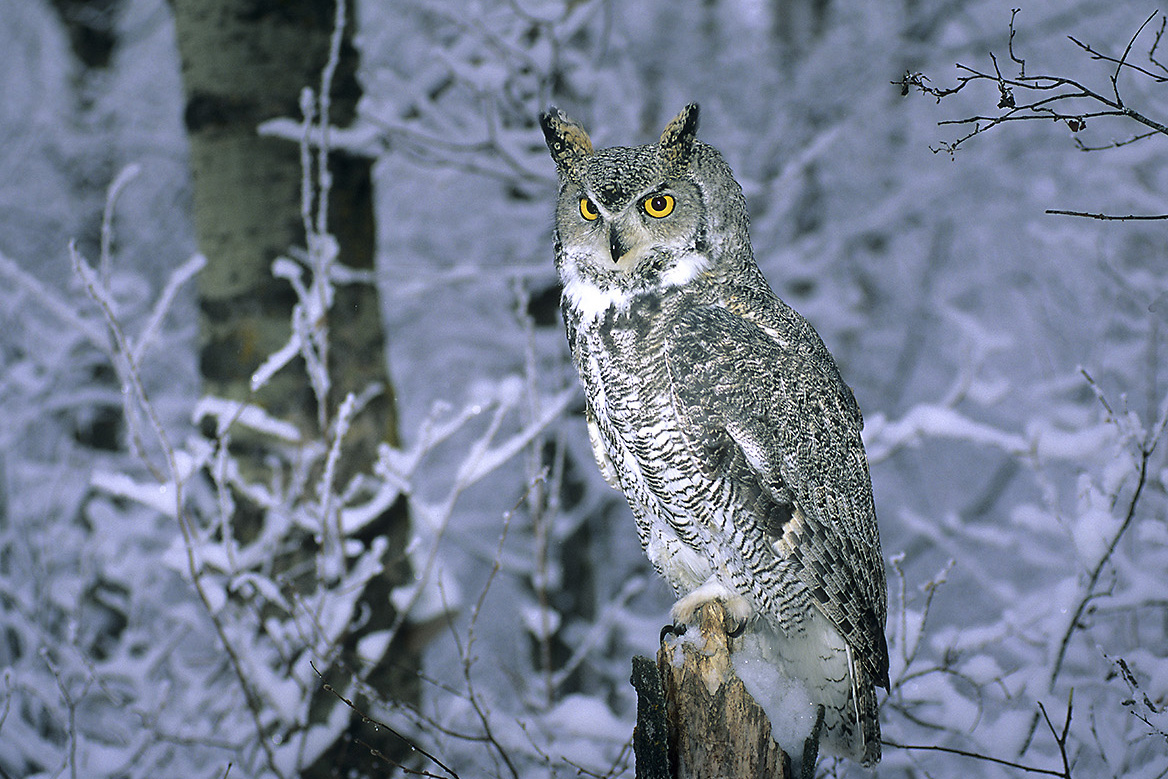
In 1977, the great horned owl was Alberta’s pick following a province-wide children’s vote. This powerful owl is the second heaviest owl in Canada and is a formidable predator of small and medium-size mammals and birds. It will even tackle heavily quilled porcupines, nestling hawks, peregrine falcons, and every other owl species that shares its habitat.
Canada is an immense country where natural landscapes and wildlife are a proud part of our national identity. To celebrate our connection to the environment, provincial governments, beginning in 1945 in Saskatchewan, set out to officially select a familiar and popular native bird that symbolized the individual province’s or territory’s natural heritage. Governments used various methods to make their choices, often involving informal polls of newspaper readers and school children, the suggestions by natural history organizations and indigenous groups, and the input of ornithologists and other local nature specialists.
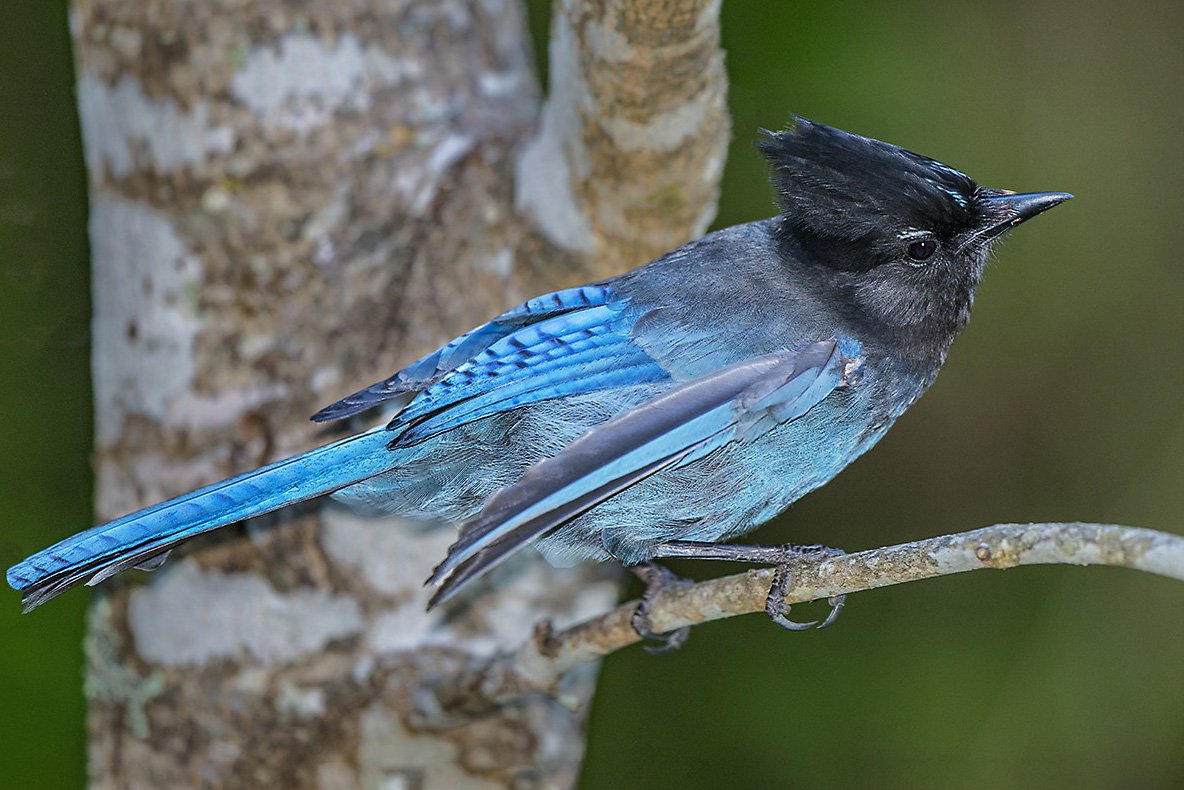
Steller’s jay was selected in British Columbia in 1987 because of its familiarity to the public. The handsome jay is named in honour of George Wilhelm Steller who was the naturalist/surgeon on Vitus Bering’s final voyage of discovery to Alaska in 1740. On the voyage Steller discovered a jay, an eider, a sea eagle, a sea lion, and a sea cow, all of which bear his name today.
When the territory of Nunavut was finally created in 1999, it was the last of the country’s governments to adopt an official bird emblem. This month I want to feature the 13 avian stars (in alphabetical order) that made the cut. Before looking at the photos below see if you can recall your own province’s or territory’s avian celebrity and how many others you can guess. Here are a few clues. Among the 13 species, there are three owls, two diurnal birds of prey, two game birds, four songbirds, one waterbird, and one seabird.
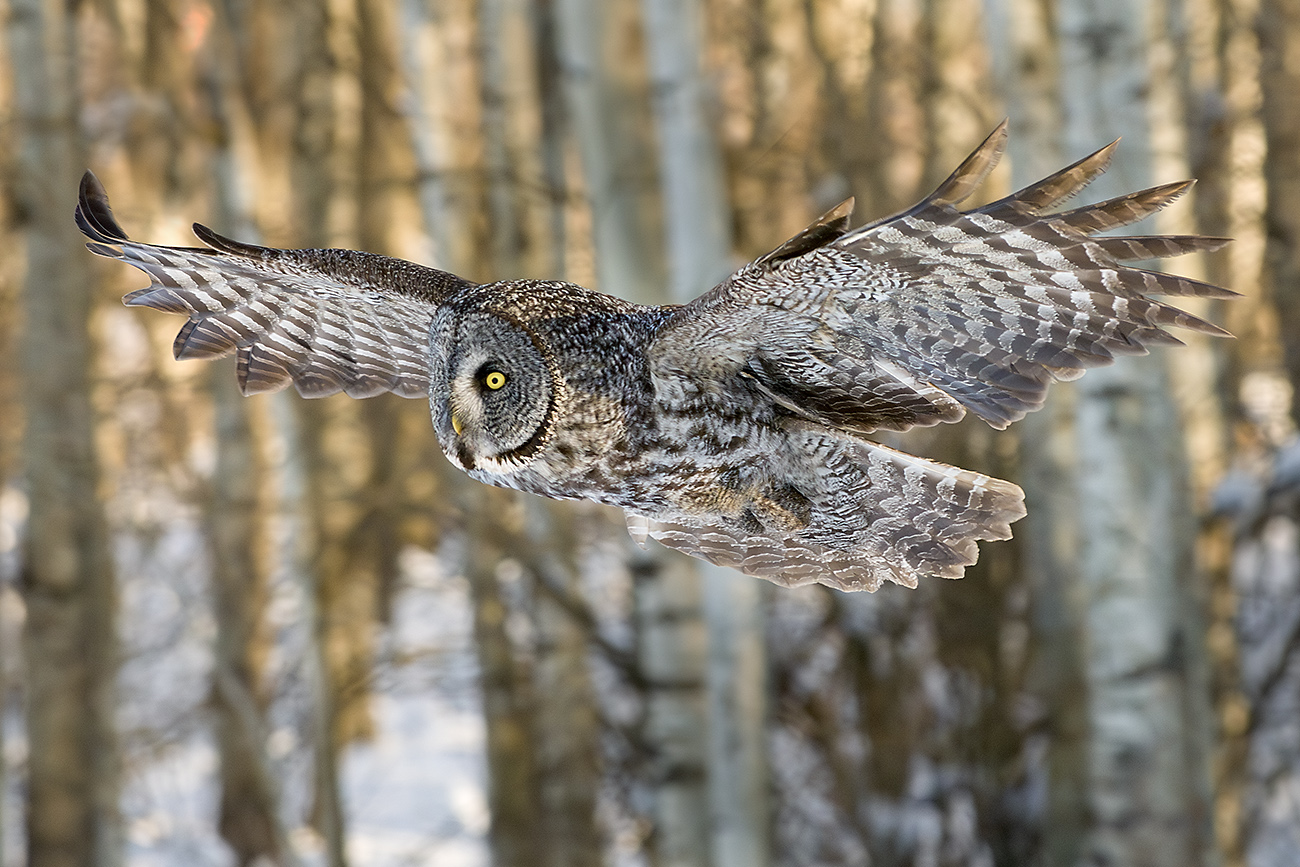
The Great Grey Owl was officially adopted as the provincial bird emblem of Manitoba in 1987. This tallest of owls is known for its incredible hearing that allows it to detect and capture small rodents tunnelling under snow as deep as 25 centimetres.
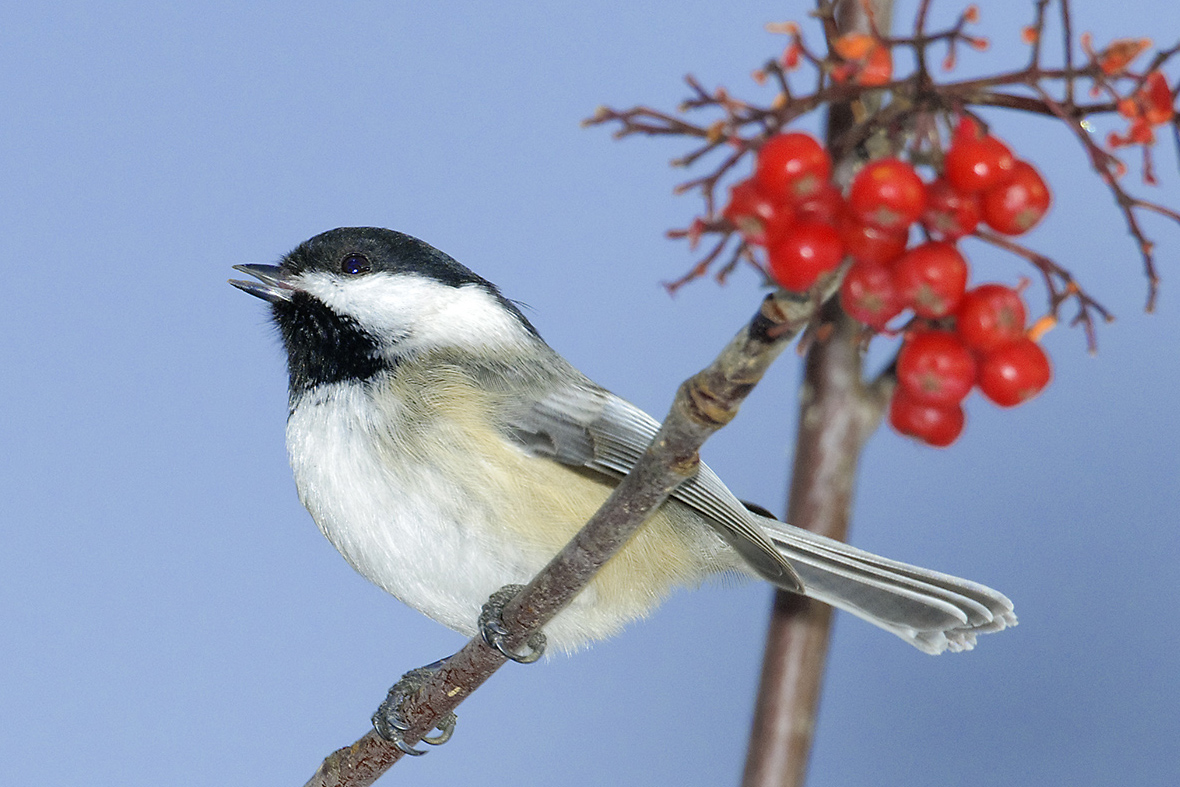
In New Brunswick, in 1983, a poll conducted by the provincial natural history society opted for the black-capped chickadee as their chosen feathered one. The tiny chickadee is one of the smallest birds to overwinter in Canada. To conserve energy the chickadee voluntarily cools down at night allowing its body temperature to drop from 40° C to 30°C, earning the tough little songbird an energy saving of up to 45 per cent.
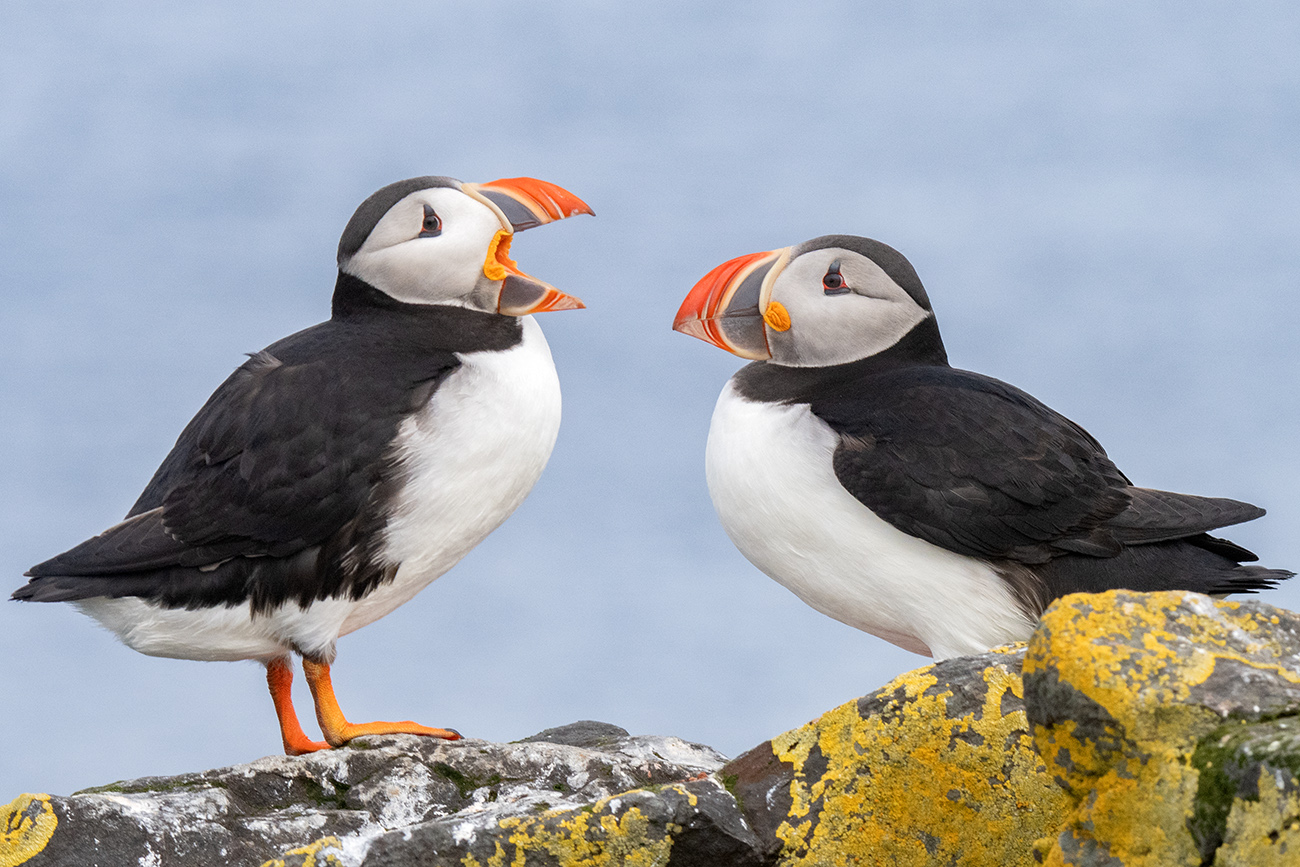
The Atlantic puffin was adopted by Newfoundland and Labrador in 1992. The puffin belongs to the Auk family whose members are the Northern Hemisphere equivalents of the Southern Hemisphere penguins. Both auks and penguins live in cold, polar waters, nest in large colonies, eat the same kinds of food: squid, shrimp-like krill and small schooling fishes, and chase their meals by “flying” underwater; the penguins use their stiff front flippers, and the auks use their narrow, sickle-shaped wings as though they were flippers.
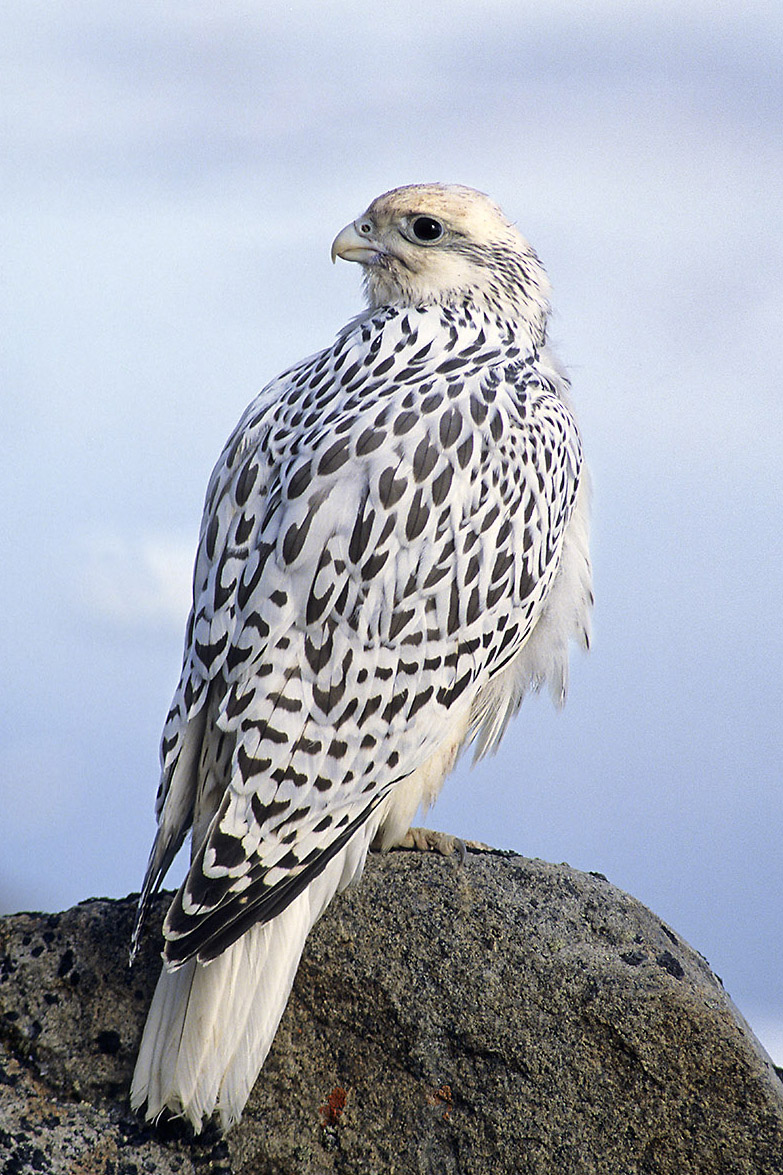
The gyrfalcon (pronounced JEER-falcon), a majestic bird of prey, is the raptorial embodiment of the north. Able to endure frigid temperatures and thrive in the Arctic, this powerful, fast-flying raptor was selected by the Northwest Territories in 1990 as its avian emblem.
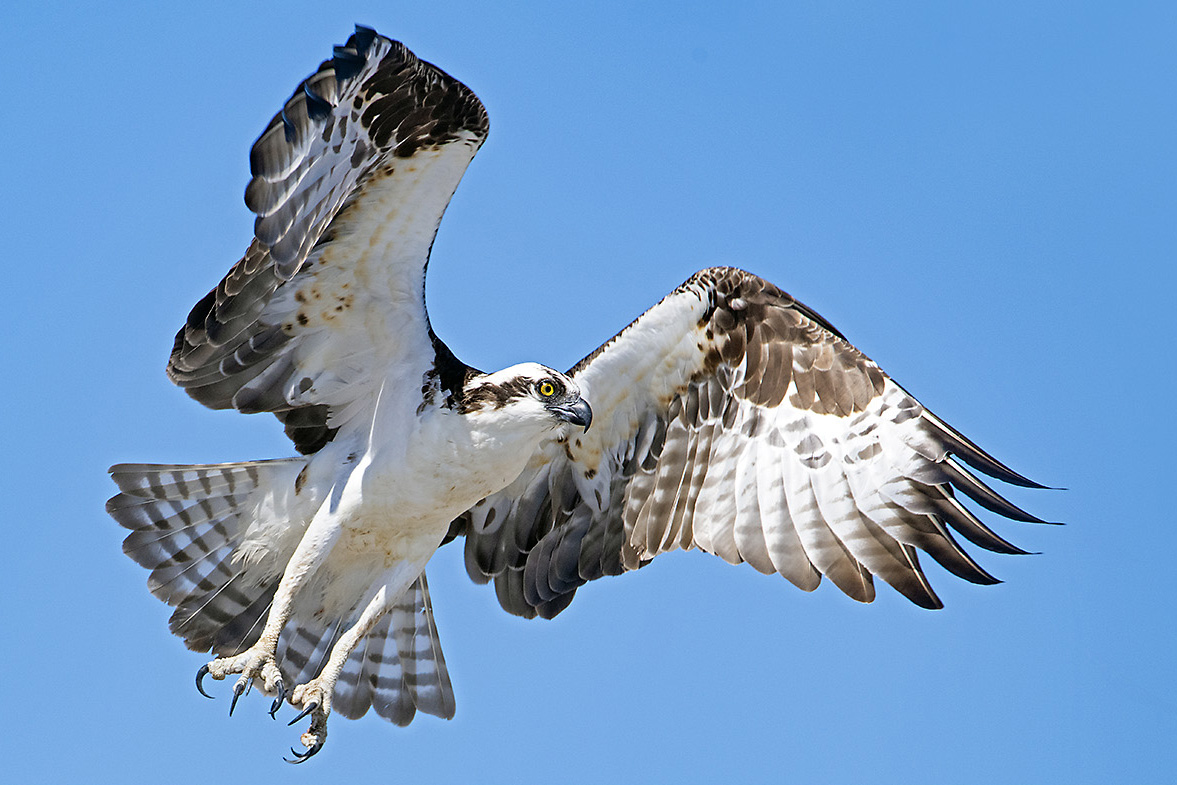
In 1994, the osprey, formerly known as the fish hawk, was chosen by 70 wildlife and environmental groups in Nova Scotia to celebrate the province’s intimate connection with the ocean. The bird’s dramatic diving behaviour, sometimes resulting in it disappearing completely underwater, and its large conspicuous nests were cited as two of the reasons for its successful nomination.
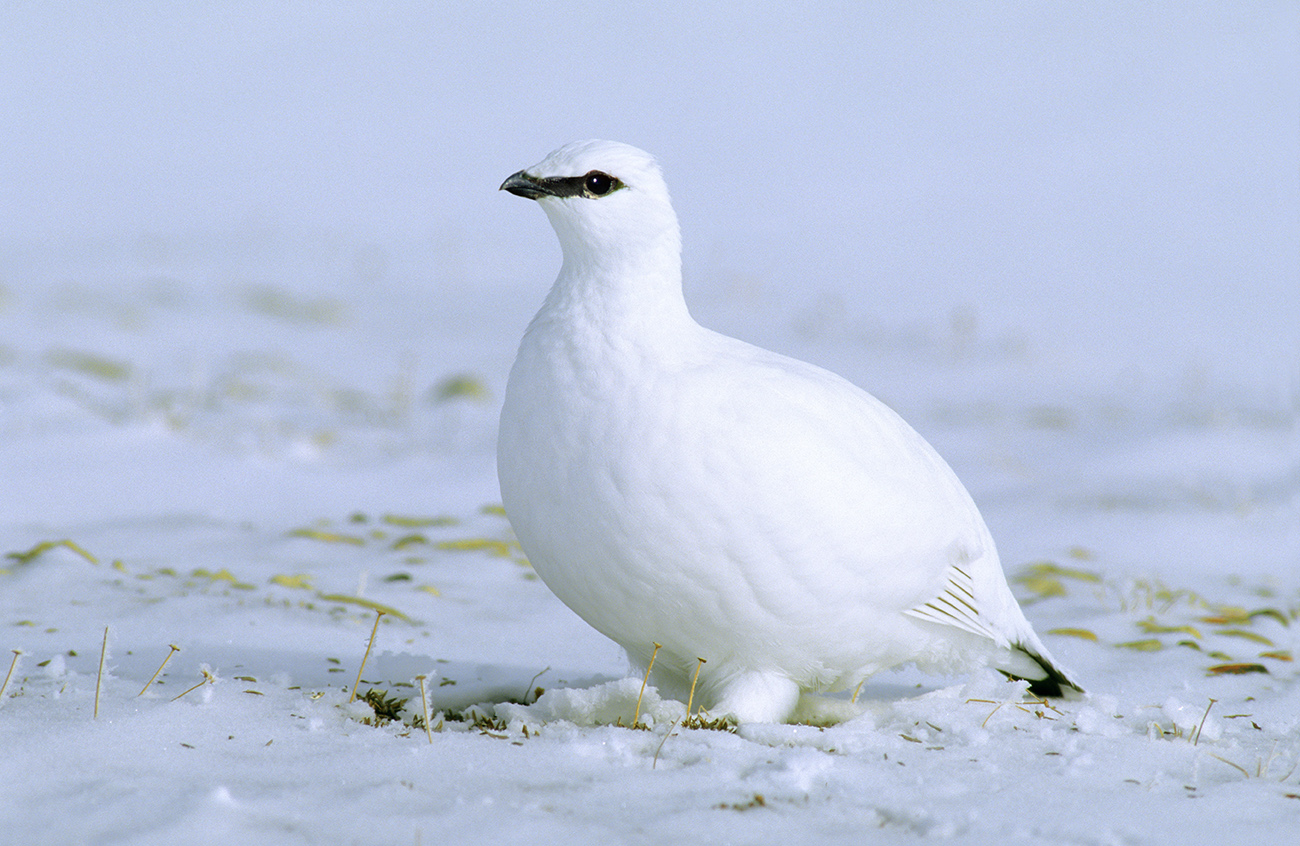
With the creation of Nunavut in 1999, the rock ptarmigan was the last of the country’s avian emblems to be chosen. Three species of ptarmigan occur in Canada, and the northernmost of the trio is the rock ptarmigan. As Nunavut includes the most northern regions in the country, and rock ptarmigan are a popular game bird for residents to hunt, the choice was a logical one.
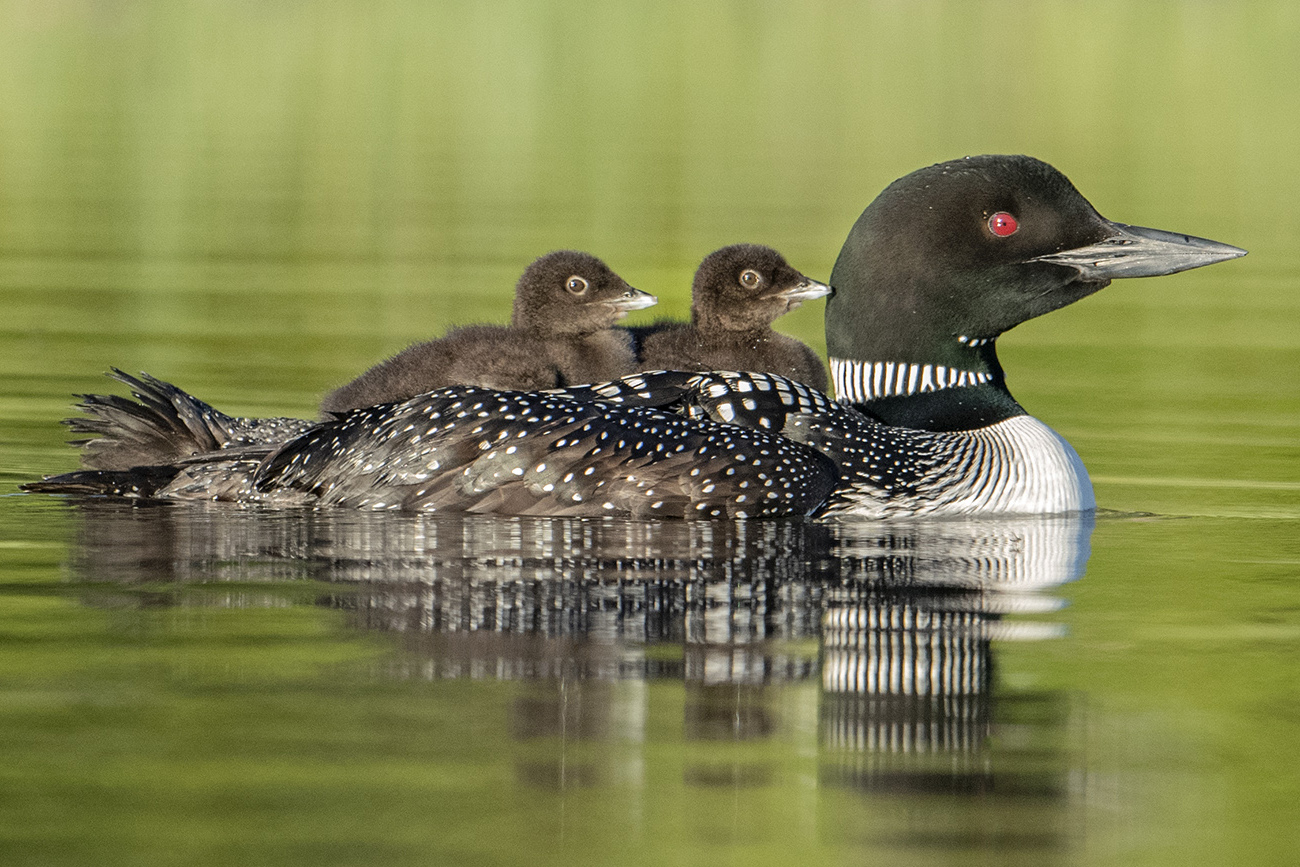
After a province-wide vote in 1994, Ontario residents overwhelming chose the common loon as their avian emblem. The successful nomination acknowledged the loon’s beloved presence on the province’s vast network of wilderness lakes and rivers. A newly hatched loon chick, such as the one pictured here, is unable to maintain its body temperature when paddling on the surface of a cold lake, so it spends much of its time riding on a parent’s back.
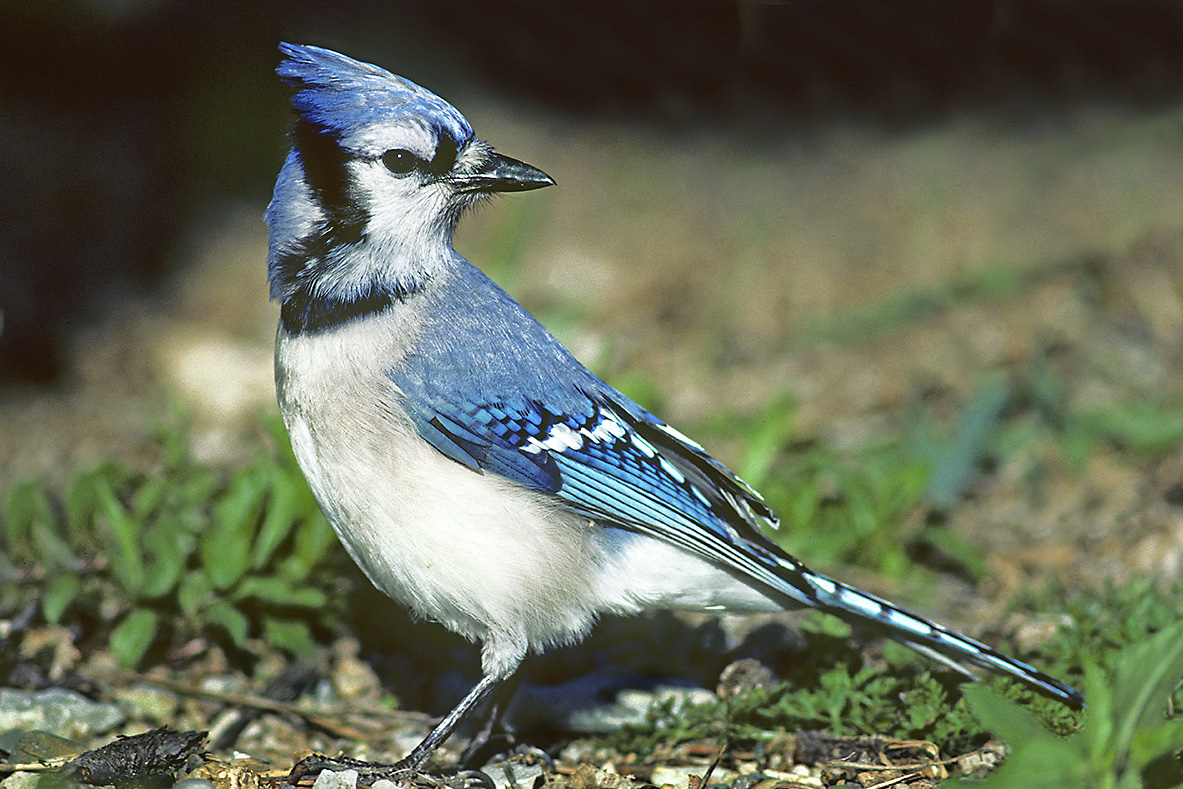
The familiar blue jay, which inhabits forests and urban areas alike and is a regular visitor at backyard bird feeders was officially adopted as the provincial bird of Prince Edward Island in 1977. It won the title after a province-wide public vote a year earlier. The intense blue of their plumage is not produced by a pigment but is due to the refraction of light by the microscopic structure of their feathers. If a feather is crushed, the blue disappears.
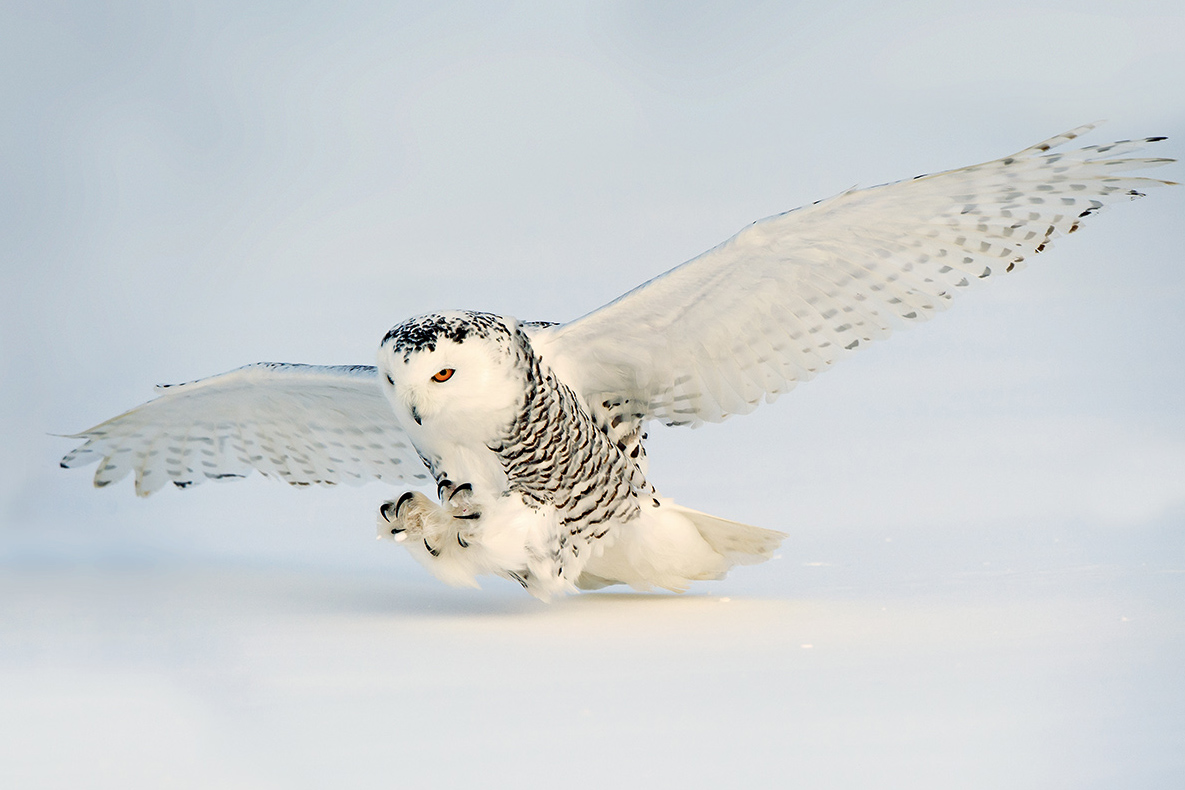
In 1987, the snowy owl was chosen as Quebec’s provincial bird. Every winter, these large, powerful owls regularly migrate into the province from their Arctic nesting grounds. The owl symbolizes the province’s cold, snowy winters, its vast northern territories, and its connection to the Arctic tundra.
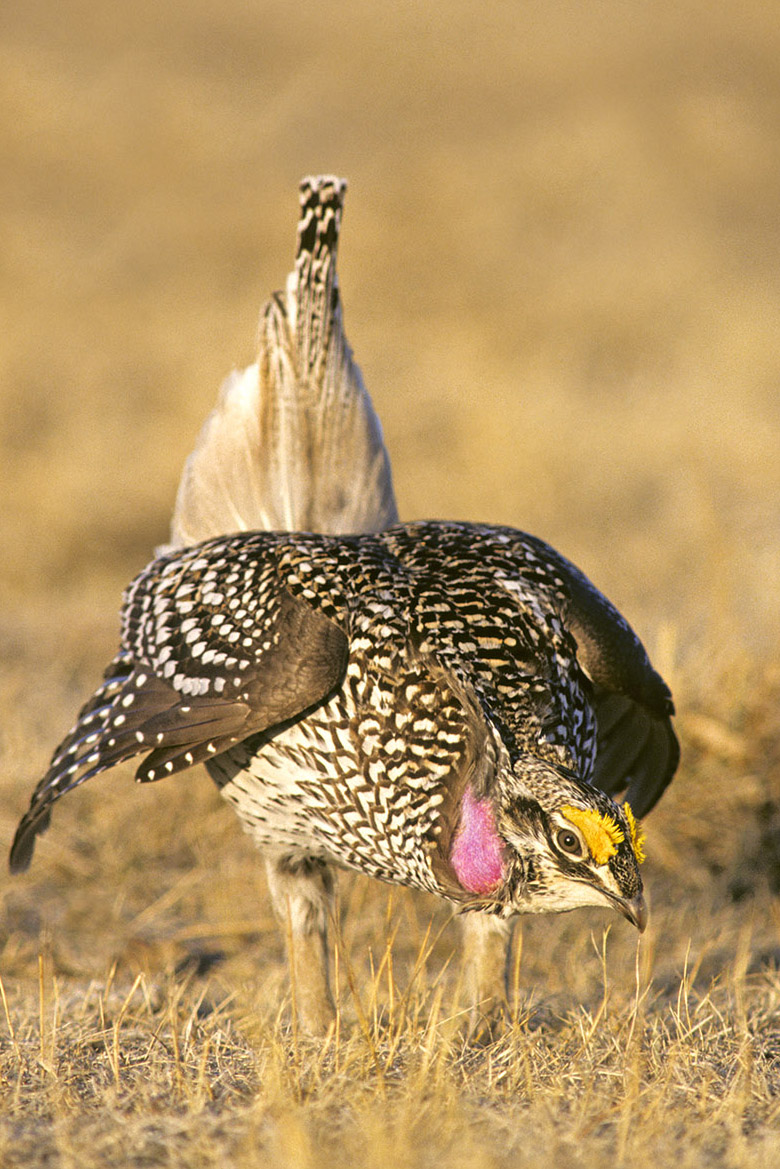
World War II ended in the summer of 1945 and in that same year Saskatchewan designated the sharp-tailed grouse as its official feathered emblem, making the province the first in Canada to assign such an avian designation. The grouse is a widespread grassland species, and a popular game bird, known for its spectacular foot-stomping, tail-fanning spring courtship displays.
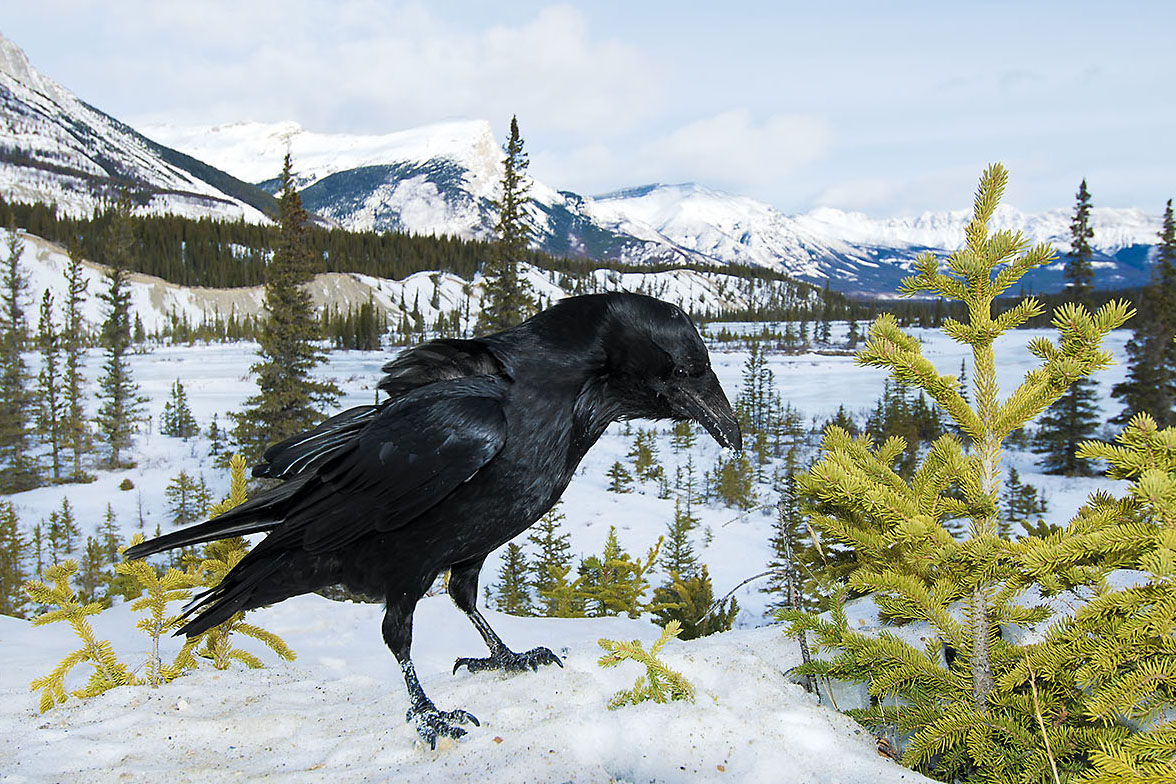
The Yukon government website claims the common raven was chosen as the territorial bird emblem in 1985 because of the bird’s intelligence, adaptability, and deep significance in First Nations cultures where it appears in countless stories as a creator and trickster.
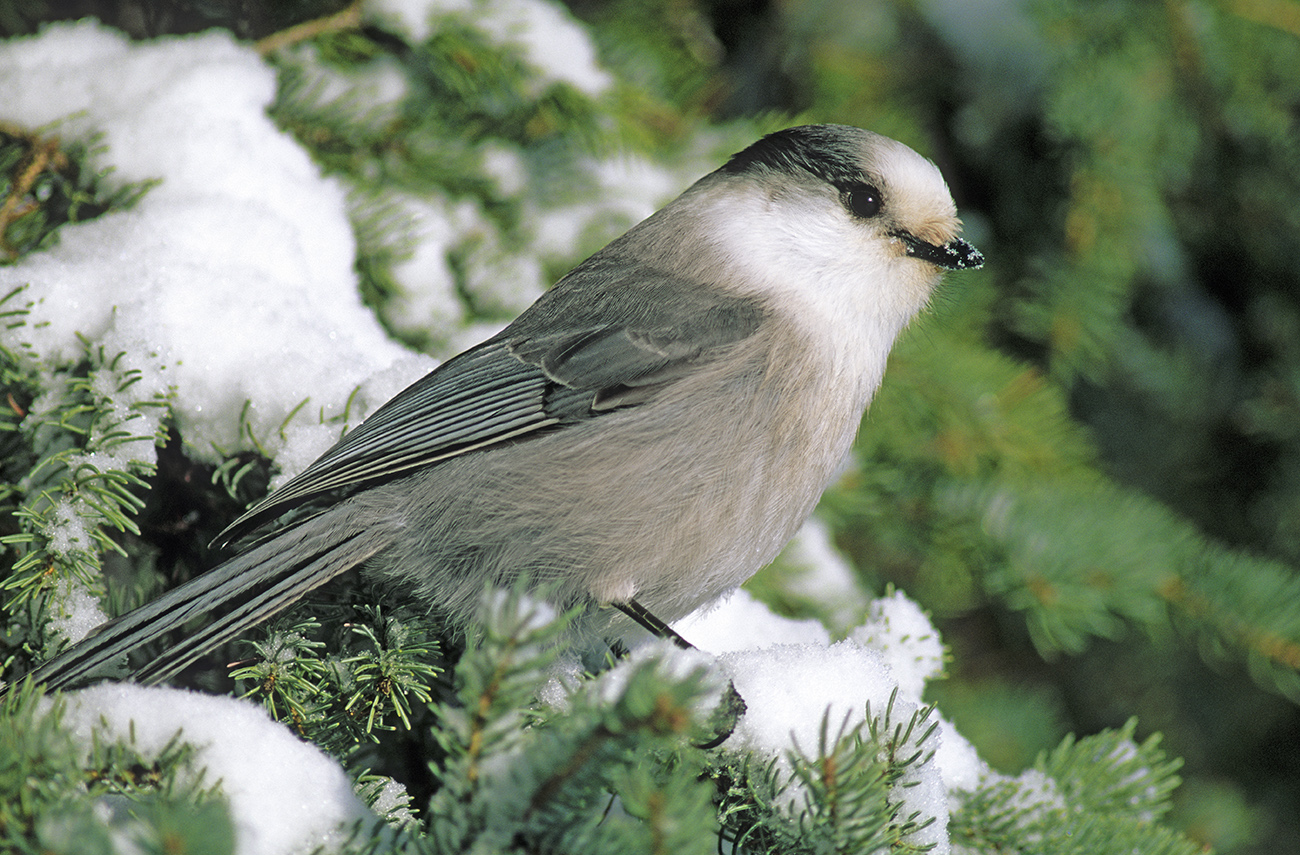
Although the sugar maple is Canada’s national tree and the beaver our national animal, we have no official national bird even though the Canada goose has long been a part of our country’s identity, and since 1987 a common loon has been proudly featured on our one-dollar coin, affectionately dubbed the “loonie.” In an effort to rectify the situation, the Royal Canadian Geographical Society launched a two-year public campaign in 2015 to select a bird species that had not been previously chosen by any other province, territory, or country. They gray jay emerged as the winner and in 2018 its name was officially changed to the Canada jay to reflect its widespread occurrence and regional significance. Federal government approval of the choice is still pending.
About the Author – Dr. Wayne Lynch

For more than 40 years, Dr. Wayne Lynch has been writing about and photographing the wildlands of the world from the stark beauty of the Arctic and Antarctic to the lush rainforests of the tropics. Today, he is one of Canada’s best-known and most widely published nature writers and wildlife photographers. His photo credits include hundreds of magazine covers, thousands of calendar shots, and tens of thousands of images published in over 80 countries. He is also the author/photographer of more than 45 books for children as well as over 20 highly acclaimed natural history books for adults including Windswept: A Passionate View of the Prairie Grasslands; Penguins of the World; Bears: Monarchs of the Northern Wilderness; A is for Arctic: Natural Wonders of a Polar World; Wild Birds Across the Prairies; Planet Arctic: Life at the Top of the World; The Great Northern Kingdom: Life in the Boreal Forest; Owls of the United States and Canada: A Complete Guide to their Biology and Behavior; Penguins: The World’s Coolest Birds; Galapagos: A Traveler’s Introduction; A Celebration of Prairie Birds; and Bears of the North: A Year Inside Their Worlds. In 2022, he released Wildlife of the Rockies for Kids, and Loons: Treasured Symbols of the North. His books have won multiple awards and have been described as “a magical combination of words and images.”
Dr. Lynch has observed and photographed wildlife in over 70 countries and is a Fellow of the internationally recognized Explorers Club, headquartered in New York City. A Fellow is someone who has actively participated in exploration or has substantially enlarged the scope of human knowledge through scientific achievements and published reports, books, and articles. In 1997, Dr. Lynch was elected as a Fellow to the Arctic Institute of North America in recognition of his contributions to the knowledge of polar and subpolar regions. And since 1996 his biography has been included in Canada’s Who’s Who.



Dear Dr. Lynch,
Thank you very much for this wonderful summary and photos of our Provincial and National Birds in Canada. I love all birds and they play a huge roll in keeping us all happy wherever we live.
Greatly appreciated.
Thanks Patricia.