




Macaques have a very expressive face. This animal became frightened when a more dominant monkey arrived in the hot pool.
This month I want to feature the last of the photos I took on the two trips I led to photograph the winter wildlife of Japan. Typically, people don’t expect to see monkeys when they visit a landscape where there are sub-freezing temperatures, blizzards, and heavy snowfall. But that was what greeted me on my first morning in the Japanese Alps, a six-hour drive north of Tokyo. My destination was Jigokudani, the “Valley of Hell”, so called because of the many volcanic hot springs, which attract dozens of Japanese macaques from the surrounding snow-covered mountains. The monkeys come to the valley to bathe in the 41°C water. It’s believed this tradition started in the 1960s after a dominant female macaque observed humans in the heated waters and mimicked the behaviour.
In 2022, author Mark Brazil wrote in his book Japan: The Natural History of an Asian Archipelago:
“…the female macaque’s name was Tokiwa and her bathing habits spread to many of the animals in her troop, and to other troops that shared her unusual valley. Nowhere else in Japan do wild monkeys soak in hot water. At Jigokudani, the monkeys have become globally famous for indulging in their spa treatments, but in fact they are drawn down into the valley by the provision of food, given so that researchers may study their social behaviour. The macaques spend just part of each winter’s day in the narrow valley close to a pool that was built specifically for them.”
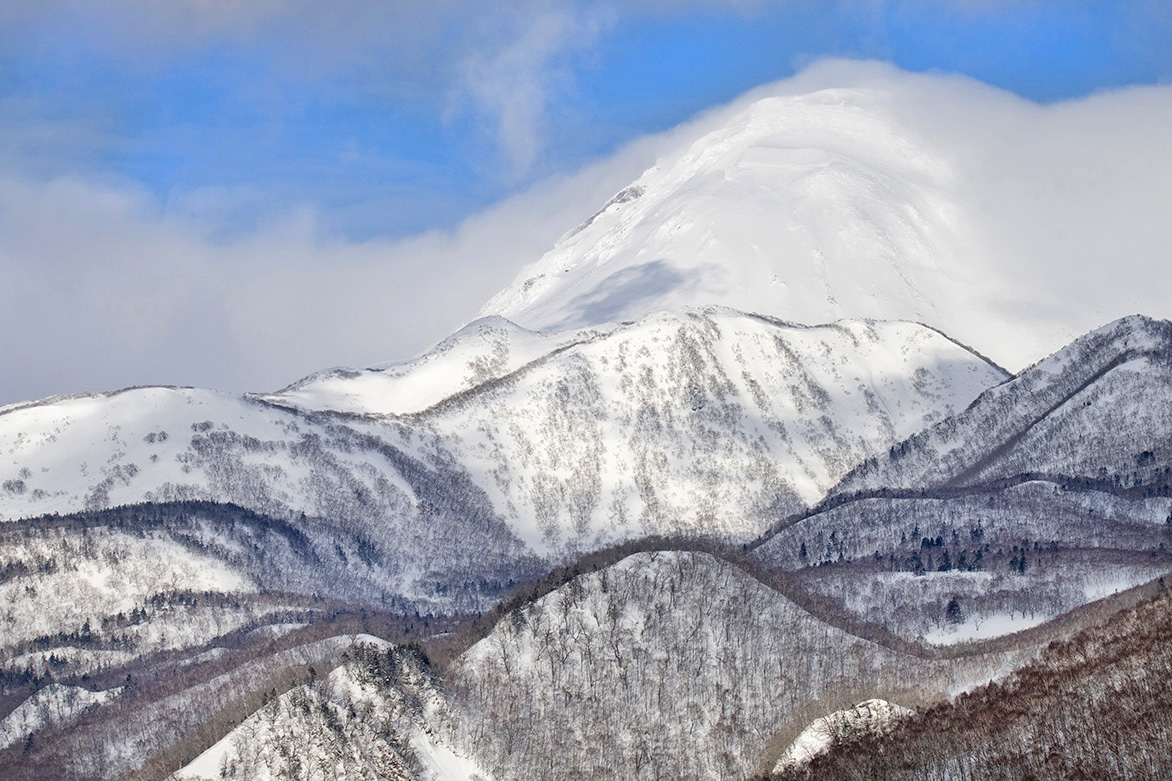
The Japanese Alps are cloaked in snow for many months during the winter season and an unlikely location where a visitor could see a monkey.
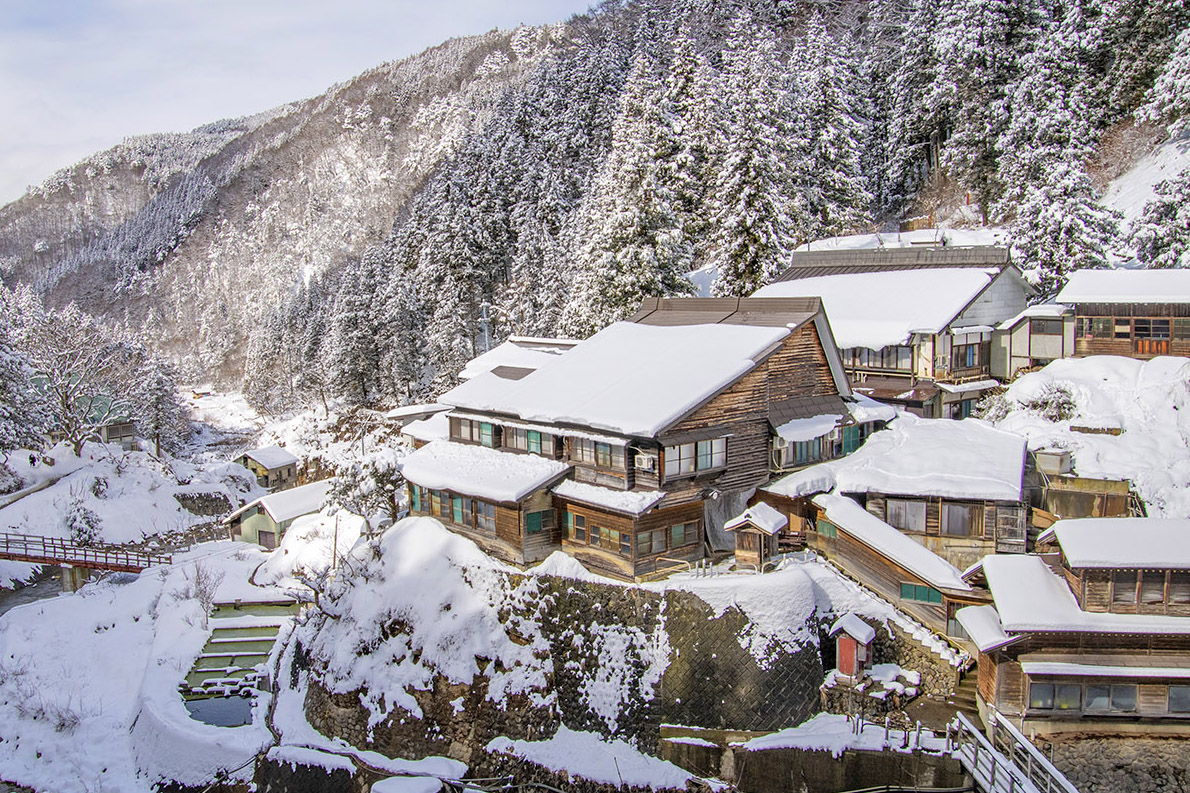
During our time in the Valley of Hell we stayed in a traditional Japanese inn that had been owned and operated by the same family since 1867.
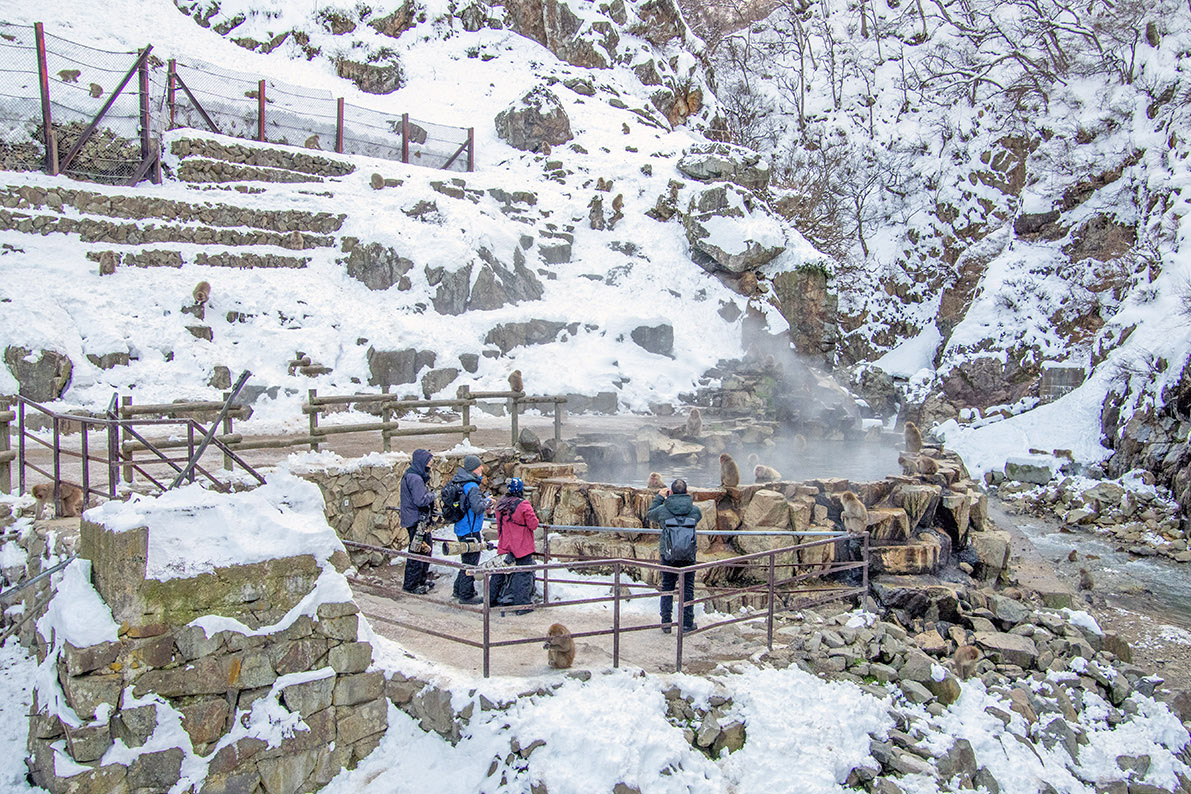
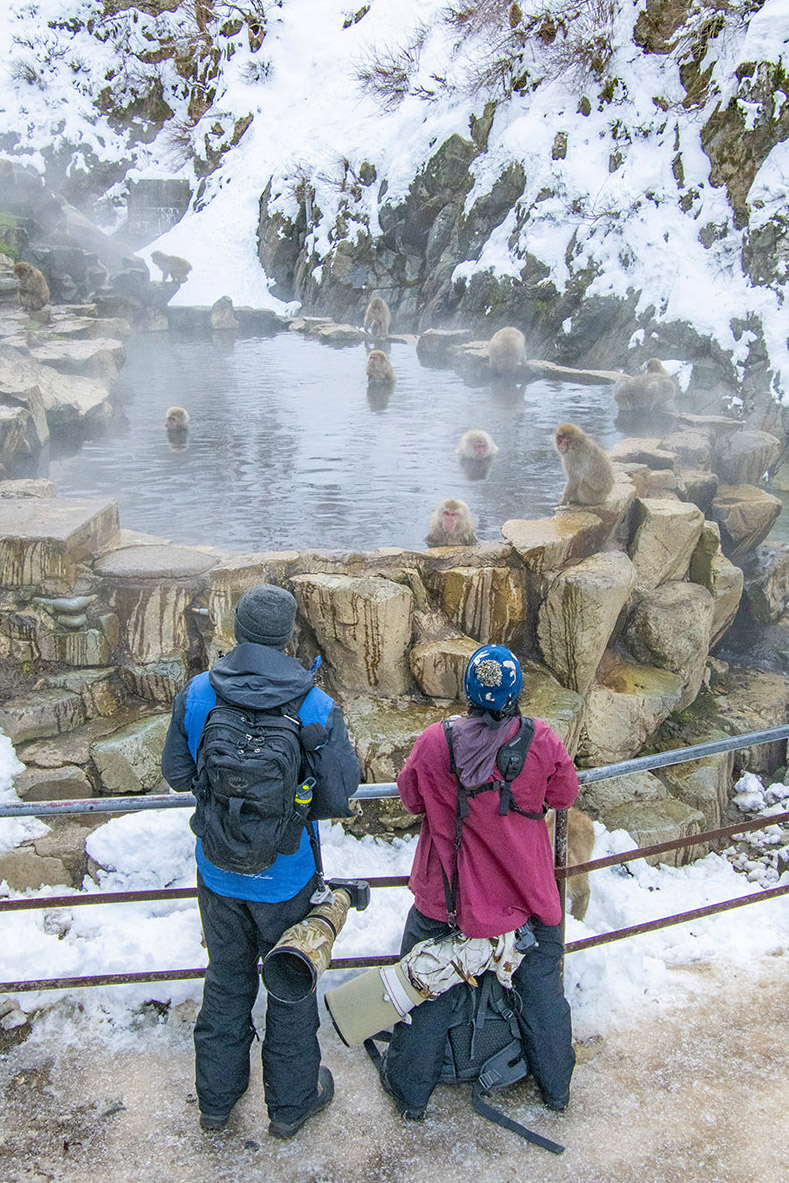
I had seen many wildlife documentaries featuring the macaques and always imagined that the hot pool was much bigger than it is. Currently the pool is visited by over 150 different macaques belonging to multiple different troops.
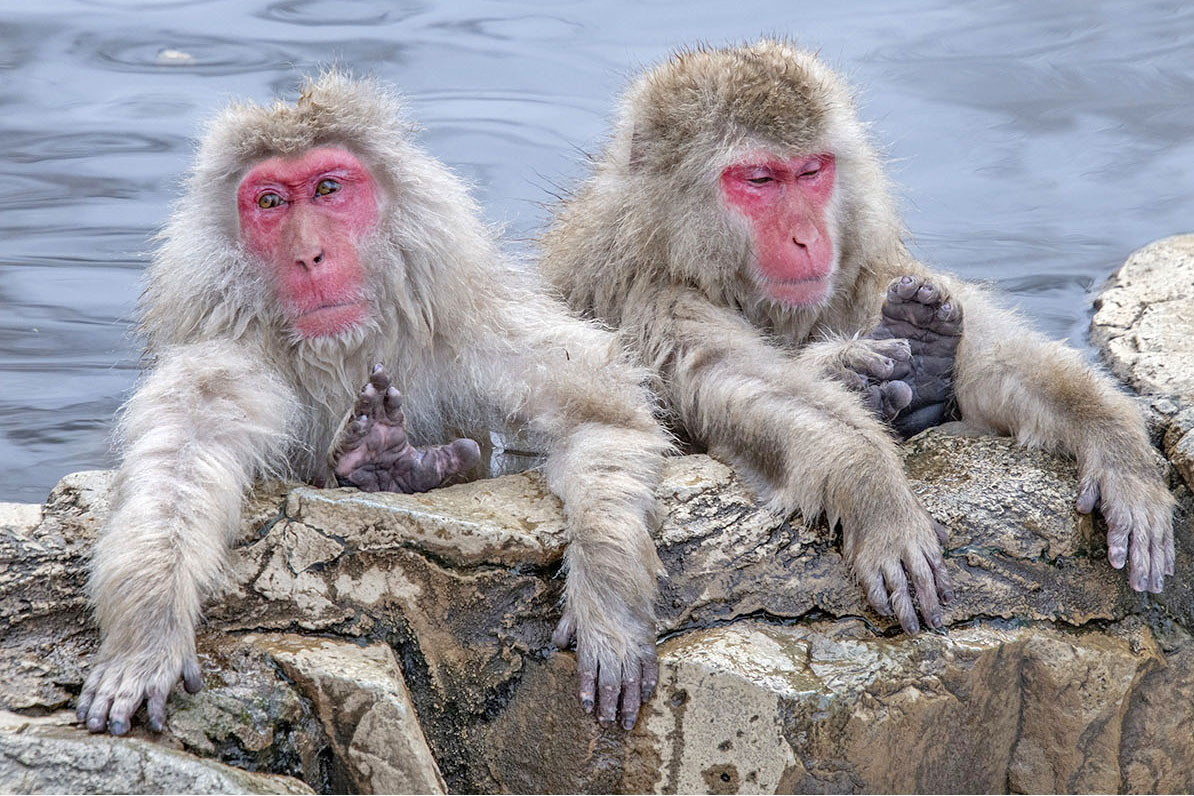
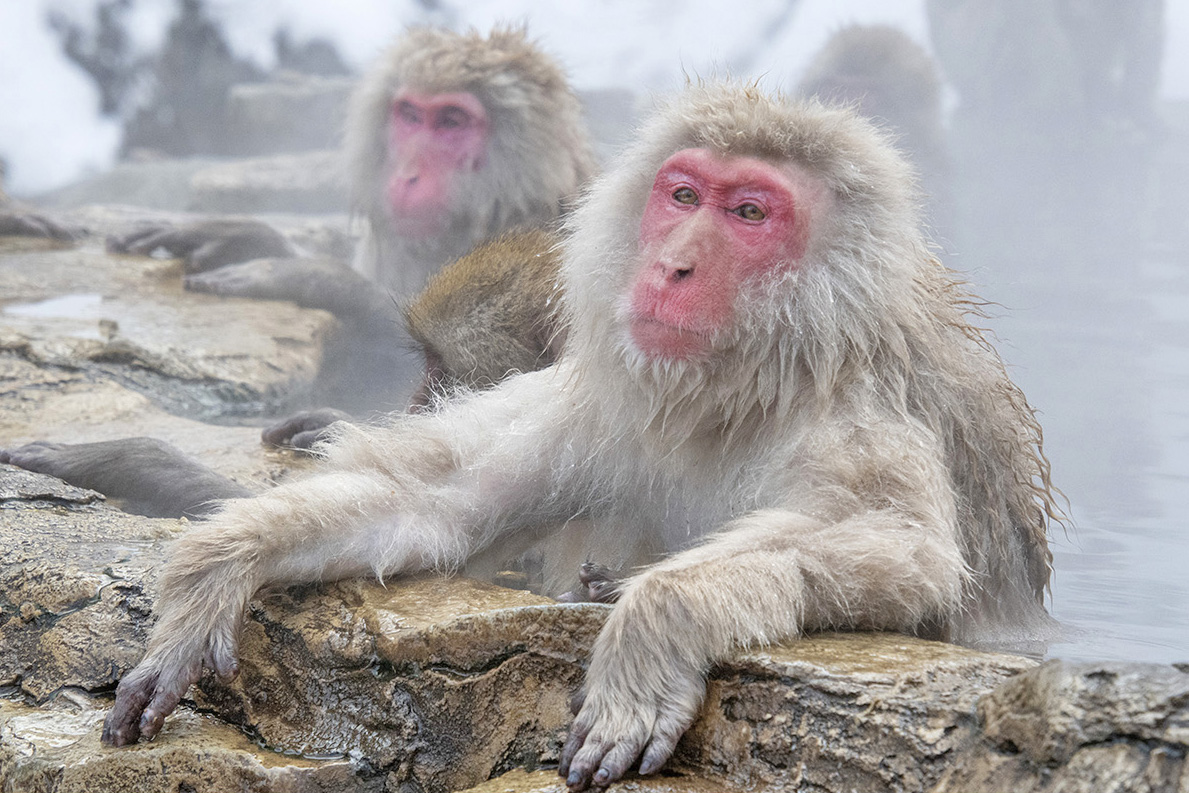
Each troop of macaques is ruled over by a dominant alpha male while the females are organized into strict hierarchies led by an alpha female.
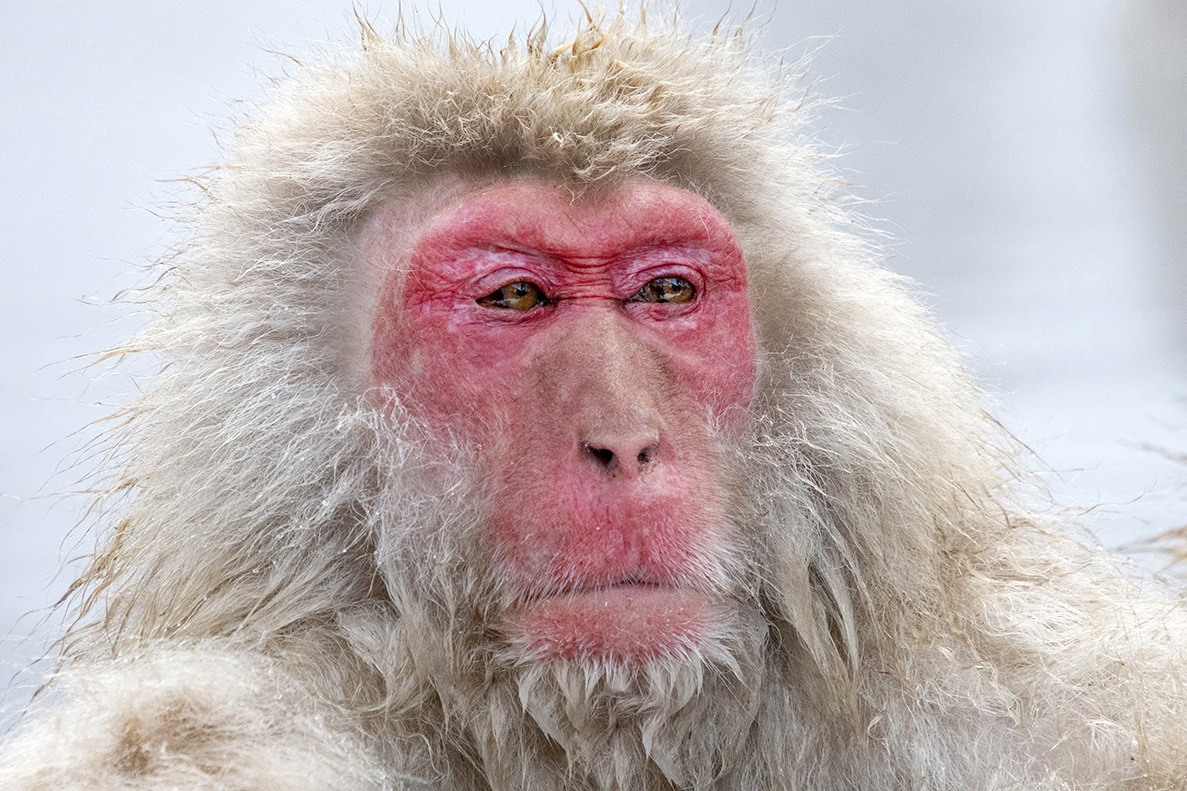
A macaque’s facial skin brightens dramatically during the October-December breeding season. As in humans, the facial skin is also a convenient site to radiate body heat when the animal becomes overheated.
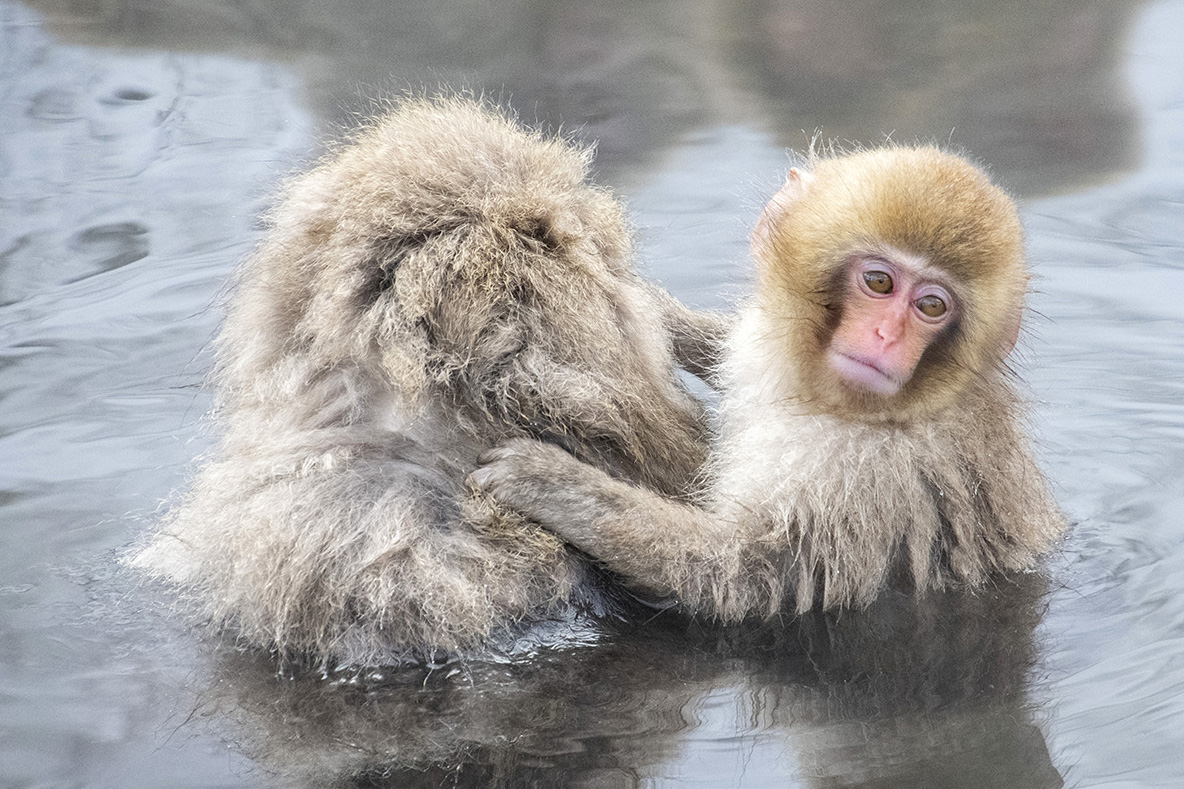
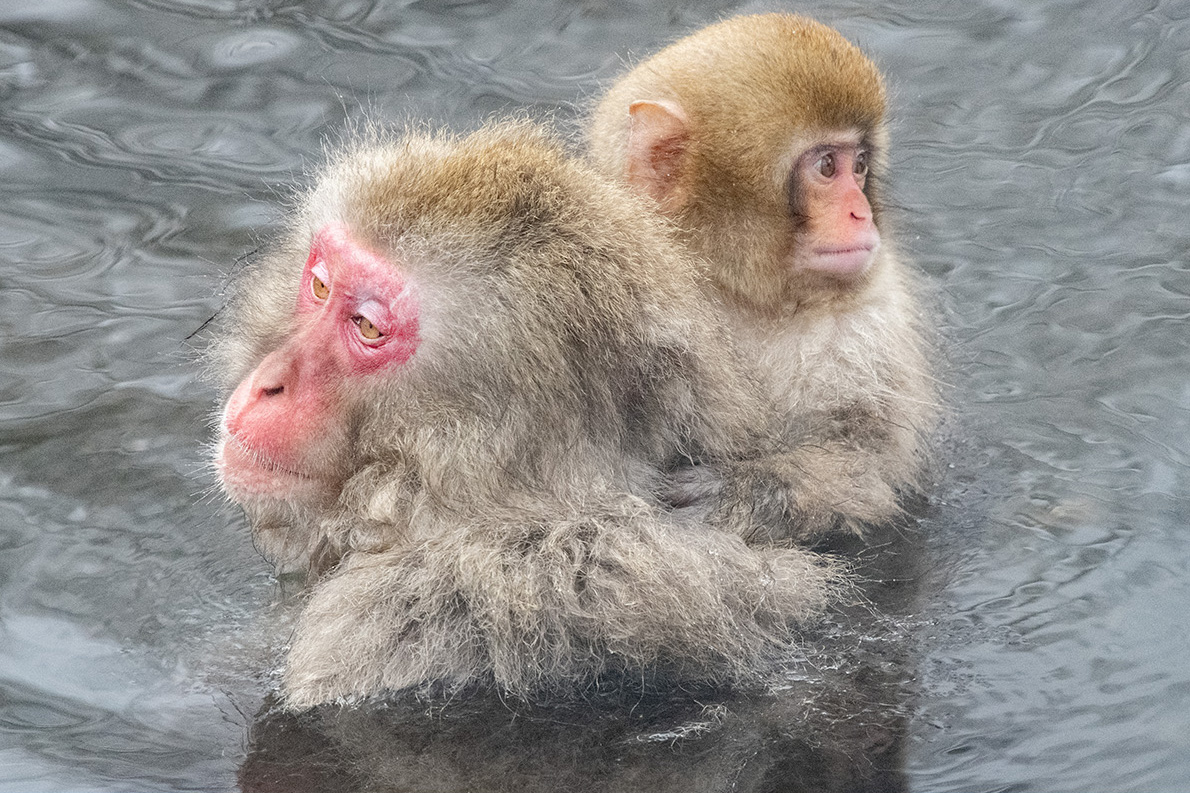
Youngsters automatically acquire the same social status and rank as their mother. This entitles them to bully subordinates, even when the subordinates are much larger than they are.
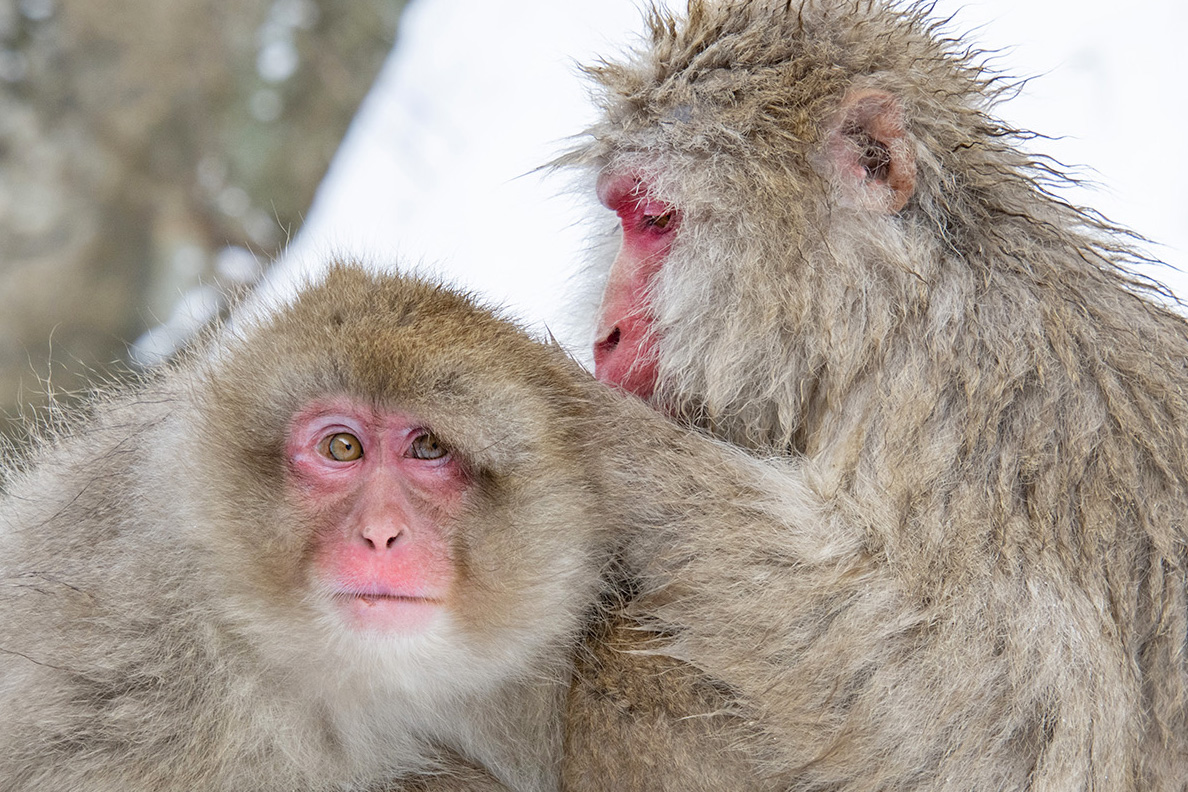
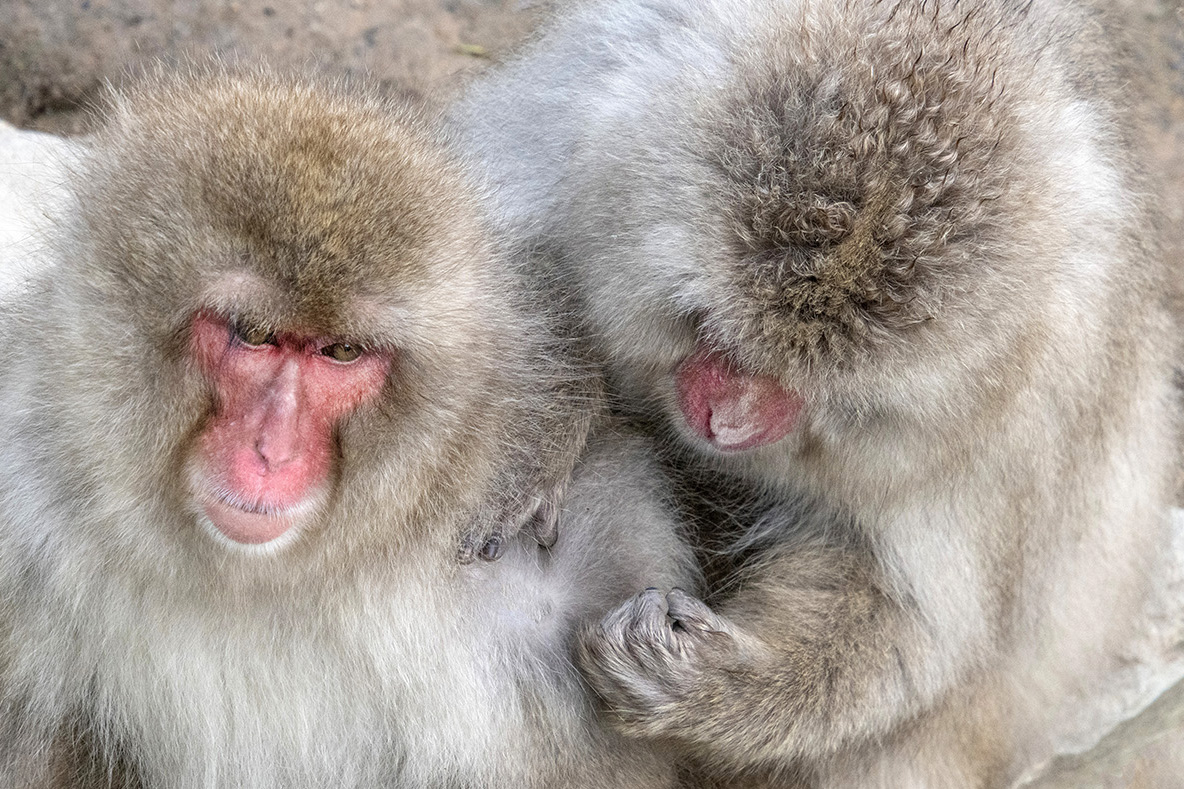
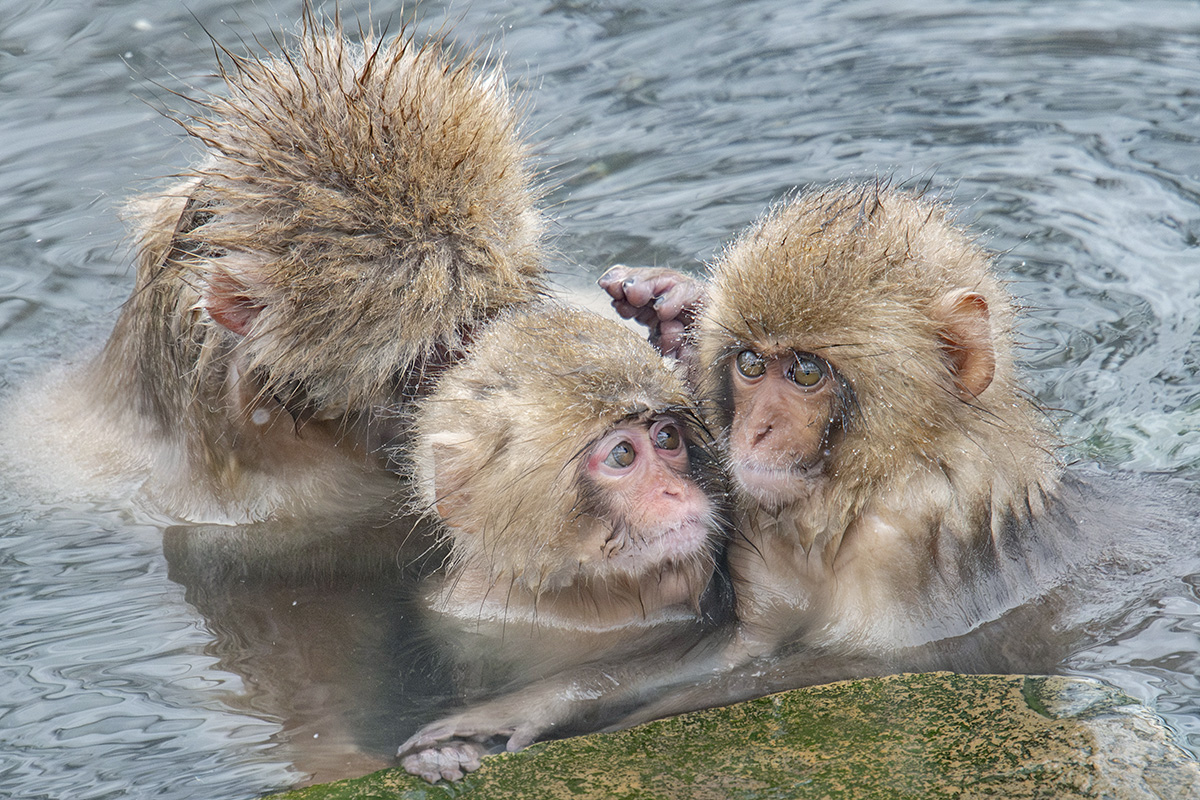
Macaques groom during every season of the year and show preference for those in their own troop and who are dominant to them. During grooming they remove dirt as well as fleas and ticks.
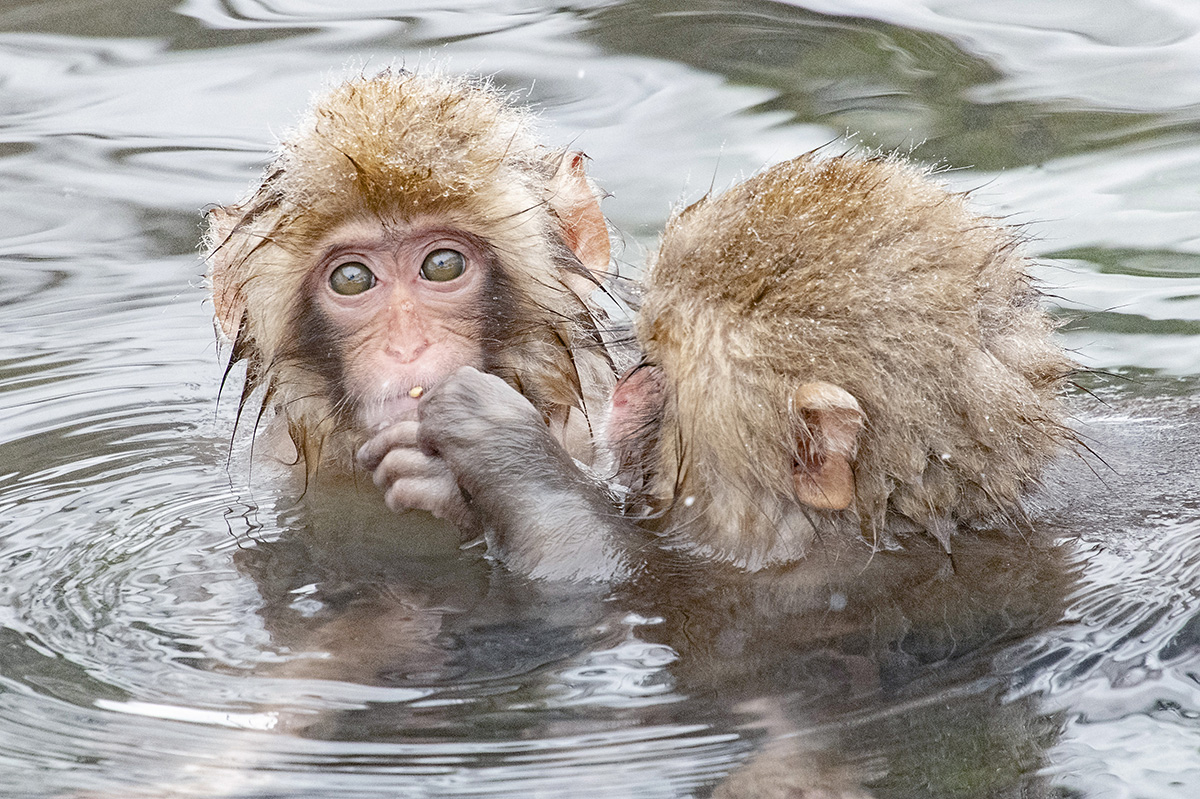
The youngster on the right was trying to steal a kernel of corn from the lips of a subordinate. Its thievery failed and the subordinate swallowed the prize.
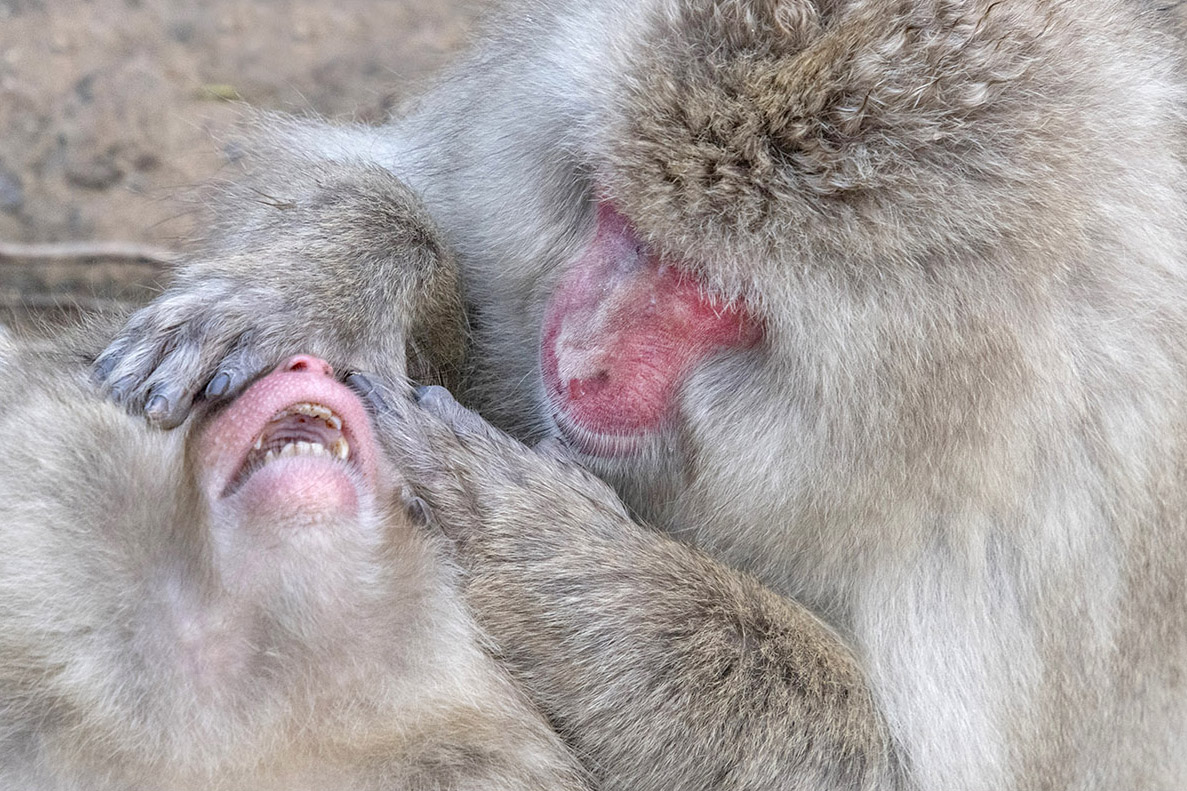
Although this looks like a dental exam, the groomer seemed most interested in the recipient’s nostrils.
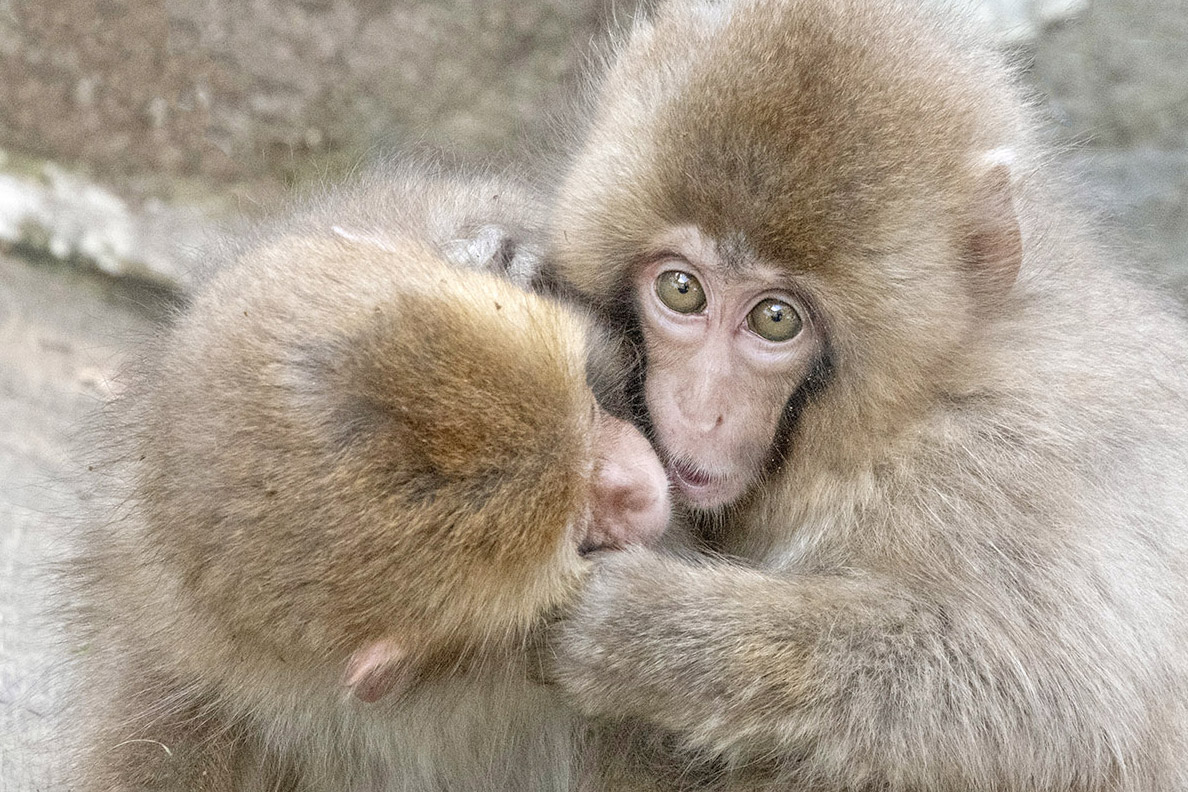
I’m not sure what these juveniles were doing, but it certainly looked as if they were kissing.
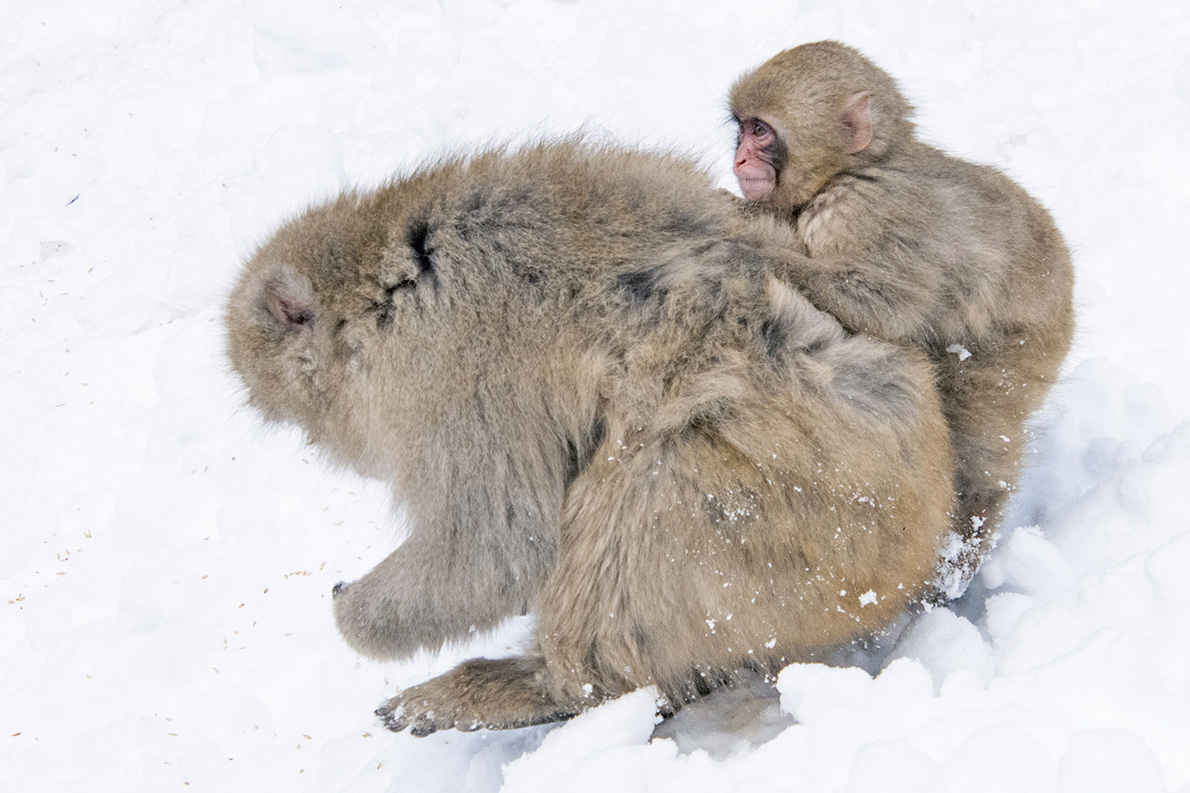
A mother will carry a newborn on her belly for a month. After that, the youngster commonly rides on her back.
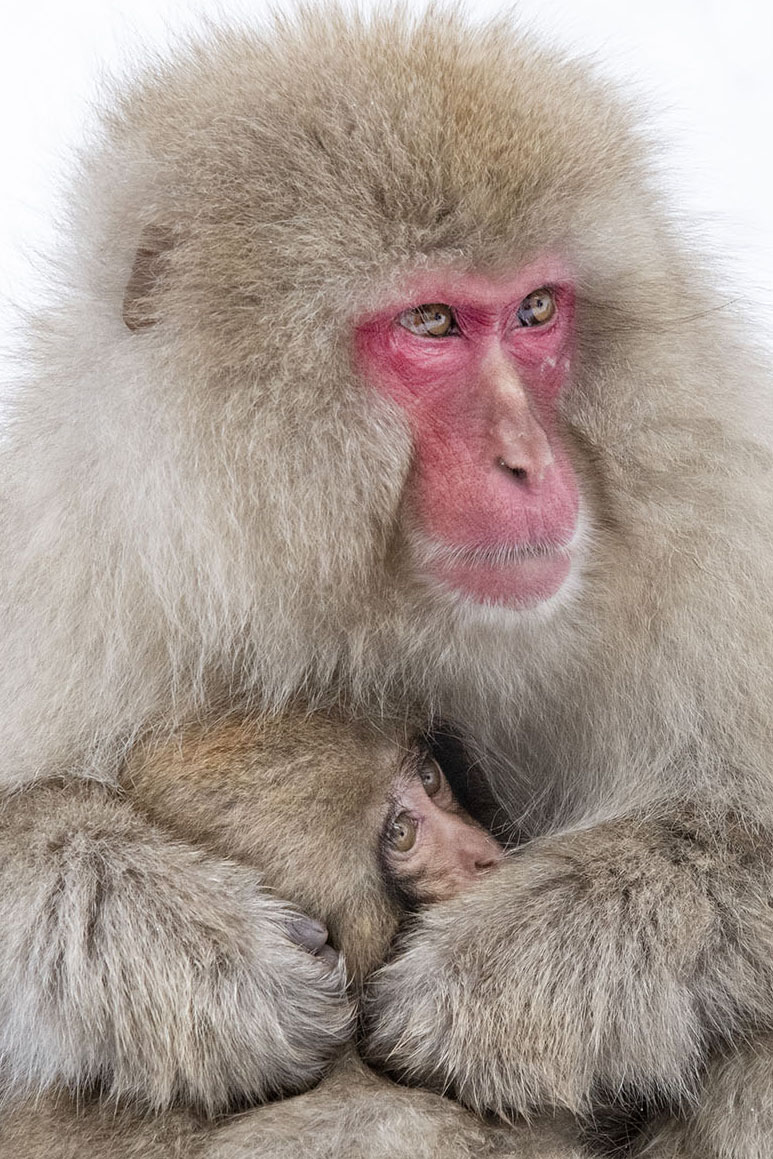
A mother will nurse her offspring until it is almost a year old.
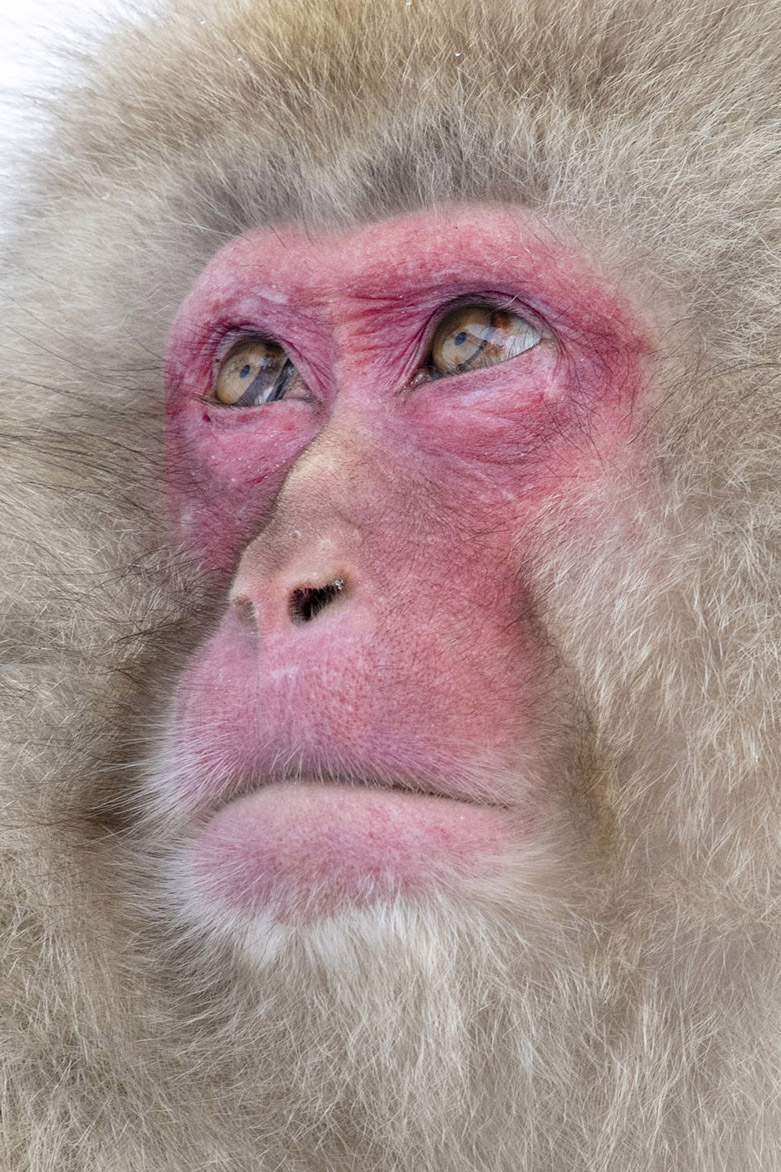
Humans share 91% of our genes with macaques.
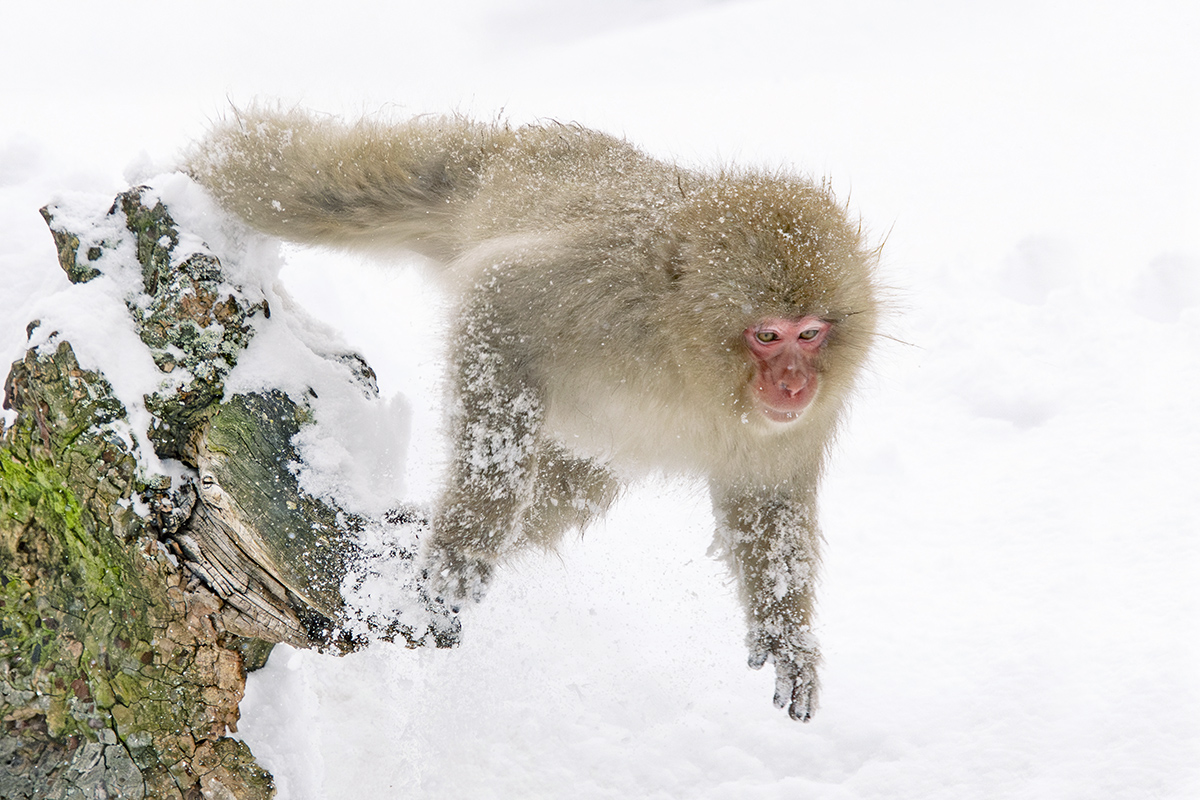
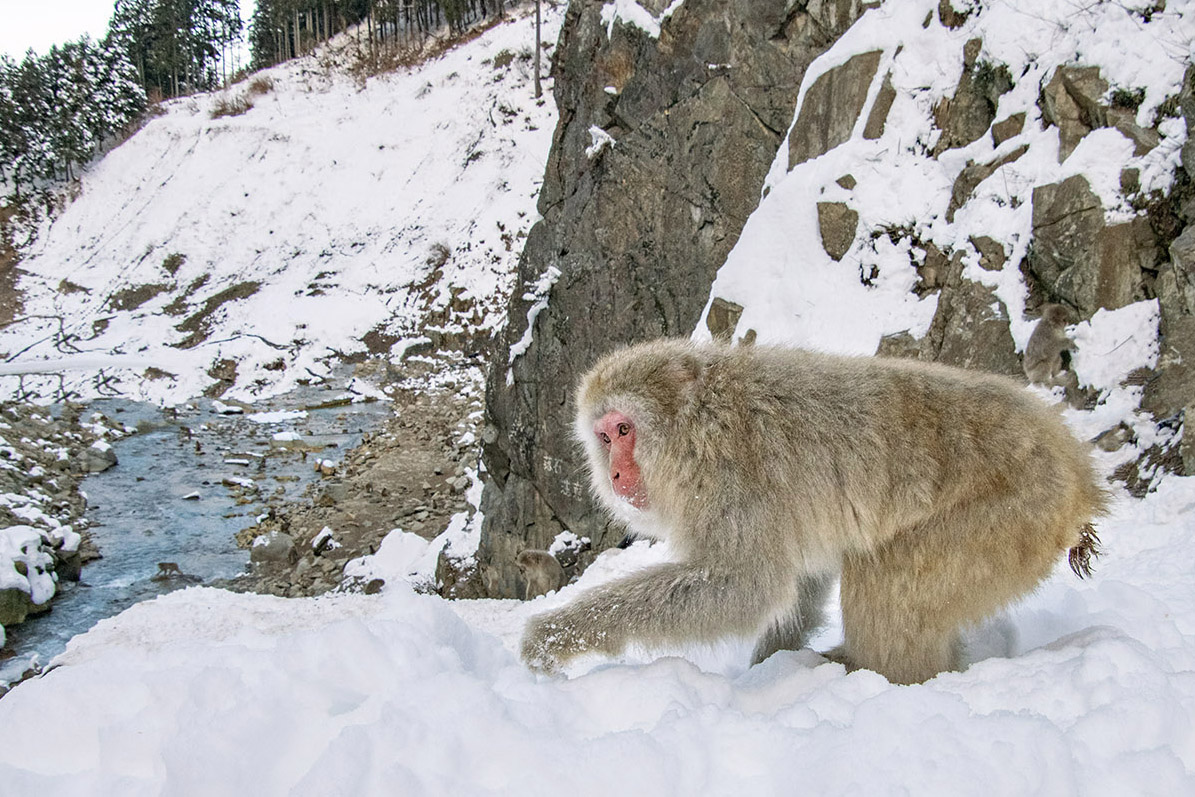
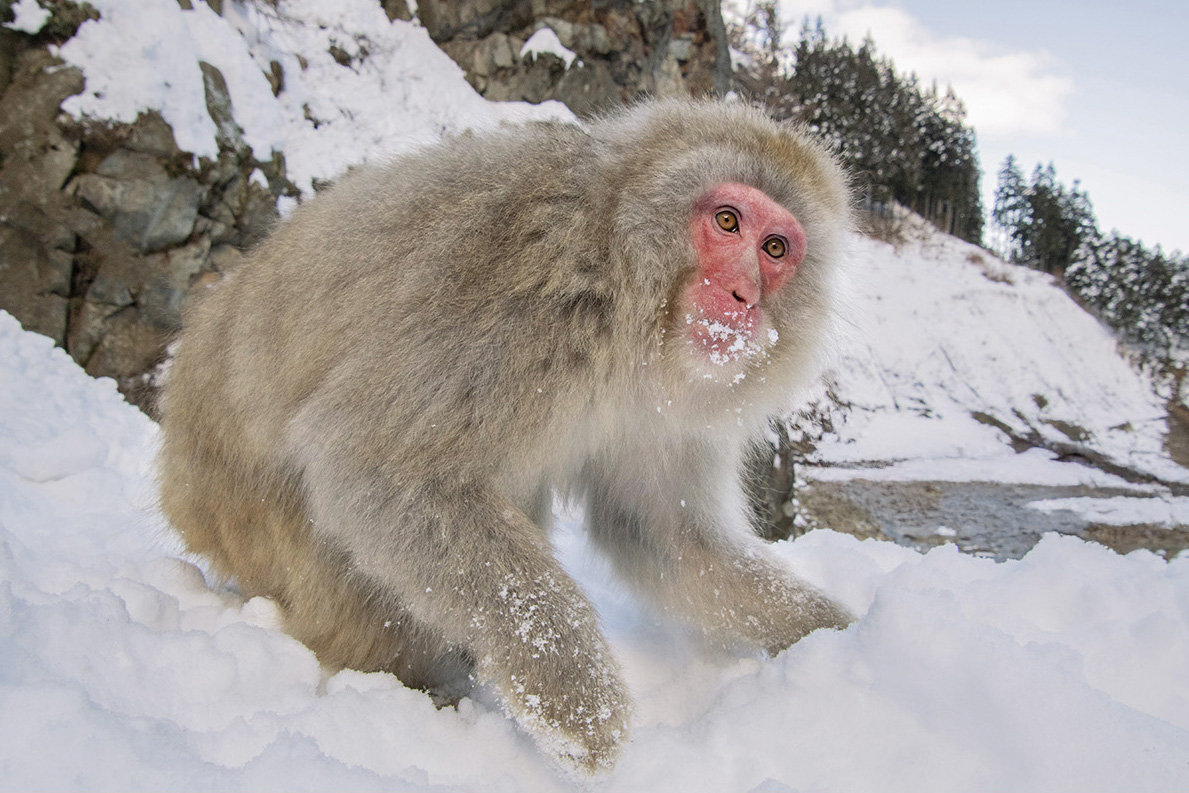
Japanese macaques are the most northerly ranging non-human primates on Earth. Most of the other 22 macaque species inhabit tropical and sub-tropical woodlands and arid mountains.
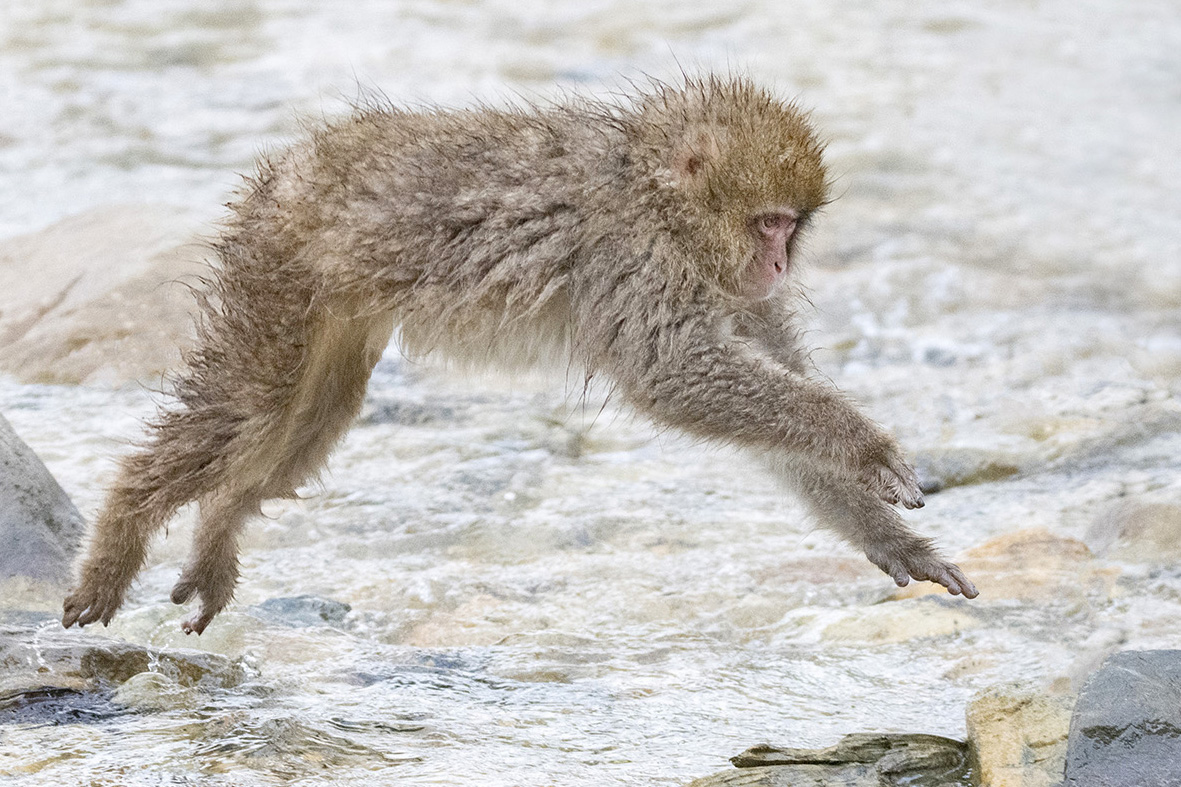
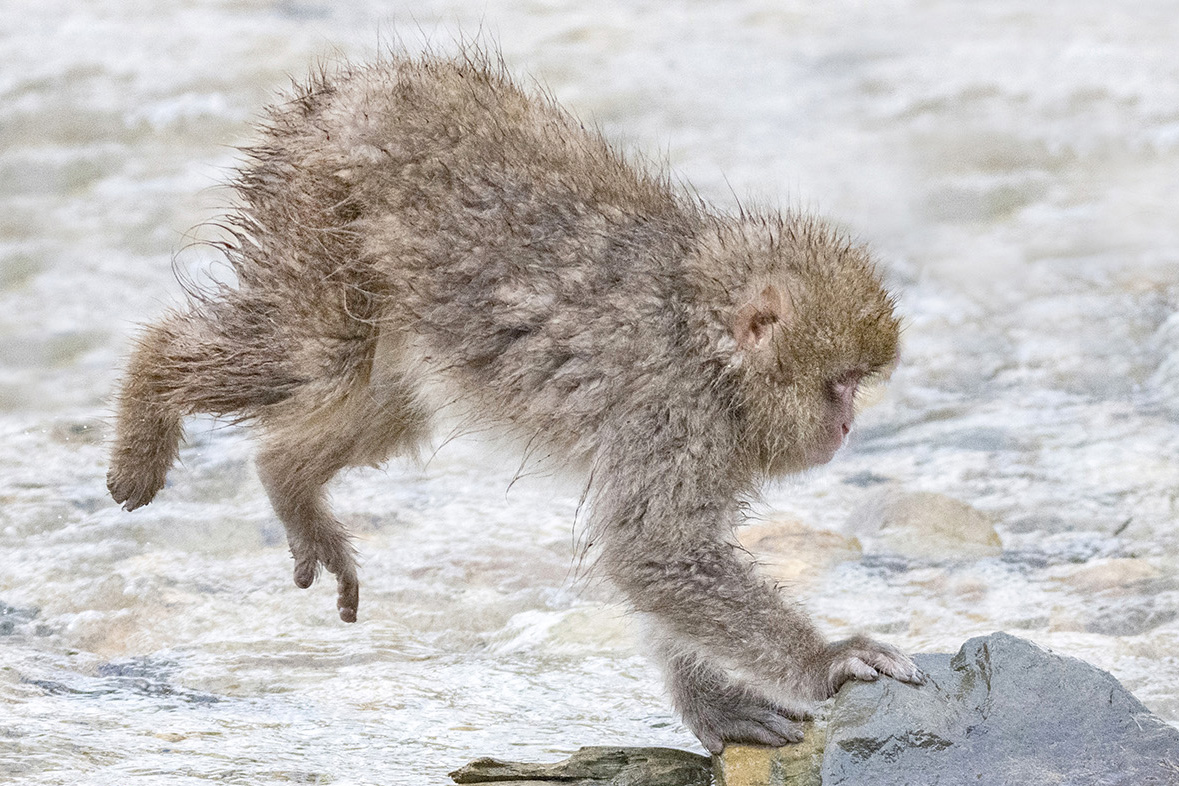
Individual macaques often spent little time in the hot pools, and I preferred observing and photographing them engaged in other behaviours, such as crisscrossing the river that drained downstream from the hot pool.
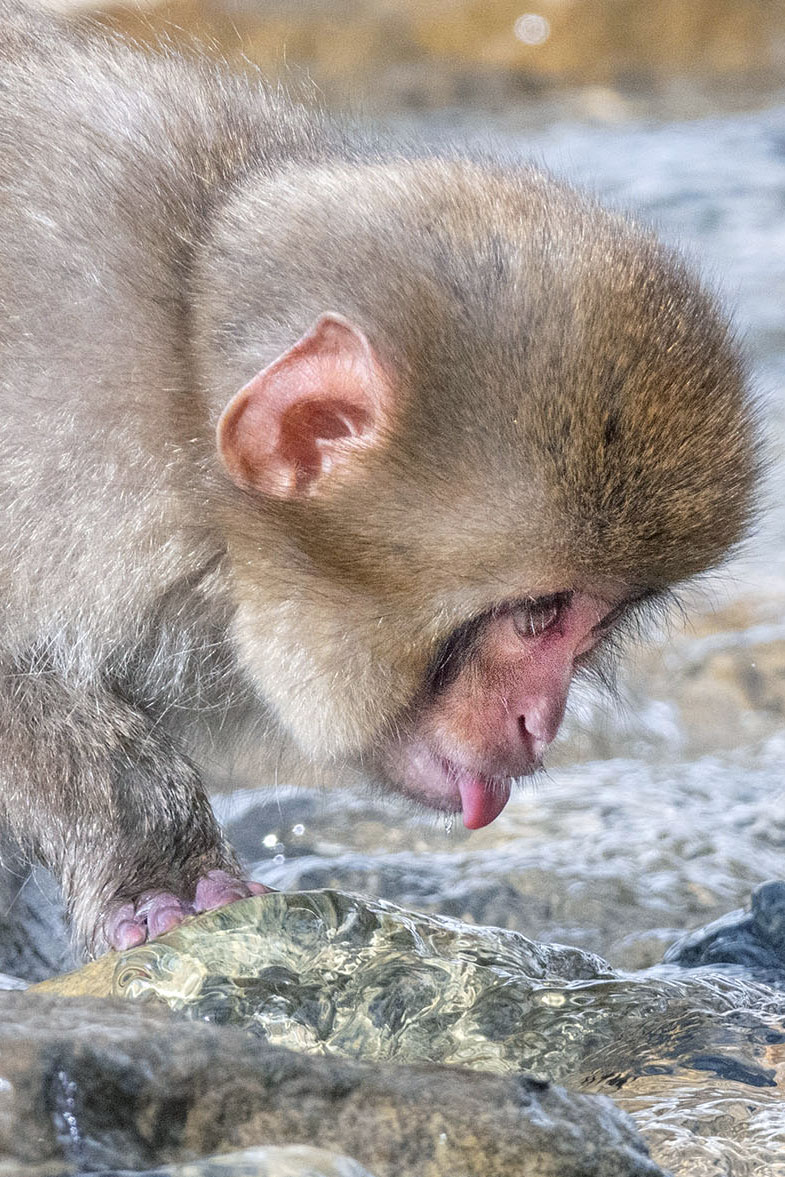
This thirsty juvenile was getting a drink at the river’s edge.
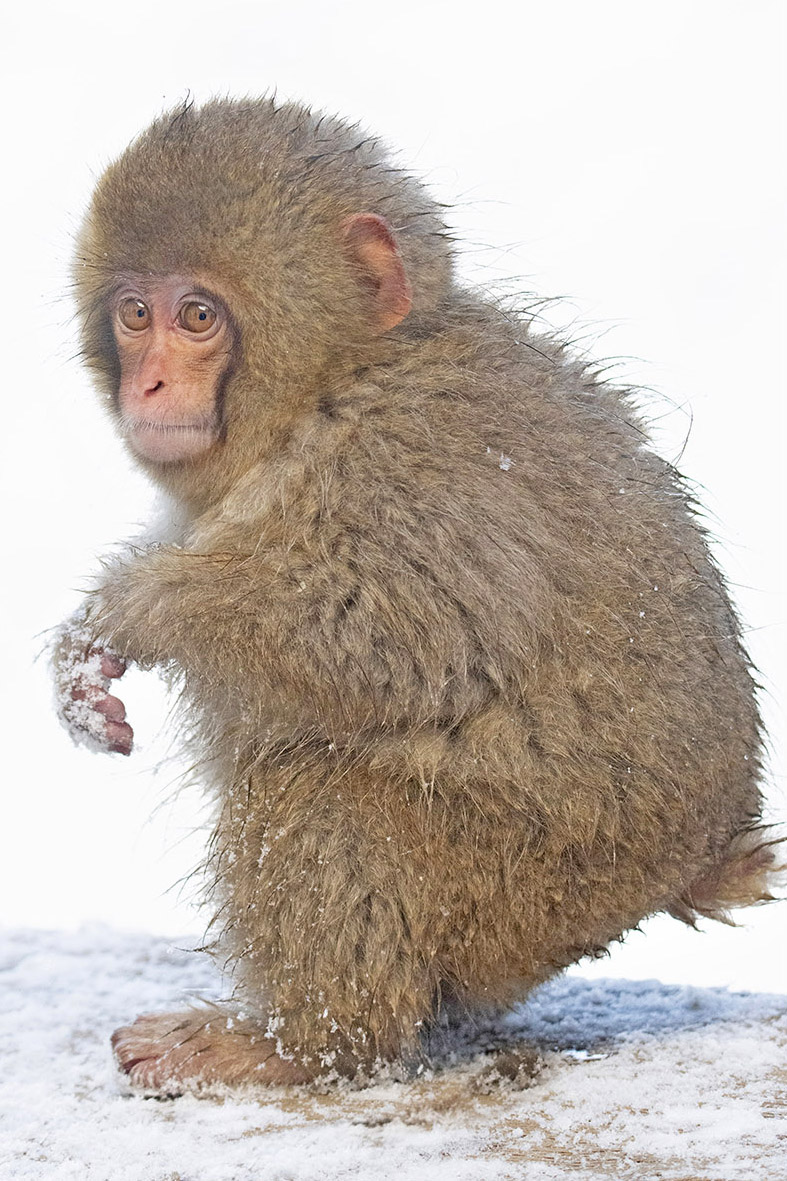
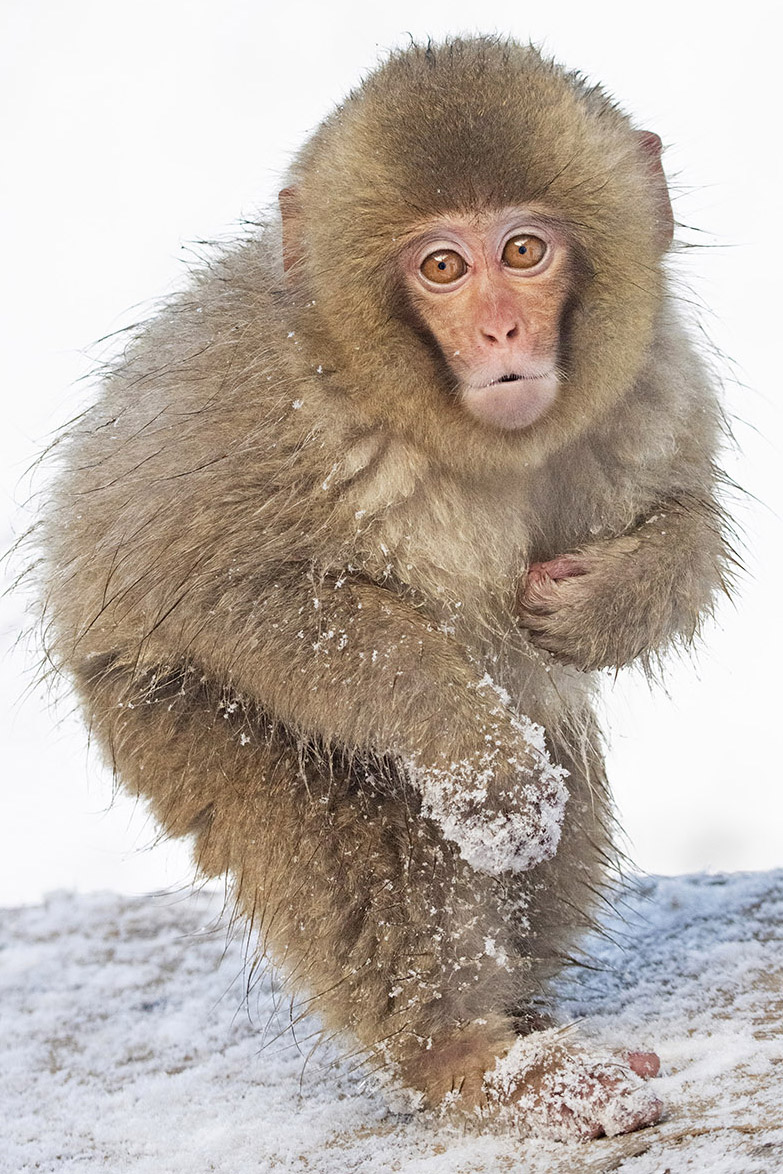
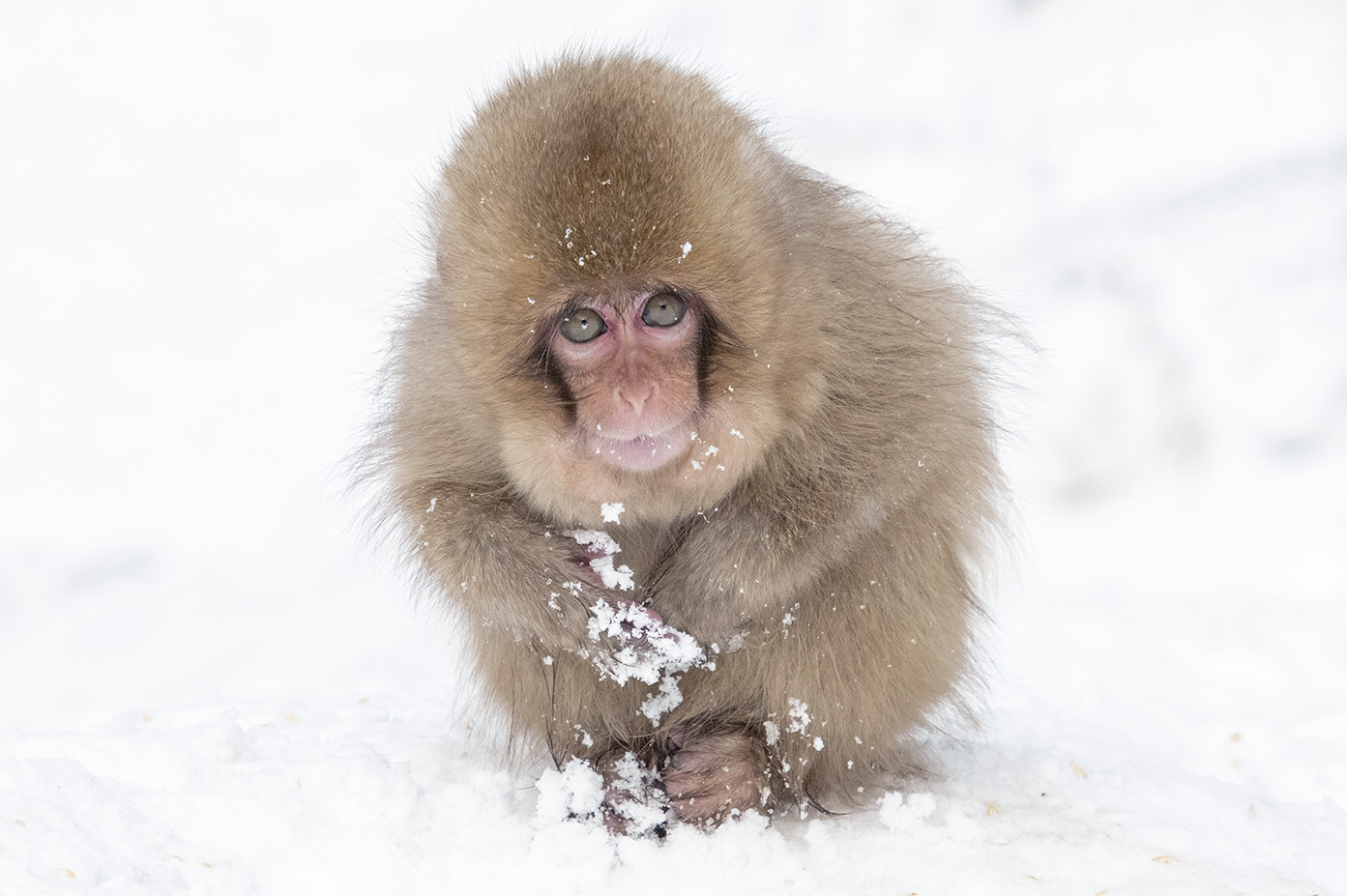
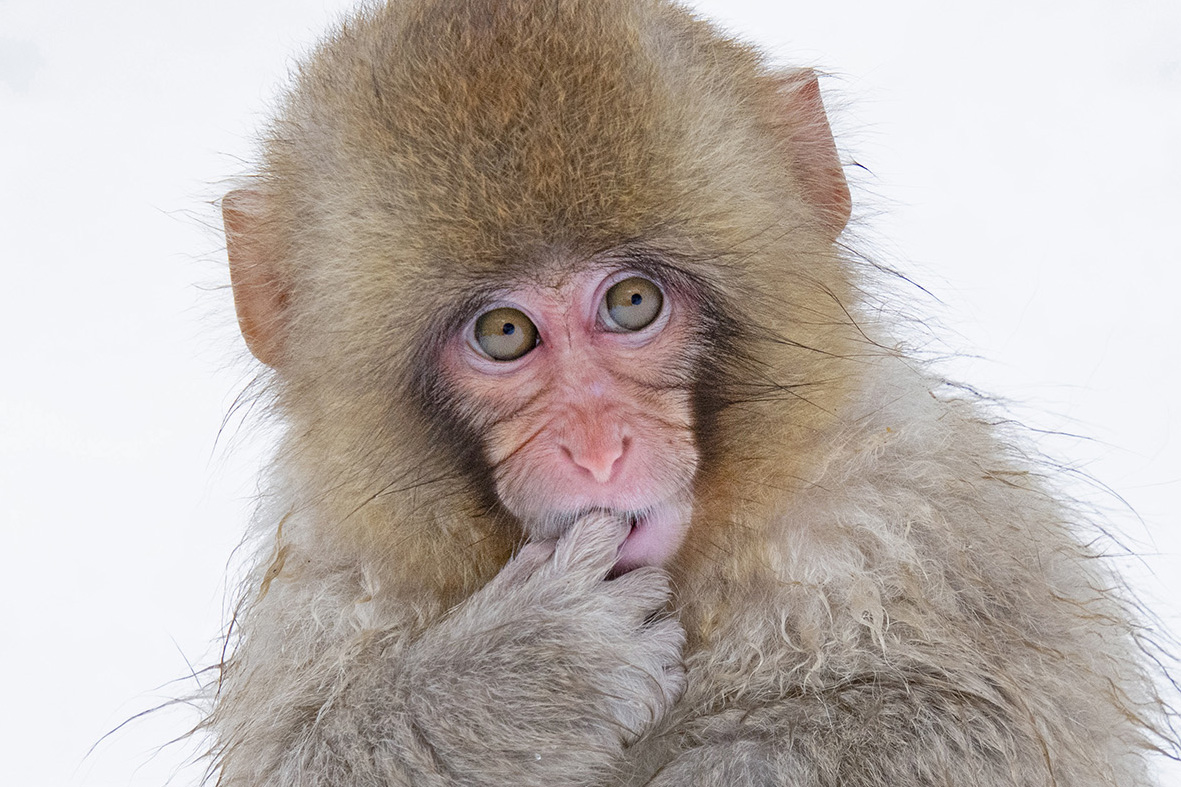
It was hard not to be completely smitten by the playful antics and expressions of the juveniles.
About the Author – Dr. Wayne Lynch

For more than 40 years, Dr. Wayne Lynch has been writing about and photographing the wildlands of the world from the stark beauty of the Arctic and Antarctic to the lush rainforests of the tropics. Today, he is one of Canada’s best-known and most widely published nature writers and wildlife photographers. His photo credits include hundreds of magazine covers, thousands of calendar shots, and tens of thousands of images published in over 80 countries. He is also the author/photographer of more than 45 books for children as well as over 20 highly acclaimed natural history books for adults including Windswept: A Passionate View of the Prairie Grasslands; Penguins of the World; Bears: Monarchs of the Northern Wilderness; A is for Arctic: Natural Wonders of a Polar World; Wild Birds Across the Prairies; Planet Arctic: Life at the Top of the World; The Great Northern Kingdom: Life in the Boreal Forest; Owls of the United States and Canada: A Complete Guide to their Biology and Behavior; Penguins: The World’s Coolest Birds; Galapagos: A Traveler’s Introduction; A Celebration of Prairie Birds; and Bears of the North: A Year Inside Their Worlds. In 2022, he released Wildlife of the Rockies for Kids, and Loons: Treasured Symbols of the North. His books have won multiple awards and have been described as “a magical combination of words and images.”
Dr. Lynch has observed and photographed wildlife in over 70 countries and is a Fellow of the internationally recognized Explorers Club, headquartered in New York City. A Fellow is someone who has actively participated in exploration or has substantially enlarged the scope of human knowledge through scientific achievements and published reports, books, and articles. In 1997, Dr. Lynch was elected as a Fellow to the Arctic Institute of North America in recognition of his contributions to the knowledge of polar and subpolar regions. And since 1996 his biography has been included in Canada’s Who’s Who.



superb article and photos.Excellent in all aspects.
many thanks.