



Every autumn, if I want to brighten my day, I drive to the mountains west of my home in Calgary to watch American pikas prepare for winter, and this year was no exception.
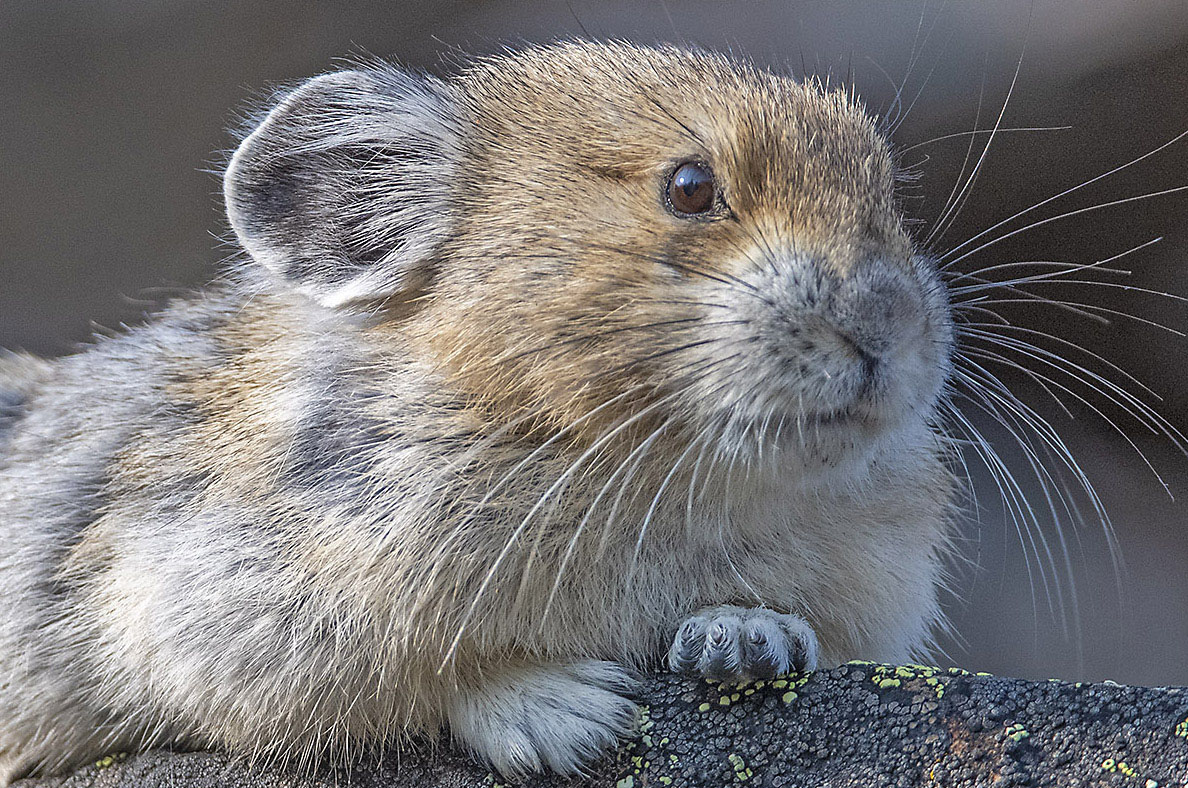
Everyone who sees a pika (pronounced PIKE-ah or PEEK-ah) for the first time invariably exclaims, “Aww, it’s so cute.” The diminutive pika is a cuddly furball about the size of a baked potato.
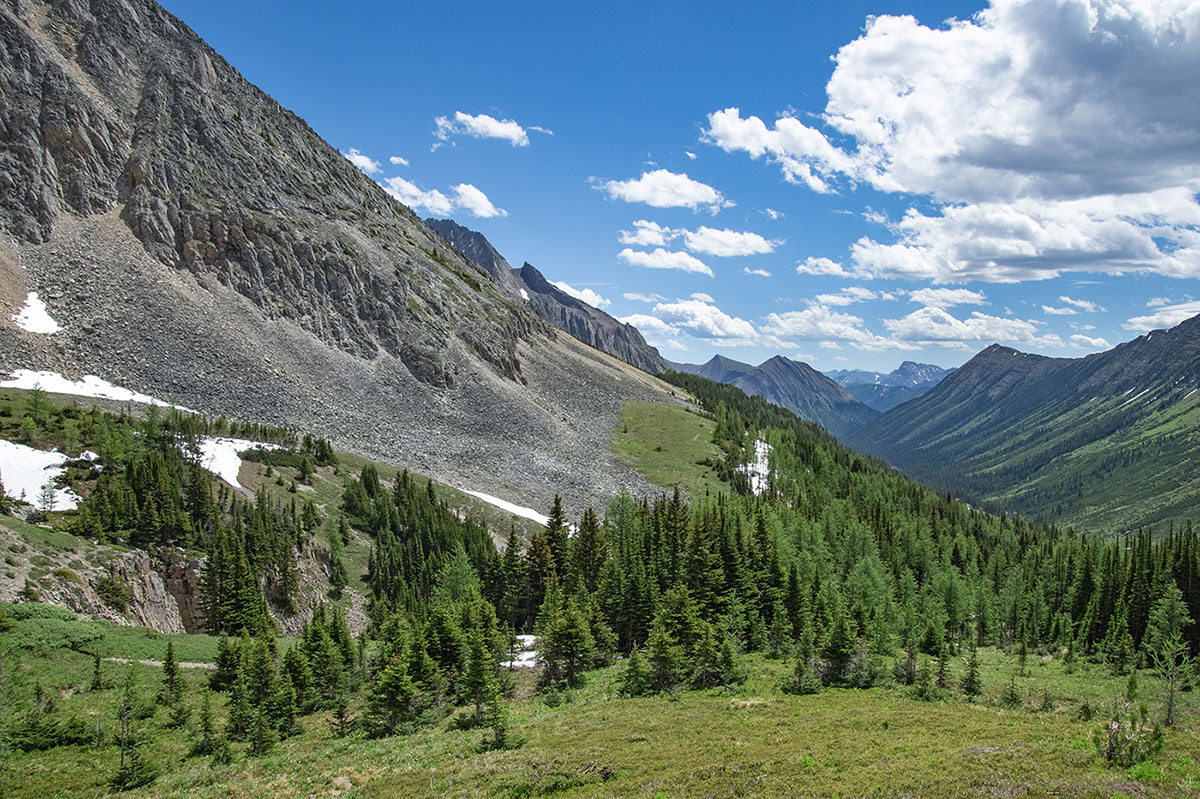
The pika is a habitat specialist that lives almost exclusively in barren rockslides and talus slopes. From across this ravine, I could hear the pika’s telltale whistle coming from the distant talus slope.
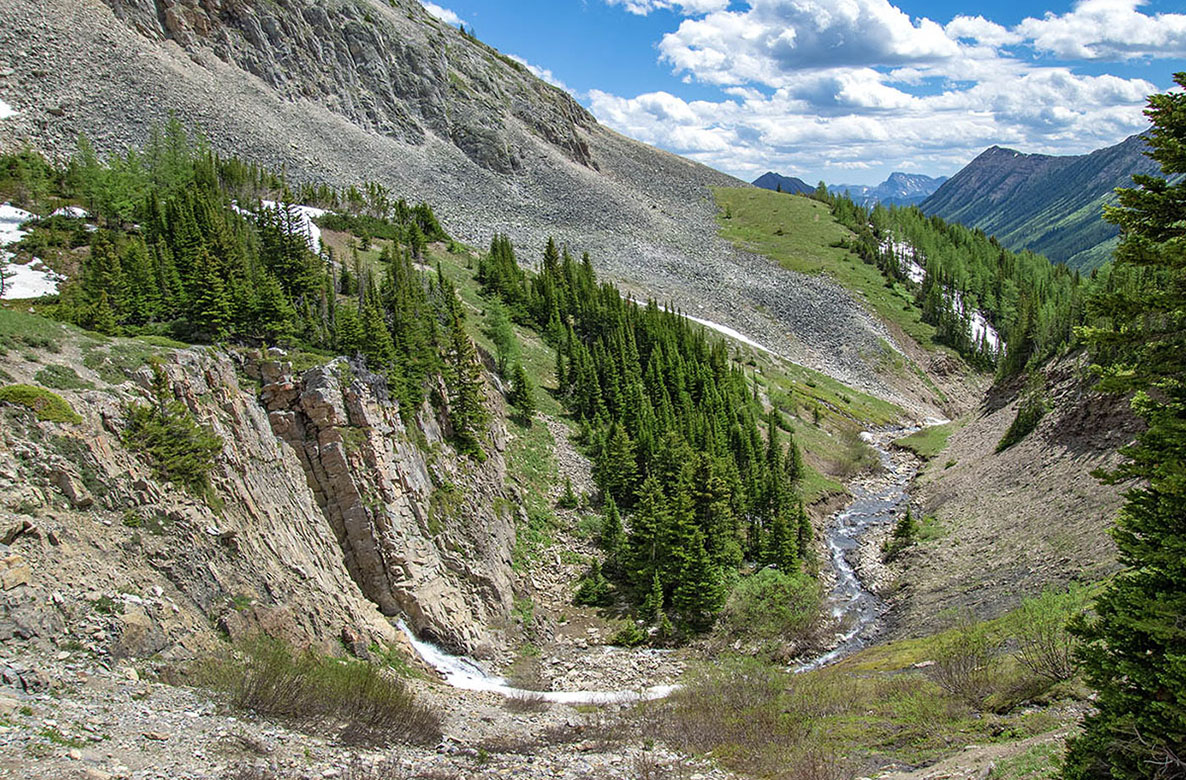
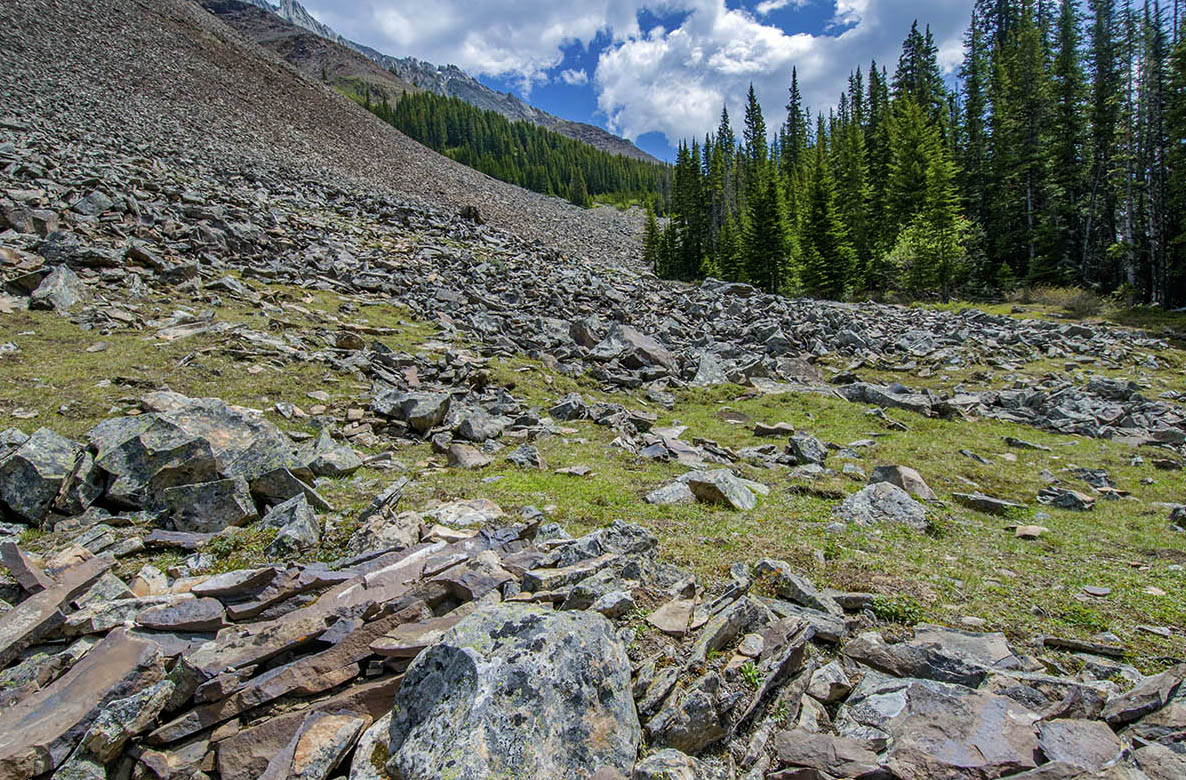
As I hiked closer, it continued to call. The pika whistles to advertise its ownership of a territory, signal its dominance when chasing an intruder, or sound an alarm when it spots a predator.
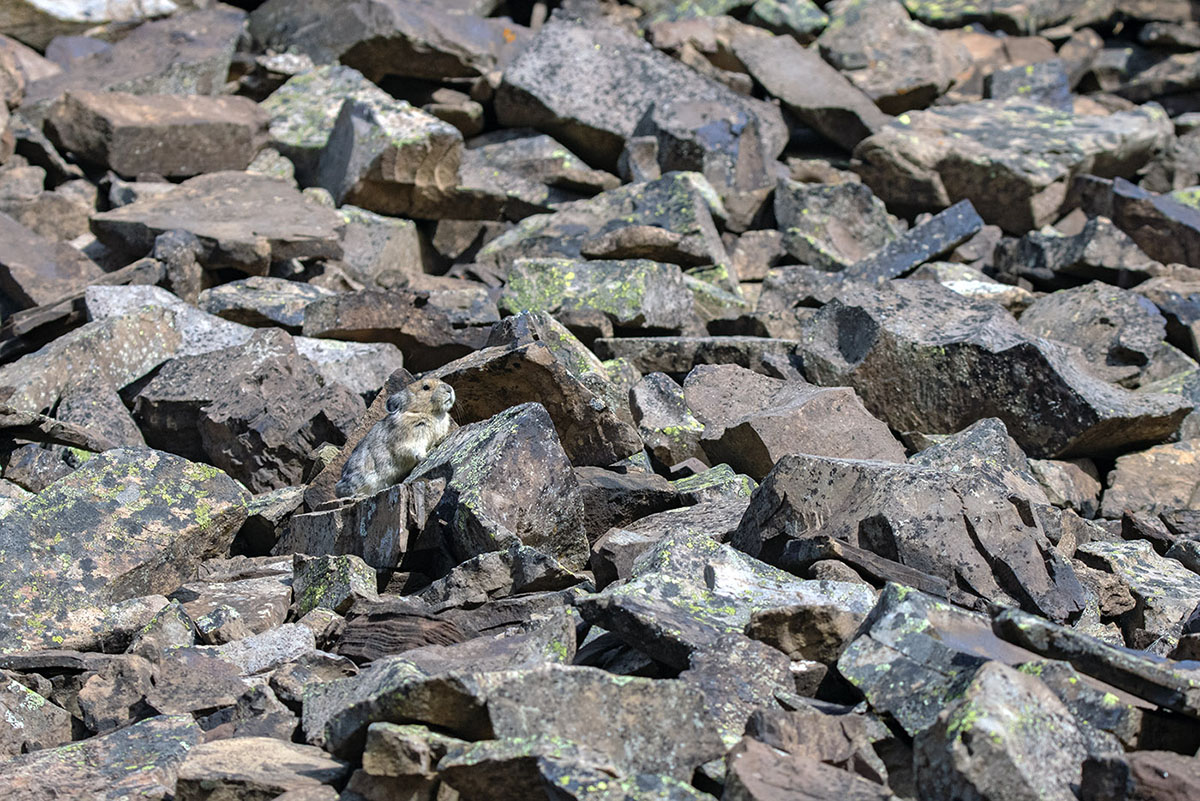
The pika’s colouration closely resembles the rock piles where it lives, making it hard for predatory hawks, eagles, and curious photographers to locate it.

The fur on a pika is thick and soft like its close relatives, the rabbits and hares, but the similarity ends there. The pika has small, rounded ears rather than long floppy ones, and instead of a fluffy powderpuff tail, its tail is invisible, hidden beneath its thick fur.
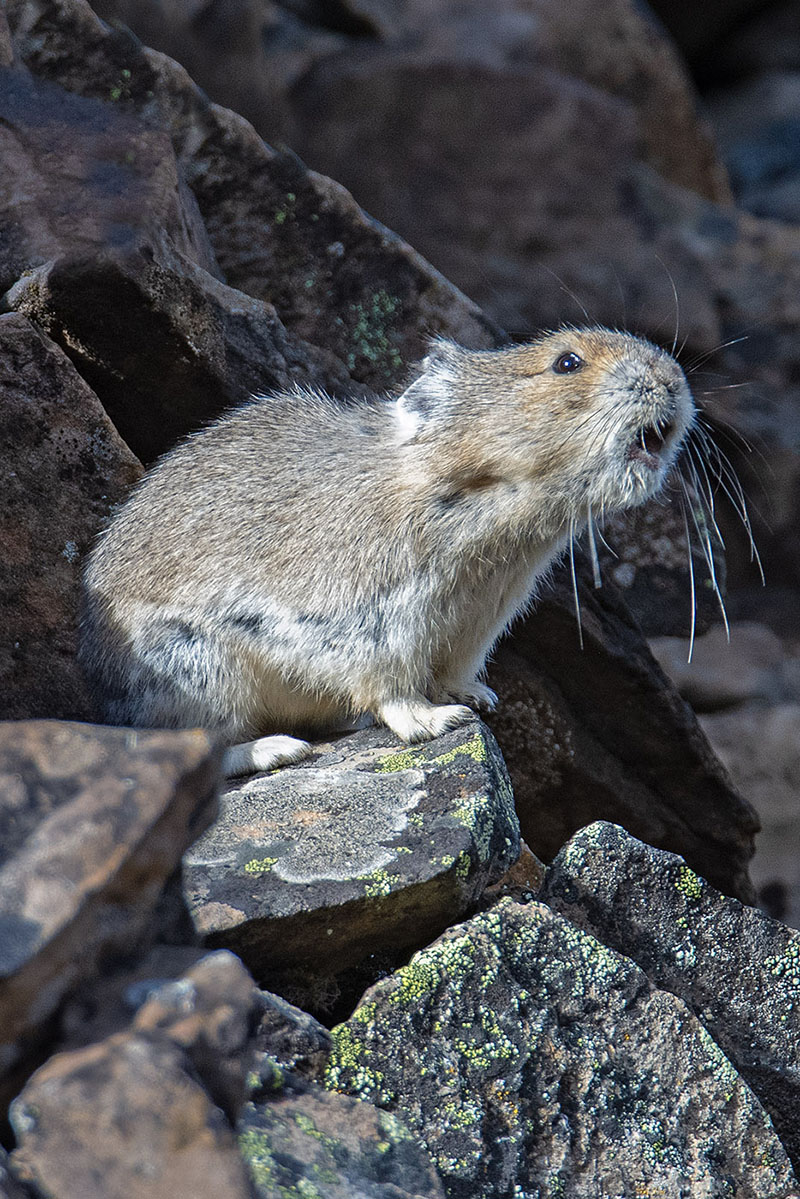
Probably the biggest difference between the pint-size pika and a bouncing bunny is its voice. Whereas rabbits and hares are usually quiet, the pika is an incessant whistler, and its loud telltale “eeeek” can be heard 300 metres (328 yards) away.

Two species of pika, sometimes called rock rabbits or whistling hares, live in North America. The collared pika (pictured here) is the more northern of the two, and lives in central Alaska and the Yukon.

The American pika ranges from the mountains of southern British Columbia and southwestern Alberta to New Mexico and California. Although the two pika species in North America probably arose from a common ancestor during the Ice Age, they are now separated by a gap of about 800 kilometres of unoccupied mountain habitat.

The pika differs dramatically from the other small mammals that share its Rocky Mountain neighbourhood. The hoary marmot (top) and the golden-mantled ground squirrel pad themselves with fat during the summer, then curl into a ball and hibernate for the winter. The pika, on the other hand, prepares for winter in a unique way.
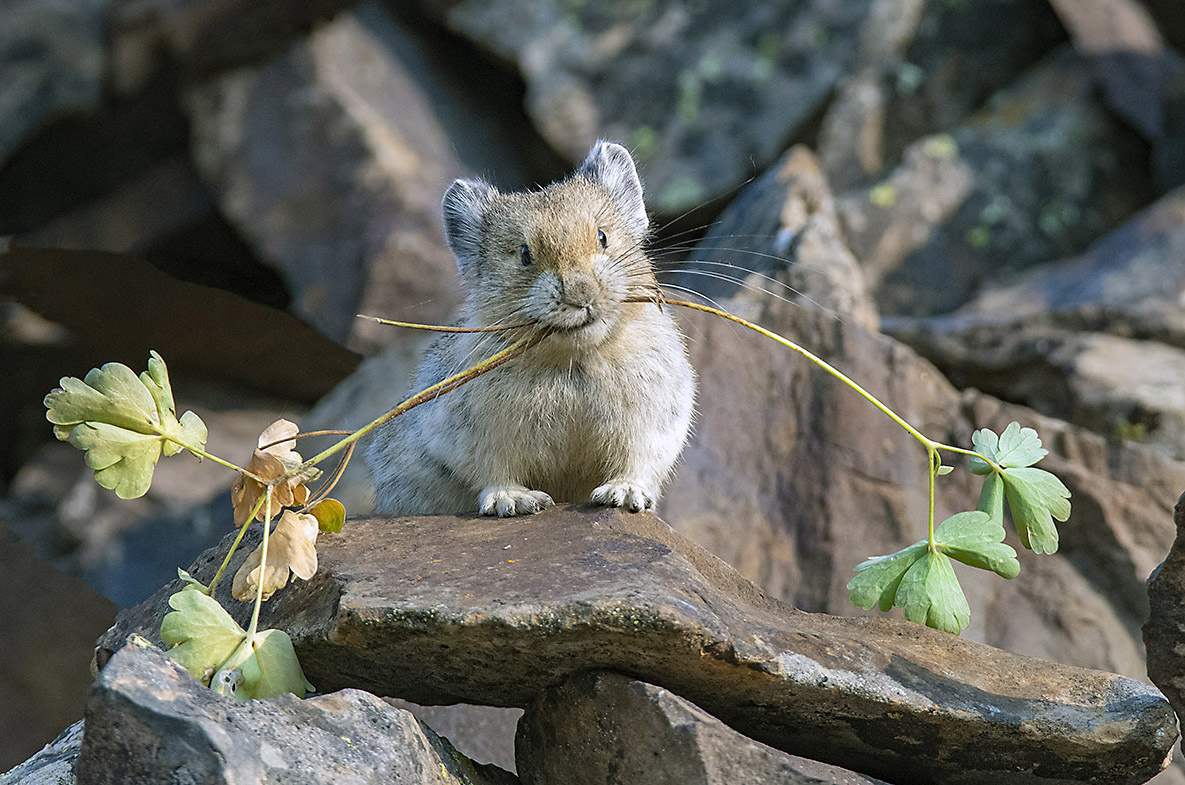
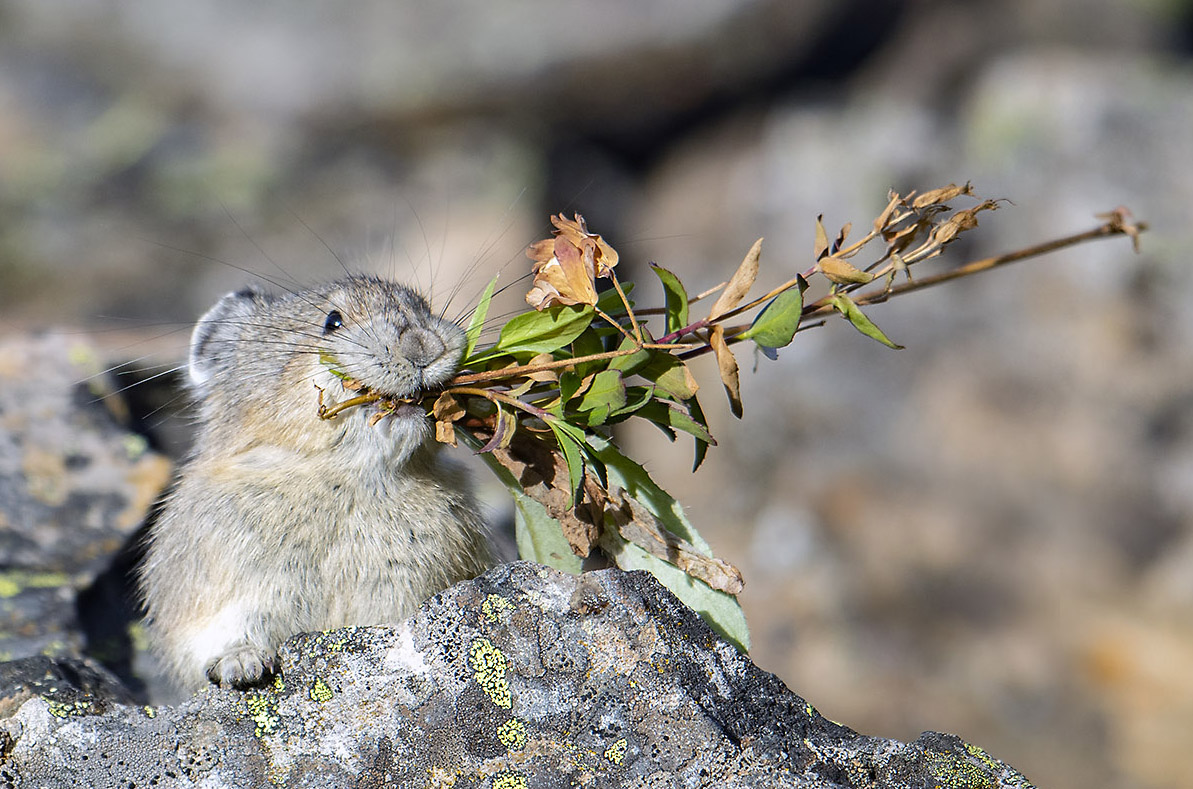
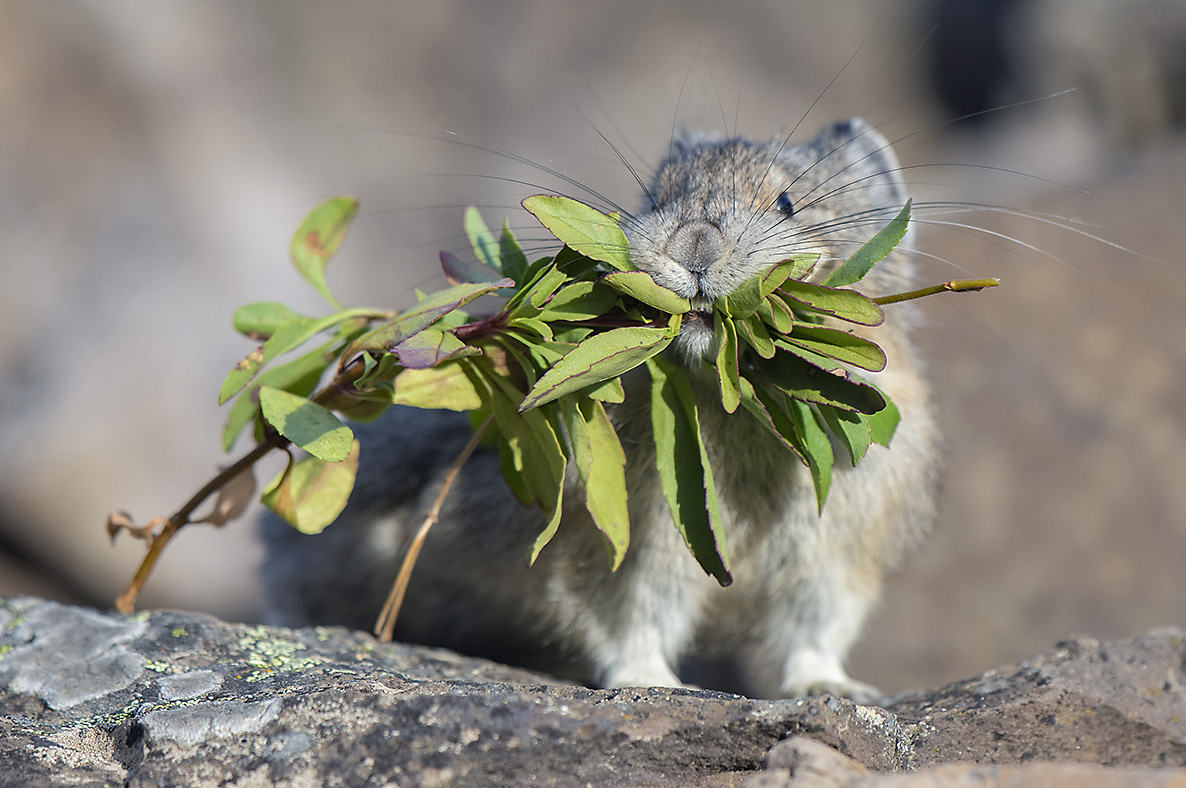
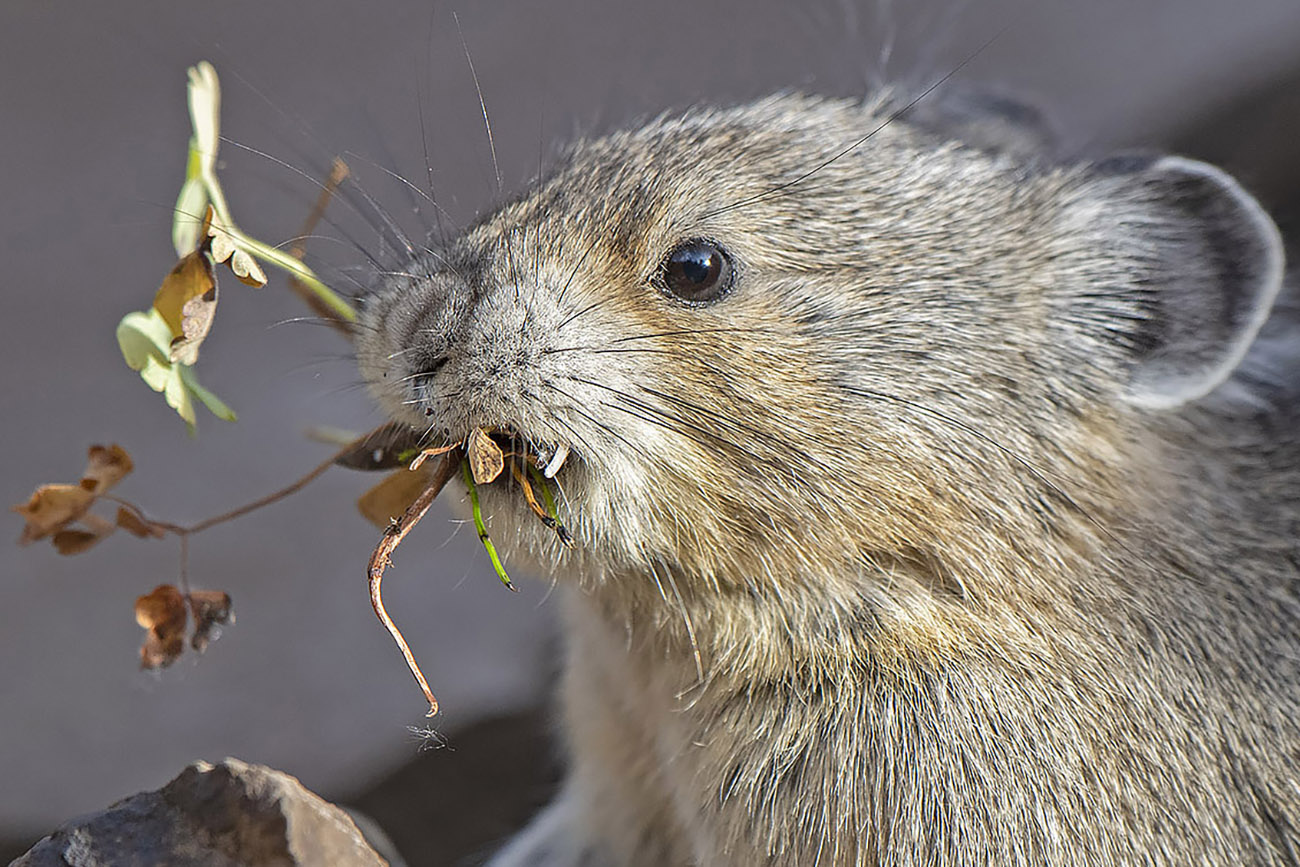
To prepare for winter, the pika turns into a fastidious farmer. From July to September, pikas tirelessly gather the stems, leaves, and flowers of carefully chosen mountain plants and stack them into one or two hay piles within their rocky realm, often sheltered beneath a sizeable boulder.
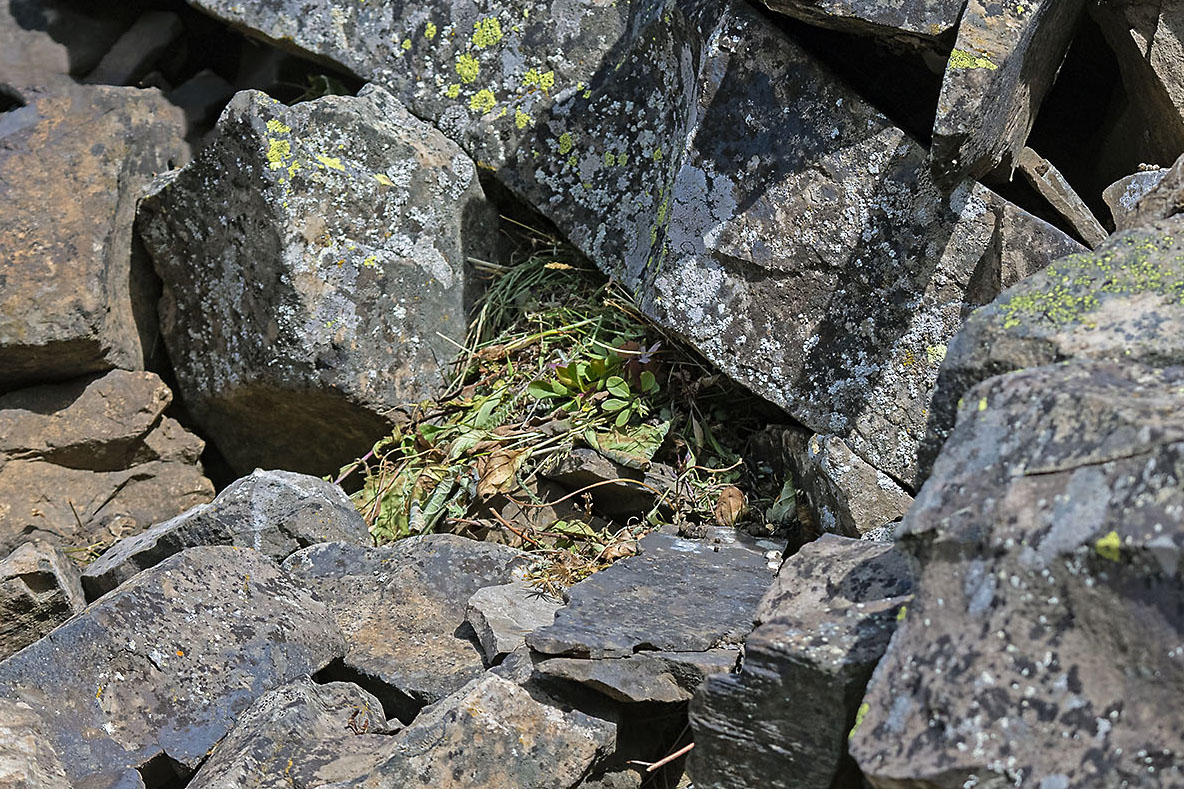
A large hay pile may be 60 centimetres (24 in) high and 80 centimetres (31 in) in diameter at its base. In one study done in southwestern Alberta, the most common plants collected included peavines, gooseberry, willows, and buffaloberry.
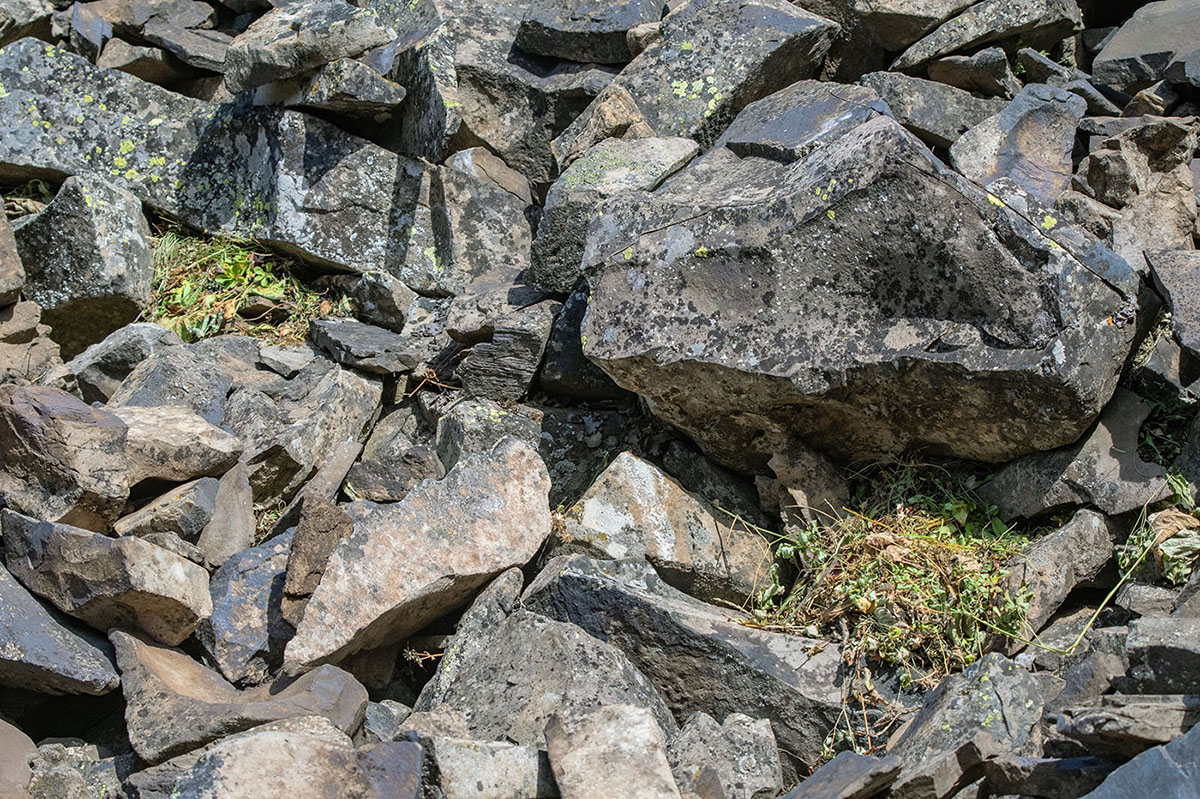
The size of a hay pile depends upon the age and sex of the animal, and the lushness and proximity of nearby meadows. Males build bigger piles than females, and adults outdo juveniles. Logically, nearby lush meadows yield more hay than drier sites, and when meadows are nearby, it takes less time for a pika to transport the plants, so its haystacks are usually larger.
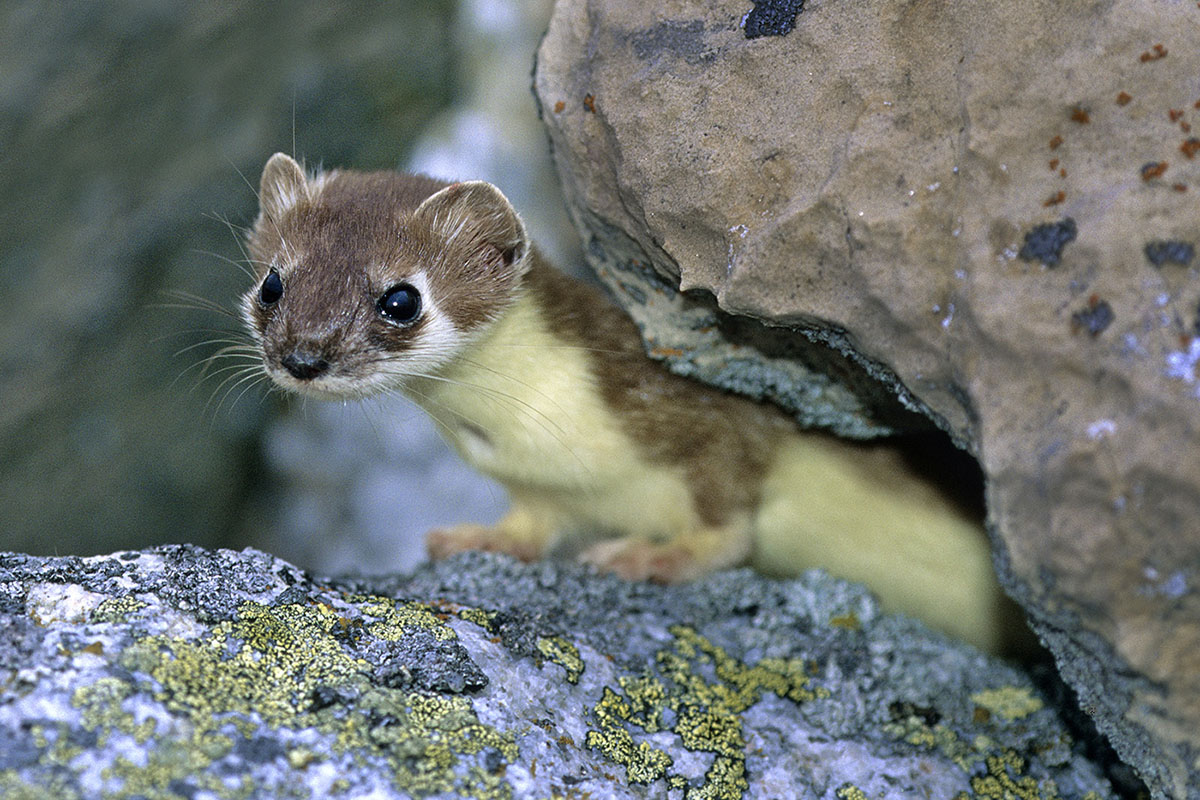
The slender, lithe, short-tailed weasel is the most dangerous of a pika’s predators as it can readily squeeze through the maze of crevices and hidden runways where pikas normally find safety.
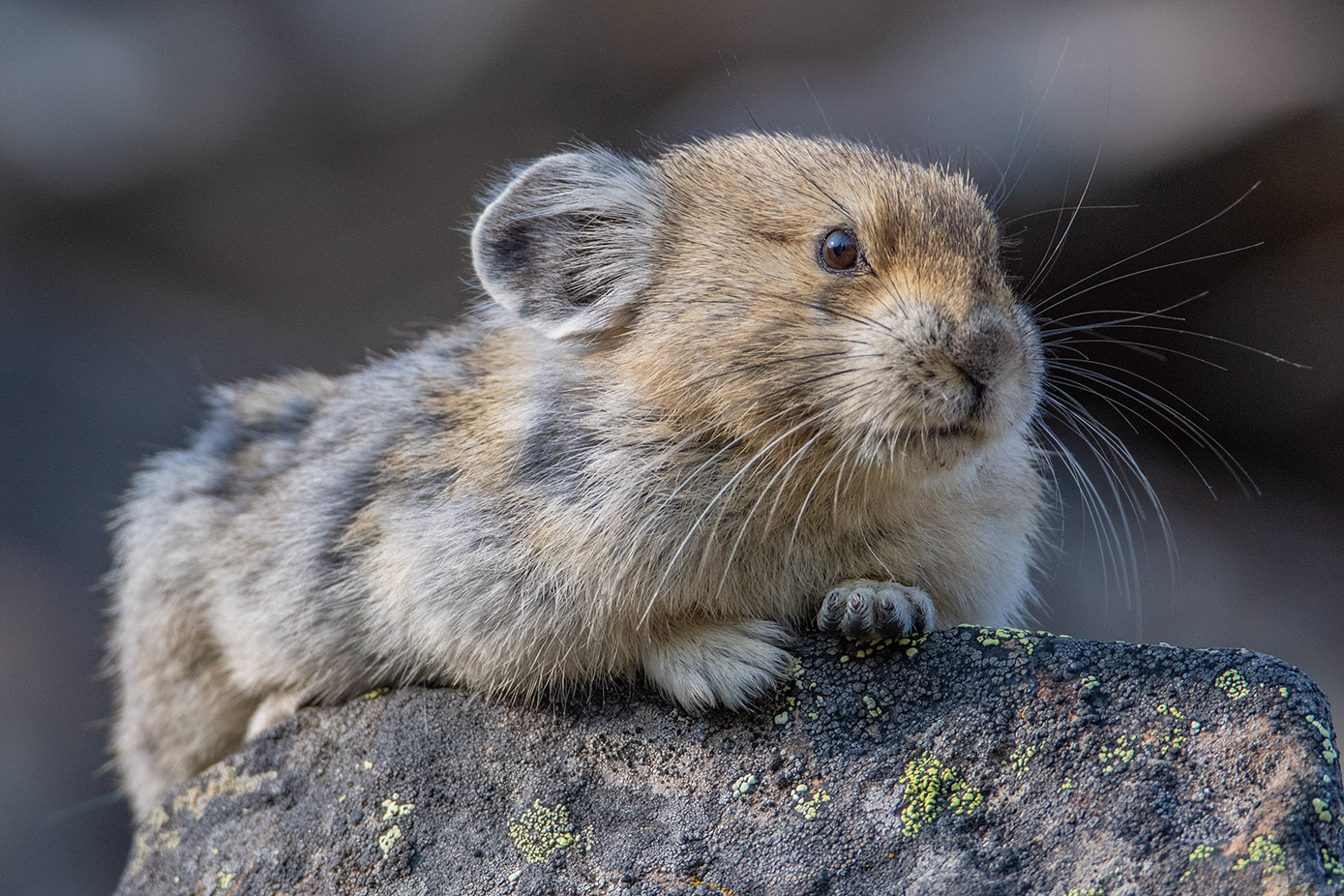
The pika’s haystack building and its avoidance of winter hibernation are not the only aspects of its life that differ greatly from those of its rock-pile rodent neighbours, the marmots and ground squirrels. The pika is a hot-blooded lilliputian overdressed in a thick fur coat.
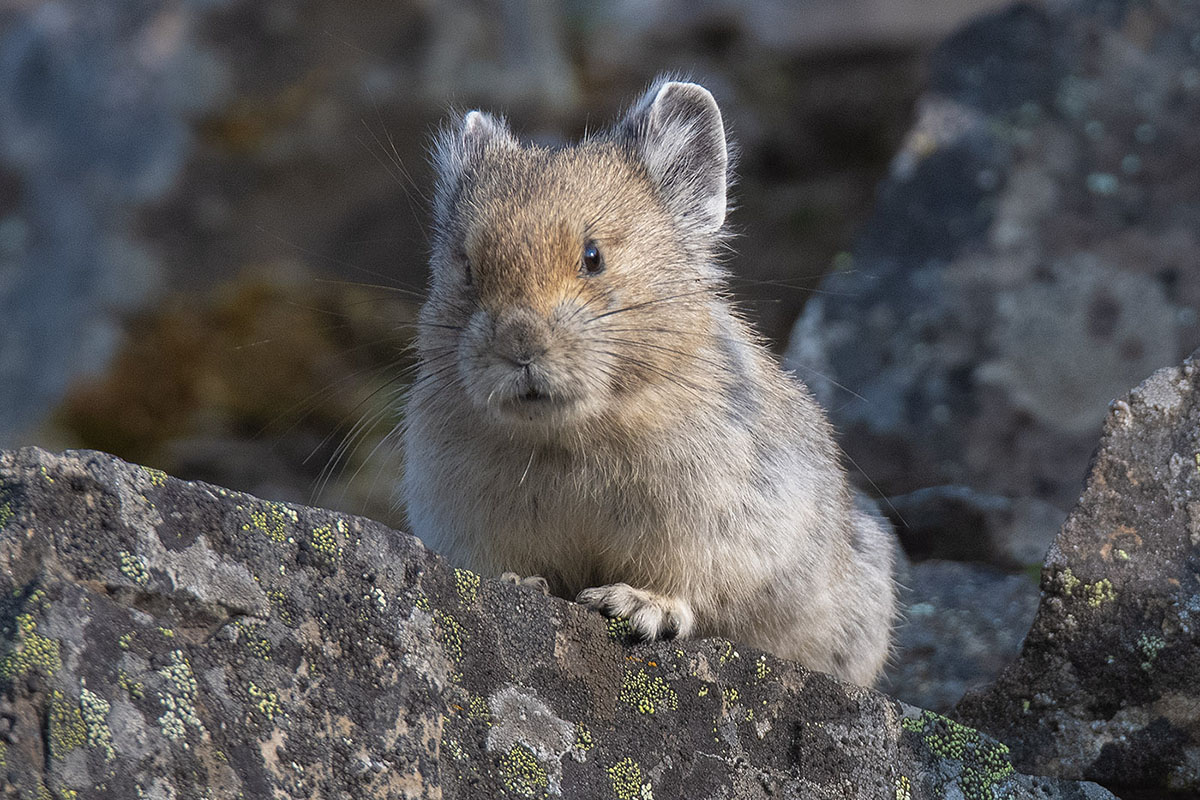
Unlike neighbourhood rodents, whose body temperatures hover around 37°C, like humans, the pika simmers at 40°C. Add to that a dense coat of fur designed to endure the frigid temperatures of a mountain winter, and you have an animal that is perpetually teetering on the verge of overheating. In fact, a pika will die from hyperthermia if it must remain outside in temperatures above 26°C (79°F) for just a couple of hours.
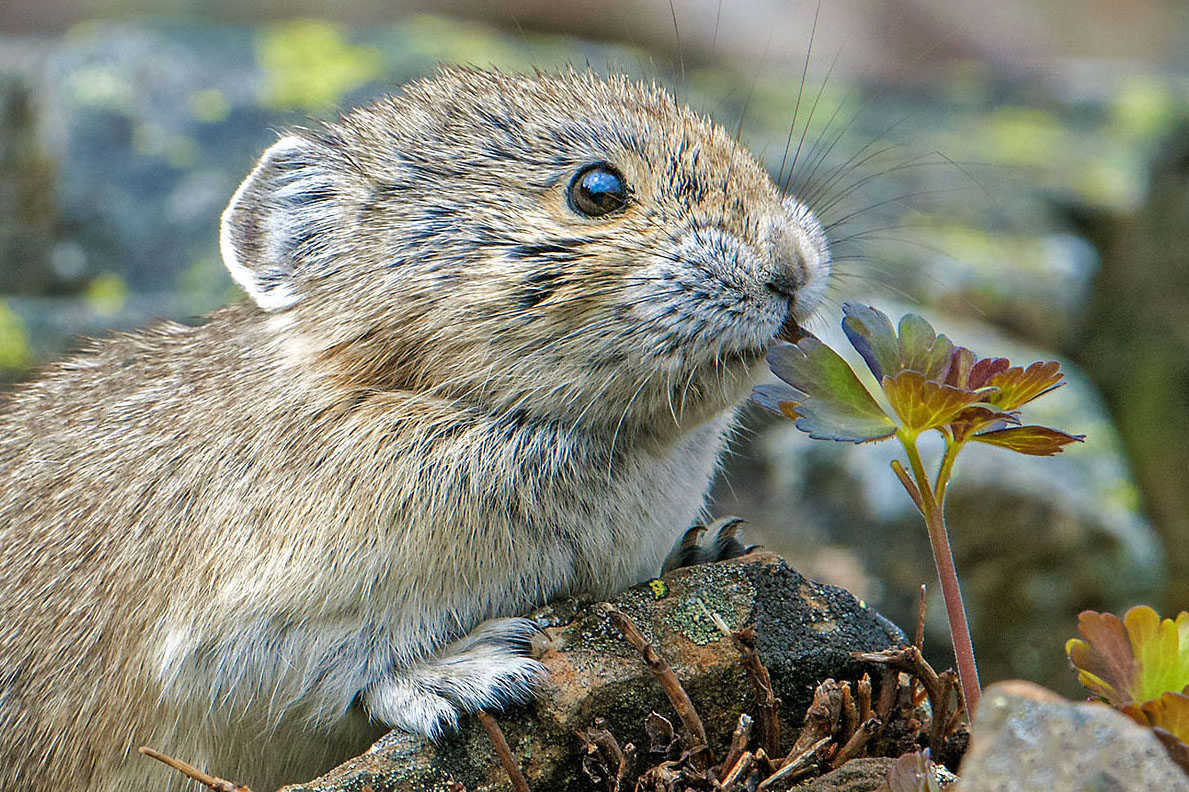
The pika’s vulnerability to modest air temperatures is its Achilles’ heel. At the height of summer in Alberta or British Columbia, pikas are usually active only in the early morning and late afternoon. During midday, the animals retreat to the cool depths of their rocky sanctuary to avoid overheating.
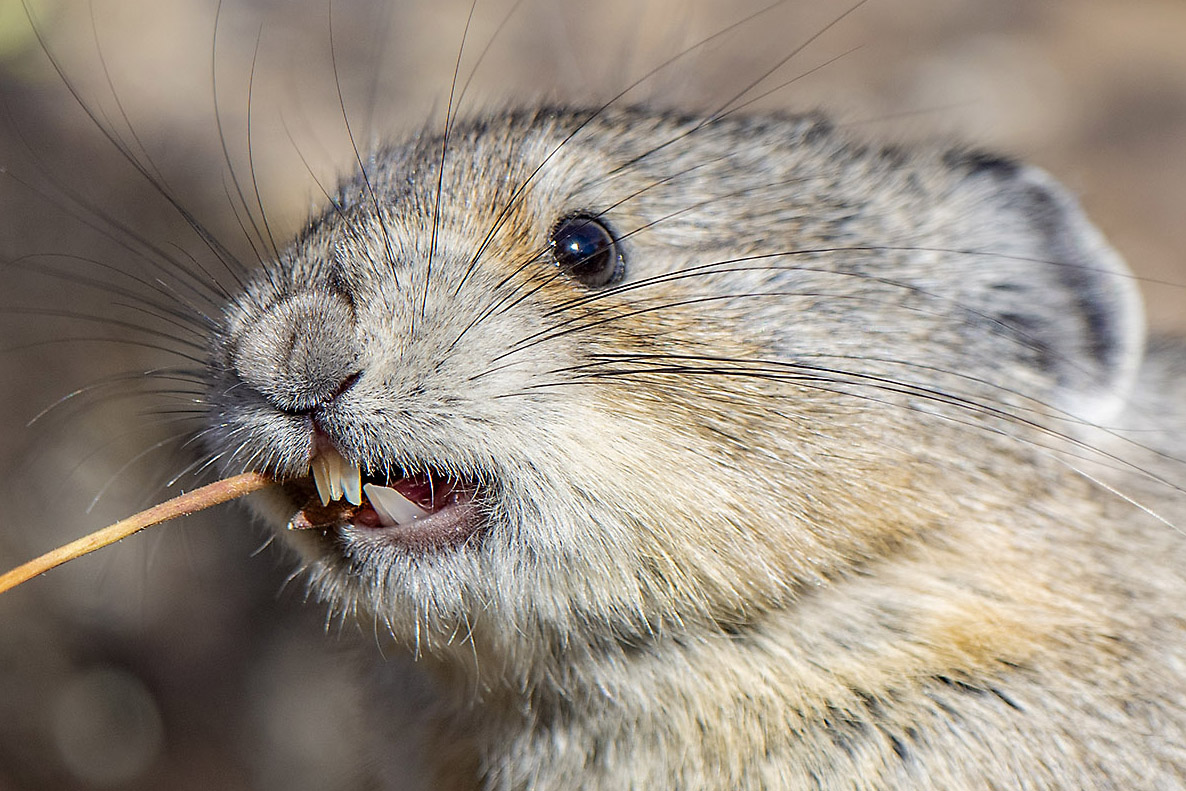
The pika, like its rabbit relatives, has a double set of incisor teeth.
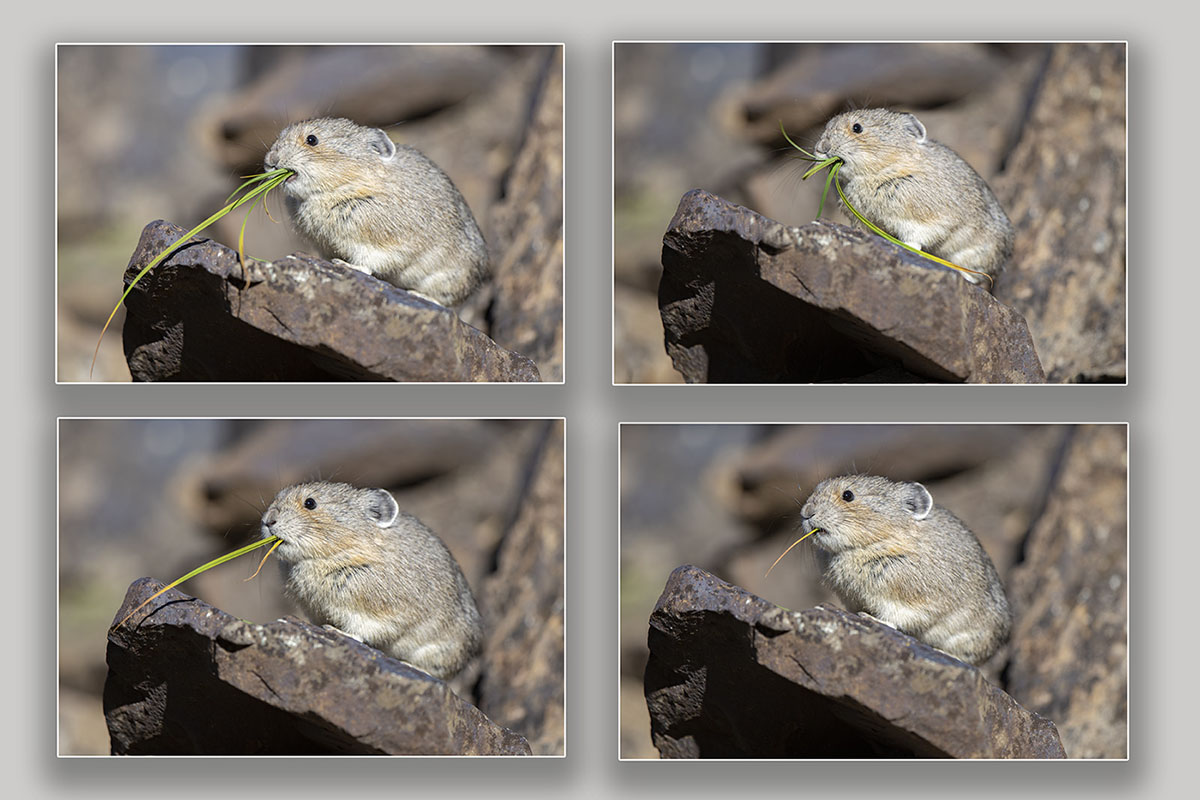
This hungry pika chewed through this clump of grass in less than 30 seconds.
About the Author – Dr. Wayne Lynch

For more than 40 years, Dr. Wayne Lynch has been writing about and photographing the wildlands of the world from the stark beauty of the Arctic and Antarctic to the lush rainforests of the tropics. Today, he is one of Canada’s best-known and most widely published nature writers and wildlife photographers. His photo credits include hundreds of magazine covers, thousands of calendar shots, and tens of thousands of images published in over 80 countries. He is also the author/photographer of more than 45 books for children as well as over 20 highly acclaimed natural history books for adults including Windswept: A Passionate View of the Prairie Grasslands; Penguins of the World; Bears: Monarchs of the Northern Wilderness; A is for Arctic: Natural Wonders of a Polar World; Wild Birds Across the Prairies; Planet Arctic: Life at the Top of the World; The Great Northern Kingdom: Life in the Boreal Forest; Owls of the United States and Canada: A Complete Guide to their Biology and Behavior; Penguins: The World’s Coolest Birds; Galapagos: A Traveler’s Introduction; A Celebration of Prairie Birds; and Bears of the North: A Year Inside Their Worlds. In 2022, he released Wildlife of the Rockies for Kids, and Loons: Treasured Symbols of the North. His books have won multiple awards and have been described as “a magical combination of words and images.”
Dr. Lynch has observed and photographed wildlife in over 70 countries and is a Fellow of the internationally recognized Explorers Club, headquartered in New York City. A Fellow is someone who has actively participated in exploration or has substantially enlarged the scope of human knowledge through scientific achievements and published reports, books, and articles. In 1997, Dr. Lynch was elected as a Fellow to the Arctic Institute of North America in recognition of his contributions to the knowledge of polar and subpolar regions. And since 1996 his biography has been included in Canada’s Who’s Who.



Thanks to PhotoNews Canada for sharing these wonderful images of the diminutive Pikas! And a big thanks to Dr Wayne Lynch for sharing these extraordinary shots of these tiny rabbits!
I am now 88 and have enjoyed reading magazines showing the best results of your research. I learned basic photography in our local photo club and this has had a direct effect on the way I now see animals and nature. Signed: Pierre Bourdeau, Quebec City.
Merci Pierre. I am happy that you find the natural world as interesting and beautiful as I do. Roughly seventy-five million years ago primates, rabbits and rodents shared a common ancestor, so we humans, who are a species of primate, are genetically linked to the pika. I know some readers may find that scientific fact disturbing and demeaning to humanity. I think if we acknowledged our undeniable, ancestral link with more of our fellow creatures on this planet we would be in a far better place than we are.
Wayne
The photos are great and the article is very informative, thank you.