



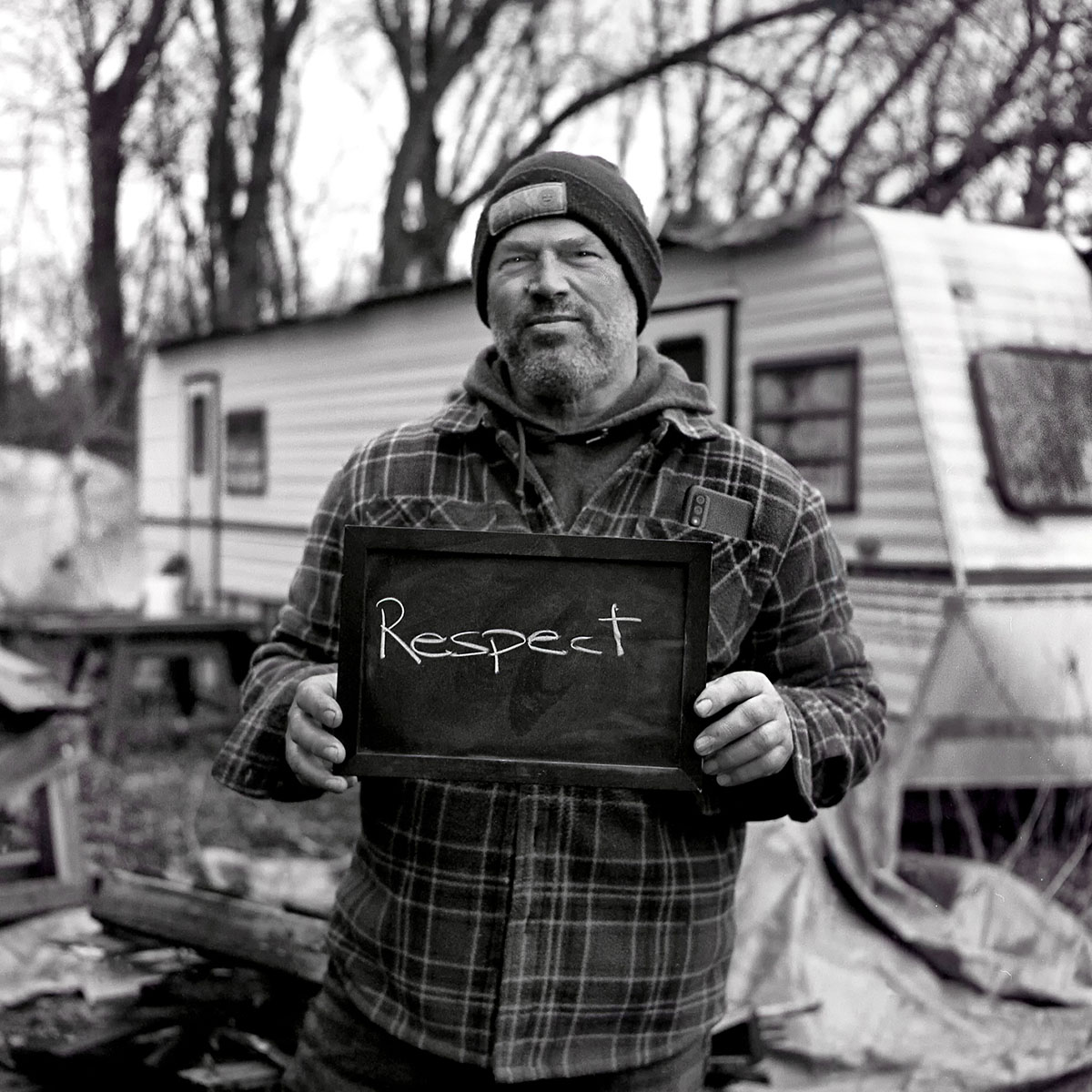
It began simply: with a camera, a chalkboard, and a question. While walking through Port Credit, my home, and a place I have photographed for years, I started to notice how many faces we pass each day without really seeing. A thought struck me: what if, instead of moving past, I paused long enough to listen?
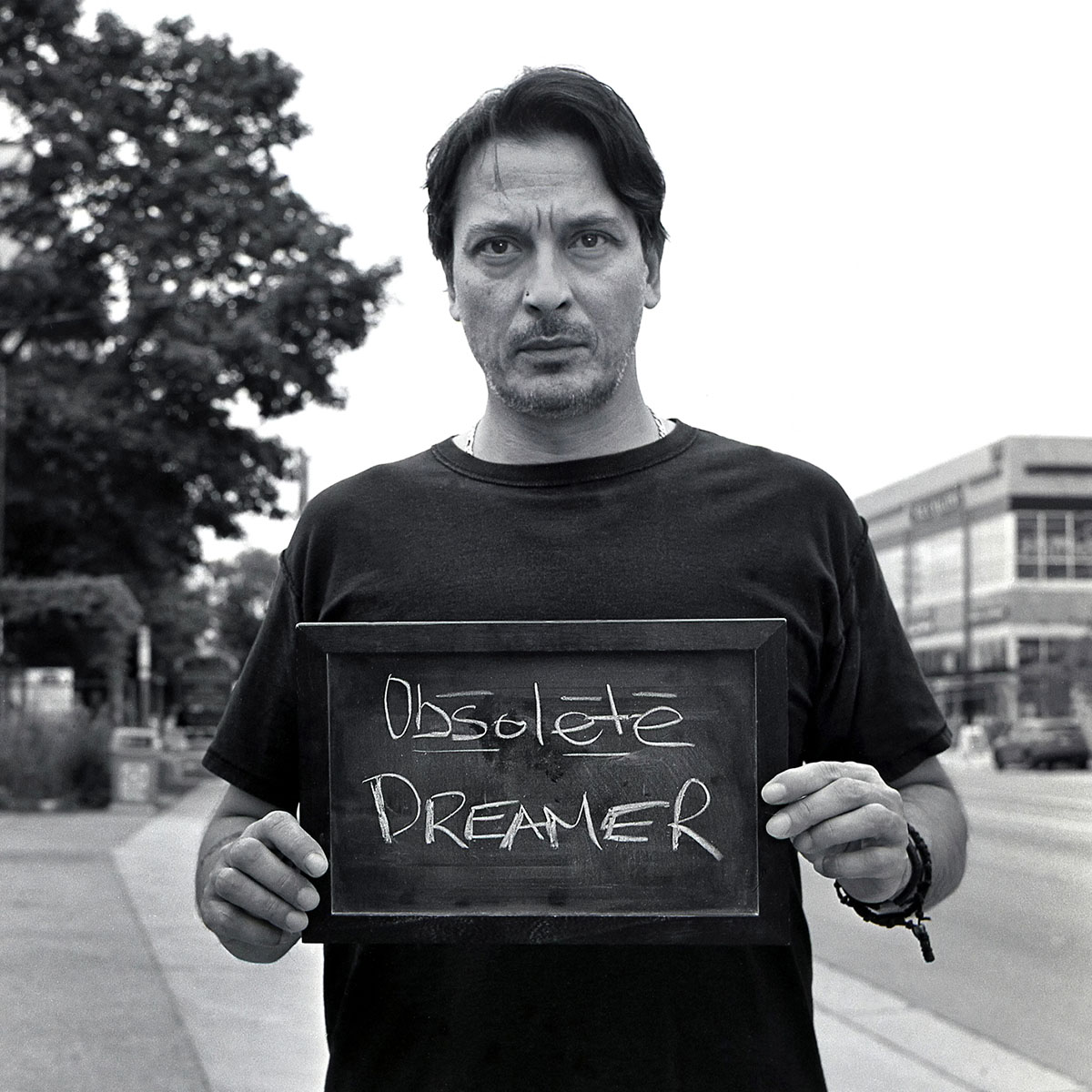
I began carrying a small chalkboard and chalk. When I spoke with someone on the street, I handed it to them and asked if they would write a word, a thought, or a sentence that reflected what was on their mind in that moment. Along with their portrait, these handwritten fragments became the heart of the project. Sometimes they are expressions of gratitude. Sometimes a memory. Sometimes something as simple as: “I’m just trying to get through today.”
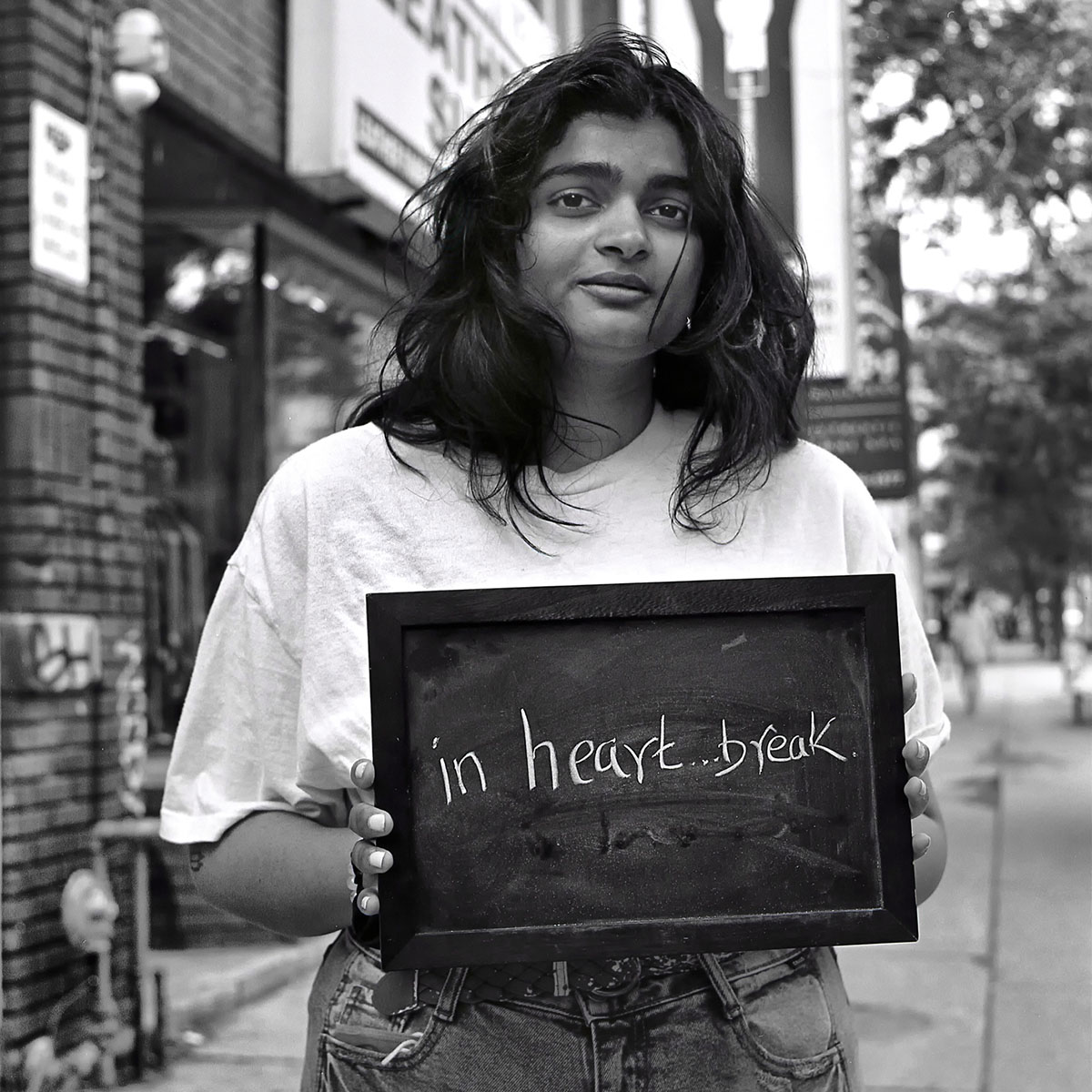
Each chalkboard message is like a fingerprint, no two alike, yet all connected by a quiet honesty. Some words feel heavy, weighed down by loss or uncertainty, while others are lighthearted and playful, almost childlike in their simplicity. Standing in front of the camera, people often linger longer than expected as though writing something down makes their feelings more real. And in those pauses, I am reminded that photography is not only about capturing a likeness, but about creating a space where people can be seen in ways they rarely are. What began as a passing idea has grown into a living archive of voices that might otherwise have gone unheard. The project has now extended across the GTA, with the idea to take it nationally.
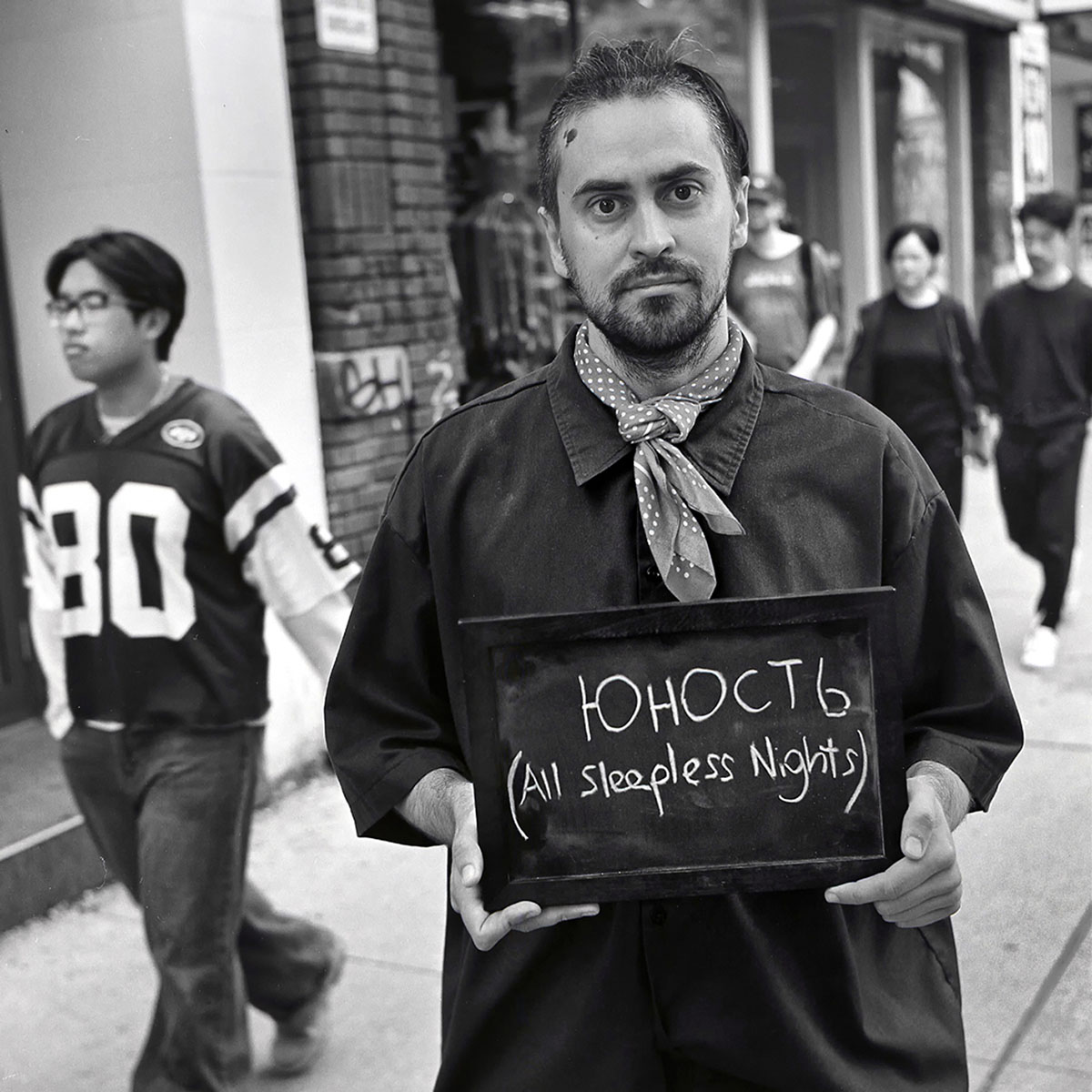
Much of this unfolded because of the camera itself. I am shooting the entire project exclusively on my 1954 Rolleiflex and shooting Ilford HP5 and Kentmere Pan 400, That camera is more than a tool; aside from being a piece of art, it is a conversation starter. People stop me on the street to ask about it, curious about this twin-lens machine from another era. After a short exchange about the Rolleiflex, I invite them to take part in the project. In this way, the instrument of photography also becomes a bridge to human connection.
The choice of film is intentional. The tonal depth and texture of these stocks match the unvarnished honesty of the portraits. This amplifies Ilford’s and Amplis Foto’s connection to both heritage film photography and contemporary documentary work. The medium itself adds to the feeling of the project; timeless, tactile, and grounded in tradition.
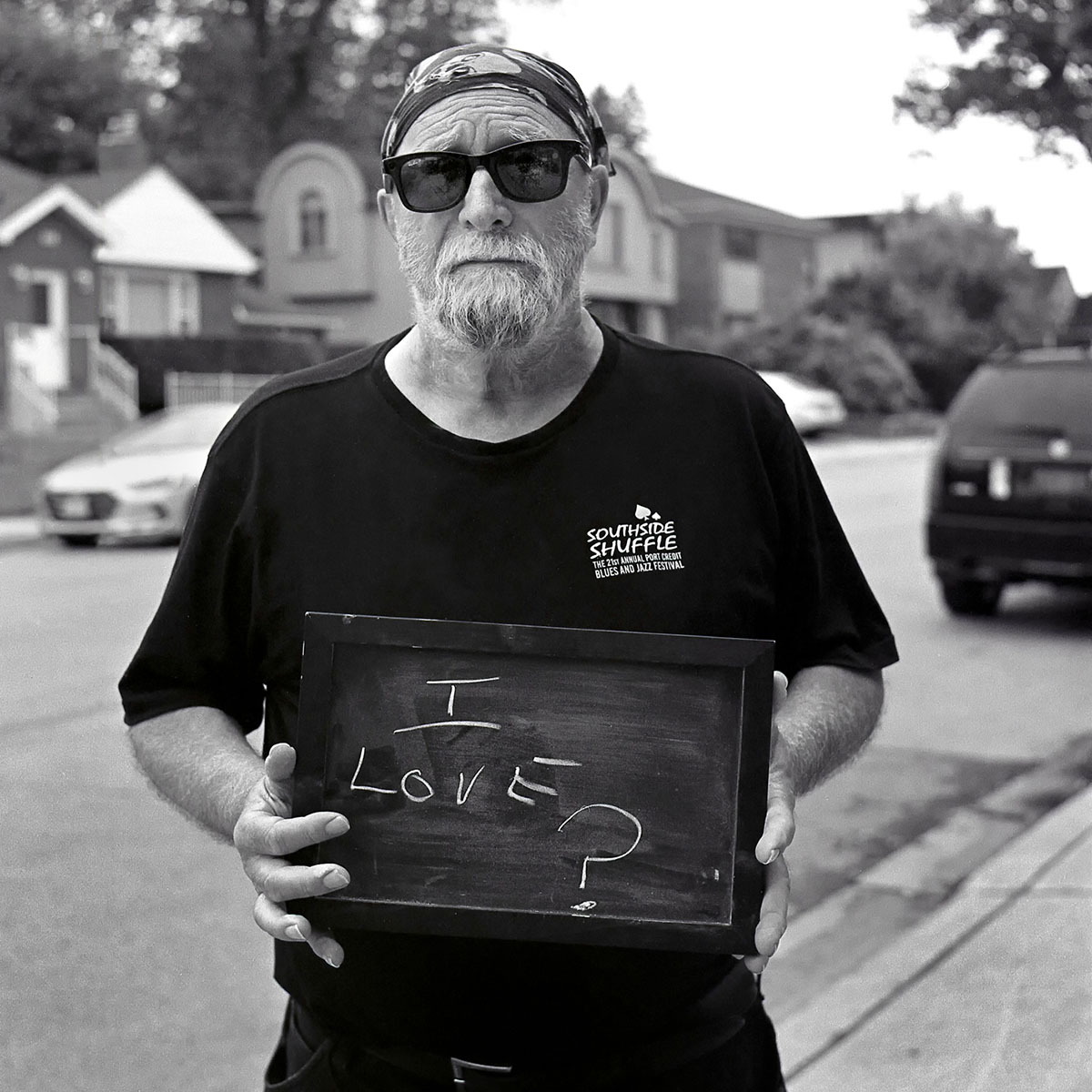
What I’ve found is that kindness often emerges in these small exchanges. A passerby who stops to share a thought realizes maybe for the first time that week that what they feel matters. Gratitude surfaces in unexpected ways: for family, for health, for the weather holding out. These may seem ordinary, but in their ordinariness lies something profound.
The world today is fractured. We are surrounded by noise, quick opinions, and the constant scroll of images that barely touch us before we swipe away. But The Chalkboard Project slows that down. It reminds us that behind every face is a story, behind every story is a life, and within each life there is something worth listening to.
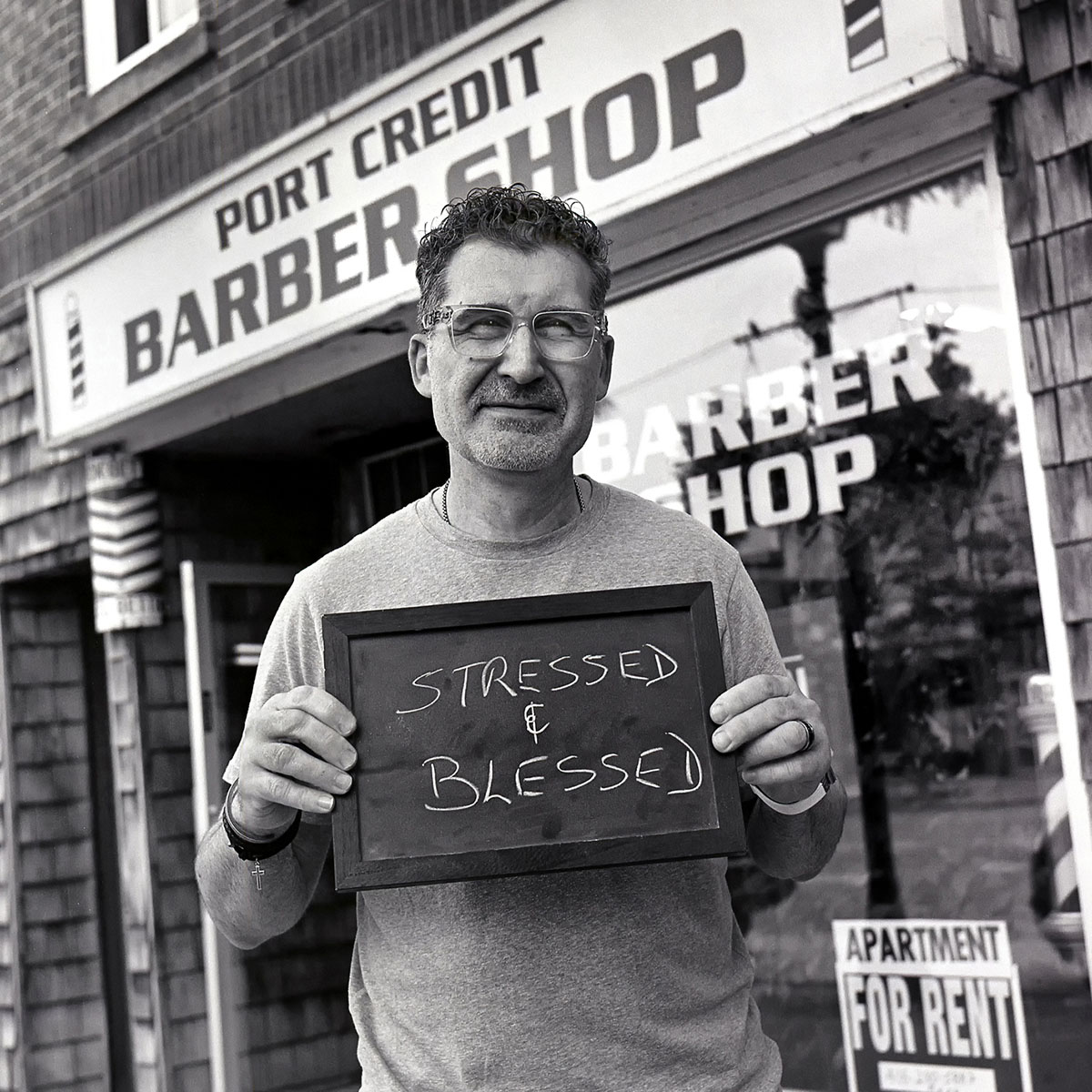
Photography has always been my way of looking deeper, beyond appearances, beyond surfaces. This project feels like a natural extension of that work. It is about pausing in the middle of the rush, making room for empathy. It is about holding space for another person’s voice, however small or fleeting.
I cannot thank Amplis Foto enough for sponsoring this project. Their support and dedication to heritage film photography has allowed me to work in a way that honours both the craft of traditional film photography and the immediacy of the ongoing contemporary documentary practice.
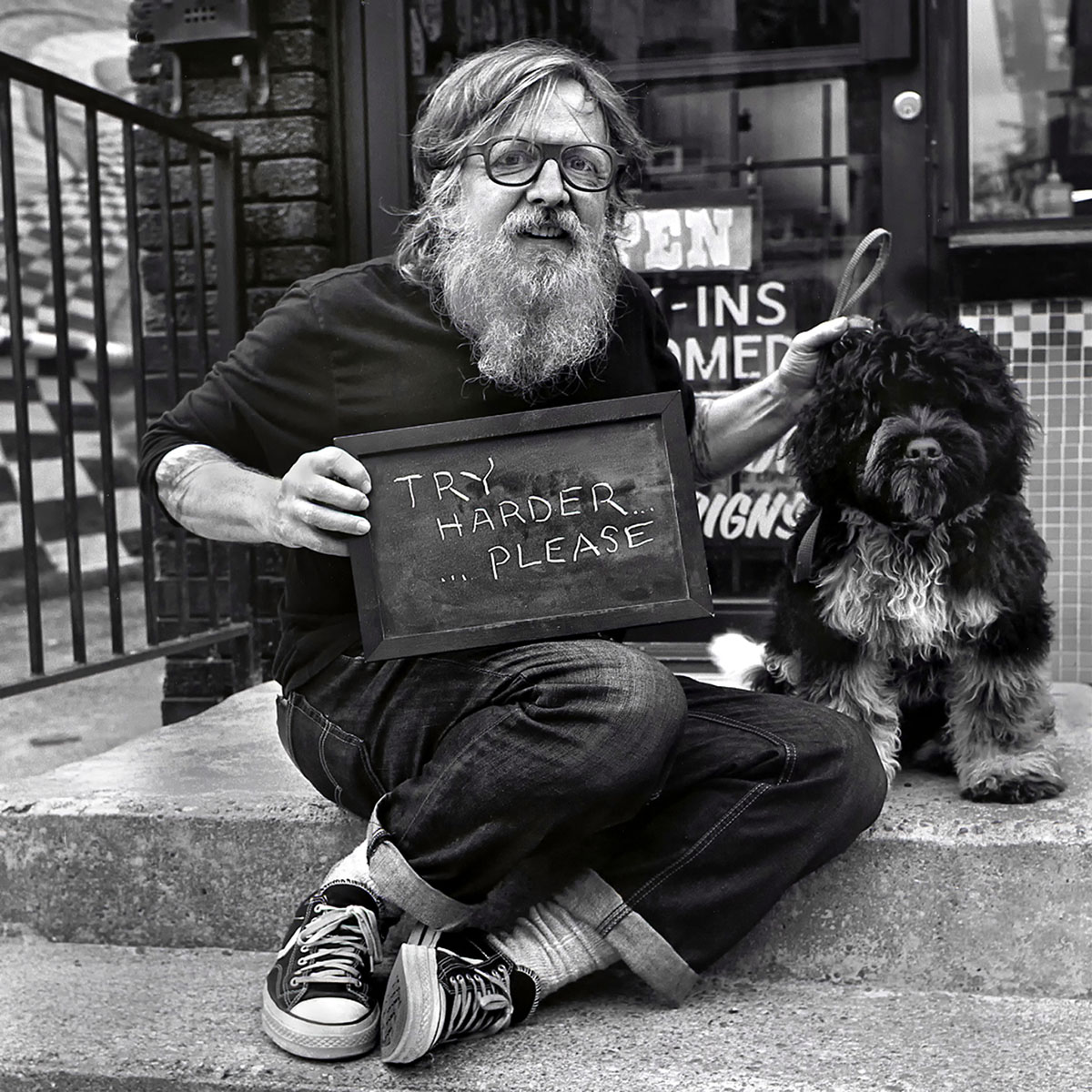
The truth is, the world needs this now more than ever. Compassion is not abstract; it happens in the exchange between two people. It happens in the moment when we see each other clearly. And sometimes, all it takes to begin is; a chalkboard, a Rolleiflex, a few rolls of Ilford HP5 and Kentmere Pan 400 and a simple question asked on the street.
Discussed Items
ABOUT THE AUTHOR
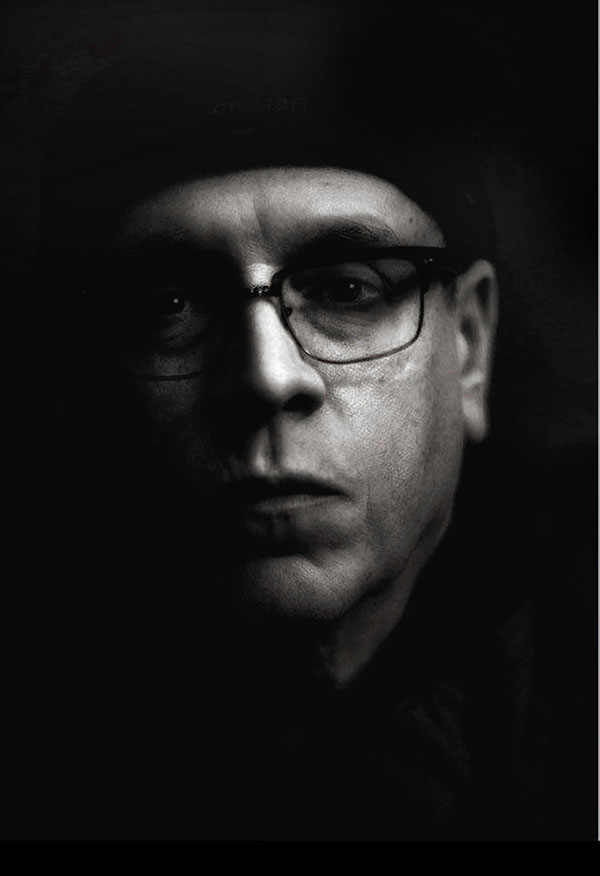
Stephen Uhraney is an award-winning Canadian photojournalist and documentary photographer whose work looks beyond the surface to capture the essence of life. In 2024, he became the only Canadian ever to win the International Association of Fire Fighters Media Award for On Duty, his four-month immersion with Fire Station 104 in Port Credit. He was named Mississauga’s Visual Artist of the Year in 2023 and received the 2024 Heritage Mississauga Modern Heritage Award for his long-term documentation of Port Credit. His acclaimed projects include Life in the Marsh, a documentary on migrant farm workers in the Holland Marsh featured in the 2013 Scotiabank CONTACT Photography Festival, alongside five solo exhibitions. A former staff photographer with the Toronto Sun and a current contributing photographer with Canadian Press Images. His work has been featured on CBC’s local and national newscasts, and continues to resonate locally, nationally, and internationally. This fall, Uhraney will be teaching at George Brown College and Visual Arts Mississauga, sharing his immersive approach to documentary photography with a new generation of artists.



What a great series and concept.
The words give the image so much more depth and meaning. Well done.
Thank you Robert. The series is about looking beyond the surface and letting the images connect more deeply with everyday life.
Such a simple yet touching project. Do go national. It would make an awesome book.
Thank you so much Carole. I’ve been thinking about how the work could live beyond the series, and a book is definitely something I am thinking about.
Great article with real meaning. I will awaken people to truly dee others.
Thanks Andrew, that really means a lot. My hope is to eventually bring the project to a wider audience, and a book feels like a natural direction.
I continue to learn and grow through your work and images. Thank you for your understanding of people and places around us
Thank you Kim. That means a lot, my goal has always been to capture the essence of people and places in a way that resonates and tells a deeper story.
Very inspiring work.
Thank you Kevin! The chalkboard becomes a mirror for the soul, temporary, imperfect and erasable much like our thoughts and experiences. A reminder that expression does not need to be perfect polished or permanent to be powerful.