



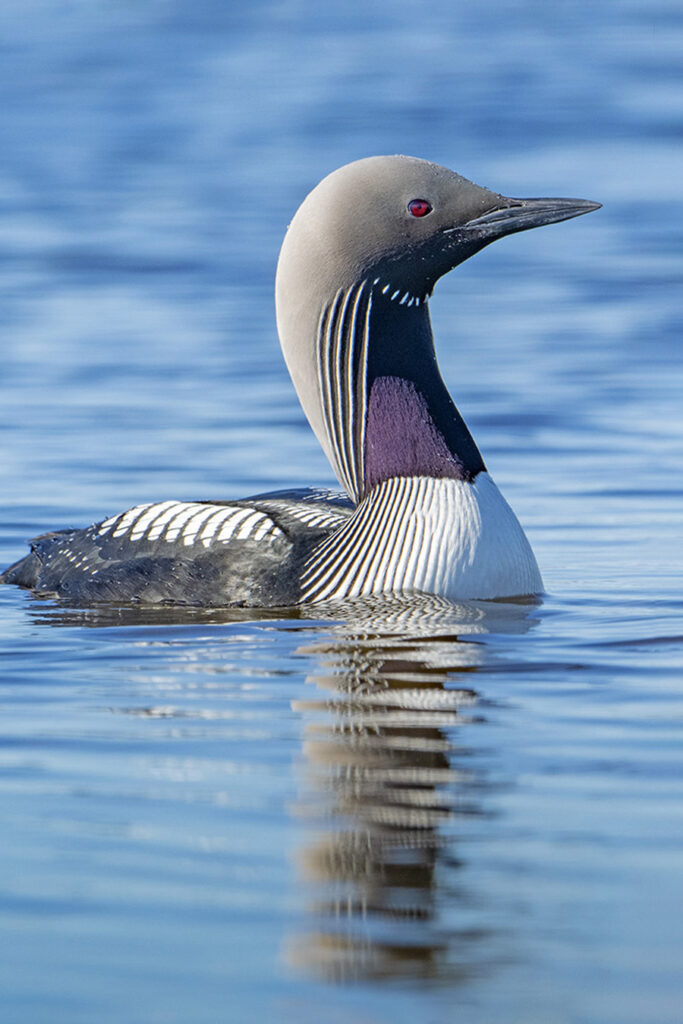
The Pacific loon, like all species of loons, has beautiful blood-red eyes. Many authors have erroneously suggested that the reason a loon has red eyes is to restore the red colouration filtered out of the water when the birds dive underwater. This is wrong. More likely, the intensity of the eye colour is an honest cue of health and fitness.
Again, this month I want to share with you some of my favourite photos from the four weeks I spent in July 2022 on Victoria Island in the Canadian Arctic. The main focus of the trip was to pursue the three arctic-nesting loon species: red-throated loon, yellow-billed loon, and Pacific loon. In my post last month, I featured the red-throat loon and yellow-billed loon. This month, the Pacific loon is the star. As I mentioned previously, many other avian species besides loons captured my attention on the trip, and they are featured as well. In the last few days of my trip, the high temperatures on Victoria Island were 5°C and 6°C (41- 43°F). The wind was gusting to 60 kph (36 mph), which made the wind chill equivalent to -2°C (28°F). Such is July in the Arctic.
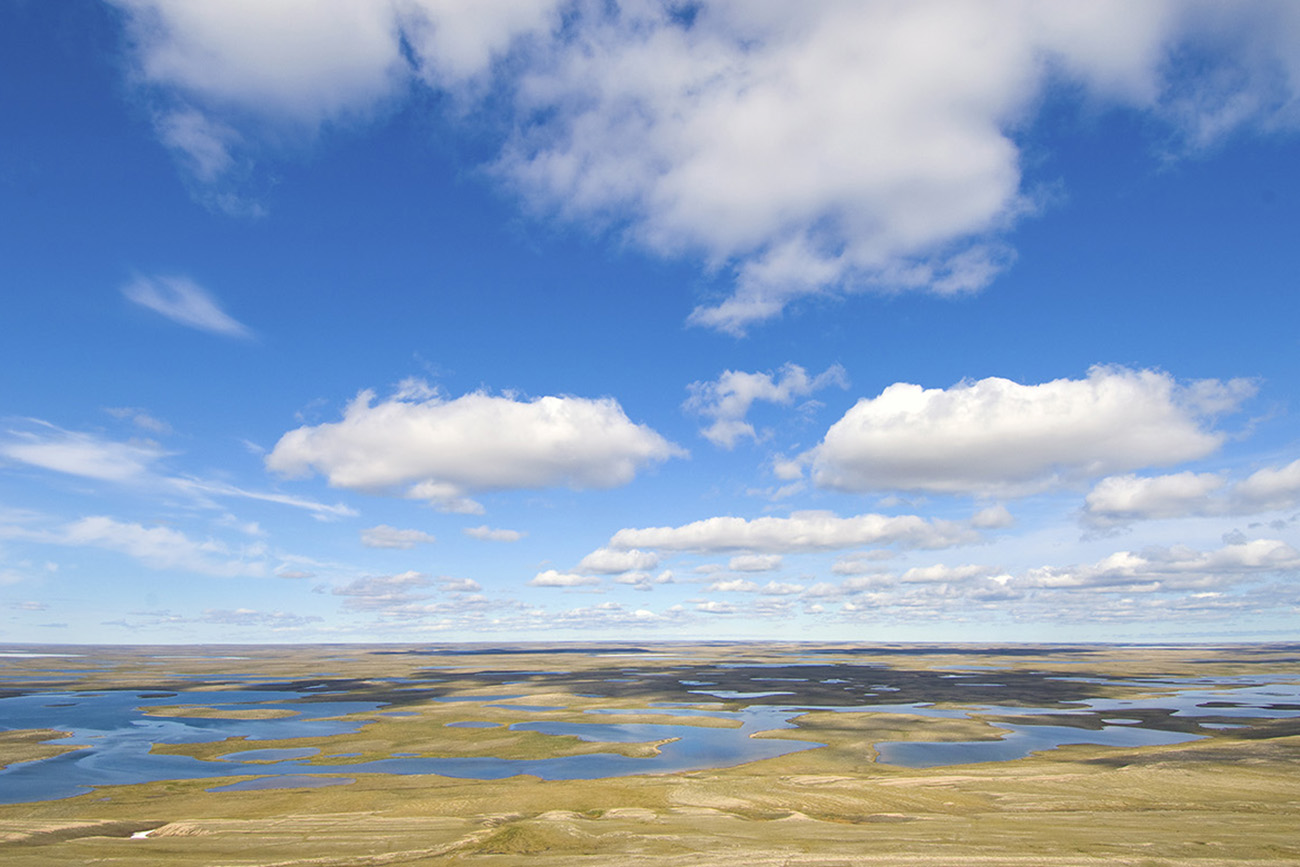
The numerous Arctic lakes on southern Victoria Island vary in size and depth, making them an ideal habitat for nesting yellow-billed, Pacific, and red-throated loons.
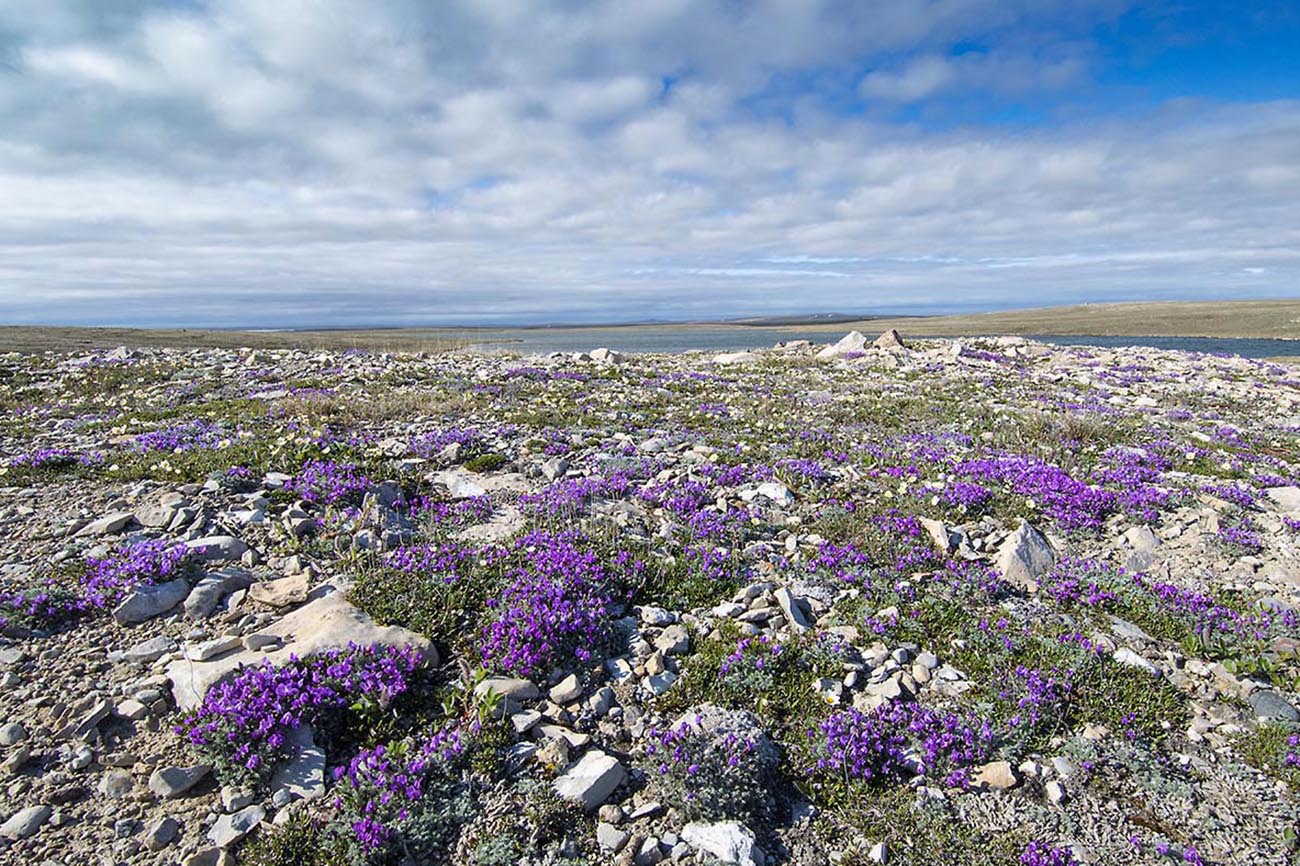
I am often surprised by the profusion of wildflowers that carpet the Arctic tundra in summer. In this case, the floral display is provided by cushions of purple oxytropis.
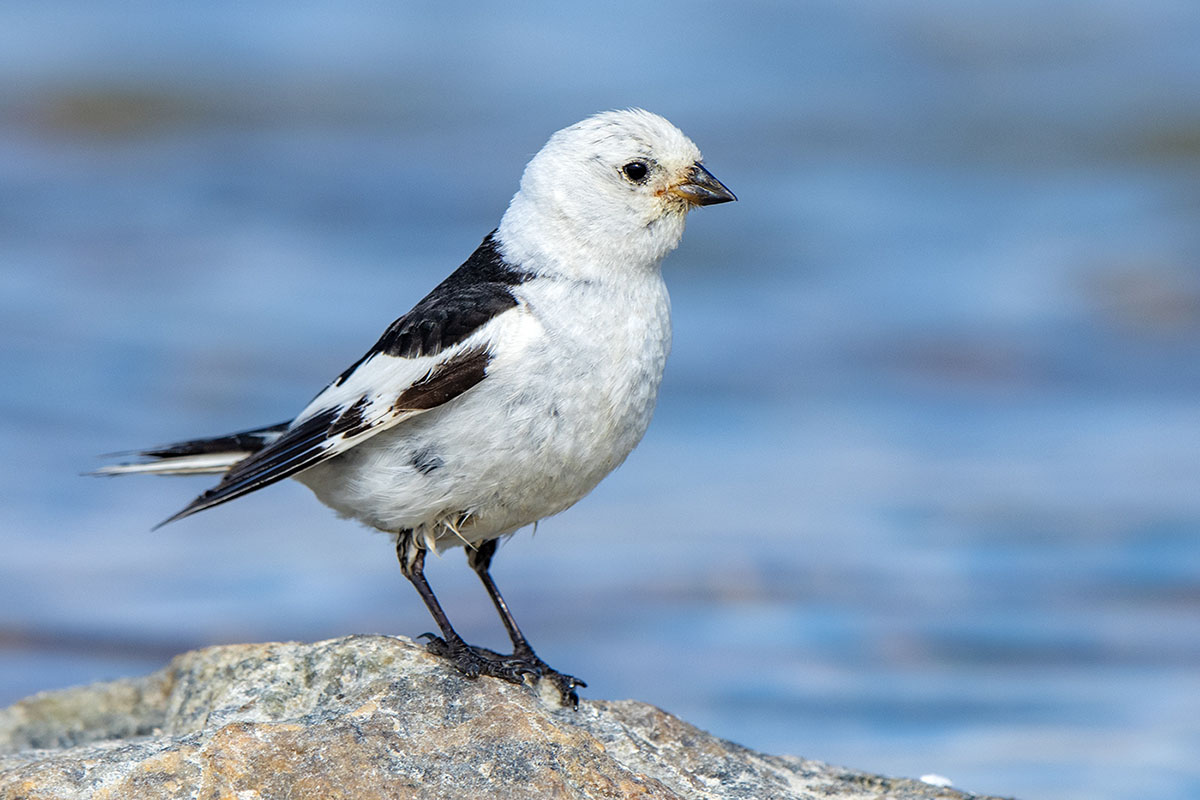
The snow bunting is usually the first migrant songbird to return to the Arctic each summer. Residents celebrate the bird’s warbling whistle as a welcome sign that summer is just around the corner.
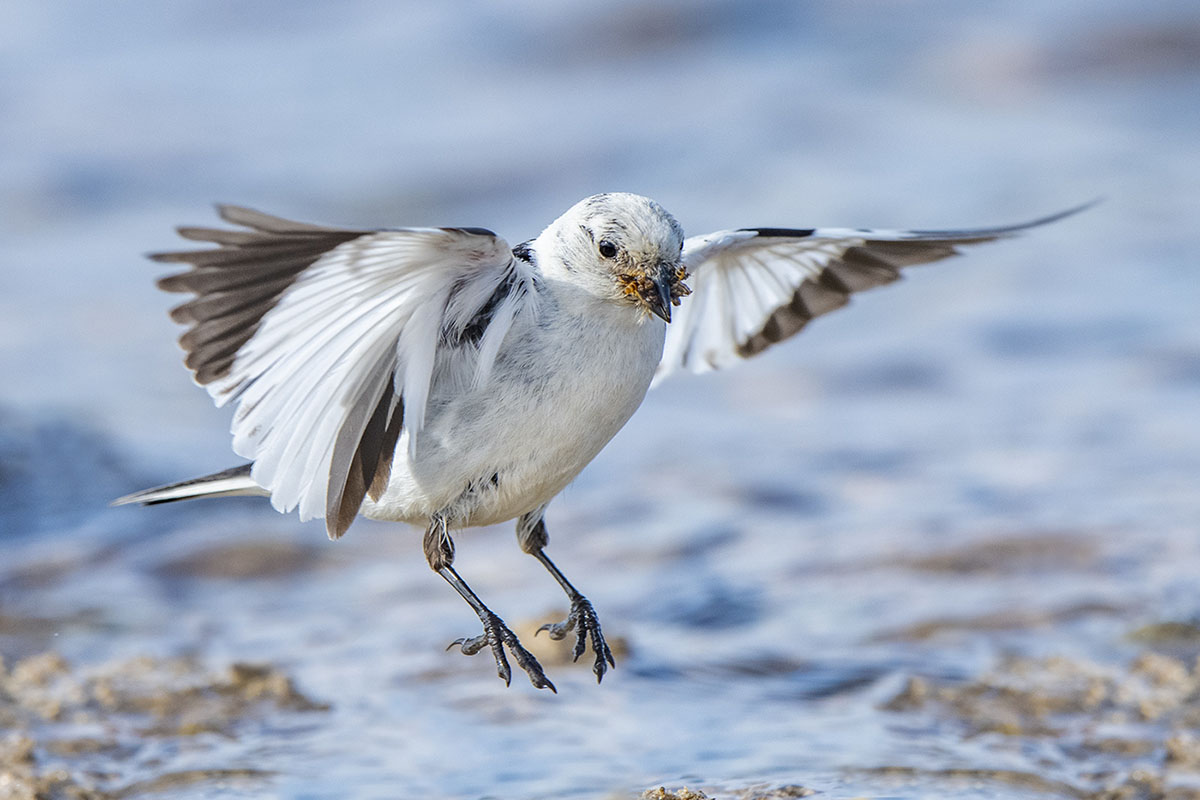
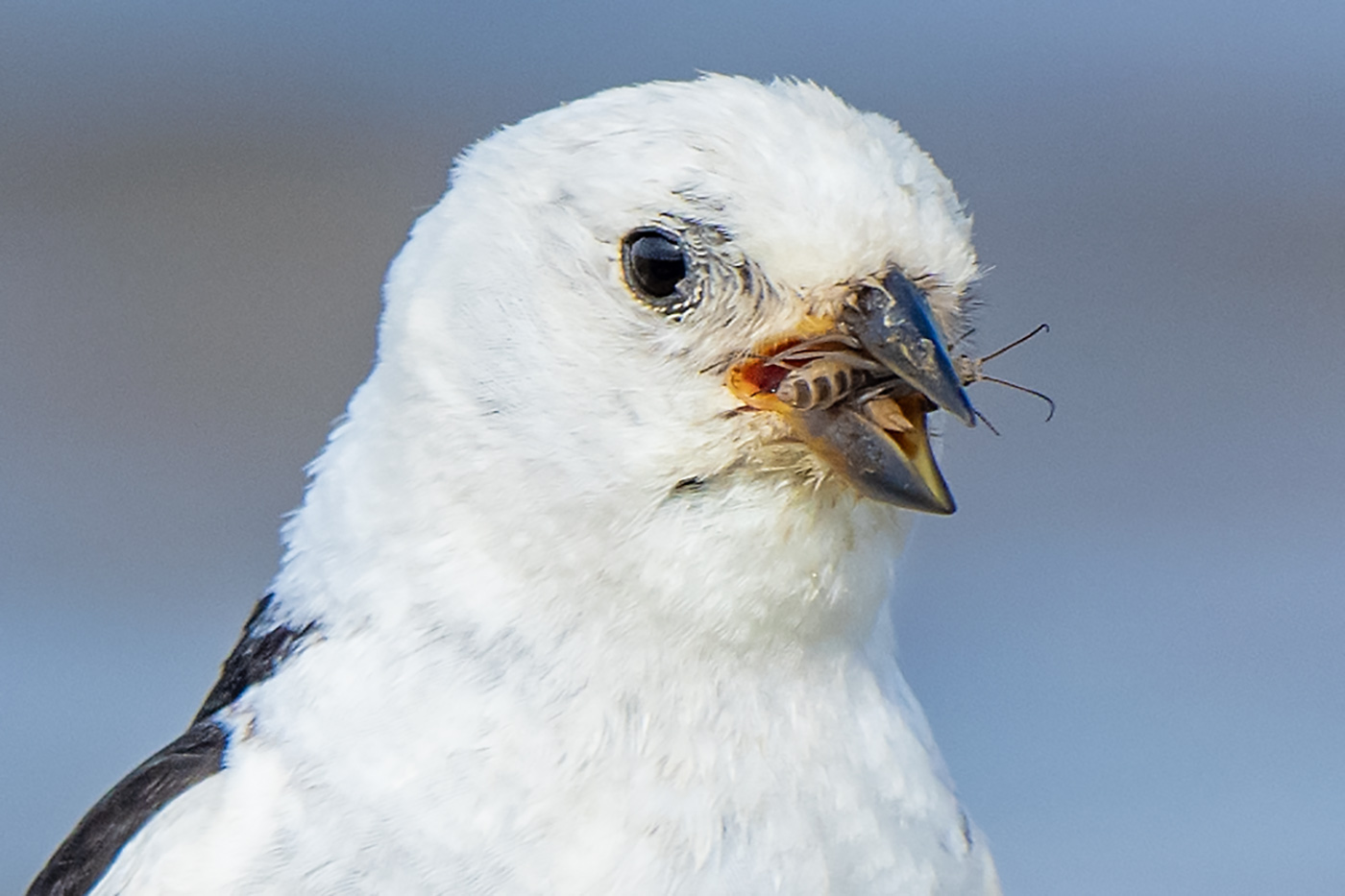
Half a dozen snow buntings were foraging along the shore of a small lake, and all were finding an abundance of emerging craneflies. A cranefly resembles a large mosquito with a six-pack of unusually long, dangling legs. Although it looks like a mosquito, it isn’t one: it doesn’t bite, nor does it suck blood. An adult cranefly may sip a little nectar from a flower, but since it lives for just a few days, most don’t ever eat.
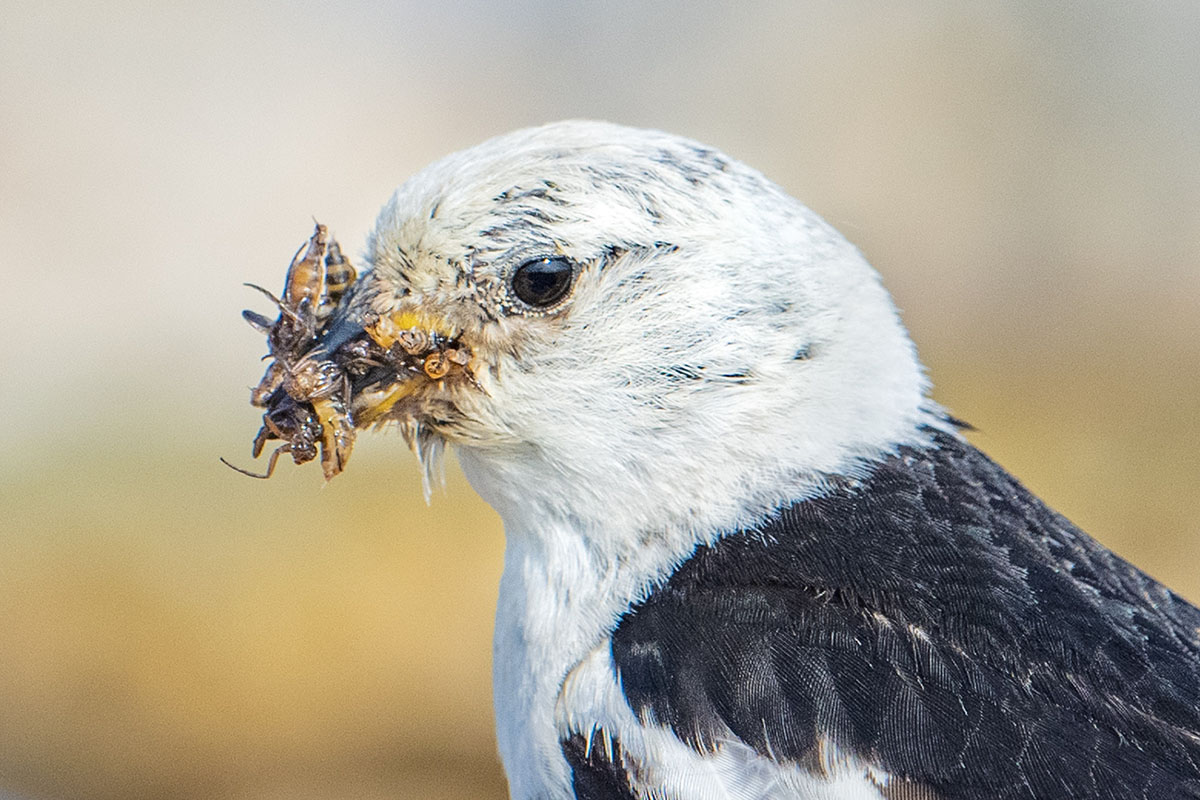
A bunting could stuff its mouth in a matter of minutes, after which it would fly away to presumably feed its nestlings.
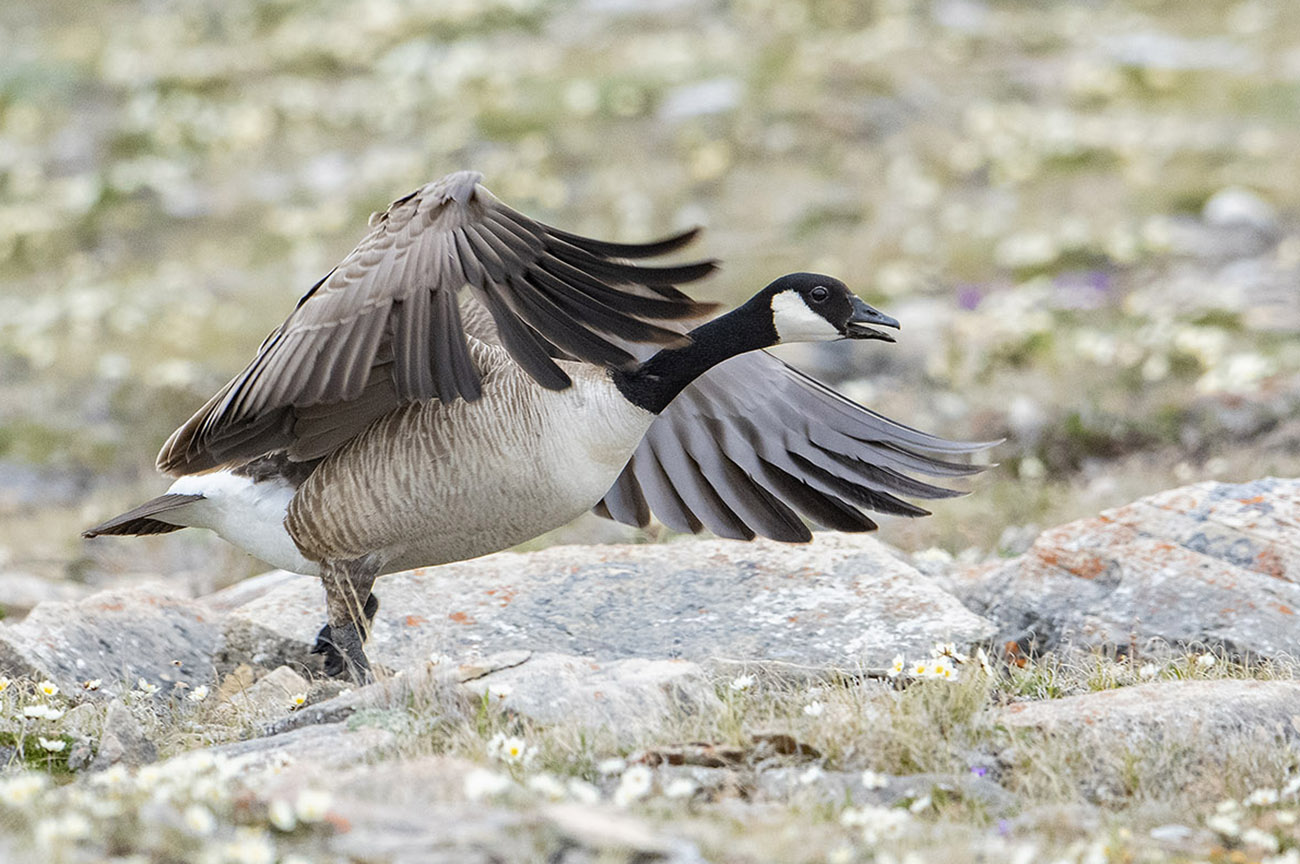
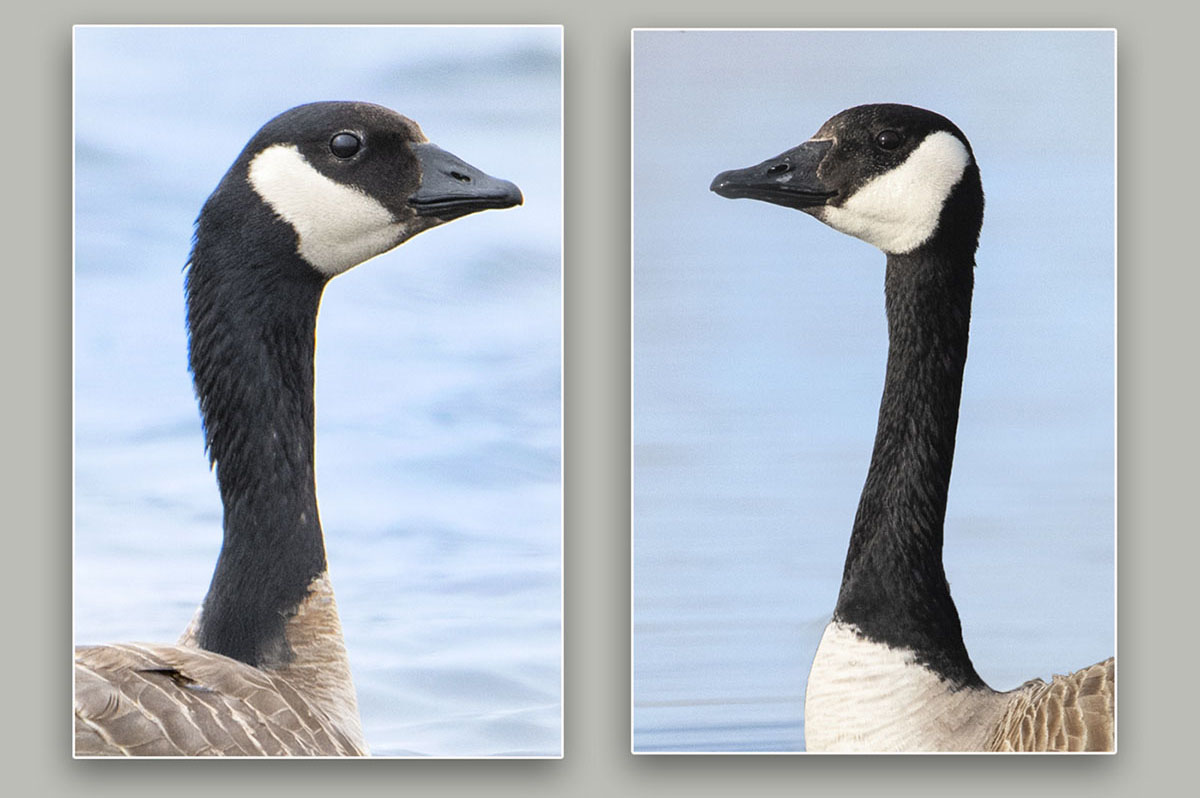
Since 2004, the cackling goose has been recognized as a separate species from the familiar Canada goose. Although the two look similar, the cackling goose is much smaller (sometimes barely larger than a mallard duck), has a shorter beak and neck, and a higher-pitched honk.
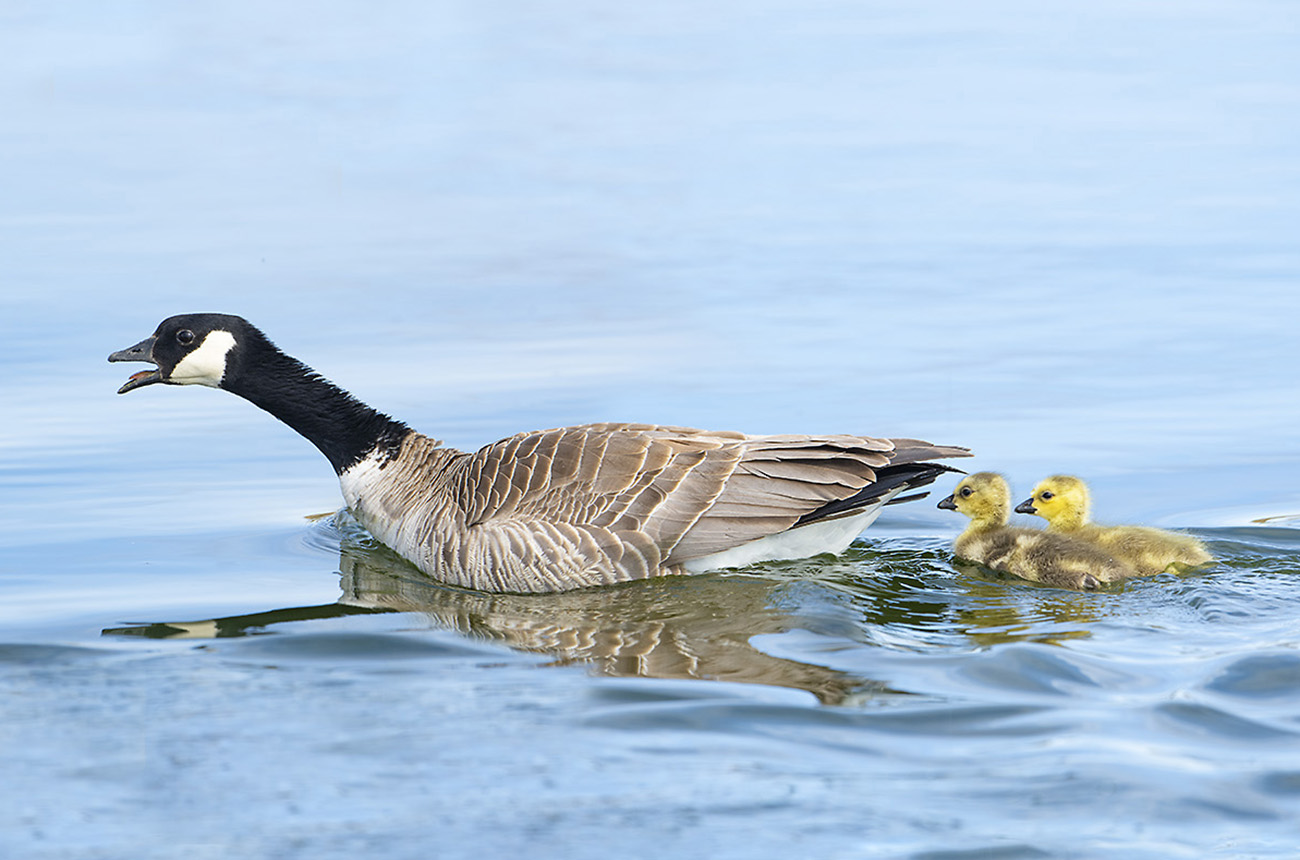
Cackling geese typically lay 4 to 6 eggs, but predatory glaucous gulls prey on the vulnerable goslings, and few may survive to independence.
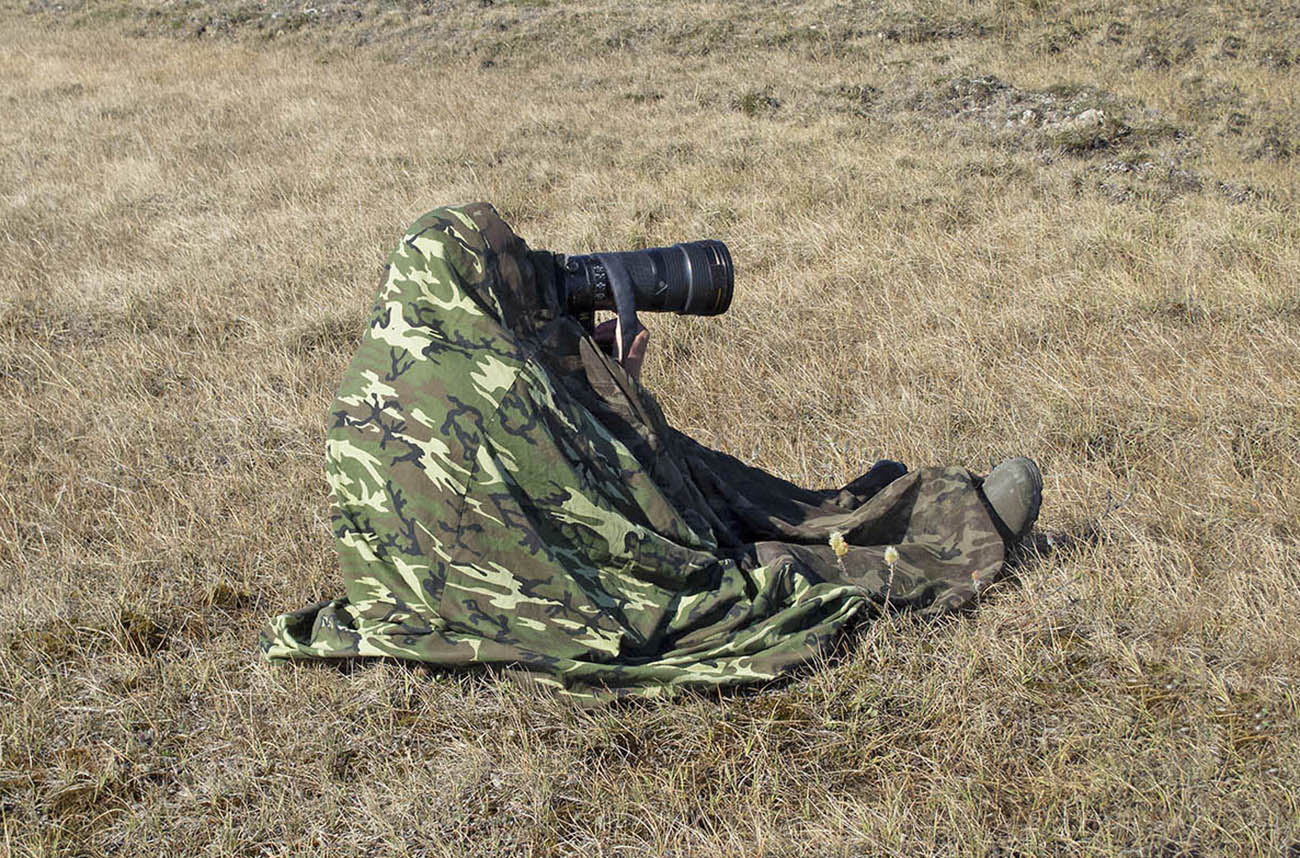
Anything that hides the human outline is frequently all it takes to get close to wildlife
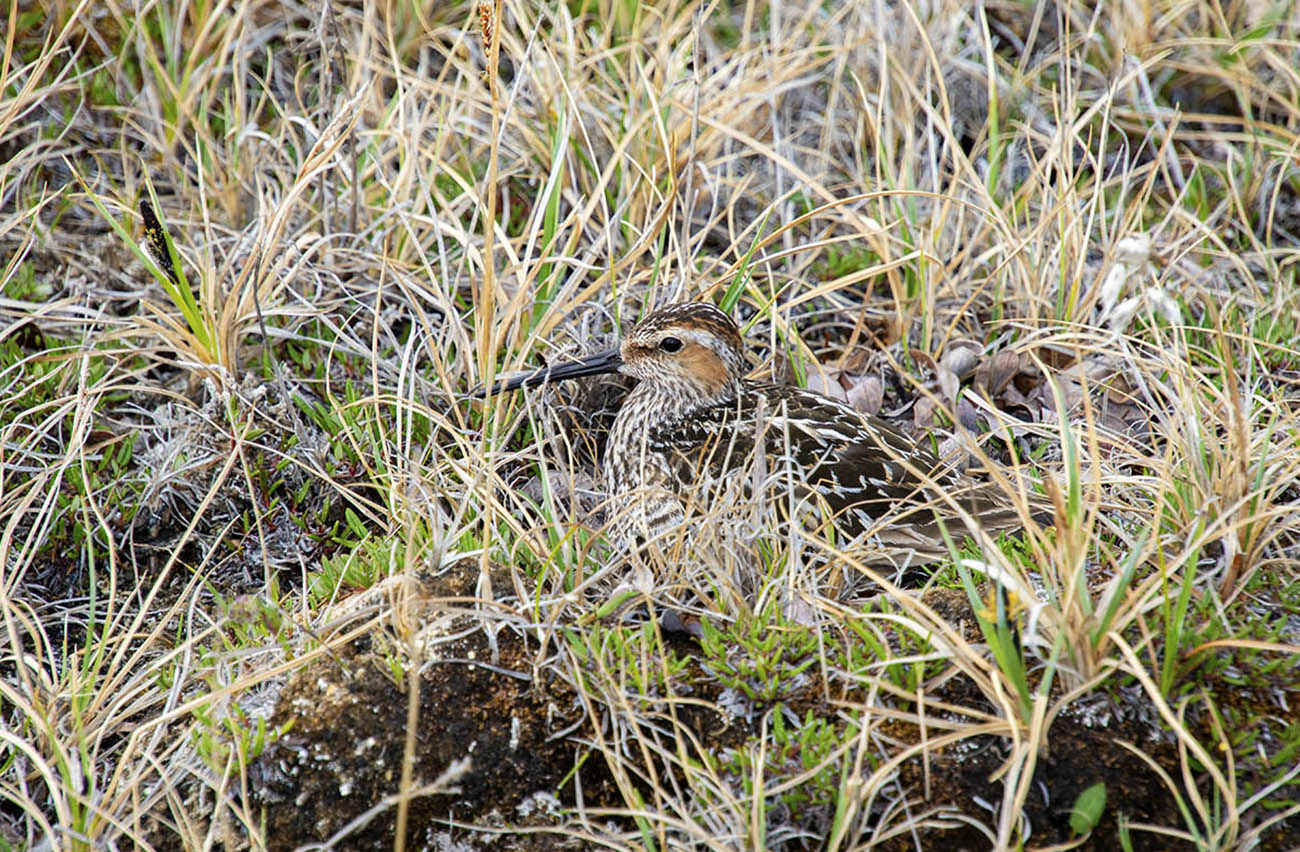
The cryptic plumage of an incubating stilt sandpiper makes it hard to detect, and this one did not flush until I almost accidentally stepped on it.
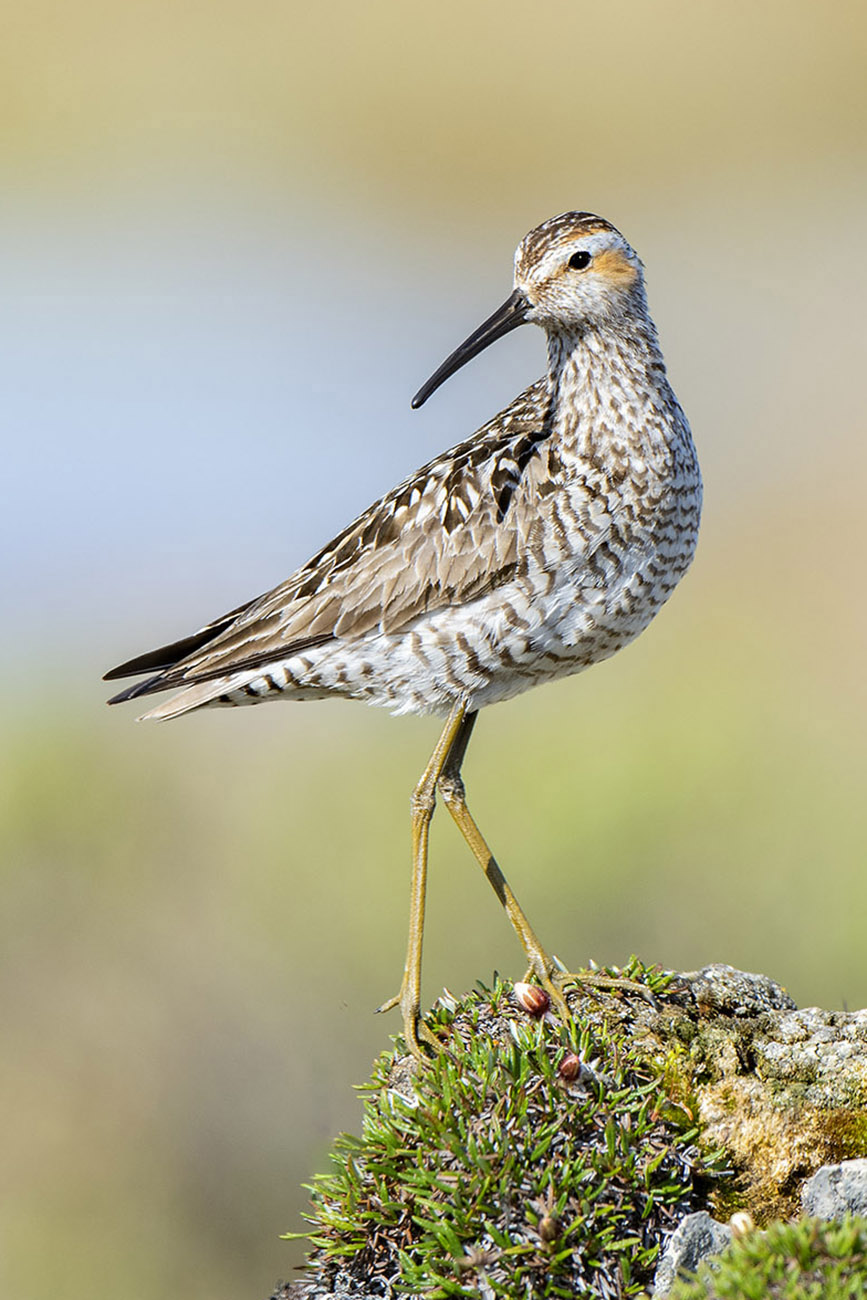
Out in the open, the stilt sandpiper’s long, yellow legs are a distinctive field sign.
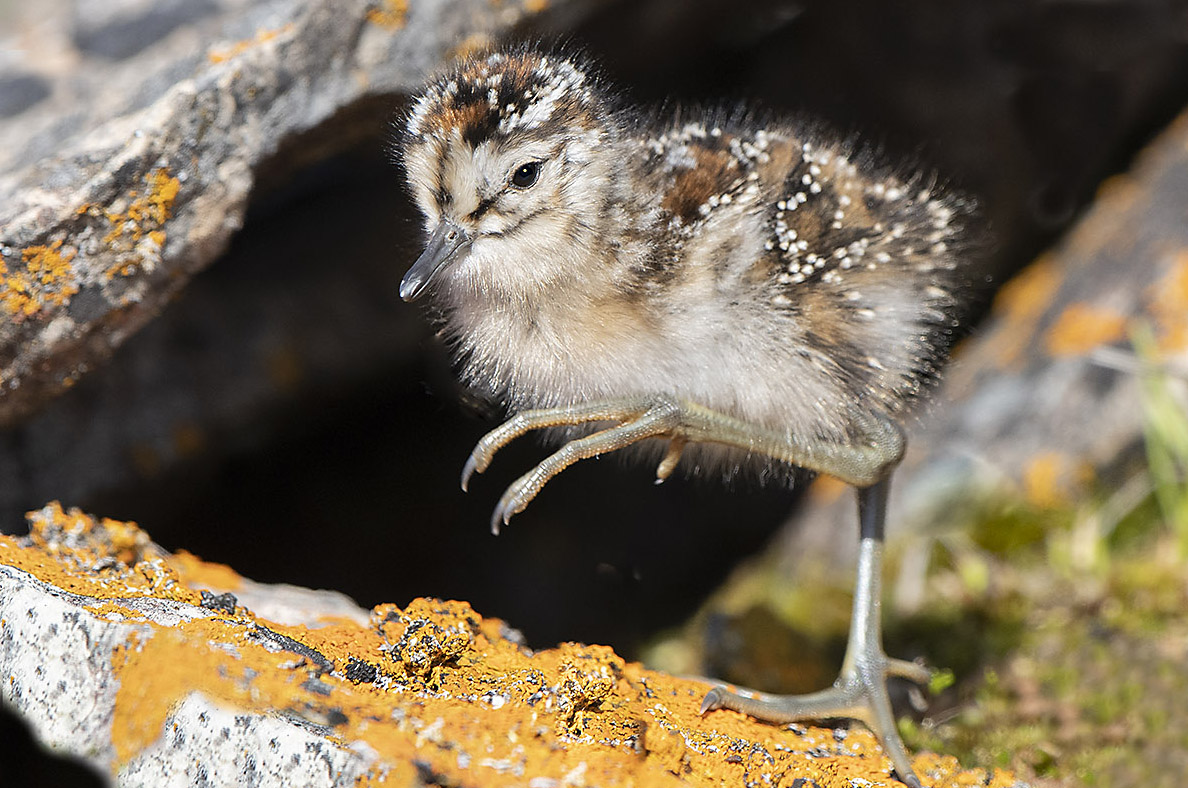
The white tip on this stilt sandpiper’s beak is an “egg tooth” that the chick uses to break itself free from the egg. The downy chick is no larger than a ping-pong ball, and its feet are almost half as long as its body.
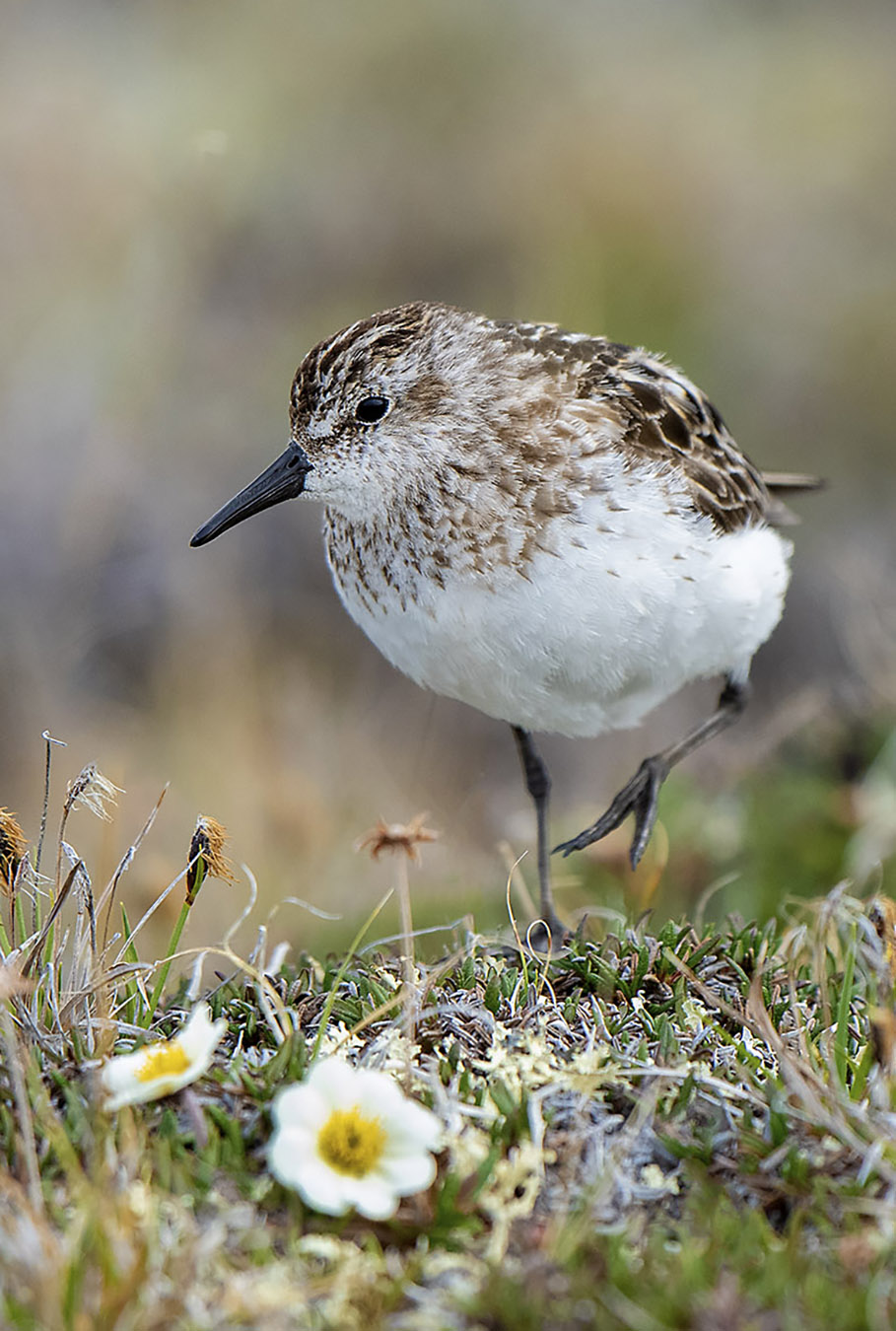
It was 11 pm, overcast, and 2°C (36°F) when I photographed this Baird’s sandpiper parent who was shepherding four newly hatched chicks.
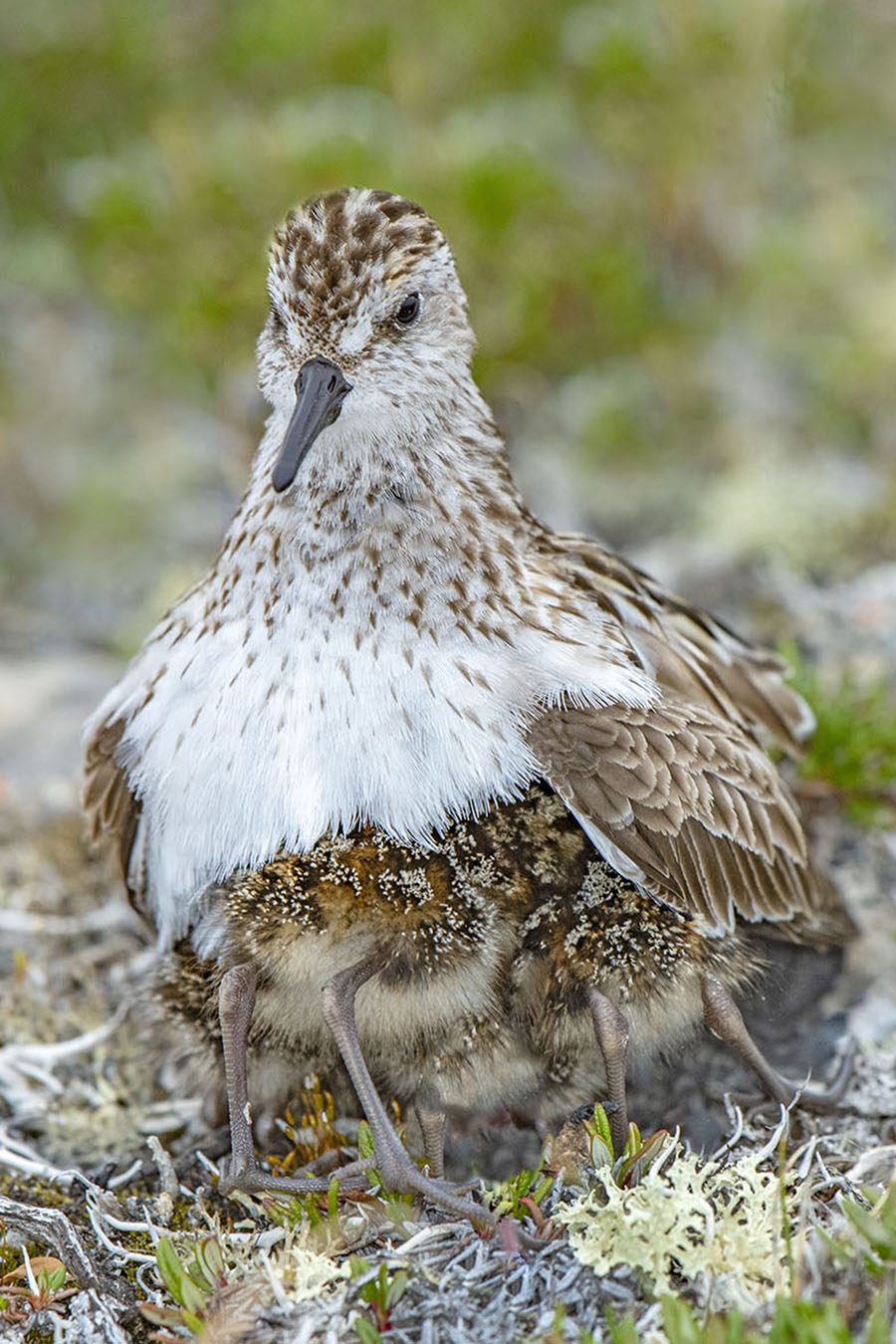
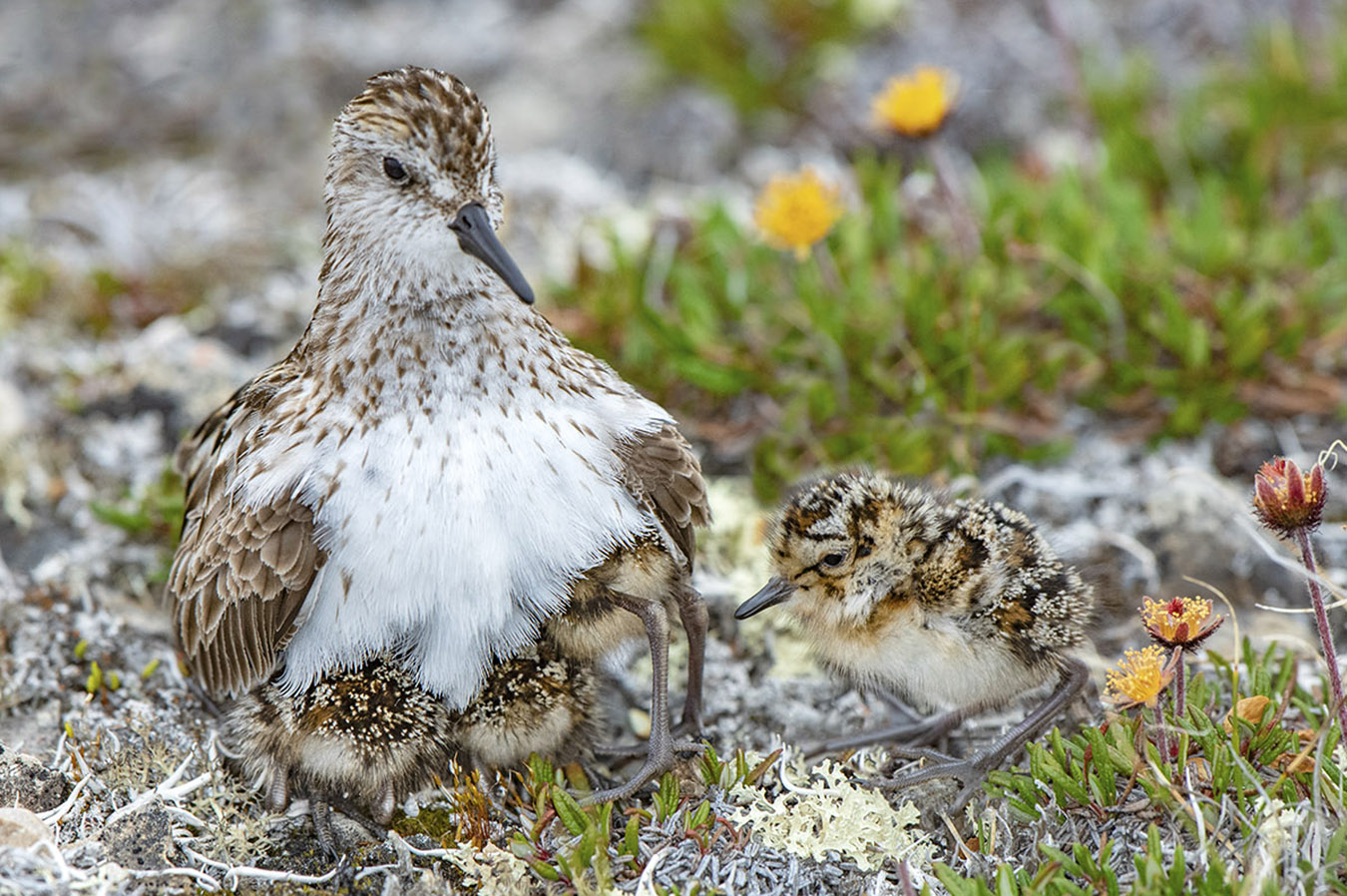
Sandpiper hatchlings behave like tiny windup toys that scurry around the tundra feeding themselves until their body temperature gradually drops, slowing the chicks down. When their body temperature drops to 32°C from the normal 40°C, the chicks must find a parent to huddle under to warm up again, and all four chicks can fit under one parent.
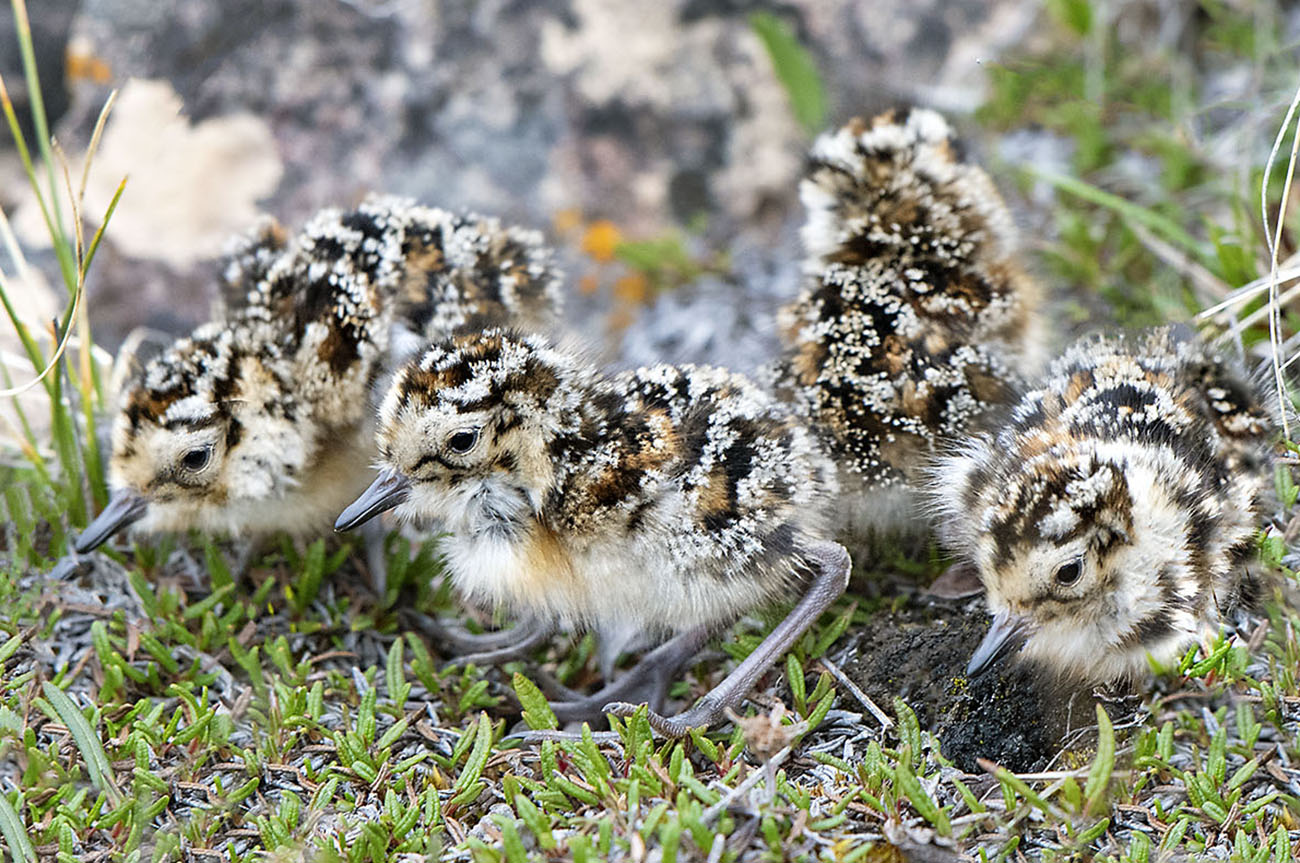
When the sandpiper parent decides to stop brooding, it will suddenly jump up and leave. For a moment, the chicks seem surprised but soon disperse and start feeding again.
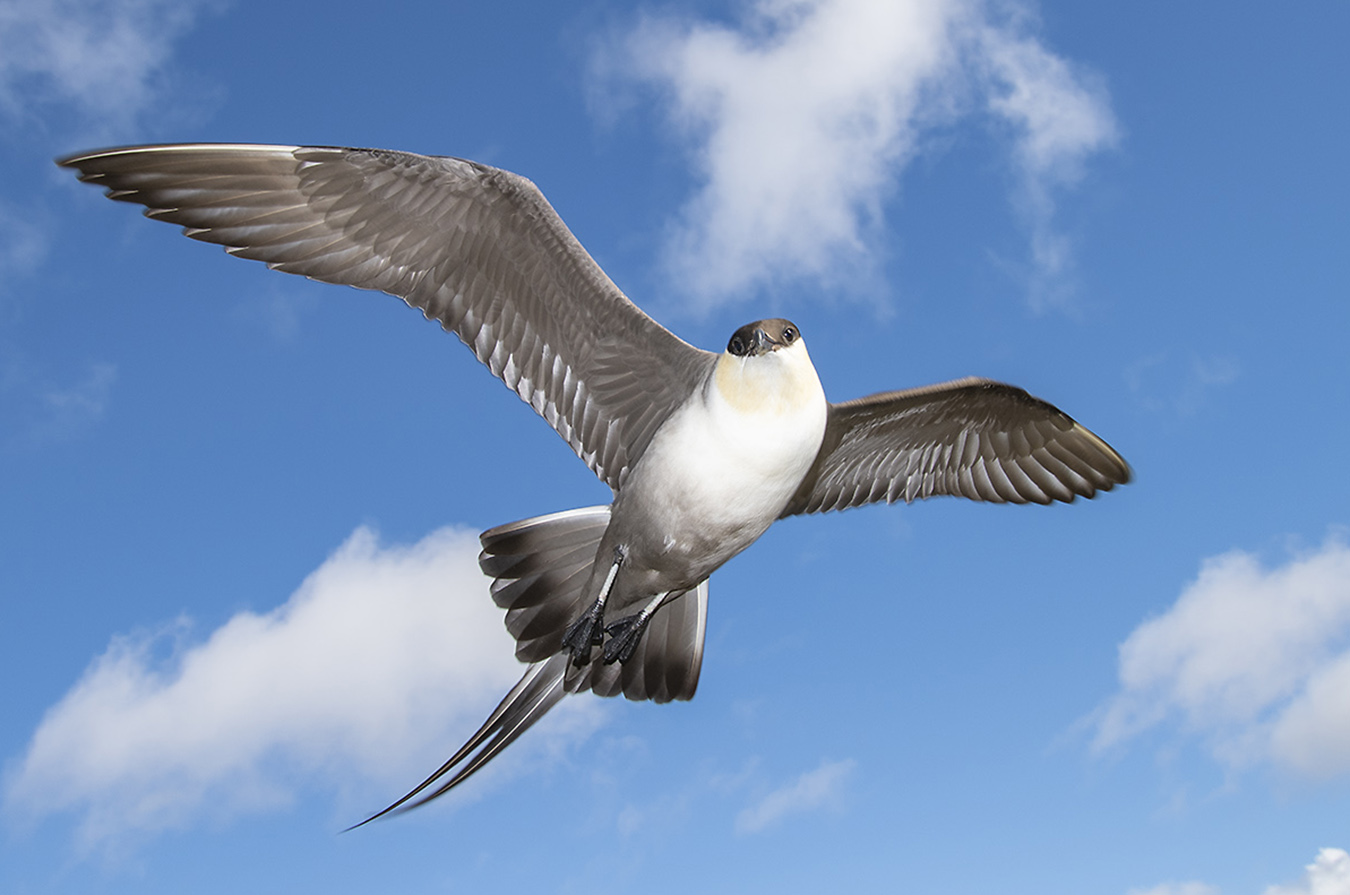
The long-tailed jaeger is slightly smaller than the parasitic jaeger I featured last month.
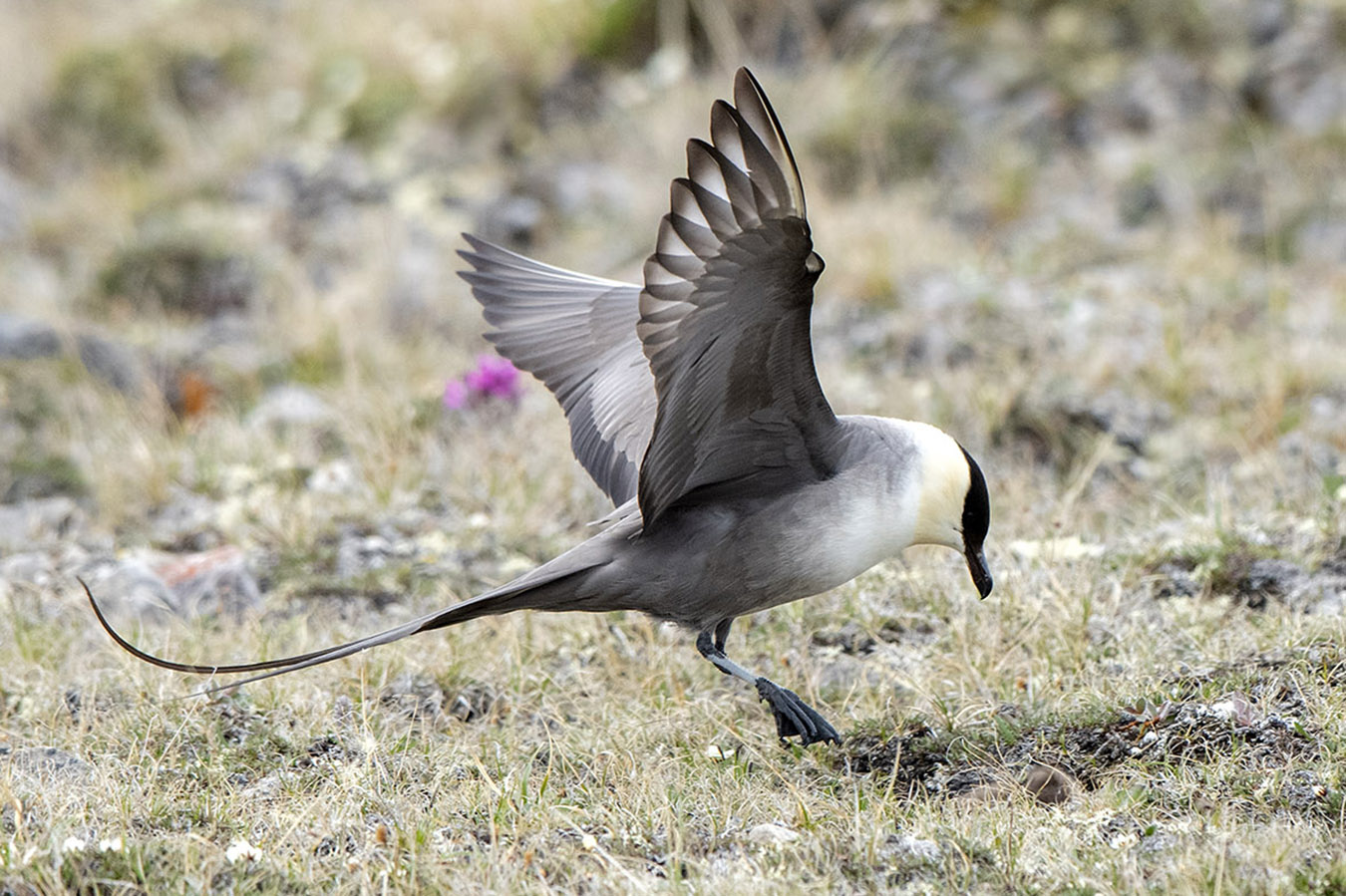
The jaeger’s long, pointed wings enable it to migrate annually as far south as Australia.
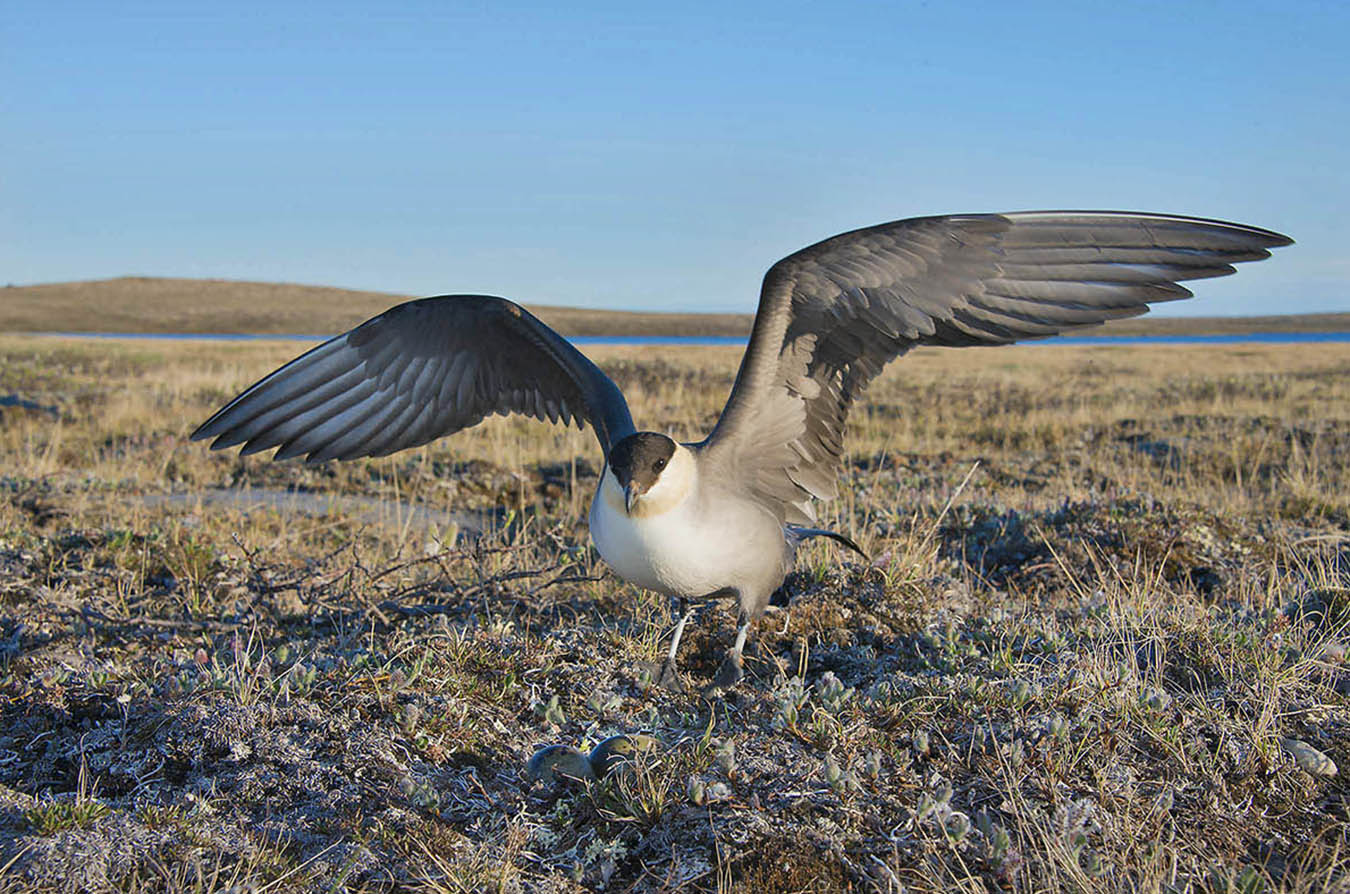
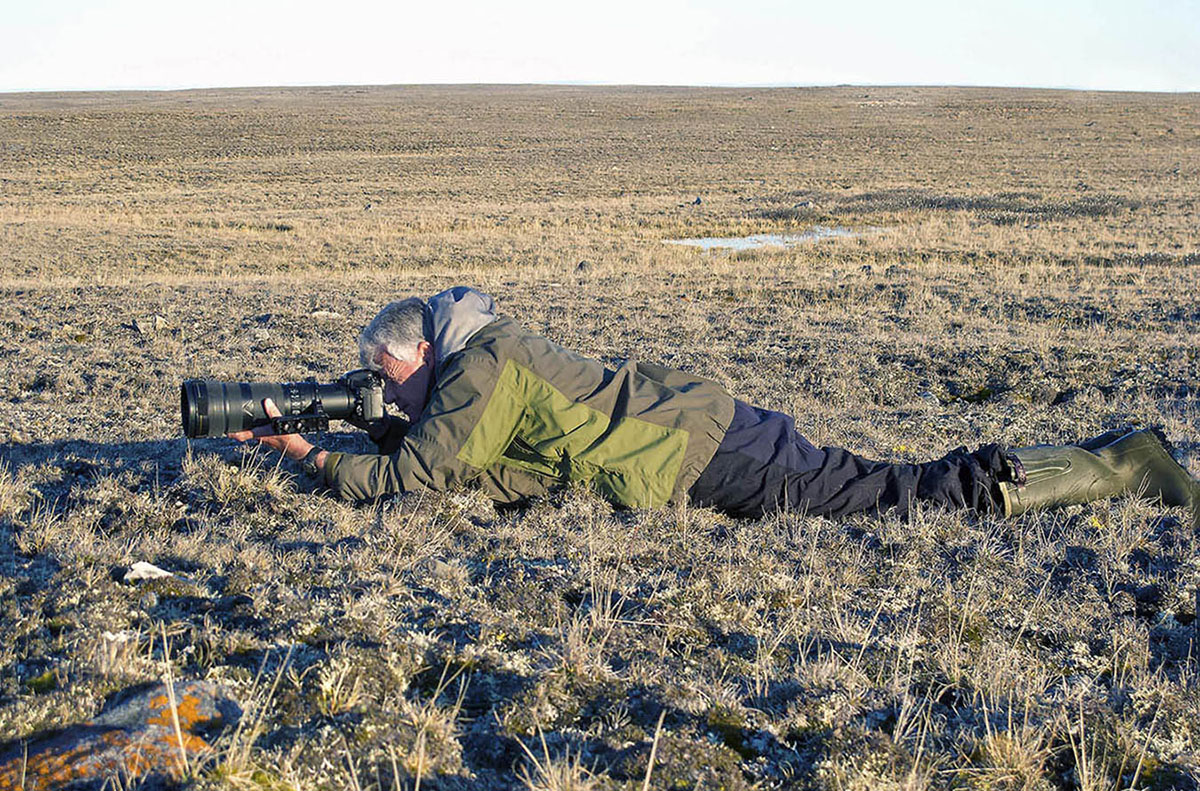
After less than five minutes, this female jaeger had accepted my presence near her nest. By lying quietly on the ground, I was able to witness remarkable, intimate behaviours. A ground-level view is less threatening to nesting birds and produces photographs from an interesting vantage point.
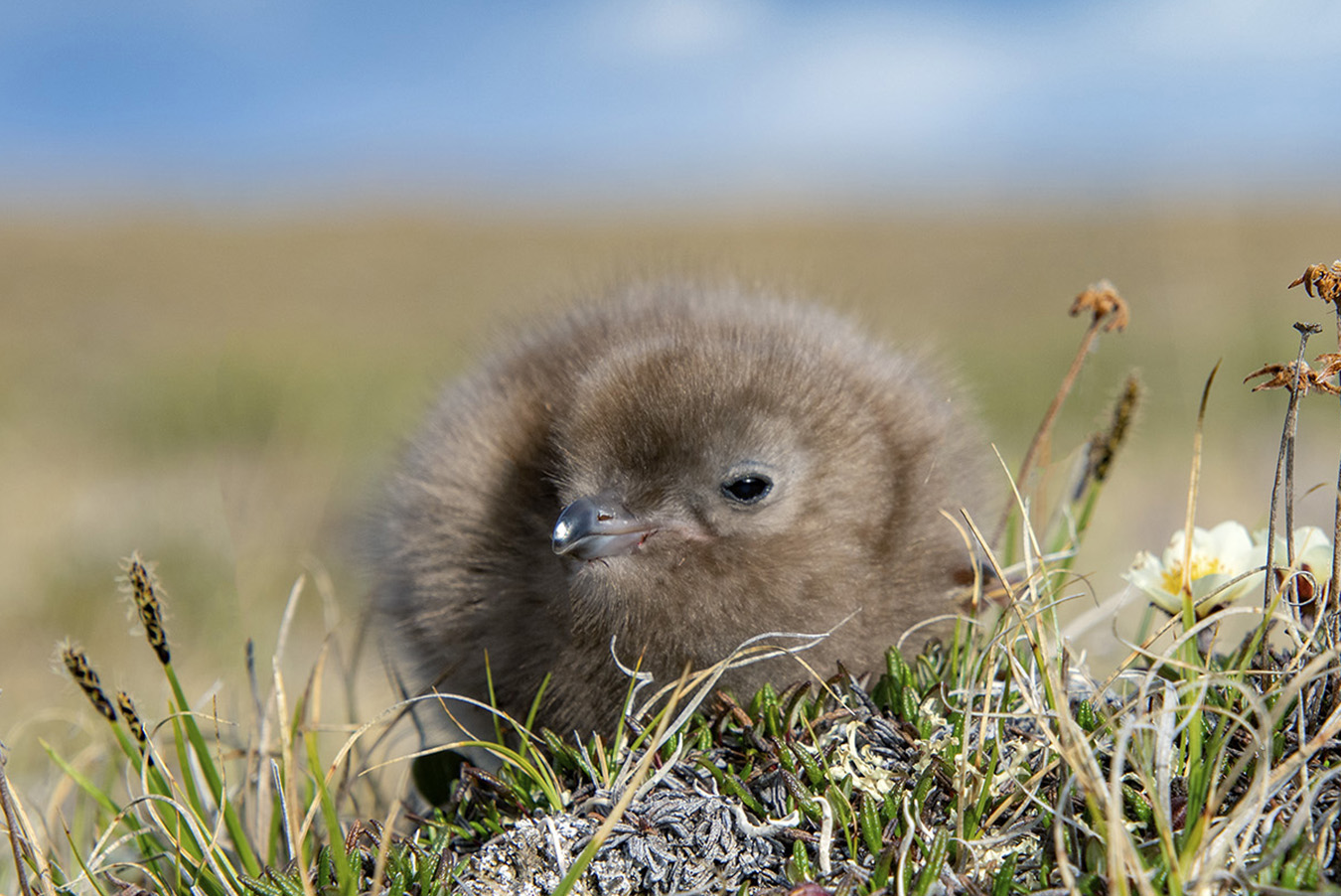
I knew this long-tailed jaeger had just hatched because of the conspicuous egg tooth on the tip of its beak.
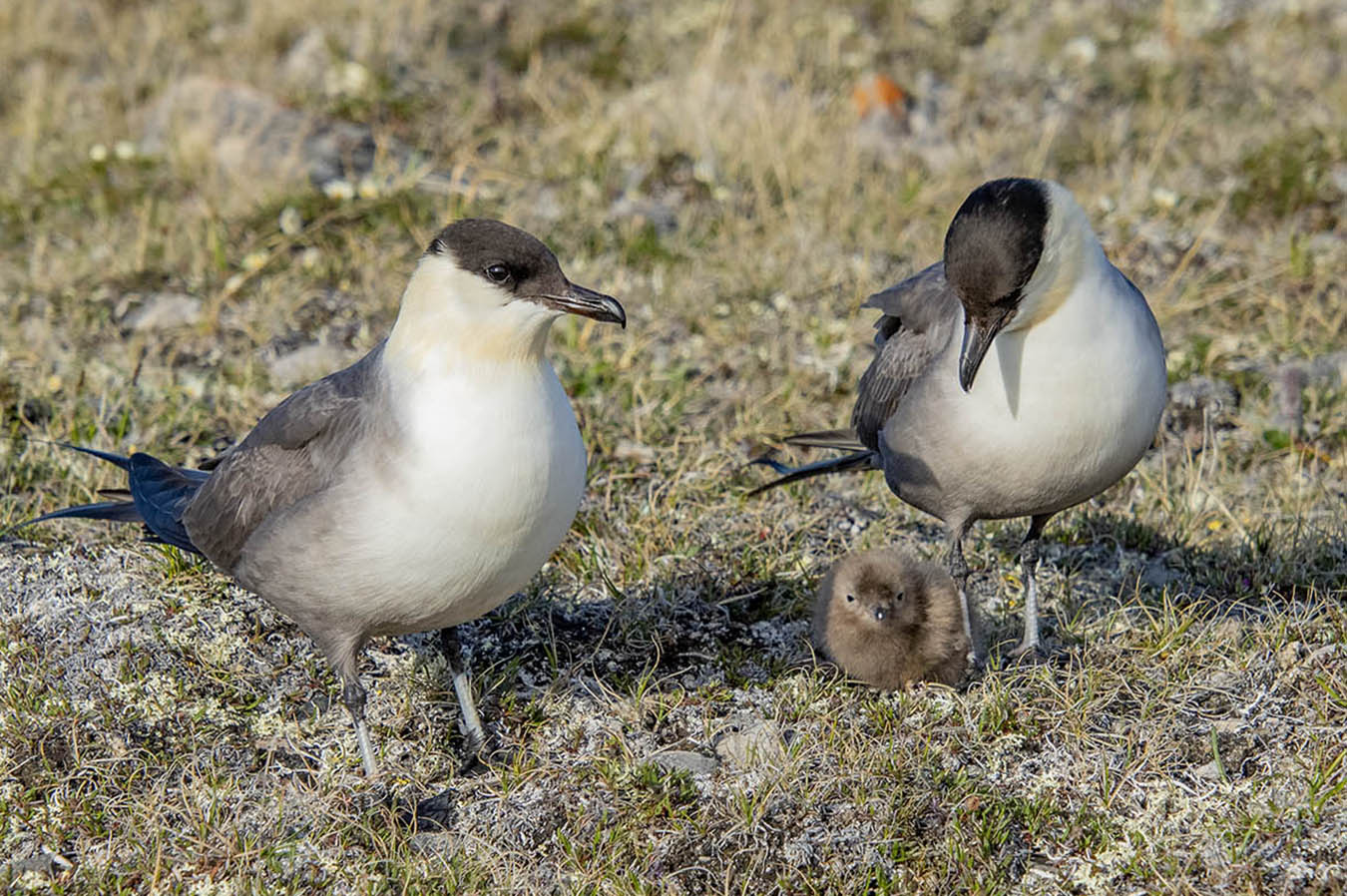
In all three species of jaegers, both parents feed and care for their one or two chicks.
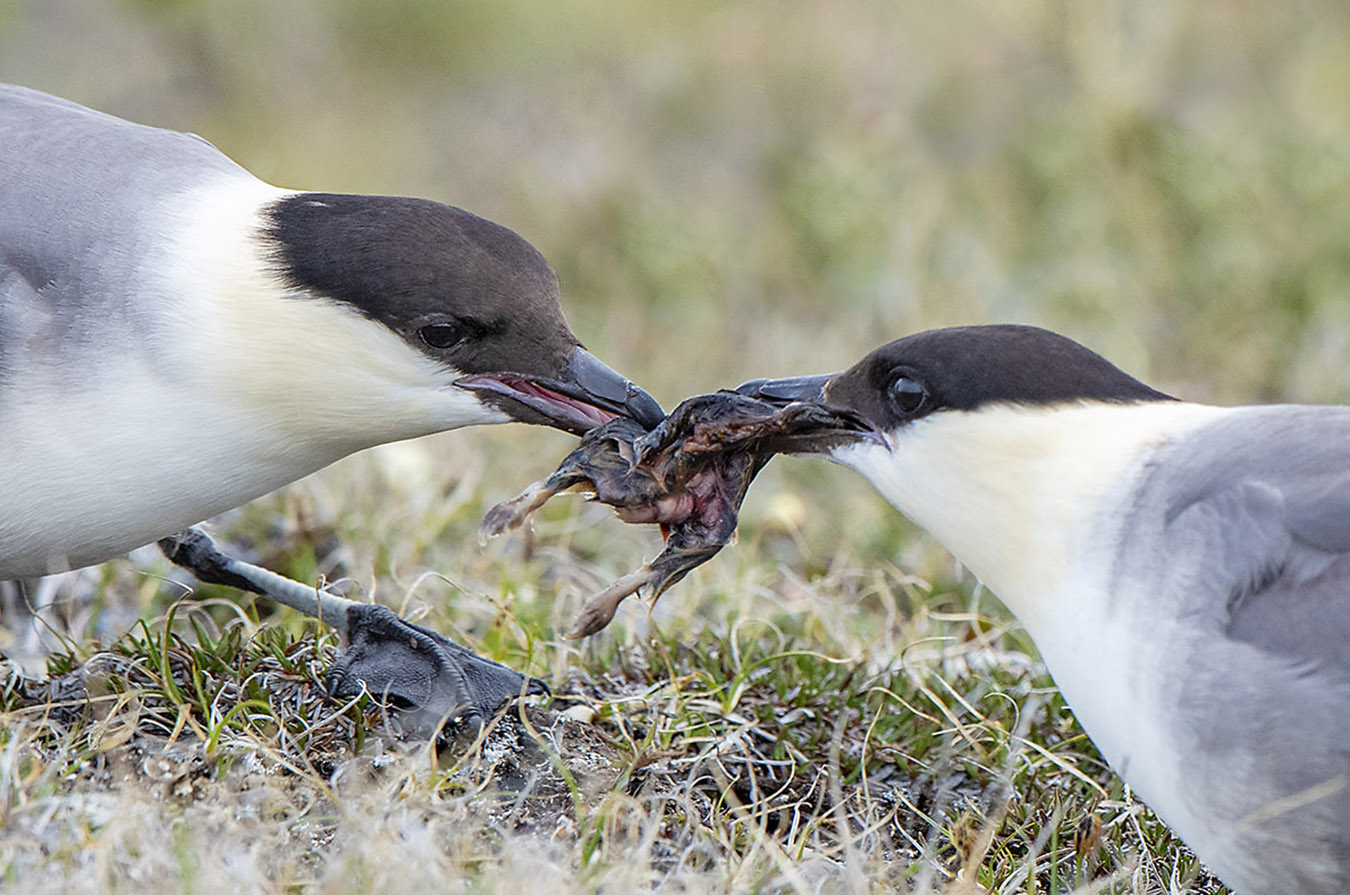
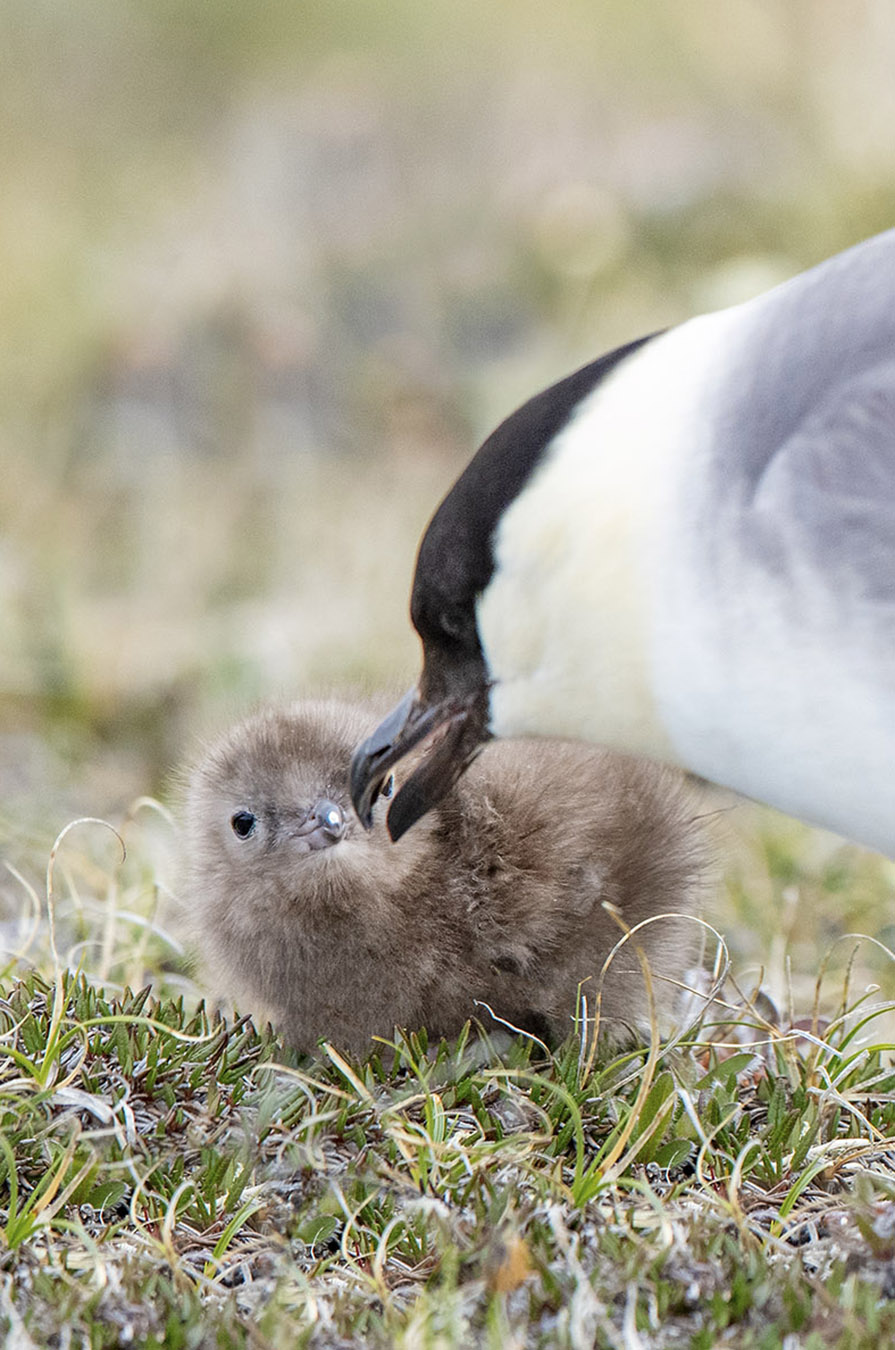
After the male jaeger (pictured on the left) regurgitated a lemming, the pair dismembered the rodent, and the female ate all of it. Even though the chick begged for a morsel, it wasn’t fed anything.
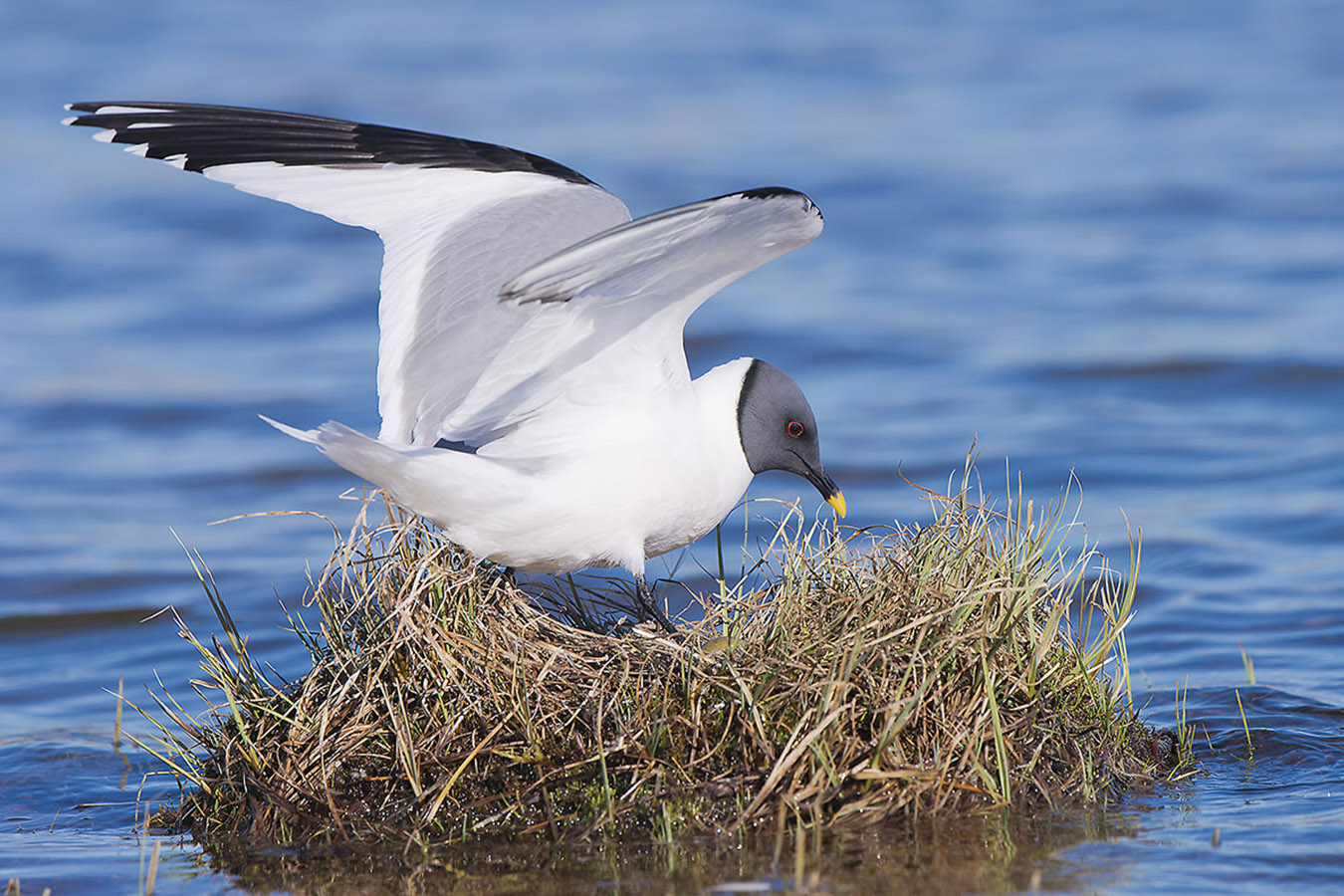
Sabine’s gull must surely be one of the most handsome of gulls. The male and female share the incubation of their two to three olive-green eggs. It winters off the western coast of South America, the longest migration of any gull species.
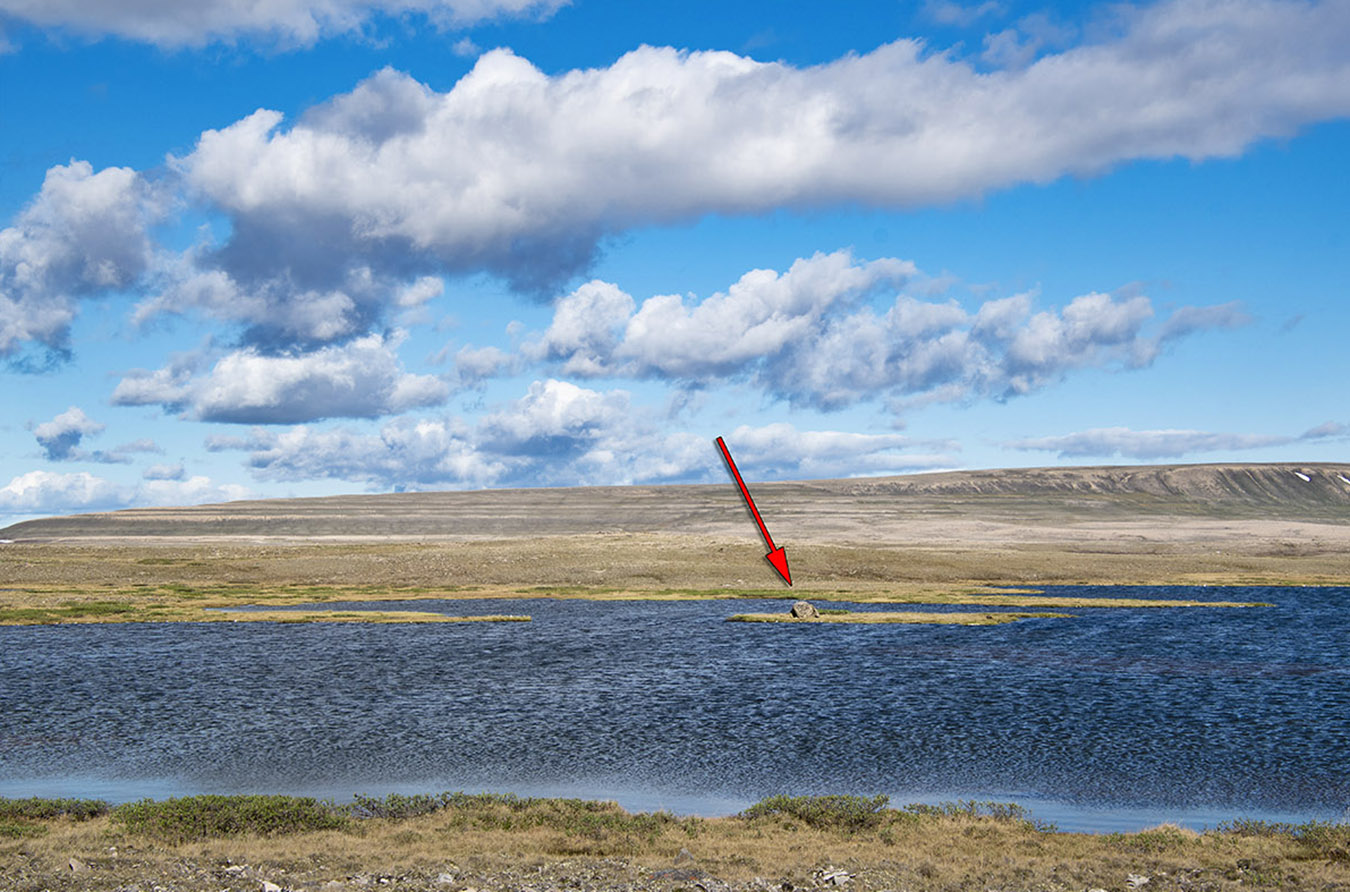
While on Victoria Island, I had as many as six photo blinds set up in different locations. I used the one pictured here to photograph Pacific loons.
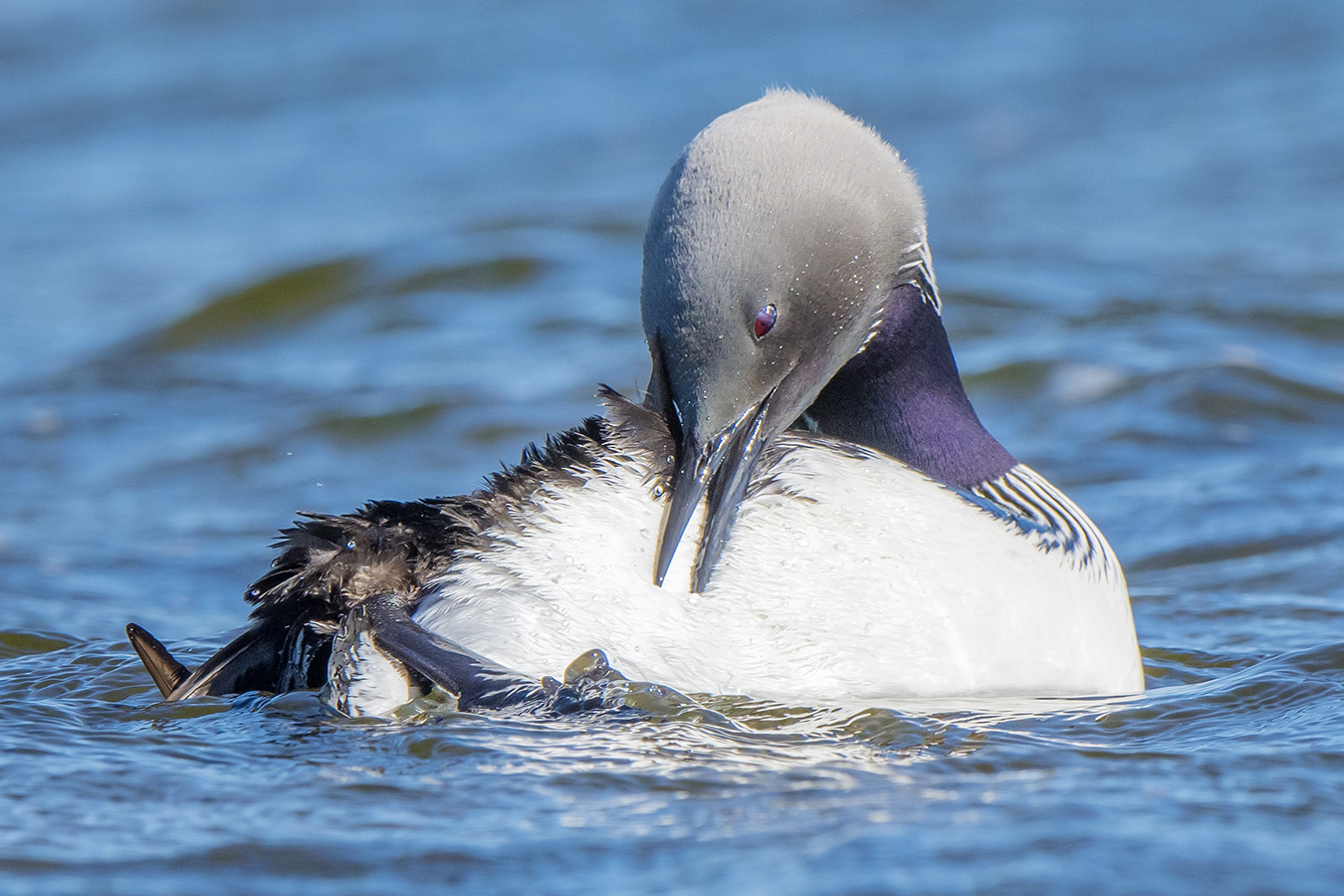
Preening realigns the individual barbs lining both sides of a feather shaft. These tend to become unhooked during physical activity, and if feathers are to provide a protective waterproof covering, all the parts must stay zipped together.
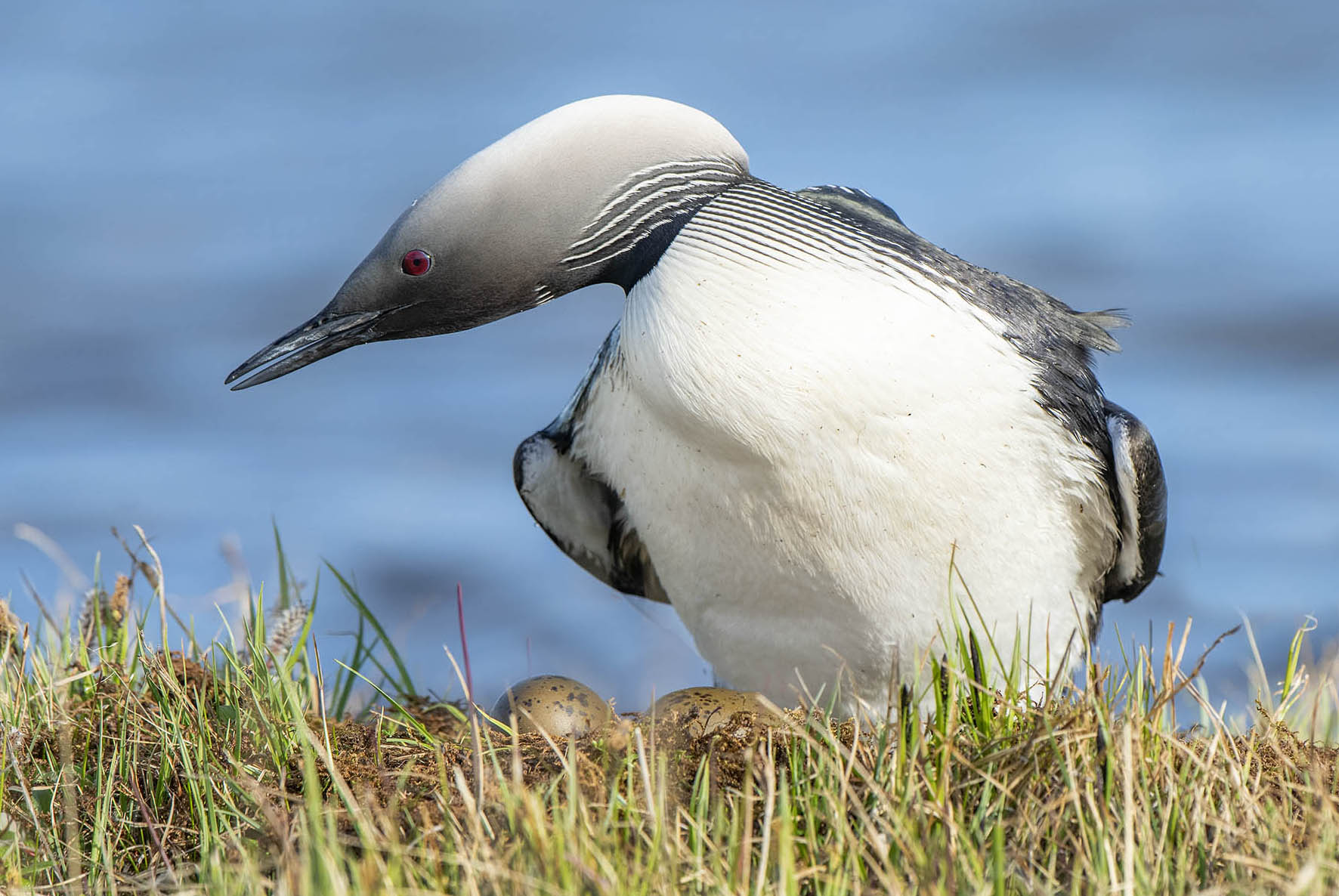
Surprisingly, loons do not have a bare area of skin on their underside to help them warm and incubate their eggs. The birds’ body heat must penetrate the feathers on their belly.
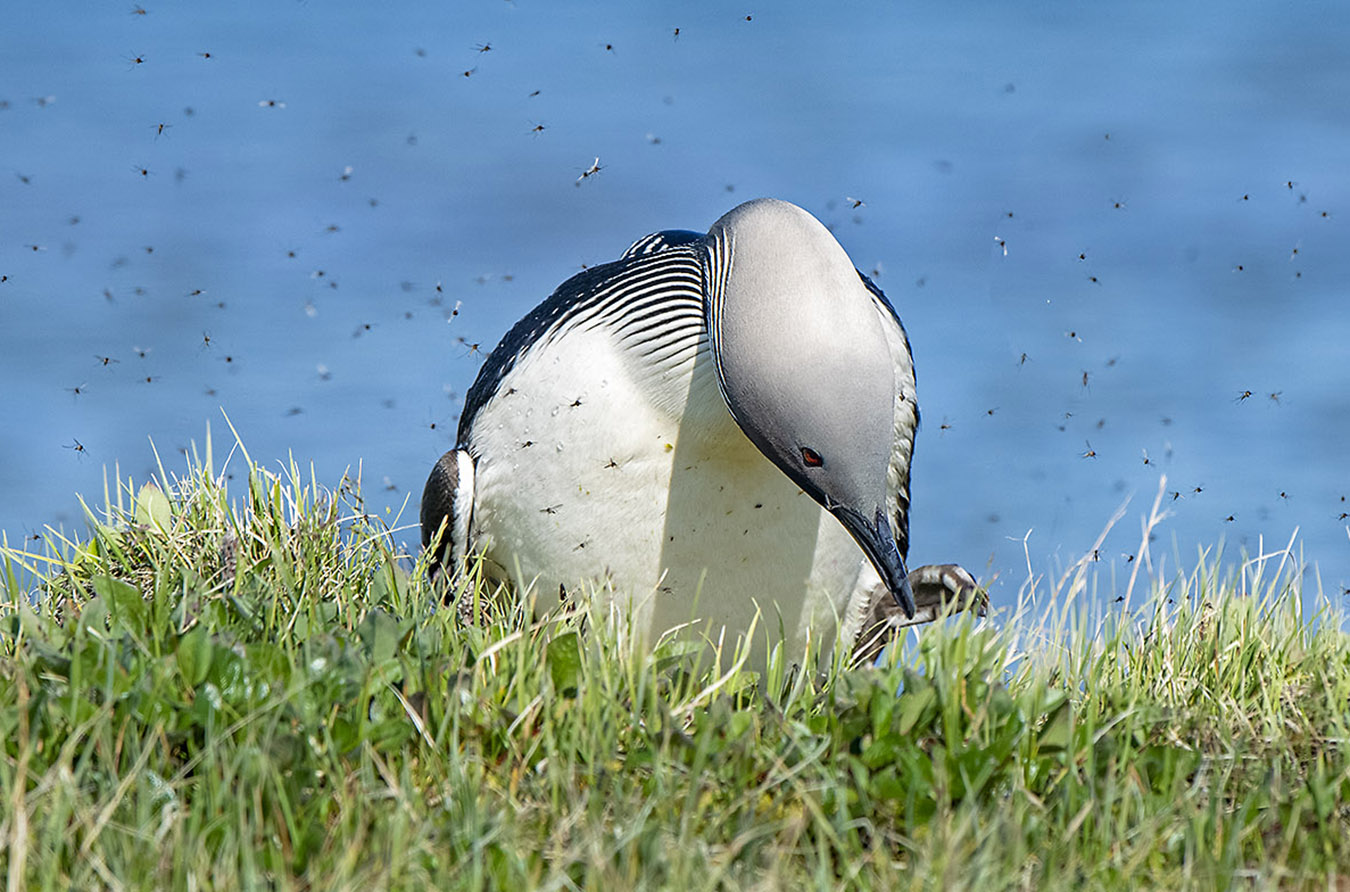
On rare warm days, mosquitoes can torment an incubating loon so much that it temporarily leaves the nest to scratch and preen itself to get some temporary relief.
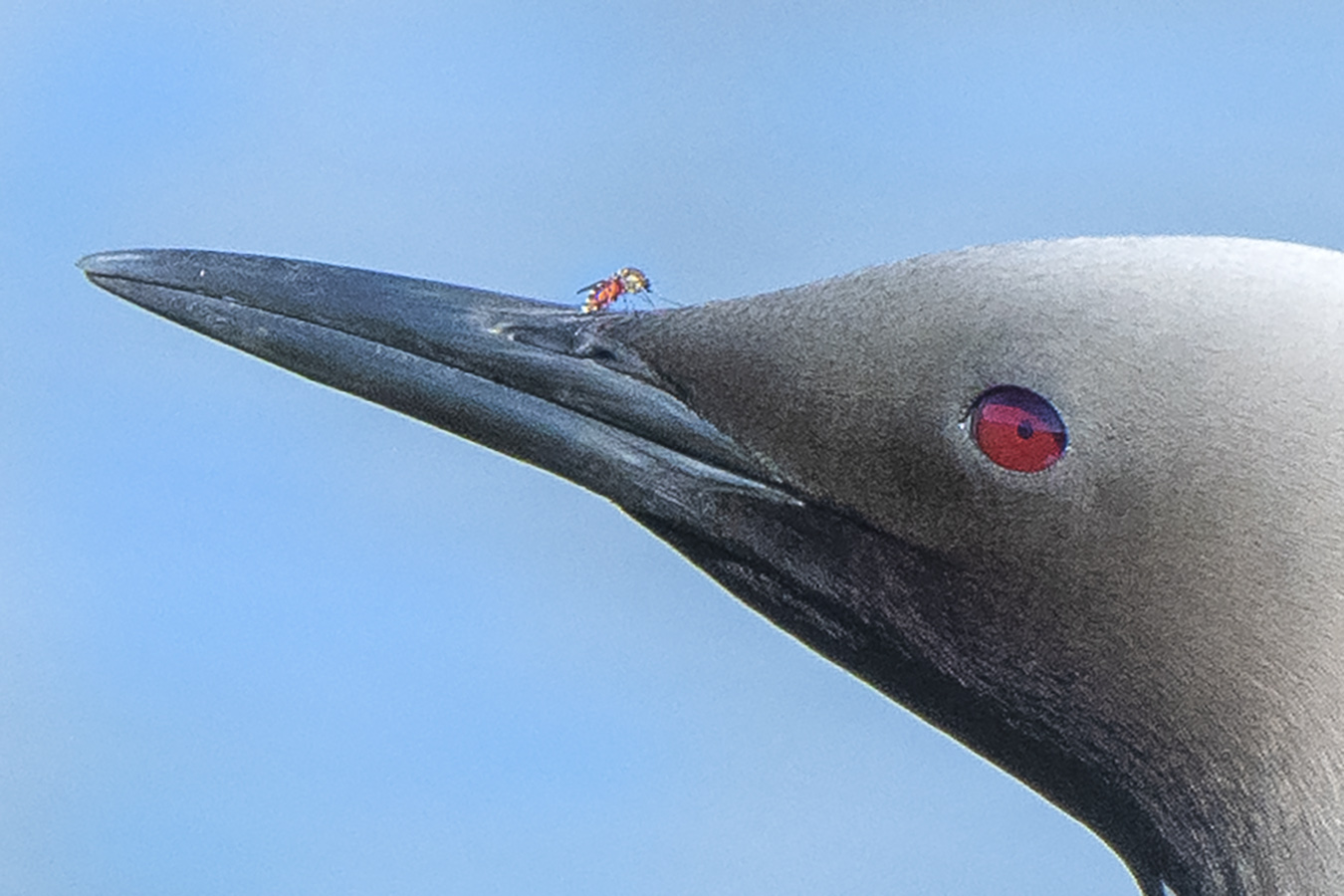
Mosquitoes target the thinly feathered areas at the base of a loon’s beak and around its eyes.
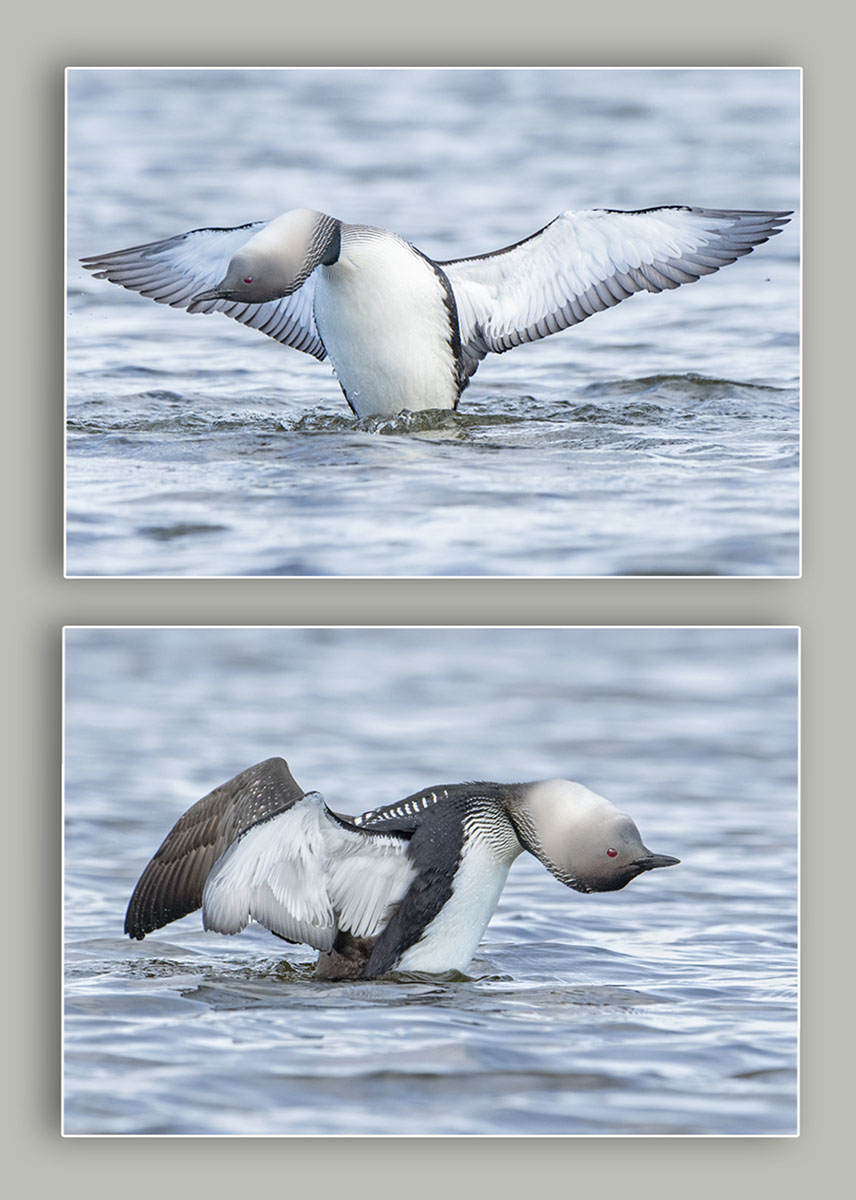
These aggressive “vulture” postures were elicited when an intruder landed on the owner’s territory.
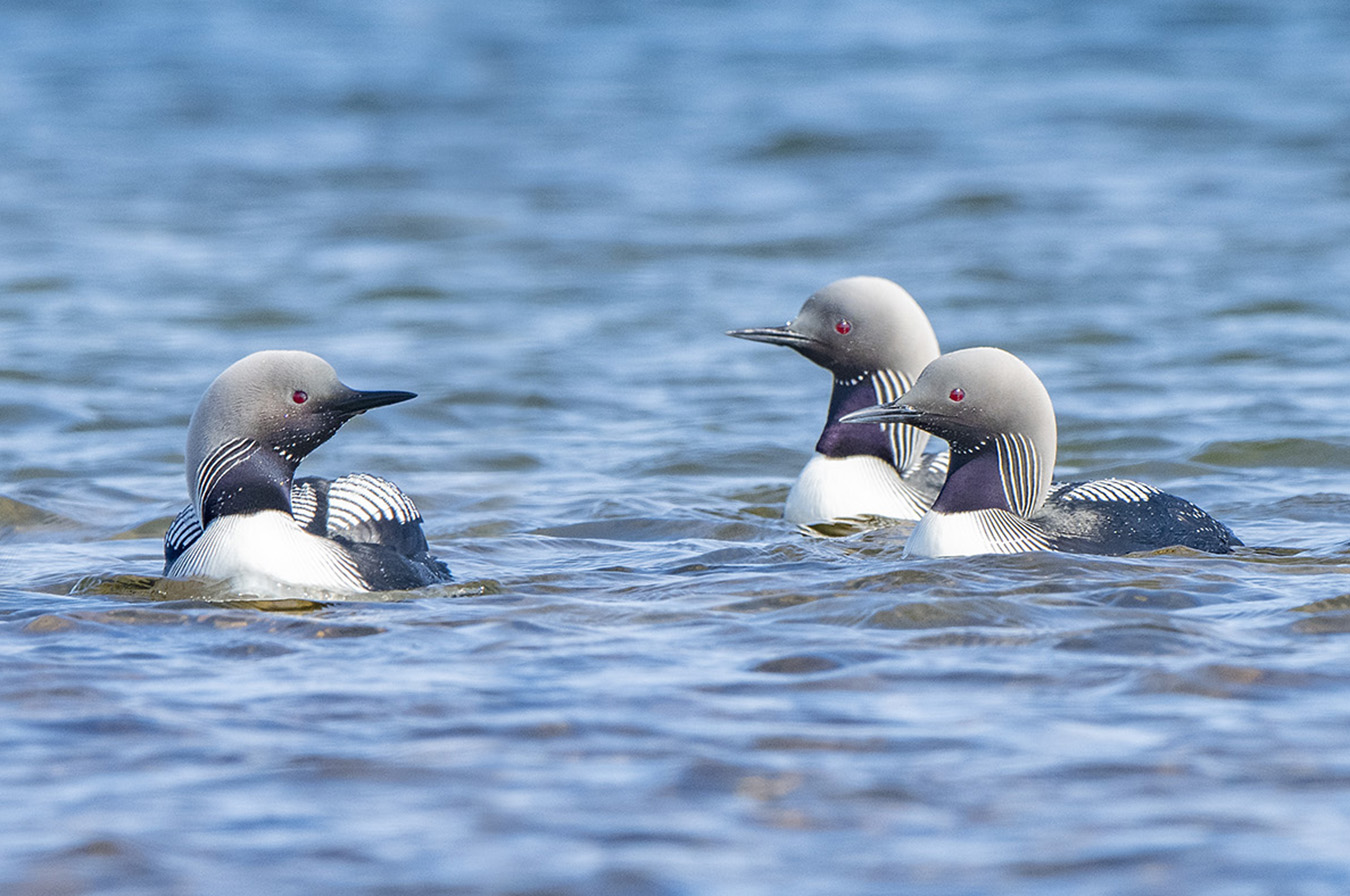
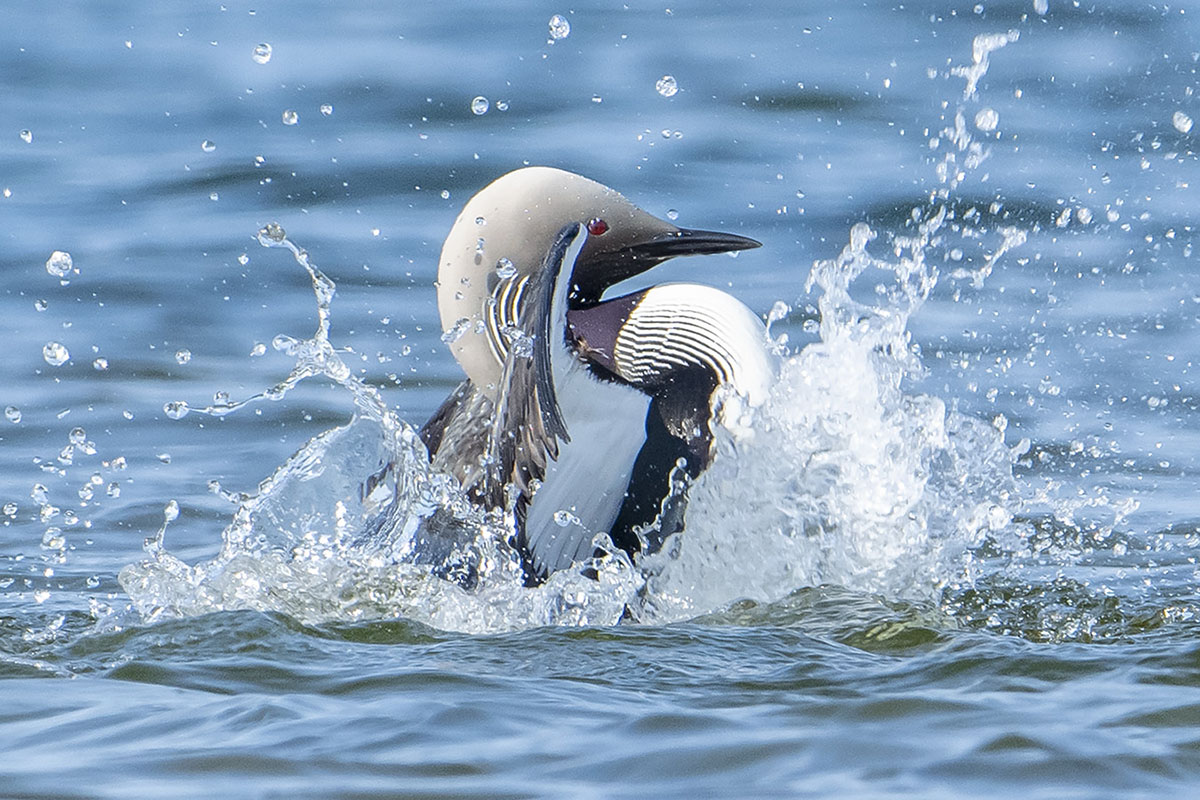
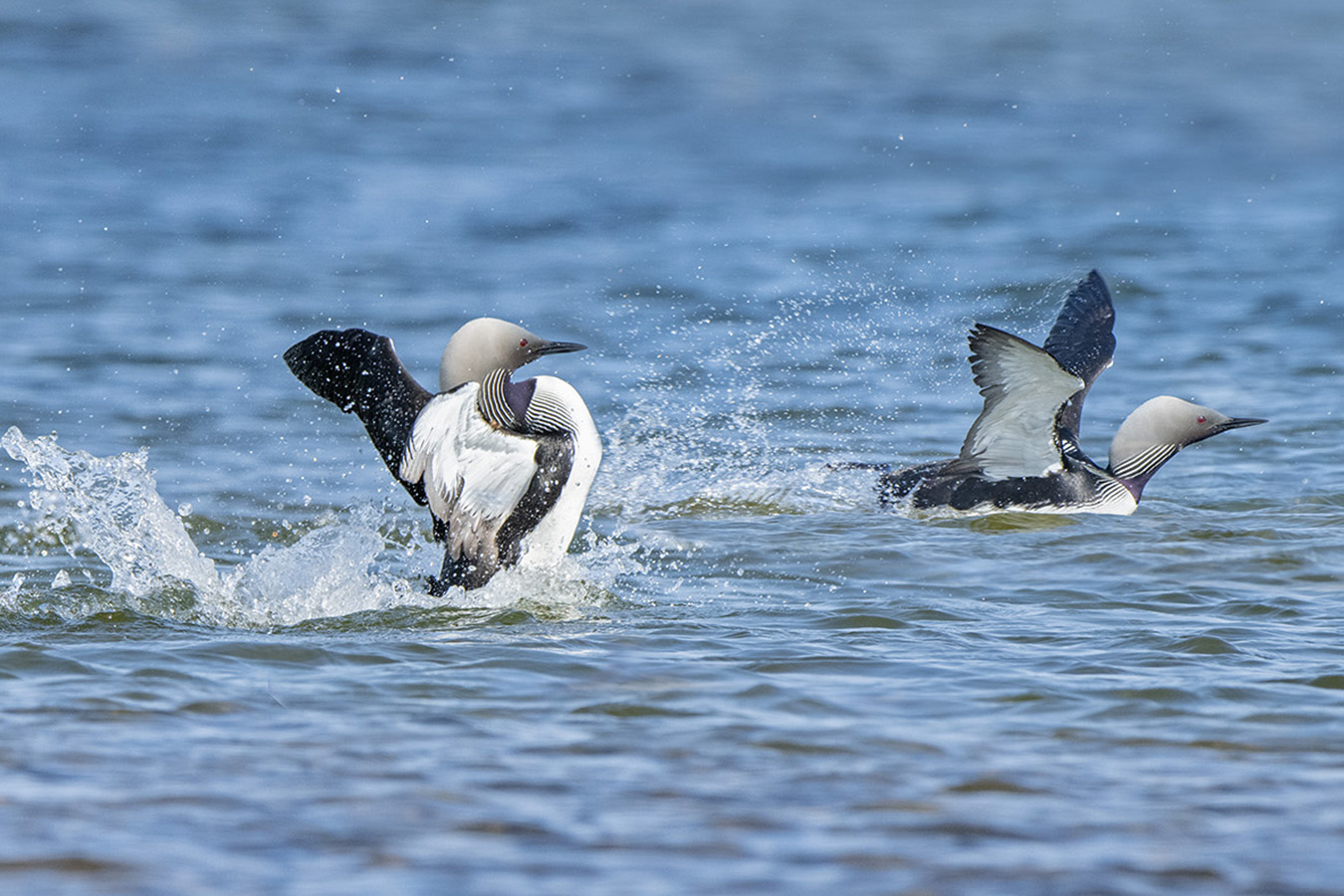
When three outsider loons joined the resident pair, the five loons embarked on a series of social behaviours that included circle swimming, and bill dipping, as well as more aggressive displays such as the penguin dance and surface rushing.
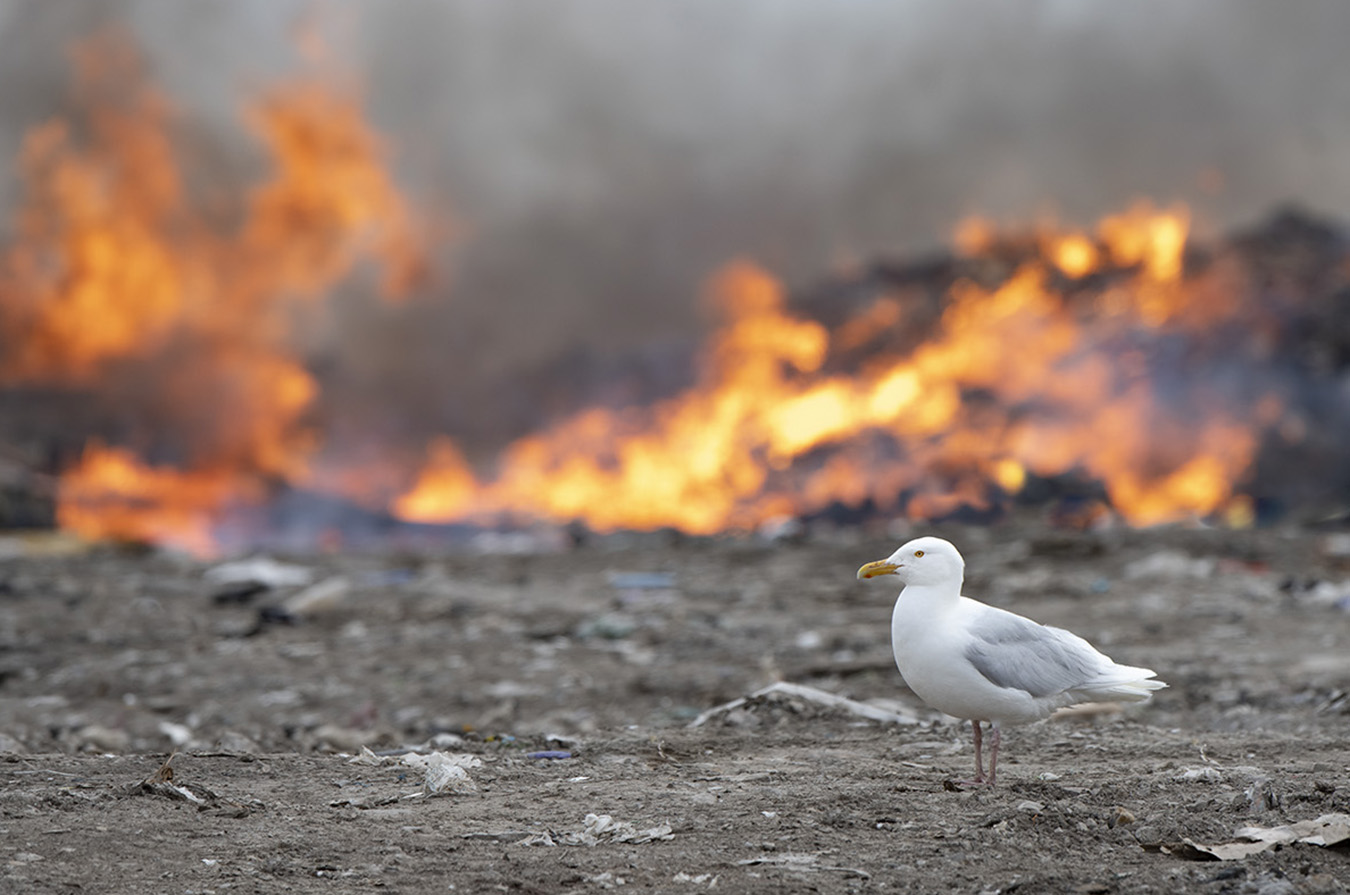
On my final morning on Victoria Island, I had a couple of hours to kill before my flight, so I went to the local dump where all seasoned naturalists go with time on their hands. Earlier in my stay, I had seen a California gull near the dump – the first sighting ever reported for the island – so who knew what other avian wonders I might find? When I arrived, a huge pile of garbage had just been set ablaze, but that didn’t seem to deter the local avian diners.
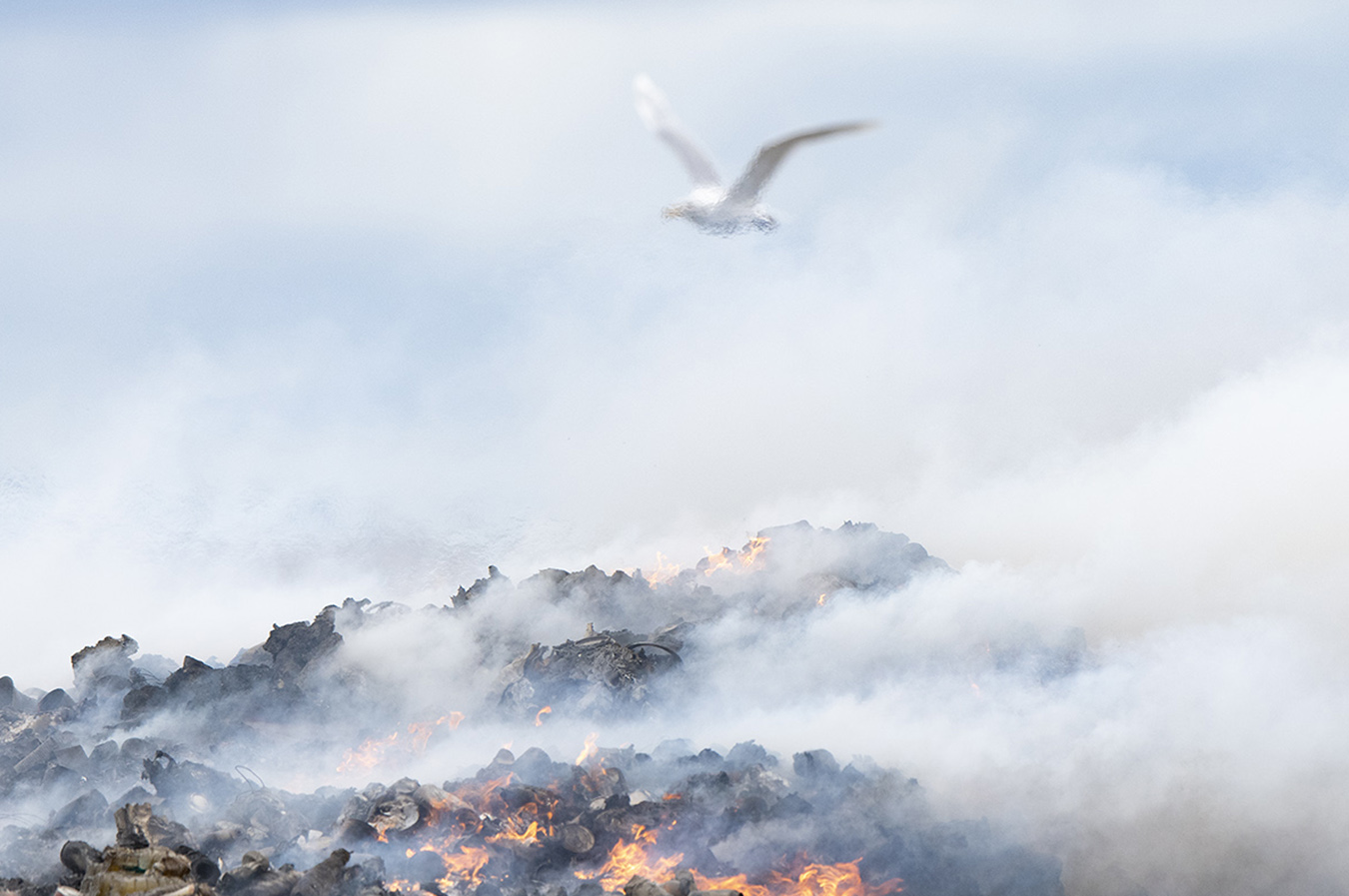
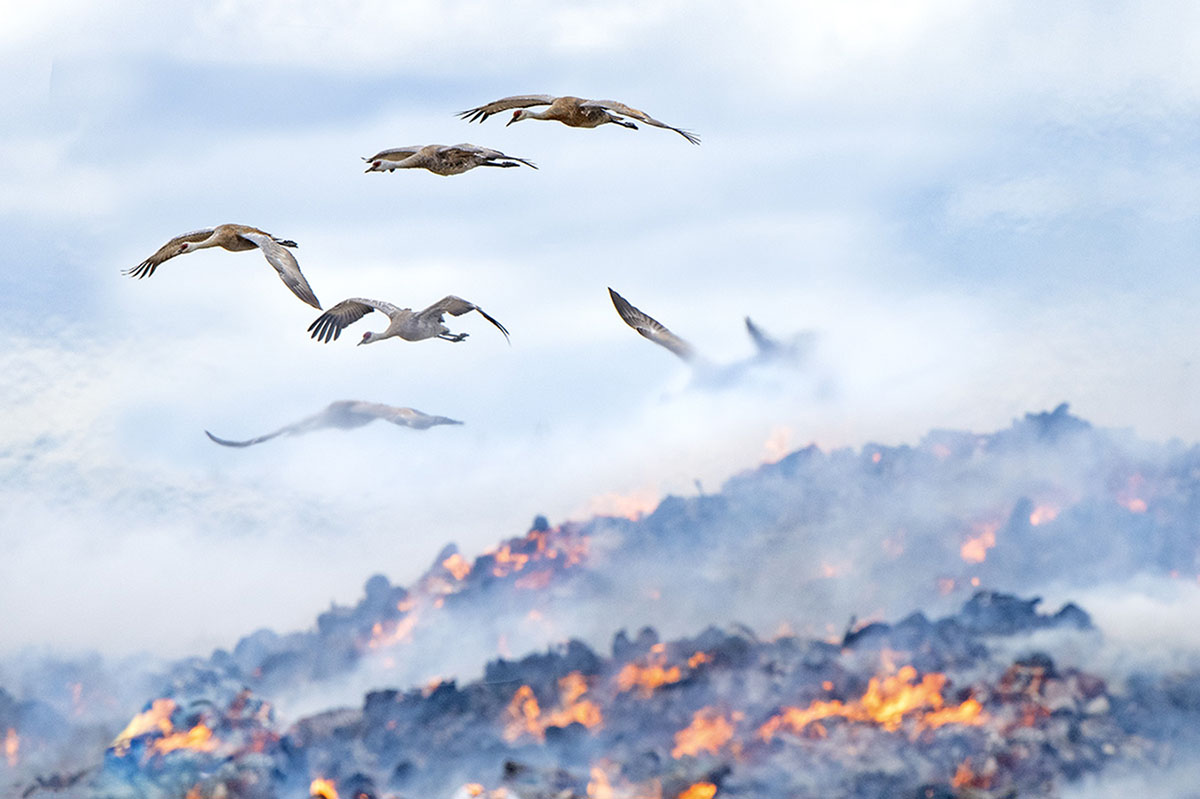
In the smoke and flames, dozens of glaucous gulls flew about, along with two California gulls and at least ten sandhill cranes, all determined to find something edible by rummaging through the rubbish. I was fascinated by how closely the birds flew to the smoke and flames. This unexpected experience leads to this month’s posting ending with something different – gulls, garbage, and conflagration.
Read the previous articles:
About the Author – Dr. Wayne Lynch

For more than 40 years, Dr. Wayne Lynch has been writing about and photographing the wildlands of the world from the stark beauty of the Arctic and Antarctic to the lush rainforests of the tropics. Today, he is one of Canada’s best-known and most widely published nature writers and wildlife photographers. His photo credits include hundreds of magazine covers, thousands of calendar shots, and tens of thousands of images published in over 80 countries. He is also the author/photographer of more than 45 books for children as well as over 20 highly acclaimed natural history books for adults including Windswept: A Passionate View of the Prairie Grasslands; Penguins of the World; Bears: Monarchs of the Northern Wilderness; A is for Arctic: Natural Wonders of a Polar World; Wild Birds Across the Prairies; Planet Arctic: Life at the Top of the World; The Great Northern Kingdom: Life in the Boreal Forest; Owls of the United States and Canada: A Complete Guide to their Biology and Behavior; Penguins: The World’s Coolest Birds; Galapagos: A Traveler’s Introduction; A Celebration of Prairie Birds; and Bears of the North: A Year Inside Their Worlds. In 2022, he released Wildlife of the Rockies for Kids, and Loons: Treasured Symbols of the North. His books have won multiple awards and have been described as “a magical combination of words and images.”
Dr. Lynch has observed and photographed wildlife in over 70 countries and is a Fellow of the internationally recognized Explorers Club, headquartered in New York City. A Fellow is someone who has actively participated in exploration or has substantially enlarged the scope of human knowledge through scientific achievements and published reports, books, and articles. In 1997, Dr. Lynch was elected as a Fellow to the Arctic Institute of North America in recognition of his contributions to the knowledge of polar and subpolar regions. And since 1996 his biography has been included in Canada’s Who’s Who.



Beautiful photography! I was in Wood Buffalo this summer, and got images of a Hooping Crane and Pelicans. I would love to head farther North as you did.
Fantastic assortment of pictures. Thanks for sharing this treasure trove of avian life on Victoria Island!!!
Great article and terrific images.
Fabulous photos Dr Lynch – I especially enjoyed your closeup images of the Pacific Loons.
I’m curious to know how you financed this trip. Did you receive funding from a government org or sponsor, or were these self-financed trips?
A month-long trip in the high Arctic involves considerable logistics in terms of transporting food and I presume a tent. How was this accomplished? Were you flown in by helicopter, or were you brought to Victoria Island by a zodiac or ship?
I would appreciate more details of your trip. If you can point me to an article or link, it would be appreciated!
Cheers and thanks!
Frederic Hore,
Freelance photojournalist,
Montréal